“The Ballad of Prefect Mori”
“My heart breaks now that I have finished singing this true story – when I think that the Mafia has power and dishonours this honest and poor land that wants bread and work, freedom, justice, and schools. And no to the Mafia! And no to the infamous law of the gun! And no to honour! No honour and glory to those who rob and shoot! This we cry out; it is our voice that awakens the dead, because we are tired and we want to change life and fate.”
“I am a human being, we are a community” – this sentence is our “I have a dream,” our “No man is an island.” Alternatives to the selfishness of the one who says “I am an individual being,” and to the suffocating partiality of those who proclaim “We are a closed group.”
A Black man, an African, appointed patron saint of the city 150 years before he was canonized by the Church. This only confirms that Sicily is a hospitable land.
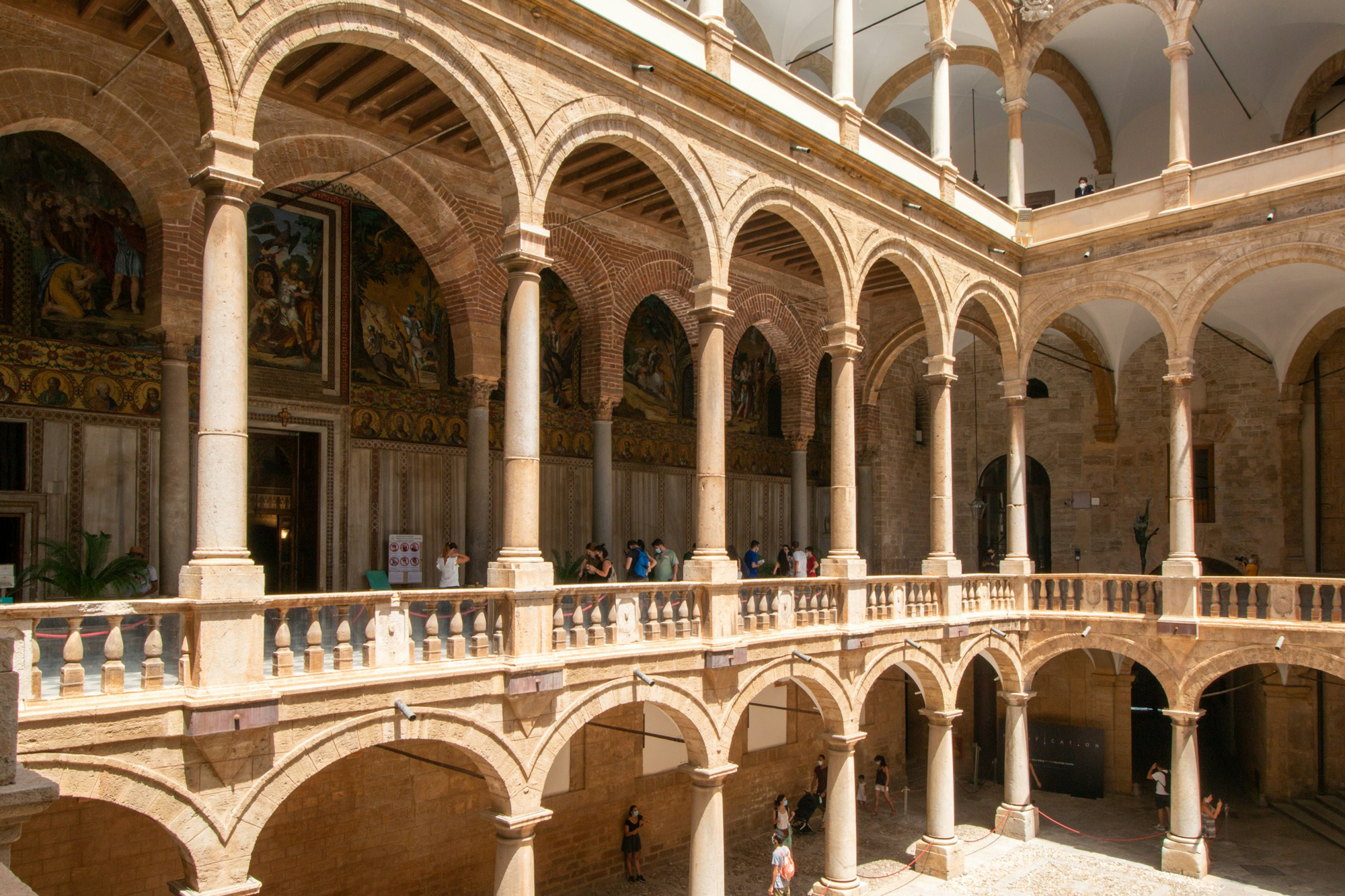
Sicily seemed empty because the Mafia destroyed time and space. Today, where the Mafia no longer rules us, we finally again have respect for time and can create new spaces. Therefore Sicily is on the one hand still empty and at the same time overflowing, and promises a future like few regions in the world. In few regions does one have the impression that tomorrow will be better. In Palermo, however, the imperfections and the suffered scars communicate exactly this message. Palermo is emblematic.
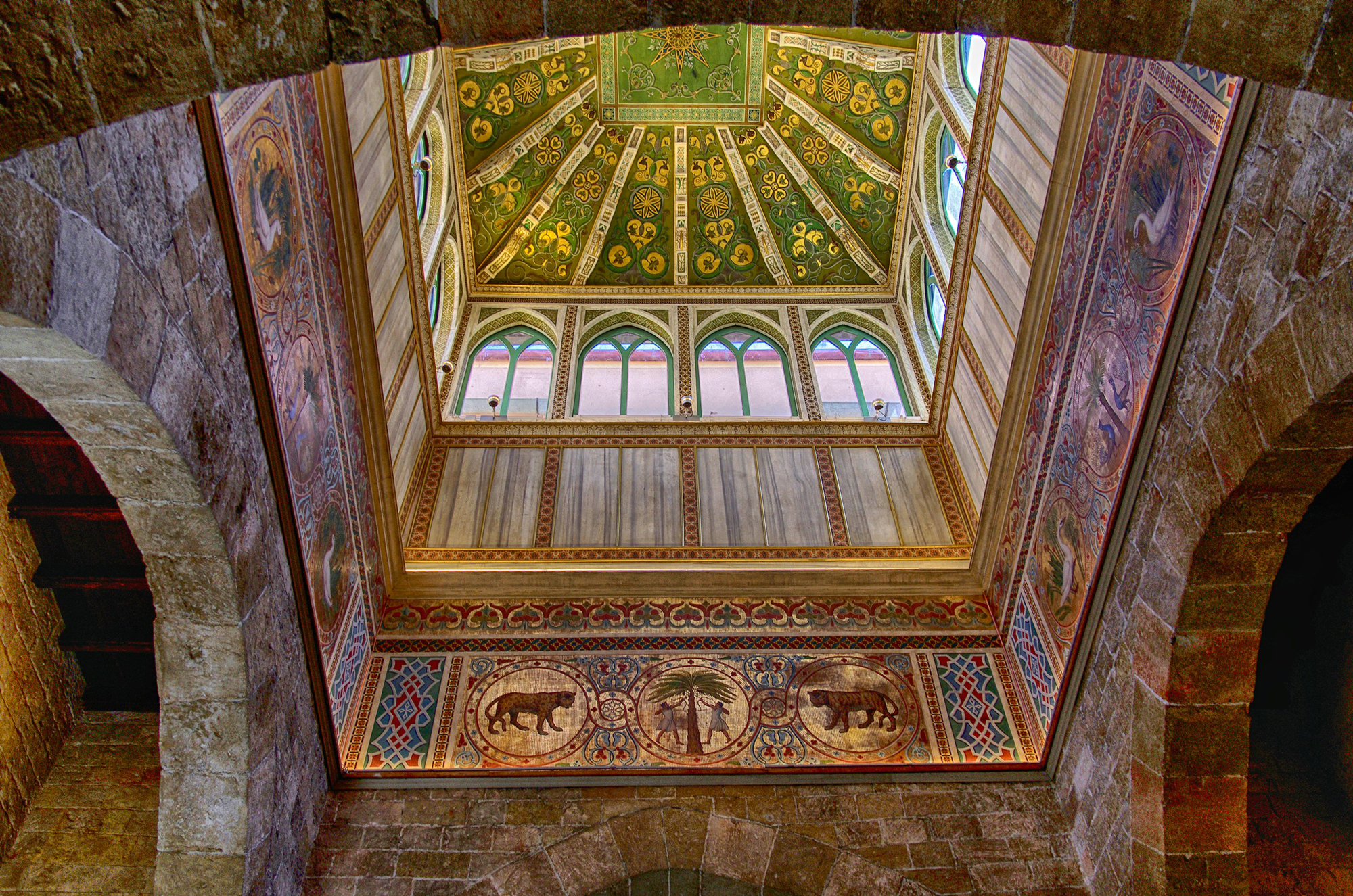
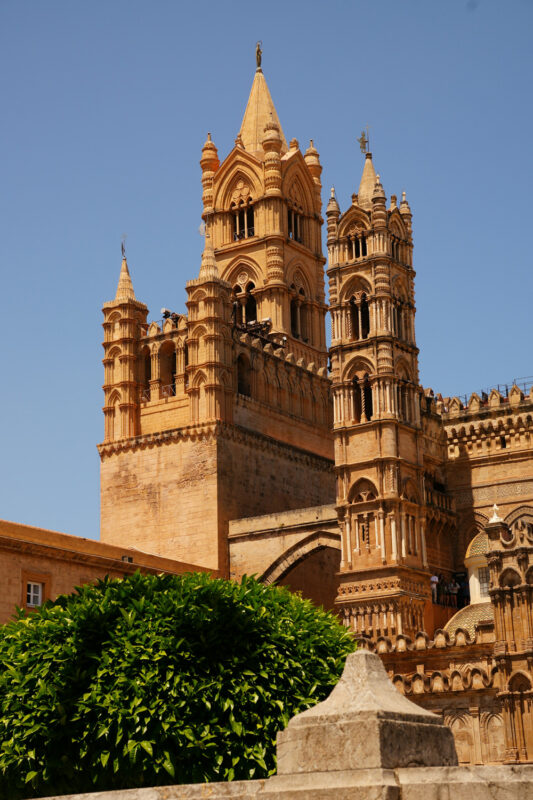
© Lothar Boris Piltz, Unsplash
There is no city in Europe that has changed more strongly in the last forty years. Certainly Berlin changed, Moscow as well. But the changes in Berlin and Moscow happened in connection with great institutional upheavals. The Soviet Union came to an end, the Berlin Wall fell, Germany reunited. We changed without changing the constitution. We changed our thinking.
We were the capital of the Mafia. Forty years ago the Mafia wore the face of the Church and of the state, of the judiciary and naturally also of the mayor. The Mafia ruled. There was hardly anyone who opposed it.
I was accused of being an atheist and a communist. I was neither one nor the other. When I criticized the Mafia, the silent Mafia-friendly bishops claimed I was an atheist, while the Mafiosi ministers claimed I was a communist.
Today Palermo is a capital of Italian culture and hosted Manifesta 12. Concerning the number of registered crimes, Palermo in 2019 was considered the safest city in Italy.
Earlier mainly journalists came because of interviews about the Mafia. Today the tourists come. I am convinced that the greatest educational work in Palermo is done by those who come to us from outside: tourists and migrants.
Palermo today is not only the safest city in Italy, but also the most hospitable. If a migrant comes to Palermo, he becomes Palermitan. Whoever comes to Palermo and lives in Palermo becomes Palermitan.
Why is it different in Palermo? Because migrants, thanks to my decision, feel at home here and therefore feel the obligation to defend their home before defending their religion and country of origin.
That is the cultural transformation. We changed thanks to those who came from outside. It is about mutual respect for rights. I defend migrants because measures directed against them can open the gap that allows others to violate everyone’s rights.
If I go to the doctor, I do not ask him for affection; I ask him to respect my right to health. If a migrant comes, we do not have to offer him caresses – we must treat him as a human being who has rights. That is all.
Thanks to migrants Palermo changed profoundly, but also thanks to the Mafia itself, whose unbearable violence forced change. I claim that Germans after Hitler became better than before Hitler. I claim that Muslims after Osama Bin Laden and ISIS became better than before those phenomena.
Today Muslims in Palermo are the first to go into the streets against Muslim terrorists.
I attend all the religious festivals of Islam, organise the Iftar, the breaking of the fast during Ramadan, participate in all Islamic feast days, all Jewish ceremonies, the festivals of the Hindus and also those of the Christians — simply all of them. That is a message. We in Palermo are, through our shame, ahead of other realities that have not experienced this shame.
If someone steals my car in Paris, I assume nothing more than a theft and file a report with the police. If someone steals my car in Palermo, I cry out: “Oh God, is the Mafia back?!?” Our reaction depends on our history. I am proud to be mayor of the city in which Pino Puglisi was born — a priest, a very dear friend, a perfectly ordinary person, as all heroes and saints are. Who is a hero? A hero is someone who is extraordinary in being normal. And a saint? Someone who is extraordinary in being normal. In 1993 Don Puglisi was murdered by the Mafia. Seen properly, he did not fight the Mafia in the traditional way, through repression, weapons, trials. He only demanded a school for the children of his neighbourhood. That frightened the Mafiosi more than the weapons of the police, more than the verdicts of the judiciary. They shot him because he endangered the culture of the Mafia. The Pope immediately declared him a martyr and initiated a beatification process, also in order to take action against the bishops who had been friendly with the Mafiosi. We can therefore say emphatically that the Church too has changed.
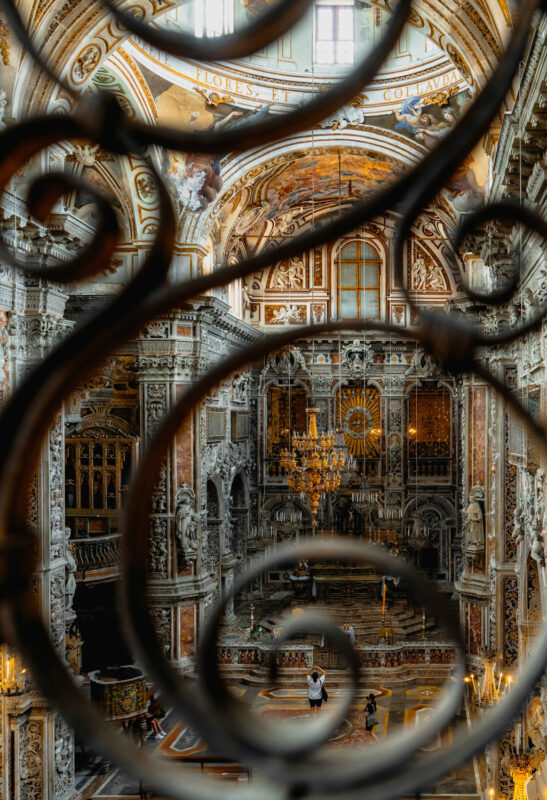
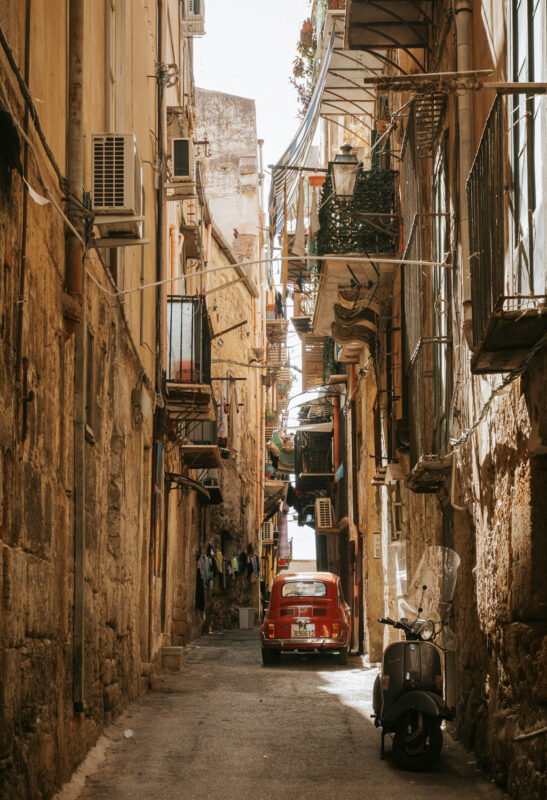
I am equally proud that I organise the largest Gay Pride in southern Europe every year. I am neither a priest nor homosexual (nobody is perfect). Last year we organised something unique: the “Palermo Pride Fest,” three full months long. I called my homosexual friends and said: “You demand that your rights be respected. As I can see, I respect them. May I ask you to respect the rights of the migrants? How many homosexuals are racists?” Then I met my migrant friends and said: “You have the right for your rights to be respected. May I ask you to respect the rights of homosexuals? How many migrants are homophobic?” I invited them all to my office and said: “I ask you to stay until you have worked out a joint programme together.” And last year we organised three months of “Pride”: homosexuality and migration as the cultural change of a city.
When Salvini passed the security decrees, I was for two months the first and only mayor who stood against them and signed the registration entries. Then the mayor of Crema in Lombardy joined me — someone who shares the idea of treating every person with respect. On 2 January 2019, the then Interior Minister Salvini let it be known that he would send the military to stop me. Several months have since passed, the military has not come, Salvini has gone, I am still here — and I keep signing, since I am in favour of security. Security is a right for everyone. Why do I sign the registration documents of migrants? Because that way I know where they live. And I enable them to sign an employment contract, not to work illegally, and to rent an apartment, with a regular tenancy agreement. I enable the migrant woman to no longer be forced into prostitution. If a criminal wants to force a woman into prostitution and the woman refuses, he calls the police and says “this woman is not registered” — and they send her back to Nigeria or Gambia. In this way the police paradoxically serve the criminals.
A man whose registration certificate I had signed said in an interview in La Repubblica that he did not know the mayor, but wanted to thank him, since he could now finally pay his taxes and was no longer invisible. Invisibility deprives people of their rights and produces violence and insecurity.
Last year we hosted the Manifesta, the nomadic biennial for contemporary art. As a symbol we chose a painting by Francesco Lojacono, a Palermitan landscape painter of the 19th century. We chose a painting that shows the plants of the Palermitan landscape. Not one of these plants is originally native here. The botanists, my university colleagues, authorised me to make the statement that there are no native plants in Sicily.
We are biologically diverse, not by birth but through culture, through choice. Think for example of the symbol of Sicily, the prickly pear, the fico d’India. It comes from Mexico… the “India” of the explorers after 1492. Try telling a Sicilian that the prickly pear does not come from Sicily… they will show you! For Sicilians the prickly pear is Sicilian, even if it is not native.
The state: we have been taught, and we then passed it on, that the state is a closed space, which one person defends with flowers, another with weapons. But always a closed space. Try telling Google what the state is, or Ali, the migrant. Try asking a twenty-year-old what the state is — they will not understand. For a twenty-year-old the world exists as a village, and that is where they live. What stands in the way of this idea obstructs happiness. Should you really manage to indoctrinate them, they might perhaps answer that the state is a necessary evil. Necessary — but an evil. That is not a terrorist thought. About 70 years ago three “terrorist” politicians were of the opinion that the era of nation-states was over. These dangerous politicians were called Schuman, Adenauer, and De Gasperi. After the Second World War they said: “Down with the nation-state!” and founded the European Community: the first supranational organisation to overcome the tragedy of the Second World War.
Identity: we have been taught that our identity is the blood of our parents. A terrible blood law! I am supposed to be Sicilian because my father and my mother are Sicilian?!? No! I am Sicilian because I have chosen to be Sicilian. That is exactly the message of Ali, the migrant, who chooses his identity and also his homeland. Terrible the blood law that wants to impose on children the identity of their parents. Children do not belong to those who conceived them. They are independent people. My life changed decisively when, at the age of ten, in the salon of aristocratic Palermitans — I was there with my parents — I observed two elderly gentlemen arguing. Finally the one, who looked exhausted from his store of insults against the other, delivered the final blow: “Your children are not your children!” I saw the beautiful expression on the face of the other gentleman, who calmly gave the reply: “Children belong to those who give them the opportunity to unfold — not to those who conceive them.” I had wonderful parents whom I loved, who loved me… but my identity and my homeland I choose for myself.
Thanks to the migrants we are winning back enormous freedoms. My thanks go to the migrants! Thanks to those who come from other realities, they change us. And we change ourselves too, because the long, painful path of liberation from the rule of the Mafia has made us aware of the significance of time.
Our experience is an alternative to populism, which is spreading dangerously throughout the world. What is populism? The cultural perversion of the notion that time has no value, that everything is an eternal present, without past and future.
Palermo has truly changed. The Mafia still exists in New York, in Hamburg and equally in Palermo, but it no longer rules Palermo. The change did not come about in 40 minutes, in 40 days, or in 40 months. 40 years were necessary and countless confrontations and bloodbaths.