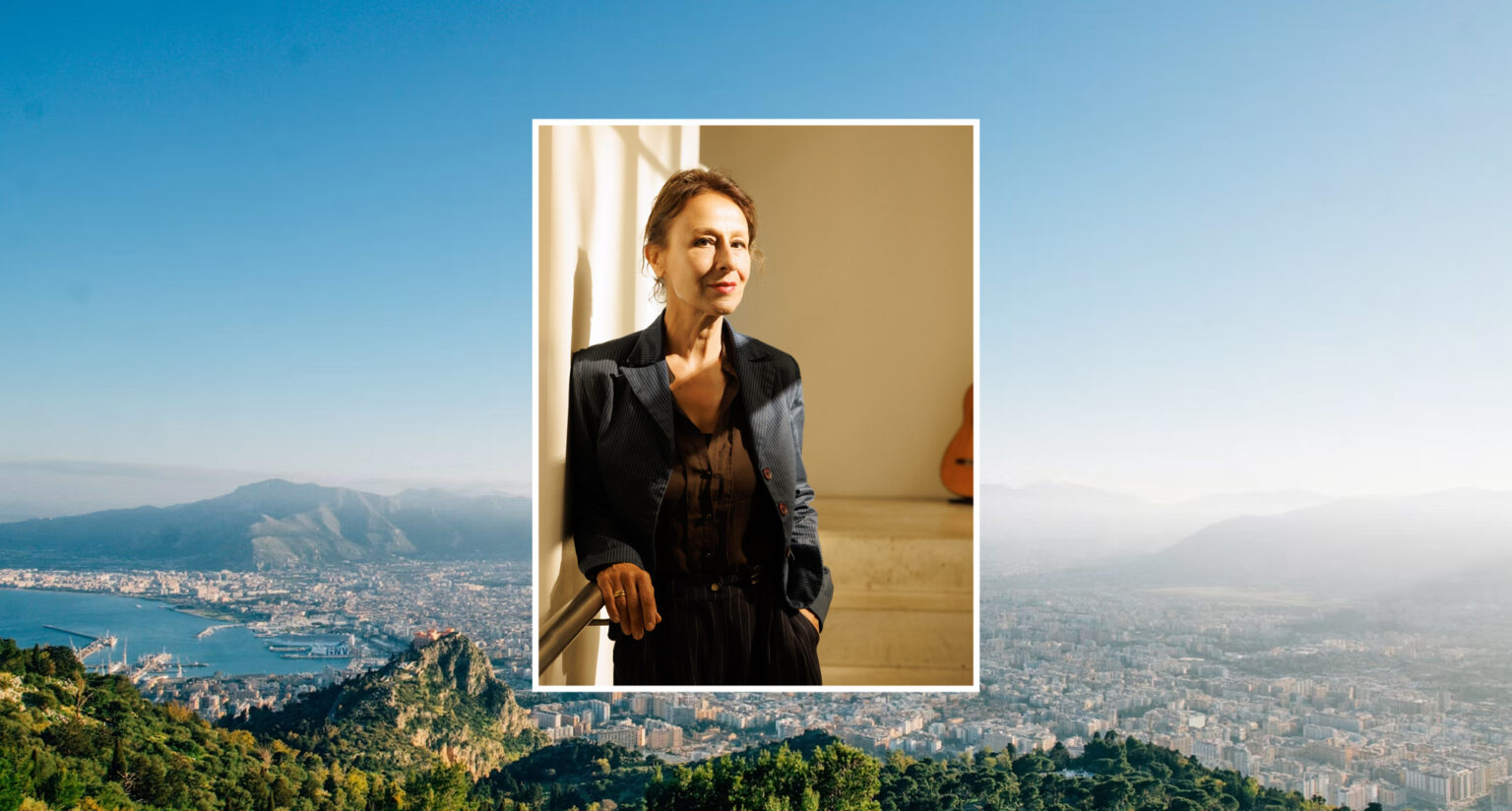

In my imagination the city appeared to me like a demanding and suspicious signora. Without doubt she was aristocratic and reserved, someone who would never open the windows of her magnificent house, and who swept the dust, together with everything else, beneath a carpet that was as precious as it was worn out. Palermo, as I imagined it, filled me with fear and respect. Yet fundamentally I had the feeling that Palermo did not really exist. As a child and young girl I was there only twice: on a school trip at eleven and at a student demonstration at sixteen. From both occasions I remember nothing except a long and winding bus ride.
In 1993 I truly discovered Palermo. This time the journey was intentional and had a personal background.

We arrived by car at the congested Quattro Canti, where Via Maqueda and Via Vittorio Emanuele cross, grey and humiliated by traffic and chaos. I cried. I was overwhelmed by such emotion, as if this street penetrated my innermost self and awakened memories of which I knew nothing. I felt a weight in my chest, yes, I felt the entire weight, the entire substance of the heart. As if only now I noticed this organ, as if only now I became physically and emotionally aware of it. I cannot explain what happened to me in that moment and in the days that followed, but one thing I know with certainty: that since then I learned to love Palermo.
Little by little I discovered it in all its problematic aspects. Over time I also had the opportunity to realize musical and artistic projects, such as my homage to Rosa Balistreri with the Sicilian Symphony Orchestra. I slowly put down roots and surrendered myself to the affection of those who, without many words, naturally and self-evidently make it understood that they care for you.


In Palermo I felt the heart. The heart of pain and of the dramatic and violent history of this city, the heart of the beauty and the profound culture that it contains within itself and gradually revealed to me, so that I surrendered myself to the meanders of its thousand lives – just as today it reveals itself to its inhabitants and to the world. The renewed Palermo. Via Maqueda is today a pedestrian and bicycle zone for all who move through the city center. The Teatro Massimo is at the height of its productivity. I had the honour of being “Alice” there, protagonist of a wonderland, an opera production with a choir of 70 schoolchildren and the house orchestra. In 2018 Palermo successfully hosted the European Biennale for Contemporary Art “Manifesta.” Immigrants are welcomed, integrated into the life of the city, and recognized as Palermitans. People discuss things together and make every effort to combat the Mafia.
Naturally the Mafia has not disappeared from Palermo, even if it has changed its clothing and its mode, expanded itself, and merged into a global system of Mafias. But the people of Palermo have a new, changed consciousness; this is clearly perceptible. My regular stays and my life as a “Palermitan by adoption” showed me that Palermo has laid aside its dark and suspicious veil and rolled up the carpet. The signora has opened her windows, and the light entered.