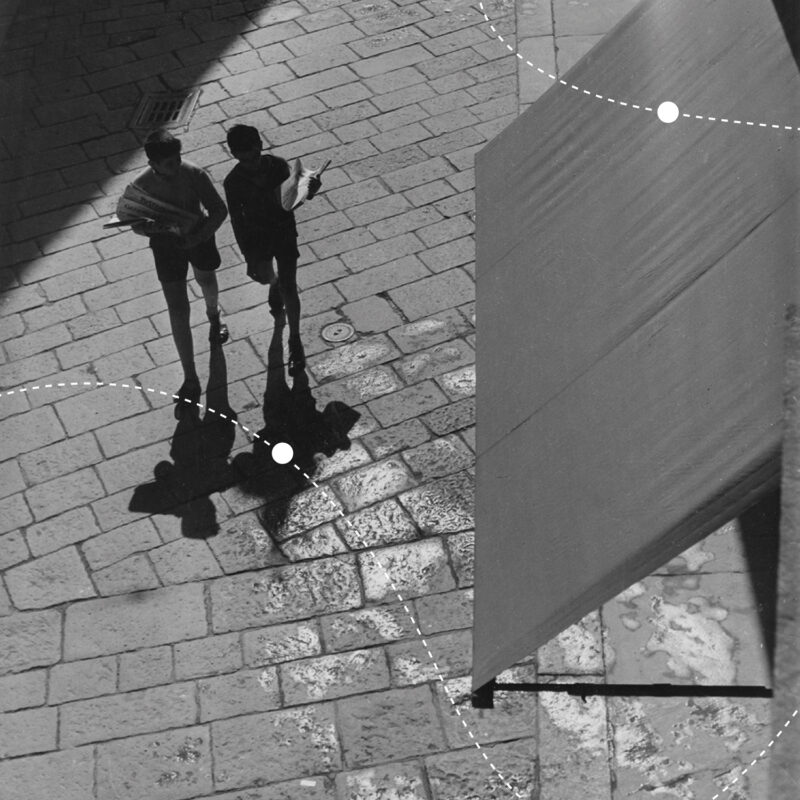
Opposite, beyond the little river Río Darro on the other side of the valley, the reddish-shimmering fortress Alhambra towered high on the cliffs, like a fairy-tale castle. It had been the last outpost of the Moors on the Iberian Peninsula, it was what remained of the Andalusian Caliphate. On 2 January of the fateful European year of 1492, it fell into the hands of Queen Isabella and King Ferdinand.
We often drove up there, during the day, but also in the evenings. The sight of the Court of the Lions and the splashing lion fountain, white marble in the light of the full moon, is unforgettable. The Alhambra is one of the most beautiful picture books of history, one can look at it again and again.
That winter we spent there, I had a foot injury, and the path to the fairy-tale book is long and in some places steep. But fortunately a small bus drove through Albaicín’s streets and up to the castle. Already the contrast between the prosaic, modern bus and the legendary, fairy-tale name ALHAMBRA delighted us. The sign might just as well have said SHANGRI-LA. But the funniest thing for me was that it was the number 31 bus.
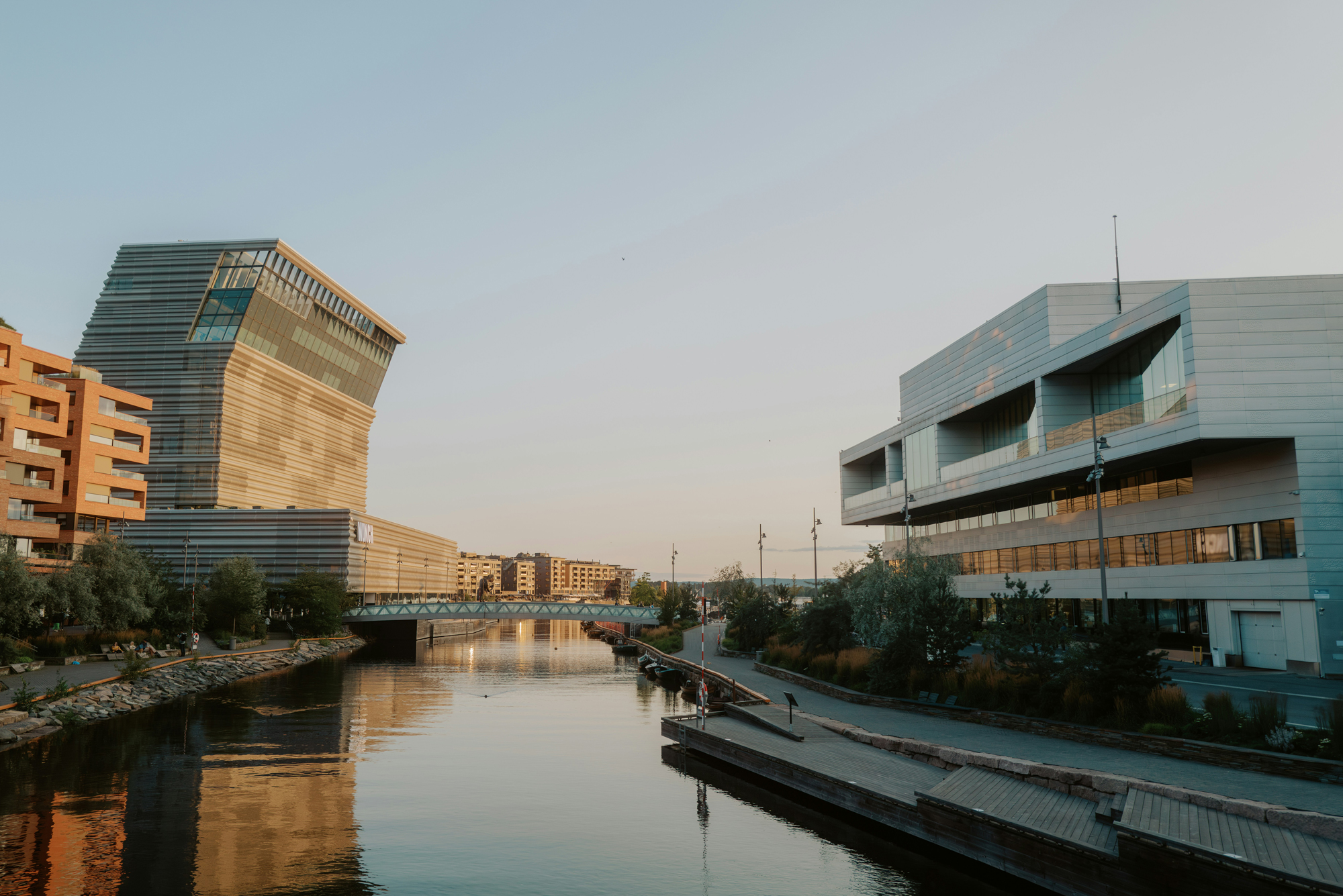
Oslo, you see, also has a number 31 bus, and for someone from Oslo there can be nothing more mundane and less fairy-tale-like than precisely this bus. At the front it reads 31 GRORUD; it crosses the entire city from west to east, where I grew up. And Grorud is truly no Alhambra, but a sober satellite town.
The westernmost stop of the Grorud bus lies in Snarøya, an affluent residential area with millionaire and billionaire villas on the fjord shore, somewhat beyond the western city boundary; the journey from there to the easternmost stop, that is Grorud with its residential blocks, takes one hour and six minutes. During the course of this hour, the number 31 bus winds its way through over 40 stops and 23.4 kilometres through the entire capital — in essence it is a sightseeing bus of a rather different kind.
Along the route one first sees the fjord with its islands; it passes by the new and modern district that has developed in Fornebu, where Oslo’s airport once lay; one can catch a brief glimpse of Bygdøy, before driving through the prosperous late-19th-century neighbourhood of Frogner; then comes the city centre with the castle, National Theatre, University and Storting. Further along it goes through the rectangular street grid of Kvadraturen, almost as far as the Opera in Bjørvika, nearly to the spot where the original medieval city of Oslo was founded in the 12th century. But just before that, the bus turns off toward the main railway station and drives into the eastern districts, into the working-class neighbourhoods from the 19th century, the era of Oslo’s industrialisation: through Grønland with its bustling food shops run by immigrants, through the formerly grey, now hip Grünerløkka, through Tøyen with its old tenements, where the Botanical Garden is also located and (until 2020) the Munch Museum. The journey continues through the districts of Rodeløkka and Sinsen, until the bus finally reaches the wide valley into which Oslo expanded greatly after 1945: Groruddalen. We travel along one side of the valley along the RV4 — the current expressway has always been called Trondheimsveien, because for centuries the road north to Trondheim, 500 kilometres further, has run here.
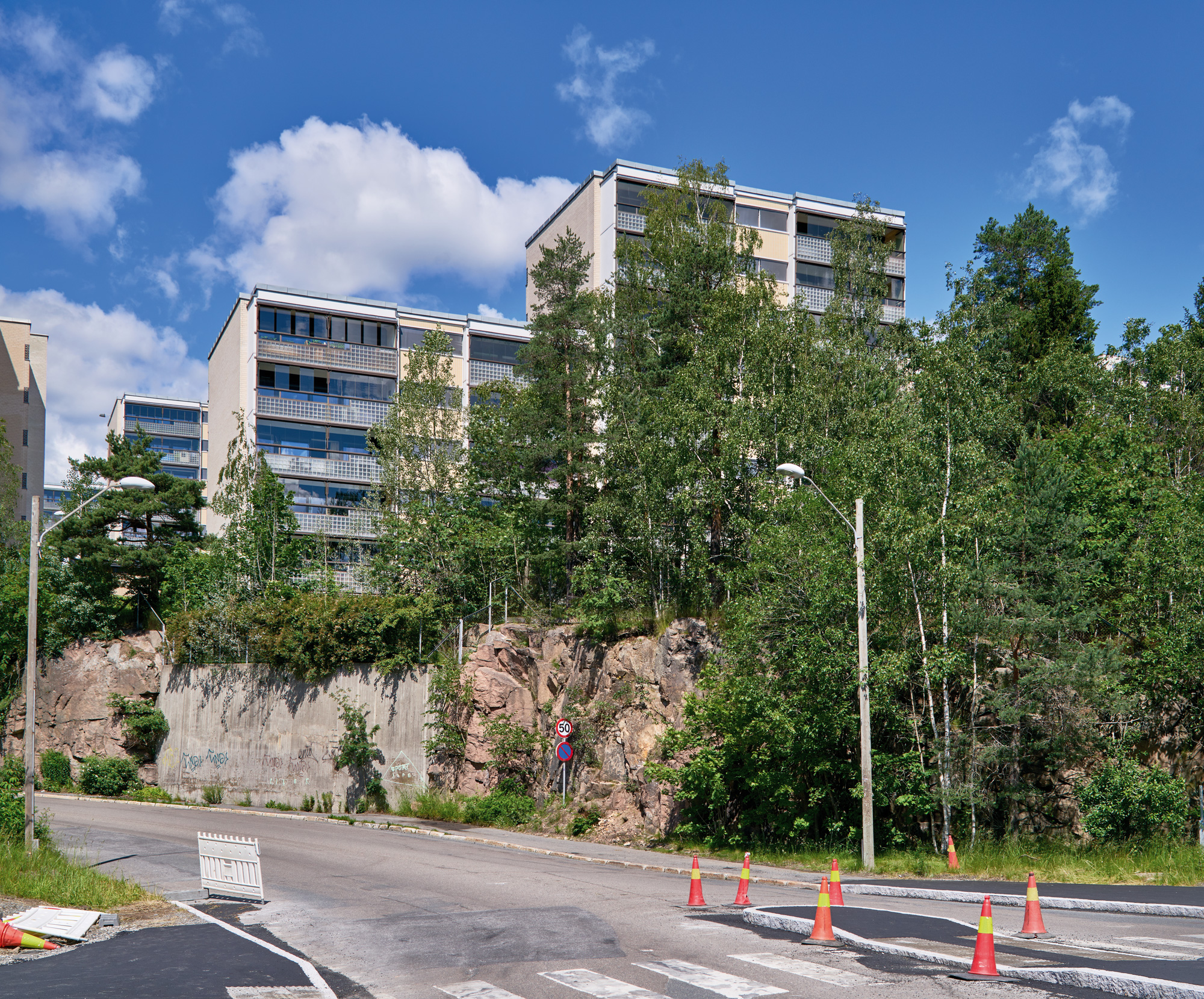
But we don’t want to go that far. Our bus serves in turn the stops on the north side of the valley, going from one satellite town centre to the next; Linderud, Veitvet, Rødtvet, Kalbakken, Ammerud — the view looks out over industrial areas and warehouses in the valley and onto the slopes opposite with further satellite towns, further centres, further residential blocks. Finally we reach the terminal stop: Grorud metro station.
The city area with its many suburbs is not yet over, but now we have essentially seen a cross-section through Oslo. The city is larger than most tourists imagine; there are extensive districts that they rarely visit. And we have seen the contrasts between west and east. This journey is, as said, a city tour, even if without the explanatory loudspeaker voice. But for 36 kroner you can’t have seen everything.
And we have not arrived at the Alhambra, the fairy-tale castle that is also without a tour guide full of history and stories. Instead we stand on a dull district square with sober buildings from the 1950s and later. There are a few shops, a kiosk, a pizzeria; to the south one sees besides the church tower only further residential blocks and single-family houses. When it comes down to it, there is not much to see here.
The Valley of Writers
From time to time, often in November/December when the autumn publishing titles appear, a journalist notices that a remarkably large number of writers come from Groruddalen, so many that it is sometimes called the Valley of Writers or Valley of Poets. So they reach for the telephone, and it rings at Per Petterson and Roy Jacobsen. At Jan Kjærstad, Torgrim Eggen and Tove Nilsen. At Jostein Gaarder and Tom Egeland. At Elin Brodin, Arne Svingen and Nikolaj Frobenius. It rings at me. In recent years it certainly also rings at Linn Strømsborg, Maria Navarro Skaranger, Maria Kjos Fonn and Zeshan Shakar. And probably at many others.
These conversations proceed roughly as follows:
Writer: “Good day.” Journalist: “Good day, Writer. I’m a journalist.” Writer: “Yes, hello.” Journalist: “I have a question. You know, it’s November/December right now, that’s surely not escaped your notice.” Writer: “Yes, indeed.” Journalist: “Book autumn and so forth, yes yes. Well, before I forget — congratulations on the new book. Really great. Haven’t had a chance to read it yet, but…” Writer: “Thank you very much.” Journalist: “Yes, well, here’s the thing. We’re working on something rather exciting here. A slightly different angle on the book autumn. Because it’s book autumn now. So, an incredible number of writers come from Groruddalen.” Writer: “Oh really?” Journalist: “Well, you’ve surely noticed that an incredible number of writers come from there? This book autumn there’s you, and then also — well, you know—” Writer: “Yes, I’ve noticed that.” Journalist: “Yes, haven’t you? We in the editorial office find it really, truly fascinating. That so many writers grew up out there, with the residential blocks and all that. It’s — uh — totally strange.” Writer (somewhat hesitantly): “Well…” Journalist: “And now I’m calling around to ask you writers how on earth it can be that so many writers come from Groruddalen. So, I’m asking you now: Why?” Writer: “Why what?” Journalist: “Yes, why do so many writers come from Groruddalen?” Writer: “Hmm…”
The writer is unable to answer. Is it really strange that so many writers and female writers have grown up in this valley? I don’t know. Once during such a conversation I claimed that recent geological investigations had revealed that at a specific spot in Groruddalen — in the Bermuda triangle of the satellite town, so to speak — a weakly radioactive gas rises from the bedrock that apparently has an effect on the language centre in the brain. The explanation was unfortunately not printed.
Other times I have answered that in a typical 1970s satellite town there was little to do if you weren’t interested in sport or sniffing glue and found Norwegian television tedious. In that situation, maladjusted young people at that time began reading books. With proper cultural offerings or notable city life, the district centres could not compete. The Nordtvet library was like a lighthouse for me. Such answers — about cultural lighthouses in the fog of social misery — journalists like to hear.
But the real answer is probably quite prosaic. It’s a matter of demographics. In the area vaguely described as Groruddalen — the Grorud Valley — more than 120,000 people live, more than in the entire west-Norwegian district of Sogn og Fjordane. It goes without saying that so many people are not a homogeneous mass; here lived and live all sorts of people. Among the neighbours in our block, some were intellectually inclined, others were not. Some were interested in music, others in sport. A deaf neighbour, a former locomotive driver, read Dostoyevsky day and night. Since he couldn’t hear, concentration was no problem. Another neighbour had opened many a beer in his life, but never a book. And we children were of course also different. Things went very well for some in life, damnably badly for others — proportionally probably more so than in other parts of the city, because more people lived here who were to be found at the lower end of the statistics for wealth, education and resources. However, and this too was as everywhere else, the great majority got along well in the end.
Of course it’s not only residential blocks here. There are terraced houses and areas with wealthy single-family homes. Not everyone is equal here either; a local upper class lives in villa-like houses, the middle class in terraced houses, the lower class in the large blocks. Whoever lives here knows these differences very precisely.
Most other Osloers find Groruddalen puzzling and somewhat unsettling; according to countless press reports it is a working-class district with social conflicts, youth problems, problem youths, ghetto problems, crime problems, drug problems, foreigner problems — problems wherever one looks. Osloers from other parts of the city or even from the western districts very rarely come to Groruddalen, if they have ever been there at all. What would they do there? There are no cultural institutions, virtually no museums, no noteworthy natural attractions, no decent restaurant. When the valley’s residents long for such things, they go into the city.
Research in the digital catalogue of the National Library shows that Groruddalen was already considered problematic since the rapid expansion of these satellite towns. One finds reports and investigations on the prevailing conditions, impassioned non-fiction books about urban planning, concerned non-fiction books about the living conditions of children and young people, even more reports and even more investigations, reports on poor school performance, investigations on juvenile crime, reports on drug abuse. In the 1960s and 1970s almost only ethnic Norwegians lived in Groruddalen — they apparently had just as many problems as today’s residents, very many of whom have a migration background. Reports and non-fiction books continue to be written. Groruddalen attracts sociologists the way light attracts moths.
Zeshan Shakar — Tante Ulrikkes vei
The two main characters in Zeshan Shakar’s debut novel Tante Ulrikkes vei (2017, Aunt Ulrikke’s Way) are informants — or victims — of such a sociological study, which in 2001 is supposed to investigate “the everyday life of young people with minority backgrounds.” With a sovereign language, Shakar tells the stories of his protagonists from a block in Tante Ulrikkes vei in Stovner, which lies a bit further up in the valley. When I was growing up in the 1970s, Stovner and Problem were almost synonymous; that was apparently still the case in Shakar’s time.
The young people Mo and Jamal have, as it is said, “the same demographic starting point,” but are (of course) completely different. Mo (for Mohammed) is a talented and hardworking pupil; he does his homework and obeys his parents. He has goals. He wants to study, get ahead, get away from Stovner and Groruddalen — that is also the hope of his parents. Mo composes his answers for the sociologists in fluent and correct Norwegian, goes to the mosque twice a year and is a good boy.
Jamal, the second narrator of the book, dictates his descriptions into a recording device. He has a different attitude to life and to the reality around him; in a certain sense he is much more uncomplicated and much less neurotic than Mo. He likes his friends, his little brother; he likes hip-hop and everything that’s fun.
Jamal’s language is uncompromisingly oral. When he speaks into the recording device that the researchers have lent him and tells of his everyday life, this is (seemingly) the rendering of spoken speech with all the features of the minority sociolect:
“I go to my homies, I’m doing research on you lot. And they’re like, man, why you doing that, ey. Mad people!”
“But we here, we’re like, screw you, all you shit-talkers, you get me? Let them do their thing, the others, but never think you’re worse than them. We stand for something. We stand (…) for Stovner, for life, you get me. Forgot the others. Don’t need them. Got everything here ourselves, man, right? We got our blocks. We got our people. That’s us.”
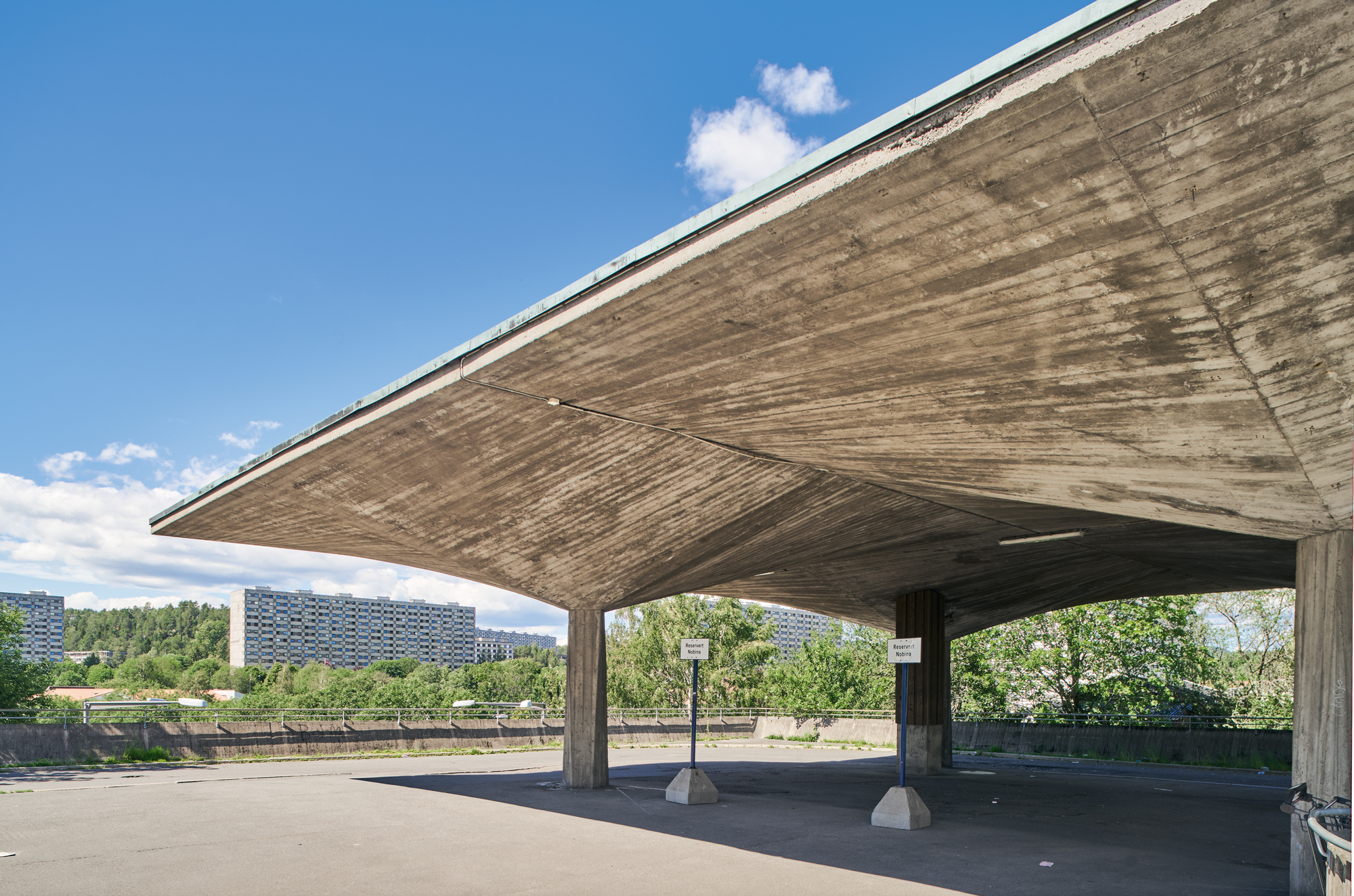
But Mo does not like living in Stovner. He discovers how small his district is and that it socially stigmatises him. This discovery causes him physical discomfort.
“I found out that Stovner was actually quite small and Tante Ulrikkes vei even smaller. I found that in Stovner people lived on one side in small houses and on the other in large blocks, and often they didn’t resemble each other — actually it was the same in Oslo, and in the world (…) They talked about us in the news and wrote in the newspapers about us. About how bad the schools were. About ten-year-olds who couldn’t even read, couldn’t write proper Norwegian. That the residential blocks were soulless machines, and that too many of those who lived in the machines got their money from social welfare. I remember that they started to say ‘integrate’ at that time. In the evening news on television (…) ‘Several politicians warn that foreigners are not being sufficiently integrated.’ I didn’t understand what they meant. I thought of spaceships that lifted off (…) and integrated toward the universe. And then they came to Stovner. Politicians stood outside the metro station (…) and wanted to do something about all the intolerable and unacceptable things that gave great cause for concern. Or the woman from the advisory centre for resource-poor families who appeared at school. I remember our teacher said we had a special guest, then a small woman with large glasses came in and sat at the teacher’s desk. ‘It can be difficult when money is lacking,’ she said. Her face was serious, her voice soft and whispering, almost like that of Mrs. Doubtfire. ‘When money is lacking, it can make parents a little bad.’ The next day everyone at school called each other bums.”
Already the so-called “Stovner Report” of 1975 branded Stovner as a slum — it first appeared in the journal Sinnets Helse(roughly: Mental Health), later as a book and caused a great sensation. It stated that children in Stovner could neither read nor write, did not know their birthday, did not know the names of days of the week and seasons, and so on. I can hardly believe that was representative; it was probably utter nonsense. In any case there were no comparisons whatsoever with what children in western Oslo “could” and “could not.” Norway’s most important daily newspaper Aftenposten called the described conditions on its front page “The Tragedy of the Satellite Town.” For the first time the upper class of Oslo’s west did what in English is called “slumming,” that is, sightseeing in the poor districts of the east. People visited Stovner to see these illiterates with their own eyes. In 1976, a Christian summer camp near Lillehammer denied Stovner children access to its camp — out of fear of what they might drag across its pietist threshold. These children at that time were almost exclusively white Norwegian citizens belonging to the Protestant state church.
Even if my childhood and youth in Groruddalen lie several decades back, I recognise Mo and Jamal without difficulty. Their slang is different, but in my time there were the same types; I was more like Mo. What was spared those former Groruddal youngsters as white Norwegians was what Mo has to experience after a holiday trip at Oslo airport:
“When he asked me about the second line of the national anthem, I lost it. I threw my arms in the air and yelled: ‘Who the hell do you think I am?’ I heard chair legs scrape the floor. The police officer behind me came up close to me. A colleague behind the desk made a sign that everything was fine. ‘Well now, that’s exactly what we’re trying to find out,’ he said, leaning back in his chair. ‘I’ve lived here my whole life,’ I sighed resignedly.”
For the people of Groruddalen the margins have always been narrower, the drop comes more quickly, the way up is longer. Perhaps it belongs to what the writers from the Valley of Writers have in common, that we were treading on thin ice.
Roy Jacobsen — The Grorud Bus
The Grorud bus brings all manner of things. For example, an unwanted half-sister who bursts into the safe life of a boy and his single mother:
“Then finally the bus came. It stopped too. But nobody got off. Instead several passengers got on, and Mother and I stood there and looked at each other. The air brakes wheezed and the accordion doors banged and groaned and threatened to close. Mother rushed forward at the last moment and called ‘stop,’ and the conductor jumped from his seat and came and grabbed her arm and with the same movement could force the door open again with his knee. Mother said something, and the bus stayed put at least, as she disappeared behind the dirty window panes. It took and took. Loud calls could be heard from inside, then she finally came out again, red in the face and embarrassed, and she was dragging a small girl in a somewhat too tight dress, with white knee socks in the cold autumn weather and a tiny light blue suitcase. ‘Thank you, thank you,’ called Mother to the conductor and he said ‘don’t mention it’ and ‘it was a pleasure’ and other things that made Mother go even redder while she smoothed her hair, and I ran around and stared at the newcomer, Linda, who turned out to be small and chubby and peaceful and whose gaze bored into the asphalt. The bus finally moved on and Mother knelt down in front of our new family member and tried to make eye contact with her, with no particular success as far as I could see. But then Mother simply couldn’t any more, I mean, and she embraced the awkward creature in a way that made me deeply uneasy. But Linda didn’t respond to that either, and Mother wiped her tears away and said, as she always does when she’s ashamed: ‘No, what am I doing, come on, let’s go to Omar Hansen and buy chocolate. Would you like chocolate, Linda?’ Linda was struck dumb. She smelled strange, had uncombed, shaggy hair and a fringe that hung deep into her face. But she pushed her hand into Mother’s and clasped two fingers so that her knuckles went white. And again Mother couldn’t hold it together. And I could no longer watch, this grip — I instinctively sensed it was a grip for life, one that would change almost everything, not only in Linda’s existence but also in mine and Mother’s; it was such a grip, one that closes around your heart and holds it as in a vice until you die, and that is still there when you lie in the grave and rot. I grabbed the little sky-blue suitcase, which weighed almost nothing, and swung it over my head. ‘She’s asking if you want chocolate,’ I shouted. ‘Are you hard of hearing?'”
The quote describing the start of events comes from the novel Vidunderbarn (2009; The Unseen, English title varies) by Roy Jacobsen (born 1954). Jacobsen experienced as a young man times when the ice was breaking under his feet and everything threatened to go wrong. At first he did indeed go off the rails. By now he belongs to Norway’s most recognised and popular authors; he is an outstanding novelist and first-class novelist. In 2017 he was nominated for the Man Booker International Prize with the novel De usynlige (2013, The Unseen, 2014).
His breakthrough was with the novel Seierherrene (1991, The Winners). That is a major novel about the satellite town; on a more abstract level, however, it is a book about the great social miracle that Norway experienced in the 20th century: ordinary Norwegians are suddenly the victors of history. The first part of the novel is about the poor girl Marta. She comes from a fishing village in northern Norway where everyday life until the middle of the 20th century still had great similarity to medieval ways and a subsistence economy. Elsewhere the modern, technically developed 20th century had long since arrived, but the fishing farmers of northern Norway had not yet reached those advances. Marta moves to Oslo, marries, has children. In the second part of the book the tone changes; the role of narrator passes to her son Roger, who resembles the author. The stark gulf between the mother’s life, which could have come from the darkness of a only vaguely definable past, and Roger’s upbringing illustrates the immense social ascent of the great majority of Norwegians in the 20th century. They are two irreconcilable worlds, yet the affected generations found their way in them; the road led from poverty and material nothingness to a high-rise flat with cooker, running hot water, radio and rubbish chute; to a life with welfare benefits and paid holiday, in which the children had access to education and grants. This road was short and long at the same time; in Norway it is called den store klassereisen — the great class journey.
I particularly remember the photographs of students. In my residential blocks lived only railway workers, some already in the second or third generation. These were thoroughly solid people. Their wages may not have been high, but they were secure; the flats were not large, but always well-kept and attractive, often with a great deal of ornaments. But the greatest pride was the photographs by professional photographers of students, framed and standing on shelves and pianos. They showed the daughters and sons of the family in the venerable, black velvet student cap (which is unfortunately no longer in use). They had been able to study. That was probably the greatest thing that had ever happened in our families at all. For generations, talented, intelligent Jacobsens and Hansens had been unable to do anything with their talents and gifts. My mother (born 1921), for example, was not allowed to study; her family could not afford it. She was clever and intelligent; I believe she would have been a good lawyer. In Seierherrene Jacobsen describes Norway’s transformation into a knowledge society in which all those who want to — including Roger — can choose their path in life. Roger does not become a criminal. The distance from Shakar’s characters is not far.
Elling
Also living in Groruddalen is one of Norway’s most beloved fictional characters, whose story has been told in several books, on stage and in film: Elling. His creator Ingvar Ambjørnsen (born 1956) does not come from Oslo but from Larvik, but he lets his Elling — a neurotic, very individual person — grow up here alone with his mother. When we meet him in the first book Utsikt til paradiset (1993, The Elling File, 1995) he is already long grown up. What diagnosis (or diagnoses) he has received remains unclear, but quite unlike other people he is not. He needs order, calm and regularity; he comments on society and his own life with equal decisiveness and painful precision and also describes the condescending attitude toward the high-rise blocks where he lives:
“It had somehow become a popular notion that it was practically degrading to live in a block. Back then, in the fifties, when the blocks were built on this gentle slope, they were considered the pride of the nation. They were the fruits that social democracy served the people. Now, in the nineties, they were apparently no longer good enough.”
The first book in the tetralogy (which in spring 2019 received an addition to make it a pentalogy) begins with the mother’s death; Elling must suddenly leave the protective cocoon of the residential block at the edge of the forest, where he has lived almost like Parsifal from the forests. He cannot really manage alone, but he faces the difficulties of the strange world out there with his head held high. Like H. C. Andersen’s Grimme Ælling — that is what The Ugly Duckling is called in the original, incidentally — our Elling too meets with resistance, but he has a noble heart; perhaps, who knows, he too is in truth a swan. The books are entertaining and in a strange way touching; they were in Norway and abroad the basis for three films and several stage versions.
The productive Ambjørnsen — who has lived in Hamburg since 1985 — became known in Germany also with the books Pelle og Proffen (Peter and the Prof) about two young detectives who come from a vividly depicted east Oslo and solve major criminal cases. These books were also filmed. Ambjørnsen and Haefs were both awarded the German-Norwegian Willy Brandt Prize. Ambjørnsen is the author of very nuanced short stories; he has written epic and experimental novels, most translated into German by his wife Gabriele Haefs.
Also as an author of crime novels for adults Ambjørnsen was successful, not least with the extremely realistic and entertaining thriller Den siste revejakta (1983, The Last Deal, 1995), which is set in the hashish-smuggling milieu of the 1980s. Here we should — especially since we are currently in an area with a comparatively high crime rate — speak about crime novels, because no other genre is currently so closely associated with the Nordic countries as crime and thrillers. That has a long tradition in Norway, going back to Stein Riverton (a pseudonym for Sven Elvestad, 1884–1934), who became famous throughout Europe with his novels about the Kristiania detective Asbjørn Krag. Krag has numerous successors; among today’s detectives worth mentioning are Anne Holt’s investigator Hanne Wilhelmsen, Jo Nesbø’s somewhat dissolute anti-hero Harry Hole, Hans Olav Lahlum’s detective pair Kolbjørn Kristiansen and Patricia Borchmann, Karin Fossum’s melancholic Konrad Sejer, Unni Lindell’s solitary Cato Isaksen, Jørn Lier Horst’s small-town policeman William Wisting and many, many more.
Murder as Entertainment
This morbid wave might lead foreign readers to assume that murders in Norway are commonplace and that the country is teeming with sophisticated, sadistic serial killers. Nothing could be further from the truth. Few murders take place — statistically 25 to 28 per year with a population of just under 5.5 million — and most are quickly solved; crime is low overall. Should you, dear reader, know from northern European books or films pale and sleepless police officers and private detectives who restlessly chase serial killers: be unconcerned. When you visit us, no ice-cold killing machine will lure you away, systematically torture you and then pack you into a snowman or carve lines of a children’s song into your forehead in order to crucify you.
Of course the mentioned writers know this just as well as I do, and it is strange that precisely the peaceful authors of these extraordinarily peaceful countries are so successful on the international crime and thriller market. I know most of the mentioned authors personally and can assure you that they all appear quite normal and harmless. Even the lawyer Berit Reiss-Andersen, who leads the Norwegian Nobel Peace Prize Committee, has ventured into the brutal crime genre. Murder as entertainment is of course not a phenomenon limited to Norway or northern Europe, but it is truly peculiar.
It must therefore be because it is so boring here. We are of course glad that our society is peaceful, safe and predictable. Good and fine. But boring is just boring. And so we escape into fantasy worlds in which there are ingenious criminals who take over the country and the world, and murderers to whom every human feeling is alien.
When I grew up in Grorud, absolutely nothing happened. It was truly unbearably boring. Monotonous. The fathers went to work. One went to school oneself. The mothers did the housework. At 5 pm dinner was on the table. At 7:30 pm the news was on television. On Sundays one went walking in the forest.
Life was safe and predictable. Perhaps no wonder that Tom Egeland (born 1959), who grew up not far from me in Kalbakken where his parents had a tobacco shop, has really gone to extremes. His detective Bjørn Beltø, nothing less than an albino and archaeologist, solves the very biggest, the extremely adventurous criminal cases, where riddles of the distant past and current crimes are ingeniously intertwined. The plot in the thriller Sirkelens ende (2001, Circle of Evil, 2006) is more or less identical to the plots in Dan Brown’s Da Vinci Code — which appeared two years later. Egeland writes, incidentally, much more entertainingly and reflectively than his vain colleague.
© Corso Verlag
Jan Kjærstad — Jonas Wergeland
An equally fantastic character as Detective Bjørn Beltø we meet in a novel trilogy by Jan Kjærstad (born 1953). His protagonist Jonas Wergeland is a well-known TV presenter and bears not coincidentally the same name as Henrik Wergeland, the poetic genius of young Norway. Jonas comes home one evening and finds his wife murdered. A shot wife on the living room carpet is a popular crime opening — one cannot rule out that Kjærstad’s childhood in Grorud was also somewhat boring. But the unsolved murder is only the starting point for a retrospective look at Jonas Wergeland’s life and everything that led to this moment. Like Kjærstad himself, Jonas also comes from a Grorud district where things were normal, where one went in the normal way. But if there is one thing Jonas Wergeland does not want to be, it is predictable and average. Thus his life path leads him to television, where among other things he makes a programme series on the theme of “Think big,” based on Ibsen’s statement that he wanted to teach his countrymen to think big. In the series Wergeland portrays, among others, Nansen and Hamsun, which opens much space for interspersed essayistic reflections. He also reports on the first Secretary-General of the United Nations, Trygve Lie, who — naturally — also came from Grorud. The novel is about Norway and Norway’s self-image. Jonas Wergeland is, as the titles of the three volumes suggest, equally Seducer, Conqueror and Discoverer. The trilogy is a decidedly intellectual undertaking. Particularly striking for those of us who come from Grorud is the passage where Jonas, for the first time from an aeroplane at 3,000 feet, sees the world of his childhood from above and recognises how small, normal, banal it looks: the universe of his childhood reduced to a formula, the fairy tale becomes a simple diagram. This sight horrifies him so much that he is sick. As with Mo in Zeshan Shakar’s book, the view of the inner and outer narrowness of his home place also causes physical discomfort in Jonas.
For the third volume of the trilogy Jan Kjærstad received in 2001 the Nordic Council’s Literature Prize, the most significant award for Nordic literature.
Jostein Gaarder — Sophie’s World
Young Sophie also lives in the monotony of the suburbs. This suburb resembles the area where Jostein Gaarder (born 1952) grew up, namely Årvoll in the lower part of Groruddalen. One day a letter lies in her letterbox, which takes her into the past. Things become increasingly complicated: who is this Sophie actually? Does she even exist? The letter offers her a course in philosophy. Later she meets her philosophy teacher Alberto Knox, and gradually they accumulate into a comprehensive primer in philosophy.
Sophie’s World has been published in 64 languages. It has sold over 50 million copies, been staged as a theatre play and musical, filmed and even made into a board game.
Jostein Gaarder was already a writer and philosophy teacher for some time when he noticed that there was no book for young people on the basic questions of philosophy, which are the subject of the ex. phil. examination. So he wrote it. It is said that he thanked his Norwegian publisher in writing for being willing to publish this strange book at all. When it appeared in Norway it went almost unnoticed; only the great enthusiasm of Danish and German readers made Sophie’s World into the phenomenon we know it as today. No second Norwegian book has ever reached a similarly large audience. Gaarder hit a nerve with readers in many countries. Apparently philosophical thoughts are just as effective an antidote to the boredom of the suburbs as solving criminal cases.
Much less idyllic, considerably more direct and brutal is the depiction by Maria Kjos Fonn (born 1990), who like Gaarder comes from Årvoll, in her shattering and heartbreaking novel Kinderwhore (2018) of the sexual abuse of children, their powerlessness and survival strategies.
Anne-Cath. Vestly
The greatest writer of the satellite town is probably Anne-Cath. Vestly (1920–2008), who changed — more precisely: revolutionised — Norwegian children’s literature. Traditionally children’s books either played out in an idyllic rural setting or were fairy tales with goblins and trolls in woods and fields, a kind of homeland poetry for little ones. Vestly was the first to write about the life of children in satellite towns — children like Ole Aleksander Filibom-bom-bom, who lives “in the tallest house in the city,” and Aurora in Block Z, to name just two of the many main characters.
Anne-Cath. Vestly reached her audience with a morning children’s hour on the radio, where she read her stories in serial form (she was a trained actress). Her particular voice is inscribed in the memory of several generations of small Norwegians, including mine, to such a degree that it seemed quite unreal when I personally met her and chatted with her over coffee. In Vestly’s episodes children recognise themselves, for they play out in realistically depicted family and living situations with little external drama. It did become dramatic, however, when Ole Aleksander got a little sister in the 1950s — an event which the author used as an occasion to explain — not in detail of course — that small children are made by mama and papa. A public outcry followed: What a scandal to expose children to! And when in the 1960s Vestly had Norwegian gentlemen with responsibility and public positions say in a radio broadcast that they would find it embarrassing to be seen pushing a pram, she had Aurora’s parents swap roles: the father stayed home, the mother went out to earn money.
Yet in Vestly’s world there are certainly goblins and trolls. In the books about Knerten — who in German is called Knorzel — the little boy has an imaginary friend named Knerten, a wooden figure shaped from a pine root that comes completely to life the moment no adult is present.
Tor Åge Bringsværd (born 1939) also has a Knerten — the metro troll Knerten Gundersen. He is a fairly small troll who lives in eastern Oslo under the hill Enerhaugen. Trolls sleep a great deal, but one morning the Gundersen family is woken by a terrible noise. The construction of the underground railway into the eastern suburbs has begun, and there the adventures also begin. Adventures, fairy tales and myths are never far from Bringsværd. He has made a name for himself with fantastic literature, science fiction, and broadly conceived novels set in distant antiquity and remote parts of the world. But his hugely successful children’s book series about the children Karsten and Petra moves within the realistic, everyday-oriented framework that Anne-Cath. Vestly created.
The River Alna
Boredom is relative. There is truly not much to do or see in Groruddalen, but one can take a walk along Oslo’s longest river, the Alna. The Alna begins in Alnsjøen, a lake in a forested area further to the north, and flows down the valley with the stream Fossumbekken.
That’s not what we called it — for us it was called Loelva, and that is surely still its popular name today. In my childhood it was a rather unpleasant affair, because down in the valley, below our residential block, it was a brownish-green, stinking open sewer in which faeces and toilet paper floated. Here and there the slowly flowing broth disappeared behind a continuous, rusted grating into a pipe that carried it under a road or houses, from which it emerged, even dirtier. I remember that “Loa” frightened me and gave me nightmares. That was also because our parents repeatedly strictly forbade us from playing by the Loelva. Not only because it was dirty, but also because the bank was slippery — in Groruddalen there is mainly clay soil — and one could easily slip. The Alna is not wide, but deep enough that a child could drown in it. Besides, in the bushes by the river there were sometimes homeless people who were drinking or arguing with each other. Some also showed their genitals, or so it was claimed; nobody could really prove it.
There was thus nothing good to say about our river; it had no merits, no historical significance, nothing made it noteworthy for us or others. It was a river without honour. With one exception: our Oslo, the capital of the kingdom, was named after the Loelv. In a last nationalist romantic stretch, in 1925 it got back its medieval name Oslo.
Unfortunately nobody knows what the syllables Os-Lo mean and what was intended. One theory circulates that this Viking name could mean Loens Os, that is, the mouth of the Lo. Of that we children were completely convinced, and it made us a little proud when, despite parental prohibitions, we played Cowboys and Indians in the deciduous forest beside its banks.
But unfortunately. Heartless philologists have robbed the poor sewer even of its one tiny honour of being the city’s namesake. Loelva is a much younger word than Oslo. In Viking times the river was called, as it officially is today, Alna. Since I was a child there, large sections have been cleaned; now the Alnapark lies in the valley like a promise that one day the whole river will be this way. But the historical dignity is lost.
If you walk northward from Grorud metro station to Alnsjøen, you enter again the beautiful forest area of Oslomarka. If you walk a short distance downstream instead, you come, where the Alna flows under the Kalbakkveien, to one of the oldest fixed bridges in Oslo.
What Oslo actually means, nobody still knows, as said. In Old Norse it was written somewhat differently: Anslo, Ásló or Ósló. The most widespread explanation now is that lo is to be interpreted as plain, while ás means either ås (ridge) or god. So the name either describes the location of old Oslo “in the plain below the ridge,” or it means “God’s plain.” One is as good as the other. Already from 1860 some radicals said Oslo instead of Kristiania. Among those who advocated for the “more Norwegian” name was the painter, writer and women’s rights activist Aasta Hansteen (1824–1908), who was the first Norwegian woman to live by her profession as a painter. She is the model for Aunt Ulrikke in the eponymous play by Gunnar Heiberg (1857–1929), who belonged to the Kristiania Bohème. The play (1884) is a biting satire on the mechanisms of oppression of the conservative bourgeoisie; Aunt Ulrikke is a fighter for women’s rights, mocked and ridiculed by her surroundings as “a half-mad woman.” Yet she continues to spread her message of justice and social liberation with warmth and strength of character. Aasta Hansteen was also the model for Lona Hessel in Ibsen’s drama Pillars of Society (1877, Samfundets Støtter).
At the harbour in Aker Brygge stands Nina Sundby’s Hansteen statue, unveiled in 1985. In 2012 on 8 March, International Women’s Day, the production platform Aasta Hansteen on the Norwegian continental shelf was named after the “half-mad woman.” And in Stovner — well, in Stovner lie both Aasta Hansteens vei and Tante Ulrikkes vei — hence the name of Shakar’s novel.
It is an obvious thought that all these writers knew each other, when they still lived there, that they came together for conversations about books and informed each other about discoveries in the library and so on. That would have been nice, but that was not how it was. One largely stayed within the large context of one’s own neighbourhood and around one’s own residential block. The layout of the development is, incidentally, such that between the individual satellite towns, entirely according to Le Corbusier’s ideas, undeveloped areas lie, and the connections between the different parts are not so good. From my window I could see the blocks of Romsås. But I was rarely there and knew nobody there. Had I known that up there sat a Torgrim Eggen (born 1958), I would perhaps have gone more often.
While Norwegian contemporary literature often circles around Norwegian themes, Eggen has also written more cosmopolitanly. Hermanas (2006) is set in post-revolutionary Cuba; he writes about Cuban society with such expert knowledge as if he had grown up there and not in Romsås. His breakthrough was however Hilal (1995), a transcultural love story in Oslo east of the Aker river (see p. 225). From Eggen also come clever books about Manhattan and Berlin. You see: from Grorud come very different people from all conceivable walks of life.
Per Petterson
Groruddalen: En reiseskildring (2005, Groruddalen: A Travel Account) lists, as Øivind Holen (born 1973) notes, how completely different are the writers who come from here, speaking of themselves and their upbringing; some count themselves as middle class, others as working class. To the latter belongs Per Petterson (born 1952), who has always loyally devoted himself and his works to the proletariat, its language, culture and behaviours. He grew up in Veitvet, when it was still more rural than today; in his work one finds many depictions of the area from the 1950s and 1960s. Øivind Holen calls Petterson the poet of the satellite towns. But his work goes far beyond that; he explores in his novellas and novels what holds families and people together; he is above all interested in the feelings of his protagonists.
He does this beautifully, directly and movingly, for example in Ut og stjæle hester from 2003 (Out Stealing Horses, 2006), a novel about loneliness and closeness that was internationally successful. Petterson received for it a dozen major foreign prizes, including the International IMPAC Dublin Literary Award. Also Jeg forbanner tidens elv (2008, I Curse the River of Time, 2009) was widely acclaimed; let mention only the Nordic Council’s Literature Prize.
In Aske i munnen, sand i skoa (Ashes in the Mouth, Sand in the Shoes), his debut from 1987, Petterson depicts in several outstanding short stories Arvid Jansen’s youth in Veitvet. This Arvid we meet in many of his stories; he is almost Petterson’s Nick Adams.
“On a small piece of ground between the residential blocks and the terraced houses stood a barn. It was red with flaking grey patches and had always been there, for as long as he had lived, and that his father said it had once belonged to a farm that had previously been there, was completely irrelevant to Arvid. ‘Shall we play at the barn,’ the children asked each other, because that was a good place to play and it was no worse for being not allowed. The adults said it was because the barn might collapse at any moment, but Arvid thought, why should a barn that had stood there for as long as he had lived pick precisely now to collapse? The barn had a barn bridge and a large barn door, which was blocked with an iron bar and a large padlock. Arvid and Jon Sand had often tried to get it open; Jon had even stuffed a firecracker he had swapped for (…) into the lock. It made a dreadful bang but did nothing. From the barn bridge they jumped down — the idea was to jump as far as possible from as high as possible. The higher up, the cooler. Of course it was a little dangerous, but so far nothing worse had happened than two broken legs and that was probably not more than one had to accept.”
The barn is gone, as are many other buildings and with them the memories of a time when Grorud was a village far outside Oslo, with farms, local shops, a parish church and meeting house. By the workers’ dwellings in Grorudveien 1–3, where the Stonemason Museum (Steinhoggermuseet) is located, stands a bust of the poet Johan Falkberget; it was unveiled in 2004 and was created by Nils Aas (who also made the Haakon VII statue, p. 128). Falkberget lived for many years in Grorud; he came however from the old mining town Røros south of Trondheim, and it is in Røros that most of his novels are set.
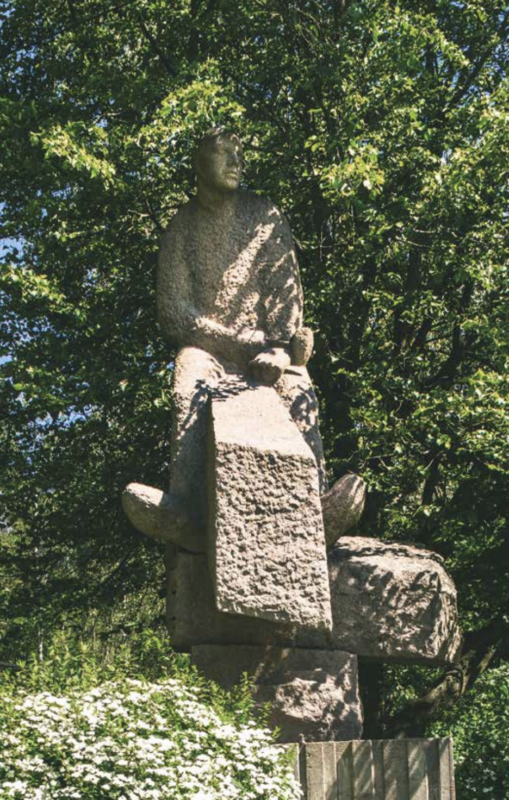
It is somehow fitting that the poet from the mining town settled in Grorud. Near the metro station stands the monument Steinhogger (Stonemason), executed in 1972 by Kåre Orud (1914–1998). A stonemason sits astride a stylised stone block, his heavy hammer resting on his thighs.
Pay attention to the red colour of the stone. If you go walking here in the forests and quarries, you see this colour everywhere, because there were once several quarries here in the valley, and the stone industry is to this day an important branch of business in Grorud. The decisive factor is this shimmering red. The stone from the shores of Alnsjøen is as red as the walls of the Alhambra. It is called Grorud granite.
Keep your eyes open when you come back into the city: it is everywhere there too. You see it in the foundations of the castle and the university, in the lion outside the Storting. You find it in the bridge over the Akerselva. You see it as doorstep, staircase and threshold, drain opening and kerbstone.
Perhaps there isn’t much in the world to see in Grorud, but you see Grorud throughout all of Oslo.
Grorud has coloured Oslo. In a gentle red.
© Corso Verlag