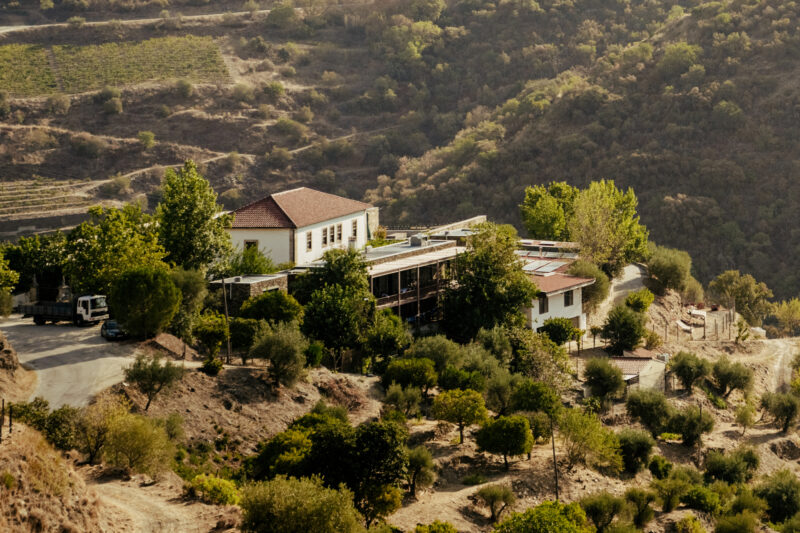

The drive begins in the broad, dry amplitude of the Douro, where scale seems slightly altered: sky, river, stone, distance. Then the road tightens, signs become specific, the station at Pocinho appears, and the estate comes into focus. The first impression is striking for what it avoids. No staged rusticity. No decorative folklore. Instead, a working place with memory, discipline and a quiet kind of presence.

The location
Quinta do Vale Meao stands on the left bank of the Douro, close to Pocinho and Vila Nova de Foz Coa, in the eastern stretch of the valley where the landscape opens out and hardens. From Porto, the estate gives a driving time of about two hours; from Lisbon, about four.
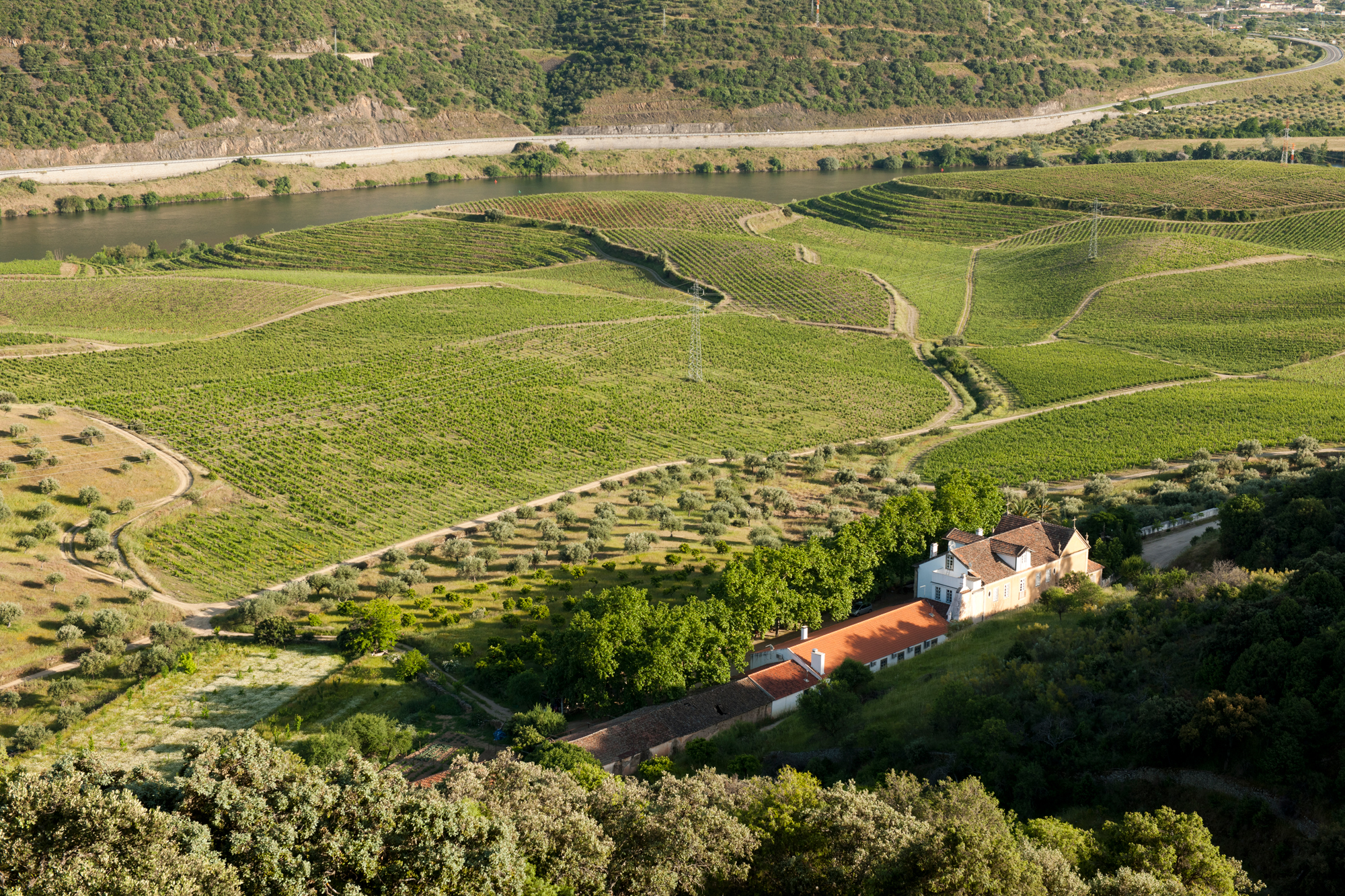
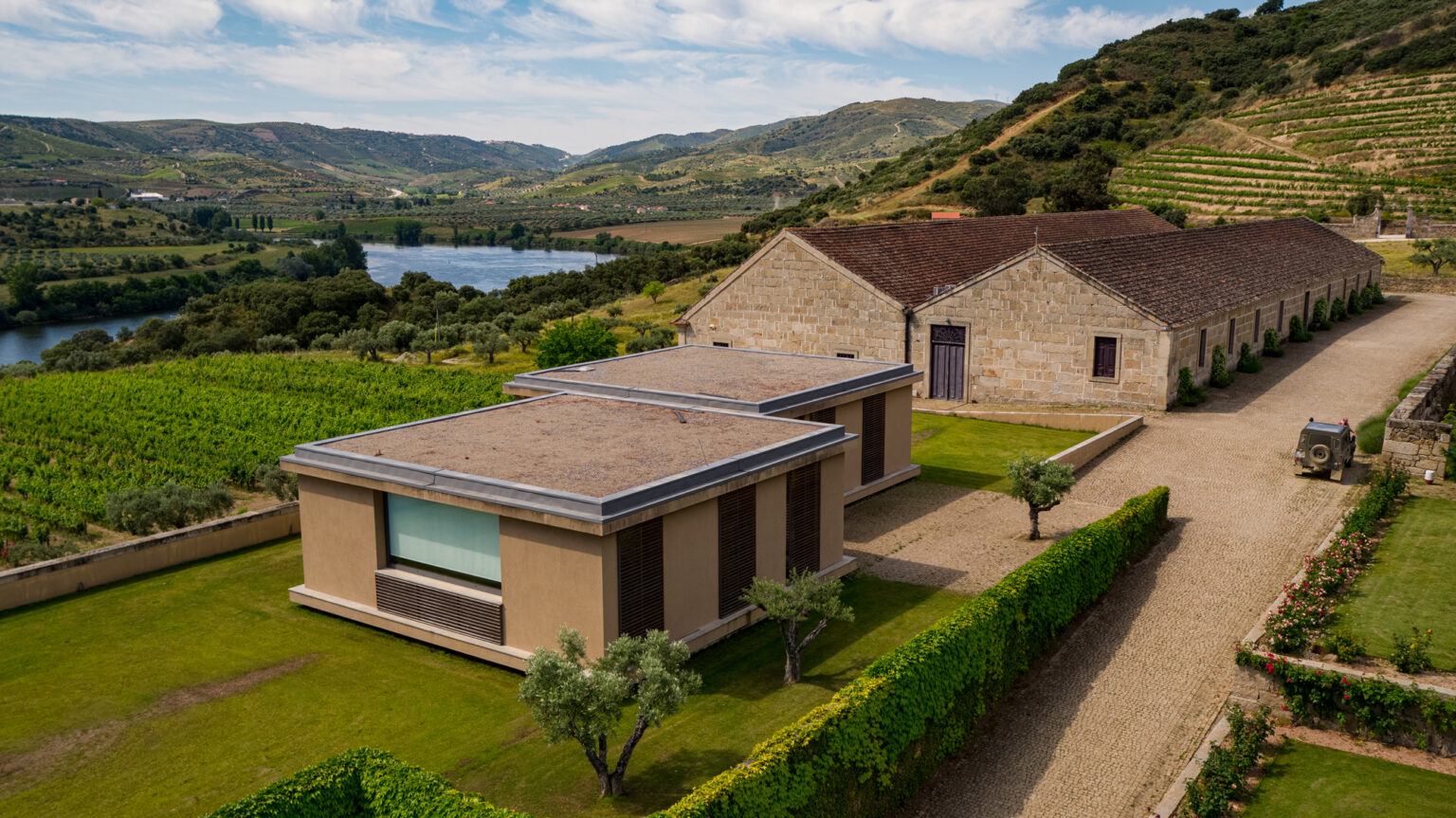
Arrival is possible by car, train, river transfer and, with prior arrangement, helicopter. The setting is not merely scenic. The Vilariça fault brings together schist, granite and alluvial soils within one property, giving the estate unusual geological range. The buildings, cellars and vineyards do not aim for display. They project authority the old way: through use, proportion and continuity.

Backstory
The story of Quinta do Vale Meao begins in 1877, when Dona Antonia Adelaide Ferreira bought roughly 300 hectares of then largely undeveloped land near Vila Nova de Foz Coa. Between 1887 and 1895 she built an ambitious model estate with vineyards, olive groves, cellars, houses, a school, chapels and even a small hospital.


It was her last great project; she died in 1896, shortly after its completion. For decades the fruit remained linked to Casa Ferreirinha, and the estate later figured in the history of Barca Velha.


Since 1994, Vale Meao has again been fully in the hands of the Olazabal family. In 1998 Francisco Javier de Olazabal, together with his son Francisco, launched the first estate wines. Today Francisco, Luisa and Jaime Olazabal lead the property forward.
Quinta do Vale Meão is part of the Douro Boys, a circle of renowned family-owned estates in the Douro that have helped shape the region’s international reputation since 2003—far beyond Port wine alone. Today, the group also includes Niepoort, Quinta do Crasto and Quinta do Vallado.

Character of the estate
Vale Meao’s character lies in restraint and consistency. The estate does not sell an inflated lifestyle narrative; it speaks, more usefully, about parcels, soils, grape varieties and time. Its stated aim is to pursue originality and complexity through traditional Douro grapes, separately planted vineyard blocks and a close reading of the site.

That might sound sober. It is. And that is part of the appeal. The restored historic cellars, preserved lagares and carefully integrated modern equipment suggest a house that does not confuse heritage with theatre. In the vineyards, too, the logic is structural rather than cosmetic.

Distinct plots, deliberate planting choices and a long preference for Touriga Nacional point to an estate with a settled line. In a sector often tempted by self-mythology, that degree of composure is rare.

The wines
At the centre of the portfolio stands Quinta do Vale Meao, the flagship red and the wine most closely associated with the estate’s reputation. Released from the 1999 vintage onward, it has been recognised repeatedly at the highest international level. Wine Spectator placed the 2011 vintage at No. 4 in its Top 100, while Wine Enthusiast awarded 100 points to both 2017 and 2020, and 98 points to 2021. Those distinctions matter here because they show consistency over time, not a single lucky year.

Below it sits Meandro do Vale Meao, conceived originally as a second wine but now convincing as a complete Douro red in its own right, drawn largely from younger vineyards. It is often the clearest way into the house style. Monte Meao Vinha dos Novos, built around Touriga Nacional, adds another layer of precision and scale.


The estate also produces Vintage Port, and olive oil that feels less like a side product than part of the broader agricultural logic of the place. Altogether, the range is coherent: serious without stiffness, recognisable without overstatement. The range is not vast for effect. It is edited. That editorial discipline helps the estate avoid the common trap of prestige at the top and vagueness below.


Quality of winemaking
The quality of production at Vale Meao can be discussed with unusual clarity because the estate is relatively open about how it works. Vineyard blocks are planted separately, and grape selection follows site logic rather than habit. Touriga Nacional was promoted here from the 1970s onward even when it was often considered difficult and low-yielding in the Douro. That suggests long-term confidence in place, not short-term opportunism. The combination of schist, granite and alluvial soils within one estate adds further definition.

In the cellar, Vale Meao combines classic Douro practice with modern precision: fermentation in traditional lagares, parcel-by-parcel vinification and updated cellar infrastructure in the restored Adega dos Novos. The Ports have their own ageing space in the rehabilitated Adega da Barca Velha. This is not nostalgia. It is functional clarity.


Balance, depth and ageing potential cannot be proved by rhetoric alone, but the steady run of strong ratings across flagship wine, second wine, Touriga Nacional bottling and Vintage Port strongly suggests that quality extends beyond one prestige label. That breadth is usually where serious estates separate themselves from branding exercises.

Just as telling is the internal coherence of the range. When a producer can sustain definition from flagship bottle down through the more accessible wines, it usually indicates disciplined work in the vineyard, sound selection at harvest and a cellar that is clean, controlled and alert without becoming anonymous. Nothing in the public record suggests a house chasing fashion. The emphasis is on precision, expression and repeatability.


Overnight stay
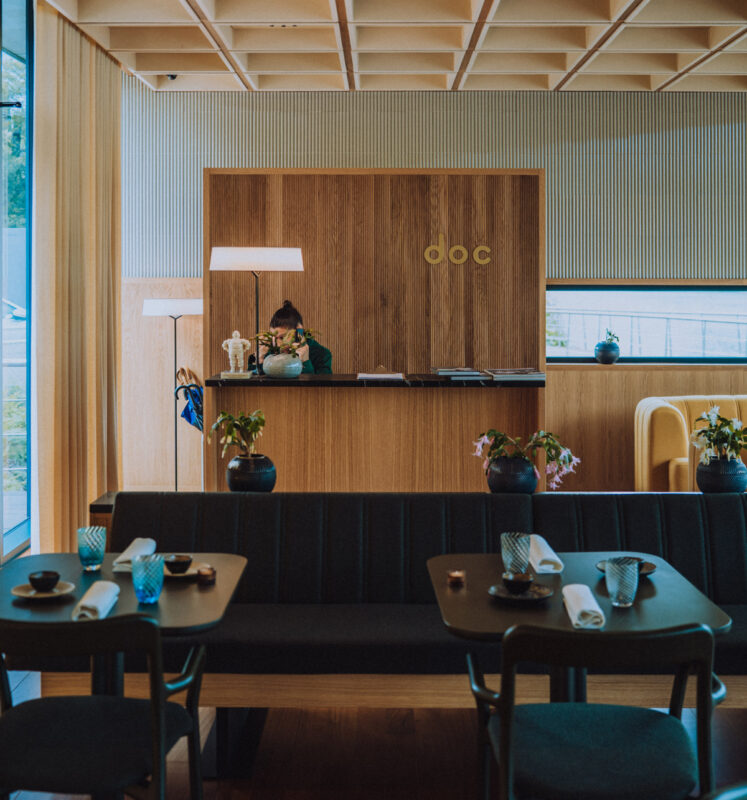
Visitors should not approach Quinta do Vale Meao as a sleep-and-swirl property. The estate publicly offers guided visits to the historic vineyards and cellars, along with tastings in a dedicated room overlooking barrels and vines, all by prior booking. What it does not publicly present is a regular hotel or guest-room operation.

That matters less as a limitation than as a useful clarification of the estate’s format. Vale Meao is, first of all, a winery. Not a hospitality compound dressed up as one. Those wishing to stay overnight should combine a visit with accommodation in the wider Vila Nova de Foz Coa or Douro area. The experience here is built around arrival, landscape, conversation and tasting. Concentrated, not diluted. For a profile like this, that concentration is almost an advantage. The visit remains centred on the estate’s real subject: land, wine and the people interpreting both.


Conclusion
Quinta do Vale Meao has what many estates claim and fewer possess: a clear identity. Its sense of place is not decorative but operational, grounded in geology, parcel structure, traditional Douro varieties and a long memory of work. The estate appears to treat the vineyard carefully, to modernise without noise and to use technique in the cellar as a means rather than a style. That already sets it apart.

Just as important, the wines seem to carry that discipline convincingly across the range. International recognition clusters around the flagship, but it does not stop there. Meandro, Monte Meao and the Vintage Ports suggest a house whose standards remain legible below the top tier. That coherence matters. It makes the estate’s narrative believable.


Vale Meao is therefore compelling not because it tries to charm at every turn, but because it doesn’t. It has history, but not museum stiffness; prestige, but not vanity. It is already in the room. Quietly, and for that reason all the more convincingly. For a visitor, that produces a rare effect: the estate feels significant without performing significance. It knows what it is, and that certainty travels.

Details
- Location and region: Vila Nova de Foz Coa / Pocinho, Douro Superior, Portugal.
- Setting and terroir: left bank of the Douro; schist, granite and alluvial terraces shaped by the Vilariça fault.
- Range: Quinta do Vale Meao, Meandro do Vale Meao, Monte Meao Vinha dos Novos, Vintage Port, olive oil.
- Ordering: no clearly public direct online shop; importers are listed via the official website.
- Stay: no regular hotel or guest-room operation publicly advertised.
- Services: guided visits, tastings, access by car, train, river transfer or helicopter by arrangement.