
At Quinta de Nápoles in the Douro, Niepoort shows how a historic Port house can become fully contemporary. Heritage is not displayed here; it is kept in motion with unusual precision.

The location
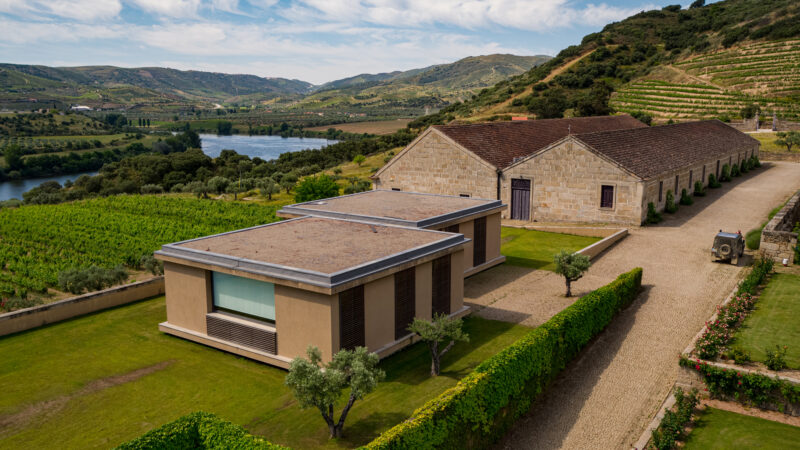
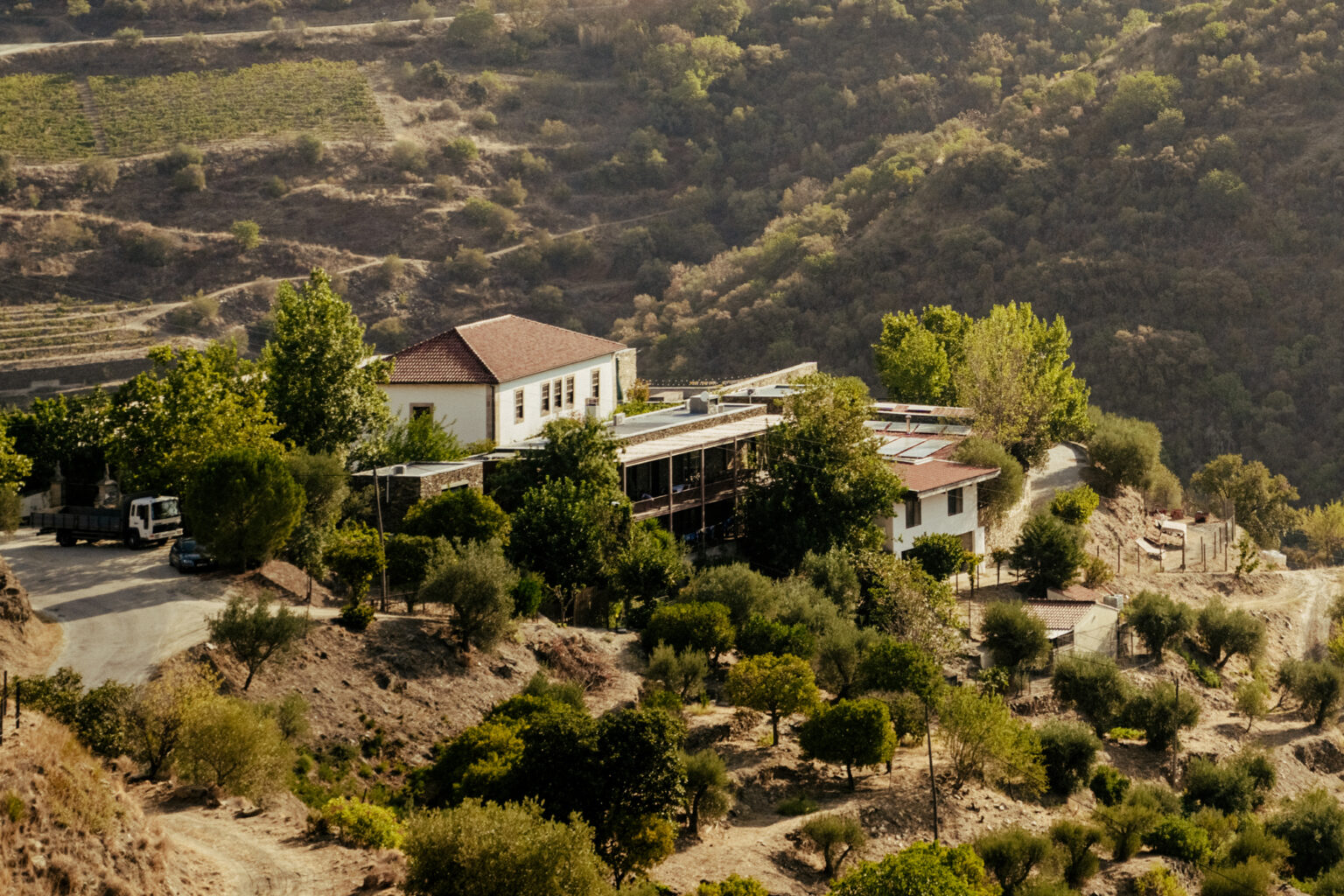
Niepoort, at Quinta de Nápoles, sits in a landscape that does not chase effect and therefore has plenty of it. The slopes of the Douro drop away in terraces, the schist stores heat, the river keeps the whole image coherent. Even the approach makes clear that this is not a decorative estate but a working place with discipline.

The buildings settle into the terrain with matter-of-fact calm. Nothing pushes itself forward, nothing performs rustic folklore. The house also remains anchored in Vila Nova de Gaia, where the historic lodges recall its origin as a Port producer. Between valley and coast, the first impression becomes unusually complete.

Backstory
Niepoort was founded in 1842 by Franciscus Marius Niepoort. Across six generations, the house has remained in family hands, first as a Port shipper with equal confidence in trade and in the long ageing of its wines. The decisive opening into the present is closely tied to Dirk Niepoort.

He did not preserve the inheritance under glass; he put it under pressure: with dry Douro wines, with projects in other Portuguese regions, with a clear interest in soils, old vines and biodynamic farming. Today the next generation is visibly involved as well. Daniel Niepoort plays an important role in the ongoing winemaking development, and Marco Niepoort is also active in the business. The result is a family company that does not lapse into family symbolism.
Niepoort is part of the Douro Boys, a circle of renowned family-owned estates in the Douro that have helped shape the region’s international reputation since 2003—far beyond Port wine alone. Today, the group also includes Quinta do Vale Meão, Quinta do Crasto and Quinta do Vallado.

Character of the winery
Niepoort has a signature that is immediately recognisable and yet does not simply repeat itself. The house comes out of Port, but now thinks on a wider radius: terroir-conscious, mobile, experimental, without slipping into novelty for its own sake. What stands out is the serious treatment of origin.

Different regions, soils and grape varieties are not forced into one polished cellar style. That is precisely why the wines do not feel interchangeable. The often-stated attention to biodiversity and biodynamic principles remains credible because it does not present itself as moral decoration; it becomes visible in the portfolio.


Over the years, Niepoort has been consistent without becoming rigid. That is rare. Many estates cultivate a story. Here, the story still mostly matches the work. There is a clear line, but no compulsion toward uniformity.

The wines
Niepoort’s range is large, but it is not loose. Port remains at the centre: Vintage Port, Late Bottled Vintage, Colheita, age-indicated Tawny, Garrafeira and White Port. This is where the house’s historical authority lies, and where its international reputation still sits. Alongside that, the dry wines have considerably expanded the profile of Niepoort. In the Douro, Redoma, Vertente, Batuta and Charme are the key red reference points.

Redoma Branco and, above all, Coche represent the white summit. Charme has long been seen as an especially fine, almost Burgundian reading of the Douro; Batuta shows more density and tensile force. Coche is one of the estate’s most ambitious whites. There are also lines such as Fabelhaft and Nat’Cool, which feel more accessible without becoming generic. That reveals a smart positioning: not prestige alone, but permeability.


Beyond the Douro, Niepoort is also active in Dão, Bairrada, Vinho Verde and Alentejo, widening the spectrum further. Awards and recognition have touched both Dirk Niepoort personally and the culinary and tourism work at Quinta de Nápoles. The range speaks not only of scale, but of breadth, internal order and a rare willingness to preserve difference. It is also striking that the lighter lines are not treated as side products. They do a different job, but with evident intent.

Quality of winemaking
At Niepoort, quality clearly begins in the vineyard. The house stresses biodiversity, biodynamic principles and close attention to soils, exposures and grape varieties. What matters is that these terms do not float free of practice. The portfolio itself suggests that the work is site-specific: the wines are meant to differ, and are allowed to.

That points to careful picking, clean selection and a clear sense of what can ripen meaningfully in a given place. In the cellar, quality appears less as technical theatre than as precision. The wines feel clean and controlled without turning sterile. For a house that moves from aged Port to taut, fine-boned whites across so many stylistic zones, that is no small thing. The better wines have balance, drive and length; fruit, acidity, alcohol and oak usually stand in a convincing relation to one another. Texture matters too: dense without heaviness, fine without thinness. Just as important is the quality across the whole range.


Niepoort does not rely only on iconic bottles such as Batuta, Charme or Coche. Redoma, Fabelhaft and some Nat’Cool wines already show that expression does not begin only at the top. Technical correctness alone would not be enough. What matters here is the link between cleanliness, origin and personality. That is where the house’s real class lies. The ageing potential of many top wines belongs in the picture as well. They are built for development, not for quick effect. Good estates are often defined by the seriousness of their entry level. At Niepoort, that seriousness is usually present.


Staying overnight
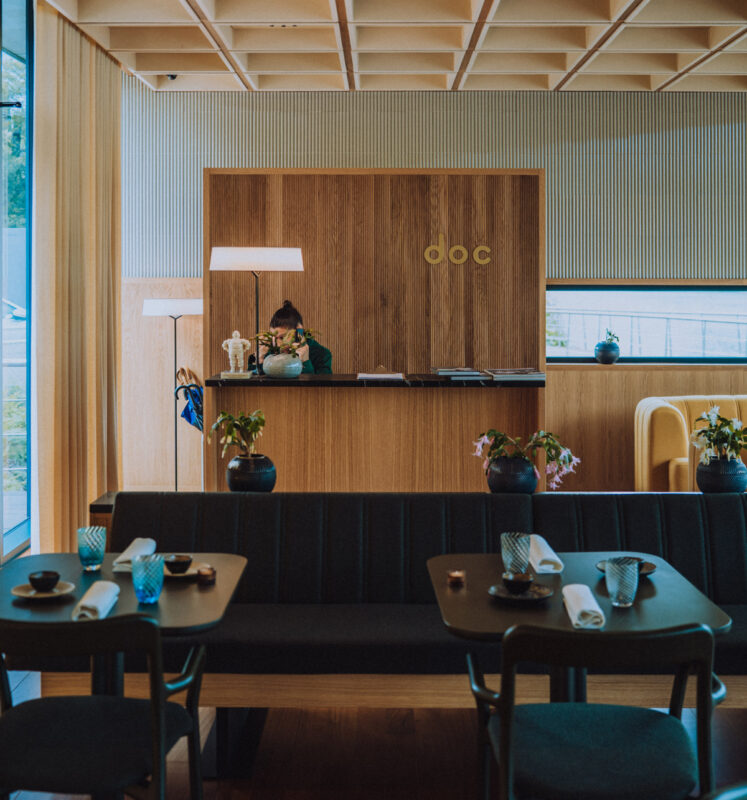
Anyone visiting Niepoort should not expect a classic winery hotel. At present, there is no accommodation at Quinta de Nápoles. That is less a loss than a clarification. The place concentrates on wine, visits and gastronomy, not on resort comfort. Tours, tastings and culinary formats are available, and the link between wine and regional cooking is regularly emphasised.


Anyone wanting to stay longer will sleep elsewhere in the region and visit Niepoort as a clearly defined appointment in the Douro. That suits the character of the house rather well. It does not want to be everything at once. No spa, no padded escape from ordinary life, but a precise place for wine, landscape and conversation. People come for the wine and stay, in memory at least, for the concentration.


Conclusion
Niepoort has a clear identity, and that is exactly what makes the house interesting. Its origin in Port has not hardened into scenery; it remains productive. Out of that origin, a winery has emerged that takes dry wines, new regions and different stylistic registers seriously without giving up its core. Origin is reflected credibly because the wines allow for difference instead of submitting to a single cellar formula.


There is also much to suggest careful work in the vineyard: the focus on biodiversity, old vines, suitable sites and precise harvest decisions. In the cellar, that care becomes technical cleanliness, balance and formal control. These wines look for tension, not mere mass. It also matters that quality is not confined to the prestige bottlings. From the more accessible entry wines to the top labels, the ambition remains legible. Niepoort therefore feels neither ingratiating nor hermetic. It is a historic house that does not live off yesterday. It lives, rather, from the ability to use tradition in a way that produces the present. In the end, that is more than style. It is a form of discipline. And it remains refreshingly concrete.
Details
- Location & region: Quinta de Nápoles, Douro, Portugal; historic lodges in Vila Nova de Gaia.
- Site & terroir: steep slopes, terraces, schist soils, warm Douro climate.
- Range: Port, Douro reds and whites, further projects in Dão, Bairrada, Vinho Verde and Alentejo.
- Ordering: own web shop, specialist merchants, international importers.
- Accommodation: currently none at the quinta.
- Services: tours, tastings, cellar visits, gastronomy, culinary experiences, guided tastings and visits between Douro and Gaia.