
You come through the loud centre of Arequipa, a block from the Plaza de Armas, and step through a tall double door. Inside, it falls quiet. The scent of palo santo and Andean mint hangs in the air, white stone walls catch the light, a vault arches over the lobby. The city falls silent, as if someone turned the sound off. You arrive and are suddenly in the sixteenth century.

The Location
CIRQA lies in the historic centre of Arequipa, Peru’s second-largest city, a block from the Plaza de Armas. Arequipa, the White City, was built of sillar, the pale volcanic stone of the three surrounding volcanoes Misti, Chachani and Pichu Pichu; its centre is a UNESCO World Heritage Site. From the airport it is around twenty minutes, at two thousand three hundred metres, a good place to acclimatise before the higher destinations of the Andes. From outside, the hotel hides behind the white walls of the old monastery, unremarkable in the row of houses. Only behind the door does the world of stone, patios and vaults open. To arrive here is to find calm in the middle of the city.

Backstory
CIRQA lives in a monastery as old as the city itself, founded in 1540, the same year as Arequipa. The land first belonged to the scribe Alonso De Luque and his wife Isabel de Vega Sarmiento, who left it to the Augustinian Order on the condition that it build a church with cloisters, patios and gardens.


Over centuries, earthquakes rebuilt the house again and again; today two thirds of the old monastery form the hotel. It is run by Andean, a pioneer of owner-managed hotels, who revives the idea of the old parador: the inn where monks received travellers with an open door and hearty cooking. Andean runs three further houses in Lima, at the Colca Canyon and on Lake Titicaca, together a route through the south of Peru. The hospitality of the monks lives on in the house.
Interior & Architecture
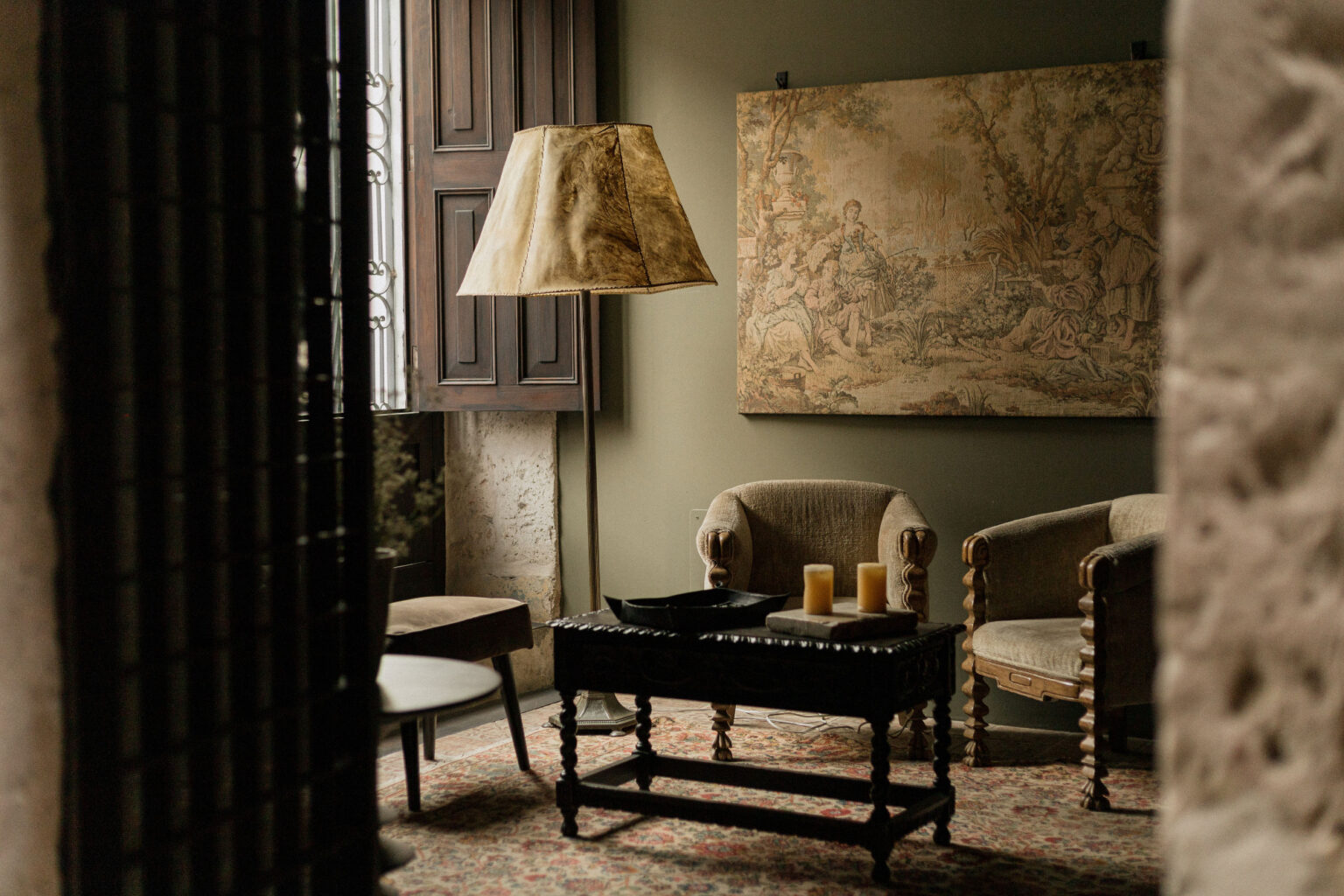
The house shows its original walls of sillar, the white volcanic stone of Arequipa, once hewn by local stonemasons, plus high vaulted ceilings restored after the earthquakes. Against the old stone the restoration deliberately sets the present: black steel, floor-to-ceiling glass, clear lines, a play of stone, steel and glass that holds old and new against each other.


The spaces gather around two patios and a central terrace, with sofas, fire pits and alpaca hides. In the rooms lie soft earth tones, handwoven textiles, freestanding tubs under the vaults. Because the architects worked within the fabric of the monastery, no room is like another; each carries the traces of its history. The joining of venerable stone and cool modernity gives the house its sound.


A Look Inside
CIRQA counts eleven rooms, plus the vaulted lobby, the restaurant, the two patios, the plunge pool and the rooftop terrace facing the volcanoes. The rooms belong to three categories, named after the parts of the old monastery: Claustro, Aposento and Bóveda, from the more intimate room to the larger with its vault and freestanding tub.

No two are alike, since the architects worked within the existing walls; some are small and turned inward, all of dense atmosphere. Inside, the finest linen, a wireless speaker, a stocked snack and drink hamper, organic toiletries and a service that tends to the room three times a day. Over it all the white vaults and the silent stone that let you forget the city outside.


Culinary
The in-house restaurant is the culinary heart of the house, a contemporary reinterpretation of the picanterías, the traditional country taverns of Arequipa, where cooking is done in stone mortars and clay ovens. The seasonal menu draws on local produce and the bold flavours of the region: stuffed peppers, shrimp chowder, an unusual ceviche of river crayfish, plus a cocktail of pisco, cognac, vermouth and lemon. You eat in the elegant hall or out in the patio, warmed by crackling log fires.

On the rooftop terrace, tea and pastries are served in the afternoon, facing the volcanoes. Half board is included in the stay, breakfast and dinner, both carefully prepared. The kitchen celebrates the heritage of Arequipa, a city whose picanterías belong to the culinary memory of Peru. Local ingredients and old recipes in new form carry the table. Those who want more have the kitchen put together a selection of regional classics, from rocoto relleno to adobo.


Wellness & Relaxation
There is no classic spa; the calm of the old monastery takes its place. In one of the patios lies a small plunge pool of black stone, a cool bath after a long morning in the lanes of the city. On the rooftop terrace the view reaches over the white roofs to the snow-capped volcanoes, a place for afternoon tea or a pisco sour at sunset.

In the evening fire pits warm the cool Andean highland air, and alpaca hides lie on the sofas. Rest here means coming to stillness within thick stone walls, far from the noise, in a quiet the house has kept for centuries. The altitude of two thousand three hundred metres invites a slow arrival anyway.


Surrounding Area
Arequipa is one of the most beautiful colonial cities of South America, built entirely of white sillar, its centre a UNESCO World Heritage Site. A few steps from the hotel lies the Santa Catalina Monastery, a town within the town of ochre and blue lanes, where nuns lived in seclusion for centuries. In the Museo Santuarios Andinos rests Juanita, the more than five-hundred-year-old Inca mummy from the ice of the Ampato.

On the Plaza de Armas stands the mighty cathedral, around it monasteries, churches and the patio of the Palacio Goyeneche; the Iglesia de la Compañía shows the finest mestizo-baroque façade in the city. Culturally grounded is a visit to a real picantería in the Yanahuara quarter, where the hearty cooking of the region has been made for generations, and a look from the Mirador de Yanahuara to the Misti volcano. Those after craft find the finest alpaca wool at Mundo Alpaca, can watch the animals being sheared and look over the weavers’ shoulders. An insider tip is the old lane quarter around the church of San Lázaro, the oldest in the city, with small galleries and cafés. Those who like sweets visit one of the old convent bakeries, where they still bake to the nuns’ recipes.
Activities
For culture travellers. The Santa Catalina Monastery with its ochre and blue lanes, the Inca mummy Juanita in the Museo Santuarios Andinos, the cathedral and the Palacio Goyeneche on the Plaza de Armas.
For the appetite. The house restaurant with its picantería cooking, a real picantería in Yanahuara, the hearty Andean cuisine from stone mortars and clay ovens, the pisco sour at sunset over the roofs.
For nature lovers. The Colca Canyon, one of the deepest in the world, with the flight of the Andean condors, the snow-capped volcanoes Misti and Chachani, the lagoons and vicuñas of the highlands.
For walkers. The climb of Misti or Chachani above five thousand metres, the trekking routes in the Colca valley, the paths through the old terraced fields of the Andes, from gentle to high alpine.
For history travellers. The old lane quarter of San Lázaro, the monasteries and churches of sillar, the mills and manor houses of the colonial estates around the city.


For shoppers. Mundo Alpaca with its finest baby alpaca wool, the weavers’ workshops, the city’s markets with pottery, leather and silver by local artisans.
For those after calm. The black plunge pool in the patio, the rooftop terrace with its volcano view, afternoon tea by the fire with an alpaca hide, the slow acclimatisation to the altitude of the Andes.
For the adventurous. The rafting on the Río Chili, the mountain biking on the volcano slopes, the tour to the thousands of petroglyphs of Toro Muerto in the desert.
For wildlife watchers. The Andean condors at the Cruz del Cóndor lookout, the flamingos of the highland lagoons, the vicuñas and alpacas on the way to the Colca valley.
Details
- 11 rooms in three categories, named after the old monastery: Bóveda (largest, with vault and freestanding tub), Aposento, Claustro; no two rooms alike.
- Restaurant with contemporary picantería cuisine; half board (breakfast and dinner) included; afternoon tea on the rooftop terrace.
- Black-stone plunge pool in the patio, rooftop terrace facing the volcanoes; no classic spa.
- Relais & Châteaux, run by Andean; part of the Southern Peru Travesía (Lima, Colca, Titicaca).
- Concierge for excursions and transfers to the Colca Canyon and Lake Titicaca; no pets.
- Located at Calle Sucre 104, historic centre of Arequipa; about 20 minutes from the airport.