

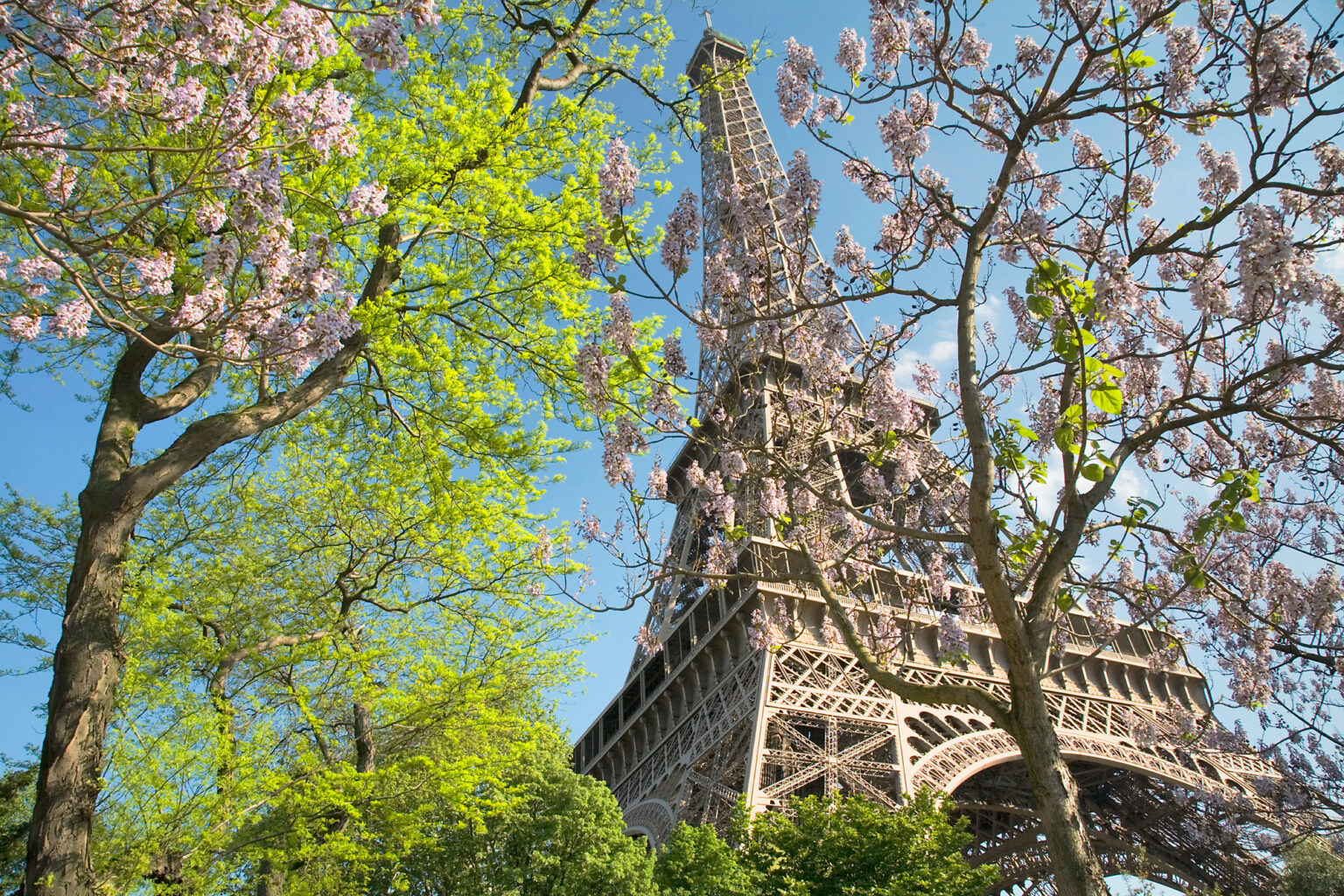

The historic centre of Paris is, in some respects, a survivor. Neither the Prussian siege of 1870 nor the two world wars of the following century managed to leave a mark on it. Even in 1944, when the Allies bombed the region, their targets were the railway junctions of the suburbs, not the urban fabric of the centre. An accident of history, with considerable consequences.
Most major European capitals were forced to choose between their eras. Destroyed by sieges or bombing raids, they rebuilt on their own ruins, sacrificing the remains of one century to make room for the next. London after the Blitz. Berlin after 1945. Warsaw, more than 85 percent destroyed. Paris never had to make that choice. The result is a city where the centuries do not succeed one another — they coexist. A first-century Gallo-Roman arena serves as a playground in the 5th arrondissement. 19th-century shopping arcades receive customers under the glass roofs installed at their inauguration. Patisseries serve their founder’s recipes in interiors listed as historic monuments. Everything has remained in its setting.
This is the condition of Paris, and it is a rare condition in Europe: a city where every era is contemporary with all the others — not in museums or protected zones, but in the street, in shops, in libraries and swimming pools. The past here is not preserved. It works.

© Guilhem Vellut from Paris, France, Arènes de Lutèce @ Paris (29589842480), colours, CC BY 2.0
The centuries in service
Paris does not carefully preserve its centuries. It puts them back to use. The past is not a heritage simply to be visited—it is a material to be inhabited.
At 51 rue Montorgueil, in the 2nd arrondissement, the Pâtisserie Stohrer has occupied the same premises since 1730, under the same name, with the same recipes and the same decor. Nicolas Stohrer was the pastry chef of Marie Leszczyńska, daughter of the Polish King Stanislas, who married Louis XV in 1725 and brought her chef with her to Versailles. Five years later, Stohrer left the court and opened his shop. He was the first to bring under one roof the trades that the guilds had kept separate: pastry-making, confectionery, wafer-making and spiced bread. He invented the baba au rhum—a Polish kouglof deemed too dry by King Stanislas, which he soaked in rum syrup. The interior decoration visible today was executed in 1864 by a student of Paul Baudry, the painter who decorated the Opéra Garnier. It has been listed as a historic monument since 1984. The patisserie has been in continuous operation for 295 years.

© Neoclassicism Enthusiast, 51 Rue Montorgueil, Paris (06), colours, CC BY-SA 4.0

©Neoclassicism Enthusiast, 51 Rue Montorgueil, Paris (01), colours, CC BY-SA 4.0
At 51 rue de Montmorency, in the 3rd arrondissement, the oldest stone house in Paris receives guests for dinner. Nicolas Flamel, public scribe and presumed alchemist, had it built in 1407. The facade retains its carved medieval inscriptions. The interior houses a restaurant. One dines in the 15th century without it being behind glass, without an audio guide, without a security rope. The building functions because it has never stopped functioning.
The same logic operates at 58 rue de Richelieu, within the walls of the Bibliothèque nationale de France. The Salle Labrouste, designed in 1868, is a reading room covered by 9 cast-iron and faience domes, each pierced by a central oculus that admits a soft zenithal light. Sixteen cast-iron columns carry the structure. The architect called his domes “my white petticoats.” The room closed in 2010 for a major restoration and reopened in 2022. It is not a museum: it is a working library, where readers come to consult documents under a ceiling inaugurated under Napoleon III. The adjacent Salle Ovale, completed in 1936, makes 9,000 comics available to the public. Few visitors think to enter a library while travelling. That may be precisely why this one remains intact.

©Fanfwah, Maison de Nicolas Flamel, adjusted colours, CC BY-SA 4.0
Streets inside streets
In the 19th century, Paris invented a form of urbanism without equivalent: streets that entered buildings to create other streets within them.
The Passages Couverts were born at the end of the 18th century out of a practical need: to cross Paris without being splashed by carriages or wading through mud. Galleries were cut through urban blocks, covered with glass roofing, heated and gas-lit. They are interior streets—commercial, sheltered, with their own light and their own climate. There were up to 150 of them in the 1860s. About twenty survive.
The Galerie Vivienne, built in 1826, is perhaps the most complete. Its floor mosaics are the work of Facchina, the same craftsman who made those of the Opéra Garnier. The dark wooden storefronts frame shops affiliated with no international chain. Legrand Filles et Fils, a delicatessen and wine cellar, has occupied the premises since 1880. It was in a shoe shop in this same arcade that the German poet Heinrich Heine met his future wife Mathilde, who worked there as an assistant.
The Passage des Panoramas, opened in 1799, is the oldest survivor. Its name comes from an attraction that once occupied its entrance rotundas: 360-degree paintings applied to stretched canvases that gave the spectator the illusion of standing in Athens or Jerusalem. It was cinema before cinema, and the Lumière brothers understood as much: they held their first public screening in 1895 two streets away, on the Boulevard des Capucines. Walter Benjamin devoted his unfinished “Passagen-Werk” to these arcades—an attempt to read the history of the 19th century through these commercial galleries. The Passage Brady, in the 10th arrondissement, adds a further layer: the aromas and colours of Paris’s Indian neighbourhood unfold inside a 19th-century covered corridor. These passages are not monuments restored for tourism. They are 19th-century streets functioning in the 21st, returned to circulation by use.

©Petit Palais, Jardin intérieur du Petit Palais, adjusted colours, CC BY-SA 4.0
If one climbs the steps of the Petit Palais, on Avenue Winston Churchill, passes through the gilded gate, crosses the Art Deco hall and continues without stopping in the exhibition rooms, one arrives in an interior garden with a red marble colonnade, orange trees, Moorish fountains and a mosaic floor. The café serves a savoury quiche and tea. Entry is free. One is two hundred metres from the Champs-Élysées, and the courtyard is nearly empty. A century after its construction for the 1900 Universal Exhibition, the place fulfils the same function it was designed for: a pause within a place of passage.
The reactivated belt
“Secret Places Paris,” published in 2023 by Bruckmann Verlag, is the sixth book that Waltraud Pfister-Bläske has devoted to the city. A German studies scholar and art historian trained at the University of Bamberg, she lived in Paris for fourteen years. Her material consists of places the standard tourist frame fails to capture: libraries, interior gardens, workshops, repurposed infrastructures, inhabited cemeteries. The book puts forward no explicit argument about Paris not having been destroyed. But its 54 addresses demonstrate it involuntarily: what they share is that they belong to different centuries, and that all of them are functioning in the present.
The most striking case may be the Petite Ceinture. This 32-kilometre circular railway was built from 1852 under Napoleon III and Baron Haussmann to link Paris’s terminal stations to one another. The passenger service ran from 1862 to 1934—72 years—before the expansion of the Métro made it redundant. Since 1934, the line has been abandoned. For decades it remained inaccessible, surrounded by walls and barbed wire, crossing the city as an invisible ring.
Since 1992, the Association Sauvegarde Petite Ceinture has campaigned for progressive public access to the line. On the sections now open, over 200 plant and animal species have colonised the tracks spontaneously. The retaining walls are covered in graffiti: nowhere else in Paris is there such a concentration of murals. What the Petite Ceinture demonstrates is an involuntary lesson in urban planning: an 1852 infrastructure does not need to be destroyed to die, nor restored to return to life. It needs only to be left alone.

© 0x010C, 2016-02 Ligne de Petite Ceinture 03, adjusted colours, CC BY-SA 4.0
La Recyclerie, installed in an abandoned Petite Ceinture station near the Porte de Clignancourt, takes this logic one step further. It is an urban farm whose vegetables grow along the tracks and go directly to the kitchen. Grapes from the rooftop produce juice, hops from the wall go to a local brewery, and the annual honey harvest reaches ten kilograms. Runner ducks patrol the garden, eating the slugs and making pesticides unnecessary. Workshops teach local residents to repair their household appliances rather than replace them. What La Recyclerie does is precise: it transforms a Second Empire railway infrastructure into a 21st-century ecological laboratory. There is no break in continuity. There is a change of use.
The addresses of the dead
In Paris, the dead hold precise addresses, and those addresses form part of the city on the same terms as restaurants and libraries.
Thirty kilometres from the centre, in the village of Auvers-sur-Oise, Vincent van Gogh arrived on 20 May 1890, following a stay in a psychiatric clinic in Saint-Rémy-de-Provence. He spent his final 70 days in lodgings kept by the Ravoux family, painting 75 canvases in that time—more than one per day. The only painting he sold in his lifetime, the portrait of Dr Gachet, was made here. The room he occupied measures 7 square metres, with a skylight as its only opening. On 29 July 1890, he dragged himself back to it with a bullet in his abdomen. His brother Theo rushed to his side. Vincent died in his arms. The room has never been rented out again. The walls are bare, the furniture absent, and there is no visitor rope: one enters and stands in the emptiness. It is not a room for tourists, Pfister-Bläske writes, but for pilgrims. Theo died a few months later. The two brothers rest side by side in the Auvers cemetery, under ivy.

©Chabe01, Tombe Vincent Van Gogh Cimetière – Auvers-sur-Oise (FR95) – 2021-06-13 – 1, adjusted colours, CC BY-SA 4.0
Back in the city, the dead continue to hold their positions. The Cimetière de Montmartre, the third largest in Paris, gathers 20,000 graves beneath 800 century-old trees. An iron bridge crosses it: a road passes over the dead. Dalida, whose life-size statue receives fresh flowers more than thirty years on, rests at the foot of the hill where she lived. The German poet Heinrich Heine, who lived in Paris from 1831 until his death in 1856, poses a question on his own gravestone: “Where will the weary wanderer find his final rest? Under southern palms? Under Rhine lindens?” Neither, as so often: Paris corresponded to none of the options he had foreseen. Truffaut, Berlioz, Offenbach, Zola, La Goulue—the woman Toulouse-Lautrec made famous on his posters and who is said to have invented the cancan at the Moulin Rouge, a few hundred metres up the hill—all hold addresses here, as legible as those of any business.

©Ermell, Paris-Cimetière de Montmartre-P1260644, adjusted colours, CC BY-SA 4.0
At the Cimetière du Montparnasse, in the 14th arrondissement, Sartre and Beauvoir share the same grave—they who never shared an apartment in life. A few streets away, rue Campagne-Première retains the plaques of its former residents: Modigliani at number 3, Aragon at 5, Miró and Giacometti at 9, Man Ray at 29. The studios are closed, but the plaques hold. The Musée Bourdelle, which tourists rarely visit, exhibits monumental sculptures in the courtyards and former studios of the master who taught Matisse, Germaine Richier and Giacometti. The neighbourhood makes no spectacle of its past. It continues to live alongside its dead.
Productive anachronisms
Certain places in Paris survive the logic that should have eliminated them—not because they were listed or protected, but because the city did not destroy them, and they found another use.
The Piscine Joséphine Baker has floated on the Seine since 2006, moored beneath the four towers of the Bibliothèque nationale François-Mitterrand—those buildings shaped like open books. Its glass roof slides fully open in summer. On certain evenings it remains open until 10 pm, and swimming at sunset while watching boats move along the river is an experience that belongs entirely to the 21st century, on a river where bathing has been banned since 1923. The name belongs to the American dancer and singer who spied for the French Resistance, adopted twelve children from five continents, and became in 2021 the first and only Black woman to be transferred to the Panthéon.

© Guilhem Vellut from Paris, France, Pont de Bercy, Paris 24 July 2016 01, adjusted colours, CC BY 2.0
In the Bois de Boulogne, the Fondation Louis Vuitton, inaugurated in 2014, is a building by Frank Gehry made of twelve glass sails, steel, wood and concrete. Gehry said he wanted a structure “that moves like a ship under full sail.” The result is an architectural object that seems to belong neither to this park, nor to this era, nor to this city. Which is precisely what makes it the clearest illustration of the Parisian condition: five hundred metres from this 21st-century vessel, the Serres d’Auteuil—built in the Belle Époque style at the end of the 19th century—house a palmarium dating from 1895. The Jardin d’Acclimatation, laid out in 1860, adjoins the whole. A Gehry from 2014, greenhouses from 1895 and a garden from 1860 occupy the same hectare of ground. No one was asked to choose between them.

© Moktarama, Fondation Louis Vuitton 5, adjusted colours, CC BY 3.0
The question Paris never had to answer
Most cities in the world do not face the question of how their eras coexist. They were rebuilt, and the rebuilding settled the matter by eliminating it. Paris must compose with a question that destruction would have rendered obsolete: how does one live with the entirety of one’s past when no bombing campaign has offered the luxury of an empty site?
Stohrer’s oven has been running since 1730 at 51 rue Montorgueil. The rails of the Petite Ceinture produce vegetables in the 18th arrondissement. Van Gogh’s room has been empty in Auvers since 1890. The Salle Labrouste reopened after twelve years of silence beneath domes the architect had nicknamed his white petticoats. A runner duck eats slugs on a Second Empire railway track at La Recyclerie so that pesticides are unnecessary.
This is neither a conservation programme nor a municipal strategy. It is the cumulative result of twenty centuries of uninterrupted presence on ground that no one ever needed to clear. The city does not ask the visitor to choose a century. It asks them to accept that at each turn of the street, the era may change without notice, and that this change is neither explained nor signposted.

© Chabe01, Passage Panoramas – Paris II (FR75) – 2021-06-14 – 2, adjusted colours, CC BY-SA 4.0

.jpg)
.jpg)
.jpg)


_-_2021-06-13_-_1.jpg)


_-_2021-06-14_-_2.jpg)