


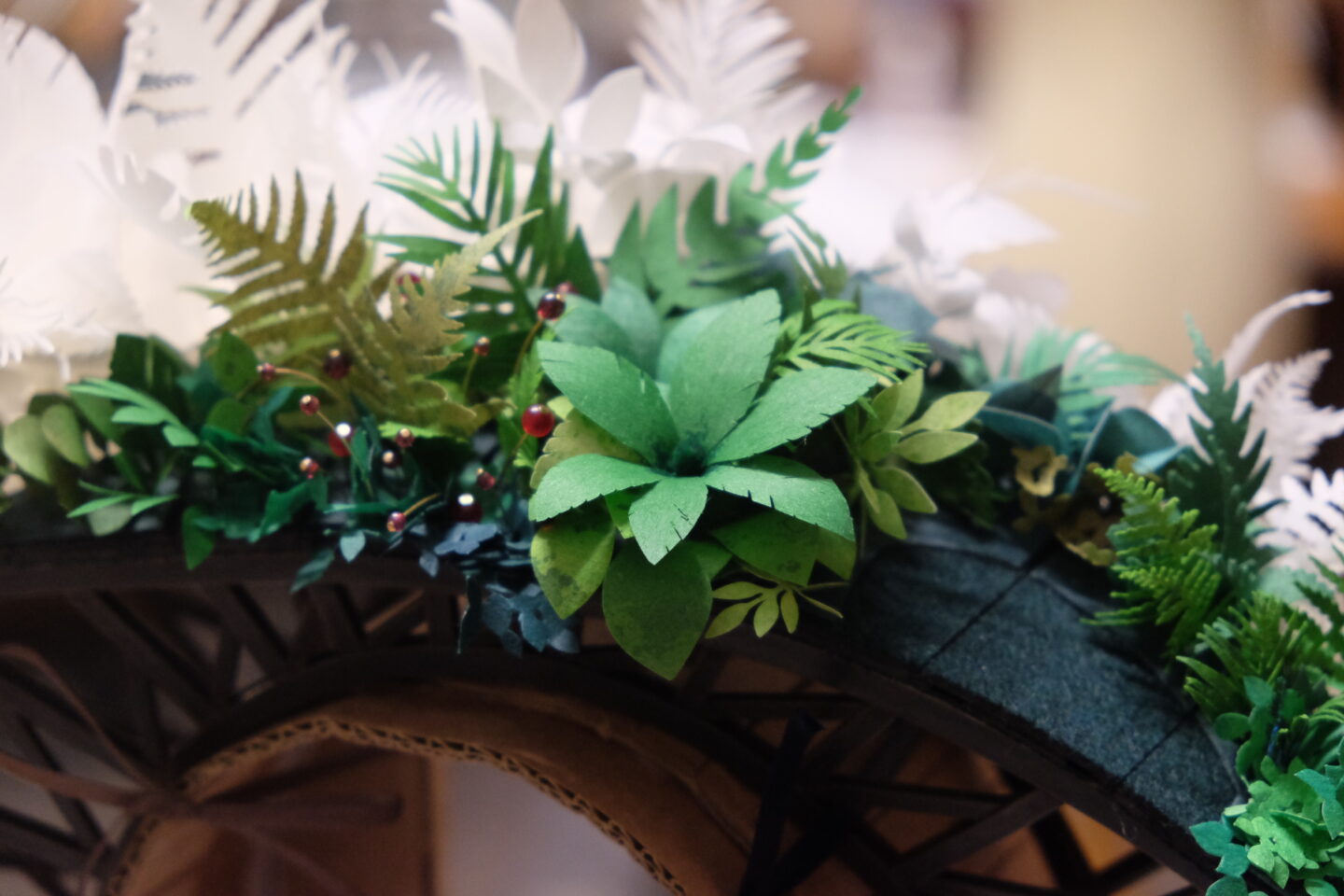
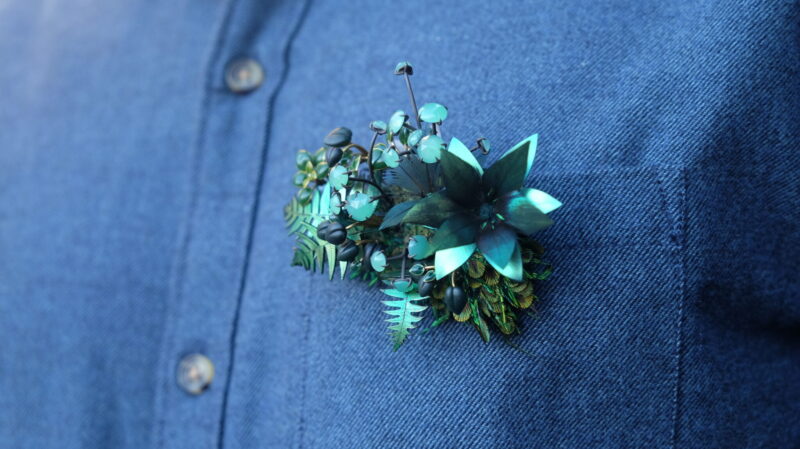
Marie Grimaud’s designs are driven by a blend of innovation and cultural tradition. Her unique creations stand out for their intrinsic harmony and balance, containing gemstones, metals, and unexpected materials like paper and wood. Grimaud utilizes her work to convey sustainable ideas, being deeply committed to ethical and slow-made art pieces.
© Francéclat and Désirables futurs
Which place do you currently call home and where do you work on your projects?
I live in a beautiful region of France in the West, Loire-Atlantique. Today, I work between my studio, my home office, and Paris.
Do you have a favourite place in your area where you like to relax and linger?
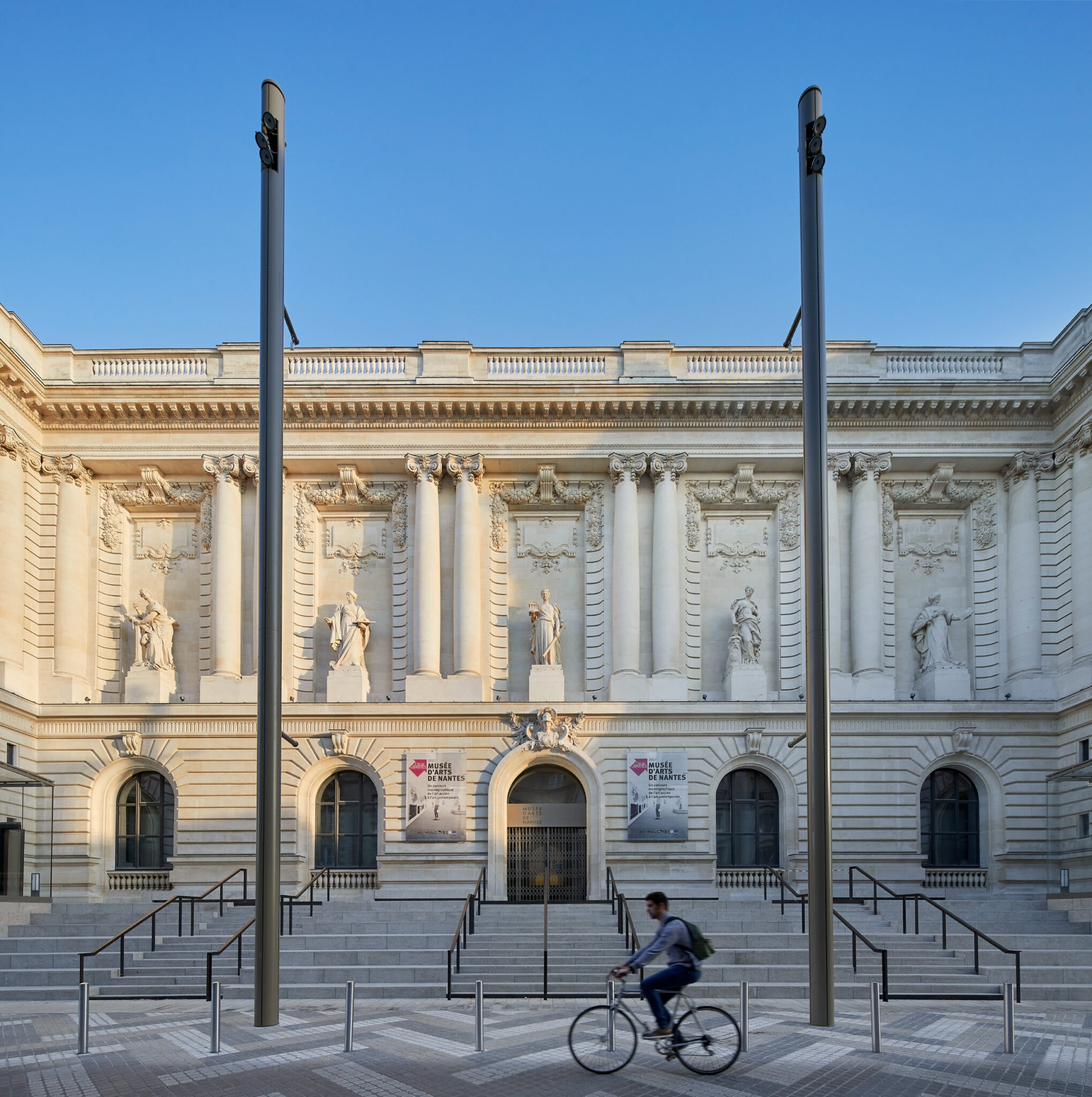
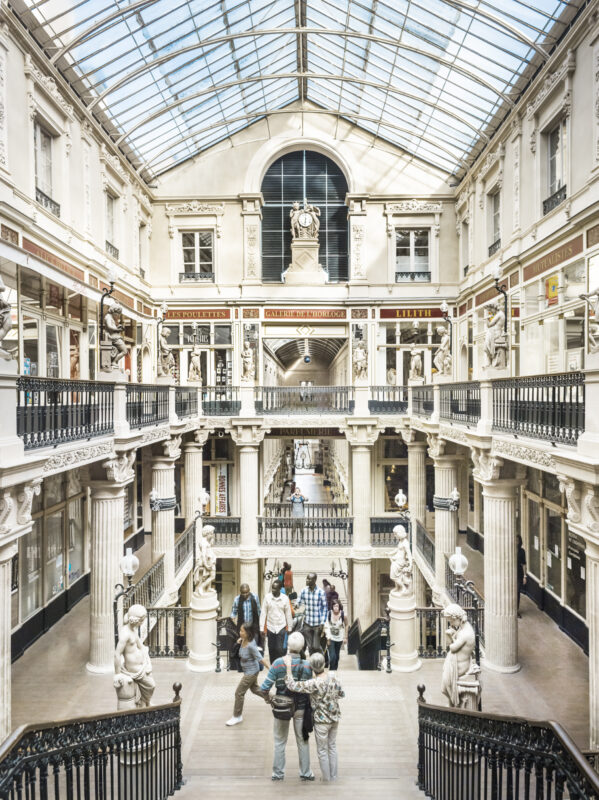
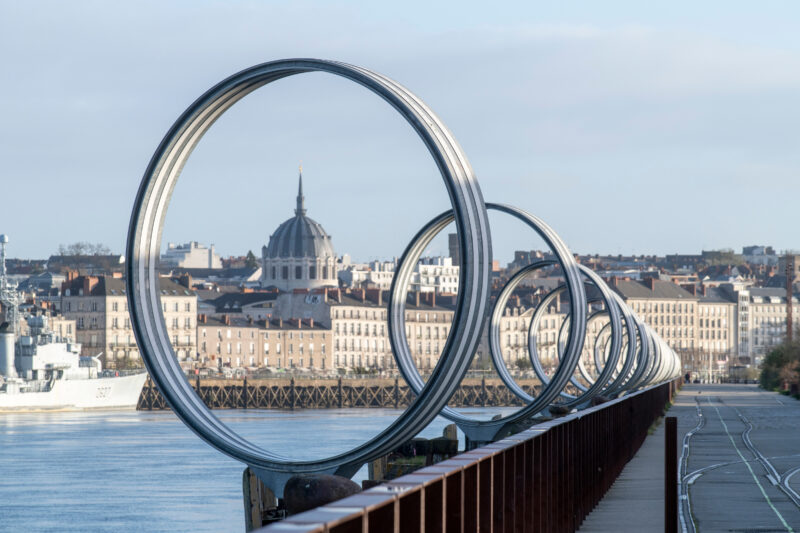
I stroll along the small country lanes around my home, otherwise, I take the train and go to Nantes or Angers (or Paris for work) for an afternoon to soak up some bustling city energy. The Atlantic coast isn’t far away; in just an hour’s drive, I’m by the Ocean! But to relax, a lunch or a snack with friends around my place is also very pleasant.
© Photography by Hufton + Crow.
Are there any urgent political issues or problems in your region?
Today, I appreciate my fortune to live and work in France, where life has been good so far. I am free to create, to express my ideas, to move around. We don’t have food shortages, no lack of energy, no war in France. However, I am curious to see how things will evolve. The world of luxury and art is doing rather well, as people need to dream and escape more when the world is troubled. What concerns me greatly is that other essential domains, such as agriculture, health, social issues, and ecology, are deteriorating more and more.
In your opinion, what has developed well in the last 5 years—and what has not?
It’s difficult to answer this question because everyone agrees that what is happening today is a consequence of several years of poor governance in the country. However, since Emmanuel Macron and his government came to power, France truly appears to be a country in decline.
What has developed well, in my point of view is: Women’s rights are evolving in the right direction, with policies and laws aimed at promoting gender equality in various areas such as employment, education, and political participation, awareness begins at school. And even though I’m not a big fan of inclusive writing, its use in several media outlets is a good ally in this evolution. Also, the #MeToo movement has had several consequences in France the last five years. by promoting awareness, empowering victims to speak out, and leading to changes in policies and attitudes towards sexual harassment and gender inequality.
The evolution of agricultural practices, at least in the project stage, aims to change the way food is produced, to return to a human-scale production while being concerned about environmental issues.
What is bad and will be worse in a short time: I could write three pages about it! Health and social inequalities are widening, and press freedom is in very poor condition.
The period of the “yellow vests” highlighted many flaws in the system and only needs one small thing for the fire to reignite. The COVID-19 pandemic has also highlighted weaknesses in the healthcare system and put pressure on hospital resources.
© Franck Tomps / LVAN
© Les anneaux Daniel Buren – Le Voyage à Nantes
Do you know a hidden gem when it comes to local manufacturers—whether it’s arts and crafts, sustainable products or food?
– A local manufacturer that I recommend is the ceramic artist Chloé Rimbault.
– Marie Laurent, a ceramicist who has just arrived in Nantes.
– Murat Geçimli, a sculptor.
– Thomas Brac de la Perrière, an engraver and jeweler.
– A nice co-working spaces in Nantes is Make Ici.
One of my favorite places in Nantes is The Famous and unique ïle des machines! A product of François Delaroziere and Pierre Orefice’s collective imagination, it is the unique location where you can find Jules Verne’s Invented Worlds, Leonardo da Vinci’s mechanical cosmos, and Nantes’ industrial history—all on the remarkable site of the city’s ancient shipyards. The Folle Journée de Nantes is also a famous musical event to discover, internationally renowned.
Sustainable and local grocery stores around me are:
– Au poids plume
– La berouette
– The COSME chocolate shop, a famous Parisian chocolaterie, has opened a store very close to my place.
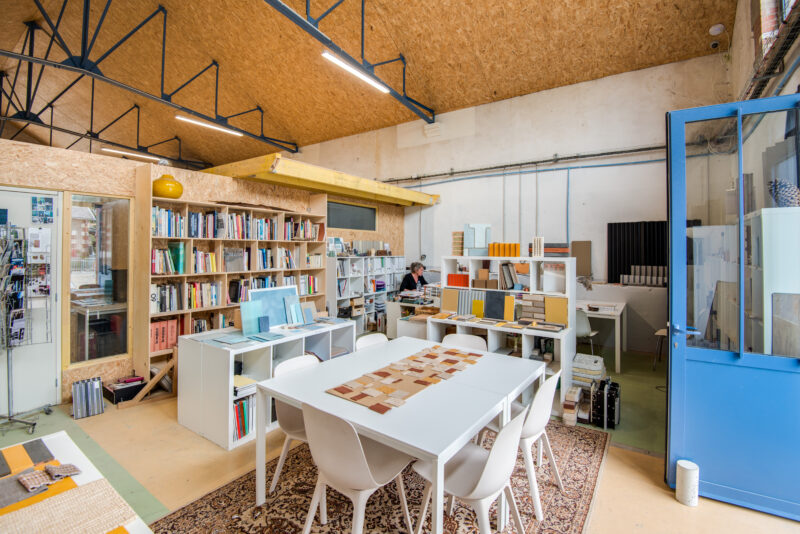
© Make ICI Nantes
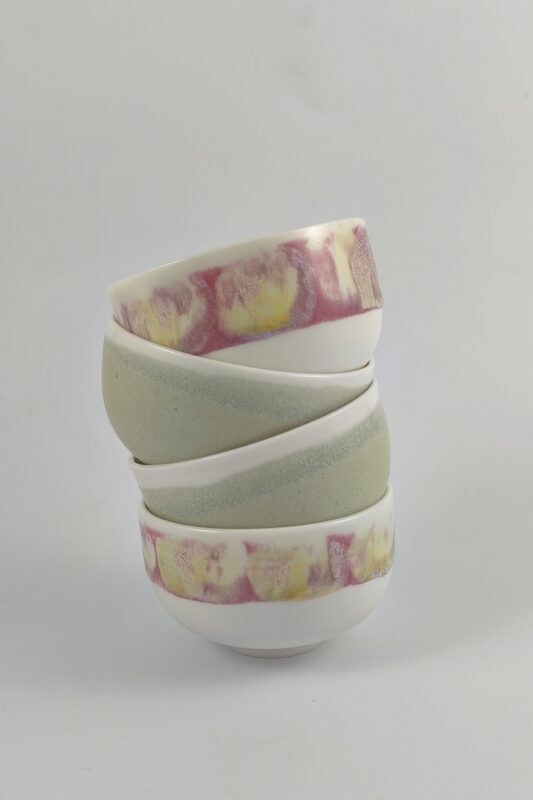
© Marie Laurent

© Atelier Brac de La Perrière
Is there anything particularly innovative in your region? Also in comparison to other places you have already visited?
I don’t have an answer to this question regarding my village, but regarding the Nantes region, I know that it is renowned for its economic dynamism, quality of life, and spirit of innovation. The region is particularly innovative in its commitment to sustainable development and the circular economy, which I have observed since my high school days in 2005. Despite a change in mayor in 2012, Nantes is also known for its cultural dynamism and artistic scene, making it a very attractive place for creative talents and entrepreneurs.
Do you have a secret restaurant tip that you would like to share with us?
Delicious restaurants near my place using local produce:
– Les terrasses de bel air
– La toile à beurre
– La villa St germain à Oudon
– La table du pêcheur 😊
– My favorite Moroccan restaurant, L’Oudaya.
Is there a local shop whose products are only available in your region?
There are regional specialties that can only be found in the department 44, and specifically sold in Nantes. These can be found in several specialized shops. In Nantes, you can find berlingots and rigolettes (delicious candies), the “gâteau nantais” or “gâteau de la Loire”, and the famous Petit Beurre LU biscuit, still made near Nantes. The LU Tower, the very first manufacturing workshop which has now become a museum, is open for visits! Among the region’s specialties, there’s also the “curé nantais”, a soft cheese with a straw-yellow crust, Muscadet dry white wine, fresh and light, made from the Melon de Bourgogne grape variety which is unique to the region. And one of my favorites: lamb’s lettuce, a delicious winter salad, rich in vitamins and minerals.
What are your 3 favourite apps that you use every day and couldn’t live without?
I’m not a heavy user of apps 😉 I mainly use the Radio France podcast app, Instagram, and YouTube.
Do you have any favourite newspapers or online magazines? And how do you keep up to date with politics or social and cultural issues?
For everything related to political, social, and economic topics, I primarily get informed through YouTube channels like Thinkerview, Trouble Fait, or Blast. Public radio remains a great ally as well. I mostly listen to podcast series that I select on various themes: music, science, philosophy, and societal issues. For art and craftsmanship specifically, I prefer to read news in print versions, and I keep beautiful editions of Ateliers d’Art close to me. Since I use Instagram to communicate about my work, I use this platform to stay informed about jewelry innovations and to follow the work of creators in various fields. I also enjoy talks with friends or family to exchange on different subjects and share our discoveries.
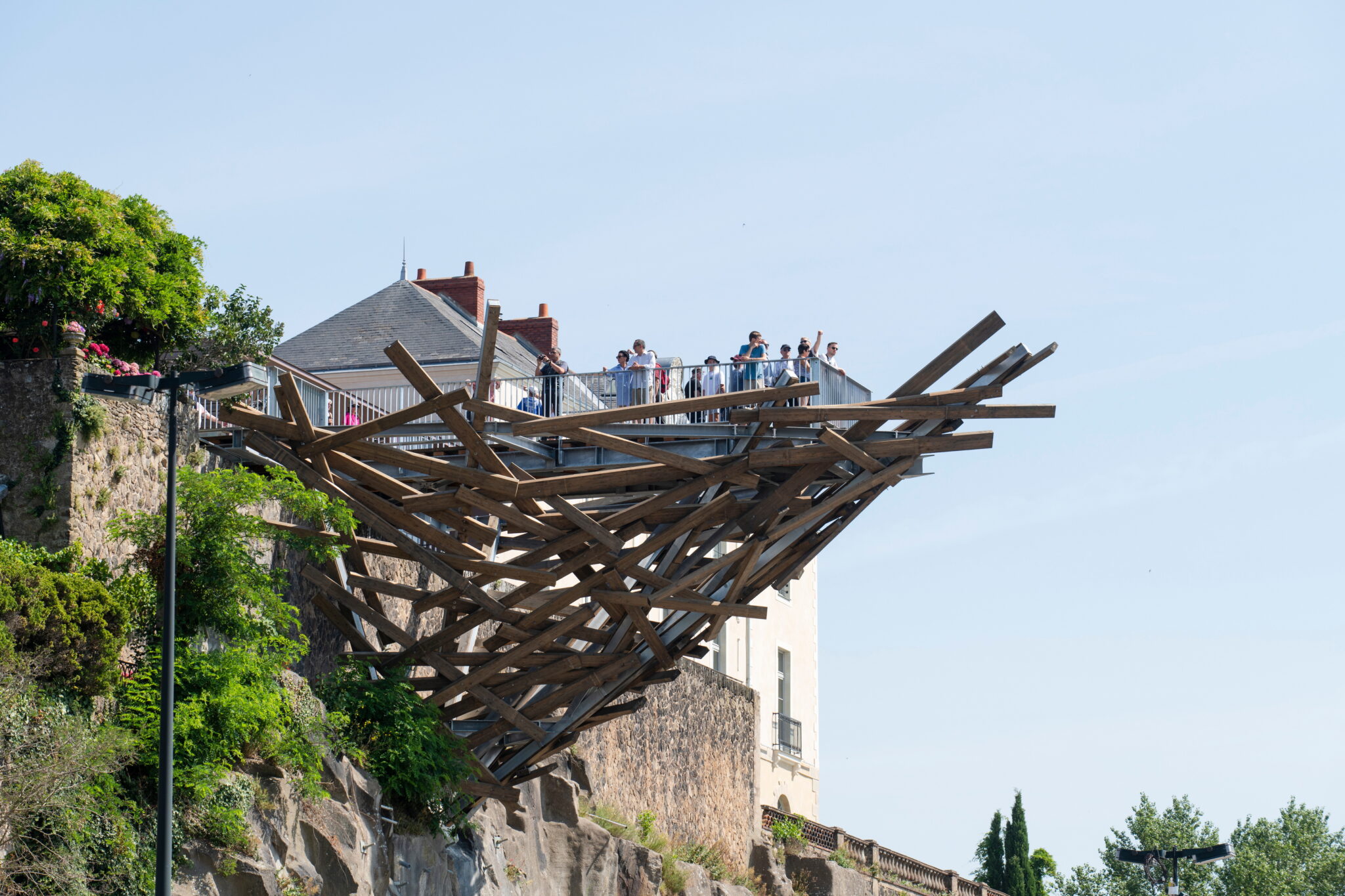
© Le Voyage à Nantes 2019 – Tadashi Kawamata – Belvedere
Imagine you could be mayor for a year—what would you change?
I would very much like to become mayor in the future. If I were to be one today, my main focus would be on educating children to eat better and to understand why it is good for them as well as for the planet. Fast food (by which I mean industrially processed food from supermarkets) is still very prevalent and fully adopted in the working and agricultural communities, which are the main sources of employment in the surrounding cities. I would like to propose attractive and playful solutions and replace overly sugary and processed food, and launch campaigns to encourage families to consume more raw and healthier products. Having lived in Paris for 10 years, I have been able to observe the paradox in terms of educating children on this subject. A child from here lives surrounded by nature but may not necessarily know how the bean he eats grows or how the bee pollinates the flower in his garden. Whereas a child from Paris, or a child from a big city, learns at school how to grow a seed or take care of a bee and will be more sensitized to environmental issues and nature conservation. If we want to change the world for the better, I am convinced that the solution lies in the education of children and also in the way of showing them the beauty of the nature surrounding us.
One last question: If you could choose another place to live—regardless of financial or time constrains—which one would you choose?
If we set aside government issues, I feel good in my country. I love the diversity of landscapes, climate and inhabitants across the regions. It’s hard to choose another place for the moment. One of our family’s desires would be to have a house near a forest and a sailboat to live part of the year on the sea and be free to move around everywhere 😊 In about ten years, one of my wishes would be to have two places to live. One primary location in France, close to nature but not isolated from a big city either. And for now, the second one in Norway to be closer for a while to very dear friends, also for the beauty of the landscapes, and for the geographical situation, anticipating climate changes.
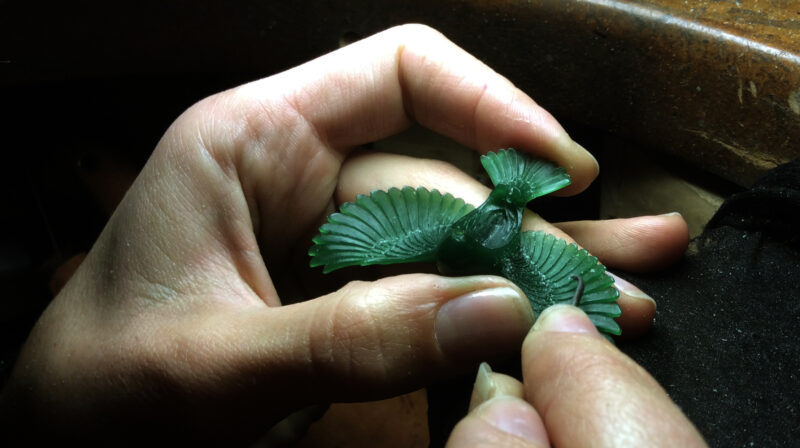
© Courtesy of the artist
© Francéclat and Désirables futurs


