
Londinium was founded in 43 CE by the Romans. The Saxons rebuilt the city under another name, from the 7th century onwards. Then came centuries of Norman, Flemish, Irish, Jewish, Bangladeshi immigration, and more. 2,000 years of superposition, and not one layer has fully disappeared beneath the next. More than a cultural trend, multiculturalism is a structural condition of the city.
The question London poses to those who pass through it for the first time, and even more to those who return, is not the question of an ordinary capital. It is not “where to go” or “what to see.” It is a question of structure: how has a city of 9 million inhabitants managed to remain made of human-scale villages, each carrying its own history, without dissolving them into a uniform whole? How can a single address belong simultaneously to several centuries, several communities, several uses, without one erasing the other?
London does not choose. It accumulates, holds, continues. That is what makes it, finally, impossible to forget.
© Bruckmann Verlag / Barbara Geier
The city of 14 active centuries
The difference between London and most European capitals lies not in what it has kept, but in what it does with it. London’s history is not archived behind glass or signposted with explanatory panels. It is practised, inhabited, crossed every day by people who no longer regard it as a curiosity.
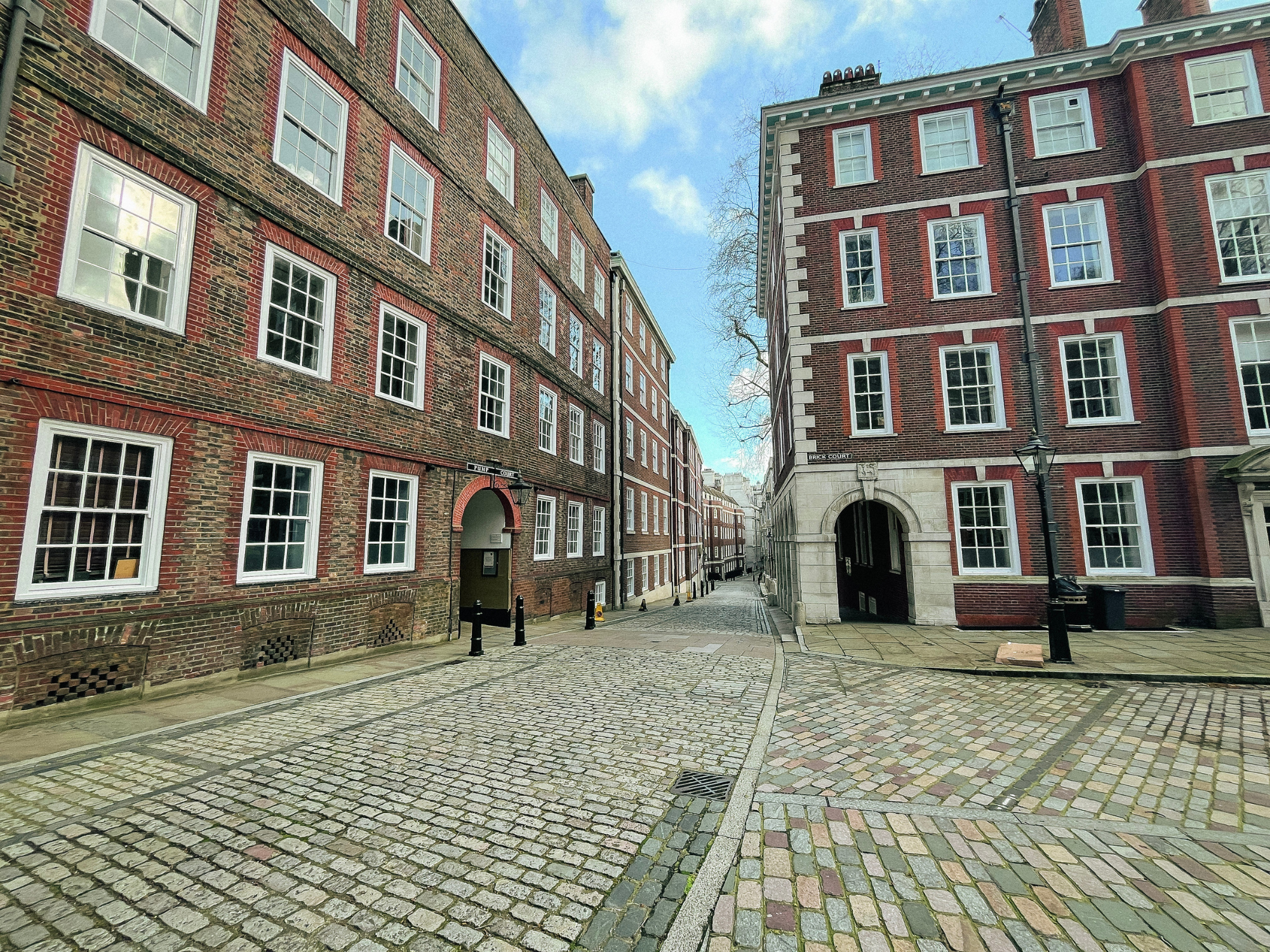
The Inns of Court are the most striking example. 4 legal institutions founded in the 14th century, Gray’s Inn, Lincoln’s Inn, Inner Temple and Middle Temple, occupy a complex of Tudor interior courtyards, gardens, banqueting halls and libraries within a few minutes’ walk of the financial City. Barristers still plead there today. The gardens are open to the public on certain days of the week. One can sit there, eat lunch, cross the courtyards beneath the red brick arches without feeling as though one is visiting anything in particular. It is simply there, in use, as it has been for 700 years.
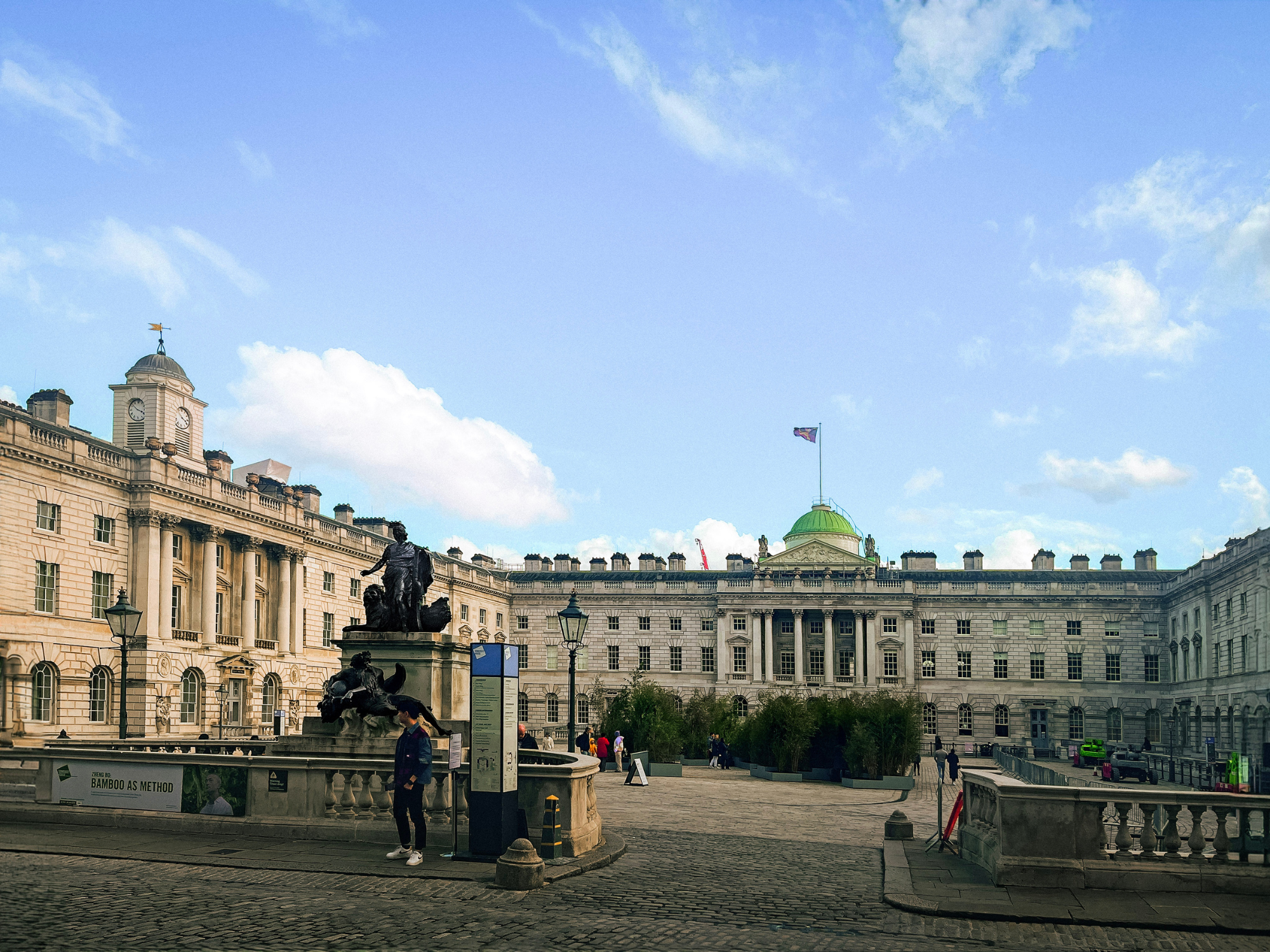
Somerset House, on the Thames, operates according to the same logic at a different scale. Built between 1776 and 1796 by the architects William Chambers and James Gibbs, the neoclassical palace served for decades as an administrative seat before becoming, in 1997, a cultural centre open to all. The Courtauld Institute of Art, founded in 1932, houses a collection of 530 works there: Manet, Cézanne, Van Gogh, Gauguin, in rooms whose high ceilings and mouldings have not changed since the 18th century. In summer, the inner courtyard hosts open-air concerts. In winter, an ice rink. The terrace on the Thames is open year-round. The palace has not been museified: it has been reactivated.
© Bruckmann Verlag / Barbara Geier
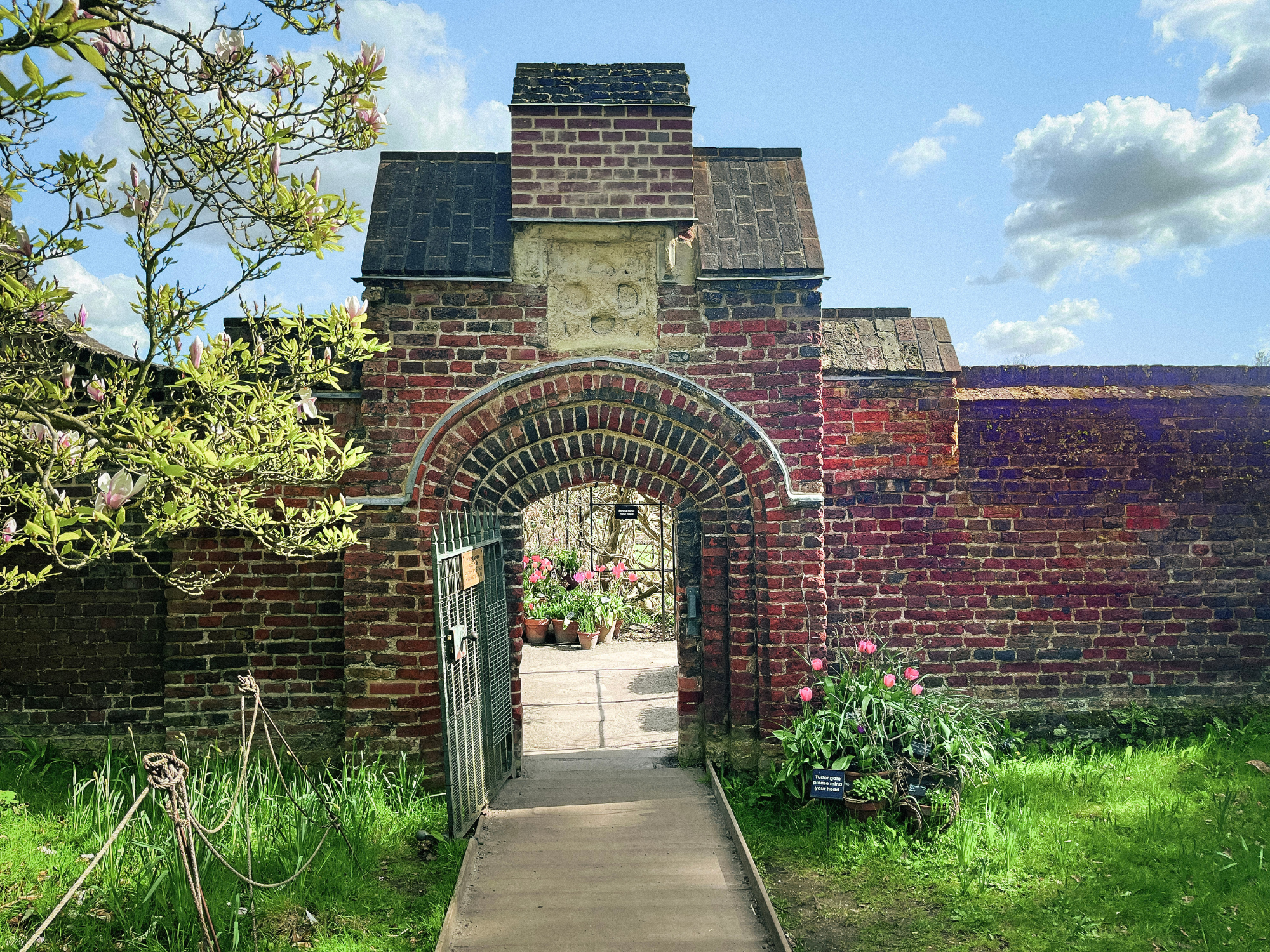
Fulham Palace carries this logic to its most discreet point. The residence of the Bishops of London for 1,300 years, until 1973, the estate retains at its core a Tudor manor house with an interior courtyard dating from the 16th century. Behind it, a walled garden of 1.4 hectares, reopened in 2012 after full restoration, shelters trees 500 years old and botanical species planted according to a logic that goes back to the first episcopal horticulturalists. Admission has been free since 1974. A 5-minute walk away, Craven Cottage has hosted FC Fulham matches since 1896. A medieval episcopal residence and a football ground, neighbours for more than a century, neither finding the other incongruous.
These places are not exceptional in the London landscape. They are representative of it. London has dozens of the same kind: spaces that have changed their users without changing their vocation, carrying several centuries simultaneously without drawing attention to any of them in particular.
The village within the metropolis
London did not build itself around a single centre radiating outward toward a periphery. It formed by aggregation: villages that existed before the city, progressively absorbed by its expansion, and that kept their own character inside it. Marylebone, Hammersmith, Islington, Bermondsey, each with its High Street, its long-established residents, its shops that look nothing like those of the neighbouring village. This is not urban nostalgia. It is a physical structure that has held against two centuries of growth.
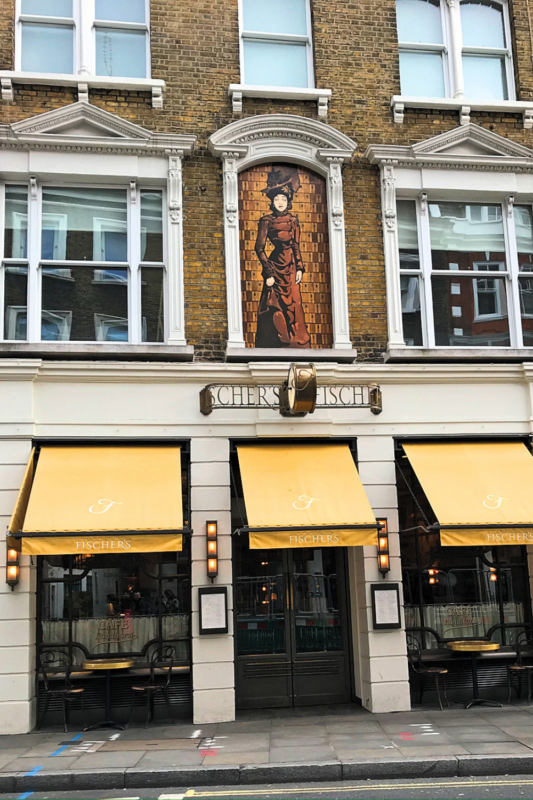
Marylebone is the most immediately legible example. A 10-minute walk from Oxford Street and its tourist flows, the High Street turns its back on the major chains. La Fromagerie, founded in 1992, sells its aged cheeses to a clientele of locals who stop in the way one stops at a neighbour’s. Daunt Books has occupied since 1912 an Edwardian building with oak galleries: shelves organised by country, natural light through the skylight, the silence of a bookshop. This is not a “trendy” neighbourhood in the sense the guides mean. It is a village that happens to be inside London, and that has decided to remain what it is.
© Bruckmann Verlag / Barbara Geier
Hammersmith tells a different, more tense story. Along the banks of the Thames, between Lower Mall and Upper Mall, the neighbourhood has been associated since the 19th century with the British Arts and Crafts movement. William Morris (1834-1896) lived and worked here, defending the idea that craft work was a form of resistance to industrialisation.
His house, Kelmscott House, is today the headquarters of the William Morris Society. The Dove, a 17th-century pub on the river, holds a place in the Guinness Book of Records for having the smallest bar in the world. A few steps away, the Doves Press, founded in 1900 by Thomas James Cobden-Sanderson and Emery Walker, produced some of the most beautiful books ever printed in the English language, before Cobden-Sanderson threw the typefaces himself into the Thames in 1916 to keep them from his partner. The gesture says something about the way these neighbourhoods have always worked: with a quiet intensity, far from official circuits.
These villages hold. But their hold is not guaranteed. The median price of a London property now exceeds 505,000 pounds sterling, according to Land Registry data. The pressure is real, and it bears precisely on what makes these neighbourhoods singular: their independent shops, their long-established residents, their specific human density. What London took centuries to build by aggregation can come undone in a generation by substitution.
What the layers reveal
It is in looking for what persists beneath the surface of the city that one begins to read London differently. Not what has survived as curiosity, but what continues to exist as practice: institutions in daily use, neighbourhoods inhabited by those who have long made them their own, gardens planted according to a logic that goes back several centuries.
Barbara Geier, a German journalist and author living in London, published a book with Bruckmann Verlag in 2024 that explores precisely this persistence. Secret Places London does not catalogue tourist curiosities. It catalogues the places where several eras of the city coexist in the same space, without hierarchy between them: neither the oldest nor the most recent takes precedence over the other.
50 entries organised across five geographical zones, from the Centre to the North, with a thematic index that crosses the same places according to four categories, art and culture, parks and gardens, architecture and design, and neighbourhood tours. The double organisation speaks the method. Geier reads London as a plural territory, not as a monolithic capital with a centre and its margins. Each zone has its own density, its own layers, its own way of having moved through time.
Her question is never the most obvious one. Not which place is worth seeing, but what each place reveals about the way London has built itself, and continues to build itself, layer upon layer, without ever quite finishing.
Where the centuries meet
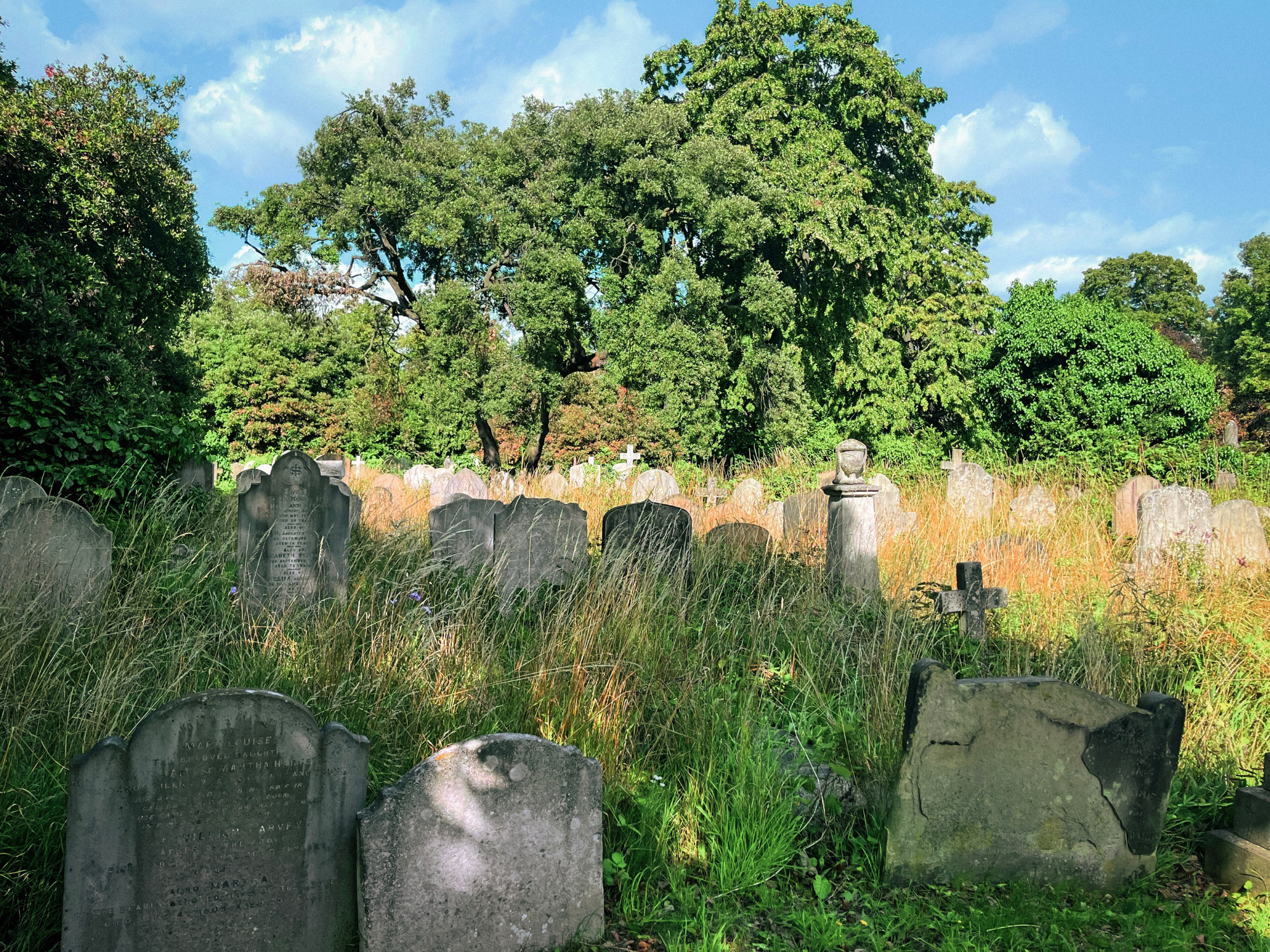
Brompton Cemetery opened in 1840. It is one of the 7 great Victorian cemeteries known as the “Magnificent Seven”, built on the outskirts of London when the city had exhausted its capacity to bury its dead in its parish churches. 16 hectares between Old Brompton Road and Fulham Road, symmetrical avenues, columns, obelisks, a domed central chapel. The architecture speaks the Victorian ambition for their dead: something between a park and an open-air cathedral.
Today, joggers move along the avenues in the morning. Families picnic between the graves on Sunday afternoons. Walkers stop at the tomb of Sir William Crookes, physicist and chemist, inventor of the cathode ray tube, who died in 1919, whose stone is as discreet as its anonymous neighbours. The cemetery has not been museified: there is no compulsory guided tour, no entrance fee, no imposed direction of circulation. It is simply open, crossed, used. Victorian death and the contemporary Sunday share the same space, neither finding the other incongruous.
© Bruckmann Verlag / Barbara Geier
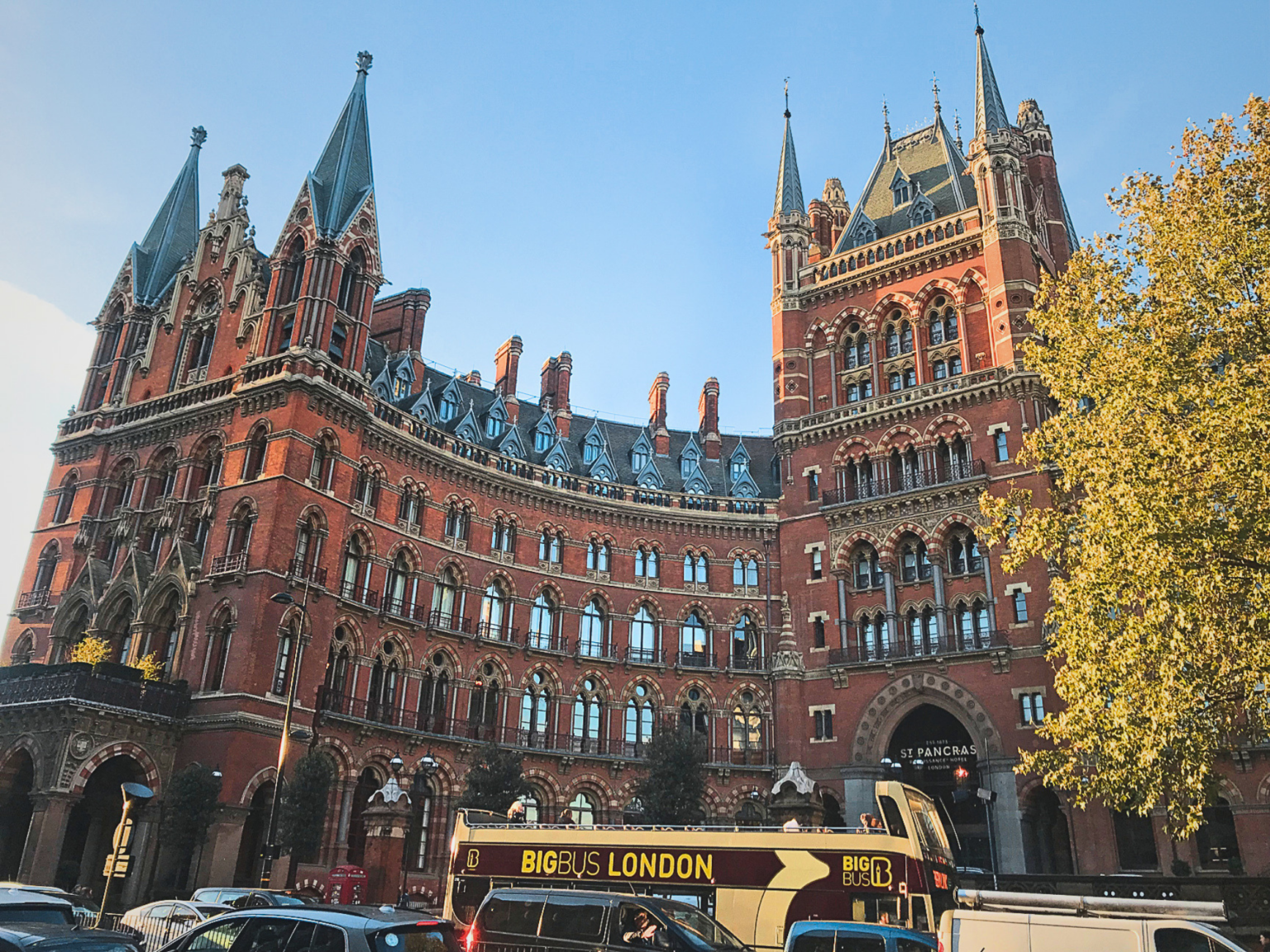
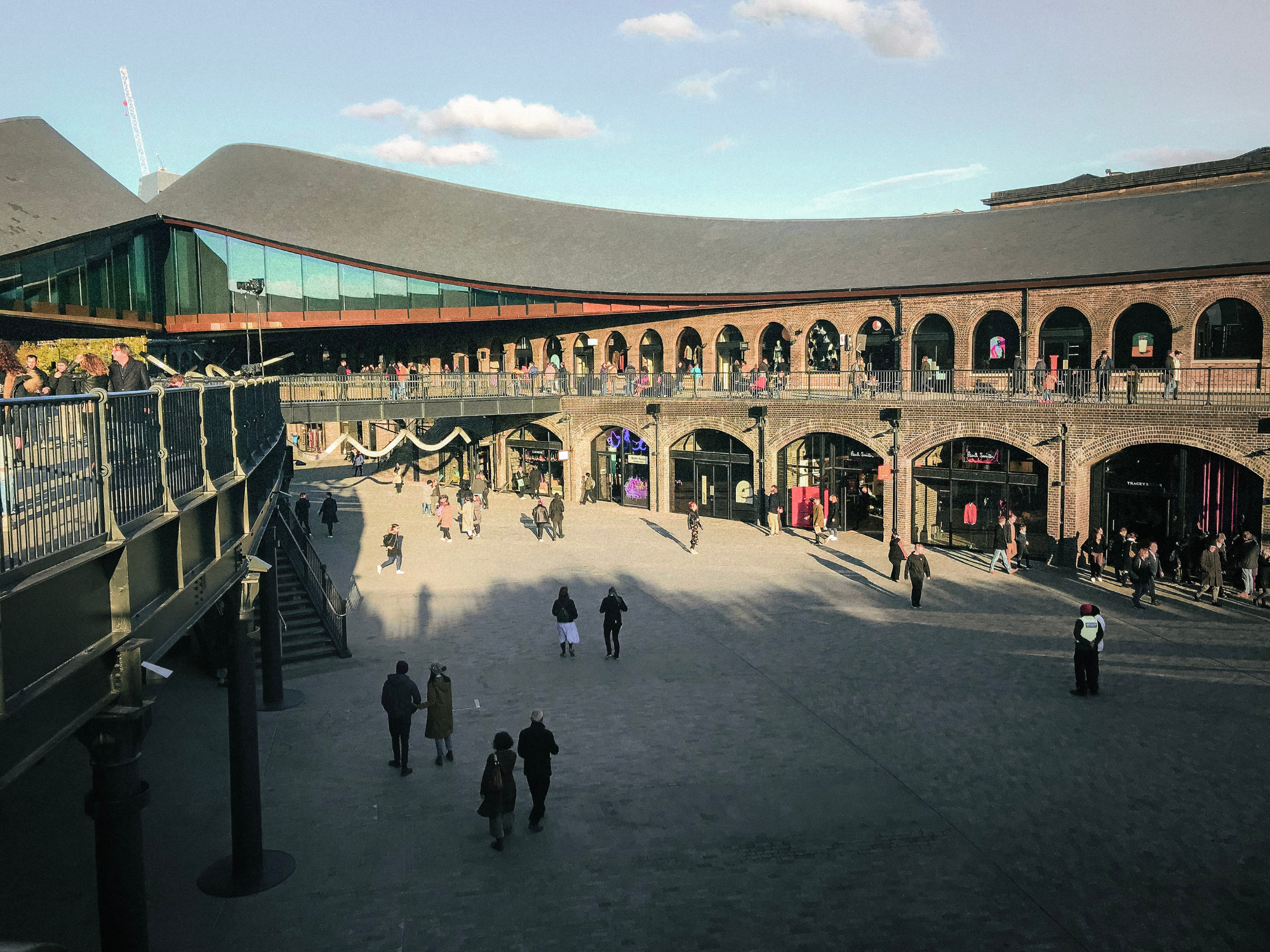
King’s Cross operates according to the same logic at a different scale, in a radically different register. A former industrial wasteland to the north of the neighbourhood, converted since 2008 into a new cultural district of 27 hectares, the site has kept its original architecture intact as the frame for what it has become. The St Pancras Renaissance Hotel station, opened in 1868 in a neo-Gothic style of turrets and red brick arches, faces the renovated warehouses of the Granary Complex, where Central Saint Martins, Google and Facebook have set up their campuses. On Granary Square, a fountain of 1,080 jets lights up at night. The Coal Drops Yard, former 19th-century coal storage sheds, house shops and restaurants within their brick vaults. King’s Cross has not concealed its industrial history to make itself presentable. It has made that past the frame of its digital present.
The thread running through both places is simple: no layer has been erased for the next to exist. The Victorian cemetery became a park without ceasing to be a cemetery. The railway wasteland became a digital campus without demolishing its warehouses. What other cities call renovation, London calls reactivation. The difference is not semantic. It is visible in every stone that was not replaced.
© Bruckmann Verlag / Barbara Geier
The craftsmen and their heirs
London has a tradition of transmission that is not nostalgic. It is functional. What has been made here, printed here, cultivated here continues to be so, not out of nostalgia, but because no one ever found a reason to stop.
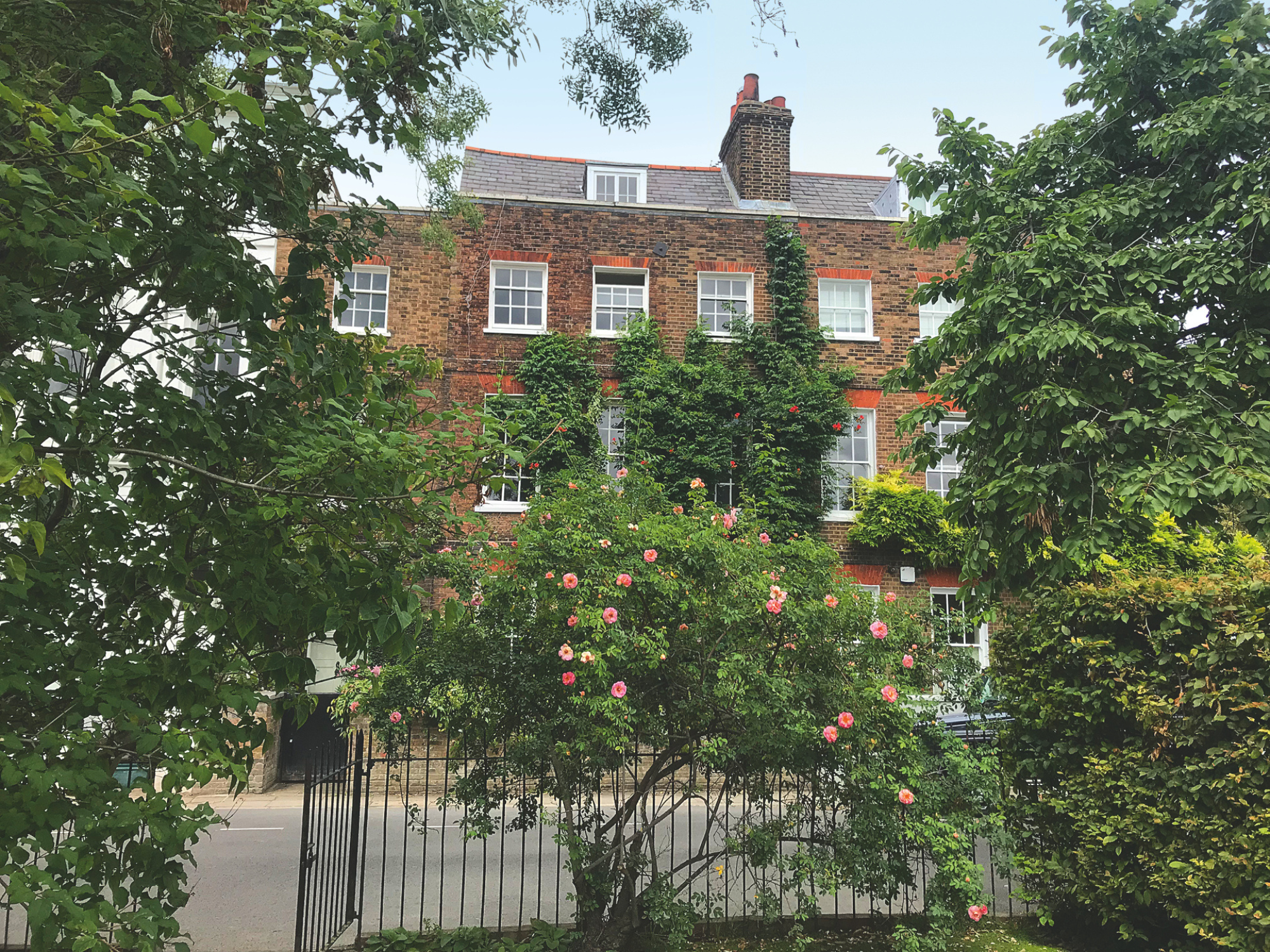
Hammersmith carries the most precise trace of this. William Morris (1834-1896) defended here the idea that craft work was a form of resistance to industrialisation: that the quality of what one makes says something about the quality of the life one leads. His house on the river, Kelmscott House, is today the headquarters of the William Morris Society, open to the public. His press, the Kelmscott Press, produced between 1891 and 1898 around fifty books whose typography and layout influenced graphic design worldwide. The Doves Press, founded in 1900 by Thomas Cobden-Sanderson and Emery Walker a few steps away, pursued this logic with an even more austere rigour. These names are less celebrated than those of London’s pop culture. They shaped, nonetheless, the way the world reads and prints, from this same bank of the Thames.
© Bruckmann Verlag / Barbara Geier
The Chelsea Physic Garden says the same thing in a different register. Founded in 1673 by the Worshipful Society of Apothecaries to cultivate medicinal plants, it is the second oldest botanical garden in England. It covers 1.6 hectares in the heart of Chelsea, a few minutes from the river. Around 5,000 species are cultivated there according to a logic that has not changed since its founding: understanding plants in order to know what they heal. It opened to the public only in 1983, after three centuries of strictly scientific use. A garden that is 350 years old and continues to grow, without seeking to resemble anything other than what it is.
London does not reconstruct its historical practices in order to display them. It continues them, quietly, in the same places, with the same intentions. That, perhaps more than any monument, is what makes it a city apart.
© Bruckmann Verlag / Barbara Geier
The kingdom without internal borders
London does not choose between its layers. It does not arbitrate between the medieval and the digital, between the Victorian cemetery and the Sunday jogger, between the episcopal palace and the public garden. It lets them coexist, each according to its own logic, in the same space, without one having to justify its presence to the other.
This is not tolerance in the political sense, nor an integration policy or a conscious urban project. It is a physical structure, a city that has thickened rather than reinvented itself, that has added without erasing, that has reactivated without demolishing, and that has made this accumulated depth its most singular quality. Other capitals have chosen the clean slate, the renovation, the stylistic coherence. London chose, or simply accepted, to keep everything.
The 19 million annual visitors do not see the same city. Those who stop at Piccadilly Circus, who photograph the Queen’s Guard, who eat their fish and chips on the steps of Trafalgar Square see one city. Those who push open the door of the Inns of Court on a Wednesday morning, who sit on a bench between two graves at Brompton Cemetery, who walk the Thames path from Hammersmith to Chiswick past the back gardens of Georgian houses see another. Neither more authentic, nor more secret. Simply more layered. It is this depth that London offers to those willing to slow down long enough to feel it.