In 1622 the Parlement of Toulouse, the regional high court, ordered Château de la Treyne demolished. The château had been regarded as a stronghold of the Protestant Huguenots and had already been burnt down in 1586 on the orders of the Duke of Mayenne. This time the demolition order followed a rebellion against the French Crown by a son of the château’s owner, Jean de La Ramière. The order was apparently never carried out. Around 1625, Gédéon de La Ramière began rebuilding, retaining the square keep and adding a large round tower beside it. Both still stand at the cliff’s edge.

The Location
La Treyne stands on a limestone spur that drops steeply to the Dordogne. The round tower comes so close to the edge that, seen from the riverbank, the château appears to stand above the water. Below are terraces where tables are laid for dinner on warm evenings. When the wind picks up, the evening acquires a little drama of its own.

The terraces were once laid out to watch for approaching enemies; today people watch the sun set from them, swallows fly and frogs call from below. The château has a formal French garden with Medici vases, framed by cedars several centuries old. Beyond it begins the estate’s own woodland: 120 hectares of downy oaks, hornbeams and boxwood. Upstream and downstream, grey-ochre cliffs alternate with shingle beaches and broad alluvial plains. The limestone spur, the château and this stretch of river are protected together as a landscape.


Backstory
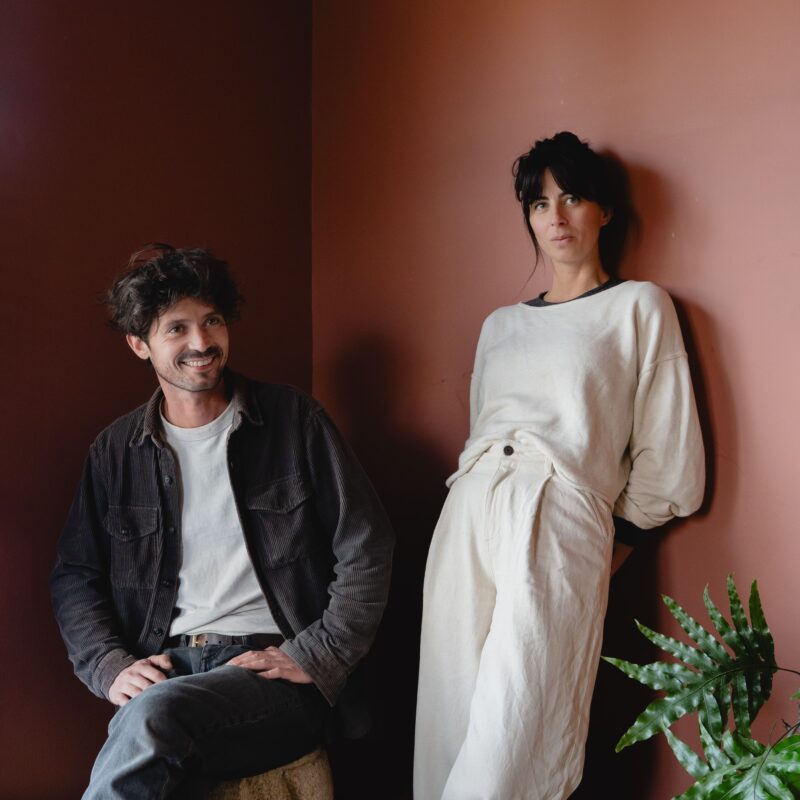
The Gombert family bought the château in 1982. The idea came from Michèle Gombert, whom French food and hotel critic Gilles Pudlowski described in a portrait of La Treyne as an aesthete with an eye for beautiful places. This is how the story is told at the château: she drove across the bridge, saw it and wanted to go inside. From the start, she envisaged a hotel for Relais & Châteaux. Her son Philippe, a lawyer in Paris, was initially meant only to put the finances in order. It became a life’s work because of his wife Stéphanie, who said: We’ll do it. Born in Bielefeld, she came to France in 1985 and met Philippe; after her studies she worked in Paris for fifteen years. During that time the couple travelled to the Lot at weekends. They have lived in the valley for over twenty-five years.


For three centuries the château had belonged to the same family. By the early 20th century it had fallen into disrepair. Around 1910 the industrialist Auguste-Gabriel Savard had the interiors restored and commissioned Édouard André to design the garden. The Spaniard Fontana bought the property in 1922. During the Second World War, Egyptian antiquities from the Louvre were stored here, reportedly including the Seated Scribe, an ancient Egyptian limestone statue around 4,500 years old. Parts of the Rothschild collection also came here. Afterwards, a couple of collectors displayed their Renaissance furniture in the château. Then a break: the private house became a hotel. Restoration took ten years; Philippe oversaw it with local craftsmen, while Stéphanie designed the interiors. La Treyne has belonged to Relais & Châteaux since 1992. The association later elected Philippe its president for two terms at a meeting in Berlin. Stéphanie Gombert is matter-of-fact about their place in its history: ‘The château dates from the 14th century. What is our story within it? 30, 40, 50 years.’
Interior & Architecture
The great Salon Louis XIII shows how the château has grown over time. Its name refers to the rebuilding period, but the coffered ceiling and wood panelling were installed by Fontana in the 1920s, as were those in the music salon.

An Aubusson tapestry hangs on the wall; the salons and bedrooms have fireplaces from the same period. The salon’s fittings are now listed as historic monuments, along with those of the billiard room, the straight staircase, the façades and roofs.


Restoration takes place every winter, when the hotel is closed; Philippe Gombert’s real passion is the building work. A mason is employed all year round, and the family has worked with the same upholsterer for fabrics and upholstery for more than thirty years.

The Gomberts have never applied for subsidies for the listed property. That would mean using an appointed conservation architect and contractors from elsewhere; they prefer local electricians, joiners and flooring specialists. ‘They know who we are,’ says Stéphanie Gombert. Another piece of the château’s history stands in the park. Around 1954 the collector Santiard had a neo-Romanesque chapel built there, incorporating Romanesque and Gothic architectural fragments from Spain into its walls. Below the pool, an agronomist tends the organic vegetable garden; the kitchen gets its tomatoes and some of its other vegetables there.


The hotel has redesigned and replanted the rest of the garden. It is tended by Greg, who previously ran Irish pubs in London; his grandfather, so the story goes at the château, was a gardener for Virginia Woolf. Stéphanie Gombert was looking for someone to care for the garden and asked him. This year he has installed beehives. Chickens and pigs roam freely.


A Look Inside
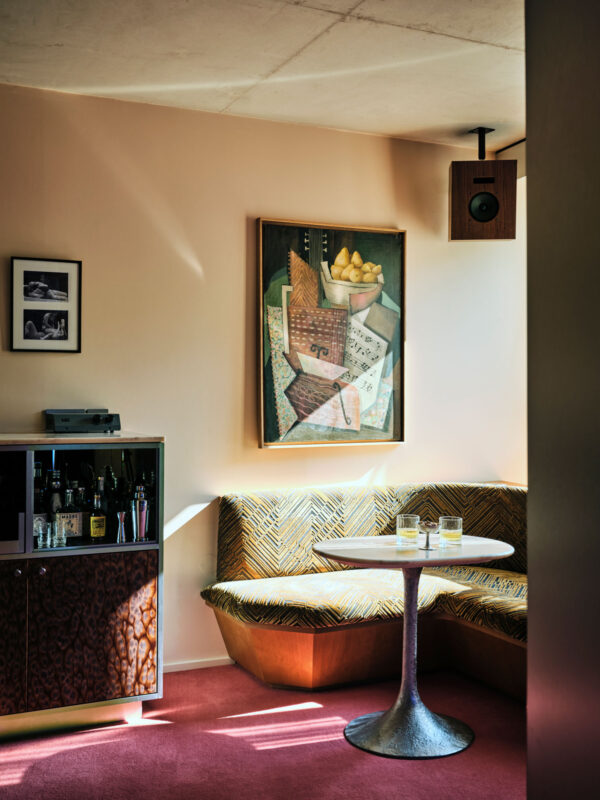
No two of the 18 bedrooms are alike. One junior suite is entirely red, with a four-poster bed, another mustard yellow; others are contemporary and simple. The Prison Dorée is in the oldest part of the château, between 14th-century walls, with a contemporary painting hanging on one of them. The Soleil Levant room was once the chapel.

The Chambre de la Tour is in the tower and looks out over the Dordogne. A stone staircase leads up, its small windows facing the river; the lift beside it is tiny. When La Treyne applied for its fifth star two years ago, it was the furniture, of all things, that cost points.


The list of some 250 criteria requires a minimum number of king-size beds, which the old beds are not. The family kept them anyway, and received the star. On arrival, a tray of pastries from the patisserie sometimes awaits guests, with a card.


Thirty-eight people work at the château, two-thirds of them in the kitchen and restaurant, many for more than ten years. The same person has worked at reception for nineteen years; one room attendant has been there for sixteen. ‘Without them we wouldn’t be much,’ says Stéphanie Gombert. For the past four years Maren has worked alongside her as assistant director; like Stéphanie, she is German, from the Lüneburg Heath. Stéphanie explains what she expects from the team by talking about a particular kind of guest: those who have been given a night at the hotel as a present. ‘We have to be even better for them than for all our other guests.’ It may be their only such experience in a lifetime, and they should leave knowing that somewhere like this exists.

Culinary
Stéphane Andrieux comes from a family of butchers and charcutiers in Nontron in the Périgord, who had expected him to take over the business. Instead he trained with Didier Clément in Romorantin, Marc Meneau in Vézelay and Anne-Sophie Pic in Valence. He has cooked at La Treyne since 1998. The restaurant has one Michelin star and three toques from Gault&Millau. ‘The Dordogne is my source of inspiration,’ says Andrieux. On the menu are lamb from the Causses du Quercy, veal raised with its mother, foie gras and, in spring, asparagus, alongside vegetables from the agronomist’s garden. Pastry chef Marc Jean has been responsible for desserts since 1995.


Dinner is served by candlelight in the Salon Louis XIII or on the terrace above the river, in a single sitting; the kitchen accepts no more than around forty guests each evening. Stéphanie Gombert runs the dining room and speaks to every table. She is quite open about the French cooking here, with crème fraîche and plenty of meat; Andrieux continues to develop, but does not change his signature style. ‘It would certainly be easier if we had a pizzeria here.’ But those dining in a château above the Dordogne expect something else. Four people work in the patisserie alone. Bread and croissants, cakes, chocolates and preserves are all made in-house. Breakfast is served in the Salon Vert, overlooking the old cedars.


Wellness & Relaxation
La Treyne has no spa. In the park is a heated twenty-metre outdoor pool, open from April to October, with a tennis court beside it. The estate’s woodland offers more space, with its unusual trees, downy oaks and truffle oaks. Paths wind through it and others lead down into the valley. One is the Sentier du facteur, an old postman’s path cut into the rock above the Dordogne.

Walk here in the morning and the river is below you, the limestone wall at your shoulder. The Gomberts’ golden retriever often comes part of the way. Another path, the Chemin des Écoliers, runs from the hamlet of Le Bastit to Pinsac. Children once walked it to school, there in the morning and home in the evening. After dinner, coffee and petits fours are served by the fire.

Surrounding Area
Coming from Souillac, you cross the Dordogne at Pinsac. Just over three kilometres beyond the château is Lacave, with its caves. The cave explorer Armand Viré discovered them in 1905; the first visitors arrived a year later. Since 1961 a small electric train has travelled 400 metres into the hillside; the rest is covered on a guided walk, lasting a little over an hour in total. At the end is the Salle des Merveilles, some 2,000 square metres in area, where the stalactites and stalagmites phosphoresce under ultraviolet light.

© Pierre Bona, Lacave-Chateau Belcastel, adjusted colours, CC BY-SA 3.0
Where the Ouysse meets the Dordogne, Château de Belcastel stands on its rock. Below it, the Chambon family has run the inn Le Pont de l’Ouysse since 1884, now in the fifth generation. Stéphane Chambon cooks, Mathieu Chambon runs the dining room. Alongside new dishes, house classics remain on the menu, including stuffed pig’s trotters. The large terrace looks up towards Belcastel.
For anyone considering Sarlat in high summer, the hostess recommends Martel instead. Sarlat is too crowded then, she says.
Activities
For walkers and runners: The Sentier du facteur above the Dordogne; the Chemin des Écoliers from Le Bastit to Pinsac; the estate’s woodland paths among downy oaks and boxwood; circular walks around Belcastel to the hamlets of Le Bastit and Meyraguet, with the church where Annet Hugon du Cluzel, once lord of La Treyne, is buried.
For paddlers: Canoe and kayak trips along the Dordogne, downstream beneath grey-ochre cliffs, landing on shingle beaches, a picnic at the end of the route.
For cyclists: Routes along the Dordogne valley and up to the limestone plateau of the Causses, for example to Martel, the town of seven towers, with its old market hall.
For cavers: The Grottes de Lacave with their electric train and ultraviolet-lit chamber; the Gouffre de Padirac and its underground boat ride, just over half an hour away; cave diving in the region’s karst springs for experienced divers.
For cultural travellers: Rocamadour, with its sanctuaries and pilgrimage steps up the cliff; Château de Montal and its exhibition on the safeguarding of the Louvre collections; the Jean Lurçat workshop museum near Saint-Céré; the Musée Champollion in Figeac; the abbey church of Sainte-Marie in Souillac; the villages of Autoire and Carennac; the gardens of Eyrignac; the cave paintings of Lascaux in the Vézère valley. Visit Sarlat outside high summer, or choose Martel.

© Château de la Treyne

© Tylwyth Eldar, Lacave – Grottes de Lacave 104, CC BY-SA 4.0
For food and wine lovers: Cahors wines from Château du Cèdre, Château de Haute-Serre and Château Lagrézette; Rocamadour goat’s cheese from the Causses; the truffle market in Lalbenque from December to March; winter truffle hunting; lunch at Le Pont de l’Ouysse; pastries, chocolates and walnut bread from the château’s patisserie.
For families: Family suites at the château (child-friendly, but no kids’ club); the Musée de l’Automate in Souillac; the train ride into the caves of Lacave; the pool and tennis court in the park; an afternoon on the Dordogne’s shingle beaches.
For music and art lovers: Concerts, exhibitions and theatre evenings at the château, often as part of regional summer festivals; the château during the Journées européennes du patrimoine in September; a walk through Édouard André’s garden.
Details
- 18 individually furnished rooms and suites, some with four-poster beds and views of the Dordogne; five stars
- Restaurant with one Michelin star and three Gault&Millau toques; one dinner sitting; closed Wednesdays, lunch on Mondays and Sundays
- Breakfast in the Salon Vert or in-room, 8–11 am; bread, pastries and preserves from the château’s own patisserie
- Heated outdoor pool (April to October), tennis court, piano bar, helipad
- Dogs welcome at an extra charge; family suites; 38 staff
- 2026 season: 27 March to mid-November, plus 23 December to 2 January
- Rooms from around €360 excluding breakfast; average stay just under three nights, hotel recommends four
- Souillac railway station 6 km, Brive airport 30 km, Toulouse 180 km; chateaudelatreyne.com