
Kortrijk lies in the west of Flanders, where the river Leie divides and forms a small island in the middle of the city: Buda. Breweries, dye houses and textile factories once stood here; today designers, students and artists work on the same island. In this repurposed industrial world, Designregio Kortrijk receives its guests. You quickly notice that the city itself—its workshops, businesses and design history—is part of the residency’s raw material.

© wedocumentart024
The location
Buda is a real island, held between two arms of the Leie and linked to the old town by footbridges. From the medieval Broel Towers it is only a few steps into a district the city has rebuilt since the 2000s as an “island of arts”: a cinema, a theatre tower, exhibition spaces, a riverside park that turns into a beach in summer. At its centre stands the Budafabriek, a former textile dye works from 1924. Budafabriek is the main location of the yearly creativity festival WONDER, organised by Designregio Kortrijk.

The place as creative ground
What makes Kortrijk good ground for design work is the short distance between idea and production. The region has long lived from textile, furniture and processing crafts; many small manufacturers and workshops sit close by. Designregio Kortrijk links the residents to this web of businesses, colleges such as Howest with its Industrial Design Center, and the city itself. The task is to research a theme and develop prototypes that respond to the city and its community. The very smallness of Kortrijk becomes an advantage: distances are short, contacts direct, one conversation leads quickly to the next. The place works as workshop and sounding board at once.

Backstory
Designregio Kortrijk grew out of an alliance between the city of Kortrijk, the intermunicipal development agency Leiedal, fair organiser Kortrijk Xpo, the Howest college and the employers’ association Voka—a platform that brings together design, business and education. The city laid the ground: from the early 2000s, Kortrijk rebuilt the abandoned industrial island of Buda into an “island of arts”, with the Budafabriek at its heart. In 2014 Designregio launched Designers in Residence Kortrijk there, taking in three young makers a year ever since. In 2017 Kortrijk joined the UNESCO network of Creative Cities of Design. The residency is curated today by Lise Van Tendeloo, who invites international designers each year and runs the organisation’s research and experimentation.

© Dieter Van Caeneghem

© Dieter Van Caeneghem
Architecture, studios & working spaces
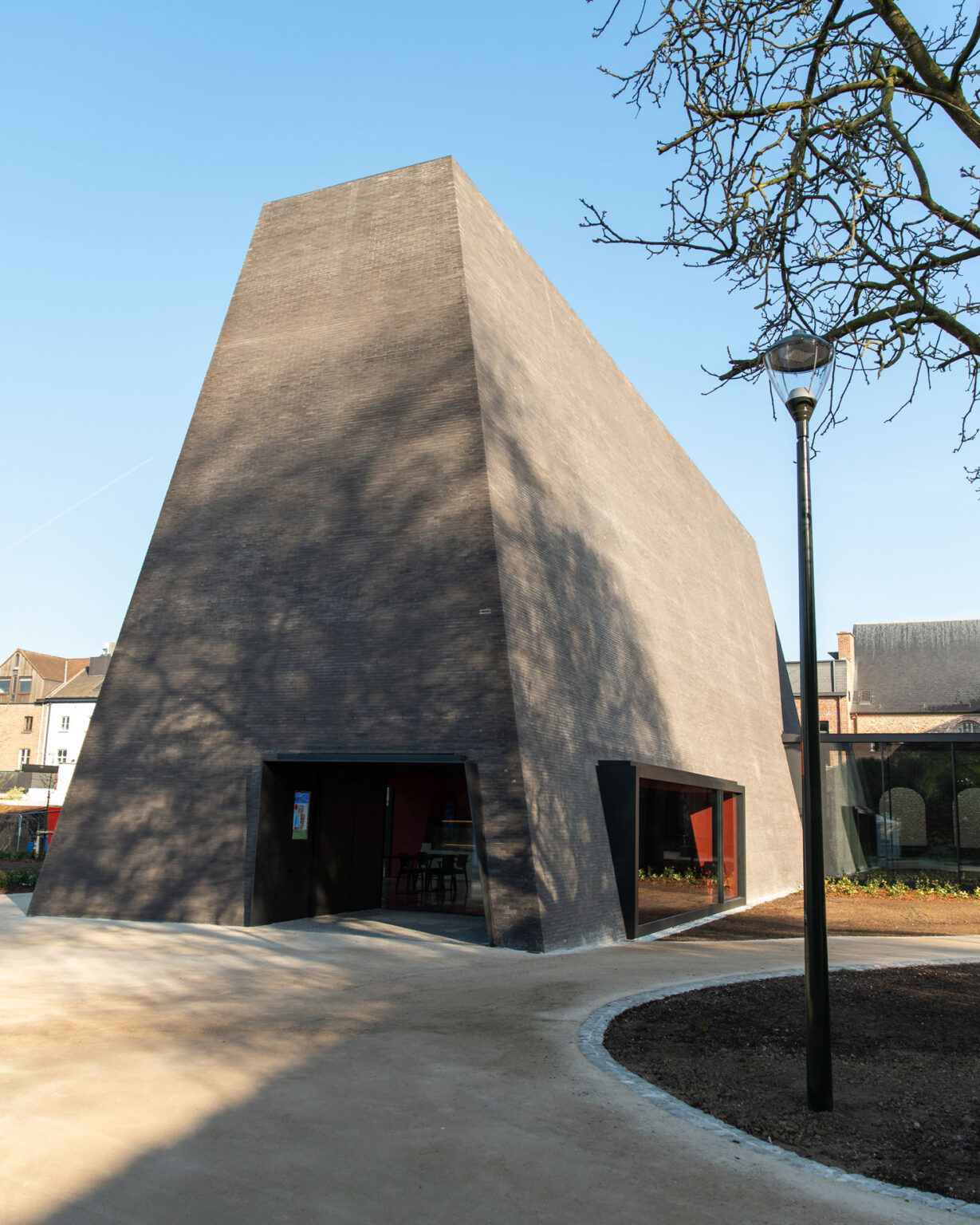
The Budafabriek, the heart of the residency, was a textile dye works of the Desmet-Dejaeghere firm from the 1920s. The Brussels architecture office 51N4E converted it between 2010 and 2012 into a house of art and production, deliberately leaving the raw factory character in place. Two pentagonal volumes in pale-yellow brick set the accents: a roofless entrance pavilion that opens the view to the sky, and an inner core around which studios, workshops and exhibition rooms are layered.

© Dieter Van Caneghem
At the top lies a roof terrace looking over the Leie and the city. The architects called the building “a tool to look with, not an object to look at.” Other places on the island—the open makerspace and the exhibition rooms at Broelkaai 6—give the residents further space to work, build and show their results.

© Dieter Van Caneghem

© Dieter Van Caneghem
The residency life
The three residents arrive in early September and stay until December. They work full time on a shared annual theme, each from their own discipline—product design, textile, ceramics, graphics or art. Guided by curator Lise Van Tendeloo, they go on excursions to businesses and workshops, talk with manufacturers, citizens and students, and develop contextual work from it.

In autumn the residents show their ongoing research at WONDER–Kortrijk Creativity Festival, organised by Designregio, which in 2025 drew more than 18,000 visitors to 34 venues. What remains are prototypes, books or installations. The guests move on; their work stays present in the city’s exhibitions and publications.
Artists, designers & projects
Over the years the programme has brought makers from more than a dozen countries to Kortrijk, and much of their work tells what the residency is about. The first trio, in 2014—Antonio Carratù, Robin Andersson and Lucie Barouillet—gathered their experience in the book “Open Design in Practice.” In 2019, around the theme of tiny houses, Lucie Dubois, Oleksandra Gerasymchuk and YunPei Hsiung developed the open-source board game “NomadiCity” and its companion “Keep It Tiny.”

© Dieter Van Caneghem
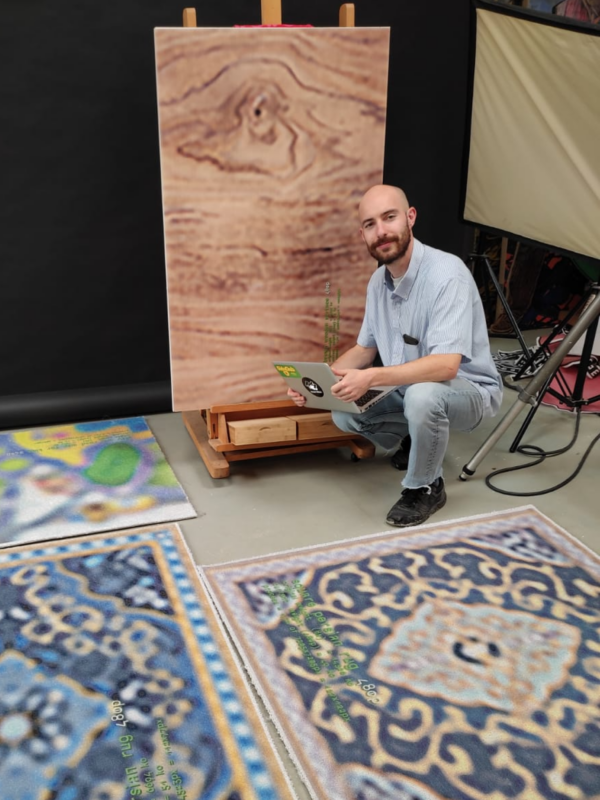
In 2025 Uģis Albiņš from Latvia, the product designer Kato Herbots and the textile designer Lou Cruard worked on the theme of metamorphosis and the region’s ceramic tradition; with “Vanissage”, Cruard develops a weaving technique of her own, between basketry and weaving.

© Dieter Van Caneghem

© Dieter Van Caneghem
The residency also opens careers: Guillaume Morillon, a guest in 2016, now works in Sabine Marcelis’s studio; Nicolas Zanoni, who turned Kortrijk into objects of raw aluminium, at Destroyers/Builders; and YunPei Hsiung is creative director of The Hive Lab in Shanghai. The results feed exhibitions such as the recent “Metamorphosis” at the ABBY museum.

© Dieter Van Caeneghem

© Dieter Van Caneghem
The programme
The programme is aimed at recently graduated designers, makers and artists of every discipline, national and international. Each year Designregio Kortrijk selects three participants through an open call to work on a changing theme—2024 “All the Small Things” with Design Museum Gent, 2025 “Metamorphosis” with the ABBY museum, 2026 “Mutation” with the arts-education organisation NERDLAB.

© Dieter Van Caneghem
The stay lasts three months full time, from September to December. Designregio provides a workspace, accommodation and guidance from the curators, along with excursions and public platforms such as the WONDER festival. Applications run through a portfolio with biography, CV and statement of purpose; deadlines change each year and are announced on the official website. What is expected is a readiness for research, experiment and exchange with the local community.

© Dieter Van Caneghem

© Dieter Van Caneghem
The surrounding area
Kortrijk’s history is visible everywhere: the medieval Broel Towers on the Leie, the belfry as a UNESCO World Heritage site, the Beguinage. Richer still is its textile heritage. At the Texture museum, housed in a former flax depot, you can follow how flax and linen shaped the region—the Leie was once called the “golden river”, because flax was retted here. That material culture still runs through today’s design scene. Since 2017, Kortrijk has also been a UNESCO City of Design and is therefore part of a global network that focuses on creativity to create a more liveable and even more stimulating environment for its citizens.

© Arno Verougstraete on Unsplash
©
Kortrijk belongs to the Eurometropolis Lille–Kortrijk–Tournai and lies close to Ghent, whose Design Museum has partnered the residency several times. Anyone coming here gets to know a city where industrial history, craft and contemporary design lie close together. For Gentle Traveller, Designregio Kortrijk is a way into a Flanders beyond Bruges and Brussels—a region that treats making as part of its identity.
Closing note
Designregio Kortrijk shows how a small city turns its industrial past into a living design programme. For three months young makers become part of Kortrijk, research in its workshops and give the city new ideas in return. For travellers who want to see design in process, Buda Island is a place where work and thinking go on.

© Dieter Van Caneghem

© wedocumentart024
Practical notes
- Location: Buda Island, Kortrijk, West Flanders, Belgium
- Disciplines: product, material, textile, graphic and experimental design, art
- Founded: programme since 2014; run by Designregio Kortrijk (a platform of the city, Leiedal, Howest, Voka)
- Curators: Lise Van Tendeloo and Kortrijk Xpo
- Programme: annual design residency on a changing theme, three participants
- Duration: three months (September–December)
- Accommodation: provided
- Studios / workshops: Budafabriek, The Maakfabriek (formerly BUDA::lab), Broelkaai 6
- Application: open call via the website (portfolio)
- Public programme: WONDER Festival; exhibitions
- Website: designregio-kortrijk.be

© wedocumentart024