You pass through a gate in the monastery wall, and the noise of the valley drops away. A sequoia stands in the courtyard, older than most guests put together. That one of central Switzerland’s most singular kitchens works behind these walls—14 GaultMillau points, once the first monastery ever to be rated—you notice only by the smell of hay, cider must and fried bread.
At the Edge of the Village Square
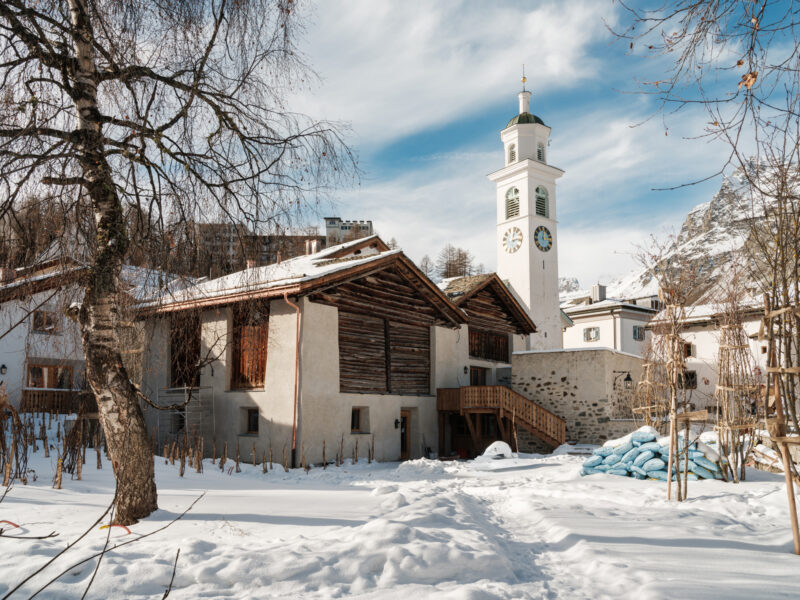
Stans lies where the Engelberg valley opens toward Lake Lucerne, in the shadow of the Stanserhorn, whose funicular has carried summer visitors up the mountain since 1893. The village core, rebuilt in dignified Baroque after the fire of 1713, is among the loveliest in central Switzerland.

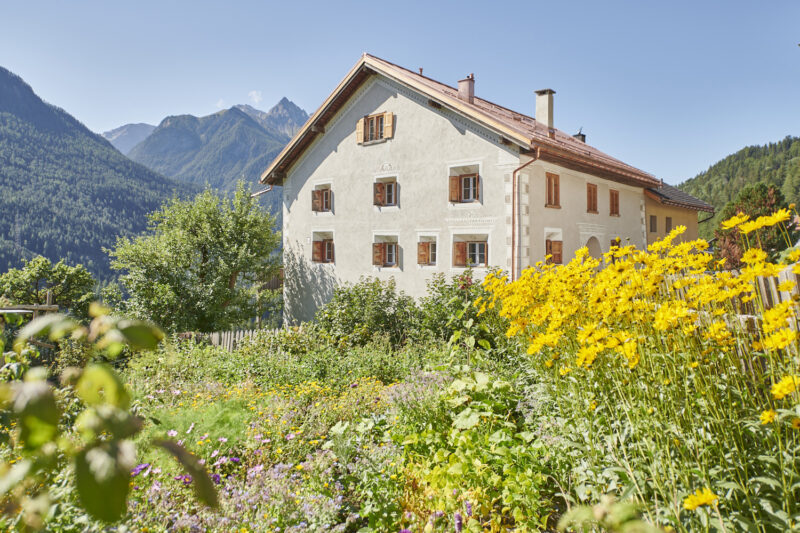
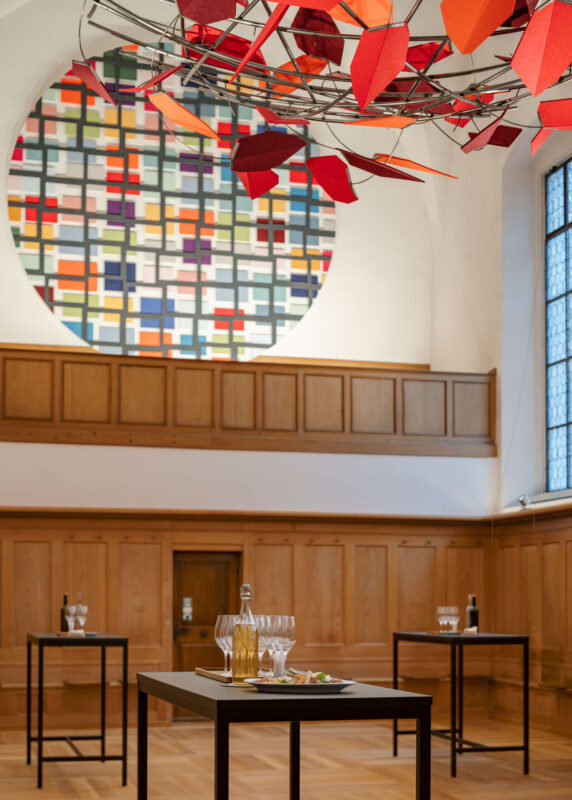
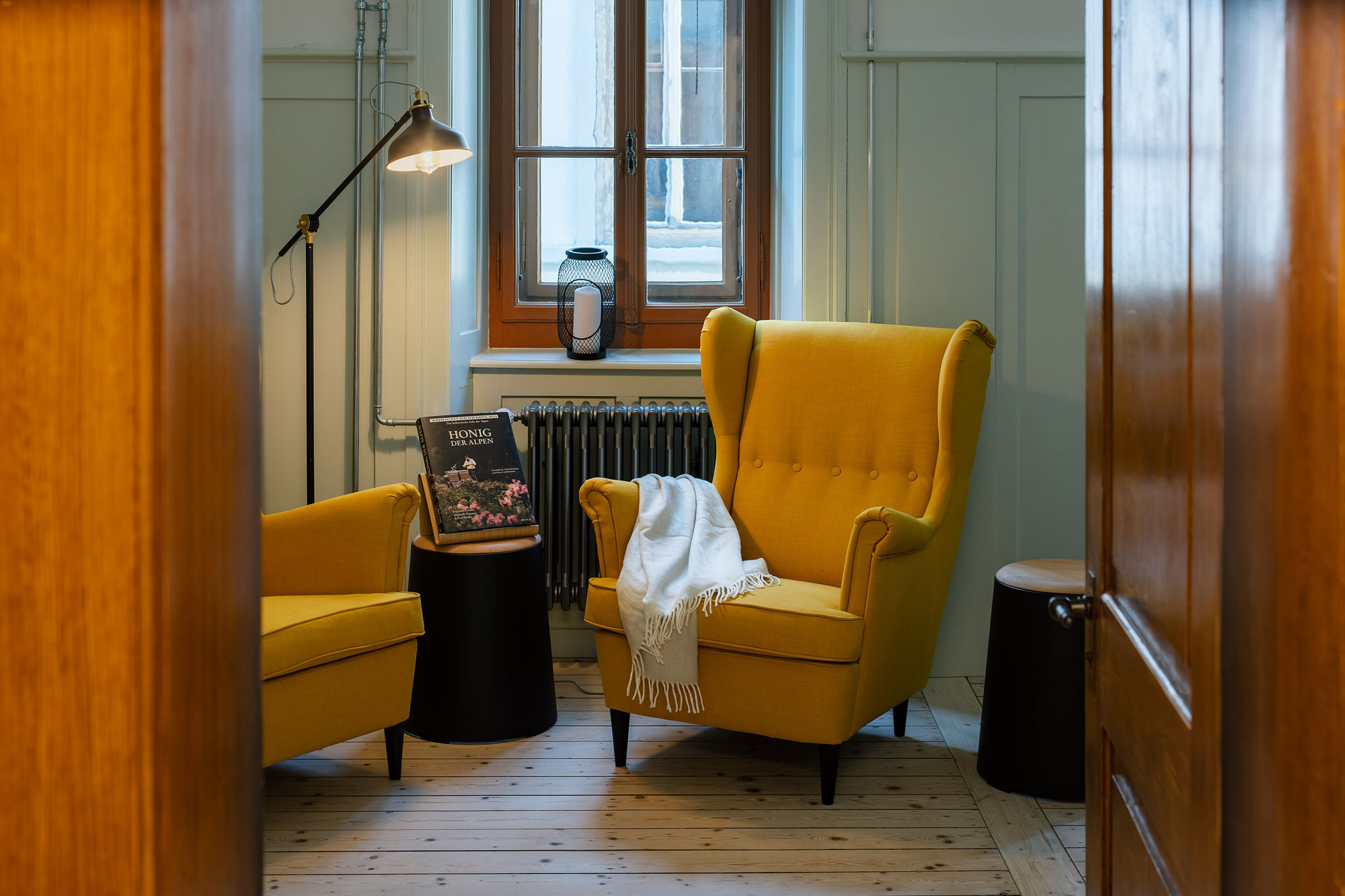
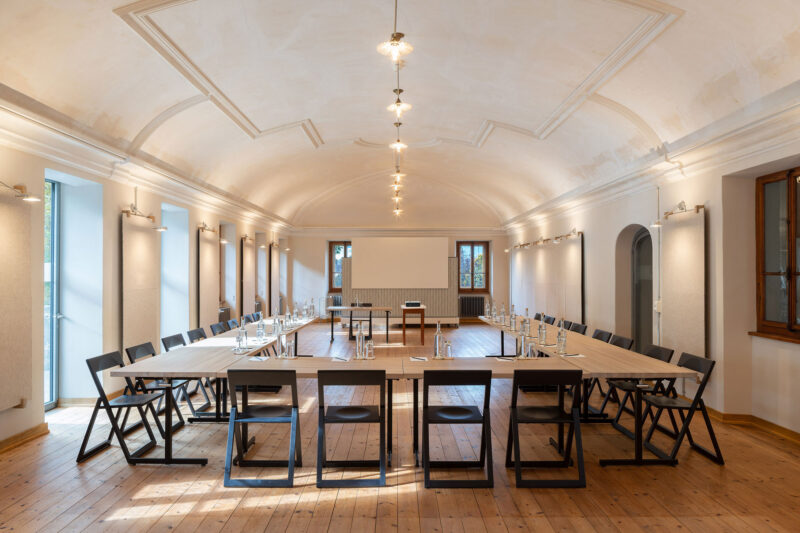
At its edge, by the Mürg, stands the Capuchin monastery: a long, unadorned building whose severity never aimed to impress. Inside, the austerity has been left intact and only the necessary added — whitewashed vaults, heavy tables, a courtyard with a sequoia that the evening light strikes at a slant. The monks’ cells have become guest rooms, plain and bright.


Four Centuries, Then the Rhubarb
For four centuries Capuchins lived within these walls. Founded in 1583 by Johann Melchior Lussy, a mercenary commander who had grown rich and sought to convert his money into piety, the monastery became a school, a plague refuge and later a gymnasium that educated half of Nidwalden. What came to the table grew in the cloister garden or arrived from the farms around — regional and seasonal long before there were words for it. In 2004 the last brothers moved out. A pharmaceutical company tried its luck with the empty rooms and failed; the house stood empty again. Only in 2015 did a concept appear that matched the severity of the place: the food journalist Dominik Flammer and the Senn Group proposed a centre for the cuisine of the Alps. The Culinarium Alpinum opened in 2020.

David Zurfluh runs the open kitchen. Host Peter Durrer, formerly a director in five-star hotels, had brought him over from the Villa Honegg on the Bürgenstock, where the two had already worked together. There Zurfluh cooked with everything the world market supplies. Here they took it all away: no lemon, no olive oil, no capers, nothing that does not come from central Switzerland or the alpine region. A restriction that feels at first like a shackle and turned out to be a release. Only it, he says, showed him the variety on his own doorstep. Today the menu changes almost daily in summer, depending on what twenty farms bring in the morning. February stays hard. But then comes the rhubarb.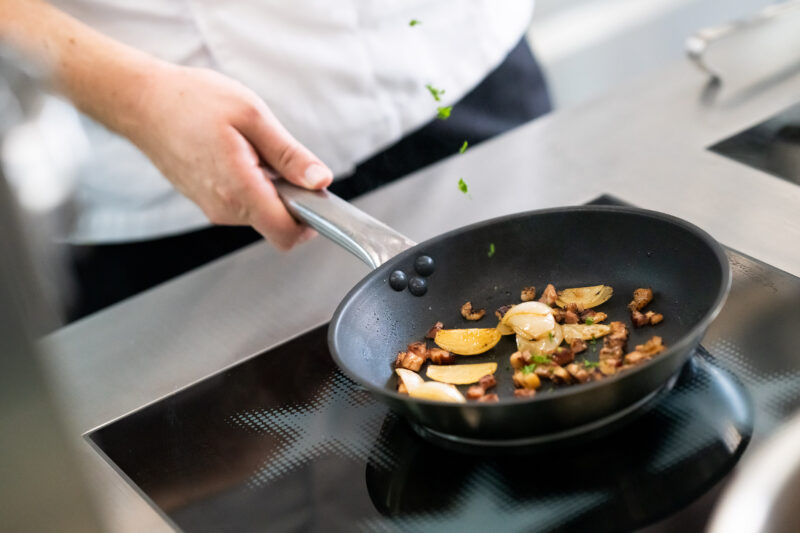
The Art of Omission
Zurfluh’s cooking claims no refinement; it reduces. Give up lemon, olive oil and overseas pepper, and you have to find the acidity, the fat and the heat somewhere else — in cider must, in aged cheese, in pickled flowers and wild herbs from the roadside. Deliveries come in the morning, from some twenty farms across Nidwalden and Obwalden; the whole animal is used, not just the fillet, and everything is made in-house, with no convenience products.

How that tastes is clearest on the signature plate: oven-roasted vegetables with Alp Sbrinz cream. The Sbrinz, a hard cheese aged in the monastery’s own cellar, is whipped into a cream that sits mild and buttery at first, then releases a deep, almost broth-like savouriness — the saltiness other kitchens reach for in anchovy or soy. Beneath it the vegetables, roasted to sweetness, soft, with caramelised edges. On top a salty granola, the only resistance on the plate: it cracks before the cream smooths everything over again. A play of three temperatures and two textures that needs not a single imported drop. The finish stays long and salty without tiring; you reach for water, not bread.


Other dishes work through contrast: fried rhubarb with its acidity still in the bite, beside bitter rocket, rich hazelnuts, shavings of Sbrinz that catch the acid and pull it toward the savoury. Or the whitefish from Lake Lucerne in a white-wine sauce, so fresh the flesh falls apart rather than breaks. The breast of Stanser whey-pig, in turn, plays on its crust — crisp, salty, almost brittle — under which the meat gives way, tender and faintly sweet; the house mustard cuts straight through. The level is not uniformly star-kitchen fine, and does not want to be. It is concentrated, honest, at times rustic. What it can do, it does completely.
Varieties That Would Otherwise Vanish
The restaurant is only the tip. Behind it stands the KEDA Foundation, which sets out to save the varieties, breeds and crafts of the Alps from disappearing. The garden, laid out with ProSpecieRara, holds around 250 fruit and berry varieties. In the cellar the Alp Sbrinz of eight central-Swiss alps matures, a Slow Food Presidio.

Zurfluh also takes the crooked vegetables off the farmers’ hands and uses the whole animal. Courses, guided tours and a teaching kitchen pass the knowledge on — to professionals and to school classes learning where food comes from. Vegetarian dishes stand on equal footing on the menu and are often the best of what the season gives.


Without Cheating
There are more expensive tables in Switzerland, and finer ones. Hardly one, though, that takes so literally what elsewhere merely appears on the menu. Here regionality is a sum that has to add up afresh every morning — and it does. You sit in a former monk’s cell and taste the valley, the lake, the alp. What is missing — the lemon, the olive oil — you no longer miss after the first course. Anyone who wants to know how the Alps taste when no one cheats drives to Stans.

Sleeping in a cell, without renouncing Anything
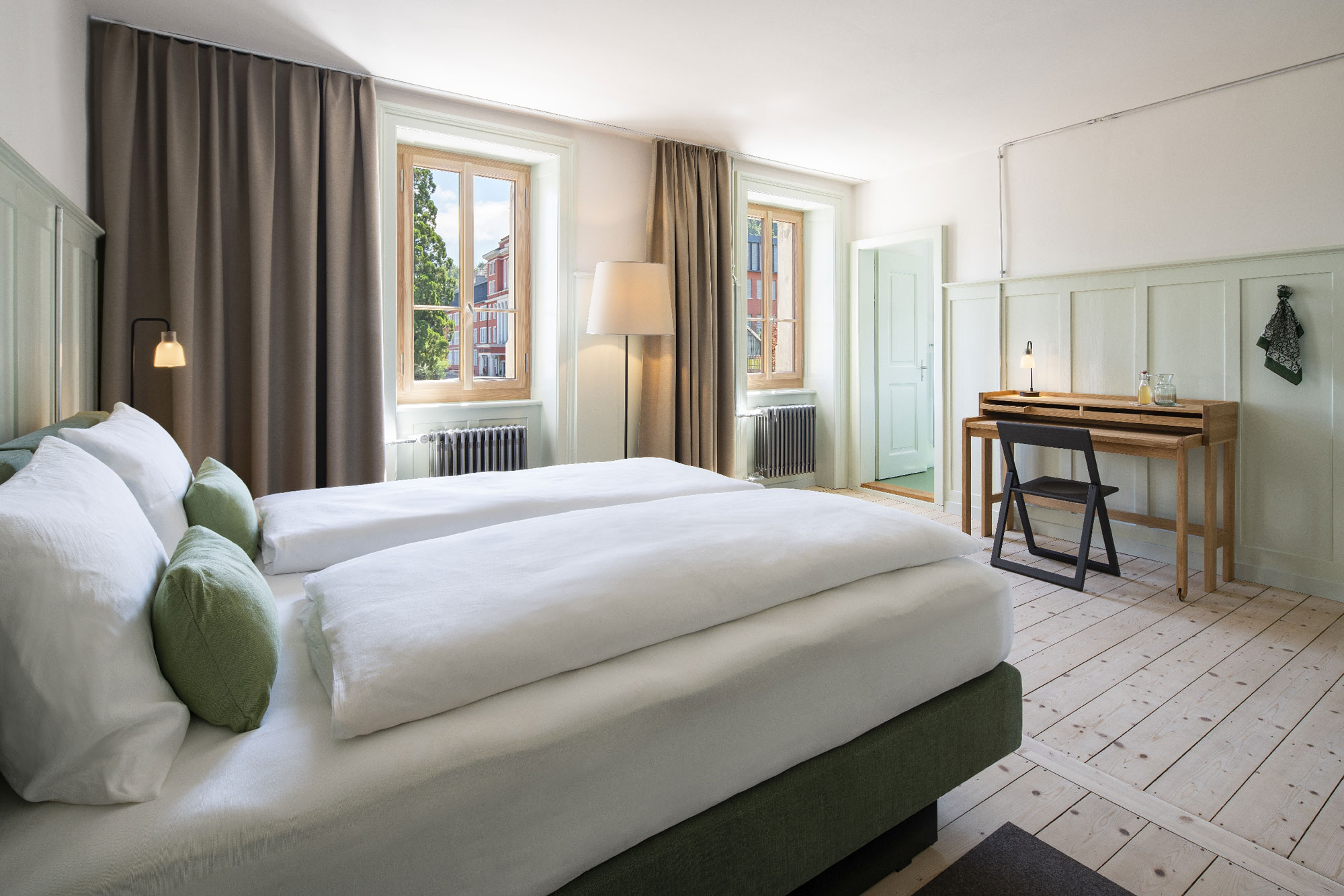
Fourteen rooms have grown out of what were once the monks’ cells, and the paradox of the place carries through to the night. The renovation of 2020 kept the monastic line — whitewashed walls, clear proportions, nothing superfluous — and quietly added what the Capuchins did without: a proper box-spring bed, a modern bathroom with a walk-in shower, warm floors, good light. The plainness is deliberate, not a shortage; it is the discipline of a house that would rather leave a wall bare than dress it. Every room looks out on the same two things — the Buochserhorn rising across the valley and, below the windows, the edible garden with its two hundred and fifty varieties of fruit and berries. Mornings begin with the monastery breakfast, the same regional exactness that governs the kitchen downstairs. What stays with you is the register: a room stripped to what matters, in which you sleep unusually well.
Details
- Address: Mürgstrasse 18, 6370 Stans, Nidwalden (Switzerland)
- Getting there: train to Stans (Zentralbahn from Lucerne, approx. 20 min), then a 10-minute walk; A2 motorway, Stans exit
- Restaurant hours: daily 7.00–23.30, Sundays until 13.00; hotel open year-round
- Offering: weekly menu and evening à la carte; 4-course tavolata to share (CHF 72 per person); Sunday monastery breakfast buffet
- Seats: around 70 indoors, 50 outdoors
- Kitchen: strictly regional, organic, alpine; many vegetarian dishes
- Also: inn, vinotheque with walk-in wine list, monastery shop, Alp Sbrinz cellar, edible garden, courses
- Reservation: online table booking recommended
- Web: culinarium-alpinum.com