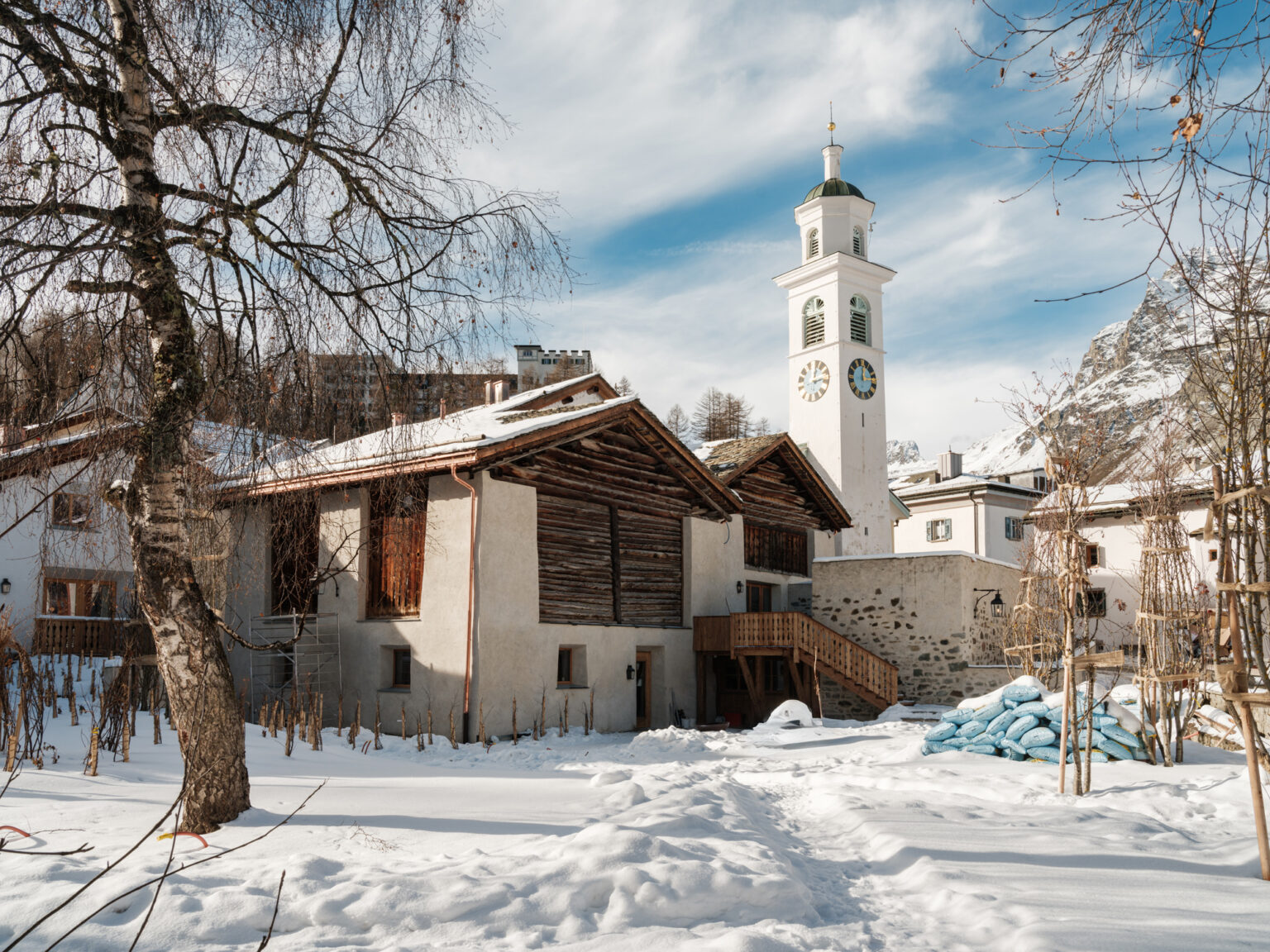

The road into Sils Maria narrows the mind in the right way. Lakes flash, the valley cools, and the village appears with that Engadin mixture of stone, timber and reserve. Then Chesa Marchetta comes into view: not theatrical, not loud, simply present. Arrival here feels less like checking in than being admitted to a place that already knows its own tempo.
The location
Chesa Marchetta stands on Via da Marias in Sils Maria, one of the Engadin’s most intellectually charged villages, around three hours from Zurich and within easy reach of St. Moritz. The approach is alpine but not remote: trains and roads bring you into the valley, then the scenery takes over.
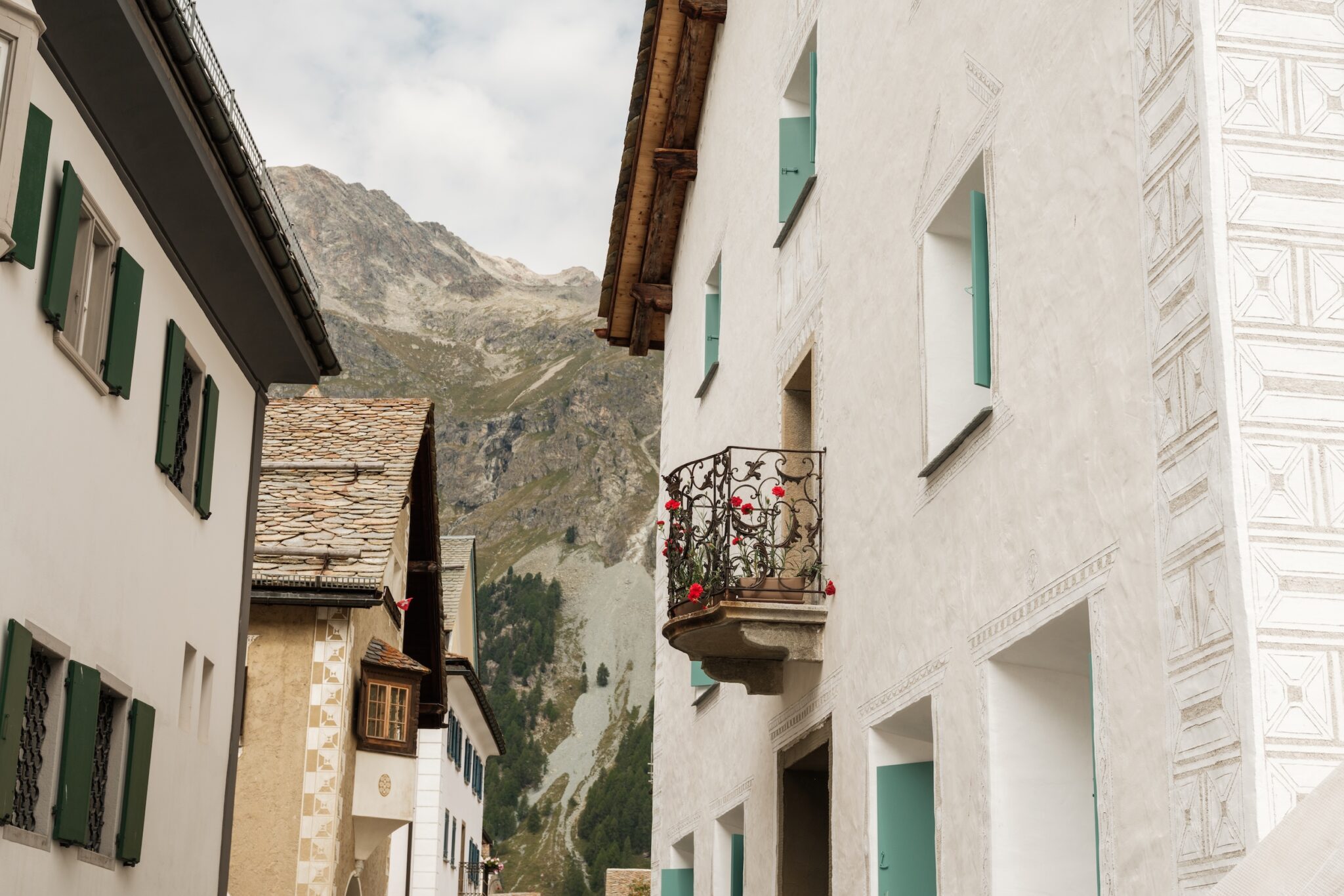
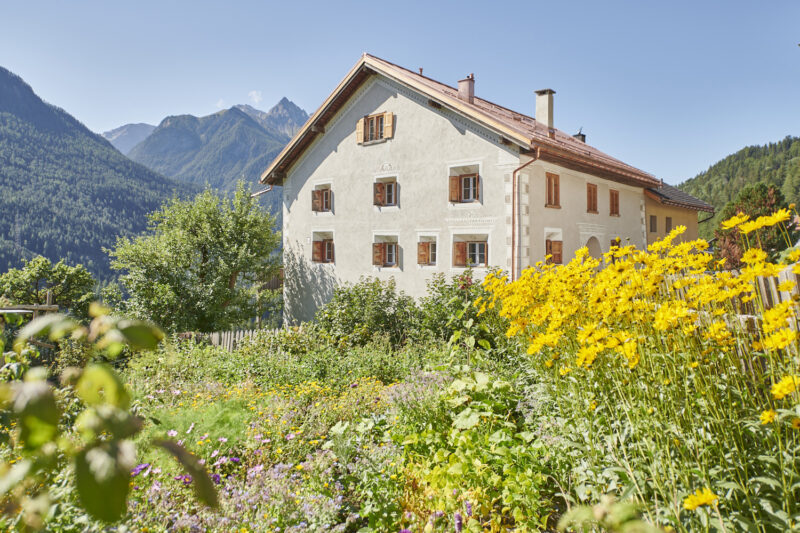
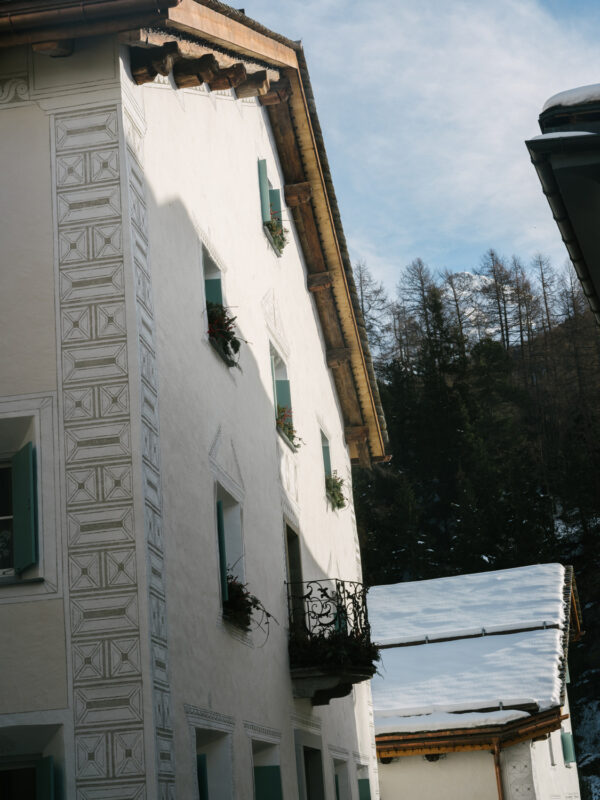
Outside, the house keeps the grammar of the Engadin intact—thick walls, sgraffito façade, deep-set windows, a certain civic solidity. It reads first as a village house, then as a refuge. The surrounding air is clear, the light almost corrective, and the exterior resists display. Precisely its style.
Backstory
The building reaches back to the 16th century and for decades lived as a much-loved restaurant and pensiun run by the Godly family from 1947 onward. Artists and travelers passed through; the house accumulated stories without becoming a museum of itself.
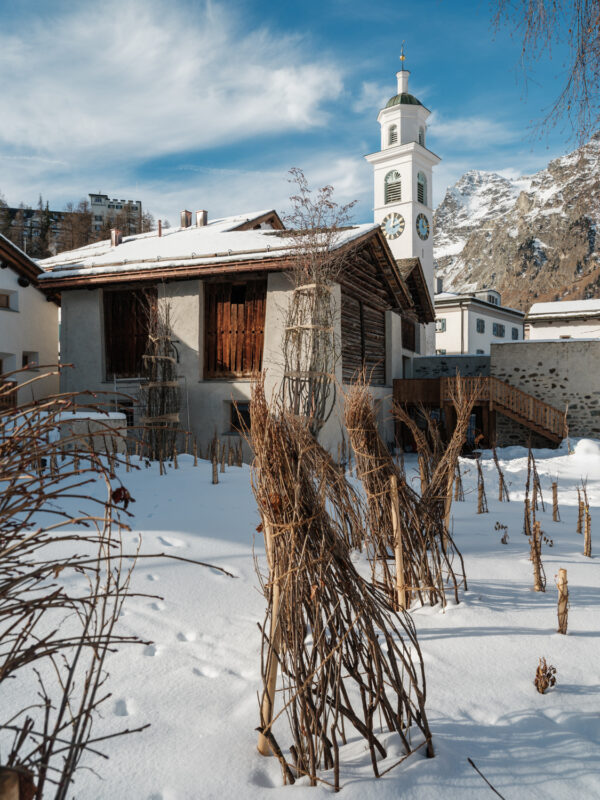
Its new chapter began when Manuela and Iwan Wirth—whose first date was here, a detail almost too neat but true—brought it into Artfarm, their hospitality group shaped around places with local depth rather than generic polish. After four years of redevelopment, Chesa Marchetta reopened in winter 2025/26. The public face of the house is deliberately human-sized: Federica and her team welcome guests, while chef Davide Degiovanni carries the old ingredient-led spirit into the present.
Interior & architecture
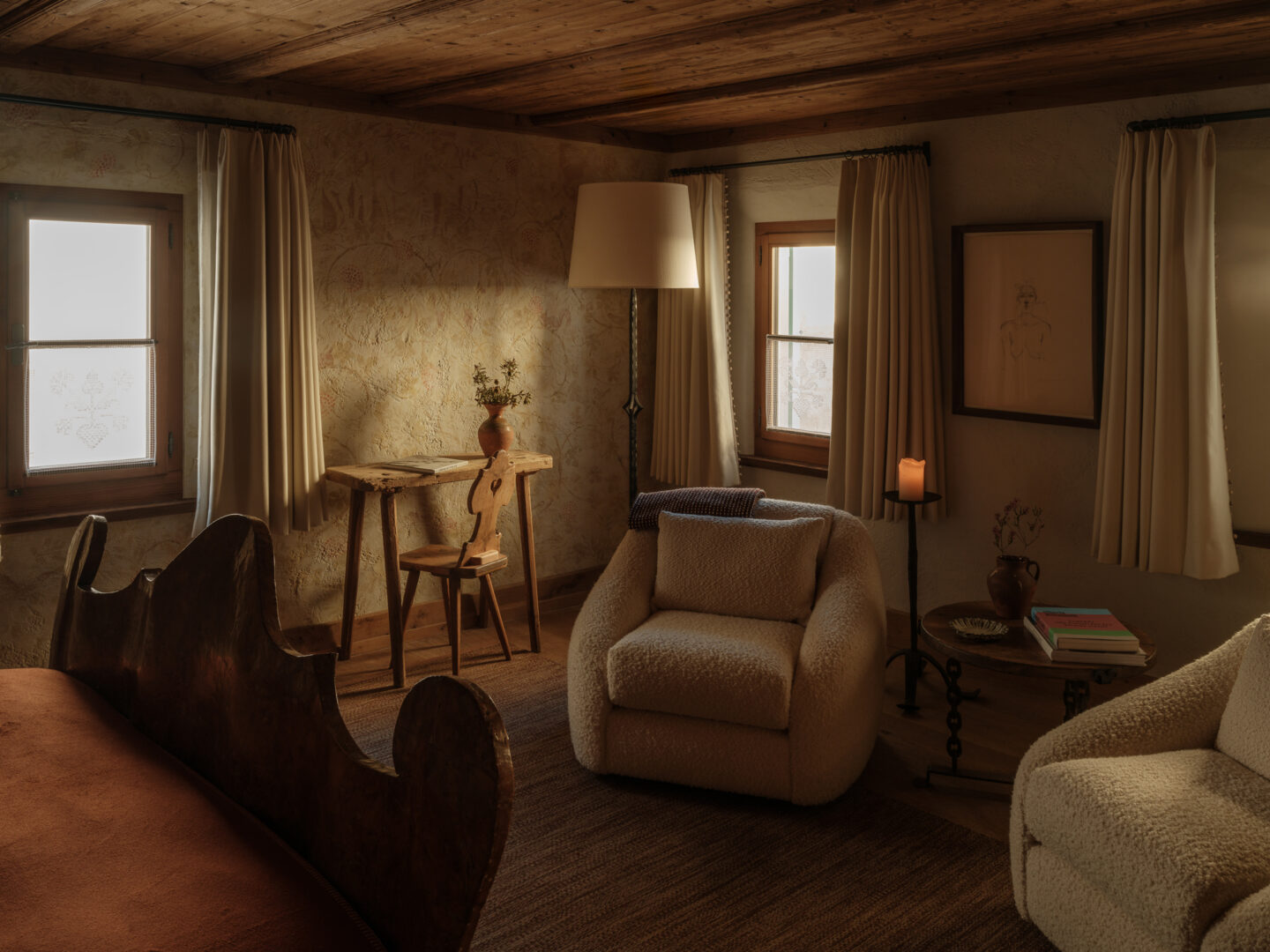
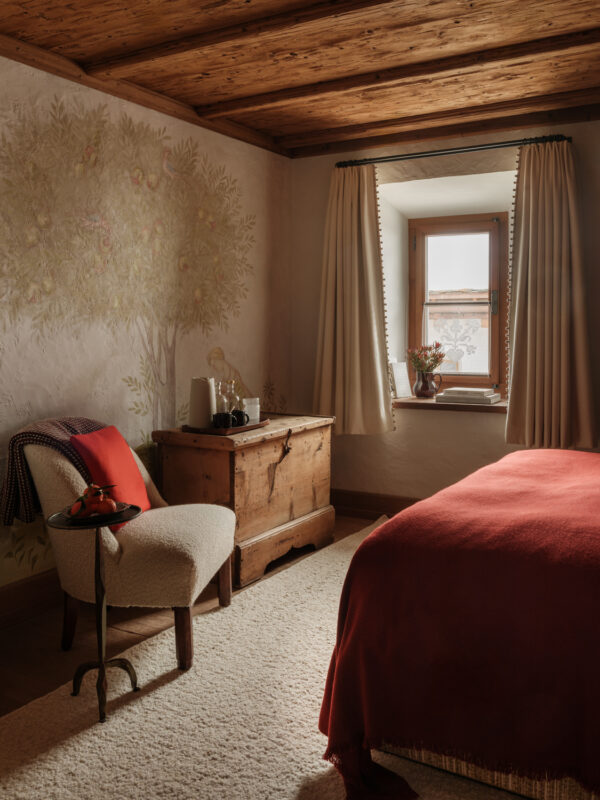
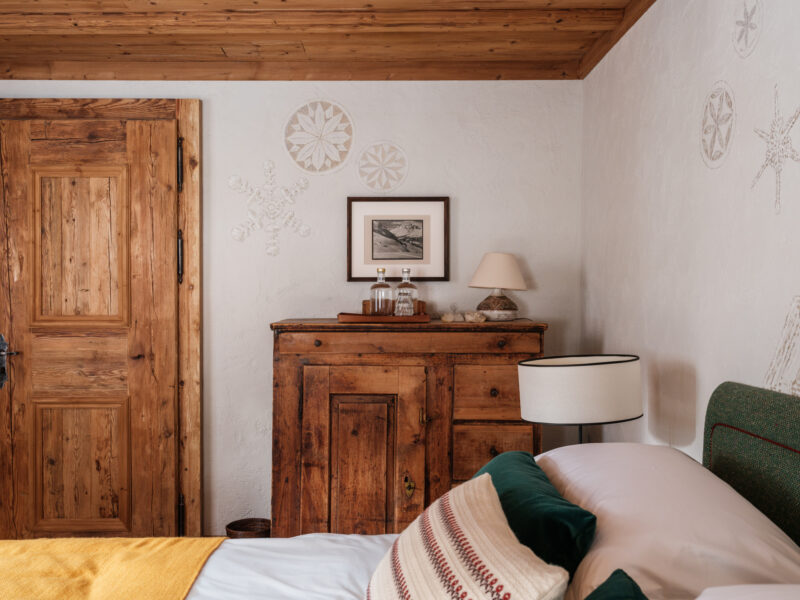
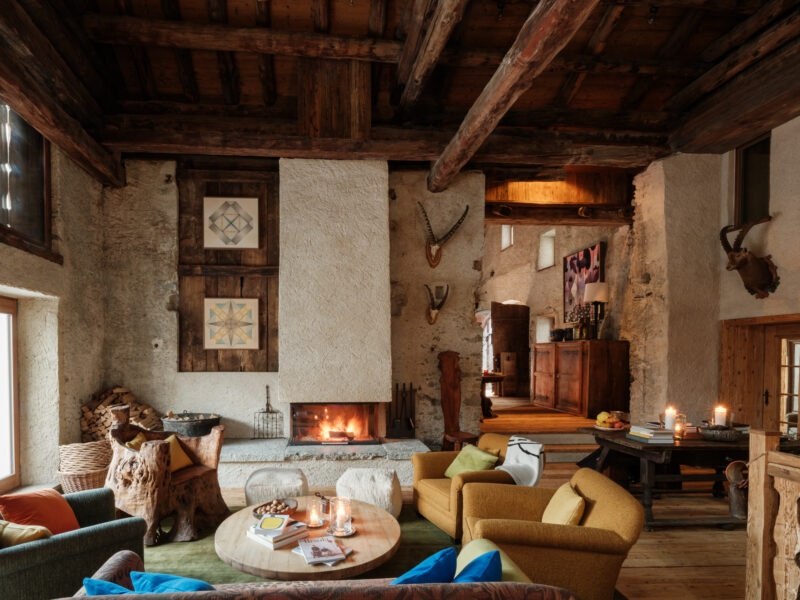
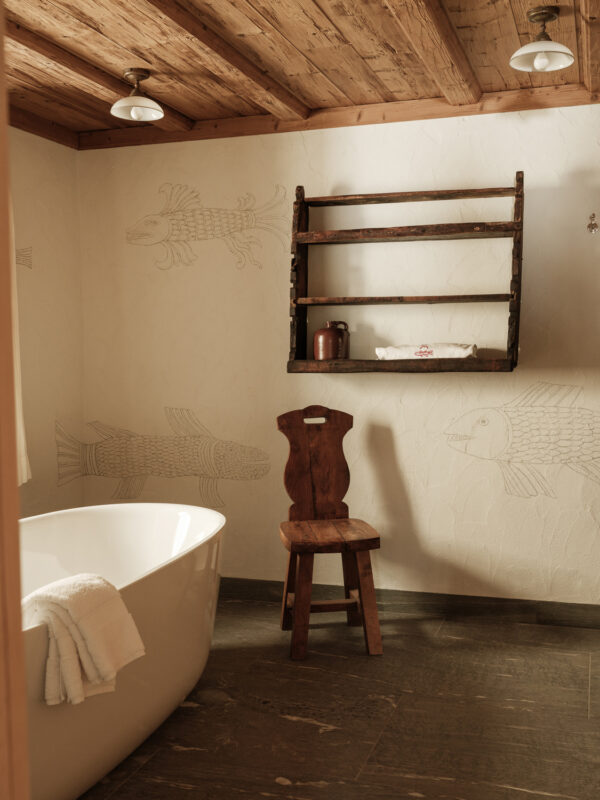
Luis Laplace approached Chesa Marchetta with restraint rather than conquest, which was the intelligent choice. The renovation preserves the building’s age lines—stabilised plaster, weathered beams, uneven textures—while returning traditional sgraffito to the façade and reinstating historic wall painting indoors.
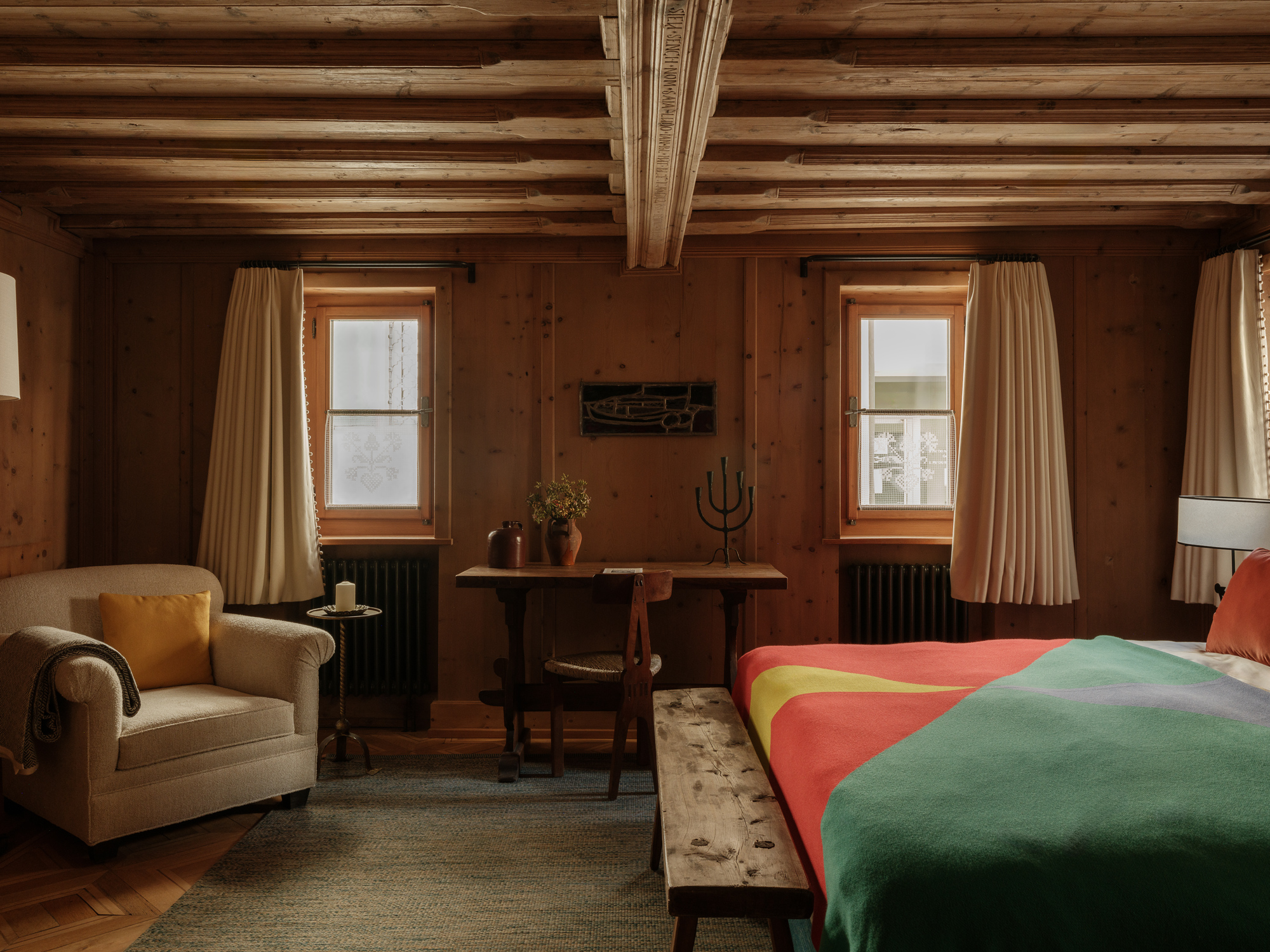
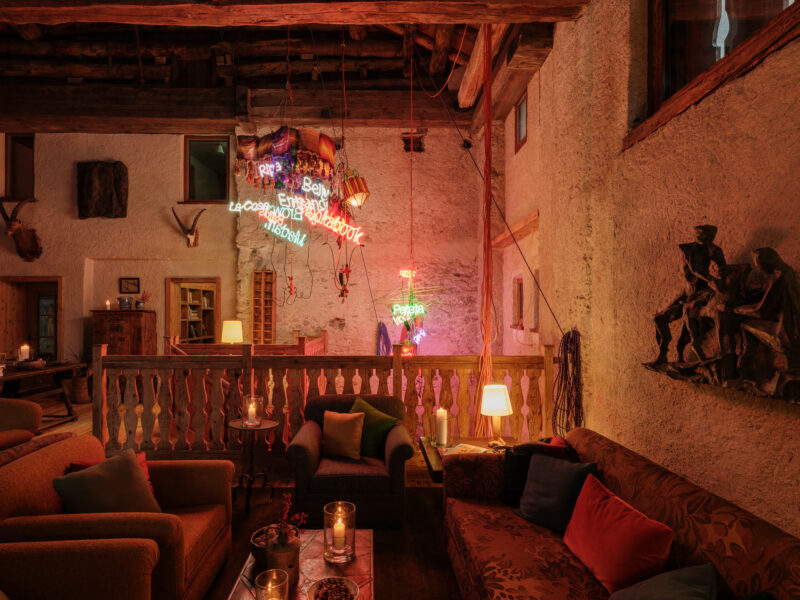
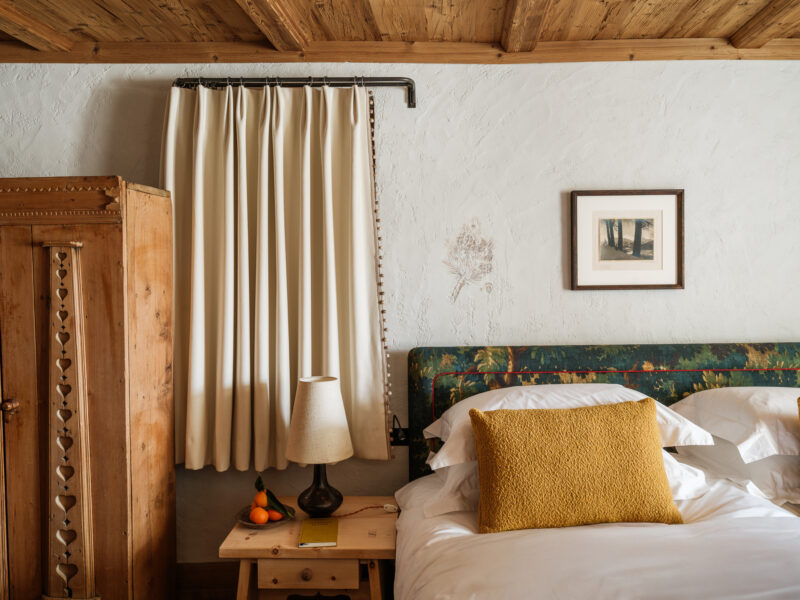
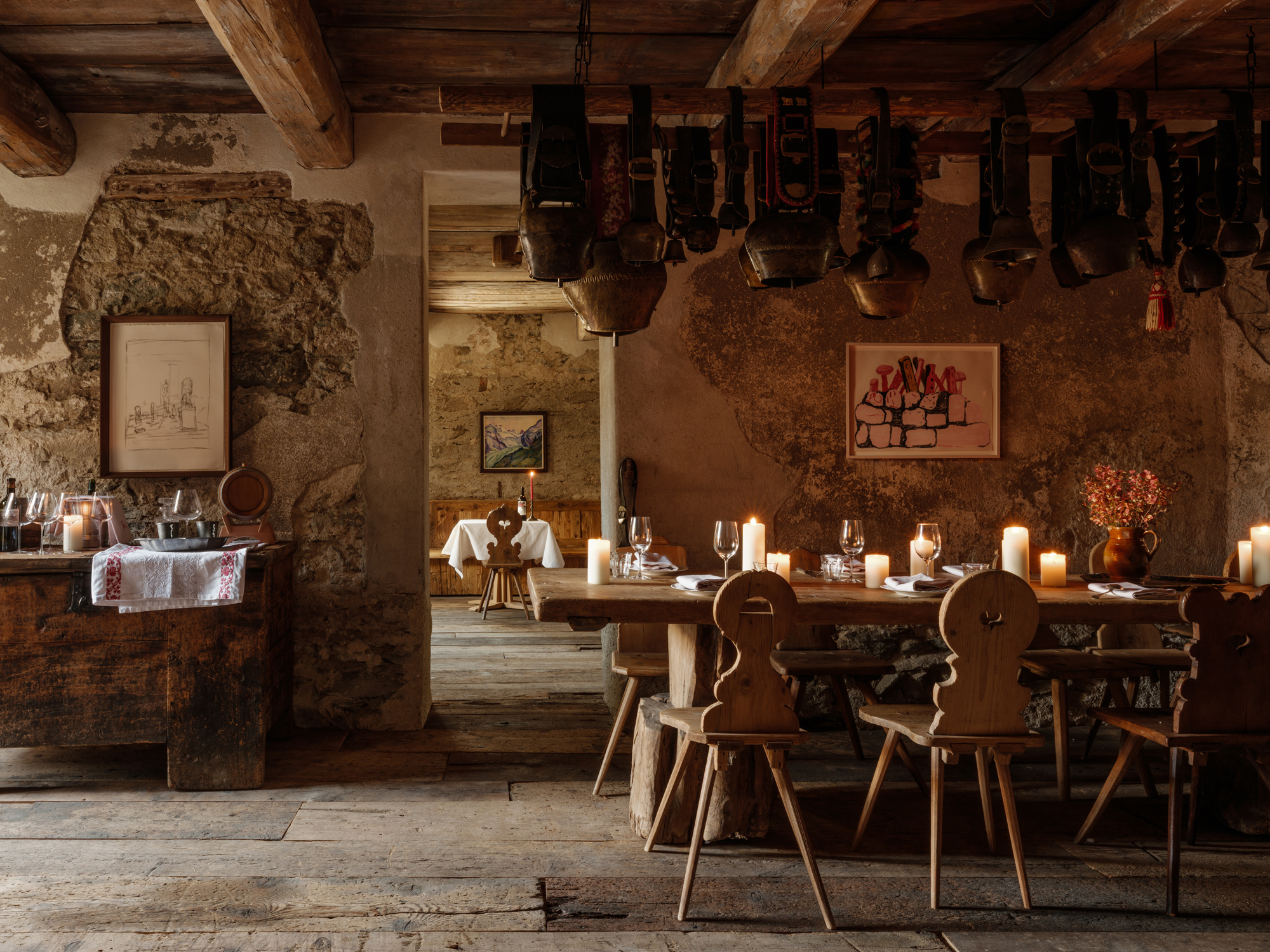
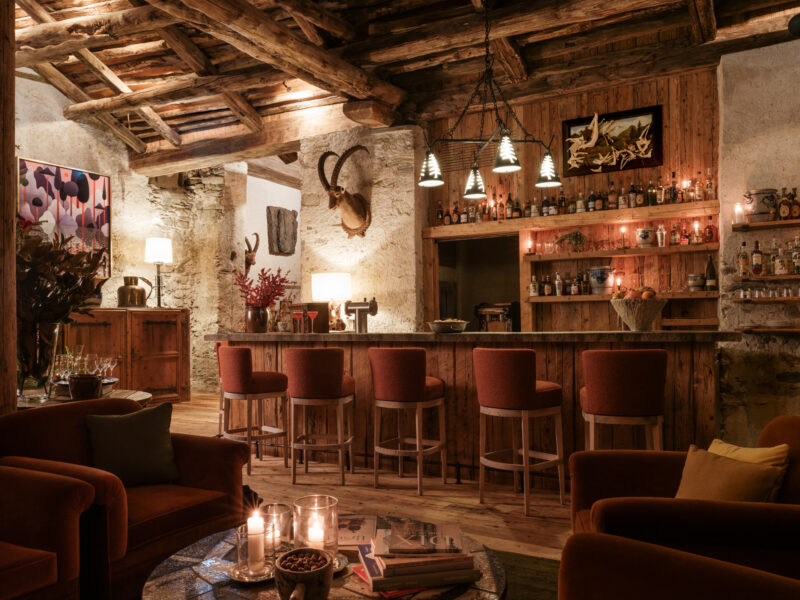
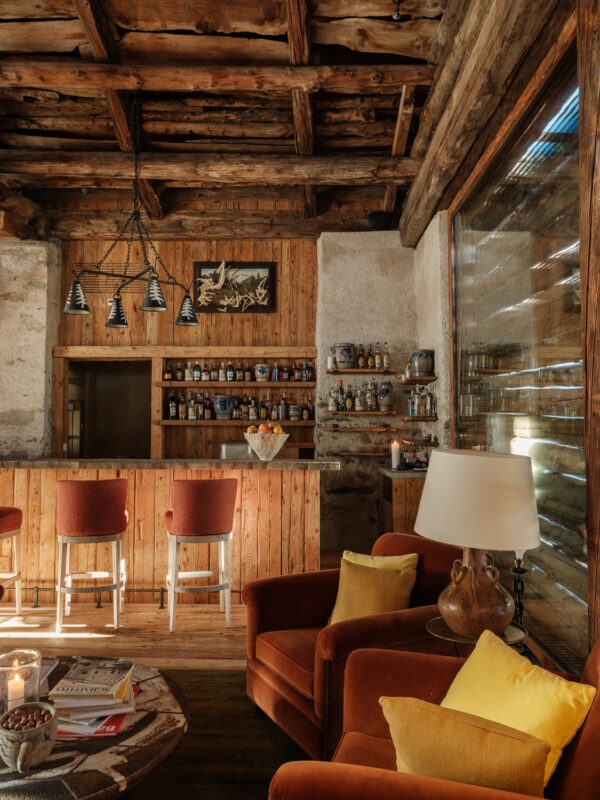
Rooms and public spaces are lined with larch, pine and spruce, hardwood floors, lime-washed walls, antique chests and vernacular Engadin furniture; embroidery, antique textiles and local craft keep the interiors from slipping into designer folklore. Then the counterpoint: serious art placed without ceremony. Works by Louise Bourgeois, Nicolas Party, Philip Guston, Daniel Spoerri and others appear in bar, restaurant and corridors, adding voltage to rooms that otherwise operate by calm.
A look inside
The house is compact but layered. There are 13 rooms in four categories—Standard, Superior, Deluxe and a Two-Bedroom Suite in the attic—plus a colorful lounge bar and restaurant.
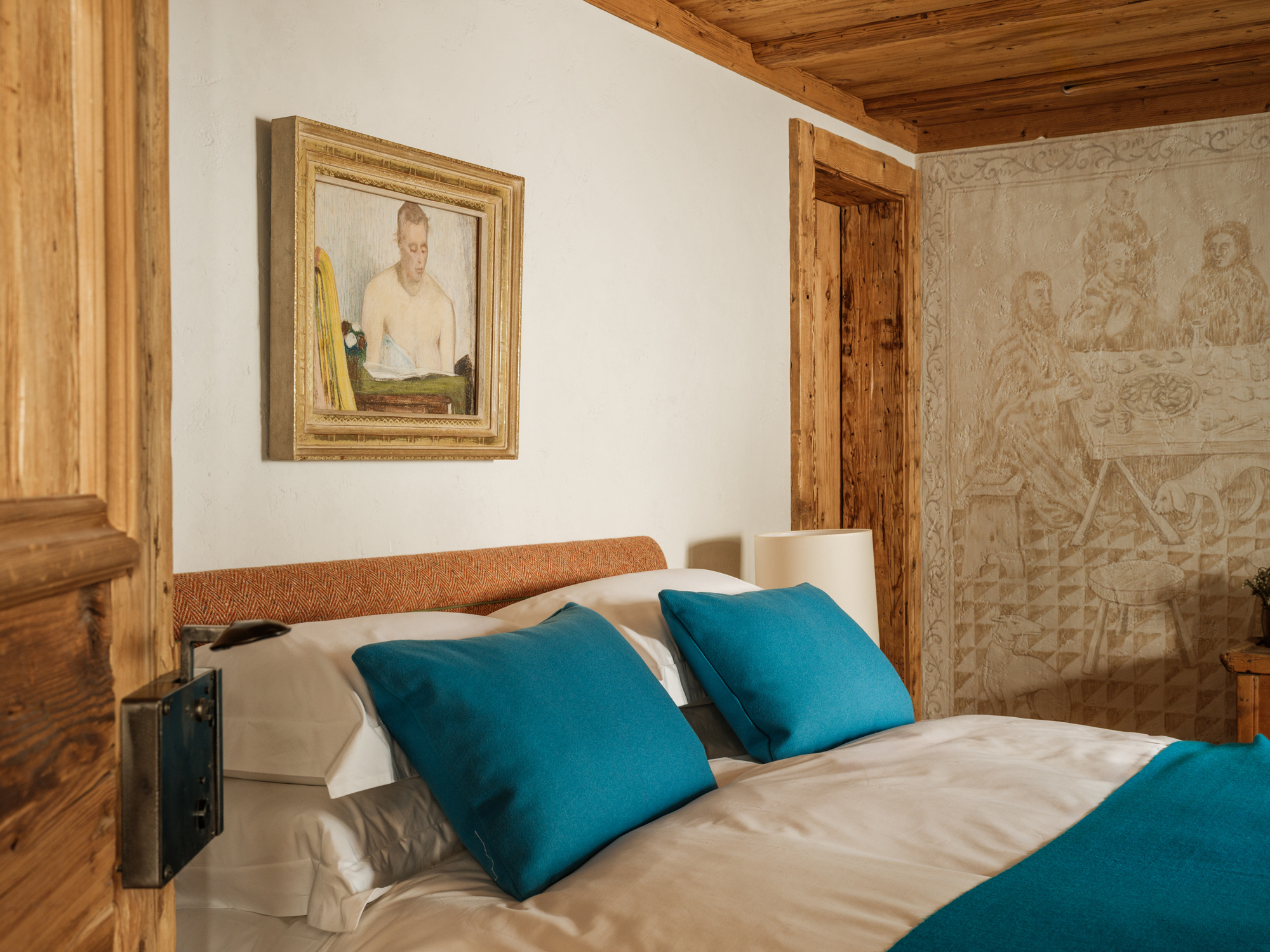
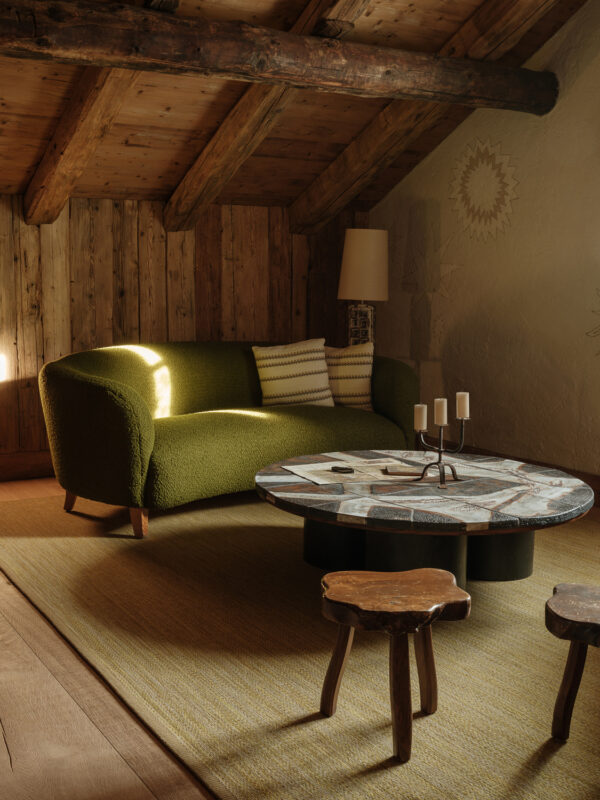
The family suite occupies its own staircase and combines double room, twin room and living area; Deluxe rooms on the ground and first floors add bathtubs and walk-in showers; Superior rooms on the second floor are quieter and more inward.
Across the house, beds run to 160 or 180 centimeters, bathrooms are stocked with Swiss Emma Kunz amenities, and antique desks, wardrobes and reading chairs keep comfort tied to use rather than showroom effect.
© Dave Watts
Culinary
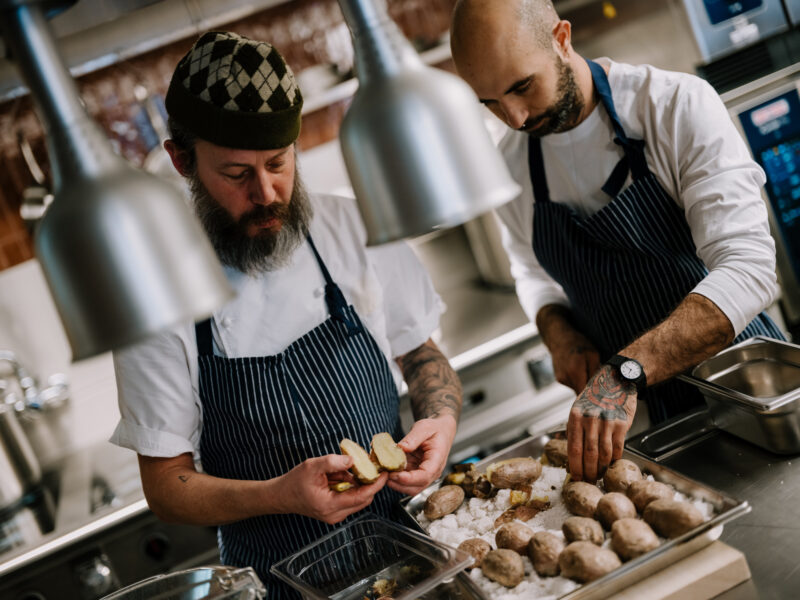
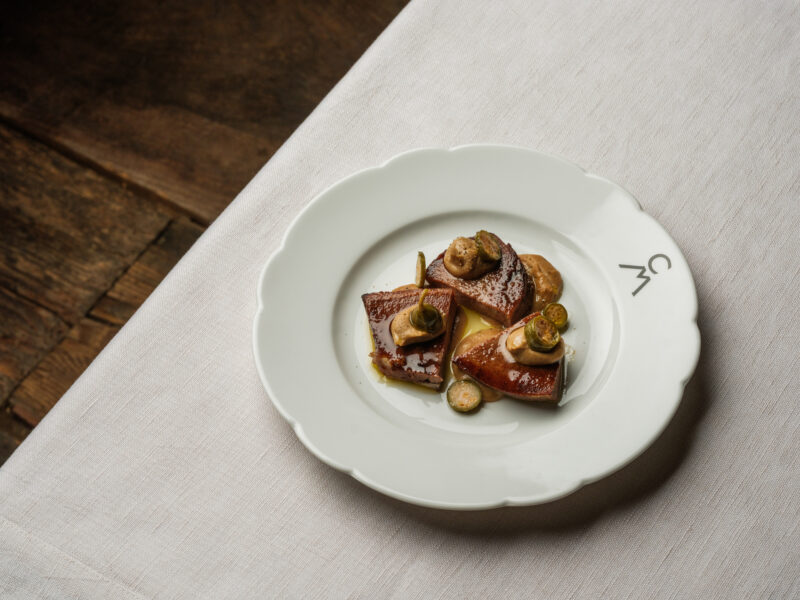
The restaurant is central to the house, not an amenity parked beside it. Breakfast is served for guests, a light lunch is available upstairs in the bar, and dinner opens the room to residents and outsiders alike—a good sign in a village hotel. Chef Davide Degiovanni works from Northern Italian and Swiss mountain traditions, with daily-changing specials and a menu shaped by producers from the Engadin and neighbouring valleys such as Bregaglia and Poschiavo.
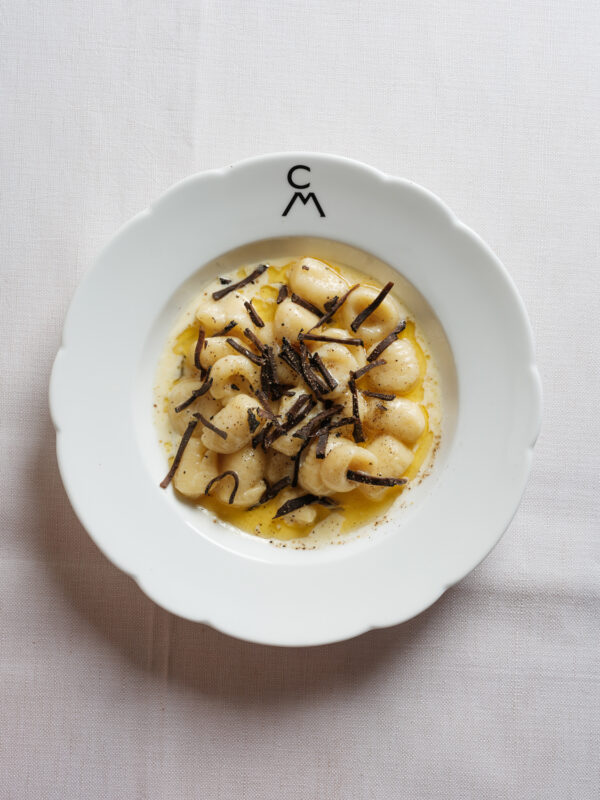
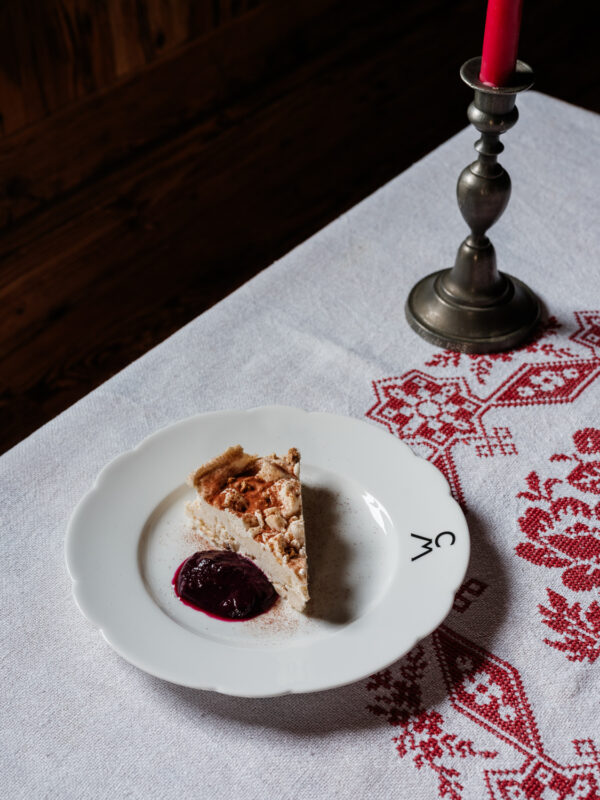
The tone is ingredient-led, seasonal, direct. Sample dishes include polenta fritta, roasted artichoke with fondue and truffle, gnocchi with cream, brown butter and truffle, pappardelle with ibex ragù, and gelato made with milk from Val Fex.
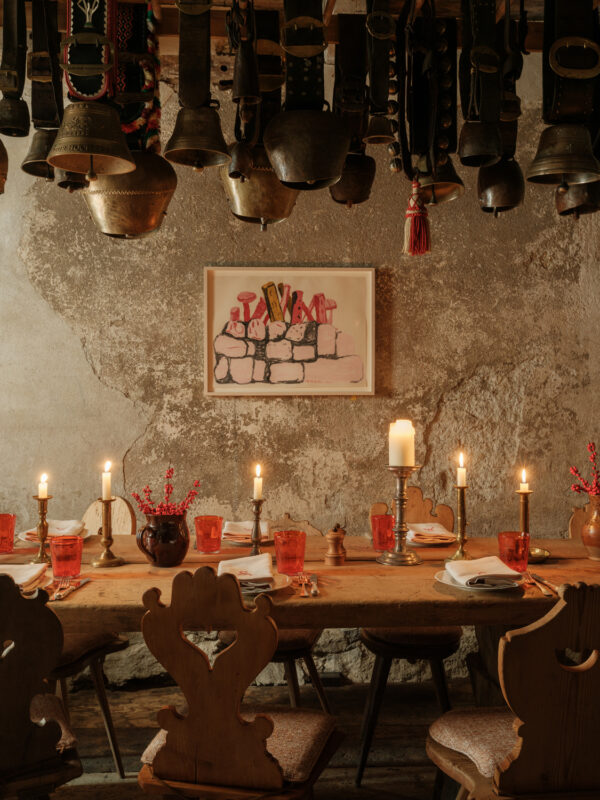
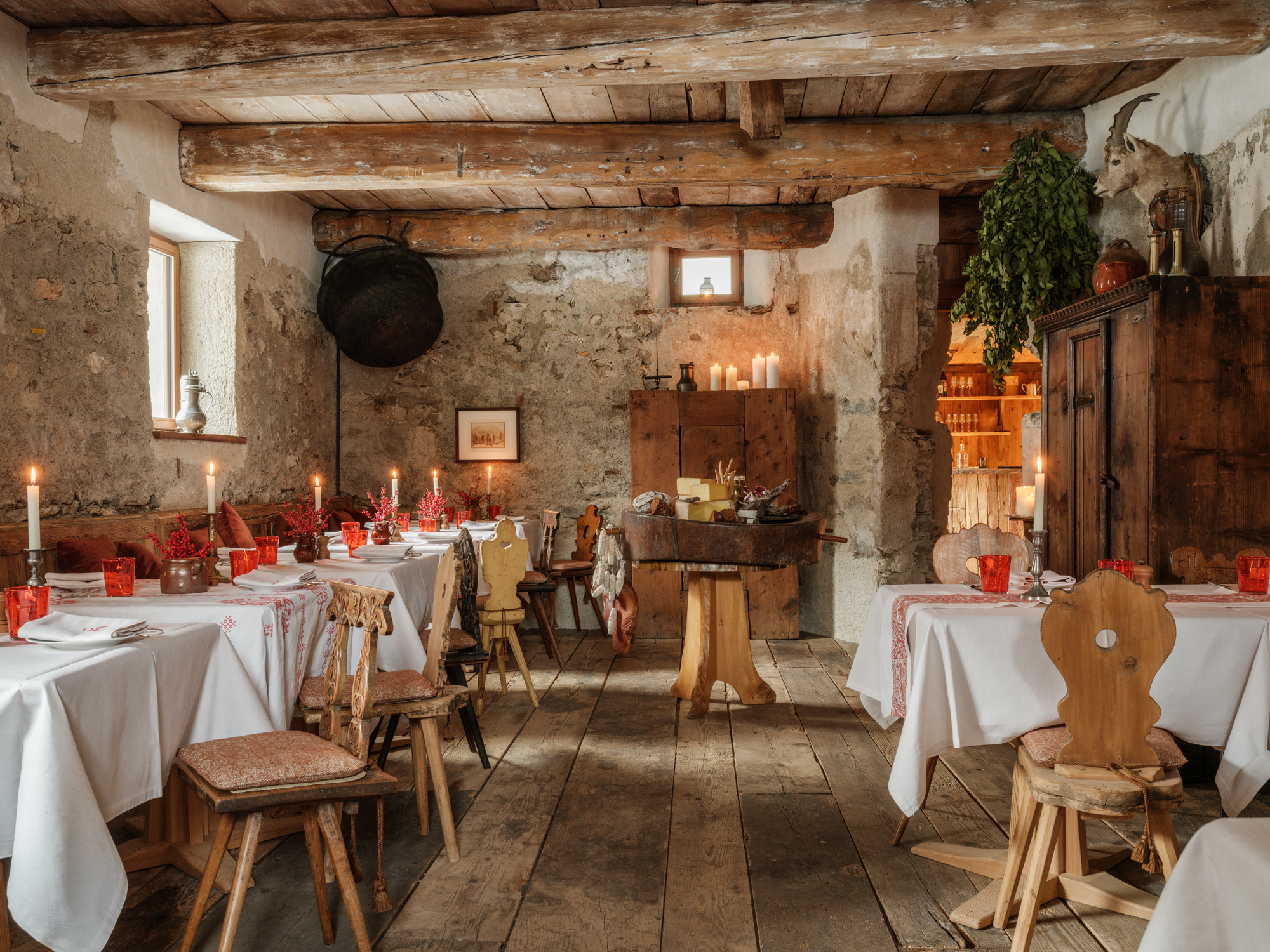
Cheese has its own moment; so does the hazelnut tiramisù. The room itself—beams, plaster, candlelight, art on the walls—keeps dinner from drifting into alpine cliché. Wines and aperitivi underline the same cross-border mood.
Wellness & Relaxation
Chesa Marchetta does not advertise the standard spa-package vocabulary, and that is part of its poise. No therapeutic spectacle, no pool as social content machine. Relaxation here comes by quieter means: pine-lined rooms, deep bathtubs in the Deluxe rooms and family suite, a bar with enough atmosphere to slow an evening down, and a landscape that does much of the restorative work itself. Lake, forest, snow, high meadows—wellness in the old sense, before the industry arrived with its scented grammar. After a walk in Val Fex, an hour by Lake Sils or a winter day outside, the house feels exactly calibrated for retreat.
Surrounding area
Sils Maria is not merely picturesque; it is culturally overqualified. A short walk from the hotel brings you to the Nietzsche House, where the philosopher spent several summers and where the village’s mental weather still makes immediate sense. Also nearby is the Sils Museum, tied to the Andrea Robbi Foundation, which gives a more local and less predictable view of regional history and art. For contemporary work, White Peak Gallery is a useful small stop.
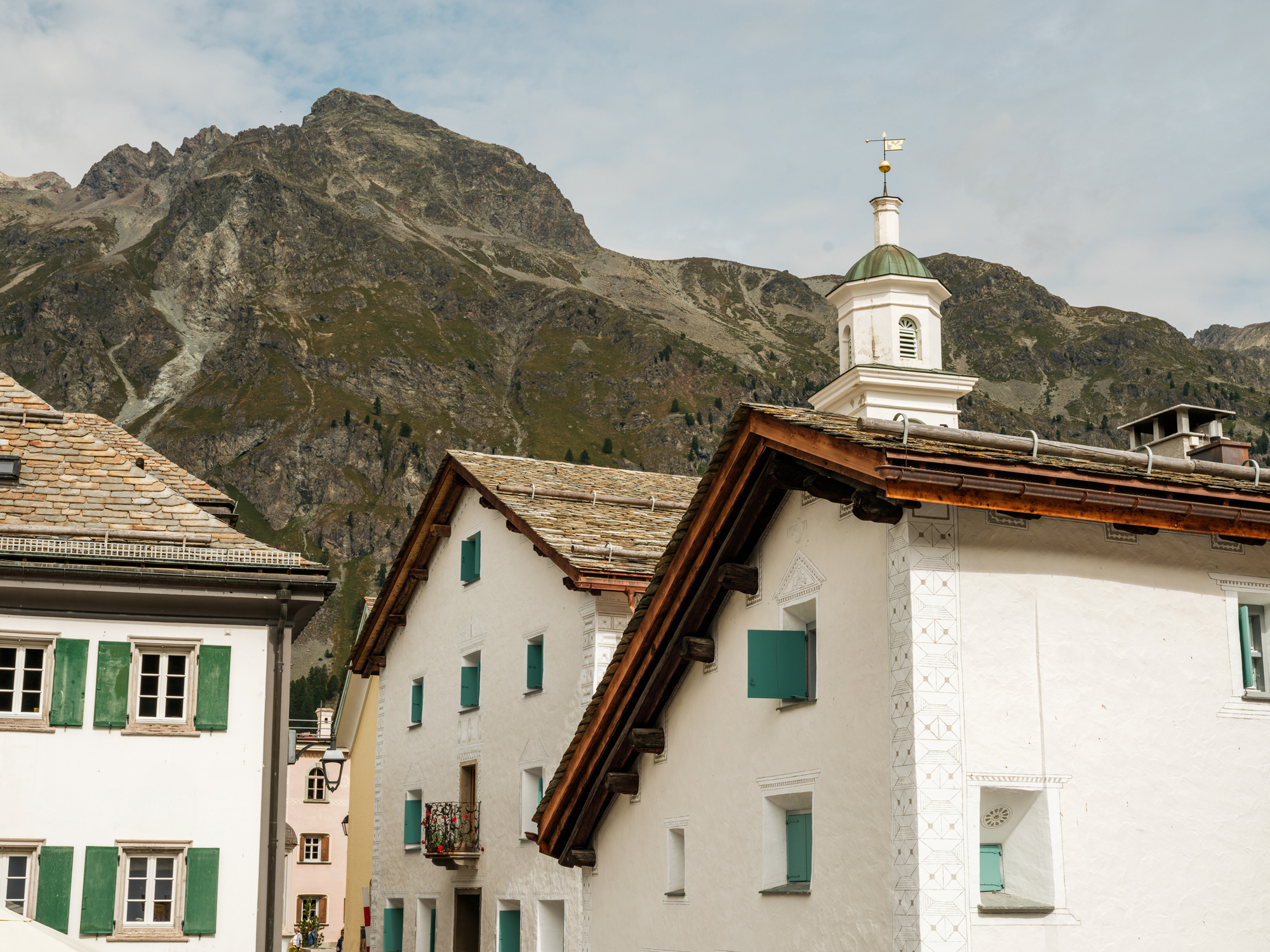
Then there is the landscape, which in this part of the Engadin behaves almost like a parallel institution: the path into Val Fex, one of the valley’s quiet masterpieces; the lakeside light that drew painters here in the first place; the improbable composure of the whole setting. For shopping, Butia Clalüna is worth a look for regional specialties and craft, while the local carpentry tradition remains visible in village buildings and workshops. St. Moritz, with galleries, boutiques and sharper social theatre, is close enough for contrast, not obligation. In winter, horse-drawn rides into Val Fex sharpen the sense that time here can still be slowed by method, not slogan.
Activities
For readers, walkers and quiet maximalists: Walk to the Nietzsche House and then keep going into Val Fex; philosophy improves slightly when followed by altitude. Spend a morning between village lanes, the Sils Museum and the changing lake light. Take a horse-drawn carriage into Val Fex if you prefer your landscapes with a measured tempo.
For art-focused guests: Look closely inside the hotel first; the collection is not decorative filler. Pair Chesa Marchetta with galleries in St. Moritz or a longer cultural excursion deeper into the Engadin. Use Sils itself as a study in why certain valleys keep attracting painters and writers.
For food-led stays: Book dinner in the house and treat lunch as flexible: bar, walk, return. Taste across the nearby valleys indirectly through the sourcing, then continue the theme with local products from village shops. Order slowly. This is not a place that rewards haste.
© Dave Watts
For families or small groups: Take the Two-Bedroom Suite and use the hotel as a base for lake walks, easy mountain days and carriage rides. In winter, fold in skiing around the Engadin; in warmer months, hiking and biking take over.
For guests with dogs: The house is dog-friendly, which matters in a region built for long outdoor days and unhurried returns.
For quieter hours, stay local: read in the bar, walk to the lakeshore, return for aperitivo, then let dinner close the loop.
Details
- 13 rooms in total.
- Room categories: Standard, Superior, Deluxe, Two-Bedroom Suite.
- Largest option: the attic Two-Bedroom Suite with living area, double room, twin room, bathtub and separate shower.
- Deluxe rooms include bathtubs and walk-in showers; Superior rooms sit on the second floor.
- Most bedrooms are stocked with Albamhor products; some have Emma Kunz products, but not all of them.
- Restaurant with 46 covers; breakfast for guests, light lunch in the bar, dinner for guests and non-residents. Chef: Davide Degiovanni.
- No classical spa or pool publicly foregrounded; relaxation comes through rooms, bar, bathtubs and landscape.
- Dog-friendly; children welcome; off-site public parking pass included in room rate.