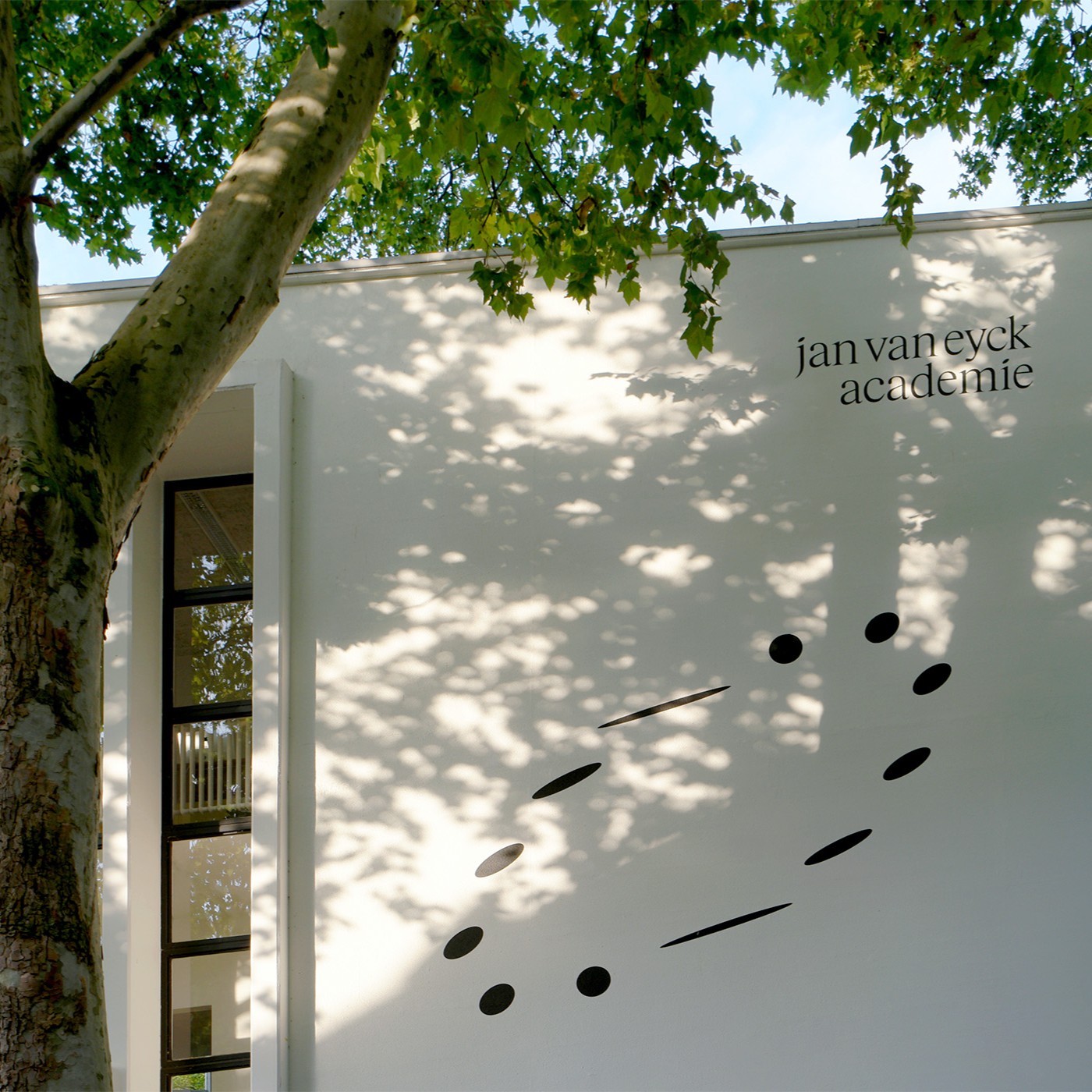

The Jan van Eyck Academie stands in the centre of Maastricht, on a square of its own, the Academieplein. Behind the bright, clear façade of a 1960s building lie studios, labs and gardens. Step inside and you find an academy of a particular kind: a place for research and production, where experienced artists and designers work on their own projects for a year. The city itself, at the meeting point of three countries, marks the house more international than its size suggests.

© Jan van Eyck Academie
The location
Maastricht lies in the far South of the Netherlands, set within the Meuse-Rhine Euregion, with Aachen, Liège and Hasselt within reach. The academy occupies a modernist building in the historic city centre, designed by the Dutch architect Frits Peutz and opened in 1961. After the 2013 renovation the building feels light and open: wide corridors, large windows, a central hall around which studios and labs are arranged. Three gardens were added, among them a vegetable garden. Upon arrival, you enter a quiet, focused space with the soft noise of workshops in the background.

© Photo by Bo Ummels
The place as a creative ground
What makes the Jan van Eyck Academie ground for artistic work is the joining of time and infrastructure. Participants get eleven months without curriculum or exams, plus a studio of their own and access to workshops that many academies lack: Material Matters Lab for wood and metal, printing, photography and audiovisual, along with a Future Materials Lab and a Food Lab and departments of Nature Research and Education and Development. These labs shift the work from talking about art to its materialisation. At the same time, the roughly 36 residents form a temporary but tight international research community that works together, learns from and supports each other. The institute sees itself as a place of reflection and production, a laboratory where ideas are tested and translated into material.

© Jan van Eyck Academie
Backstory
The academy goes back to the Catholic Limburg of the post-war years. Founded in 1948, it was meant to provide a church-rooted education in art and architecture in Maastricht; it was named after the Flemish painter Jan van Eyck and his motto “als ick can”, “as best I can.” In the 1970s the house threw its fixed curricula overboard and opened to autonomous artistic practice. In the 1990s it reshaped itself into an international, multidisciplinary post-academic institute for research and production. A major renovation in 2013 turned it into a “multiform institute” with open labs.

© Jan van Eyck Academie
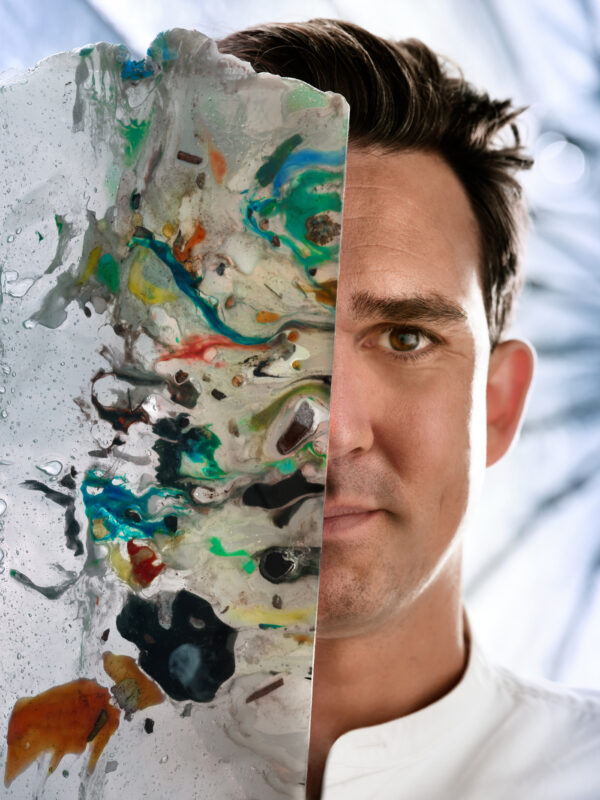
Director Hicham Khalidi, previously curator at Lafayette Anticipations in Paris and the curator of the Dutch Pavilion at the Venice Biennale in 2024, has been leading the academy since 2018; he stands for an open, international profile.

© Jan van Eyck Academie

© Jan van Eyck Academie
Architecture, studios and working spaces
The building on the Academieplein is the work of Frits Peutz, one of the most important Dutch modernists, known for the Glaspaleis in Heerlen. His 1961 building favours clear lines, light and generous rooms. Inside, some 36 individual studios line up, joined by the labs that define the building: a wood and metal workshop, a workshop for printing and publishing, a lab for photography and audiovisual, Future Materials and a Food Lab. An extensive library complements the production spaces.

© Jan van Eyck Academie
After the 2013 renovation the building became lighter and more open; three gardens, among them a vegetable garden, bring nature onto its grounds. The spaces are arranged to allow theory and production to unfold side by side.

© Jan van Eyck Academie

© Jan van Eyck Academie
The residency life
The year at the Jan van Eyck Academie follows a rhythm of its own. In early January a new cohort moves in; participants take their studios and begin their own projects. Experienced advisers and external guests come for studio visits, discuss the work and open up contacts. The residents help shape the public programme lectures, readings, presentations and exhibitions, to which the city too is invited. Participants live in Maastricht itself; presence on site is required, since working together is part of the programme.

© Jan van Eyck Academie
Over the year a community grows out of individual practices, meeting in workshops, the library and the gardens. Closer to the end of their residency cycle, participants present their research publicly, before moving on and a new cohort takes their place.

© Jan van Eyck Academie

© Jan van Eyck Academie
Artists, designers and projects
The work made here ranges from video and performance to biomaterial and archaeology. The Japanese artist Maiko Jinushi developed, during her 2019/20 residency, a literary form of her own out of video, installation and narration; today she shows at the Mori Art Museum in Tokyo. The Dutch duo De Onkruidenier Jonmar van Vlijmen and Ronald Boer explore plants, salt and the history of the landscape in their projects. The Ukrainian designer Dasha Tsapenko works on the border of fashion and biology, with textiles grown from fungal mycelium among other things. The Italian artist Diego Tonus, in turn, pursues conceptual questions of control systems and power structure.

© Jan van Eyck Academie
Such practices meet dedicated funding lines—with among others, the Arts Council Korea, the Institut français NL, and the Dutch Literature Fund, and dedicated partnerships within the region—Maastricht University, Zuyd University of Applied Sciences–and on an international level–as in the European Cooperation project Institution(ing)s. For the 75th anniversary in 2023, the alumnus Pádraic E. Moore curated the exhibition “Communal Enthusiasm”, which led visitors through the institute’s own history.

© Jan van Eyck Academie

© Jan van Eyck Academie
The programme
The programme is aimed at artists, designers, curators, architects, writers and researchers from around the world, individually or as a collective. Artists with a family are also welcome to take on a residency. Each year a jury selects around 36 participants through an open call; the application runs on a project proposal, a motivation and a portfolio. The residency usually lasts eleven months. Each participant receives a studio of their own, a stipend and a production budget, along with the guidance of experienced advisers and access to all the labs. Some places are co-funded through partner foundations. Residents are expected to live in Maastricht, take part in the public programme, and show their research publicly during Open Studios in October. In fall, the call for applications is open for the regular residency programme.

© Jan van Eyck Academie
The surrounding area
Maastricht is one of the oldest cities in the Netherlands, Roman in origin, today marked by a dense web of culture and higher education. A few minutes from the academy lies the Bonnefanten Museum of fine art and contemporary art, whose name goes back to the same convent in which the academy once began. The cultural landscape also houses Marres art centre, the university and, once a year, the international art fair TEFAF. Through its place in the Meuse-Rhine Euregion, the academy is closely tied to Aachen, Liège and the Flemish art scene. For Gentle Traveller, the Jan van Eyck Academie is a way into Maastricht beyond its historic city centre and the river; it is a city where contemporary art is at home.

Practical notes
Location: Academieplein 1, 6211 KM Maastricht, Netherlands
Disciplines: art, design (graphic, fashion, food), curating, (landscape) architecture, writing, research
Founded: 1948; present form since the 1990s
Direction: director Hicham Khalidi (since 2018)
Programme: post-academic residency for around 36 participants

© Jan van Eyck Academie

© Jan van Eyck Academie
Duration: usually eleven months
Accommodation: in Maastricht
Studios / labs: individual studios; wood/metal, printing/publishing, photo/audiovisual, Future Materials, Food Lab, a library
Application: annual open call via the website (stipend + production budget)
Public programme: Open Studios, symposia, lectures, and presentations
Website: janvaneyck.nl
Closing note
The Jan van Eyck Academie shows what emerges when artists are given time, workshops and a community. For a year, in Maastricht, work is researched, built and critically contemplated. For travellers who want to see art in thought and in the making, this institute on the border of three countries is a place of rare calm and density.

© Jan van Eyck Academie