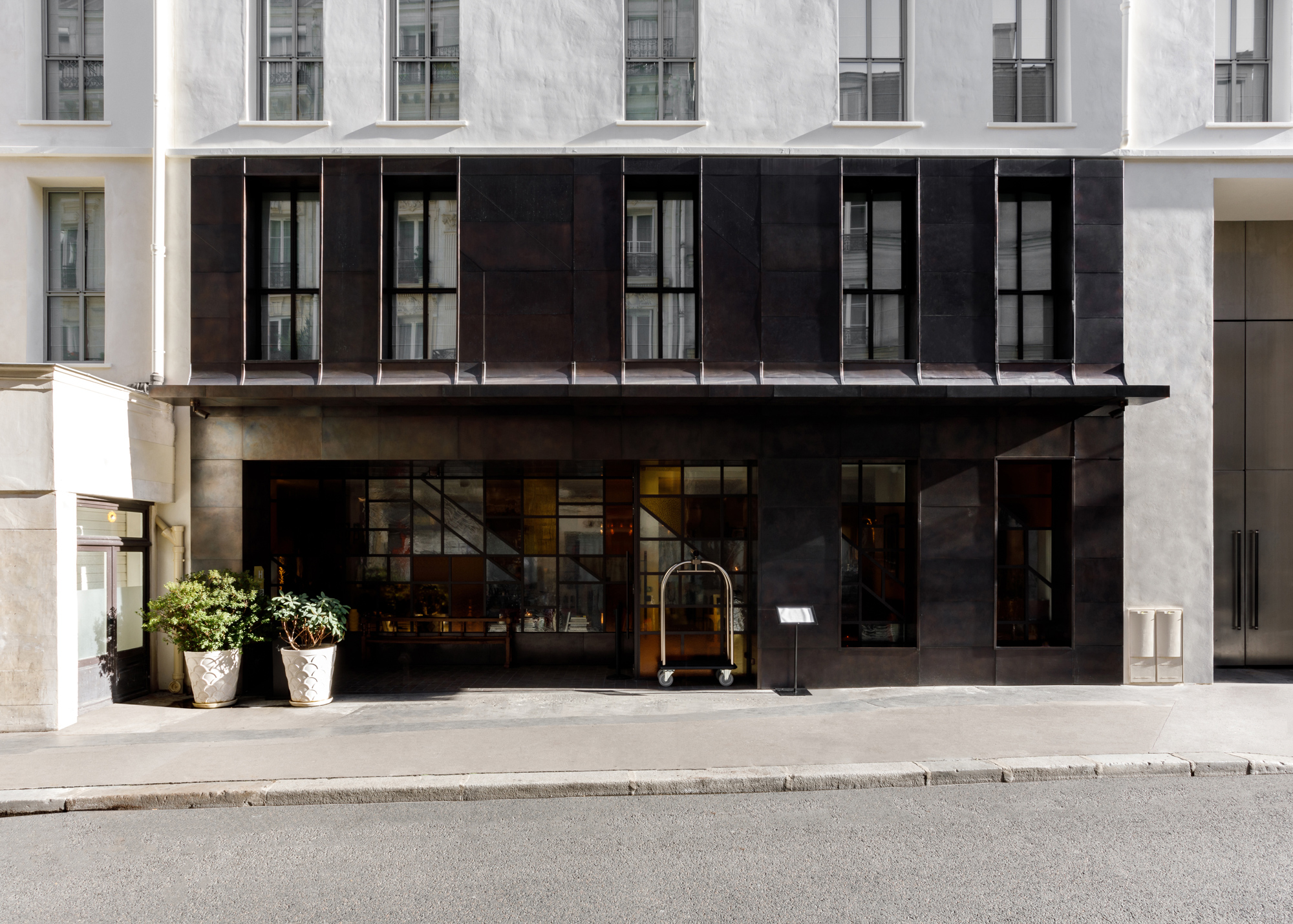
Arrival in the Haut-Marais still works by compression: traffic loosens, façades straighten, the city suddenly remembers stone. Then a dark, composed frontage on rue du Temple, and behind it a hotel that understands the Parisian art of withholding half a second before it reveals itself. You enter, and the street noise drops as if someone had lowered a fader.
© Mr. Tripper
The location
Experimental Marais stands at 116 rue du Temple, in the 3rd arrondissement, between the Marais proper and the more gallery-minded Haut-Marais. Arts et Métiers and Rambuteau are a short walk away; so are small streets that keep changing register from archive-quiet to café-noisy in a block.
© Alexander Volodin
The approach is part of the point: old masonry, shopfronts, fragments of hôtel particulier Paris. From the street, the building keeps its counsel. Its façade is measured rather than flamboyant, letting the address do what good Paris addresses do best: suggest that something more interesting is happening just beyond the door.
Backstory
The address began a new life in March 2025, when Experimental opened its latest Paris hotel here. That matters because Experimental did not arrive as a faceless operator but as a group with a specific urban instinct: part cocktail culture, part hospitality discipline, part feel for the theatre of a room.
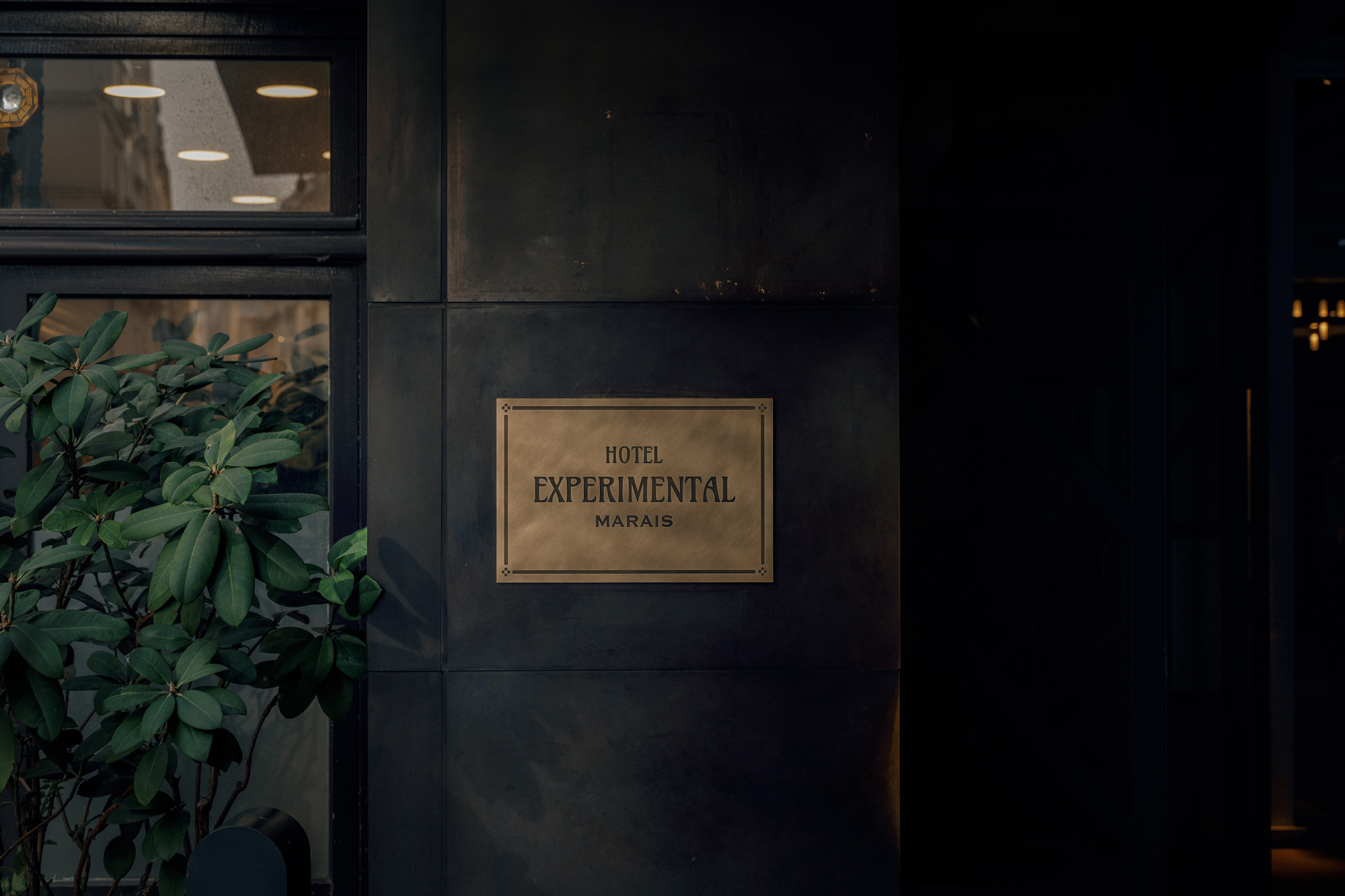
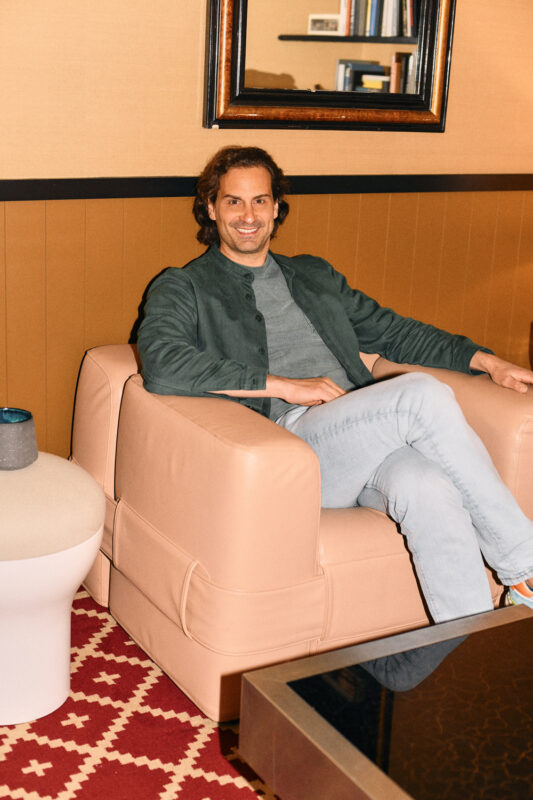
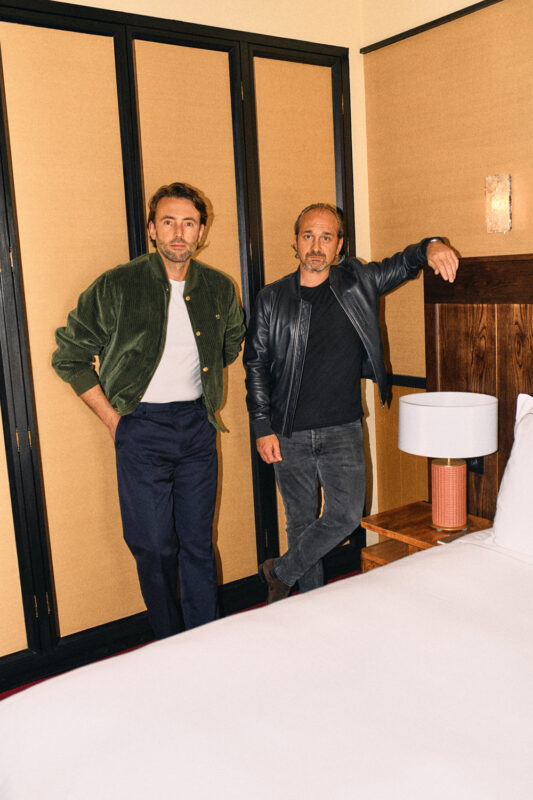
The company was founded by Olivier Bon, Pierre-Charles Cros and Romée de Goriainoff; Xavier Padovani later joined as partner. Their Paris story started with the Experimental Cocktail Club in 2007, and the Marais property reads like a return to first principles: nightlife literacy, design with a pulse, service without inherited stiffness.
© Bastien Lattanzio

© Bastien Lattanzio
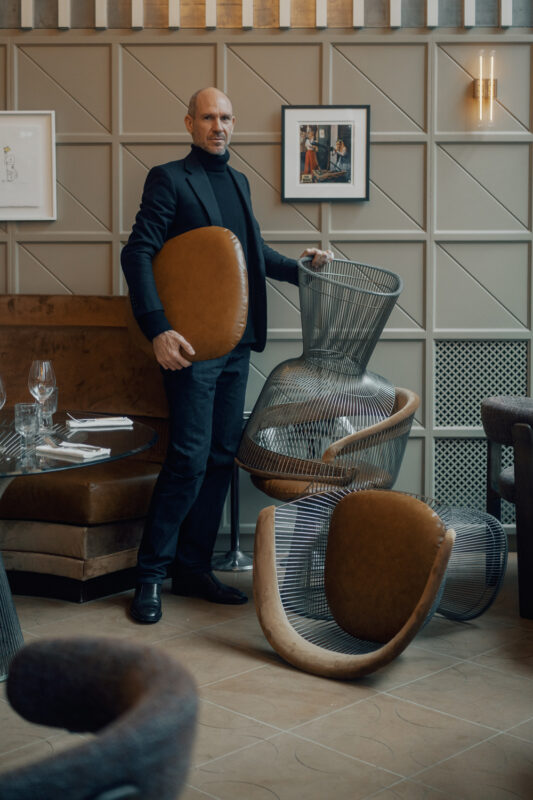
At Experimental Marais, that sensibility is given architectural form by Tristan Auer and a more public, culinary one by chef Mélanie Serre.
© Bastien Lattanzio
© Amaury Laparra
Interior & architecture
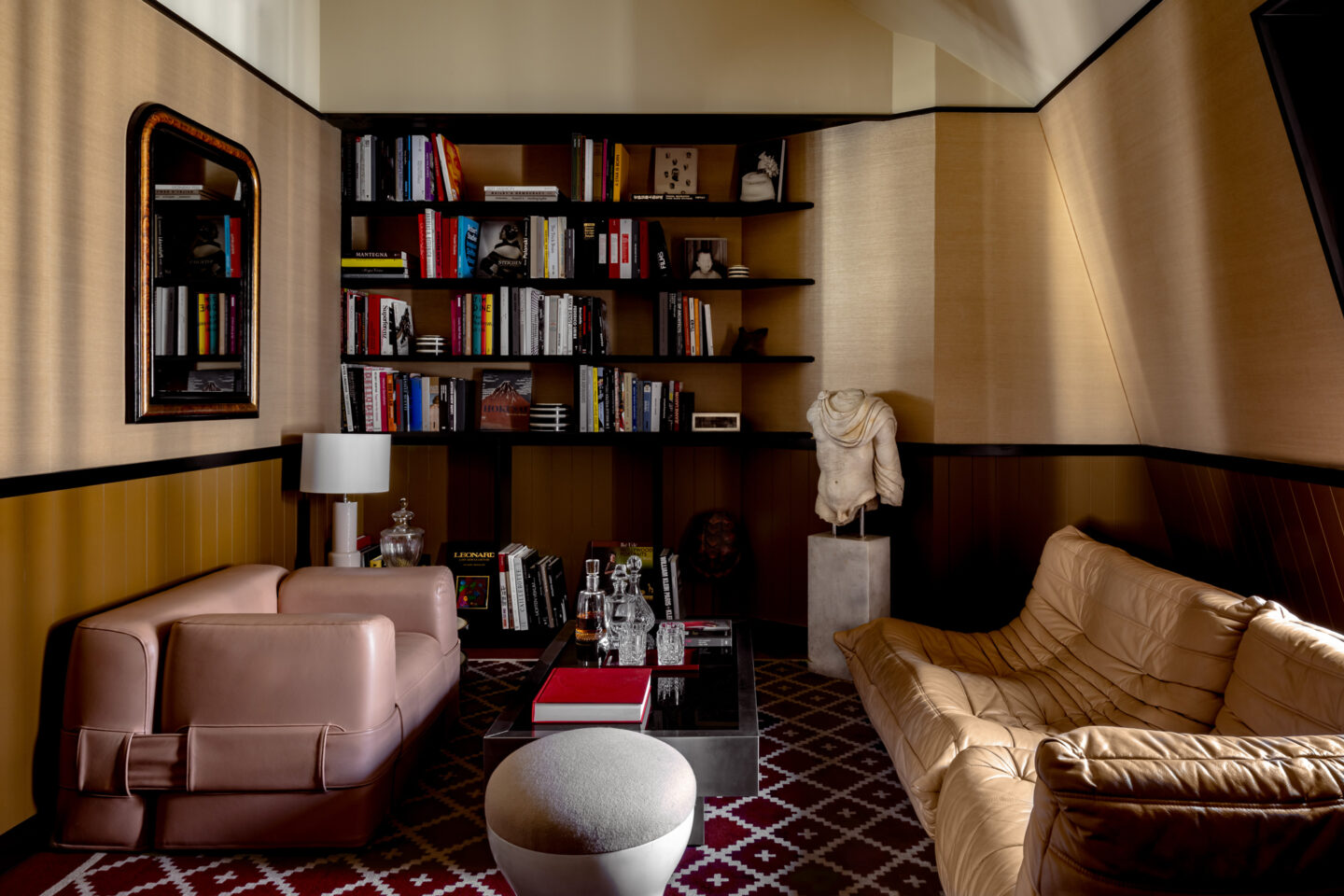
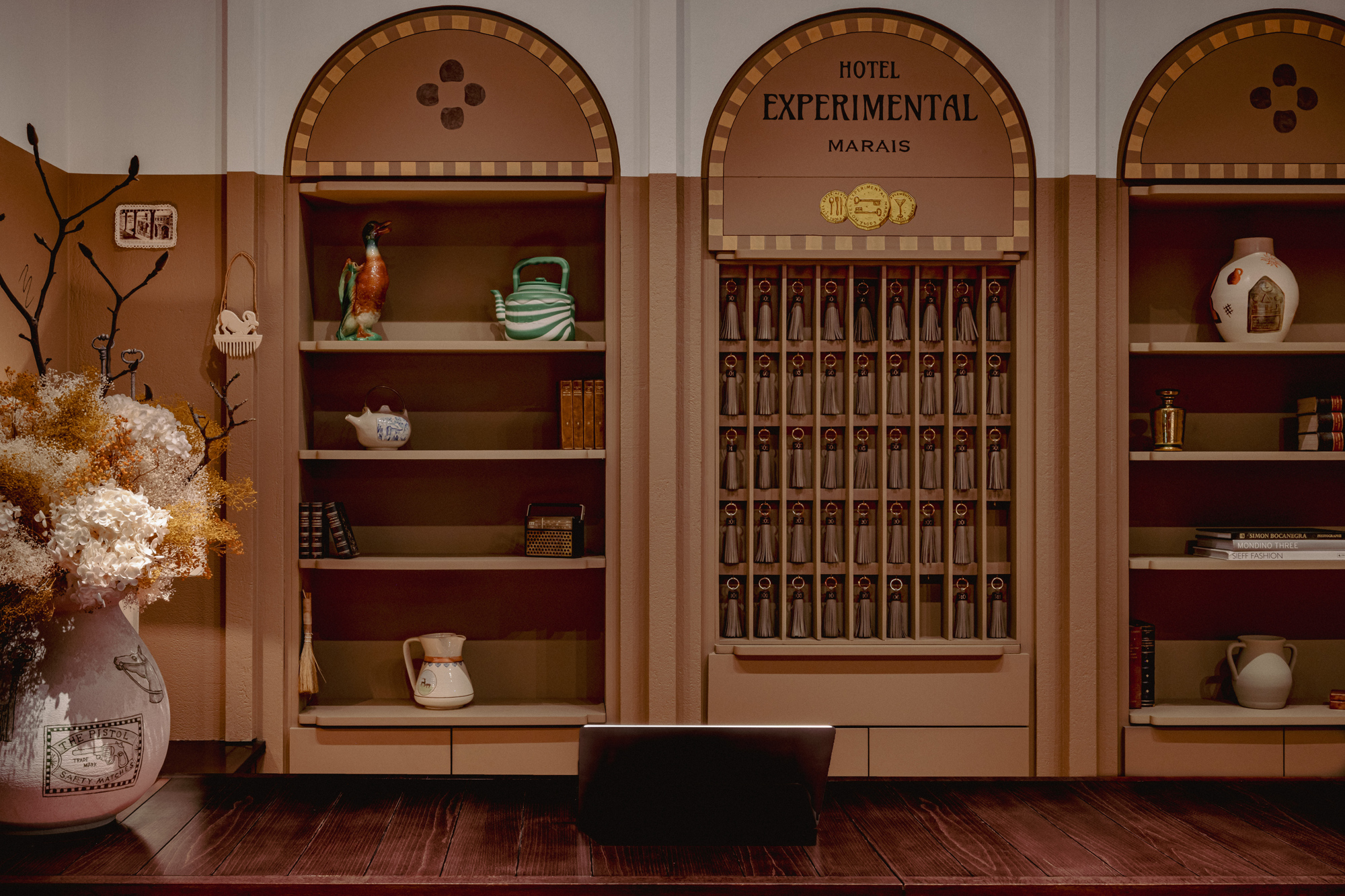
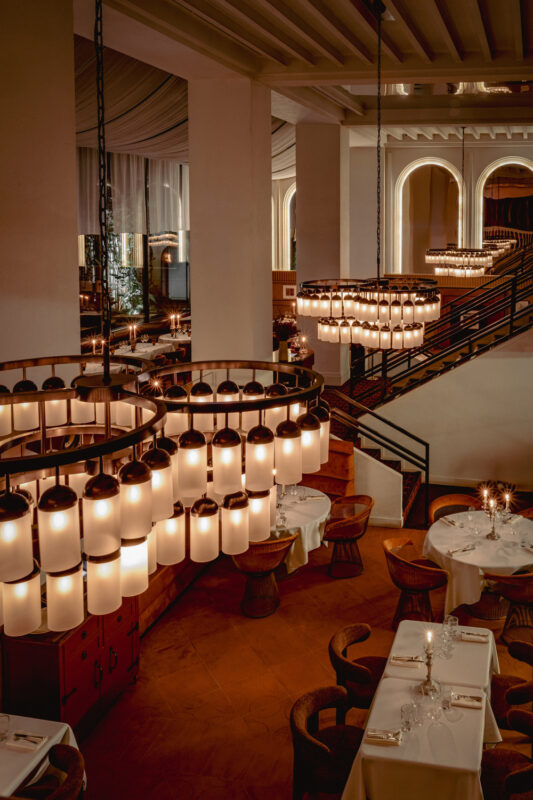
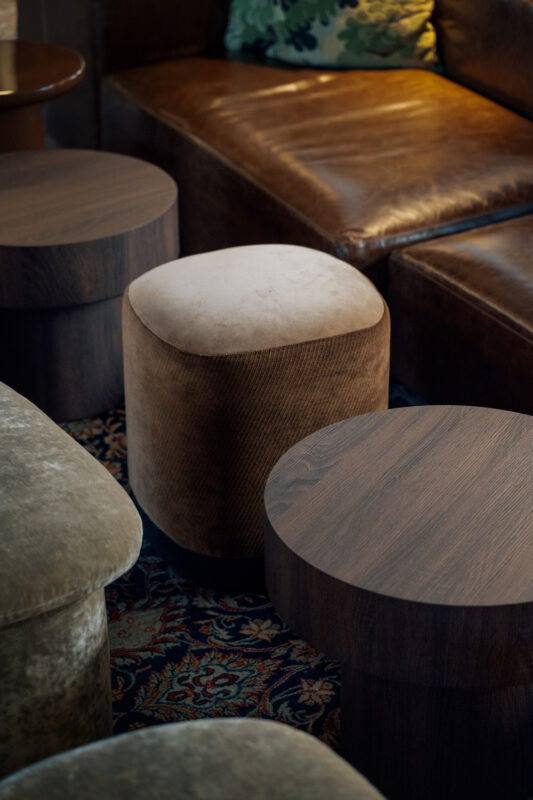
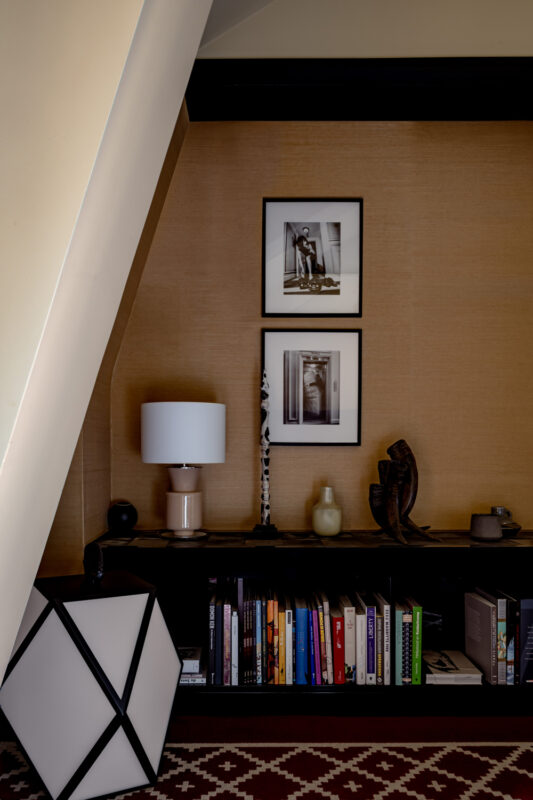
Tristan Auer’s design does not chase generic boutique-hotel softness. It sharpens the building instead. The concept draws on the district’s ecclesiastical past and turns it into a neo-Gothic vocabulary of high volumes, arches, stained glass and deliberate shadow. There is drama, but it is disciplined drama.
© Mr. Tripper
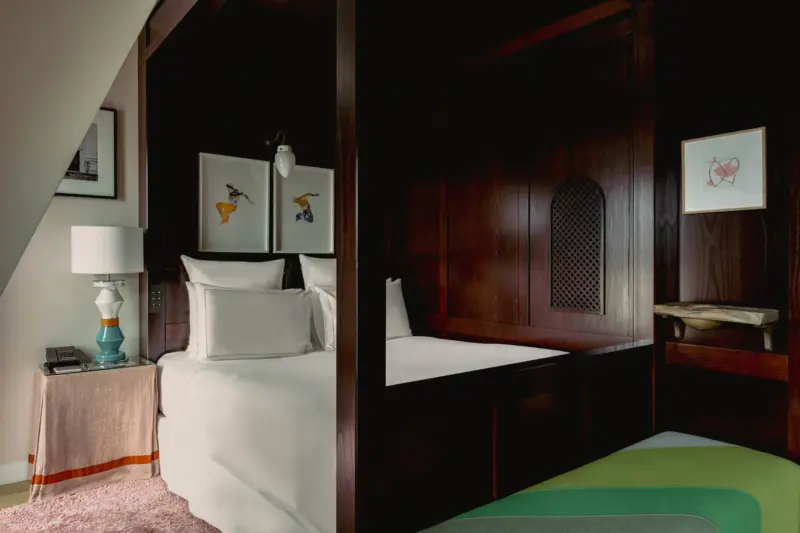
Public rooms rise and recede; light lands in coloured fragments; darker timber and tactile textiles keep the whole thing from floating away into set design. In the rooms, that language becomes more private: canopied beds, souvenirs, artworks and travel objects arranged around the fiction of an elusive collector passing through Paris.
© Mr. Tripper
© Mr. Tripper
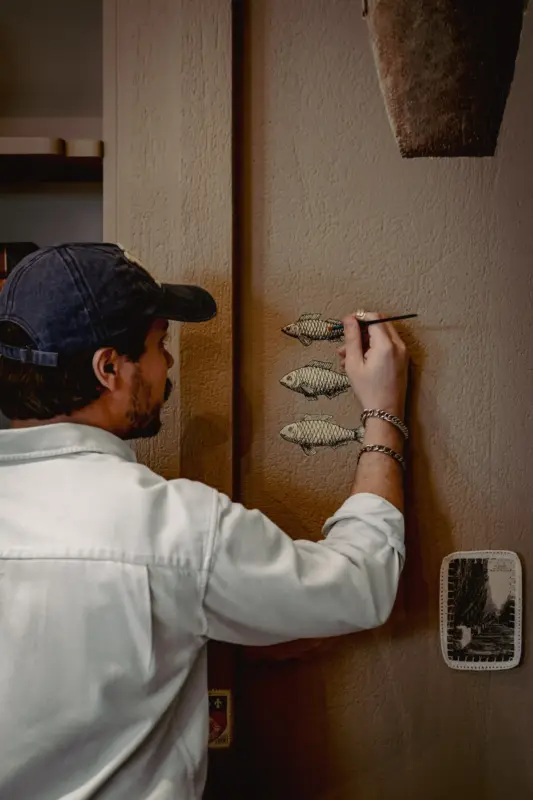
Temple & Chapon extends the narrative under a glass roof, where Auer worked with artist Clovis Retif on a décor of drawings, photographs and cosmopolitan fragments. The result is historically alert, but not pious.
A look inside
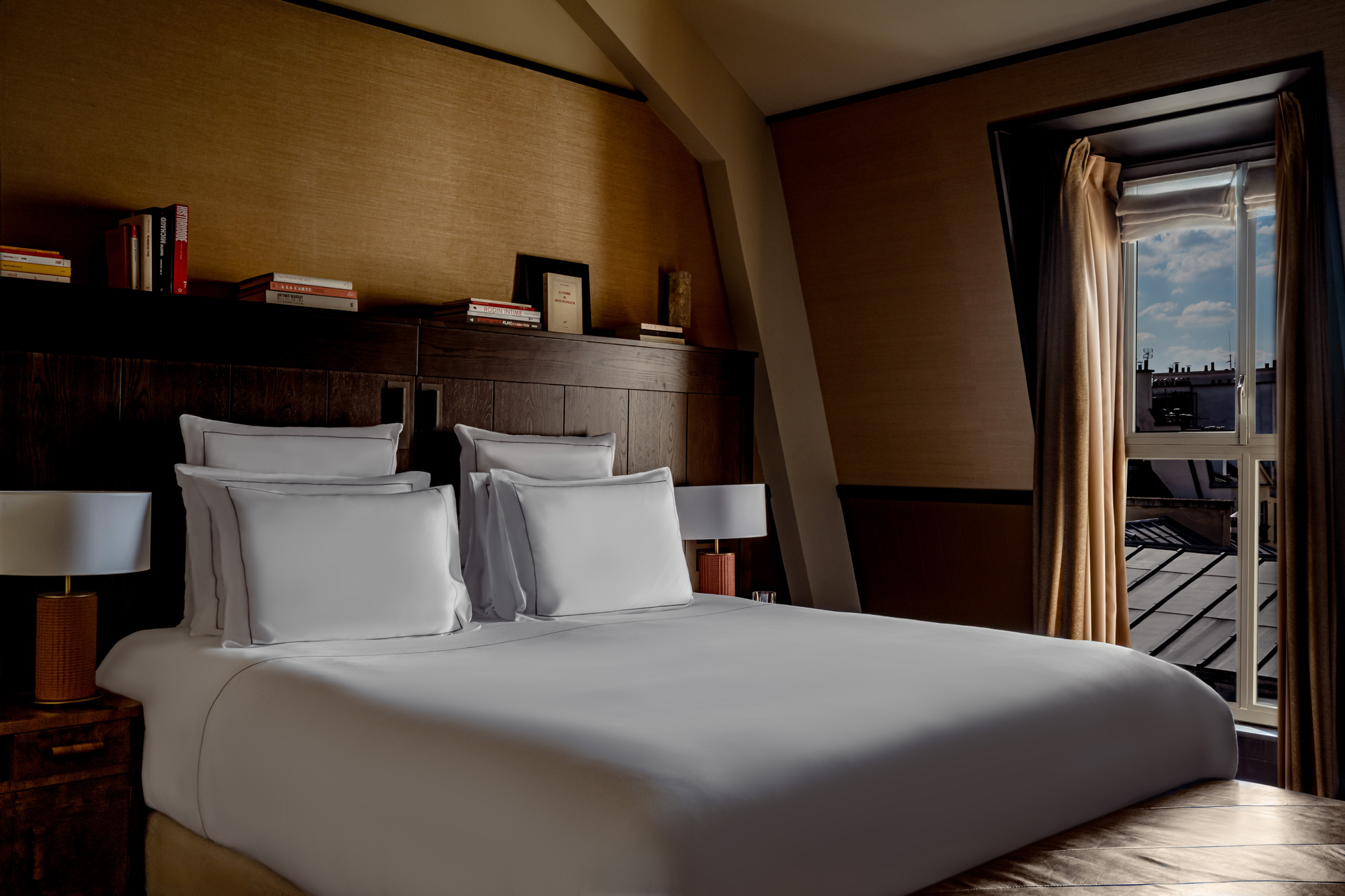
The hotel is organised around the pleasures that make a city hotel work after the first impression has worn off: a restaurant, a proper cocktail bar, a spa and 43 rooms and a suite. Categories range from the 21-square-metre Classic Baldaquin Room to the 58-square-metre Suite on the top floor.
© Mr. Tripper
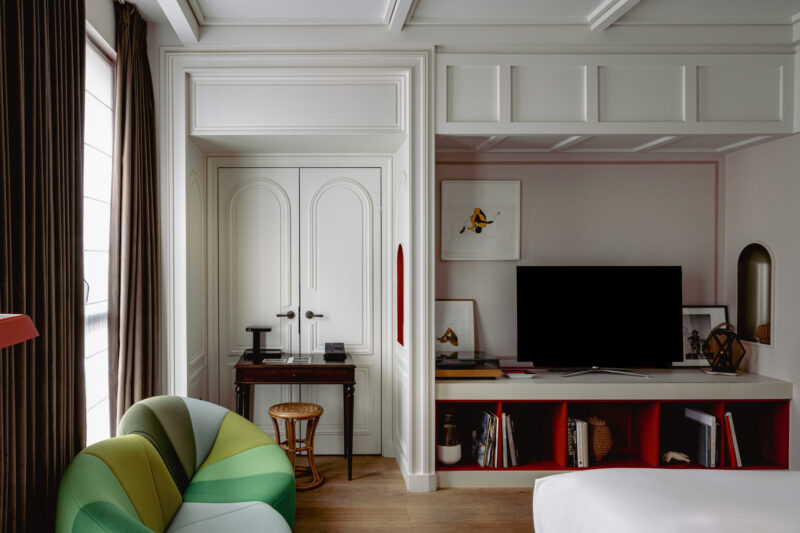
In between come Superior, Grande Superior, Deluxe and Executive rooms, many with courtyard calm or street views. The larger rooms are generous by Paris standards, with space to work without pretending work is the point of Paris.
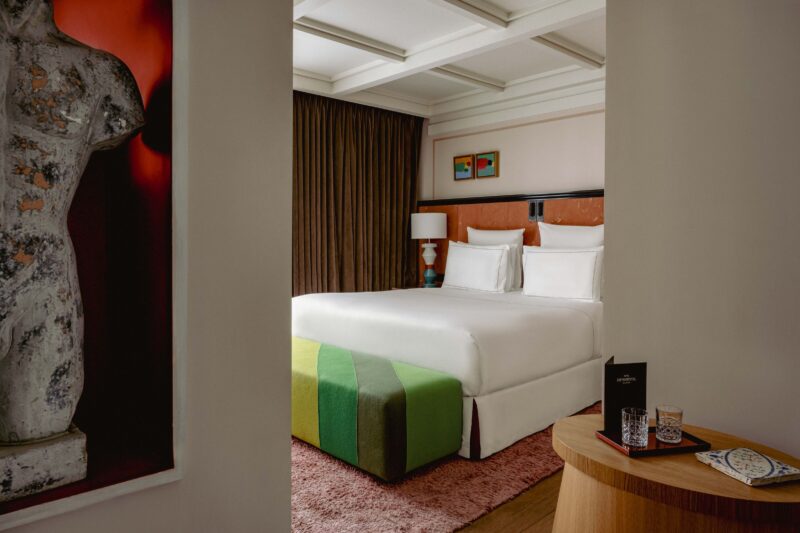
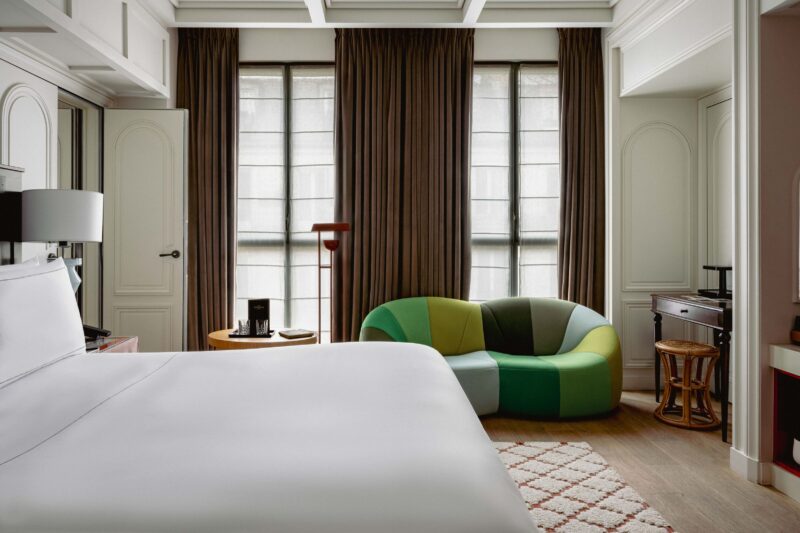
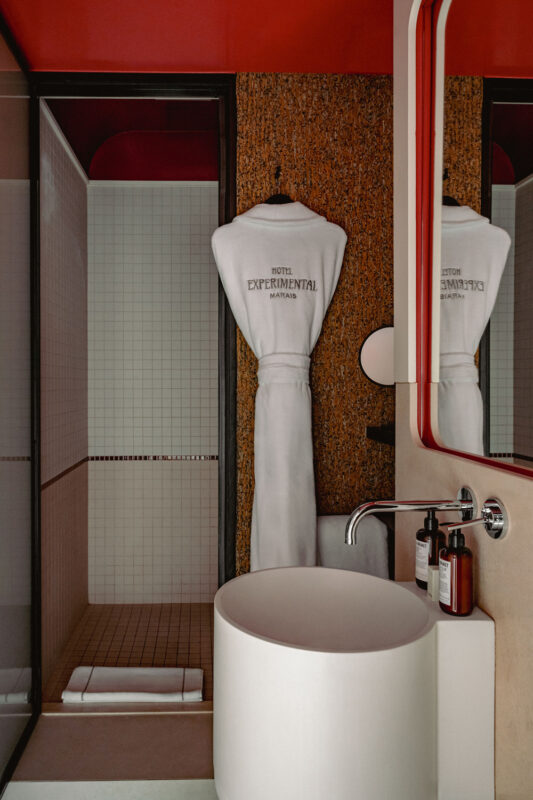
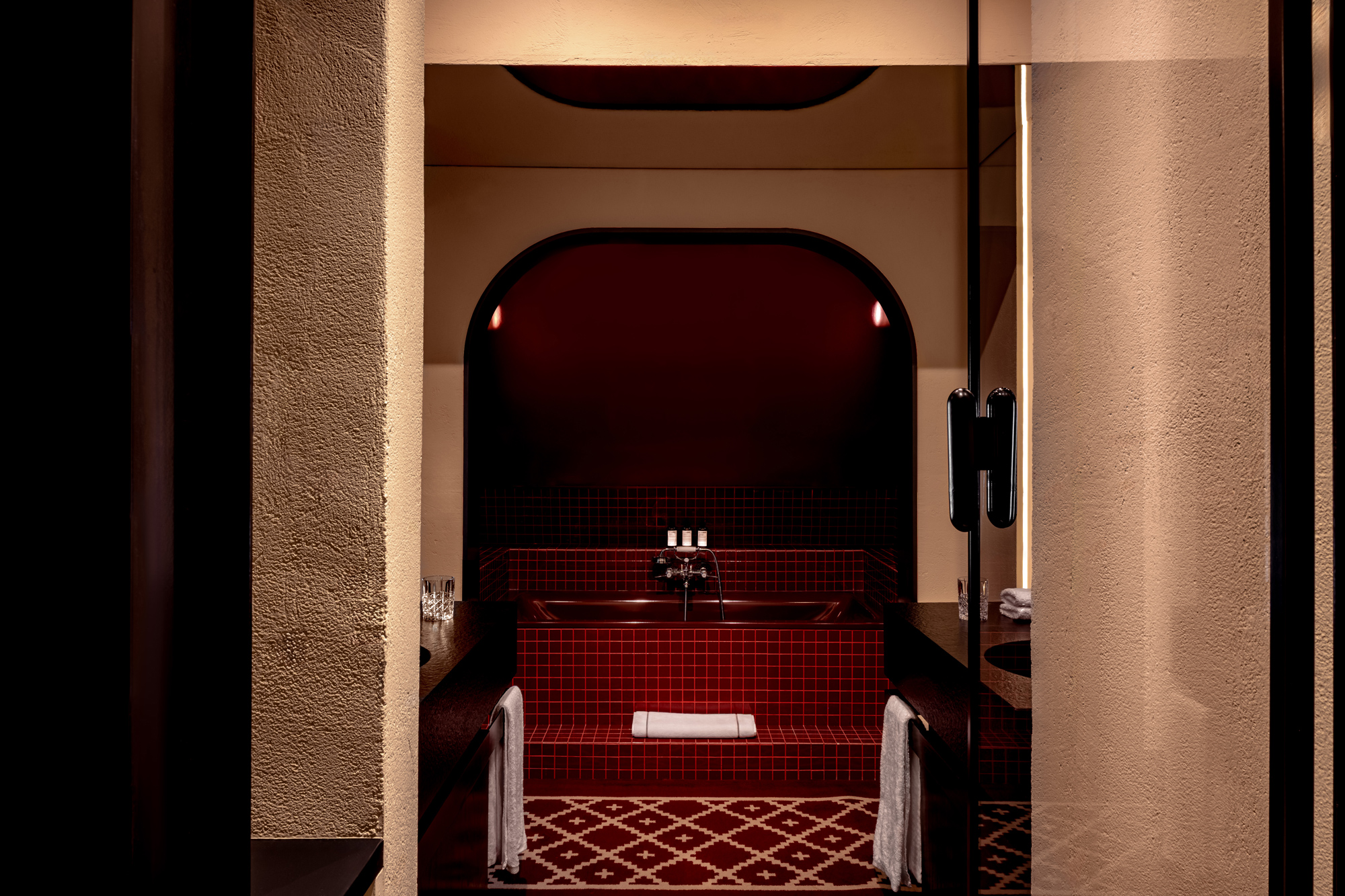
Beds run from queen to king, bathrooms pair showers or bathtubs with clean-lined comfort, and the best rooms add small luxuries that matter after a long day outside: depth, quiet, and enough visual character to feel located rather than merely furnished.
Culinary
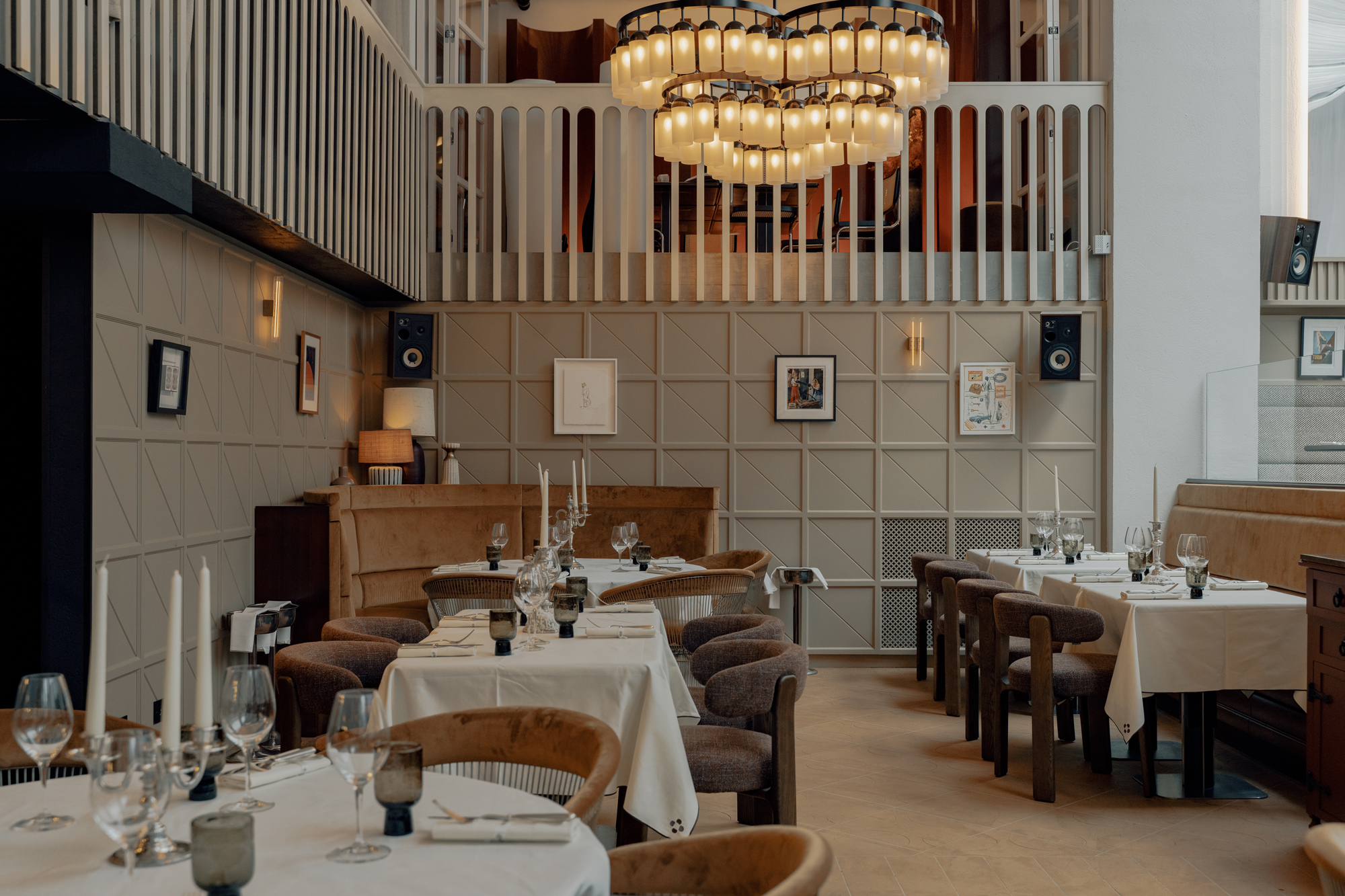
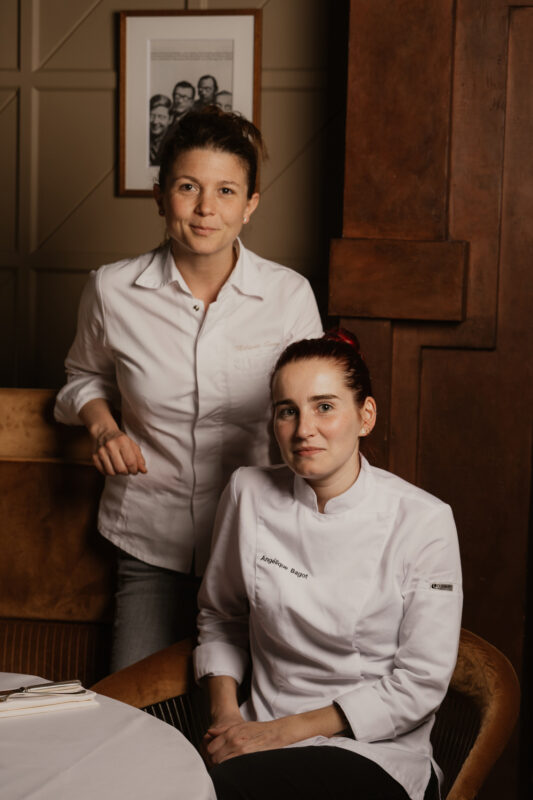
Food is not an afterthought here; it is part of the address’s social engine. Temple & Chapon, the hotel restaurant, is led by chef Mélanie Serre, whose background runs from Joël Robuchon in Monaco to Eden Rock in St Barths and L’Atelier Étoile in Paris. Her menu works a useful dual register: French technique, New York appetite.
© Amaury Laparra
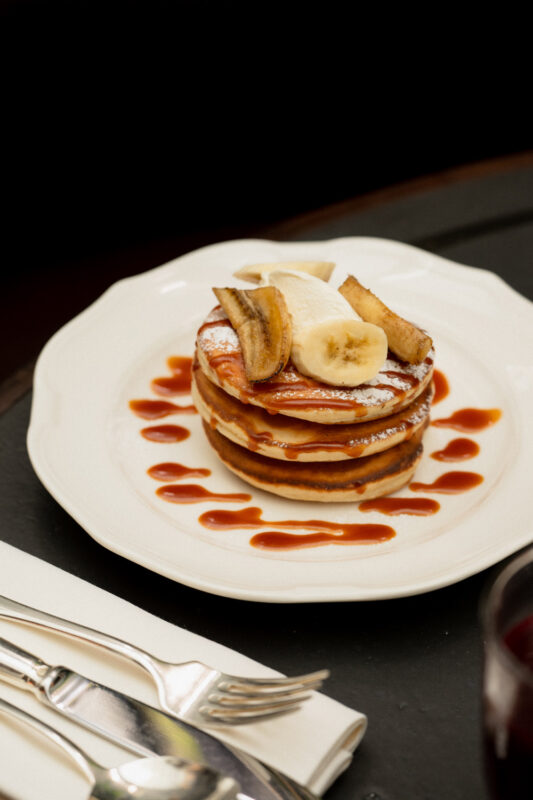
By day, lunch moves under the glass roof with a lighter, seasonal rhythm. By night, the room leans into the energy of a 1950s chop house, with dishes such as oysters Rockefeller, sole meunière and lobster rolls alongside grilled meats and larger plates for sharing.
© Salome Rateau
© Salome Rateau
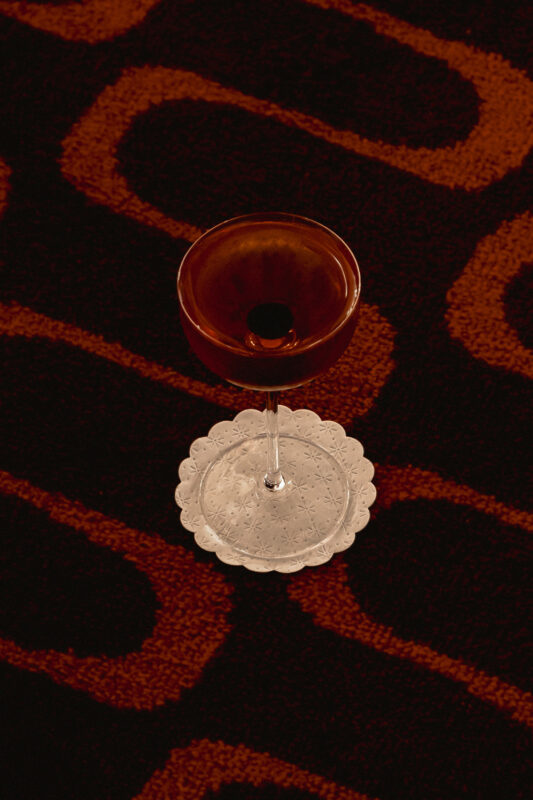
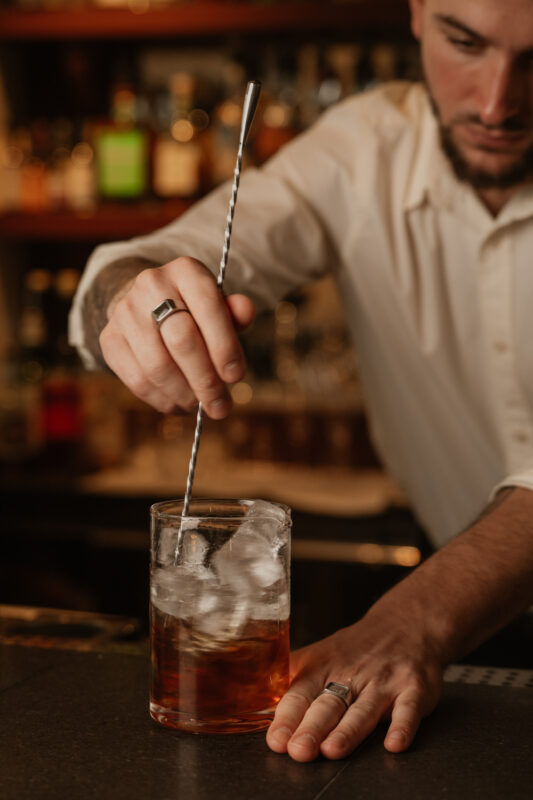
Upstairs, the American Bar keeps the after-hours side of the house in focus with cocktails that nod to New York but stay fluent in Paris. It is open daily until 2 a.m., which tells you the hotel understands the city it inhabits.
Wellness & Relaxation
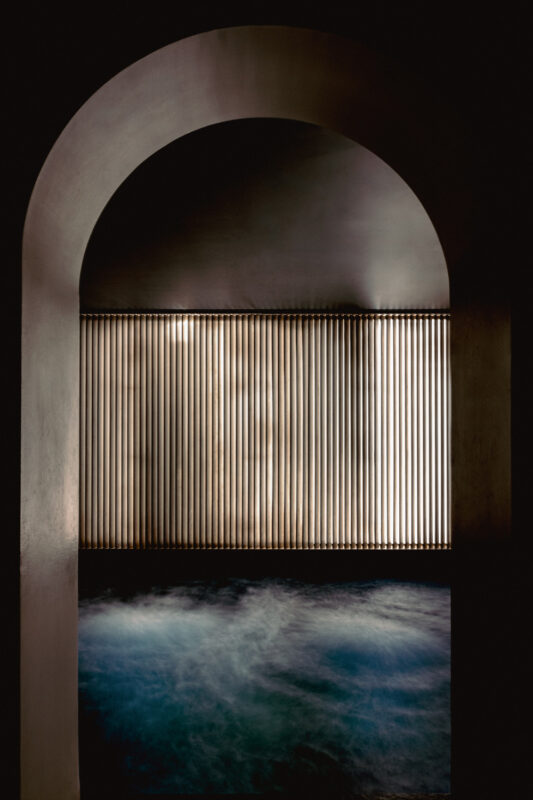
The spa sits on the first floor, slightly removed from the social circuitry downstairs. That distance helps. Treatments use Susanne Kaufmann’s Alpine, plant-based skincare, and the setup is compact but well judged: a double treatment room, Roman bath, hammam and a menu of massages and facials that avoids wellness maximalism.
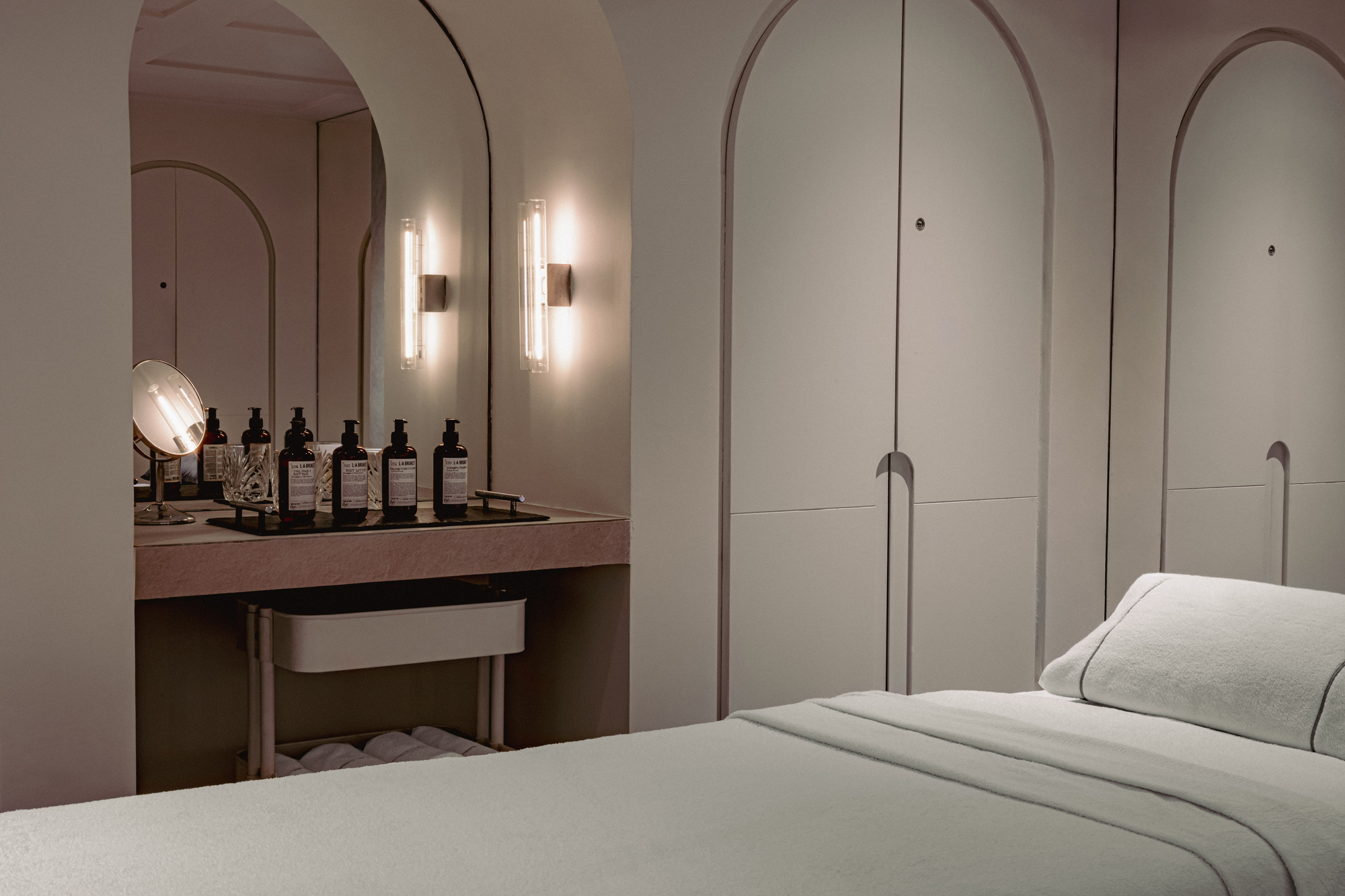
© Mr. Tripper
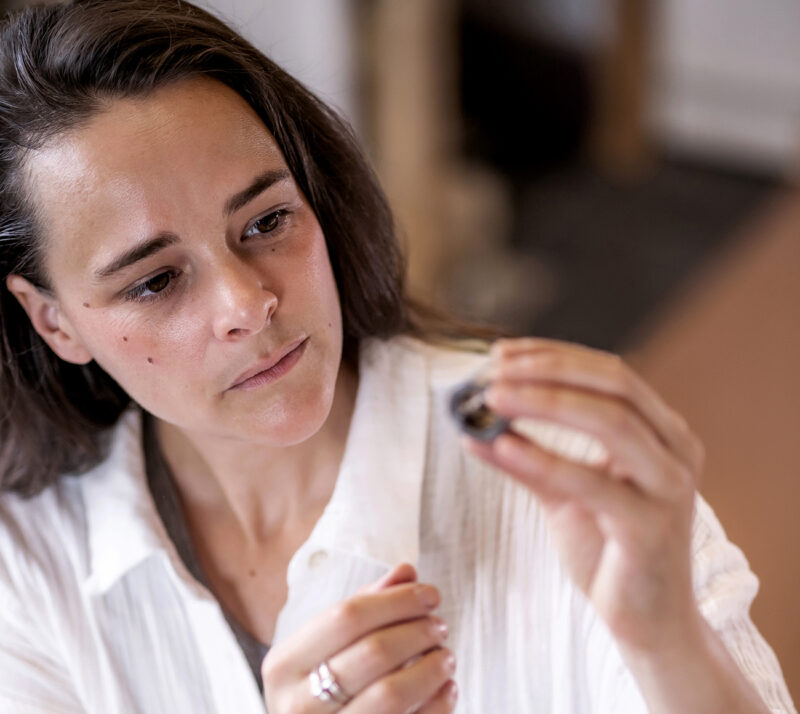
Access to the Roman bath and hammam comes with treatments, and the spa also offers half-day formats that combine breakfast or lunch with time in the heat and water. Experimental Marais teamed up with the french skincare brand Biologique Recherche, that was founded in the late 1970s by the biologist Yvan Allouche and physiotherapist Josette Allouche. In a neighbourhood that can feel over-programmed, this is a useful corrective: not a spectacle of recovery, just a calm, dark pause in the middle of Paris.
Surrounding area
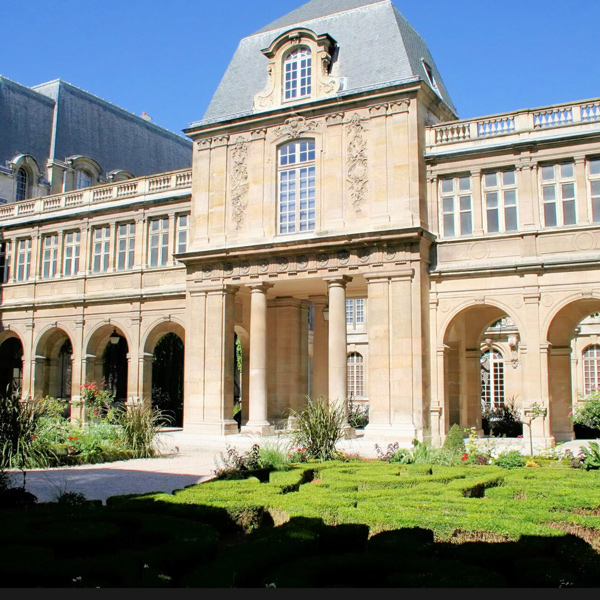
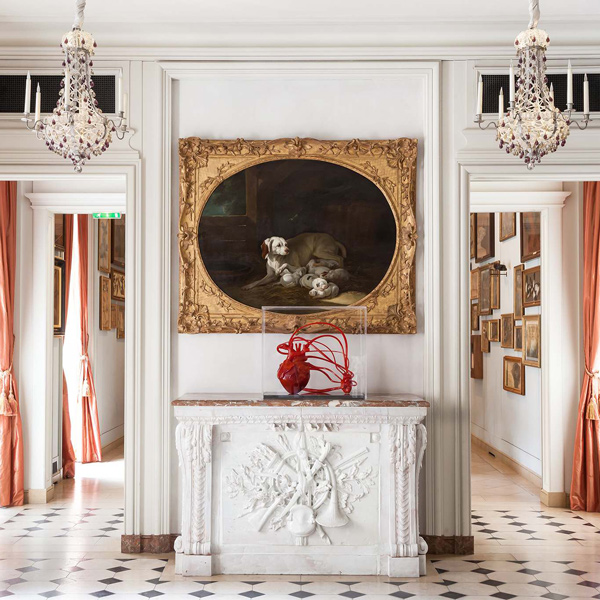
Within a short walk, the neighbourhood offers a denser cultural mix than most city breaks manage in a long weekend. The Musée des Arts et Métiers is close, still one of Paris’s best museums for people who prefer ingenuity to spectacle; Foucault’s pendulum alone justifies the detour. Also nearby are the Musée d’Art et d’Histoire du Judaïsme in the Hôtel de Saint-Aignan, the Musée Cognacq-Jay for its intimate eighteenth-century collection, and the National Archives at the Hôtel de Soubise, where state memory is housed in rooms of unnerving elegance.
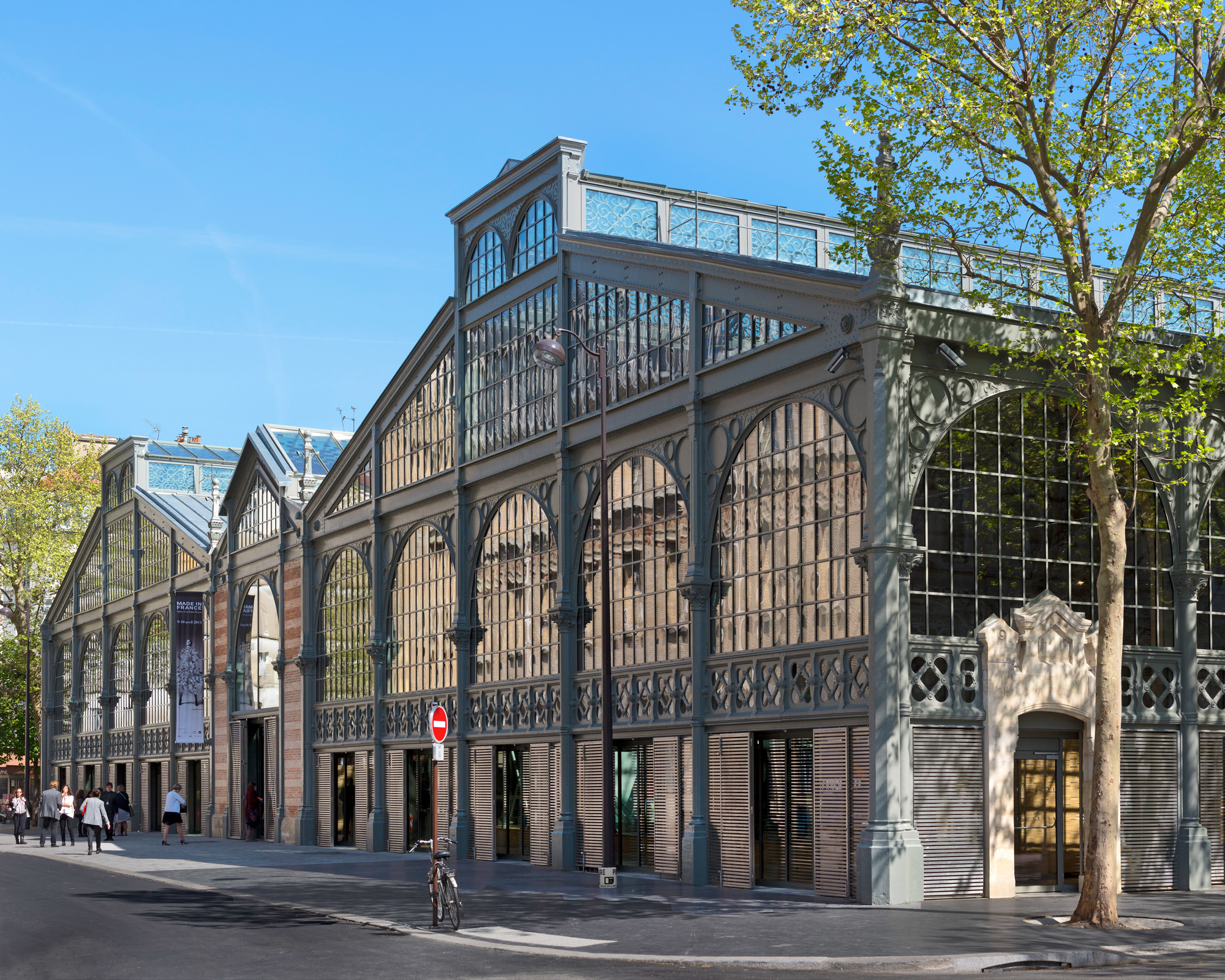
© Carreau du Temple, Carreau du Temple, Paris 9 April 2014, adjusted colours, CC BY-SA 4.0
For something stranger and more charming, the Musée de la Chasse et de la Nature turns taxidermy, painting and aristocratic oddity into a minor masterpiece. Small gardens nearby, including Jardin Anne-Frank and the garden by the Hôtel Salé, offer brief exits from the city’s performance loop. Shopping is better when it stays local: independent fashion, eyewear and design stores in the Haut-Marais reward aimless looking. So do the galleries, which often feel one step ahead of the guidebooks. For a more contemporary detour, Carreau du Temple and the nearby café-and-bookshop ecosystem keep the district from becoming a museum of its own past.
Activities
For museum-minded guests: walk first to the Musée des Arts et Métiers for scientific instruments and Foucault’s pendulum, then continue to the Musée de la Chasse et de la Nature for one of Paris’s oddest, smartest curatorial experiences.
For readers of the city as history: pair Carnavalet with the National Archives. One explains Paris by accumulation; the other by paper, power and beautifully intimidating rooms.
For those interested in Jewish history and culture: spend a morning at the Musée d’Art et d’Histoire du Judaïsme, then drift through the surrounding streets, where memory and contemporary life still overlap without needing to announce it.
For design and shopping: use the Haut-Marais properly—slowly. Browse independent fashion and object stores, look in on galleries, then return to the hotel before the neighbourhood turns from daytime edit to evening crowd.
For garden-seekers and families: slip into Jardin Anne-Frank or the quieter green spaces around the Hôtel Salé. These are not grand parks; they are pocket-sized urban exhale.
For food-and-night people: reserve dinner at Temple & Chapon, then let the night continue at the American Bar. No taxi required, which is one of the last remaining luxuries.
For private downtime: book a treatment, take the hammam seriously, and resist the metropolitan reflex to optimise every hour.
For low-key flâneurs: do almost nothing on purpose. Coffee, a gallery, an hour lost among side streets, back to the hotel, then one more drink.
Details
- 43 rooms and one suite
- Largest room categories: Suite (58 sqm), Executive Room (41 sqm), Deluxe Room (35 sqm)
- Room types include Classic Baldaquin, Superior, Grande Superior, Deluxe, Executive and Suite
- Restaurant: Temple & Chapon, led by chef Mélanie Serre
- Bar: American Bar, open daily, 6 p.m. to 2 a.m.
- Spa: double treatment room, Roman bath, hammam, Susanne Kaufmann treatments
- Services: wellness day packages, event spaces, concierge; pets may be accepted on request
- Address: 116 rue du Temple, 75003 Paris
© Mr. Tripper