

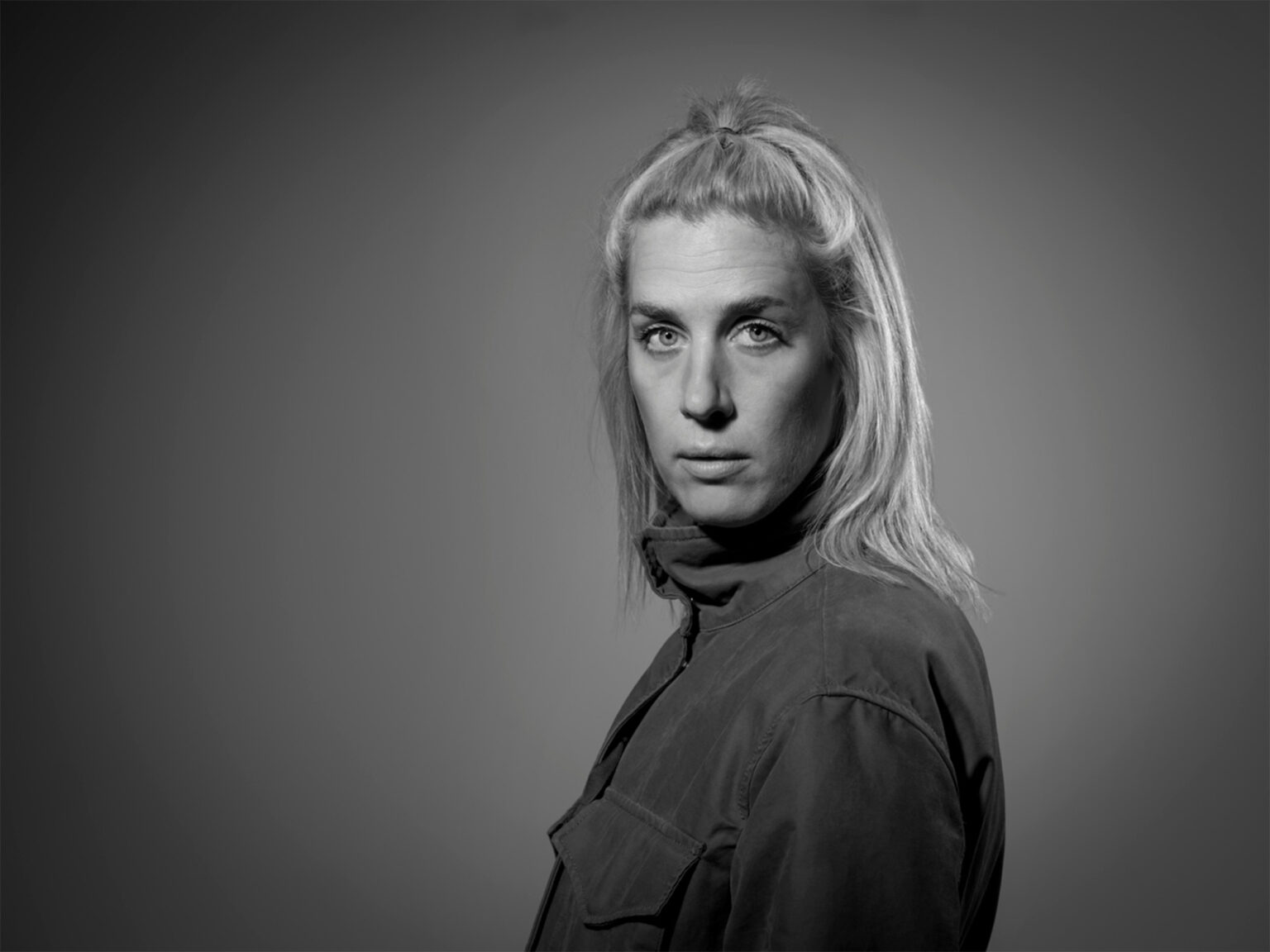
Glass moves through the sculptural practice of Kirsten Vikingstad Hermansson as both material and memory. Her works emerge through an intuitive and process-driven approach that combines casting, grinding, and hot sculpting with the reuse of discarded colours sourced from European glass factories.
Melted, broken down, and reassembled, the material carries visible traces of transformation, creating objects that feel at once fragile and monumental. Her sculptures allow texture, colour, and form to evolve together through experimentation. Whether in intimate studio pieces or large-scale site-specific installations, her work invites a sensory experience of material in constant transition.

© Courtesy of the artist
Which place do you currently call home and where do you work on your projects?
I call Jämshög in Sweden home, where I live and work. Most of my projects are developed in my home studio, and I love the close connection this creates between life and my artistic practice. When a project requires hot glass work, I usually rent studio time at The Glass Factory in Boda, located in the Kingdom of Crystal in Småland.
Where is your studio located & how does it look?
I have a small basement studio at home, where over the years I have gradually built up the essential machinery and tools needed for my practice. This is where much of the foundation of my work takes place; making plaster molds, casting glass, and carrying out the cold working process before bringing all the prepared parts to the hot shop in Boda. There, the individual elements come together and are assembled in hot glass into the final sculptures.

© Courtesy of the artist

© Courtesy of the artist
Are there any projects that are personally important to you—whether recently completed or currently in progress?
My site-specific installations will always be especially close to my heart because they often develop over many years before they are completed. They become part of places that people return to, creating a lasting connection and meaning beyond the artwork itself. I am thinking particularly of my latest project for Kvitsøy in Norway, a memorial site dedicated to those taken by the Northern Sea. It was a deeply meaningful project to work on.
I also have to mention my recent visiting artist week at the Corning Museum of Glass in the US. It was an intense, creative, and bold week where I had the opportunity to develop new sculptures together with the Amphitheater team. I felt incredibly honored to be part of it.

© Courtesy of the artist

© Courtesy of the artist

© Courtesy of the artist
Do you have a favourite place in your area where you like to relax and linger?
The region where I live is called Blekinge, and it has incredible nature along with beautiful white sandy beaches. As a Norwegian living in Sweden, being close to natural elements has always felt essential to me. I haven’t lived in Blekinge for very long, but so far Hällevik beach is definitely in my top five places to visit. I love the contrast between the long white sandy beach, the sea, and the small picturesque fishing village surrounding it.

© Photo: Manuel Nägeli, Unsplash
Are there any urgent political issues or problems in your region?
In Blekinge and southern Sweden in general, I get the sense that the main focus is on finding a balance between protecting the natural environment and at the same time making sure smaller communities can continue to develop and stay alive. There is also attention on infrastructure and how to make it possible to live and work outside the larger cities. For my part, it is something I mostly experience through everyday life and the landscape around me, rather than something I am deeply engaged with on a political level.
In your opinion, what has developed well in the last 5 years—and what has not?
I haven’t lived in Blekinge long enough to comment on the last five years in detail, as I only moved here in January 2025. From what I can see so far, there is a clear focus on regional development and improving infrastructure, while smaller communities still face ongoing challenges in terms of growth and access to services.

© Photo: Drahomír Hugo Posteby-Mach, Unsplash

© Photo: Max Muselmann, Unsplash
Do you know a hidden gem when it comes to local manufacturers—whether it’s arts and crafts, sustainable products or food?
Yes. Just a few hundred meters from our house we have Ekne gård with great potatoes and eggs, and nearby Sibbeson grows amazing berries like strawberries and raspberries. We also have a local butcher, hardware store, and pizzeria.
What I love most is how accessible these everyday local businesses are, and how people actually use them. It gives a strong sense of community and helps small places survive. The opening hours are also quite traditional, which makes you plan a bit more, but in a good way. It creates space for a slower rhythm, more time in the garden, eating local food, and spending time with family.

© Sibbeson AB

© Ekne Gård
Is there anything particularly innovative in your region? Also in comparison to other places you have already visited?
There are strong clusters in marine technology, digital industries, and advanced manufacturing, and a lot of collaboration between companies, research, and institutions.
Do you have a secret restaurant tip that you would like to share with us?
I wouldn’t say I have a very hidden restaurant tip yet, as I’m still quite new to the area. In Blekinge, many of the smaller, everyday places often feel like the real gems: simple, honest food and very locally rooted. For me, it’s more about discovering those kinds of places than specific ‘secret’ spots at the moment.
Is there a local shop whose products are only available in your region?
I believe Ekne gård and Sibbeson are good examples of local producers whose products are very rooted in the area and mainly available locally. They produce food like potatoes, eggs, and berries that are sold directly or through nearby local channels, which makes them very connected to the region.
What are your 3 favourite apps that you use every day and couldn’t live without?
Spotify, the Weather app and Mail.
Do you have any favourite newspapers or online magazines? And how do you keep up to date with politics or social and cultural issues?
Vogue Scandinavia. My influence when it comes to political and cultural issues are mostly generated through the national news and discussions with my husband.

© Photo: Peter van der Meulen, Unsplash
Imagine you could be mayor for a year—what would you change?
More public art to the people.
One last question: If you could choose another place to live—regardless of financial or time constrains—which one would you choose?
Isla Mujeres in Mexico.


