

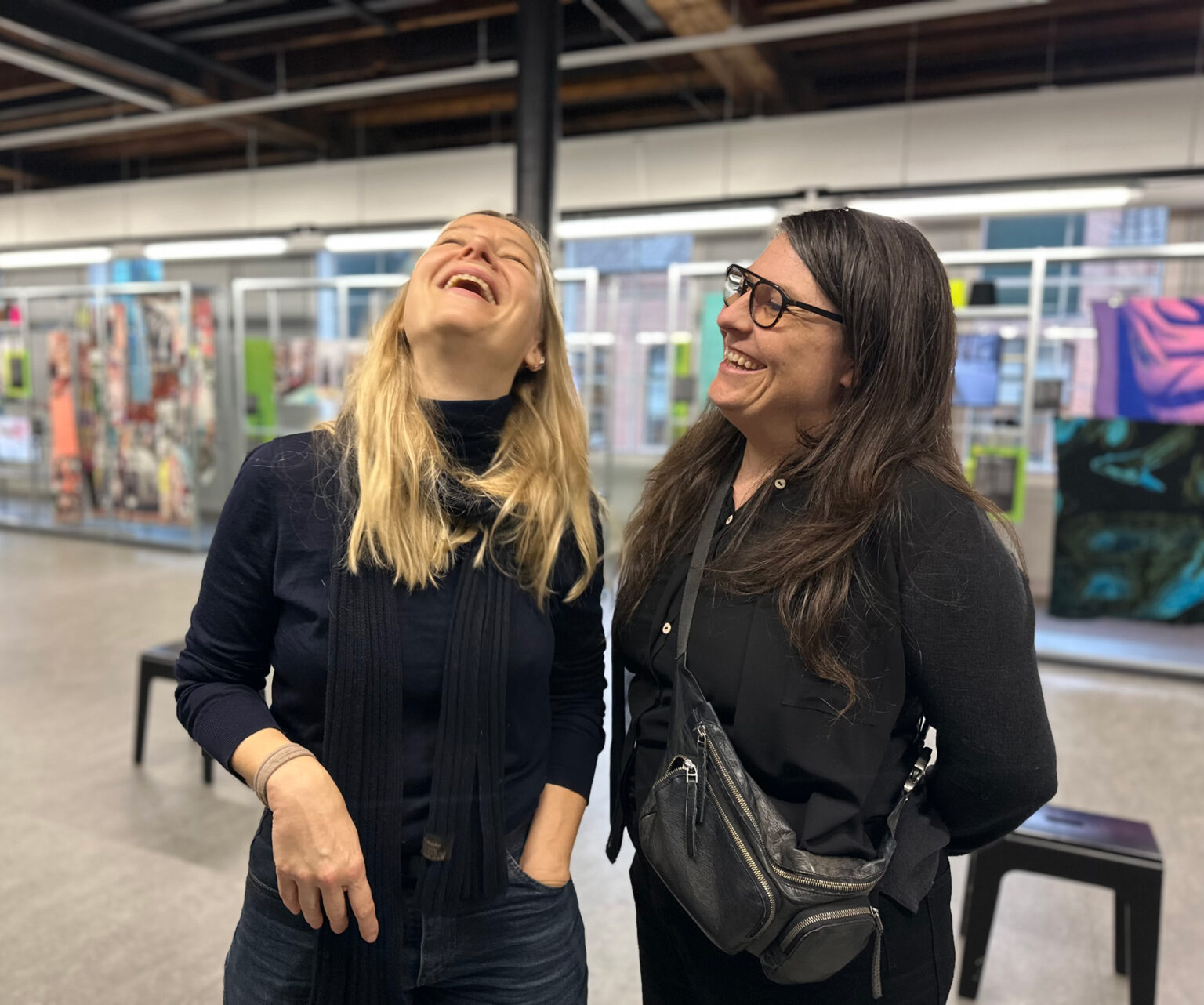
Under the name ‘Augmented Weaving’, Anita Michaluszko and Flavia Bon approach textiles as something in motion—never fixed, always unfolding across physical and virtual dimensions. Their process weaves together traditional craftsmanship with digital innovation, creating materials that feel both intimate and speculative. Surfaces ripple like coded landscapes, shaped by experimentation and collaboration.
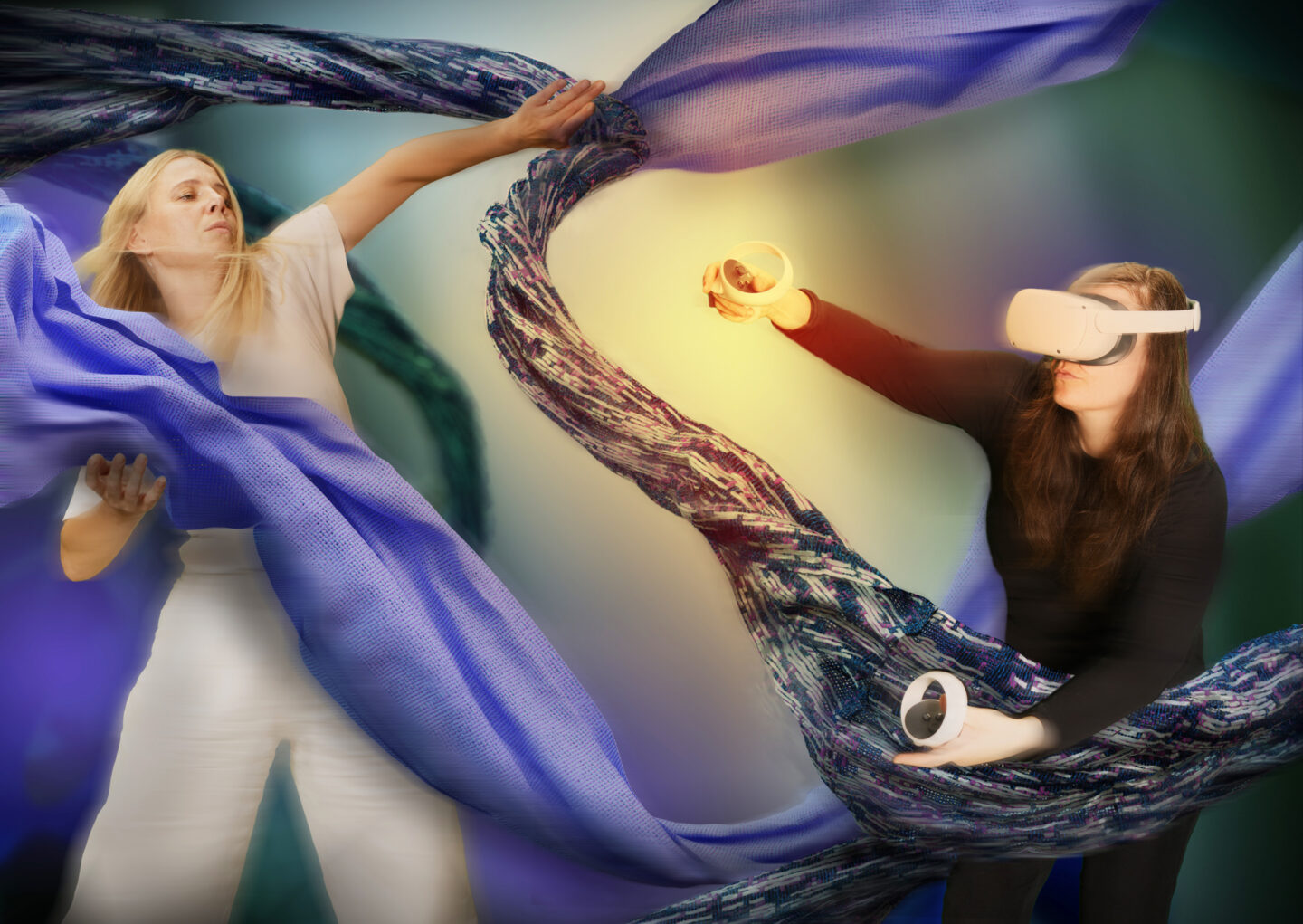
© Fan Liao & Anita Michaluszko & Flavia Bon
Which place do you currently call home and where do you work on your projects?
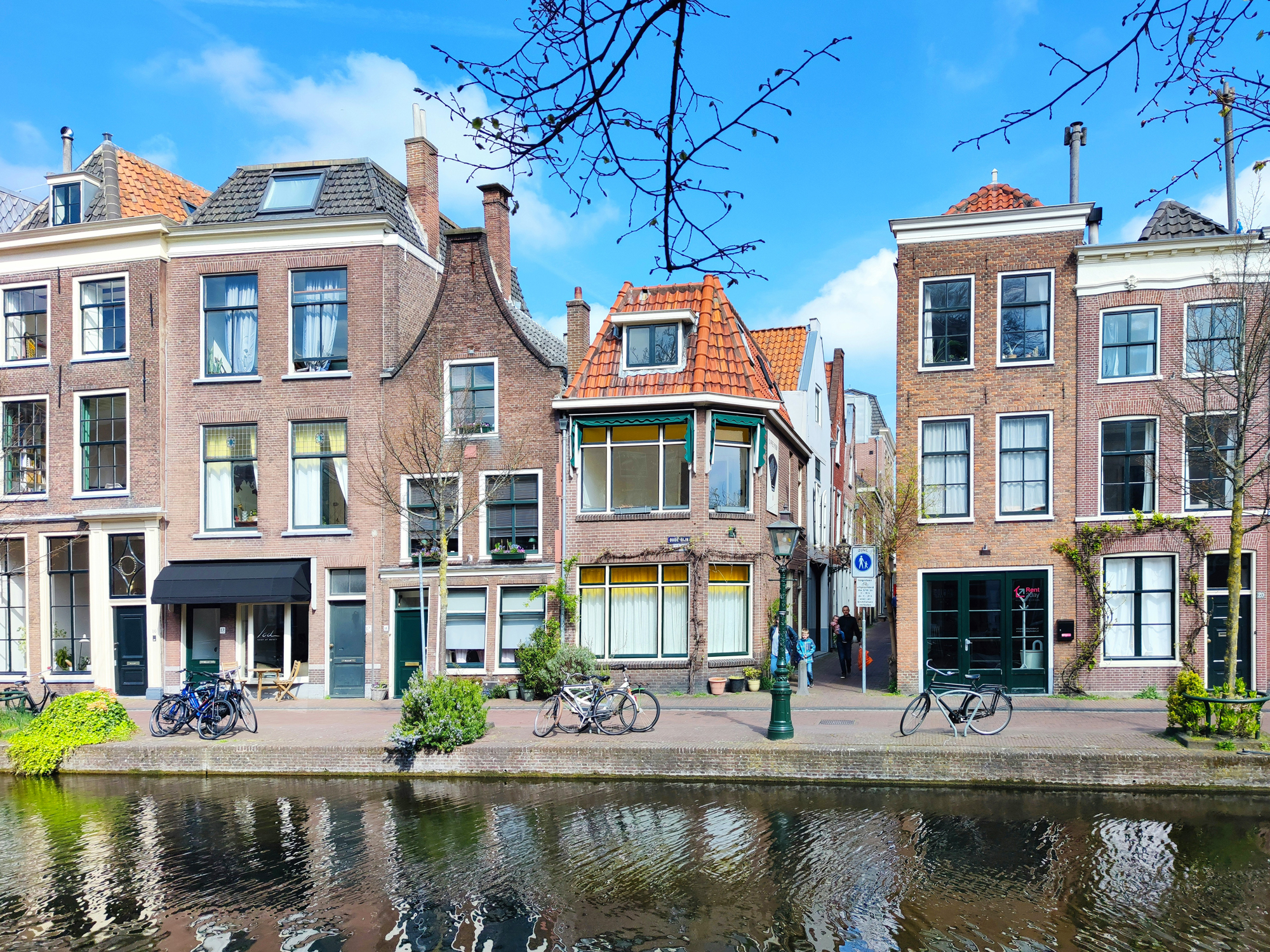
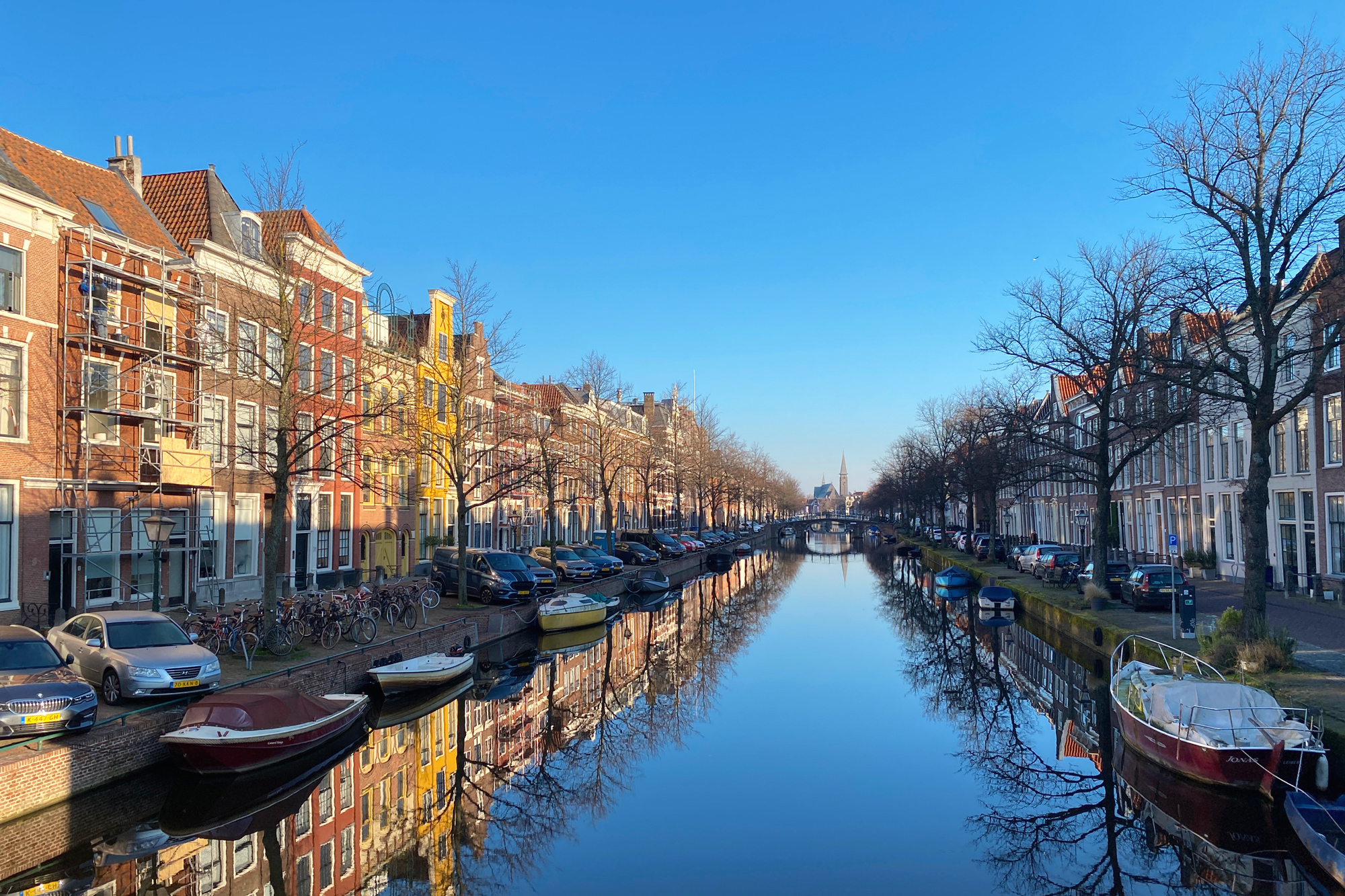
Anita Michaluszko: I live in Leiden in the Netherlands. A small town that the New York Times recently described as: ‘All the canals and charm of Amsterdam. None of the crowds.’
Flavia Bon: After living abroad for more than 10 years, in Iceland and the Netherlands, I decided to return home and rediscovering Switzerland where I grew up. Even when we both lived in the Netherlands, we never lived in the same place. Our exchanges mainly take place online on platforms that we share.
Where is your studio located & how does it look?
Our official studio is located in Leiden in a former tin factory and is part of an office space that we share with other creative professionals. The sampling and development for weaving takes place at various locations on TC2 or industrial Jacquard looms in the Netherlands or abroad. We are working towards acquiring our own TC2 loom one day.
© Courtesy of the artist
Are there any projects that are personally important to you—whether recently completed or currently in progress?
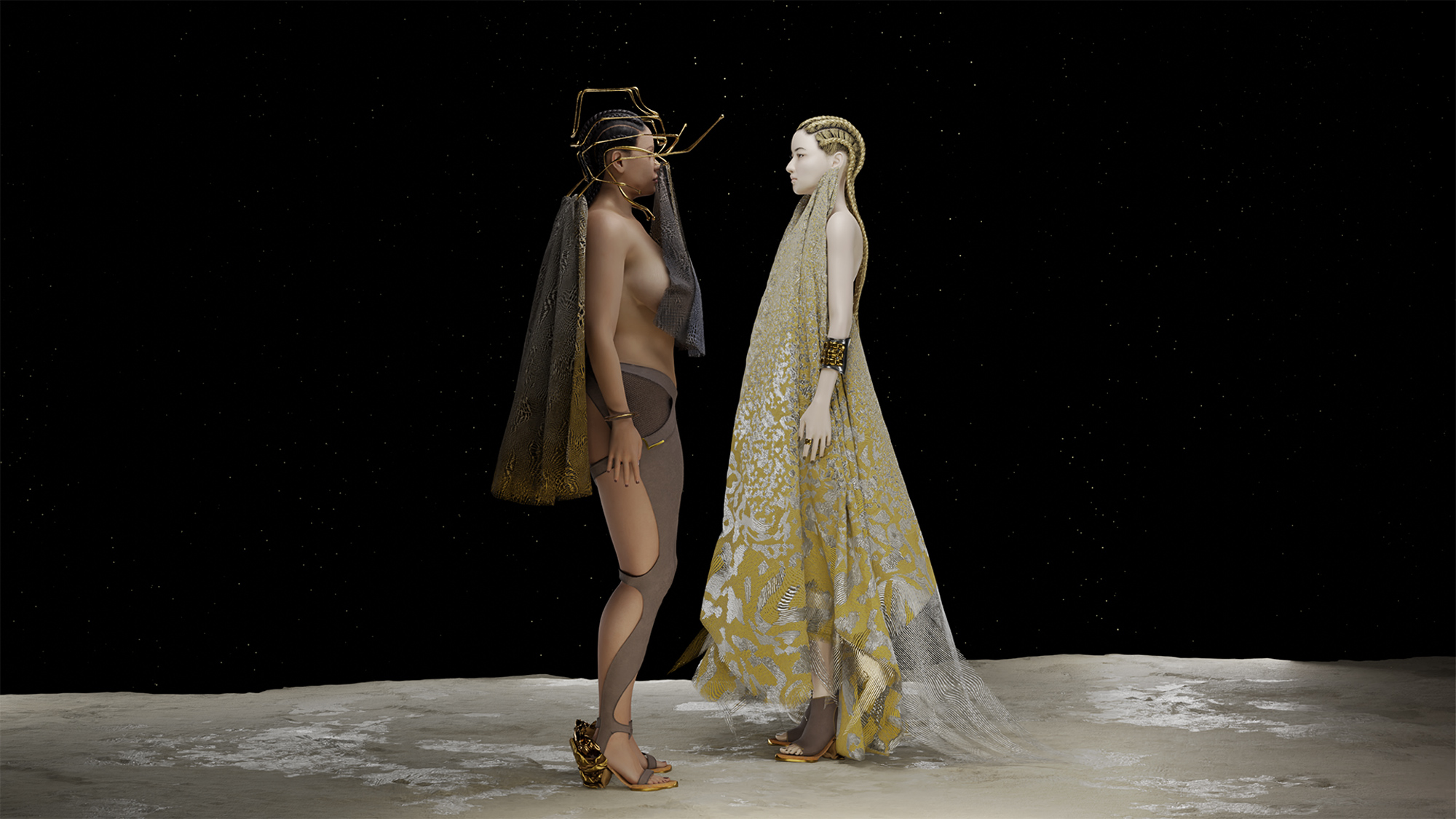
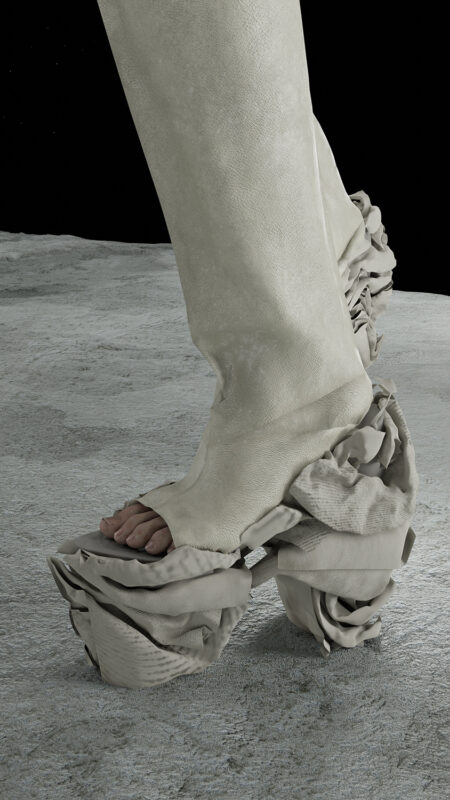
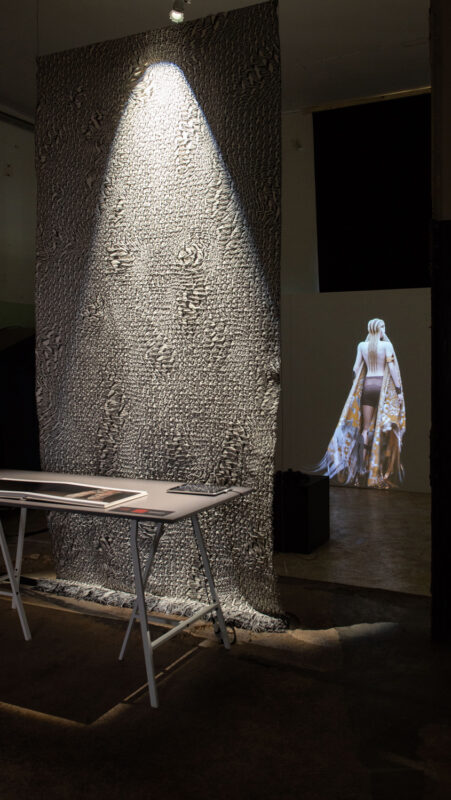
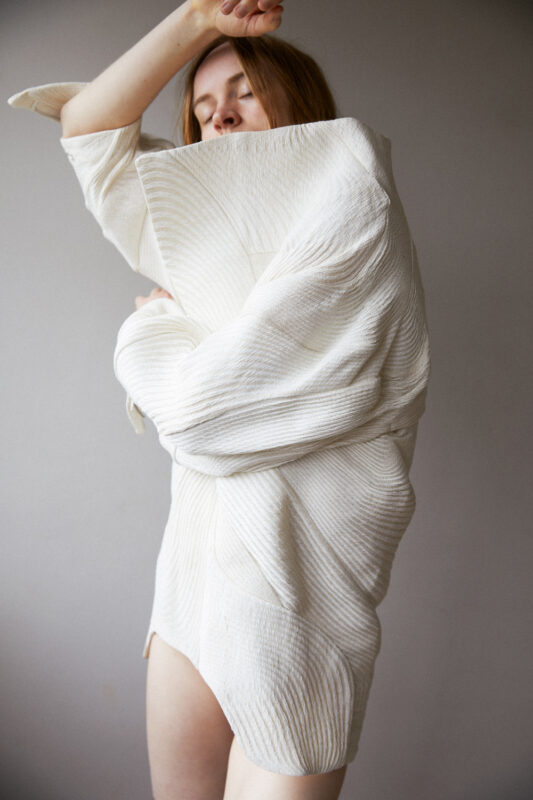
Since we started collaborating, we are interested in combining physical and digital tools and building bridges between craft and technology. The results of our work are a documentation of the paths of exploration we take. ShapeWeave, a method that enables us to custom-design textiles in direct relation to their final shape, evolved out of this approach. Rather than treating fabric as a flat surface applied afterward, material and form are conceived simultaneously.
At a certain point we started to combine expertise with other designers or companies who are using textiles in their products. For the Trend Forum of the Heimtextil fair we have already collaborated with the Dutch furniture manufacturer Artifort and Monica Förster Design Studio delivering the proof of concept. It is a long path of development and we are now in the next phase of getting the proof of work which will enable us to offer ShapeWeave as a design service to develop and produce objects and entire spaces connected by textiles.
© Courtesy of the artist
© Forum Situated Practices
© Annelie Bruijn
Do you have a favorite place in your area where you like to relax and linger?
The Polderpark Cronesteyn, less than 2km away from the city centre, is a wonderful retreat for a walk, bird watching or running. It is home to the cosy outdoor sauna “Dankjewellness” and the coffee & restaurant “Tuin van de smid”, the blacksmith’s garden. When friends from abroad come to visit, we like to rent a boat and take a cruise along the canals with a picnic and drinks. It’s great to take a tour from Leiden and sail under bridges, past fields and watermills, and back to the centre.
© Photo: S LN,Unsplash
Are there any urgent political issues or problems in your region?
As it often is the case in uncertain times, there is a right shift happening across Europe. In November 2025, an AI-generated racist song was on the verge of becoming the number one hit on the Spotify app in The Netherlands. Fortunately, people were massively promoting a song with a opposite message ‘Vrijheid, Gelijkheid, Zusterschap’ (Freedom, Equality, Sisterhood) by Sophie Straat, to prevent this from happening.
In your opinion, what has developed well in the last 5 years—and what has not?
There is a lot of awareness about food. Het Zoete Land is a community‑supported agriculture (CSA) garden in Leiden where members collectively share the harvest of an ecological urban farm. People contribute through a seasonal membership or volunteer work and in return harvest locally grown vegetables, herbs, flowers, and fruit. There is a five-year waiting list for new members, so there is clearly more demand than they can meet. On the negative side, there are many wars in the world and environmental concerns. This affects us too, at an emotional level at least.
© Photo: Damiano Baschiera,Unsplash
© Photo: Damiano Baschiera,Unsplash
Do you know a hidden gem when it comes to local manufacturers—whether it’s arts and crafts, sustainable products or food?
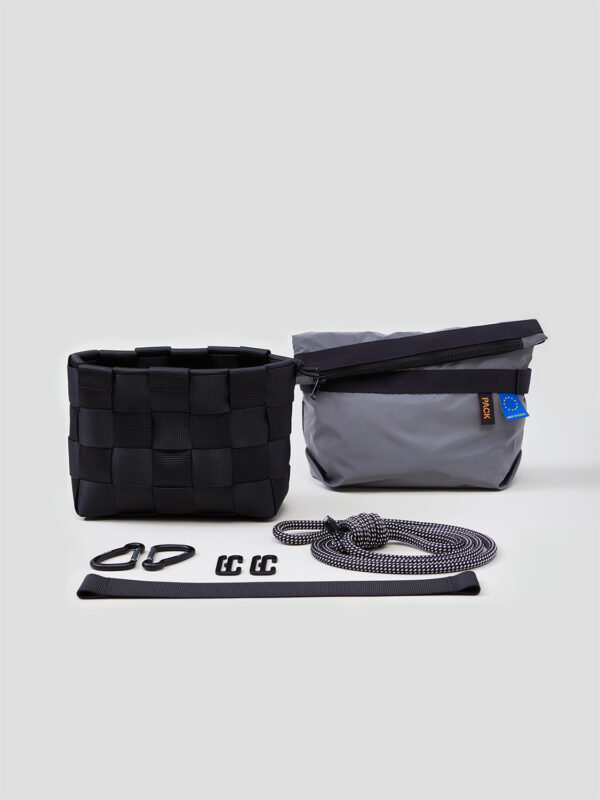
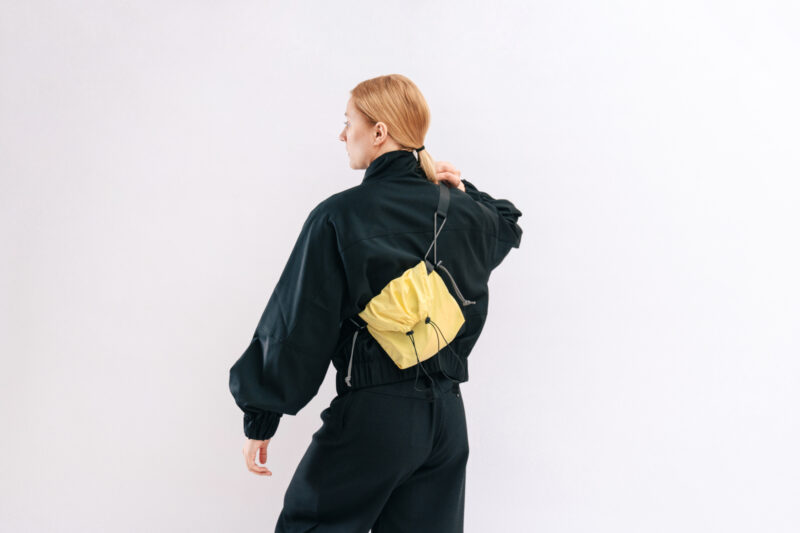
PackBags is an Amsterdam-based brand creating modular, customizable bags made from interchangeable components, allowing you to build and adapt a bag to your style and needs. All pieces are crafted in their own studio. We are big fans and are currently working together on a custom woven capsule collection.
Leiden has a long tradition of producing wool fabrics and blankets. The Leidse Deken Foundation was established with the aim of preserving this heritage and reviving small-scale production. The woven products and the self published city guide “Blanket Walk” can be purchased at their workshop.
© PACKBAGS
© PACKBAGS
Is there anything particularly innovative in your region? Also in comparison to other places you have already visited?
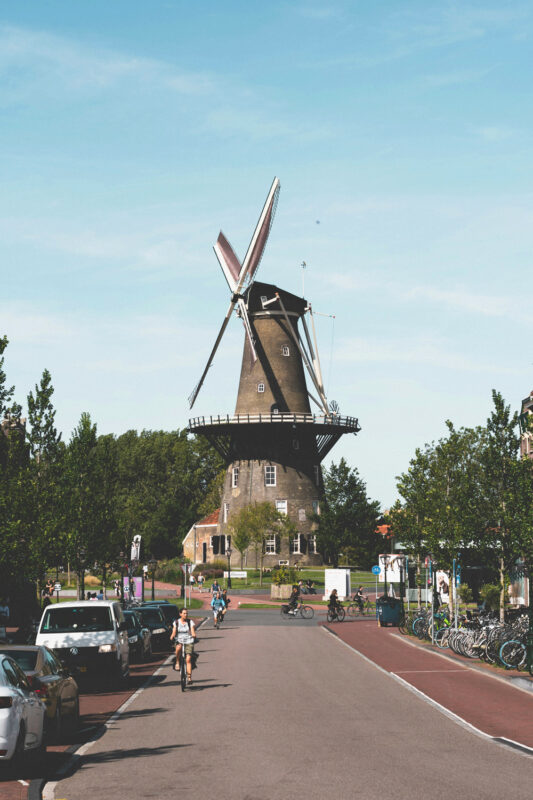
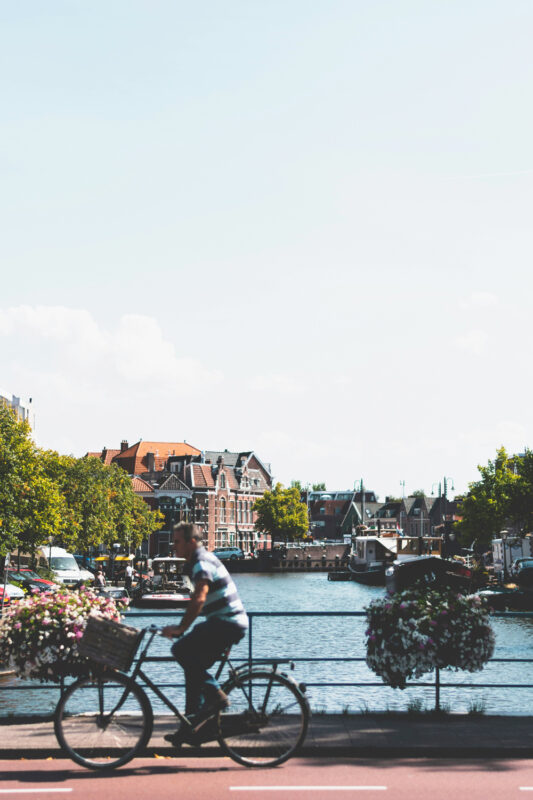
The bicycle is the everyday means of transport in the Netherlands. You see people transporting several children or balancing all kinds of goods on their bicycles. We particularly like the OV-Fiets bicycle rental service offered by Dutch Railways. With your personal rail card, you can rent bicycles at any station. Although this service is not intended for tourists, I still recommend renting a bicycle to get around.
Do you have a secret restaurant tip that you would like to share with us?
You could easily just walk past restaurant Catootje aan de Markt, as you wouldn’t expect to find a restaurant like this in front of a car park, but it’s definitely worth going in. A small, cosy restaurant serving dishes with international flavours, including vegetarian and vegan options.
At the Saturday market in the city centre, Klaas Hartenveld is my favourite fish stand. Kibbeling, white fish fried in crispy batter, or a herring sandwich are typical Dutch snacks.
© Paulies Ginger
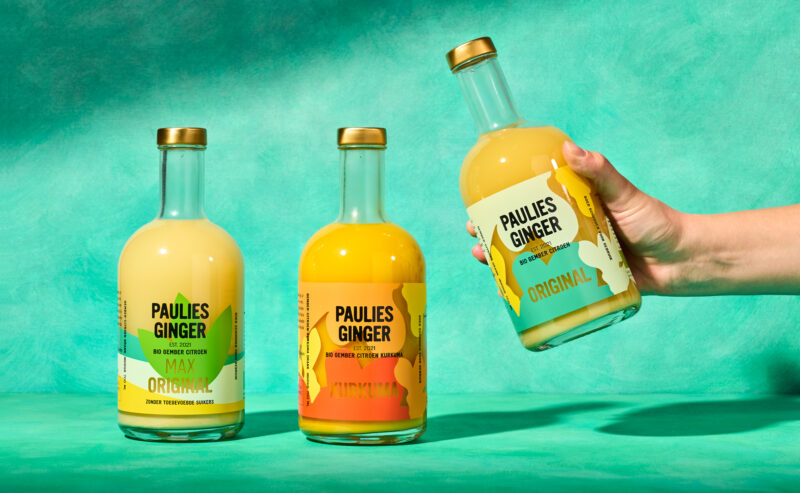
© Paulies Ginger
Is there a local shop whose products are only available in your region?
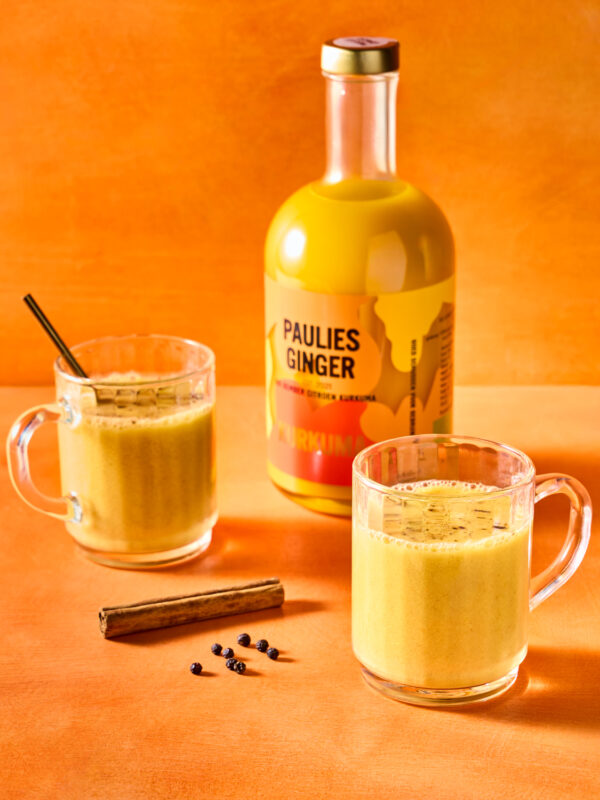
Oogst is a modern farmers shop offering local, regeneratively produced food from nearby farmers and artisanal makers. Until recently, the self-service shop was only accessible via an app, which was also used for payment. Now you can also buy products such as a bottle of local ginger & turmeric shots from Paulies Ginger with your bank card.
What are your 3 favourite apps that you use every day and couldn’t live without?
Platforms such as Miro and Figma, as well as online meeting rooms, have become our office. This is where we collaborate and without these tools, our work would not have been able to evolve across the distance. Miro is where we brainstorm and gather ideas. In Figma, we bring structure to the creative chaos and prepare it to share with the outside world.
Do you have any favourite newspapers or online magazines? And how do you keep up to date with politics or social and cultural issues?
Anita Michaluszko: My main source of information is the Radio France app (in French), especially the programmes that explain current events in a broader context. I follow Leiden University’s public programme Studium Generale and occasionally attend lectures on current topics. Then, of course, conversations and exchanges of opinion with other people.
Flavia Bon: Wetware, a forward looking magazine focusing on the emerging space of digital fashion, based in the Netherlands.
© Anita Michaluszko
Imagine you could be mayor for a year—what would you change?
We would, of course, increase financial support for creative projects. Because projects without a commercial goal cannot be realised without. Anita: I would like to stimulate a shift from consumer to maker. We buy everything because the finished product is ready to use and usually cheaper than the raw materials. In doing so, we lose the skills and ability to create and to make things ourselves. This also results in our complete detachment from the manufacturing processes, the effort and the energy that goes into the production of all the things we use.
One last question: If you could choose another place to live—regardless of financial or time constrains—which one would you choose?
Anita Michaluszko: Having grown up in Poland and Switzerland and moved around Europe, I am very happy to feel at home in the Netherlands.
Flavia Bon: A place in even a higher altitude than 629m where I live now.


