There is a specific kind of knowledge that cannot be written down. It lives in the hands of the woman who has been fitting gloves for forty years, in the roasting master who knows by smell alone that the nuts are ready, in the candlemaker who learned the trick of the wax from the person who learned it before her. In Barcelona, this knowledge is not stored in museums or commemorative plaques. It is stored in working shops that have remained open through civil wars, property booms, pandemics and the relentless pressure of a city being remade by money.
© Frederking & Thaler / Benito Barajas
A city that accumulates
Barcelona’s commercial identity did not begin with tourism. The espadrille has been made in this city since the 14th century. The chandler’s guild dates to the same era. The first apothecary shops opened in the 15th century. What lines the old streets of the Barri Gòtic and the Born is not a reconstruction of the past. It is the past, continued, by people who got up this morning and opened a workshop.
For much of the 20th century, a law protecting long-term commercial tenants from speculative rent increases kept this continuity in place. The law was imperfect: it held rents at levels so low that building maintenance became impossible in many districts, leaving entire neighbourhoods in structural neglect well into the 1990s. But it also meat that a shop founded in 1851 could remain on the same corner, under the same family, paying a rent that reflected history rather than the market. In 1996, the law expired. Rents moved. Nuria Arnau, who owns Sombrereria Mil, gives the figures without commentary: her grandfather paid 900 pesetas a month. After 1996, her father paid 1,800 euros, with a 12% annual increase written into the lease. Today the monthly rent stands at approximately 9,000 euros. Some of her neighbours pay up to 15,000.
In 2016, the Barcelona city government catalogued what remained of the comercios emblemáticos, its historically significant shops. According to the Ajuntament de Barcelona, there were 211, with an annual protection budget of 1 million euros. The measures were precise on paper. In practice, they came too late for many.
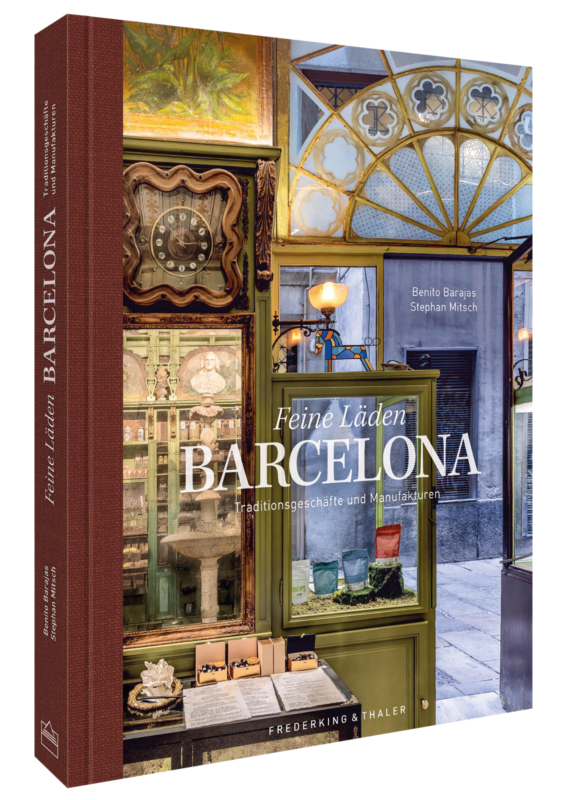
There is a book that does not begin with beauty. ‘Feine Läden Barcelona, Traditionsgeschäfte und Manufakturen’, published in 2026, is not a shopping guide. It is a document written from the inside. Stephan Mitsch, a communication designer and travel writer, has lived near Barcelona since 2000. He watched these changes street by street, shop by shop, and recorded what remained. The stores he has selected are the ones that have kept doing what they have always done, long enough for it to mean something.

© Frederking & Thaler / Benito Barajas
Everyday life objects
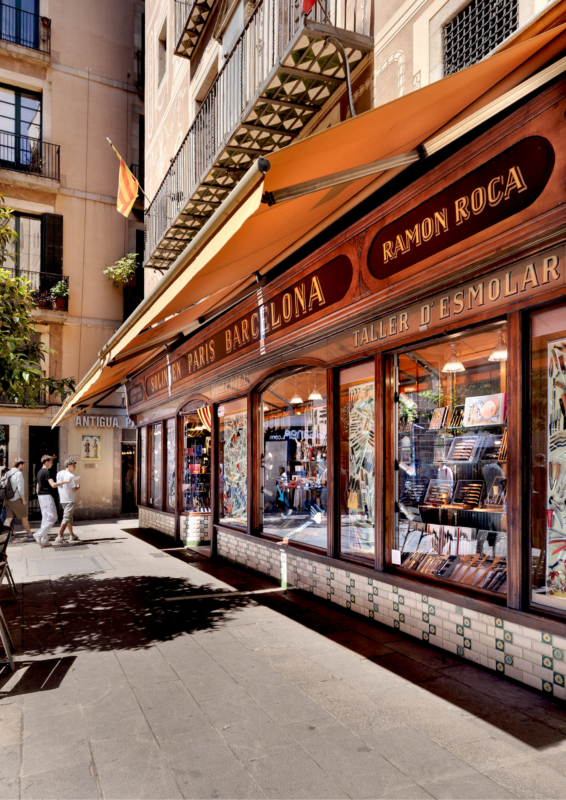
On the Plaça de Santa Maria del Pi, Ganiveteria Roca has been sharpening and selling blades since 1911. The profession was regulated in Barcelona from 1452: a master’s examination was required to open a sharpening workshop. Ramon Roca trained in Paris and Solingen before returning, because the standard he was seeking existed there and not yet here. He died of influenza in 1918 without leaving a will. His 18-year-old son found a stand-in owner to hold the business until he came of age. In 2000 the shop passed to a consortium of Spanish manufacturers. The address has not changed. It remains the address where Barcelona’s surgeons, chefs and military go when precision matters.
© Frederking & Thaler / Benito Barajas
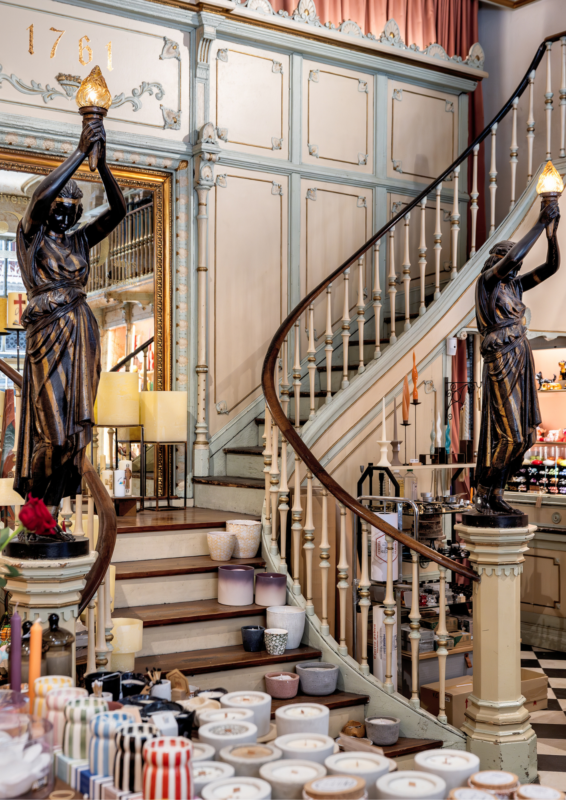
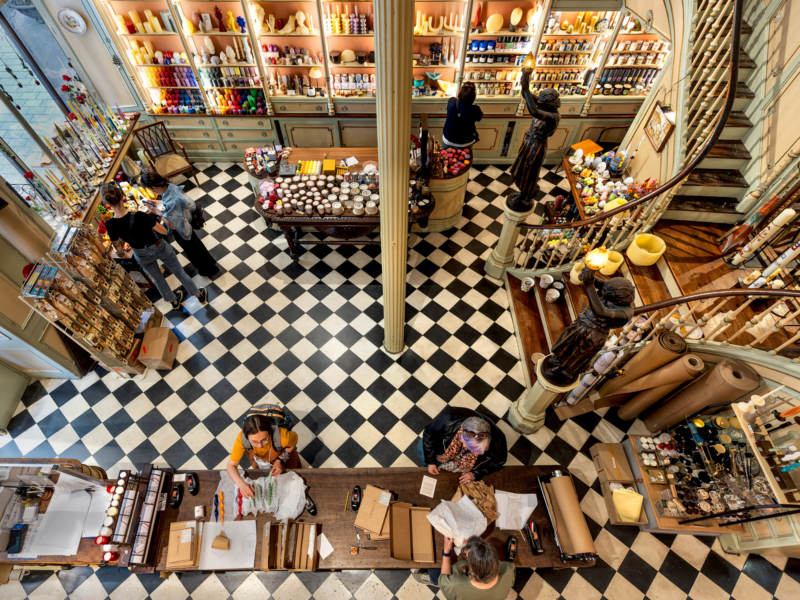
On the Baixada de la Llibreteria, Cereria Subirà has been in operation since 1761. It is, according to available records, the oldest continuously operating business in Barcelona. In 1964, the city threatened expropriation to expand the Museum of History of Barcelona. After negotiation, the shop was classified a historic monument. Five years later, a fire destroyed the workshop entirely. Neighbours and clients helped rebuild it. It reopened within days. The double-helix staircase has been preserved in its original state. The same applies to the black and white tiled floor and the torch-bearing figures at the foot of the staircase. Pilar, the current owner, explains that the chandler’s guild was once comparable in prestige to a medical or legal association. The title of master chandler was a distinction. This shop has held it for 265 years.
Casa Gispert was founded in 1851 in the Born. Its wood-fired drying oven is, according to its owners, one of the last of its kind in Europe. The fire burns on one side only. The product never touches the flame. Maximum 65 grams per batch. The roast master reads the smoke. When production moved to Viladecavalls in 2014, the original oven had to be reproduced exactly at the new site, because the flavour lives in the physics of the original, and there was no other way to keep it.
© Frederking & Thaler / Benito Barajas
© Frederking & Thaler / Benito Barajas
Fashion and the body
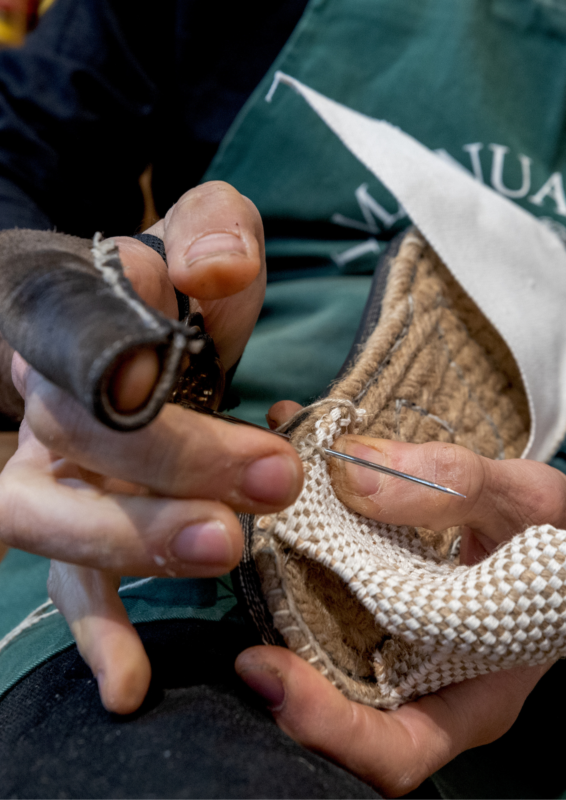
Take La Manual Alpargatera for example. Open on Carrer d’Avinyó since 1941, the espadrille it makes has been produced in this city since the 14th century. The sole is braided jute, stitched by hand. Each pair adapts to its wearer’s foot over weeks of use, forming its own insole, which means every pair eventually becomes unique to the person who wears it. Salvador Dalí bought his here. Lauren Bacall. Jackie Kennedy. Yves Saint Laurent. Pope John Paul II received a new pair every year.
The jute now comes from South America. Hemp cultivation in Europe requires licences nearly impossible to obtain, a regulatory constraint that has nothing to do with craft and everything to do with the conditions under which craft survives. These are not decorative complications. They are the actual terms of keeping a tradition alive: invisible, administrative, unglamorous, and entirely real.
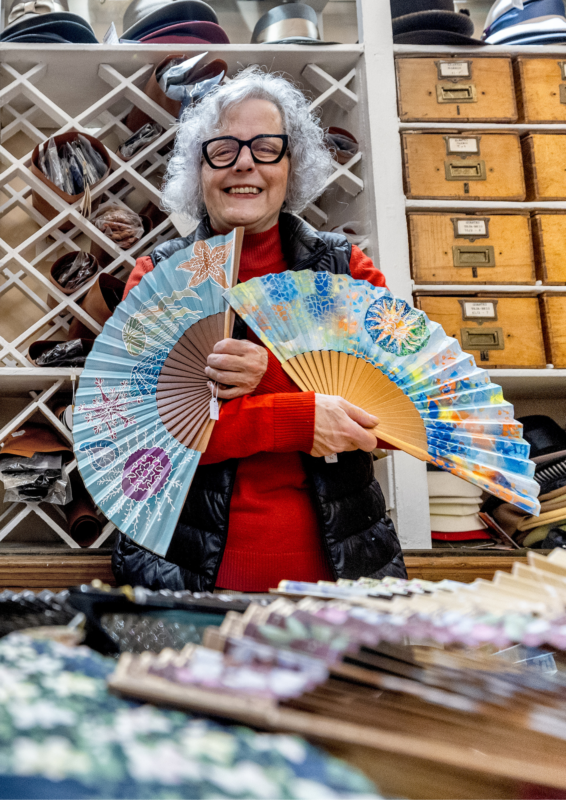
Victoria Alonso has been running Guanteria Alonso on Carrer de Santa Anna since 1993. The shop was founded in 1890 by her grandfather. The current premises date from 1905. She owns the building, bought it 30 years ago, and says this is the reason the shop exists. Without that, she adds, the rent would have made the rest impossible. Her son is waiting to take over. She is 40 years into the job, and describes it the way one describes something that was never quite a choice.
© Frederking & Thaler / Benito Barajas
© Frederking & Thaler / Benito Barajas
The edible calendar
Barcelona keeps time through its pastries. Turróns at Christmas, the Roscón dels Reis at Epiphany, elaborate chocolate Monas at Easter, the Tarta San Juan on the eve of Sant Joan, Panallets at All Saints’. This calendar does not exist anywhere written down. It exists in shop windows.
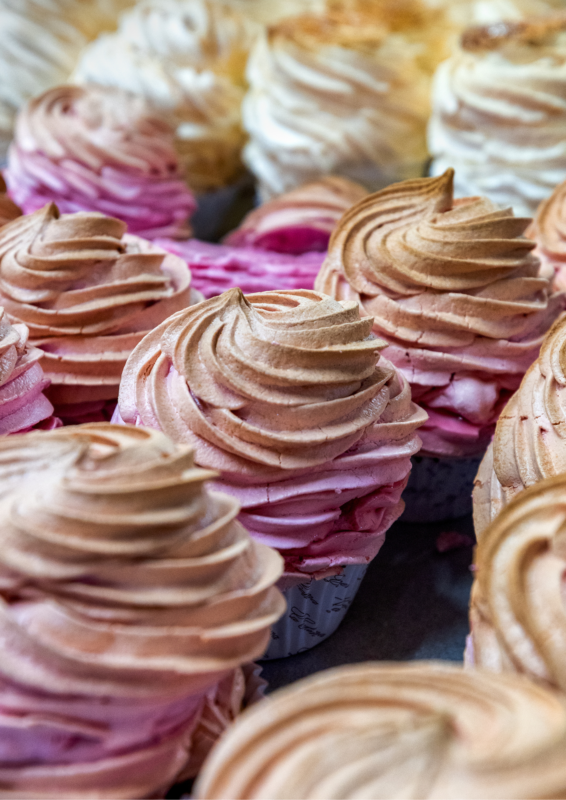
Pastisseria La Colmena has occupied the Plaça de l’Àngel since 1868, when it relocated from the Baixada de la Llibreria where it had opened, according to available records, in 1849. The facade was redesigned in 1950 by César Martinell i Brunet, one of Gaudí’s last pupils, in a blend of modernisme and noucentisme. Eight artisans work behind the counter every day. The encasada, a dome-shaped pastry of mató dusted with icing sugar, is virtually impossible to find elsewhere in the city. According to the shop’s own records, it was served to Albert Einstein on his visit to Barcelona in 1923, though this has not been confirmed by an independent primary source.
© Frederking & Thaler / Benito Barajas
© Frederking & Thaler / Benito Barajas
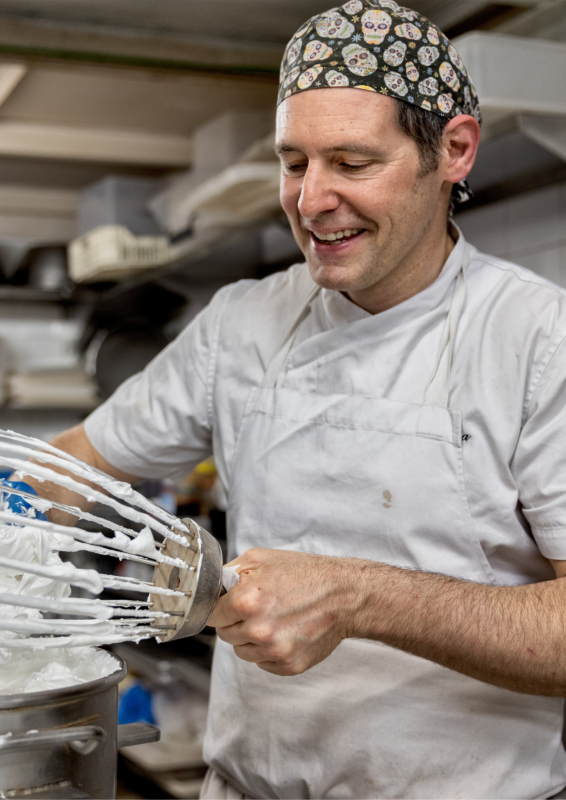
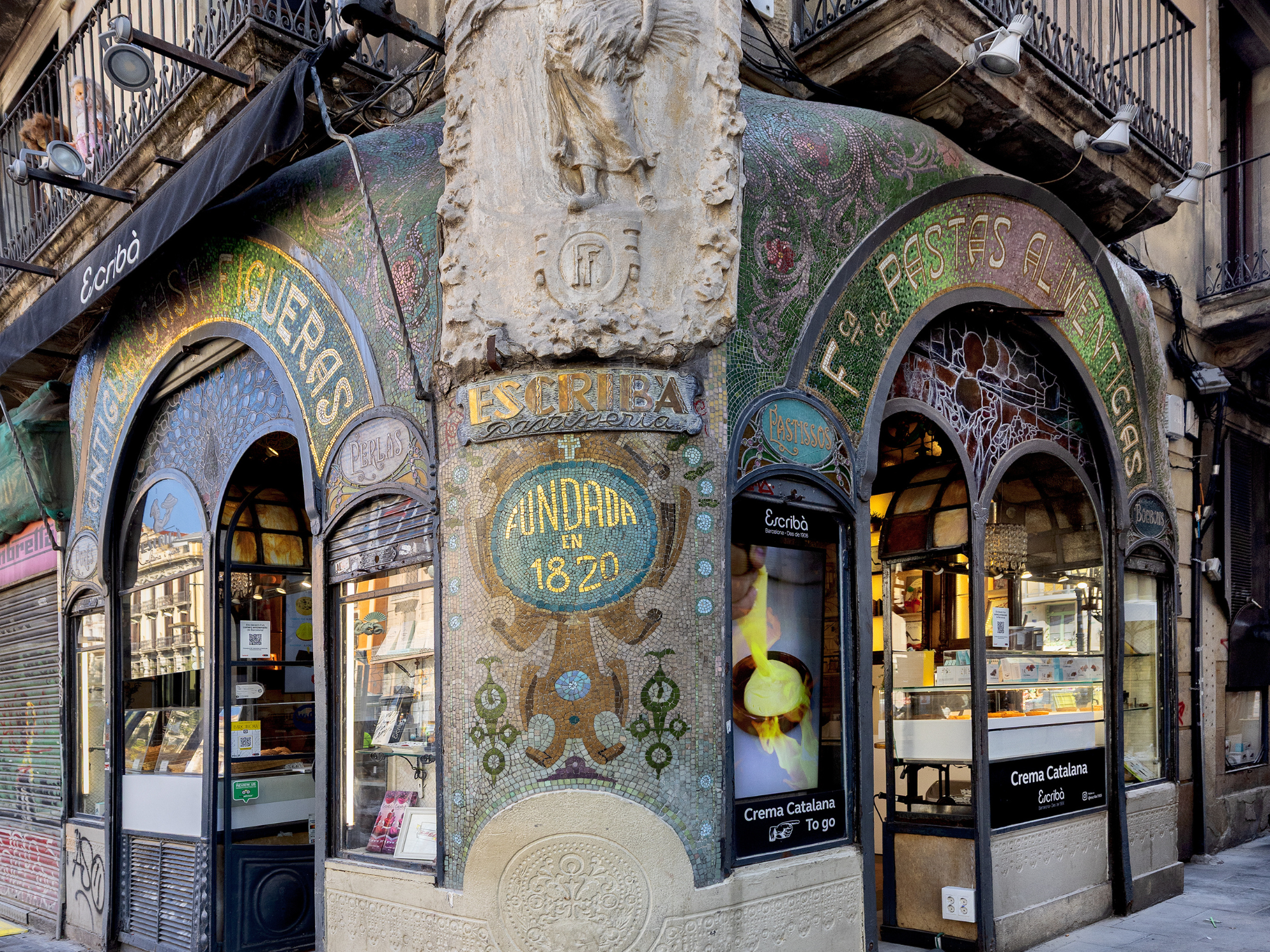
Pastisseria Escribà occupies a corner building on the Rambla de les Flors whose mosaic facade was redesigned in 1902 by Antoni Ros i Güell in full Art Nouveau style. The building originally housed a pasta factory founded by the Figueras family in 1820. A relief of the goddess Ceres holding a sheaf of wheat still marks the corner, a tribute to the women who once processed grain on the premises. The shop’s mosaic still bears its original name: Antigua Casa Figueras.
The Escribà family’s connection to the address begins with a story. A neighbour used the bakery oven to make a traditional Valencian brioche. It went wrong. She blamed the oven. The baker, Valencian himself, repeated the experiment to prove the point, ended up with more than he could sell, and hired a pastry chef: Antoni Escribà. A decade later, Antoni married the owner’s daughter. The family has been here since.
© Frederking & Thaler / Benito Barajas
Antoni’s son, also named Antoni, became known across Barcelona for his chocolate figurines, earning 25 gold medals between 1956 and 1977, and the nickname the Mozart of chocolate. Ferran Adrià was among those who recognised his work. He died in 2004. His son Cristian runs the shop today, alongside Patricia Schmidt, whose sugar flowers are, in the photographs, indistinguishable from the real thing. His son Pol is already impatient to take over.
La Botifarreria de Santa Maria has been in the Born since 1955, when the Travé family took it over. Toni Travé has spent his career extending the Catalan botifarra into new territories: ink, artichoke, foie gras, chestnut, chocolate. His wife Hélène Dufner handles sales. Their son and daughter now work in the shop. The botifarra travels well: one week in the fridge, a fortnight vacuum-packed, can be frozen.

© Frederking & Thaler / Benito Barajas
From 211 to 71
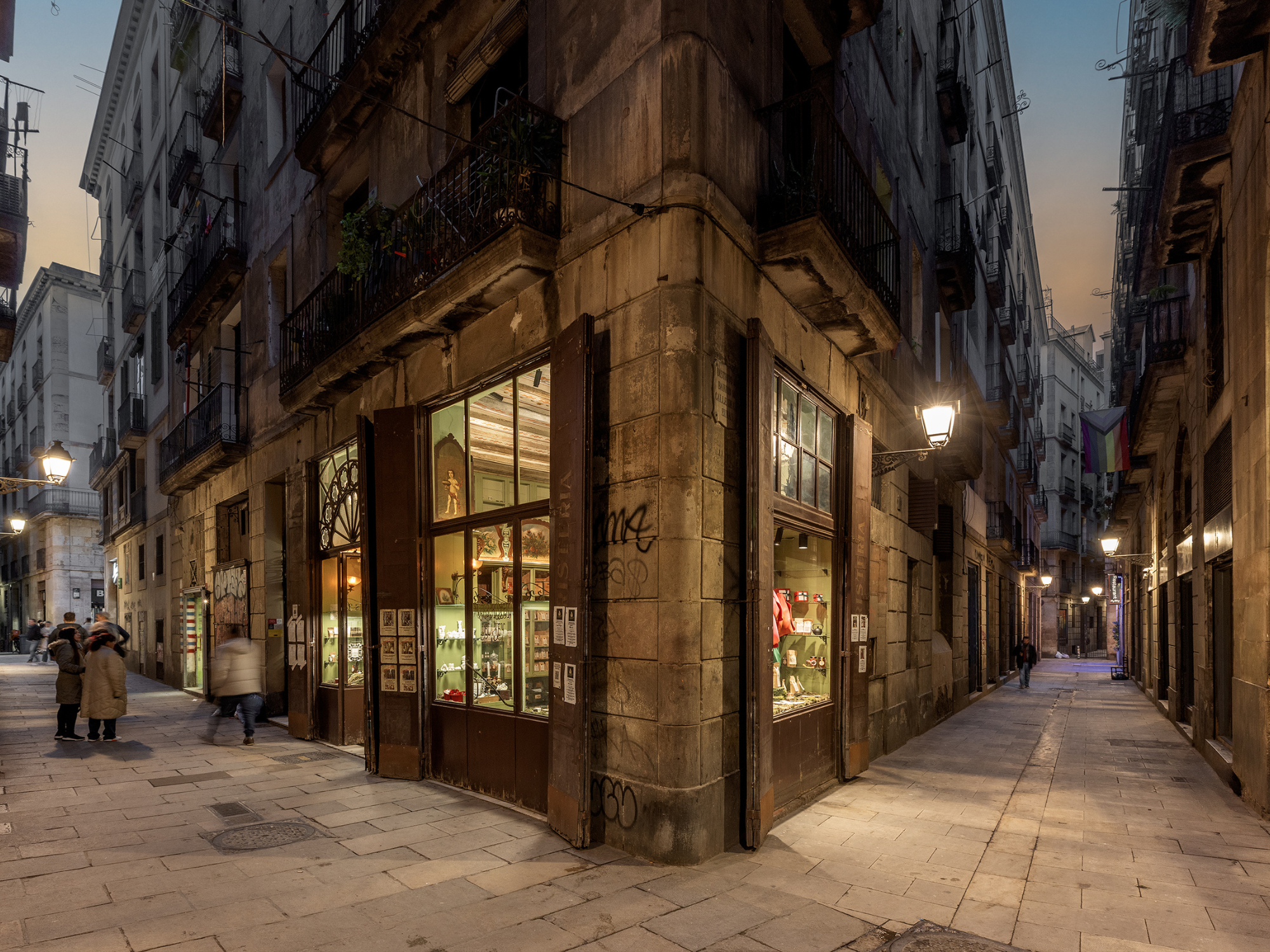
The Herboristeria del Rei was founded in 1818. Named royal supplier in 1857. In 2006, Tom Tykwer used its interior as a set for his film The Perfume, because the space looked, without modification, exactly like what it was: a working apothecary that had not changed in two centuries. In September 2021, its owner decided to cease activity. Age, economics, and the weight of a pandemic on a shop that depended on proximity and trust. For several months, the walls, the shelves, and the smell of dried herbs remained, but the door was closed.
In May 2024, Pavlinka Doroshenko reopened it. She had worked with the previous owner for years and understood what closing would mean. Her reasoning was direct: “Everyone must do something to preserve the history and identity of the place where they live.” She sells custom herbal blends, essential oils, honey. The walls are as they were.
© Frederking & Thaler / Benito Barajas
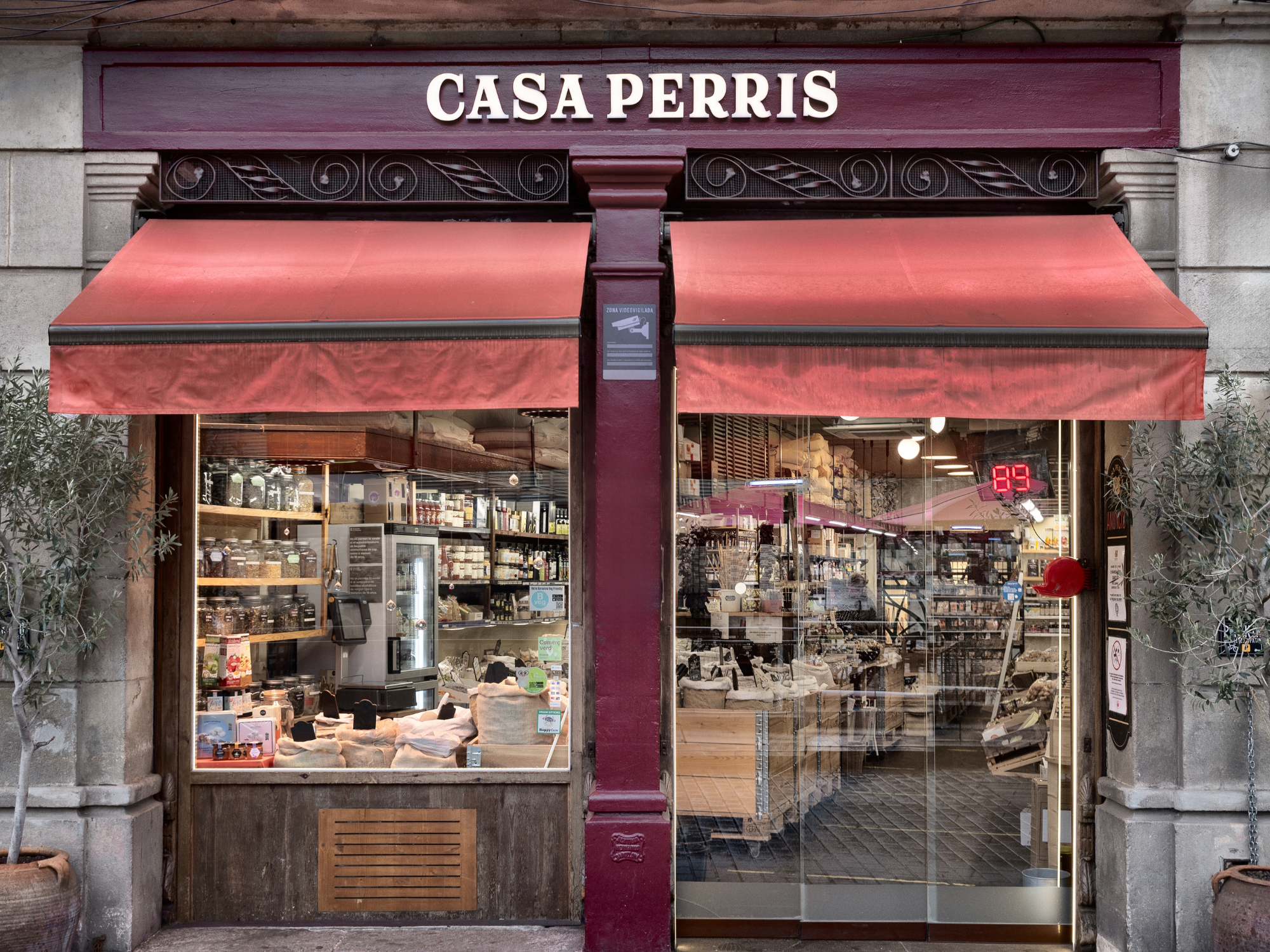
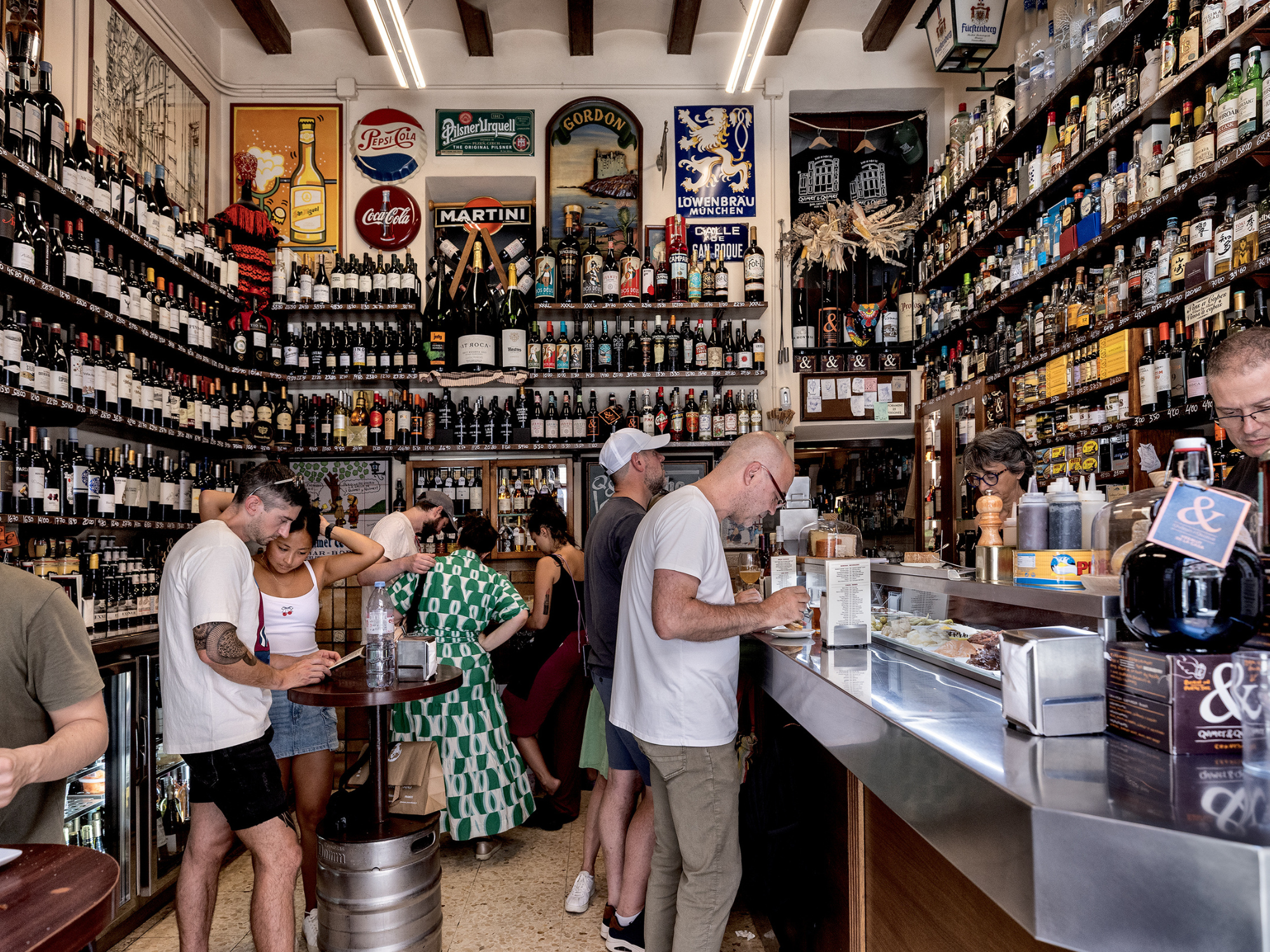
At Queviures Múrria on the Carrer de Roger de Llúria in the Eixample, Joan Múrria charges visitors 5 euros if they come only to photograph the shop for Instagram. His reasoning: “The raised thumbs do not pay the bills, and shops are businesses, not museums.” It is the most direct description available of what is at stake. These shops are not here because they are beautiful, though they are. They are here because someone gets up every morning, opens the door, and sells something to someone who needs it. The day that stops being true, the beauty becomes a photograph, and then a memory, and then an address where something else sells something else to someone passing through.
© Frederking & Thaler / Benito Barajas
The 211 have become 71. The jute comes from South America because the European hemp licences are too complex. The roasting oven in Viladecavalls is a copy of the one that stood in the Born for 175 years, because the flavour lives in the physics of the original. The 5-euro charge at Queviures Múrria is the most direct description, in commercial terms, of what is lost when visitors arrive only to look and do not stay to buy.
Barcelona reinvents itself constantly. That reinvention is legible from the street: the towers in the Eixample, the franchise facades, the luggage-wheeling crowds moving between the Ramblas and the Barceloneta. What is less legible, and what requires a different pace to reach, is the other reinvention: the one that consists of staying, of adapting without ceasing to be what one is, of finding a partner when the rent makes it impossible to continue alone, of handing something to a child who is already impatient to take it.
The counter is there. It opens every morning. That, for now, is enough.