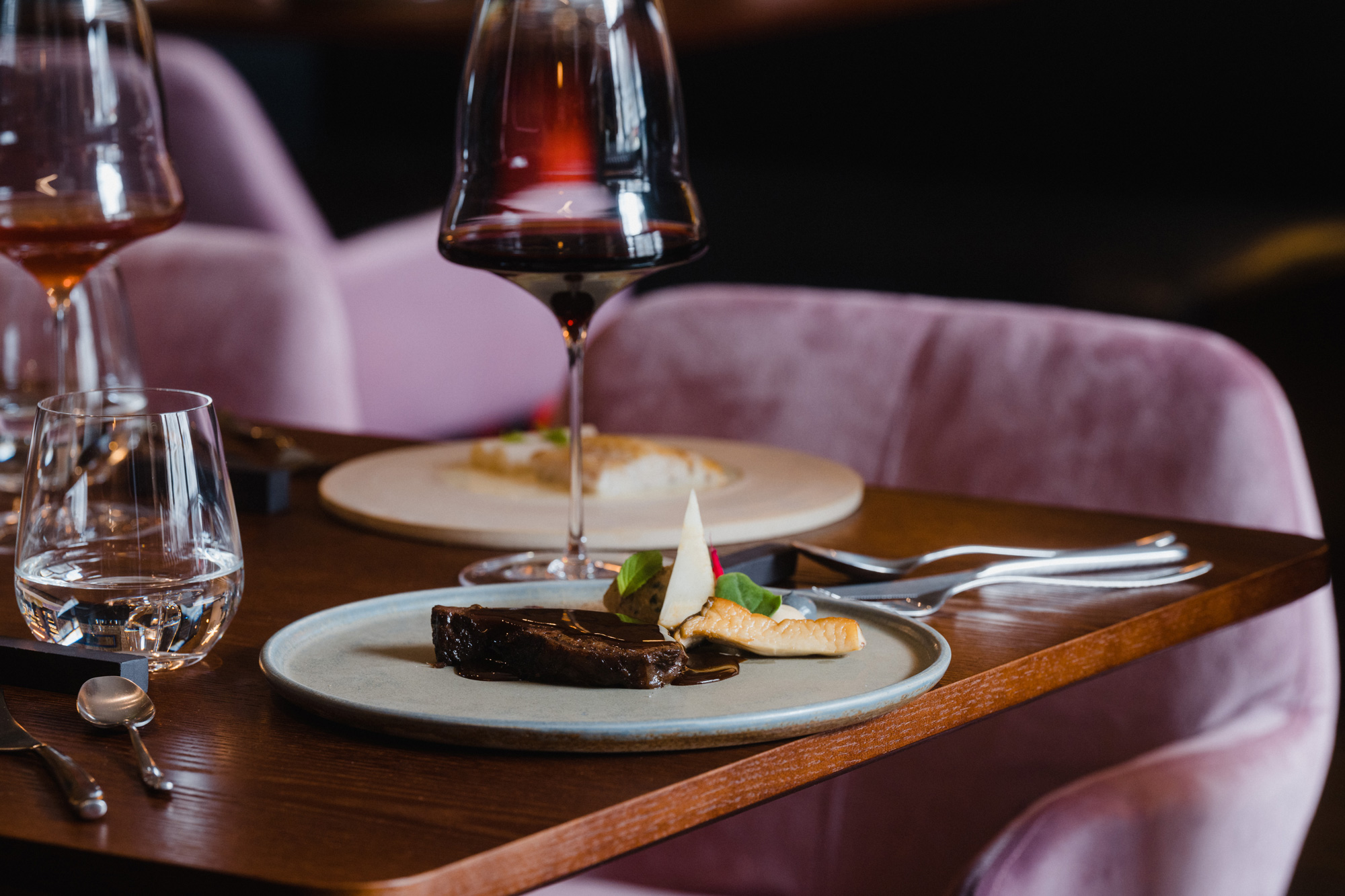
A visit to BRIKZ begins with a slight change of tempo. Outside: City West, taxis, shop windows, theatre talk, old Charlottenburg confidence. Inside: brick, low light, the sound of glass, a room that does not ask for attention yet quietly holds it. Things settle. That is why the Michelin recommendation does not read like decoration here, but like confirmation of what the room and the first minutes already suggest: serious cooking, without coldness in the wrist.
© Nils Hasenau
Setting
Around Savignyplatz, Charlottenburg shows its particular mix of polish, habit and ageing comfort. Bookshops, restored facades, a trace of theatre air, a trace of money, and cafes where people sit as if they had made an appointment with themselves. On Grolmanstrasse, BRIKZ keeps a measured presence.
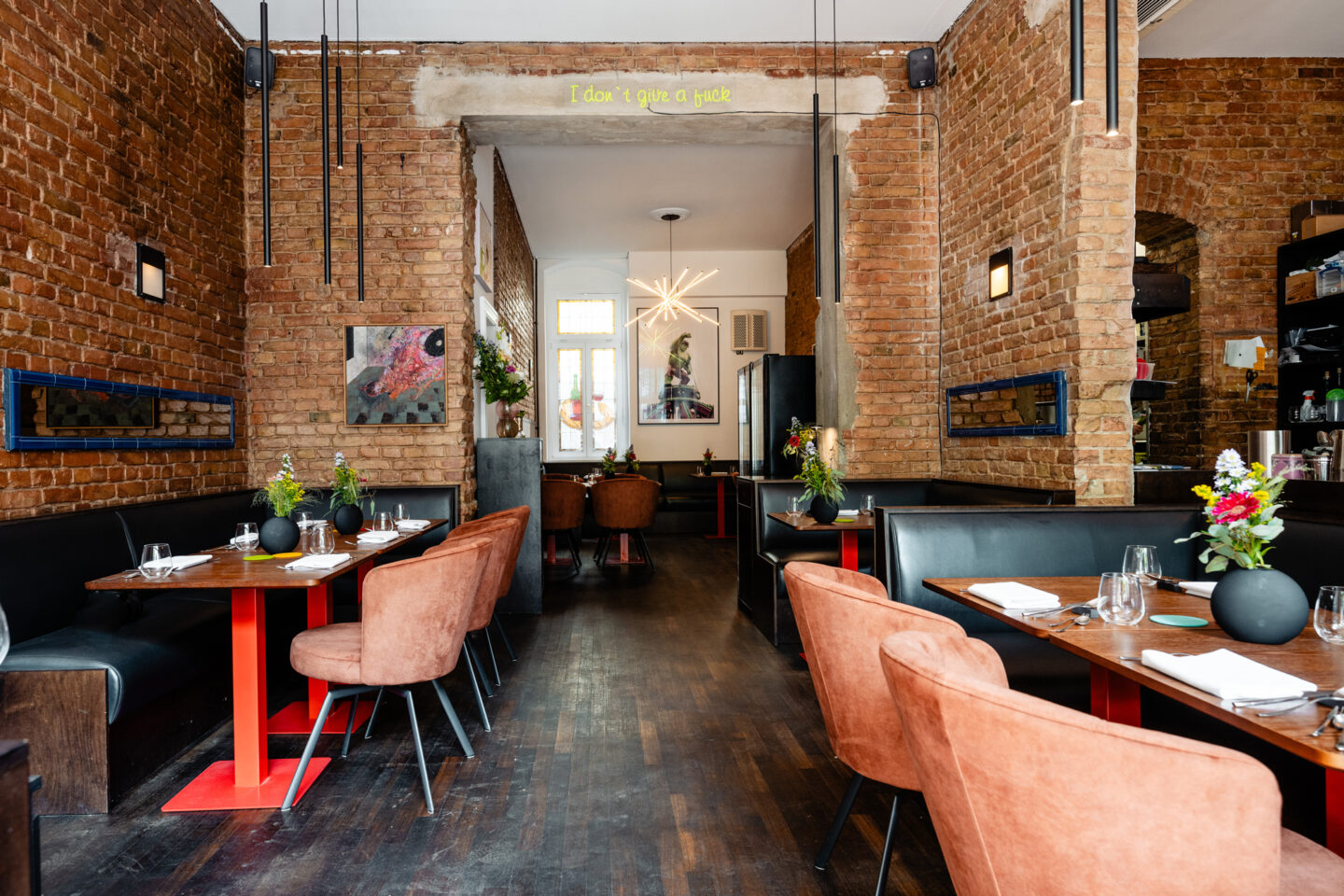
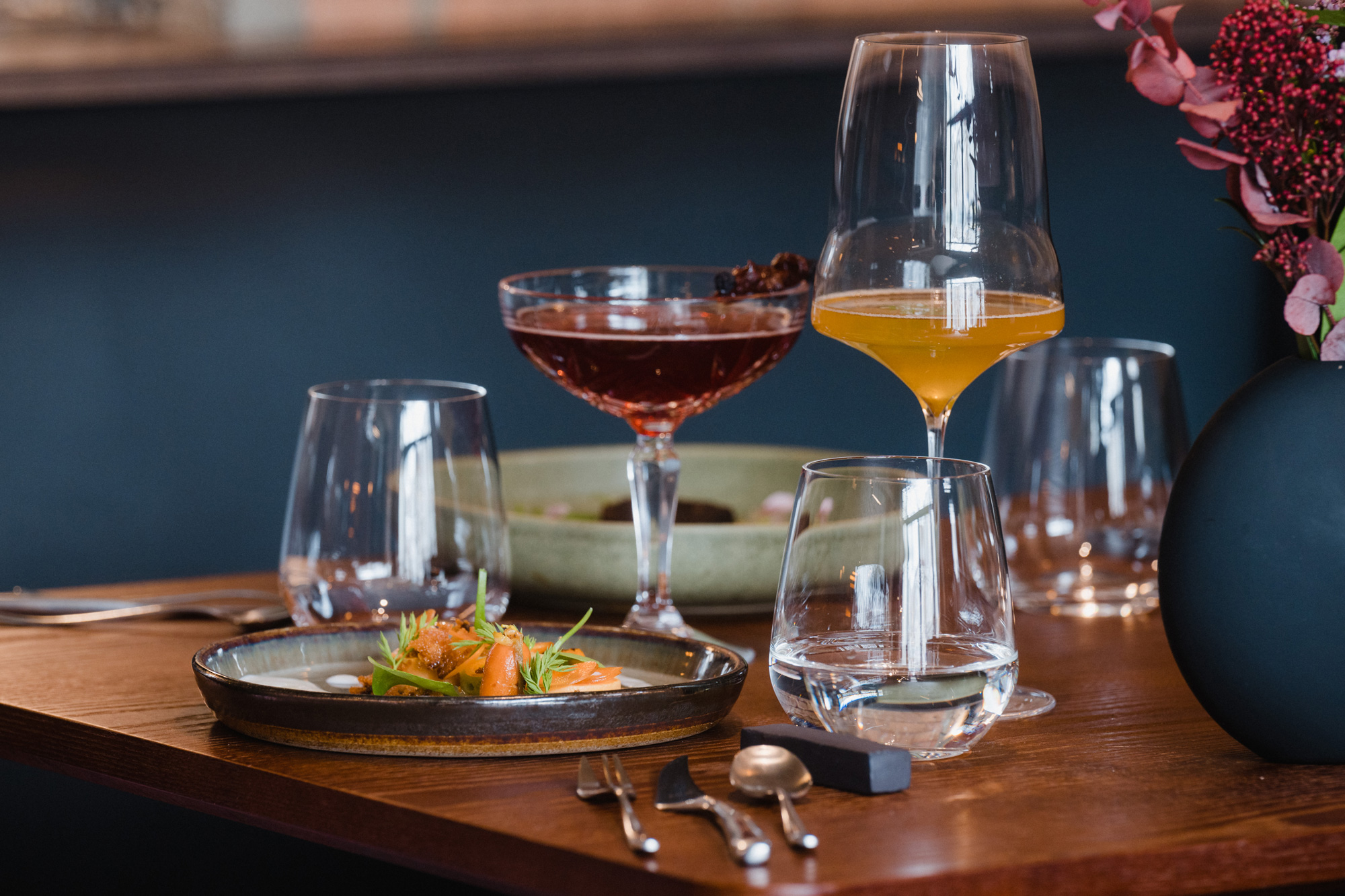
No display, just position. You do not need to hunt for it, yet it still feels discovered. Outside, everything is restrained. Inside, the red brick walls that gave the restaurant its name take over at once. Clear lines, warm light, artworks on the walls, and a neon sign that saves the evening from excess solemnity. One still senses the former jazz cafe. Not as nostalgia, more as a remaining pulse.
Backstory
BRIKZ is not old enough for patina, but old enough for contour. Arne Anker, born in Heide in Schleswig-Holstein, did not form his cooking through one of those career lines that later like to pose as destiny. His style was shaped through stations that demanded craft, pressure and judgement in practical measure: under Sergio Herman at Oud Sluis, later at The Jane in Antwerp, and then in Berlin as the defining head chef of Pauly Saal. These are places where technique is learned, certainly, but also something less easy to name: when to stop, when a plate begins to speak because enough has been taken away.

© Nils Hasenau
When Anker opened BRIKZ in November 2020, he did so in the middle of the pandemic years, under restrictions, uncertainty and real economic pressure. The restaurant moved into a former jazz cafe near Savignyplatz; to open at all, the existing interior was taken over straight after the keys changed hands. That too is a Berlin story: less master plan than resolve under time pressure.
© Nils Hasenau
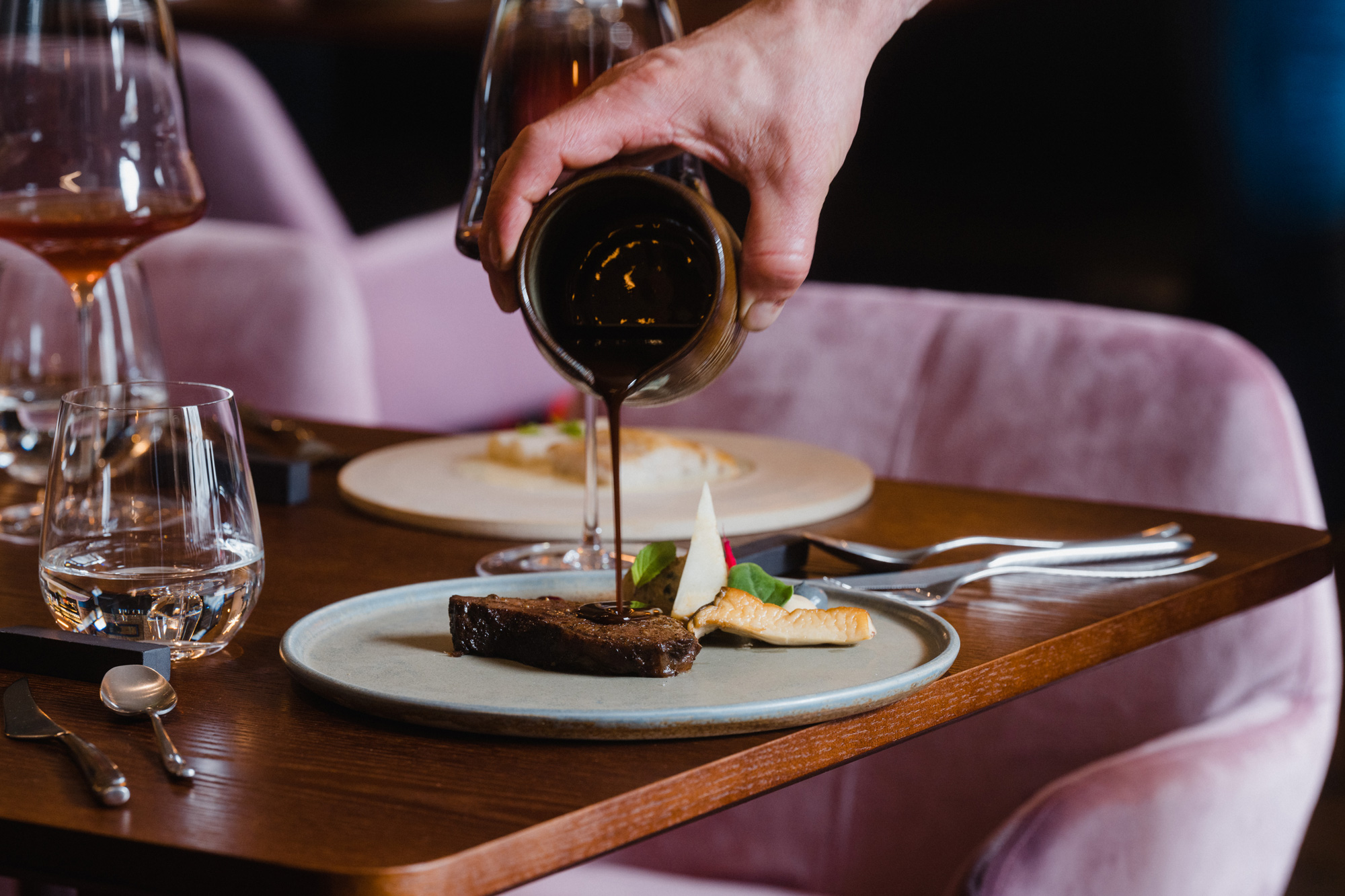
Today Anker gathers his experience from major kitchens into a more personal format. Less pose, more exactness. Less representation, more presence. That is why BRIKZ feels less like a concept than a lived place. It carries the discipline of fine dining, but in a room that allows for breathing space, informality and contact.

© Nils Hasenau
© Nils Hasenau
Culinary Signature
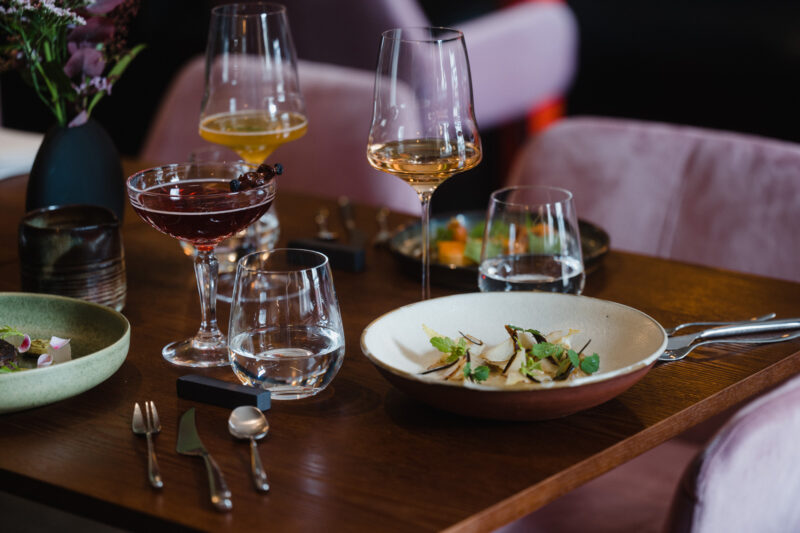
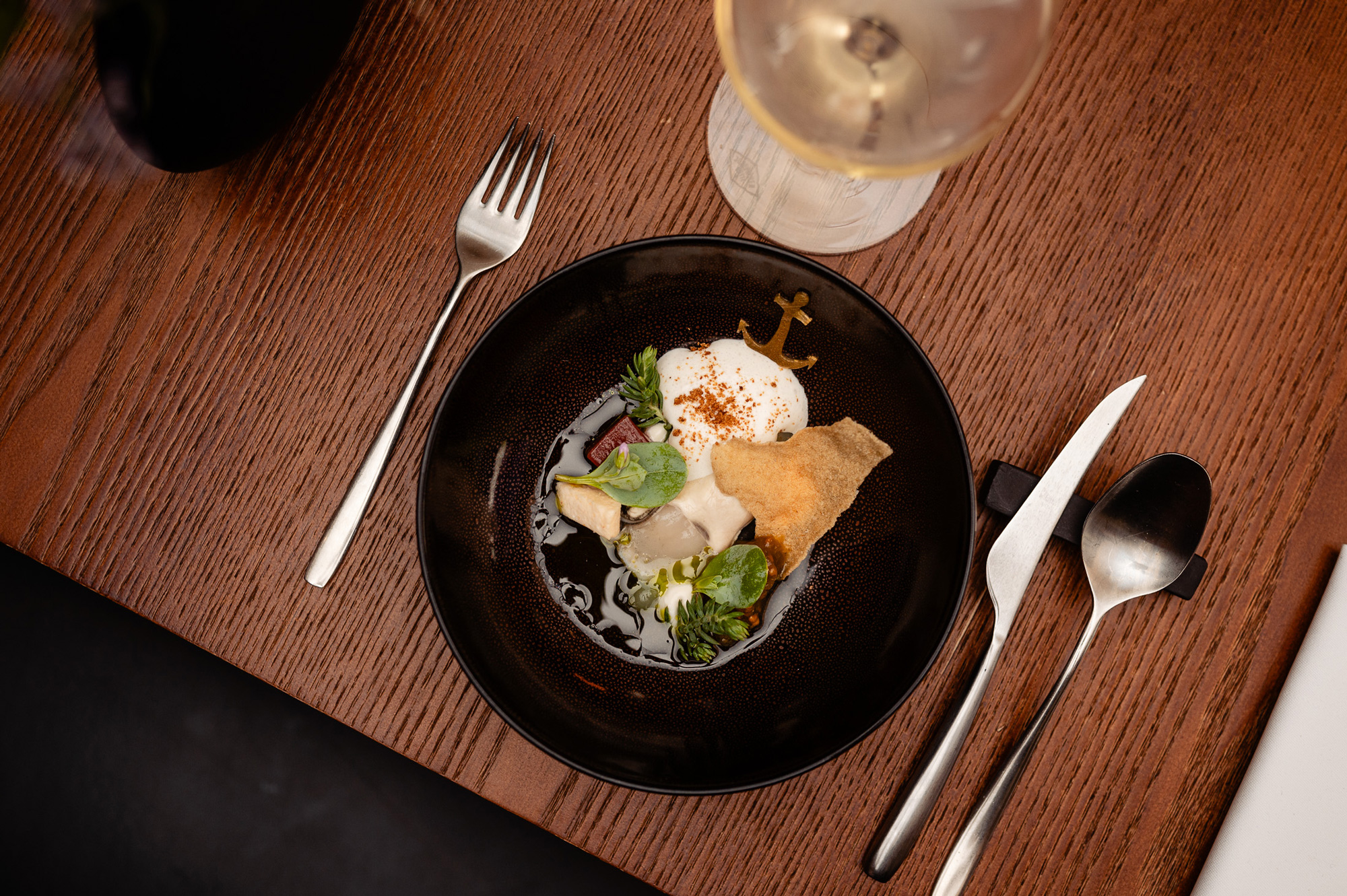
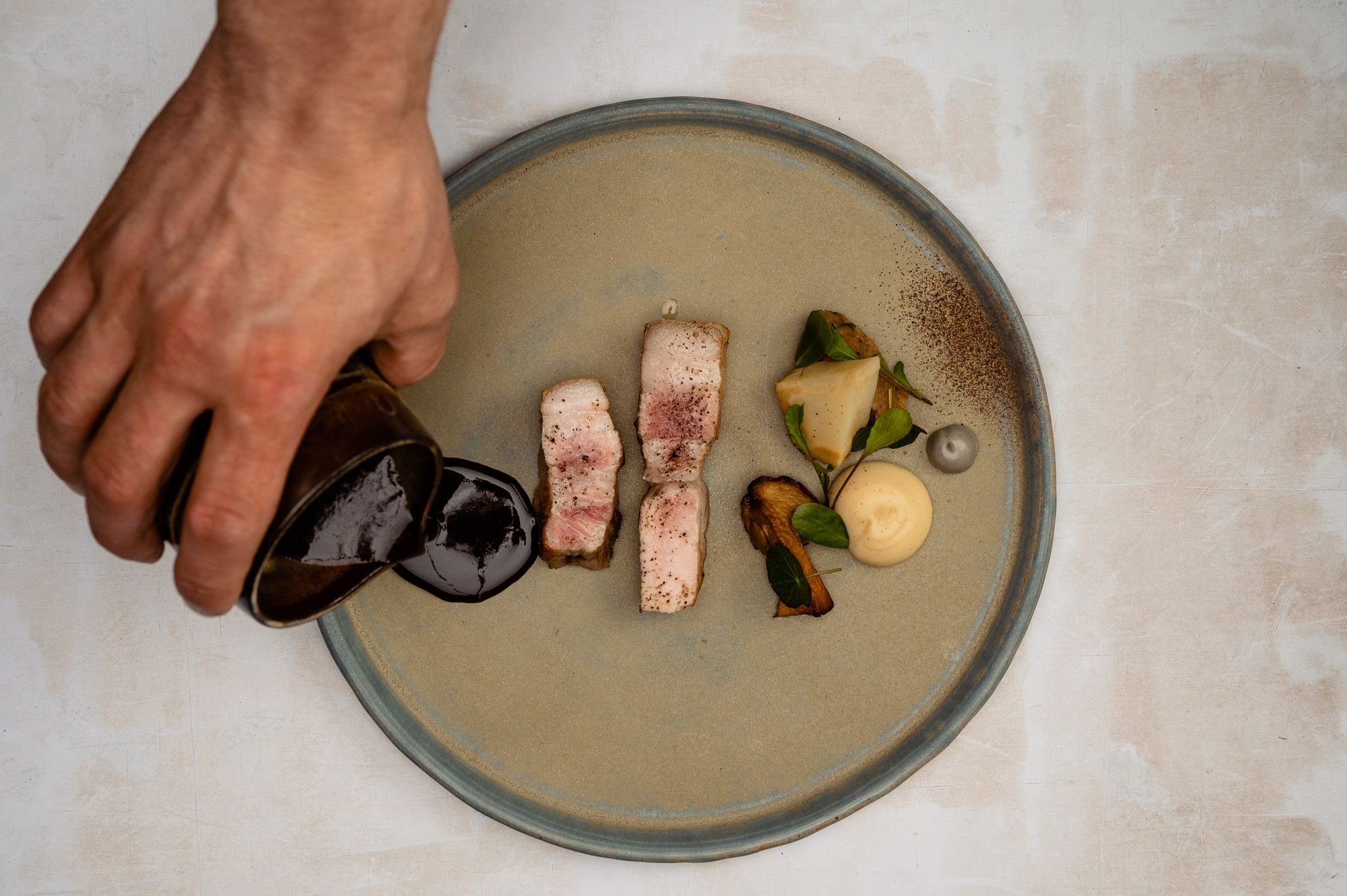
The cooking at BRIKZ follows a clear, legible idea: seasonal regional produce forms the structure; acidity and herbs provide the inner tension. On the plate, that idea does not appear as theory but as function. Acidity is not used as a generic sign of freshness, still less as a fashionable brightener. It shortens fat, tightens sweetness, sharpens outlines, keeps creaminess mobile and prevents density from turning inert.
© Nils Hasenau
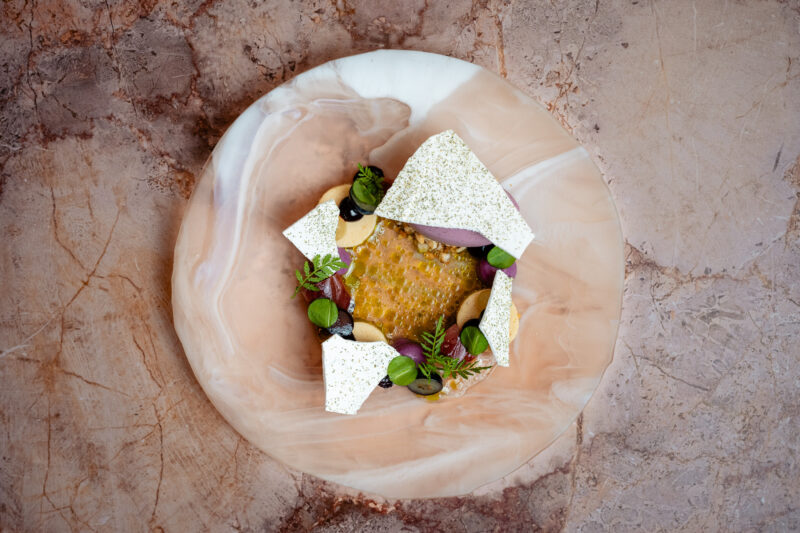
That precision can already be read in combinations that sound light but are built with exact control. Oyster, tomato and watermelon, for example: the oyster sets the base note with iodine, salt and cool metallic depth; tomato adds umami, mild acidity and softer fruit; watermelon acts less as a decorative summer note than as a cooling, diluting element that opens the oyster’s salinity without cancelling it.
© Nils Hasenau
© Nils Hasenau
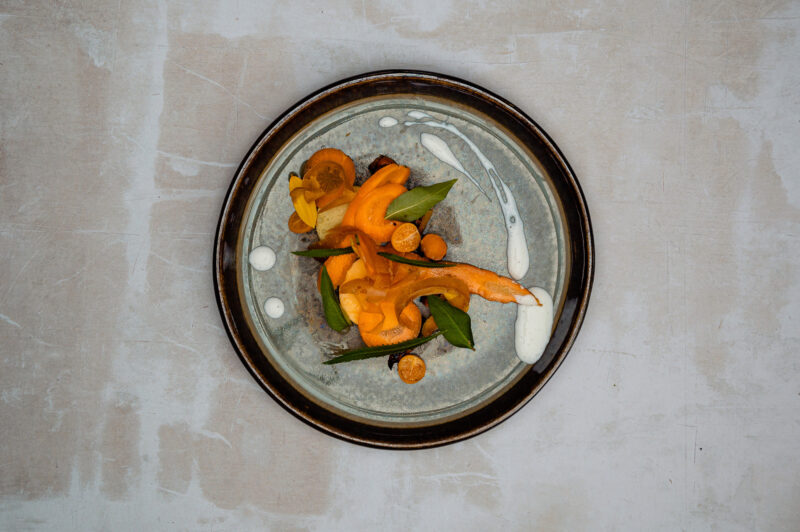
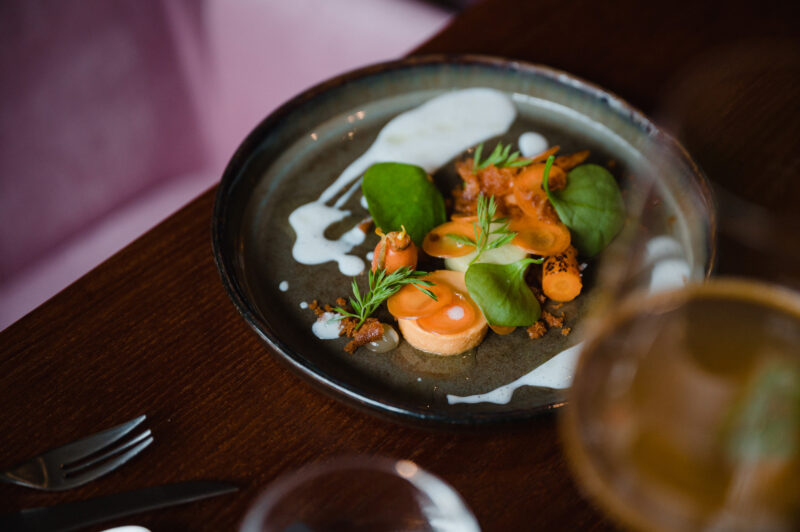
The sequence matters: first marine coolness, then vegetal sweetness, then a pale, almost glassy finish. Carrot, kefir and blackcurrant wood works differently. The carrot brings earth and subdued sweetness; kefir lifts the whole with mild acidity and fermentative movement; the blackcurrant wood introduces smoke and bitterness, keeping the dish from sliding into amiability.
© Nils Hasenau
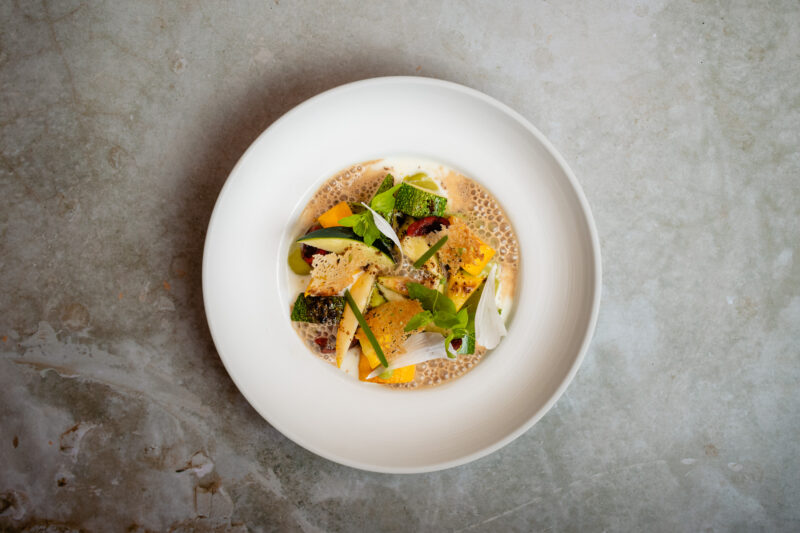
Even combinations such as zucchini, wild garlic and cherry, or fish blood sausage, fiddleheads and beurre blanc, suggest a kitchen that thinks in textures, temperature shifts and aftertaste rather than in effect alone. The point is not complication for its own sake, but controlled composition: aroma, texture and temperature arrive in sequence, correct one another, and leave a finish that feels deliberate rather than decorative.
© Nils Hasenau
© Nils Hasenau
Sustainability and Practice
What feels contemporary at BRIKZ lies not in declared virtue but in practice. What is not available does not go on the plate. What remains is not lamented; it is worked on—pickled, fermented, preserved, turned into liqueurs or new components. Low-waste,
then, not as label but as method.
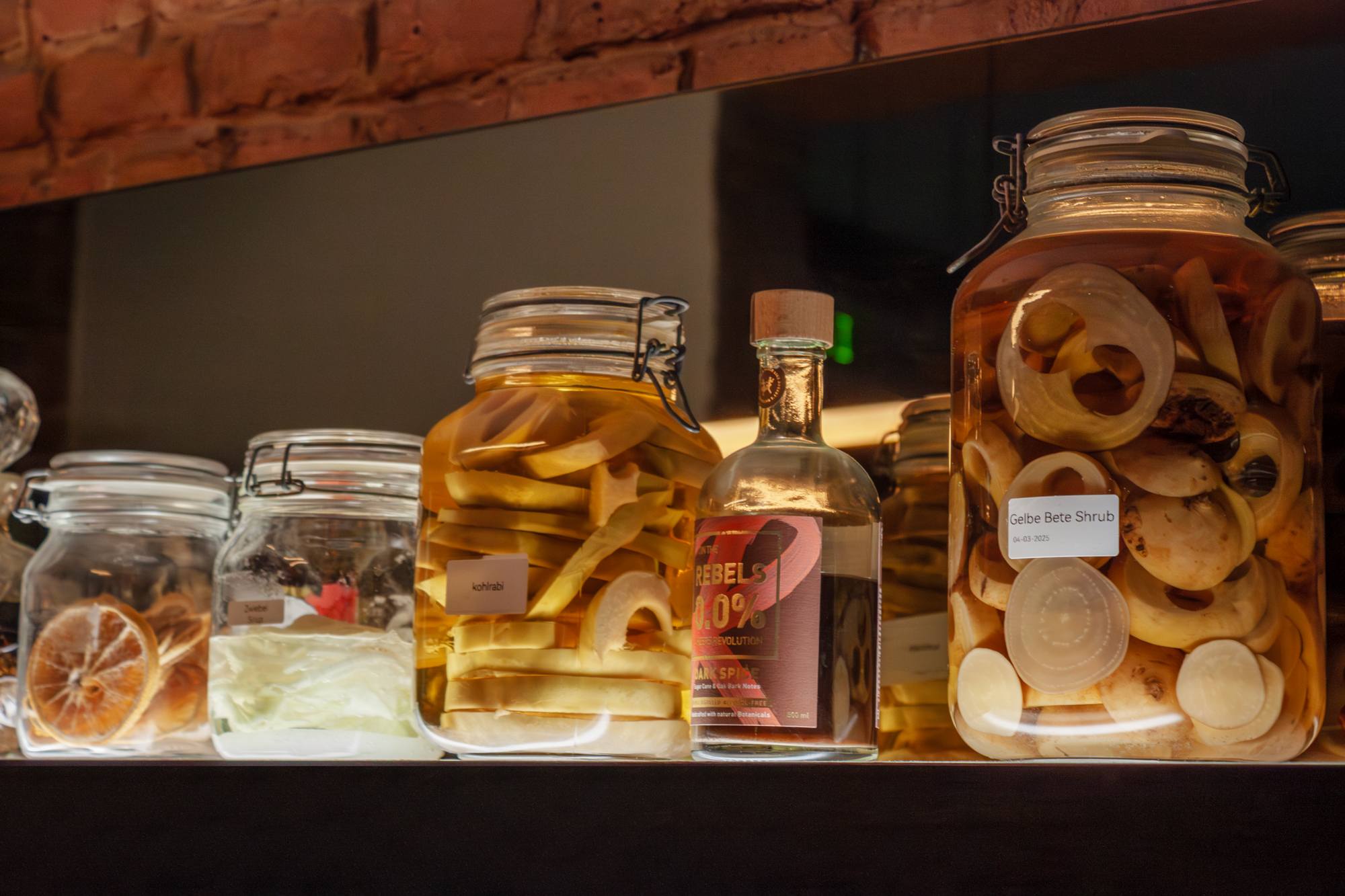
The same applies to Anker’s exchange with producers, where ingredients and ideas move together. Herbs, vegetables, meat, season: these are handled concretely. Vegetarian and vegan menus are not side options here, but part of the structure. Good cooking does not need to be austere. It does, however, need to know the world in which it cooks.
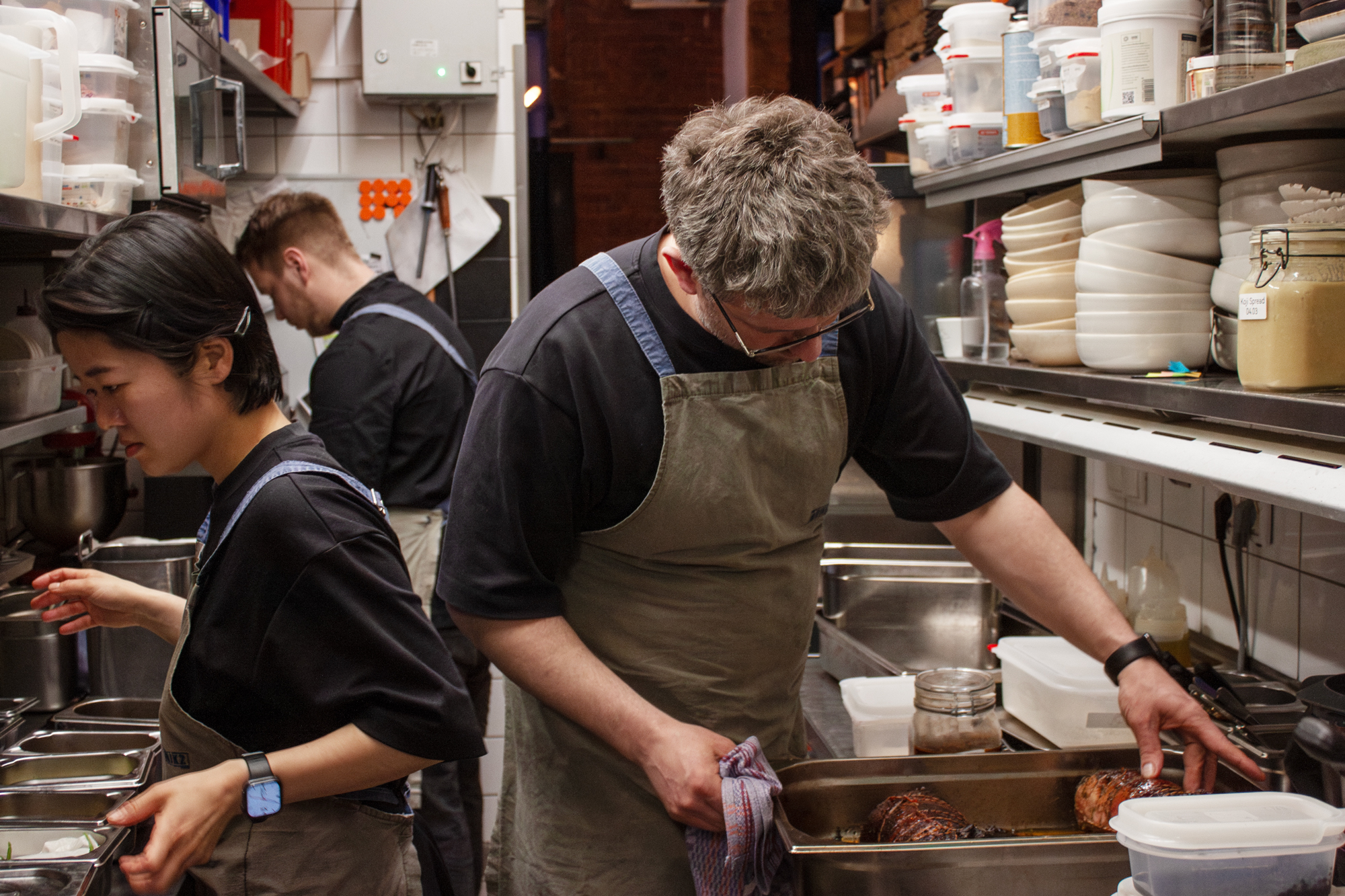
Every Friday, Arne Anker wanders through Markthalle IX and chats with producers over coffee with herb farmer Werner. He often returns not only with new products, but also with new knowledge, which he immediately puts to use in the kitchen through experimentation. After all, nothing could be further from his mind than standing still.
© Zoe Pitz
Summary
BRIKZ is memorable not because it is loud, but because it is exact – in the room, on the plate, in the temperature of the evening as a whole. Charlottenburg provides the setting; Arne Anker answers it with a kitchen formed by fine dining, but no longer bound by its stiffness. Here the aim is not effect, but result.
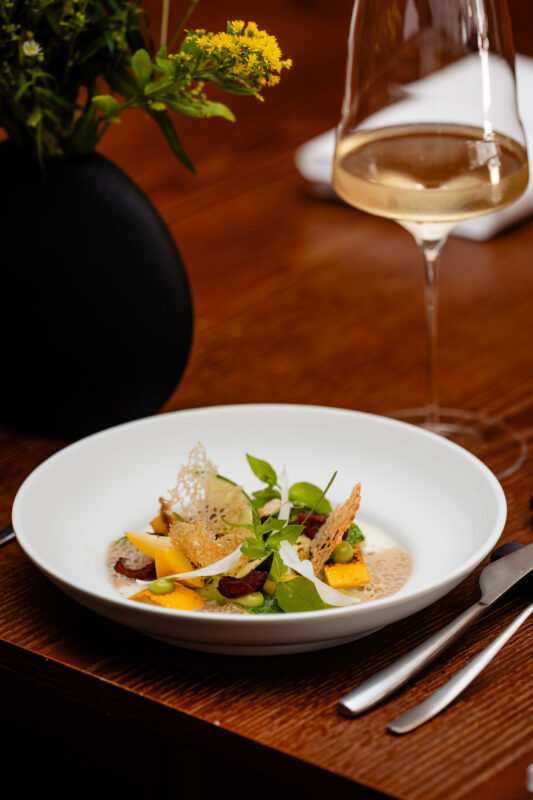
That distinction matters. Anyone looking for a place where produce, precision, acidity, herbs and atmosphere meet in a distinct urban form will find in BRIKZ a restaurant that stays with you for reasons it never needs to overstate.
Details
- Address: Grolmanstrasse 53/54, 10623 Berlin-Charlottenburg
- Hours: Tuesday to Saturday, 6 pm – 11 pm
- Format: five- to seven-course menu and a la carte
- Kitchen: seasonal, regional, with fish, meat, vegetarian and vegan options
- Style: precise produce-driven cooking with acidity, herbs, fermentation and pickled elements
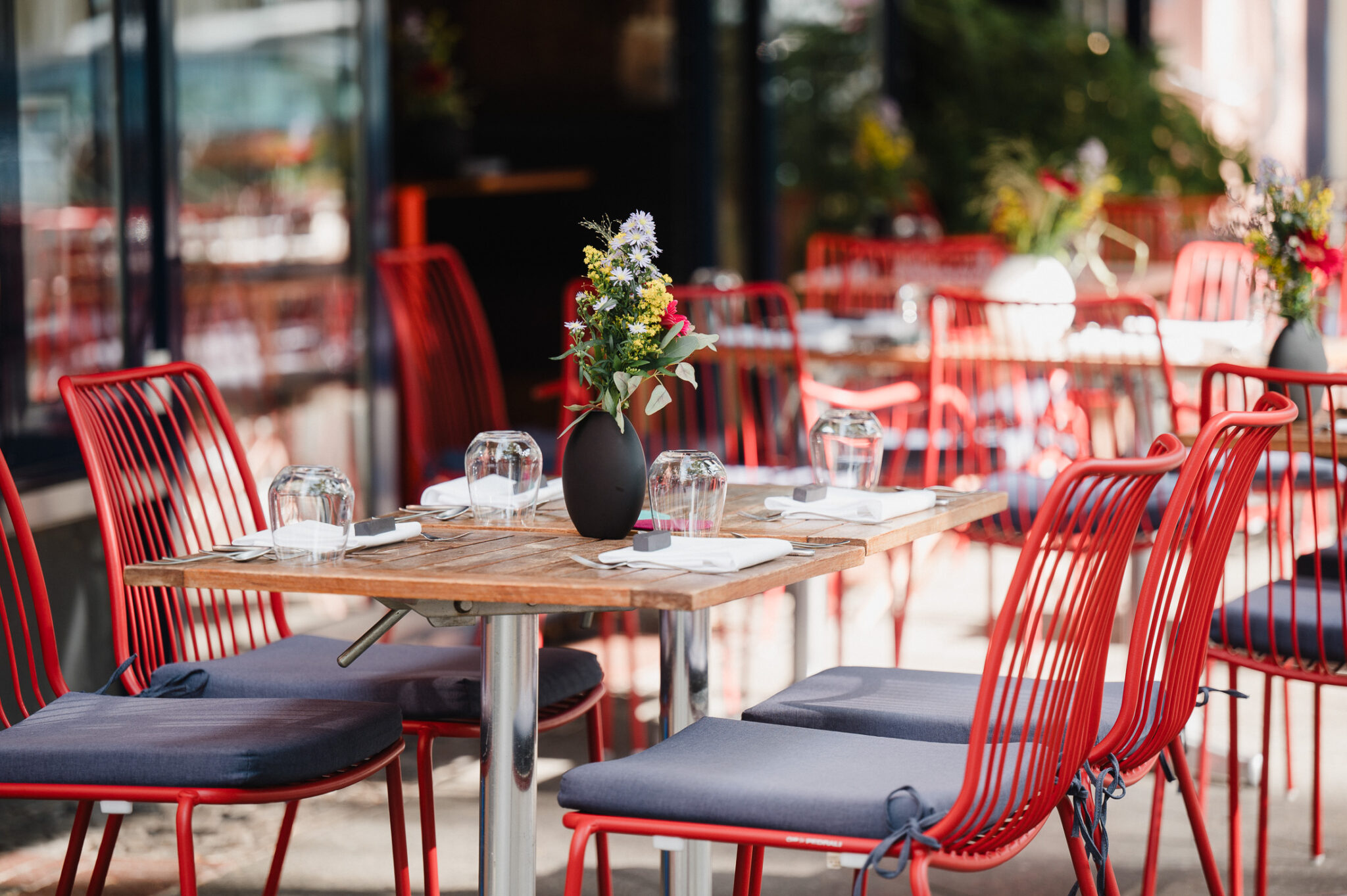
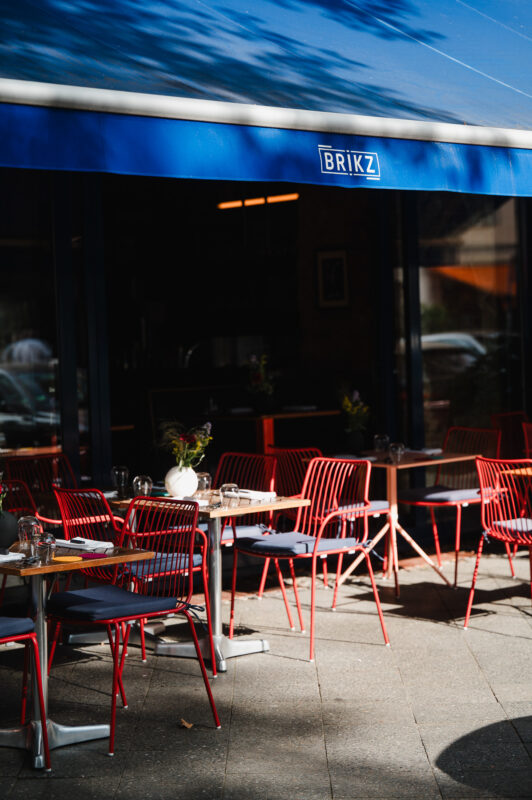
- Location: near Savignyplatz, in a former jazz cafe with terrace
- Chef-owner: Arne Anker
- Guides: Michelin Guide recommended; Falstaff Restaurant Guide Germany 2026: 89 points
- Phone: +49 30 31803780
- Website: restaurantbrikz.com
- Reservations and gift vouchers are available via the restaurant website