
Porto rarely yields itself at first glance. You arrive through sloping streets, gardens and glimpses of the river, and then the city slips from motion into composure. That is exactly where Massarelos House begins: not as a grand gesture, more as a precise moment of arrival. Behind the door there is no lobby theatre, only something rarer—calm with a point of view.
The location
Rua da Restauração runs above the Douro in a notably unhurried stretch of Massarelos, away from Ribeira’s tourist overcurrent and yet close enough for much of the city to remain walkable. By taxi, the drive from the airport takes around 20 to 25 minutes; from São Bento or Campanhã, only a short ride.
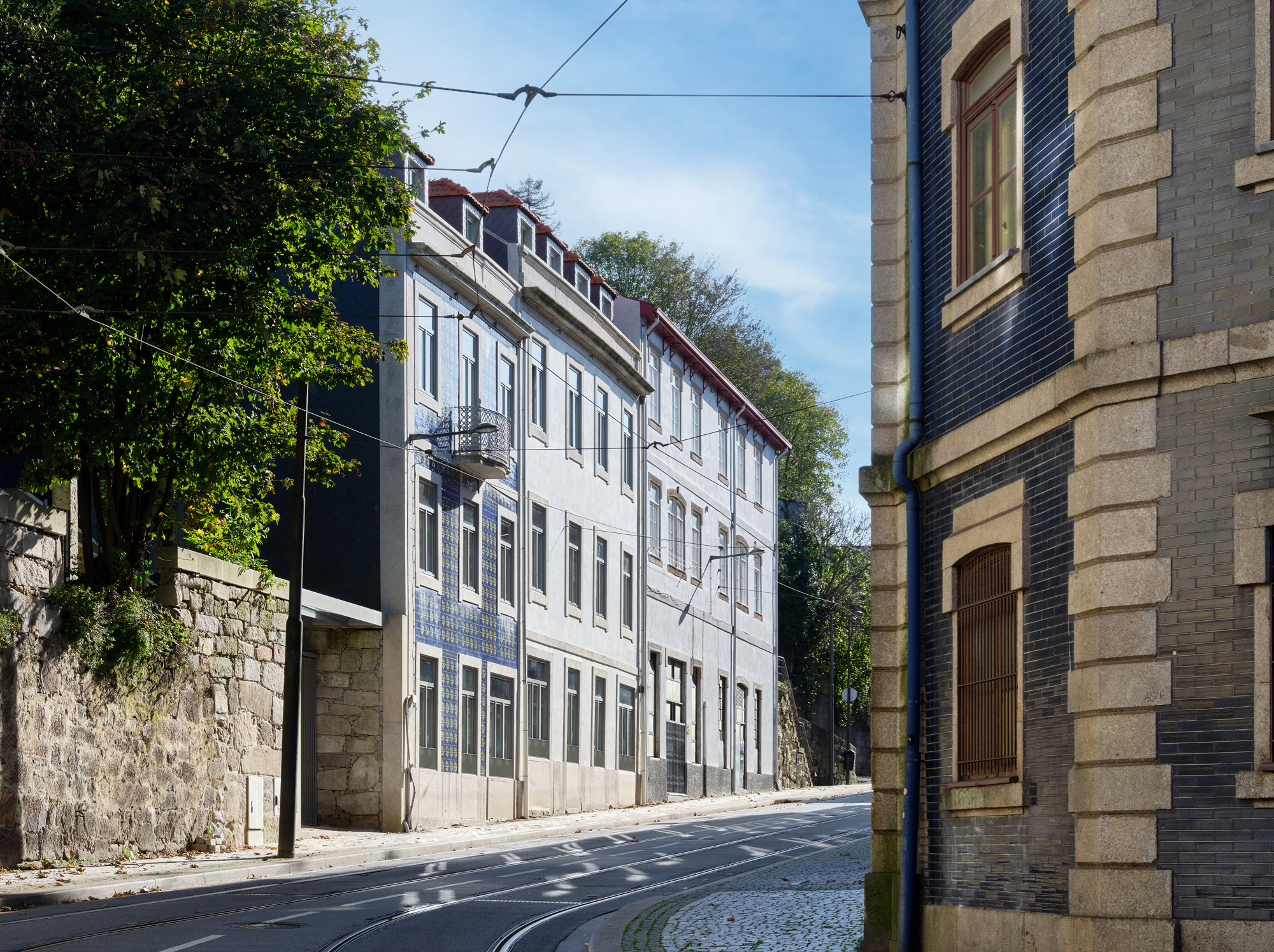
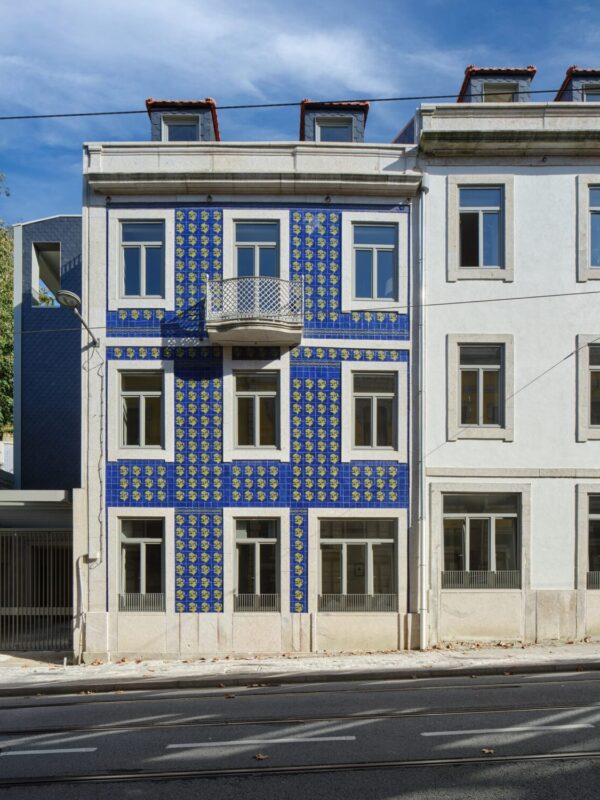
The house sits between the gardens of the Palácio de Cristal and the river, with the Museu Romântico close by. From the street, the ensemble feels restrained: historic facades in azulejo tile and slate, gathered into a long, quiet townhouse that does not advertise its quality so much as release it slowly.
Backstory
Massarelos House is not an isolated boutique gesture but part of a small, carefully run hospitality world. Its conceptual line is associated with Jesús Moraime, who also stands behind Baixa House in Lisbon and has a clear feel for how historic buildings can be moved into the present without stagey nostalgia.
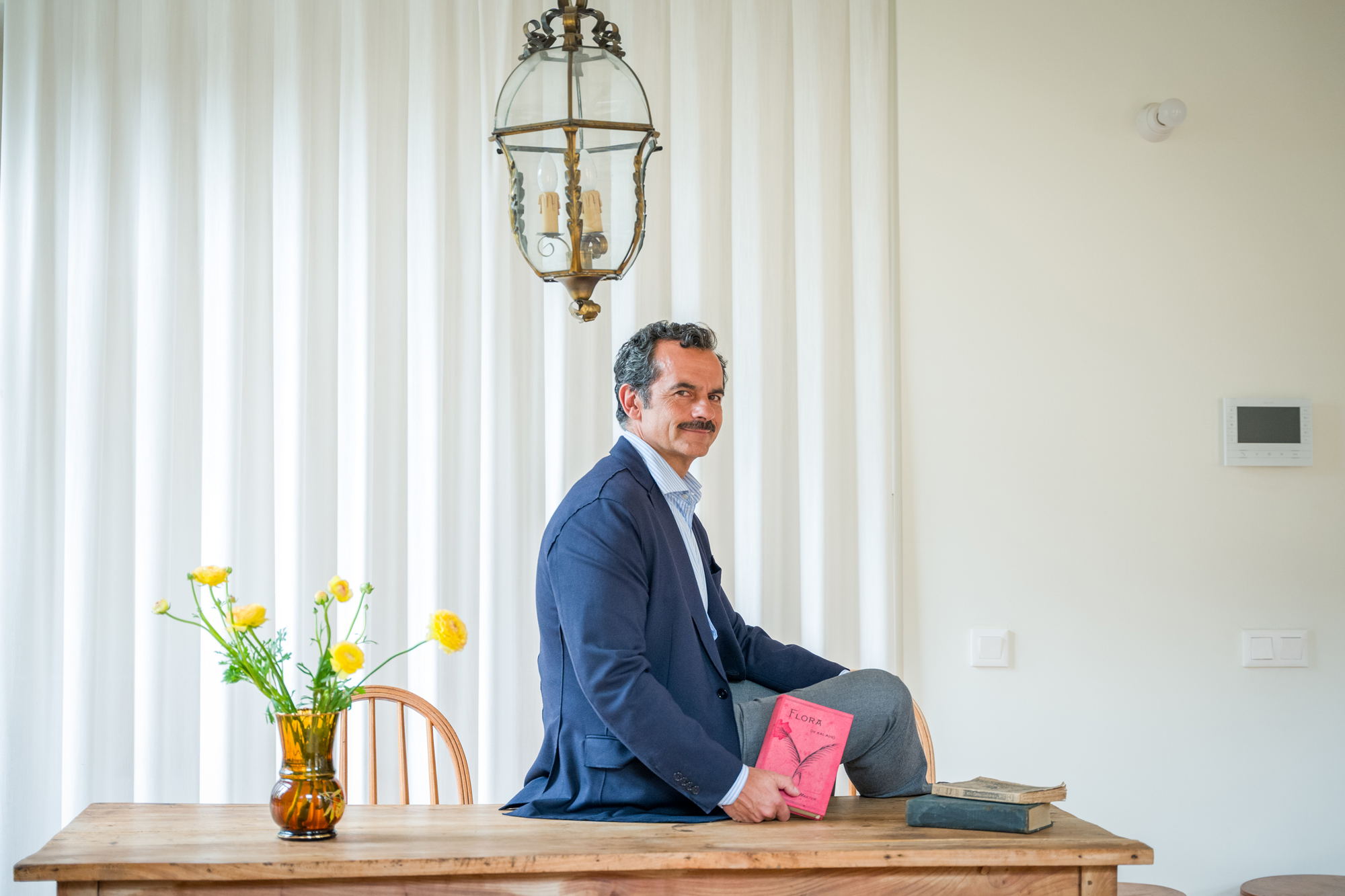
In Porto, that attitude met the architectural restoration led by Nuno Sottomayor, who oversaw the recovery of four 19th-century buildings and their conversion into one coherent ensemble. The result is telling. Rather than smoothing the house into generic lifestyle calm, the project keeps its grain, its proportions and its local intelligence. Massarelos House feels personal for that reason: cultured, restrained, quietly host-led—a place shaped by decisions, not branding.
Interior & architecture
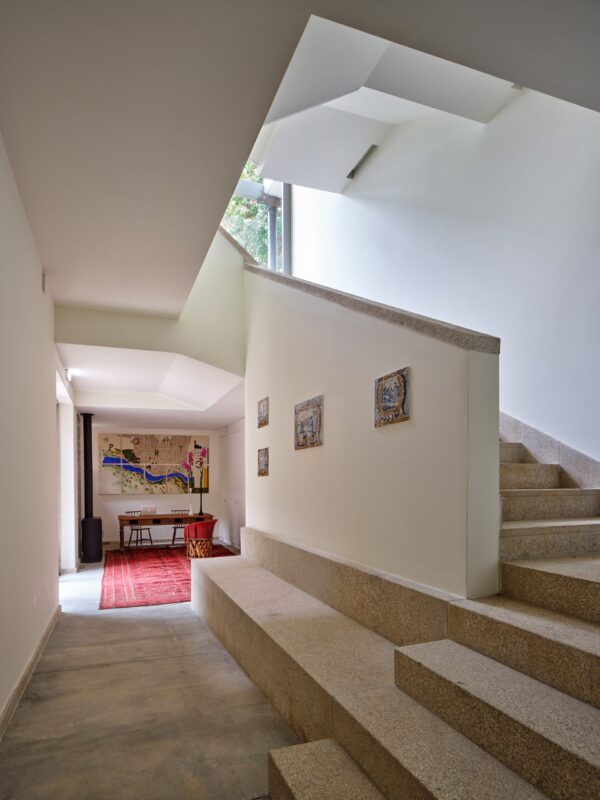
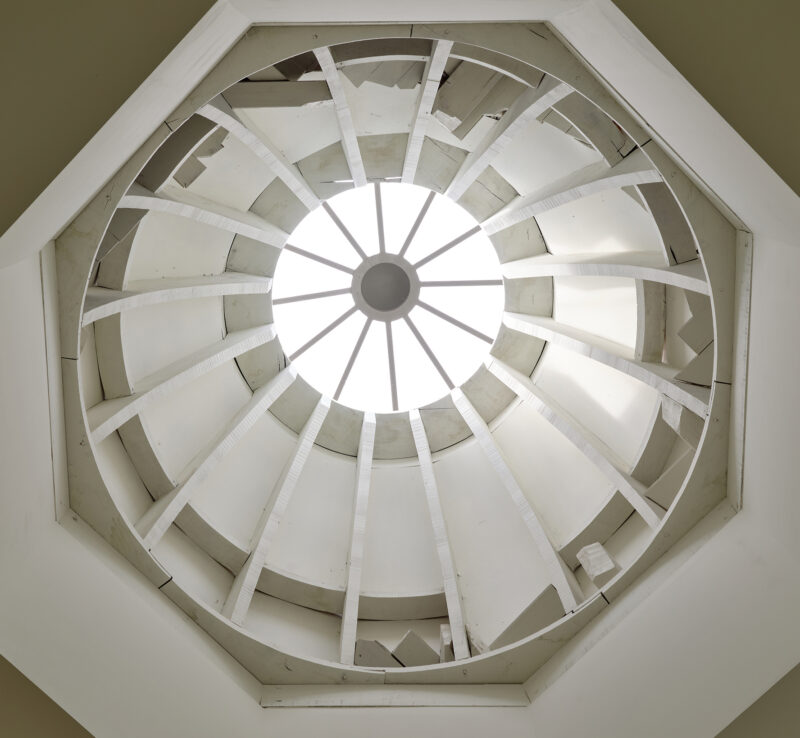
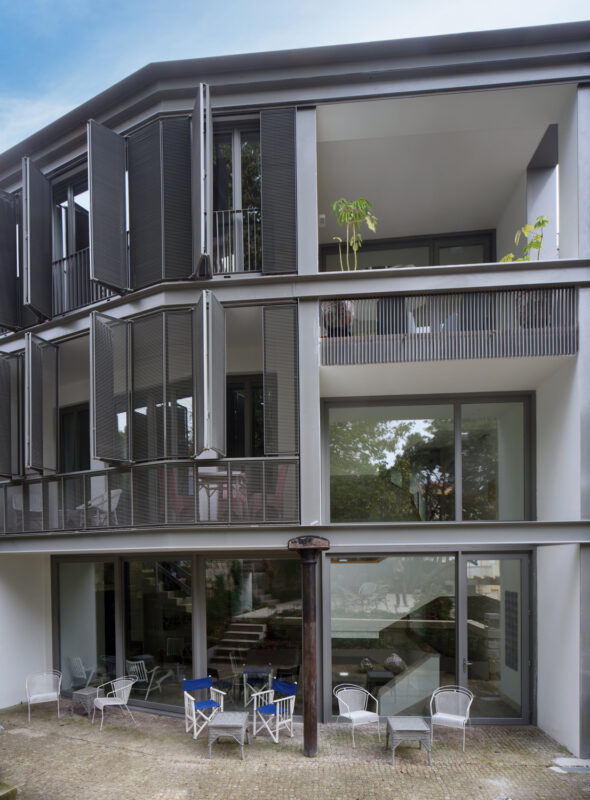
Architecturally, Massarelos House lives from a controlled meeting of two temperaments: Porto townhouse tradition and a lucid contemporary language. Slate and azulejo facades remain, along with timber floors, skylit staircases and the vertical drama of the original houses. Between them come glass, steel and precisely cut openings, without forcing the older fabric into compliance.
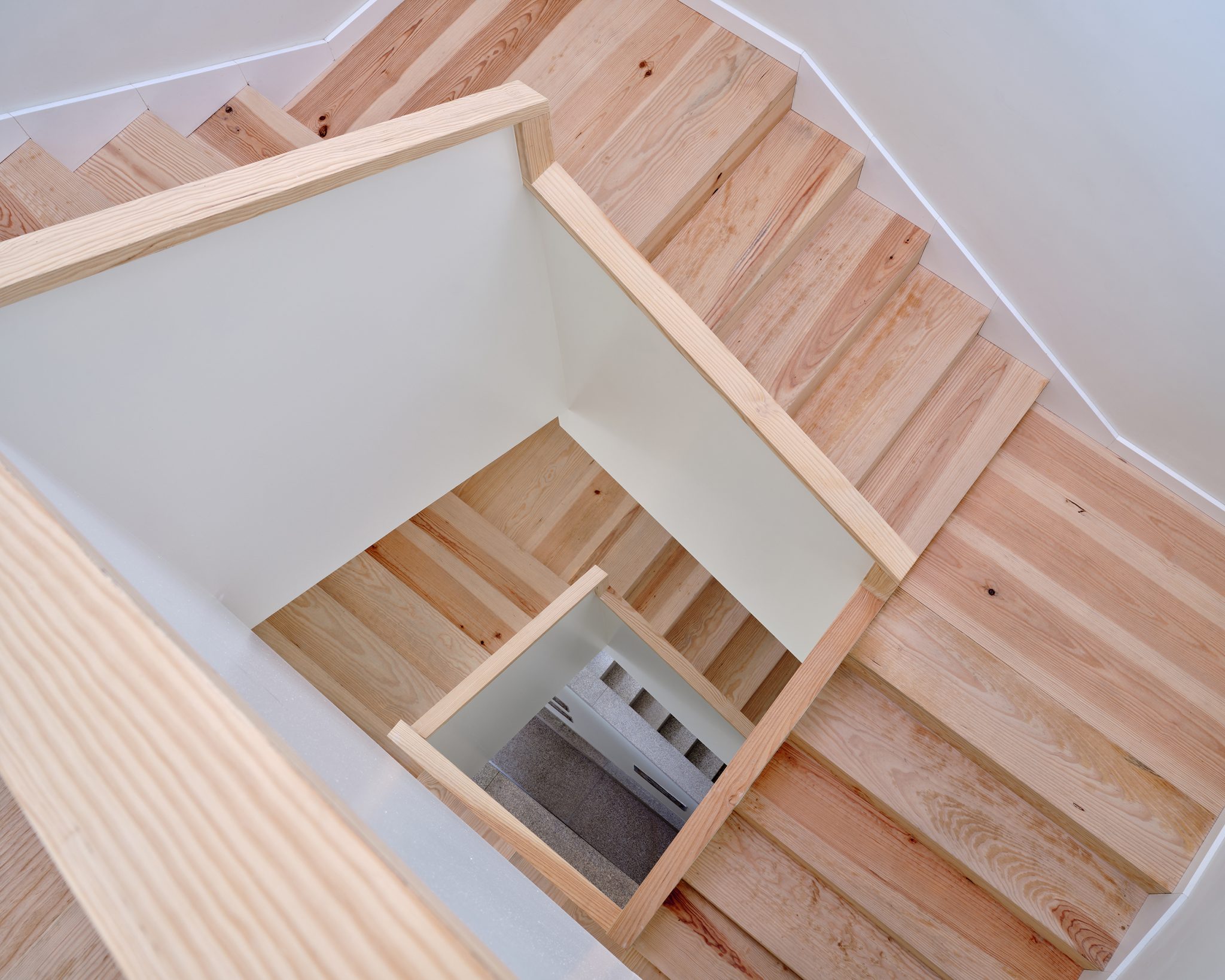
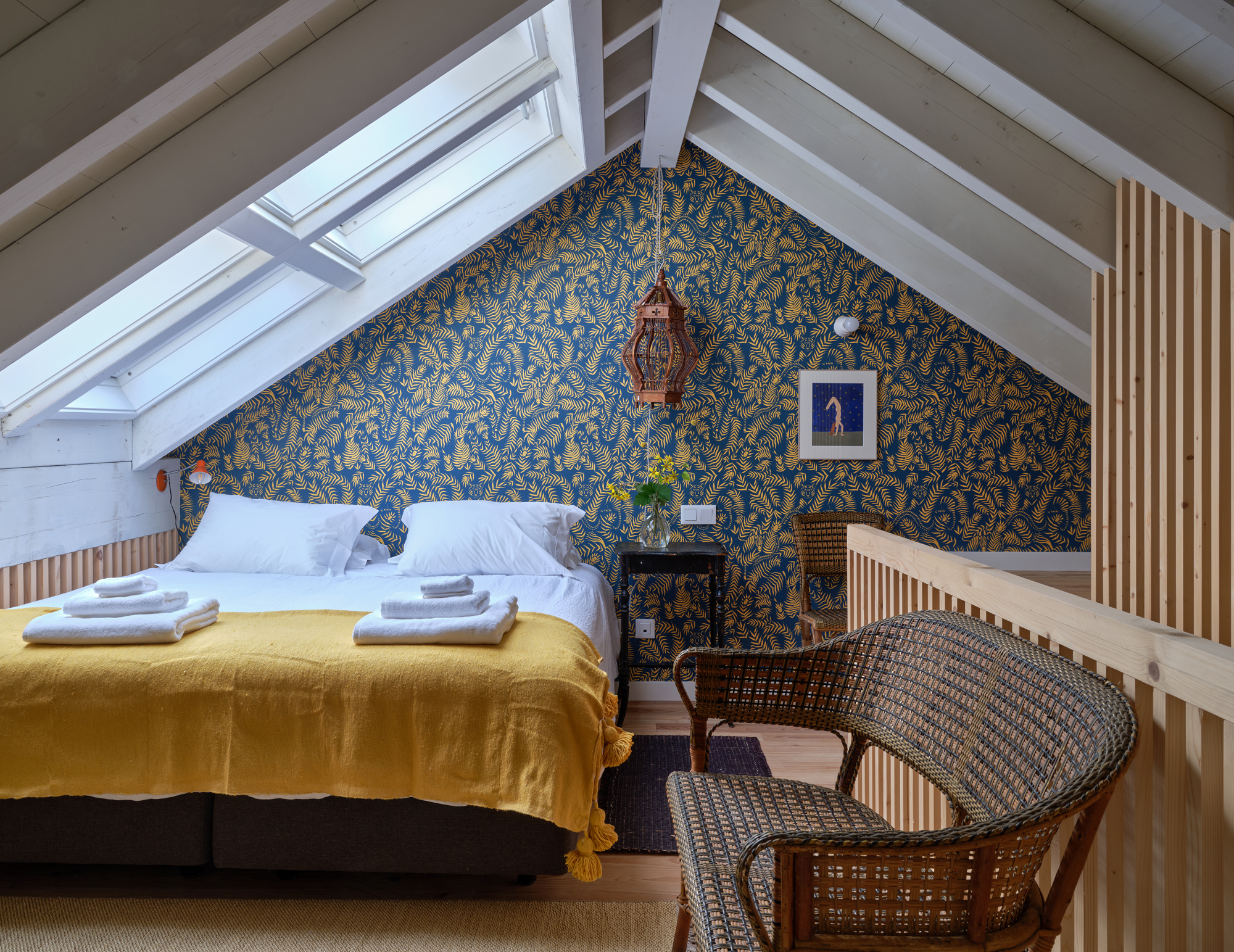
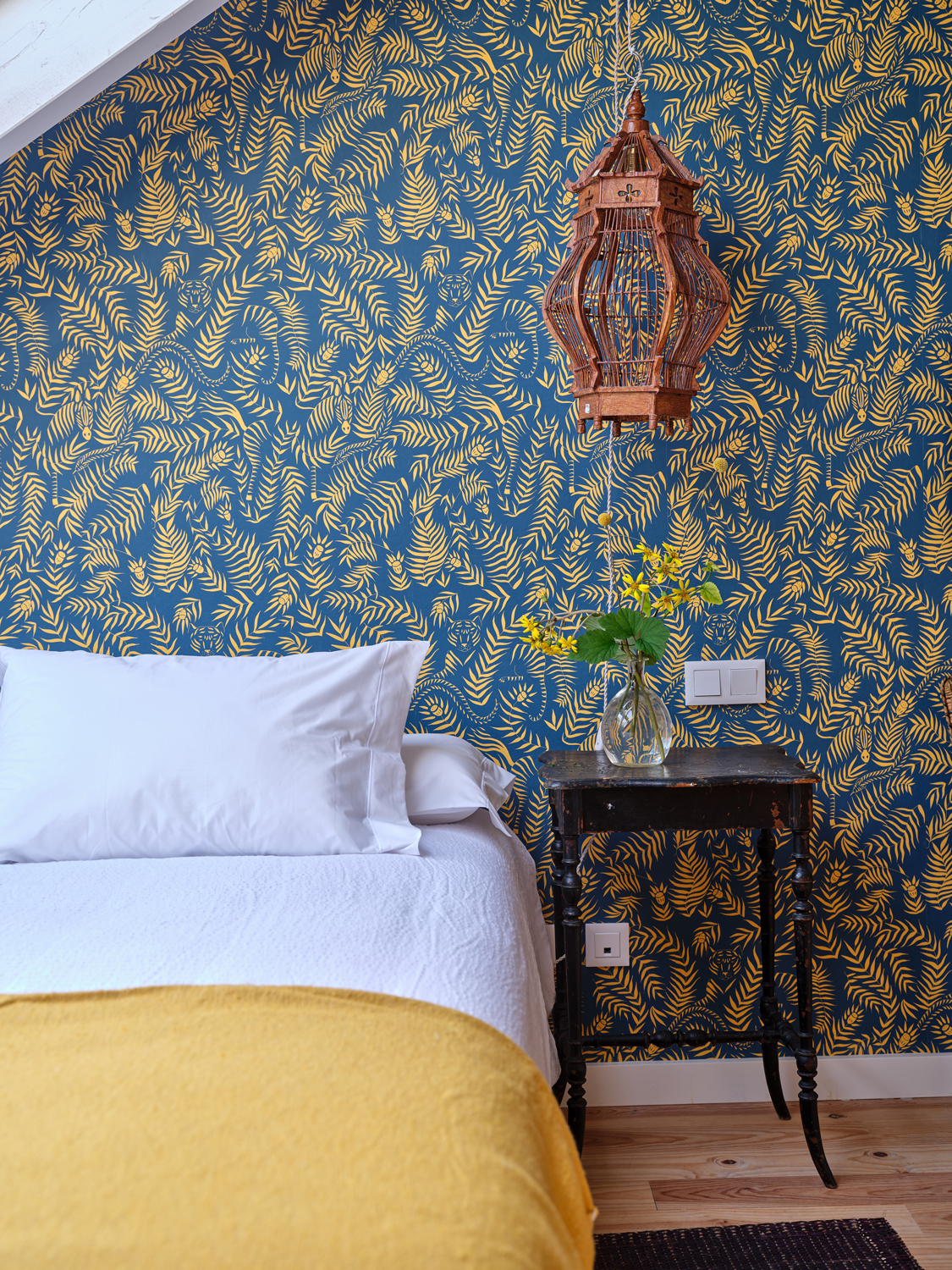
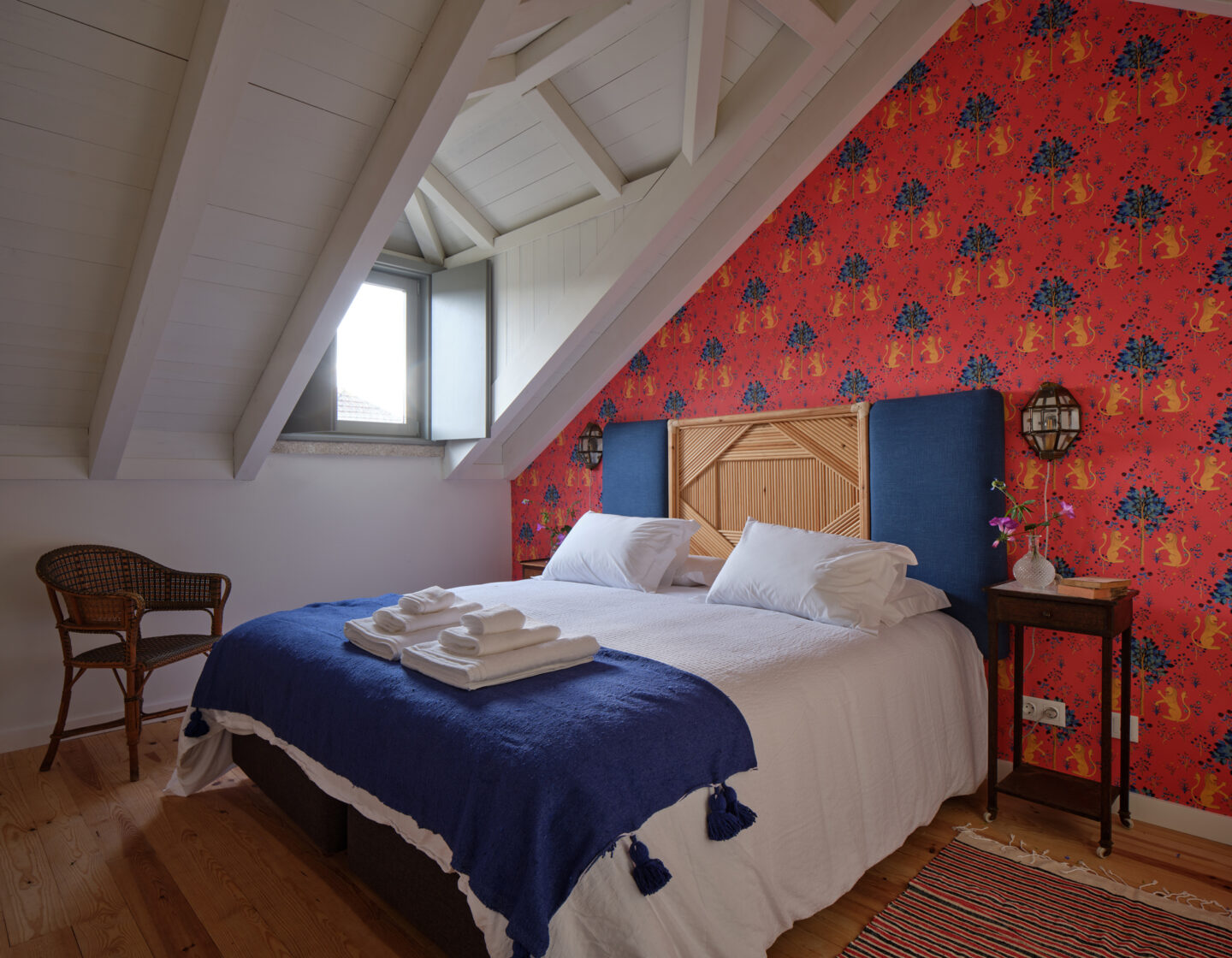
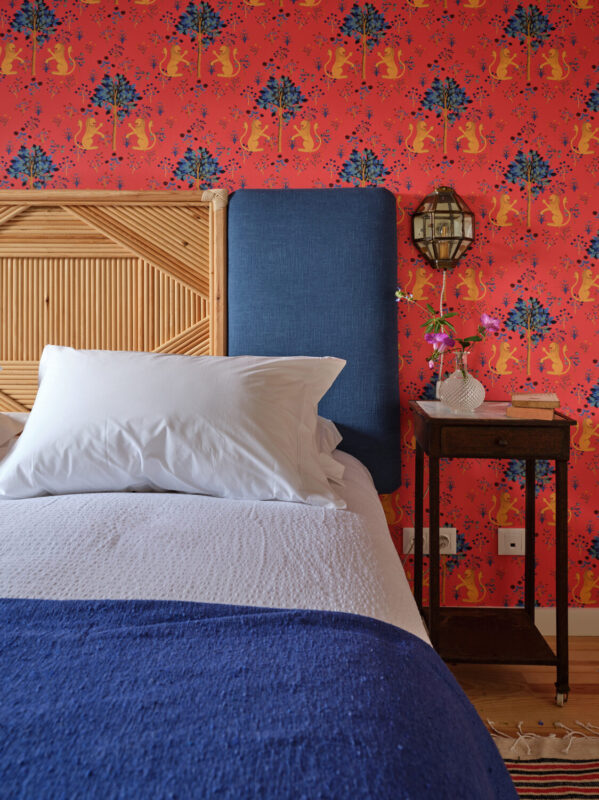
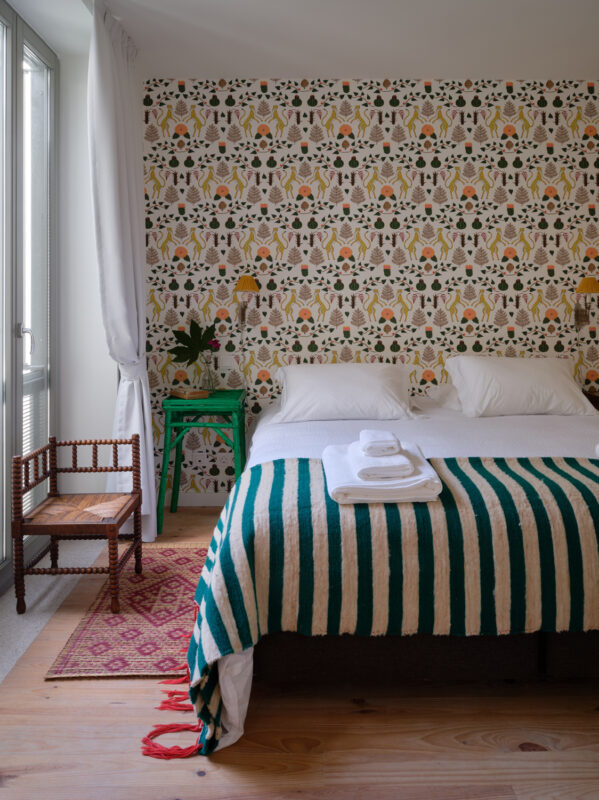
Inside, white walls, patterned wallpapers, rugs, antiques, mid-century furniture and Portuguese art feel less decorative than deliberate—part of a larger account of Porto, its British inflections and its workshop culture.
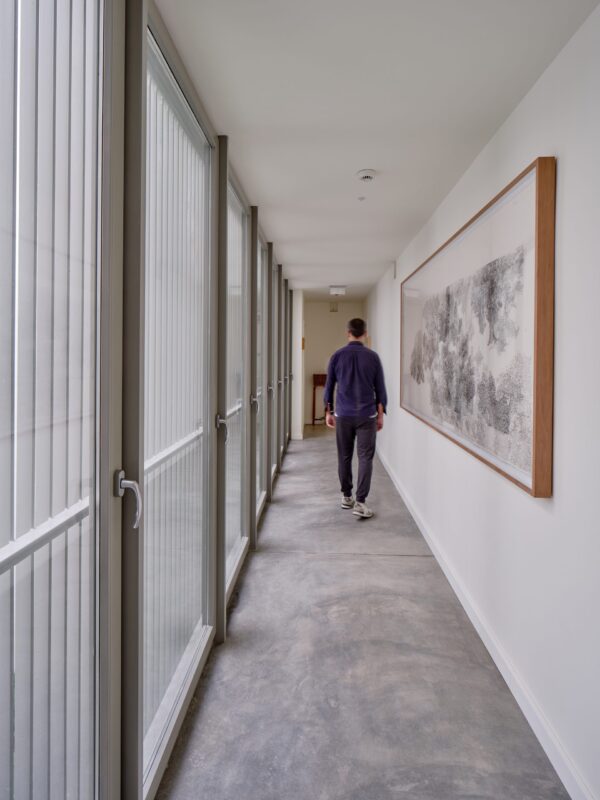

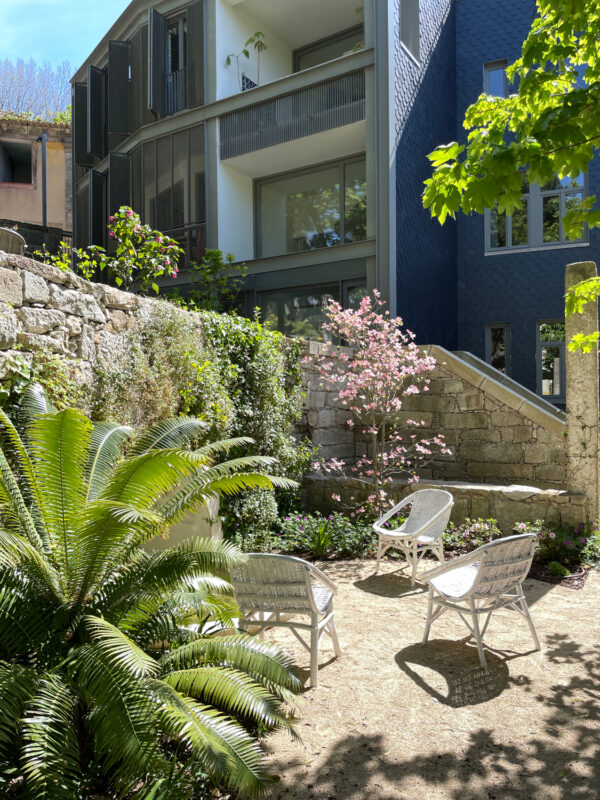
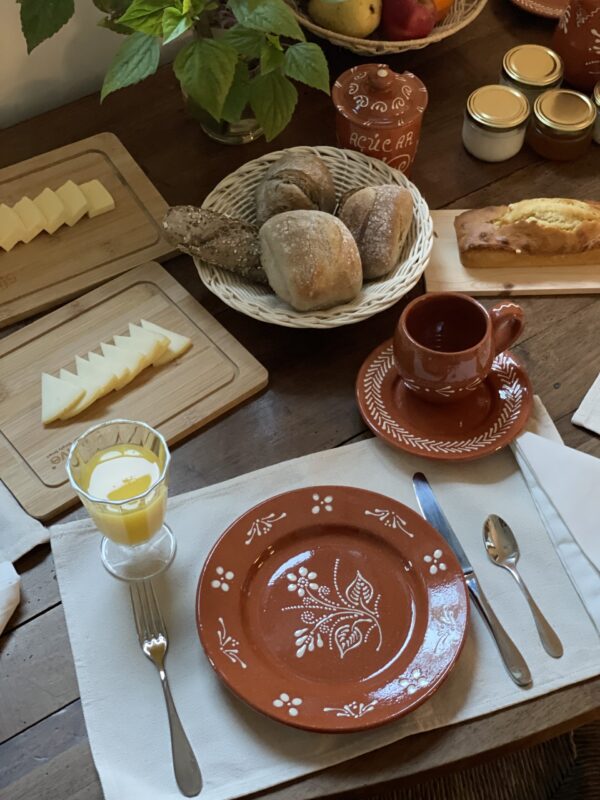
Especially strong are the corridors and stair halls that open towards the garden and pull light deep into the building. The collection of ceramics from Porto manufactories keeps the design anchored in place rather than lifestyle. Jesús Moraime’s garden continues that attitude outdoors.
A look inside
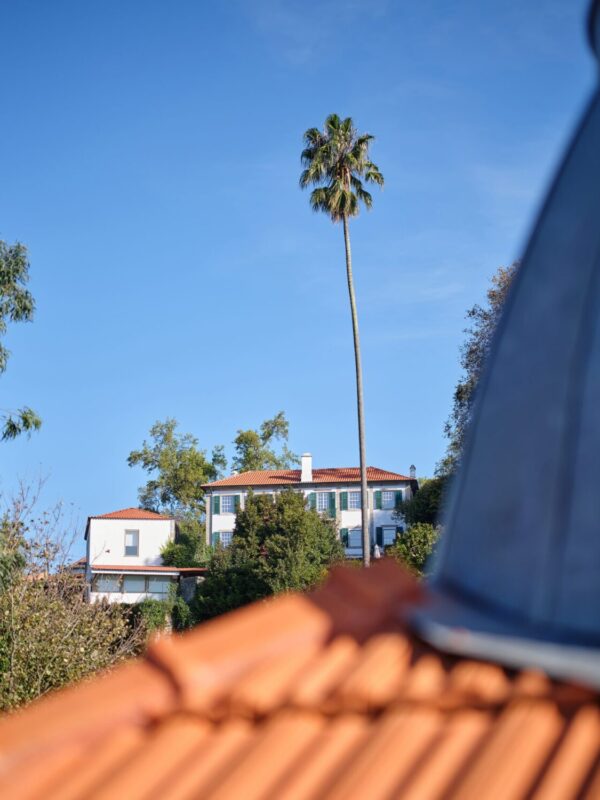
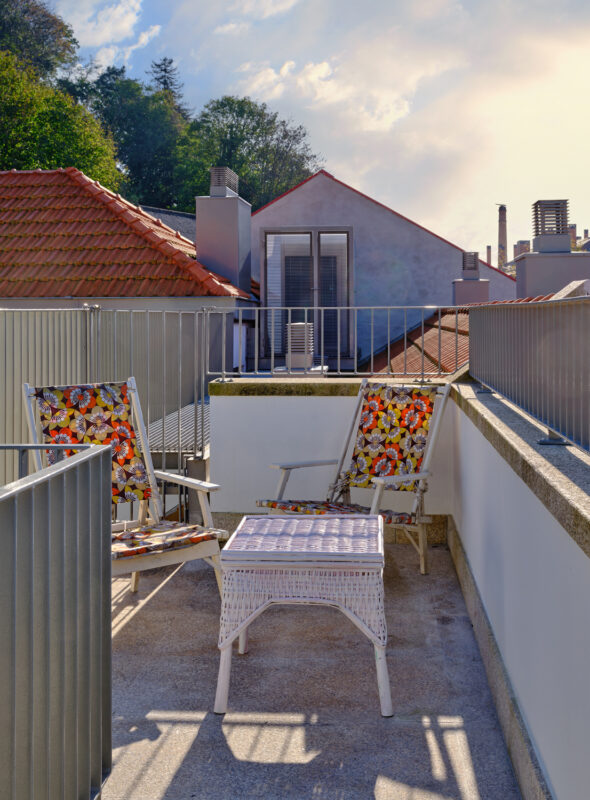
The 15 apartments are spread across several levels and linked by a sequence of shared threshold spaces: a glazed pergola at the entrance, a garden-facing sitting room, a covered terrace between floors and, above, a small rooftop with views towards Arrábida and the Palácio de Cristal.
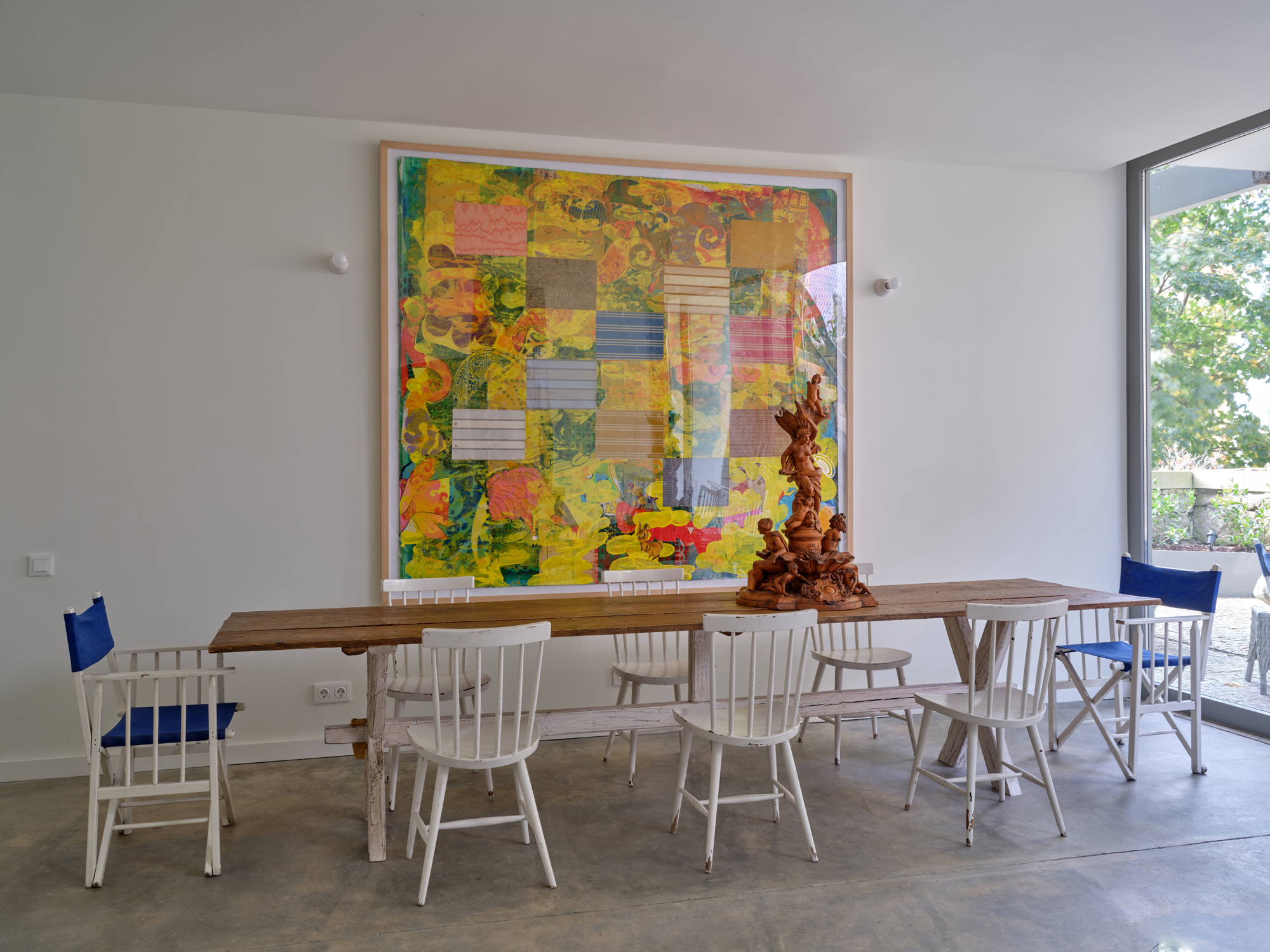
Units range from apartments for up to four guests to larger two-bedroom layouts for as many as six; among the most generous are Massarelos I and Miragaia II, both with two bathrooms.
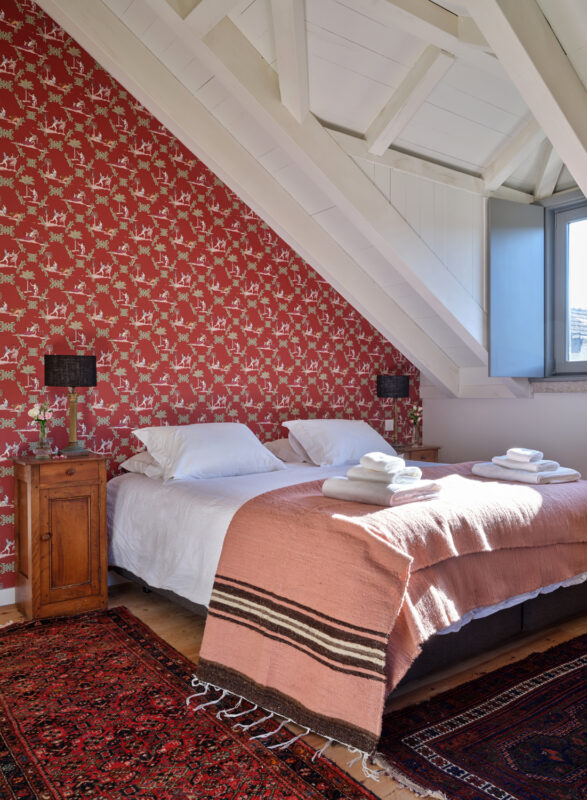
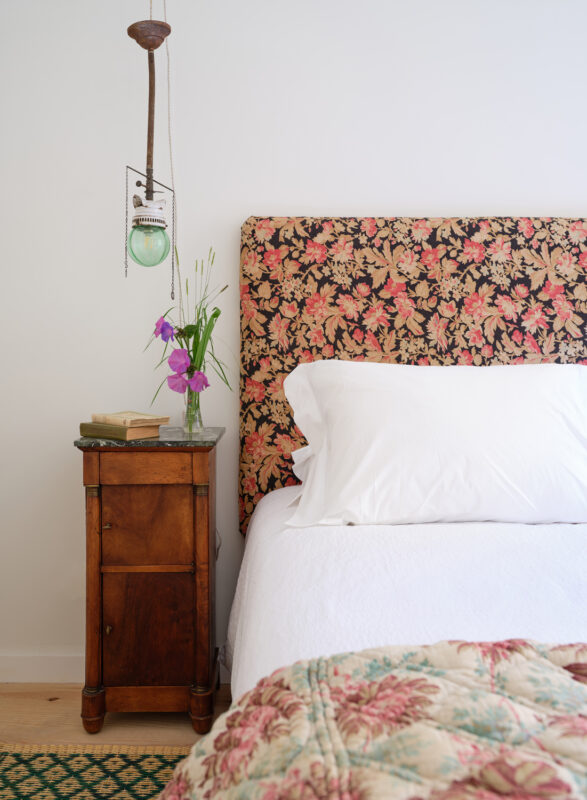
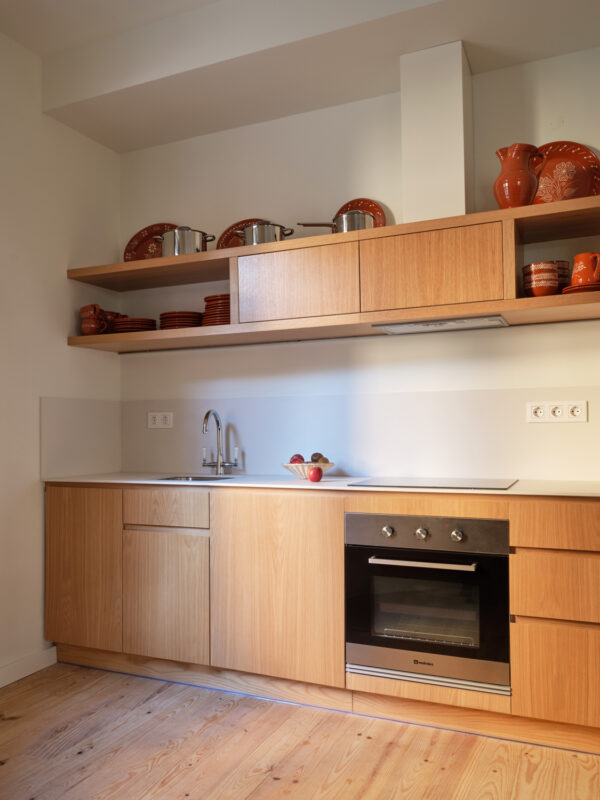
All apartments have a living area, a fully equipped kitchen and one or two bathrooms, while some add balconies, verandas or garden views.
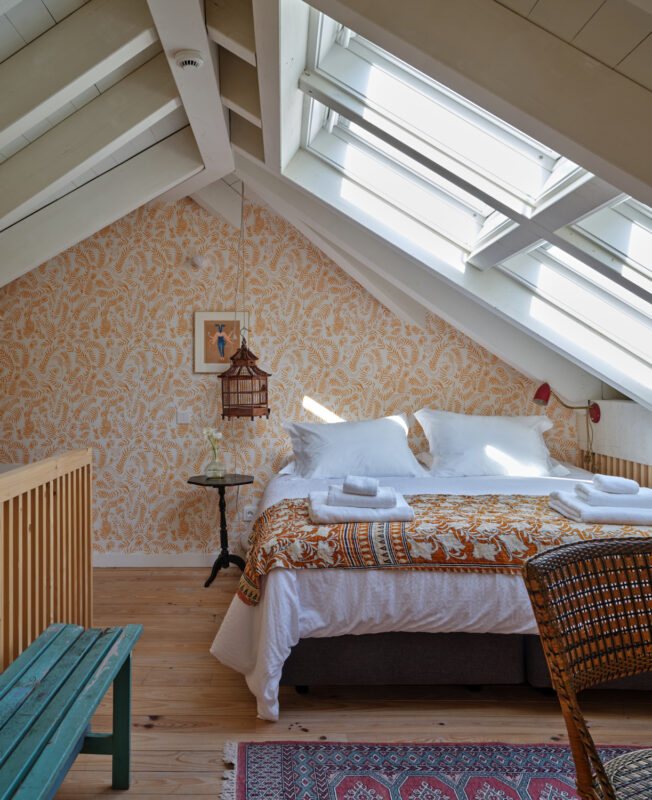
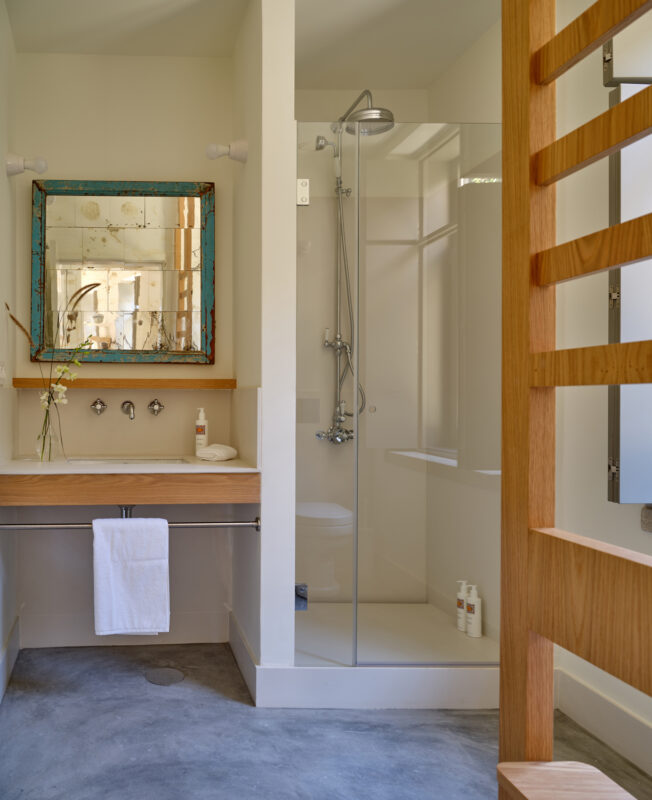
Duplex units with timber ceilings bring even more spatial character. You do not stay compactly here, but with air, light and a reassuringly unforced logic.
Culinary
There is no classic hotel restaurant here—which feels more like an advantage than a lack. Massarelos House serves breakfast in the apartment: fresh produce is supplied daily and bread arrives at the door each morning. It suits a house that understands privacy not as reduced service, but as a higher form of comfort.
For dinner, the neighbourhood offers strong options. Antiqvvm, within walking distance, pairs two-MICHELIN-star cooking with one of Porto’s great Douro views. Euskalduna Studio is among the city’s most concentrated fine-dining addresses, precise and serious without becoming stiff. More grounded, though culturally revealing in its own way, is A Cozinha do Manel, a family-run Porto fixture for traditional Portuguese cooking since 1989. Together they create a culinary map around the house that runs from refined to deeply local—and is better for spanning both.
Wellness & Relaxation
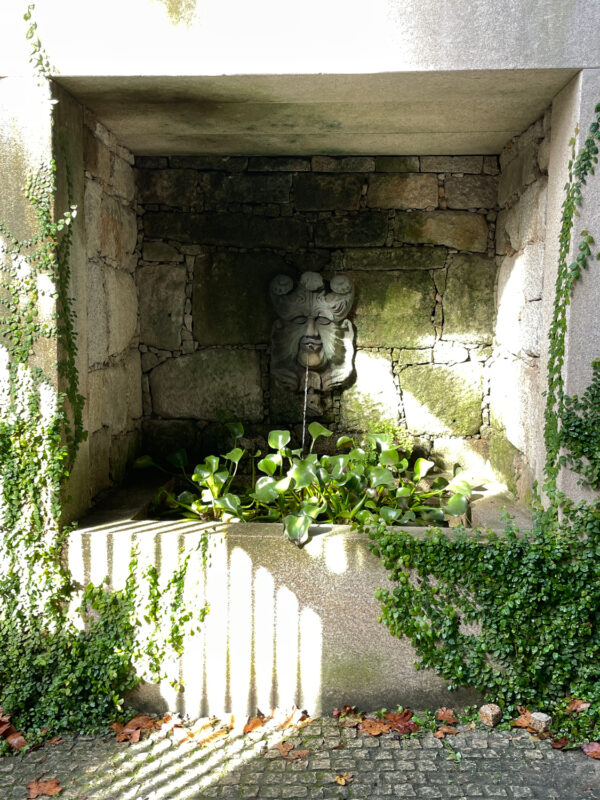
Wellness here is not staged as spa industry. The real luxury is the garden’s graduated calm. It falls down the slope in three terraces, with shaded corners under trees, citrus scent, water basins, a pergola and quiet places to sit.
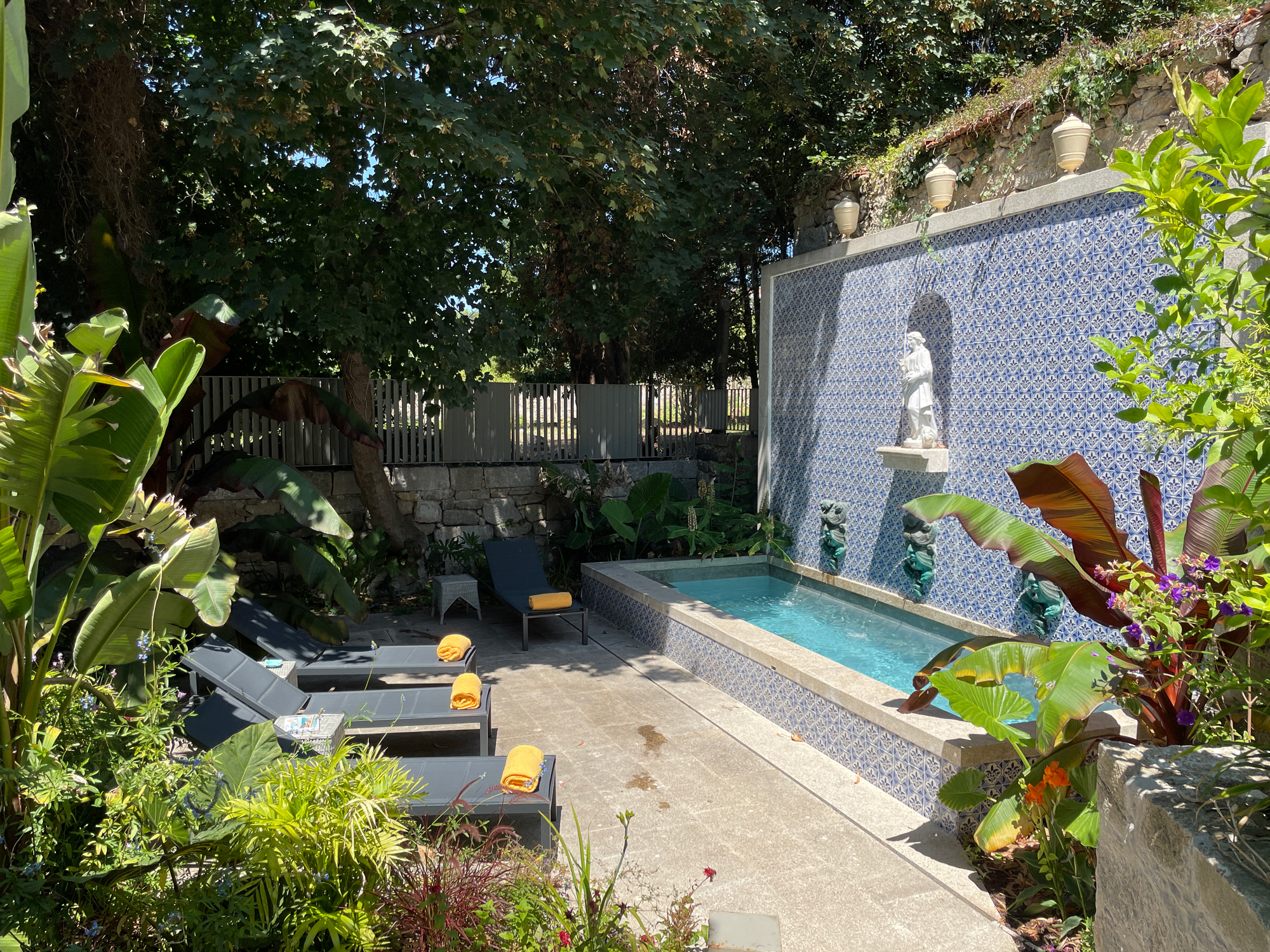
At the top there is a small plunge pool with solarium energy—more restorative pause than pool scene, which is probably the wiser choice in Porto. The house adds further retreats: the sitting room facing the garden, the covered reading terrace, the rooftop. Anyone looking for standardised rituals will do better elsewhere. Anyone after silence, light, air and the mild loss of time that marks a good afternoon will be very well placed.
Surrounding area
Within a short walking radius, this part of Porto reveals a version of the city that feels more interesting for being less over-explained. Just uphill are the Jardins do Palácio de Cristal, a sequence of paths, belvederes and planted rooms used more by locals than by hurried checklist tourism.
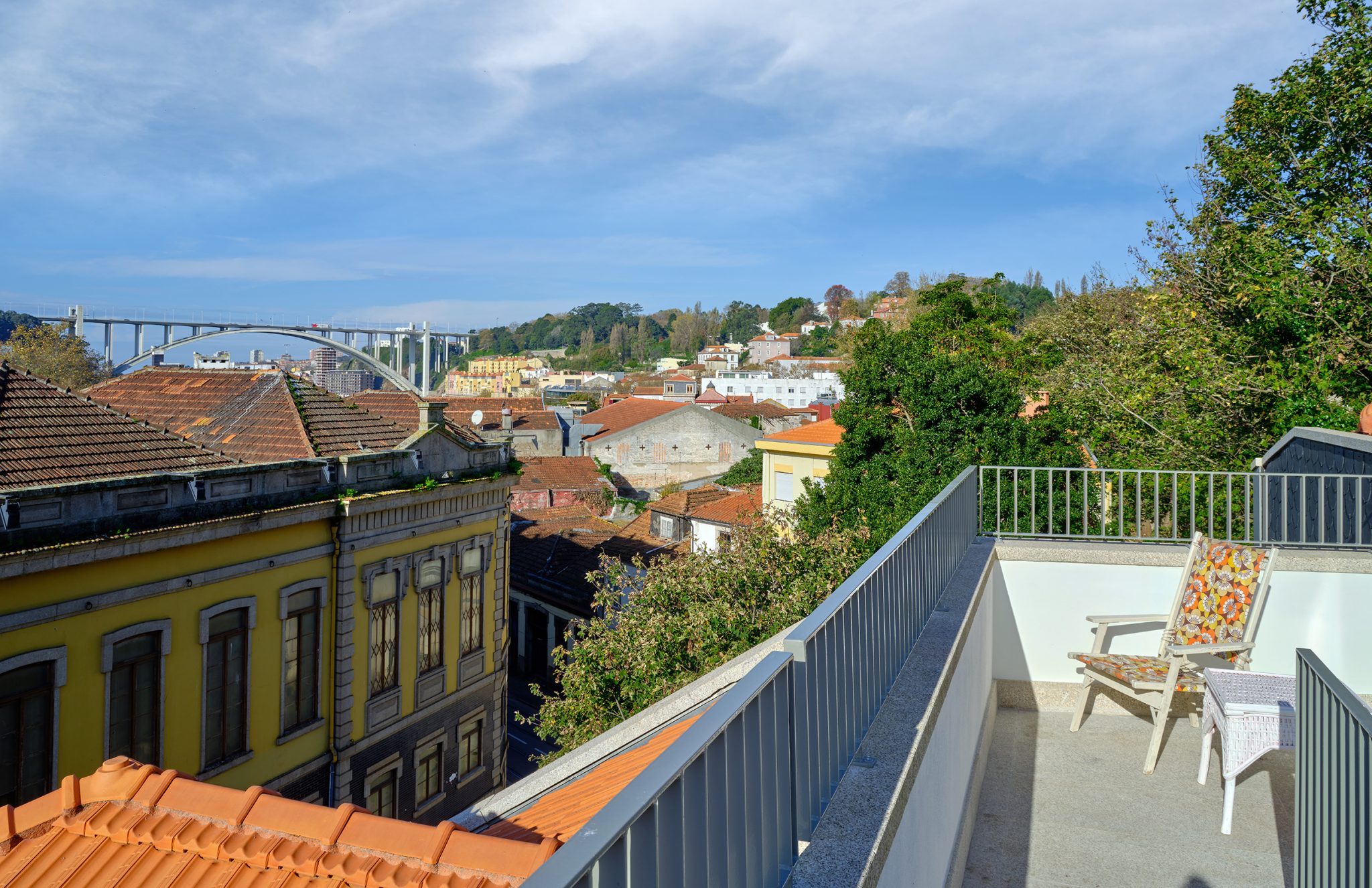
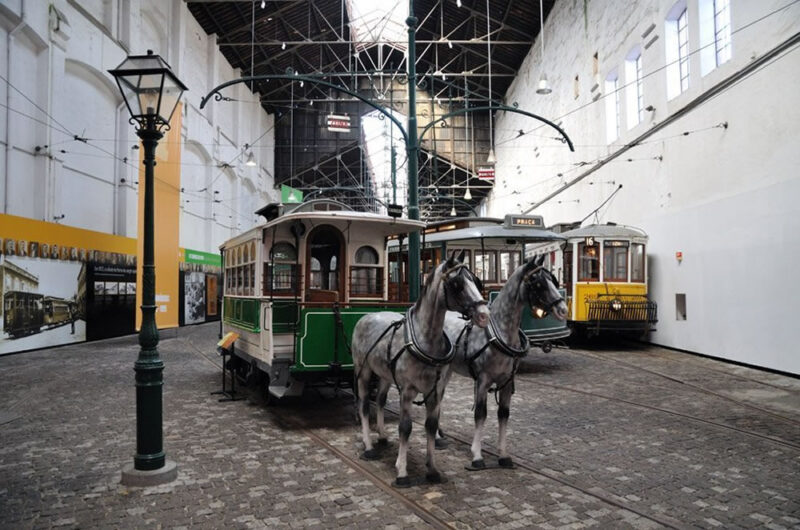
Next door, the Museu Romântico in the Quinta da Macieirinha traces 19th-century bourgeois Porto with pleasing exactness; Casa Tait is worth the detour for its gardens, views and quieter museum ecology. Down by the river, the Museu do Carro Eléctrico places Porto’s transport history inside a former thermoelectric plant—unexpectedly elegant, without any event noise. Walk further and Miragaia leads towards Alfândega and the tighter streets edging Ribeira. For shopping with local character, small ceramics and design stores in the wider centre are more rewarding than any souvenir reflex. And for evening light, Passeio das Virtudes is close enough for sunset, but still far enough from compulsory spectacle.
Activities
For culture-minded travellers: begin in the gardens of the Palácio de Cristal, continue to the Museu Romântico and then on to Casa Tait—a sequence of landscape, social history and carefully framed views. If museum-going feels better with machinery than with drawing rooms, add the Museu do Carro Eléctrico.
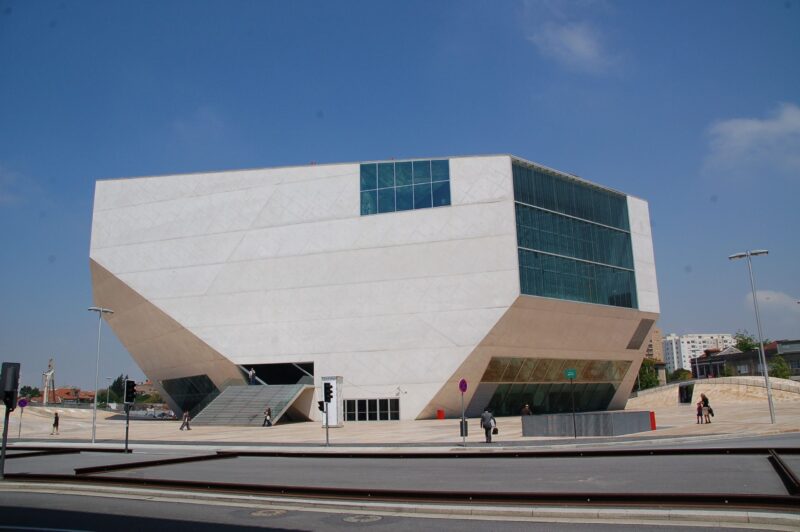
For architecture devotees: from the house, Porto reads as an argument between granite, azulejo and later modern interventions. Miragaia, the riverfront and many eloquent facades are all within reach on foot. With a little more time, Casa da Música makes an excellent counterstatement.
For walkers: simply leave the house and let the city do the editing. Follow Rua da Restauração towards Virtudes, descend to Miragaia, trace the Douro, then return through smaller streets. Porto rewards drift more than completion.
For families: the larger apartments, the garden and breakfast on your own schedule make daily life notably easy. Children get room; adults get a kitchen; neither side needs to become fully operational too early.
For diners: start with a drink in the garden, then choose the evening by temperament—Antiqvvm for grand form, Euskalduna Studio for concentrated contemporaneity, A Cozinha do Manel for classics without folklore.
For slower travellers: a book on the covered terrace, then the rooftop, then perhaps bread, cheese, fruit and wine back in the apartment. That counts as Porto, too.
Details
- 15 serviced apartments across four restored 19th-century buildings; studio, one-bedroom and two-bedroom layouts for up to six guests. Larger options include Massarelos I, Miragaia II and Miragaia I.
- All apartments have kitchens, living areas and one or two bathrooms; some also offer balconies, verandas or garden views.
- Daily housekeeping and breakfast delivered to the apartment.
- Shared areas include terraced gardens, a small plunge pool with solarium, rooftop, sitting room, covered terrace, pergola and lift.
- Pet-friendly, with Wi-Fi, a communal laundry area and guidance on nearby parking.