
The drive in changes the tempo first. Dry-stone walls, pale tracks, silver olive trees; then the palazzo appears, not as a grand statement but as a quiet find. Vista Ostuni seems to have settled into the landscape rather than landed on it. That is the first pleasure. No over-explaining, no staged arrival. Just light, air and the immediate sense that a few things can slow down here, maybe more than a few.
The location
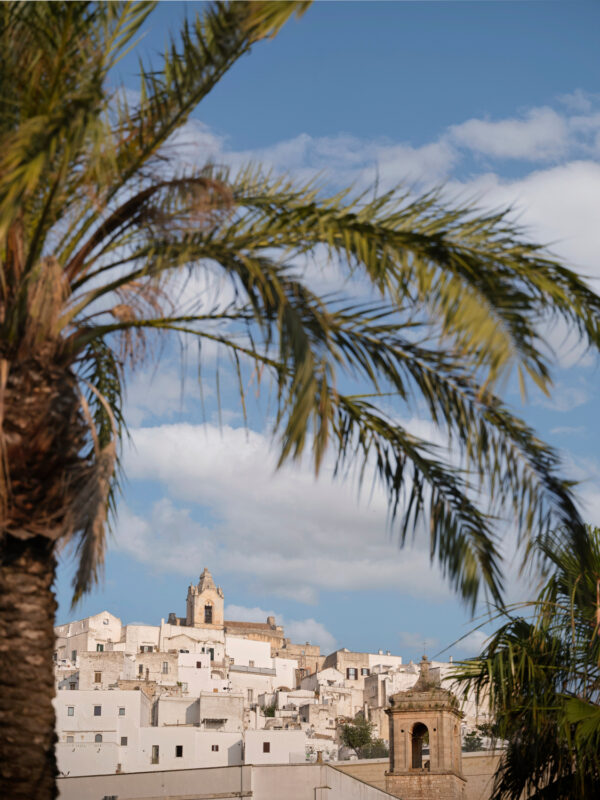
Vista Ostuni lies in the countryside behind the white city of Ostuni, close enough for quick trips into town and to the Adriatic coast, yet far enough out to switch off the social noise. The setting is shaped by olive, fig and almond trees, narrow roads, dry-stone walls and the bright, open spatial logic of Puglia.
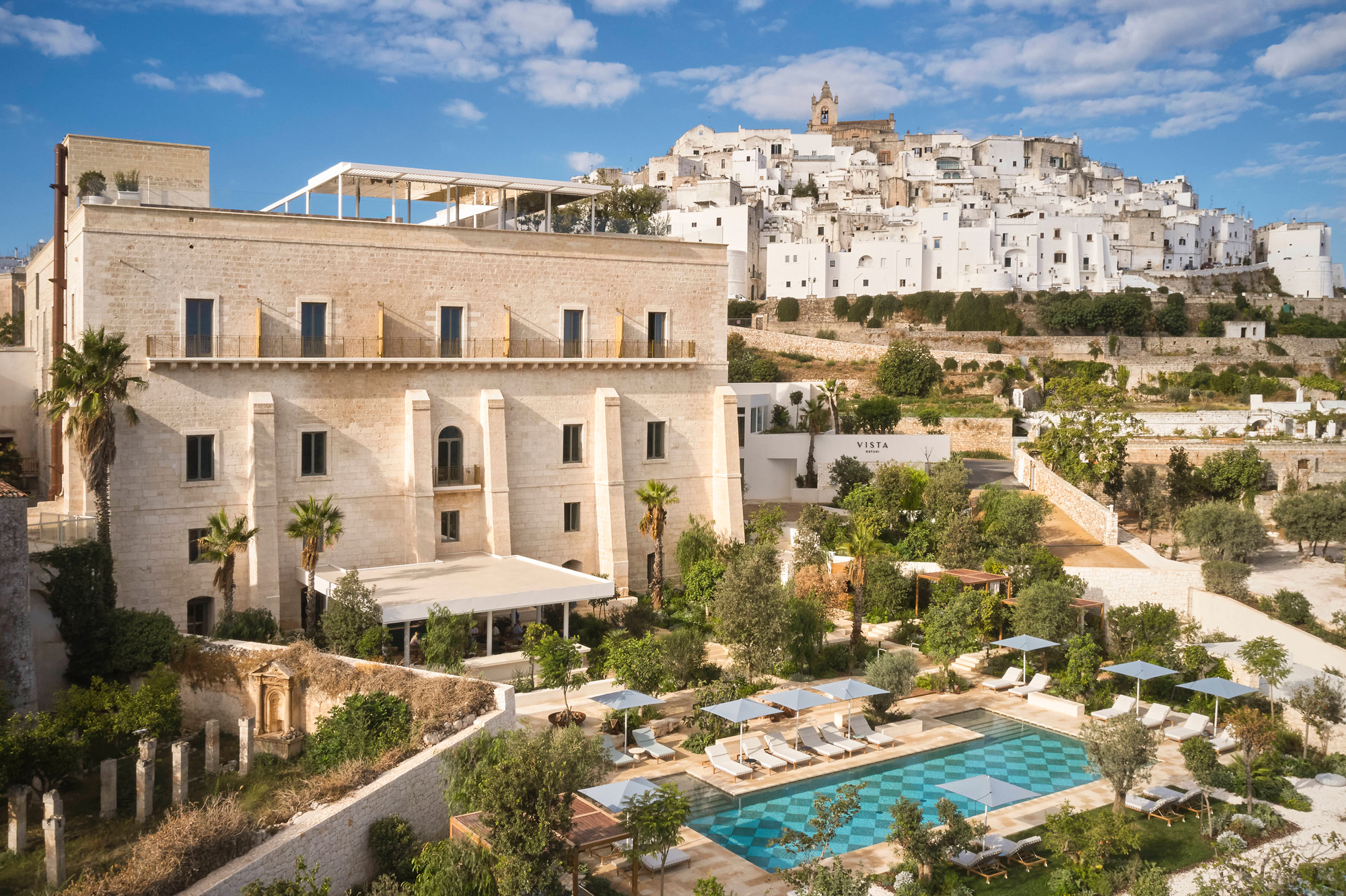
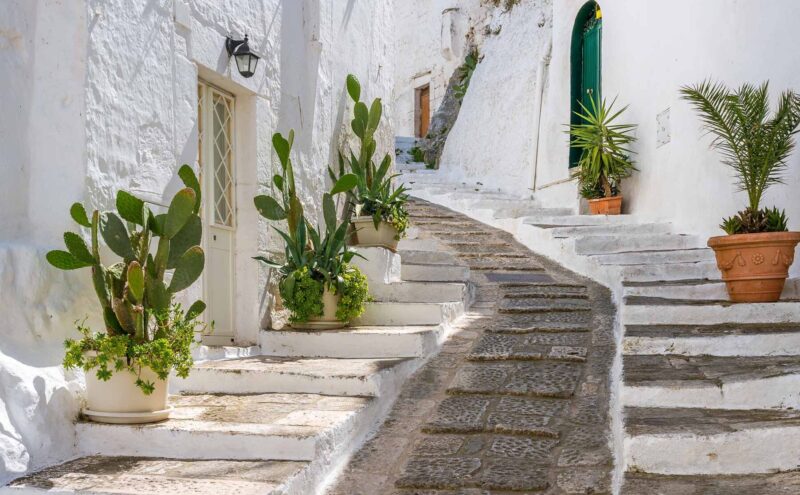
On arrival, the first impression is stillness, then the clean outline of the building: whitewashed surfaces, low volumes, stone underfoot. The palazzo borrows local forms without turning rustic. It feels pared back, current, quietly exact. Less spectacle than presence. A building that does not pose for its landscape; it belongs to it.
Backstory
Vista Ostuni does not tell the story of a grand hotel. It tells the story of a building rethought with intelligence and restraint. Officially, the property is described as a restored historic palazzo whose original character has been preserved and updated with contemporary comfort. That sounds familiar, but here it seems credible.
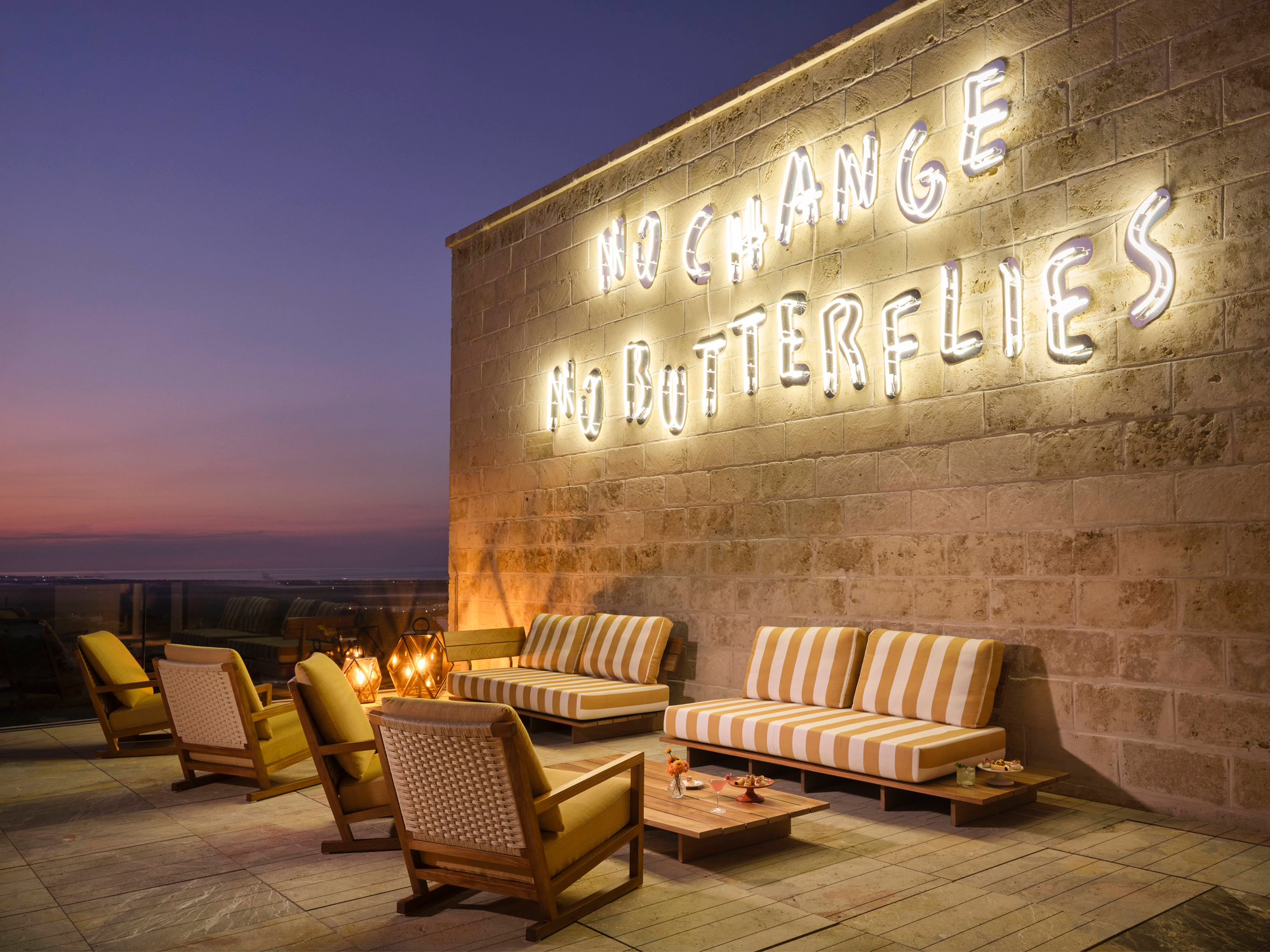
What matters is the attitude behind it: not nostalgia, not design display, but the question of how Apulian architecture can continue into the present without becoming a museum piece or a lifestyle set. The answer is a building that keeps its local grammar and loosens everything else. The official site does not foreground an owner-host persona, which suits the place.
Interior & architecture
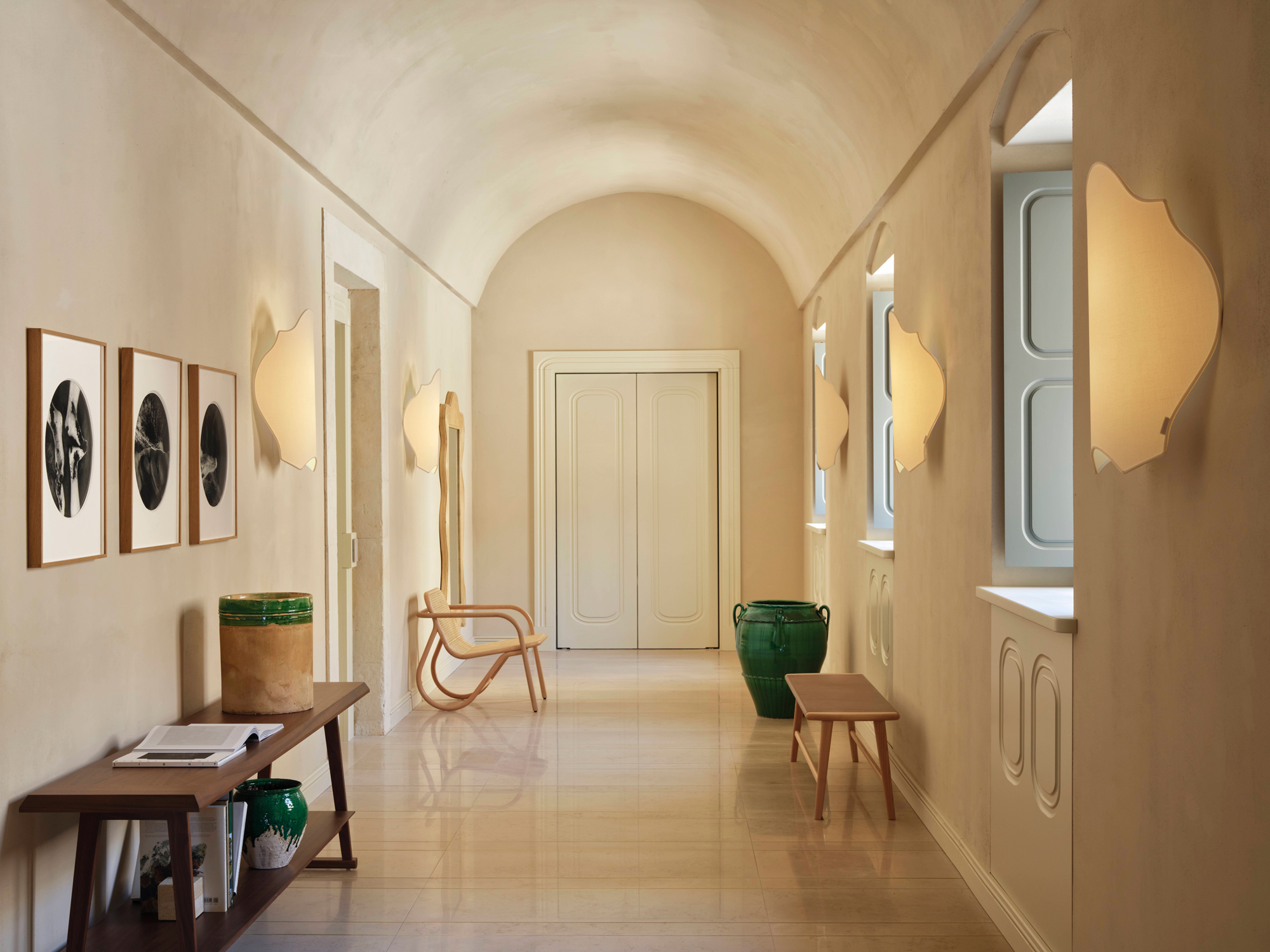
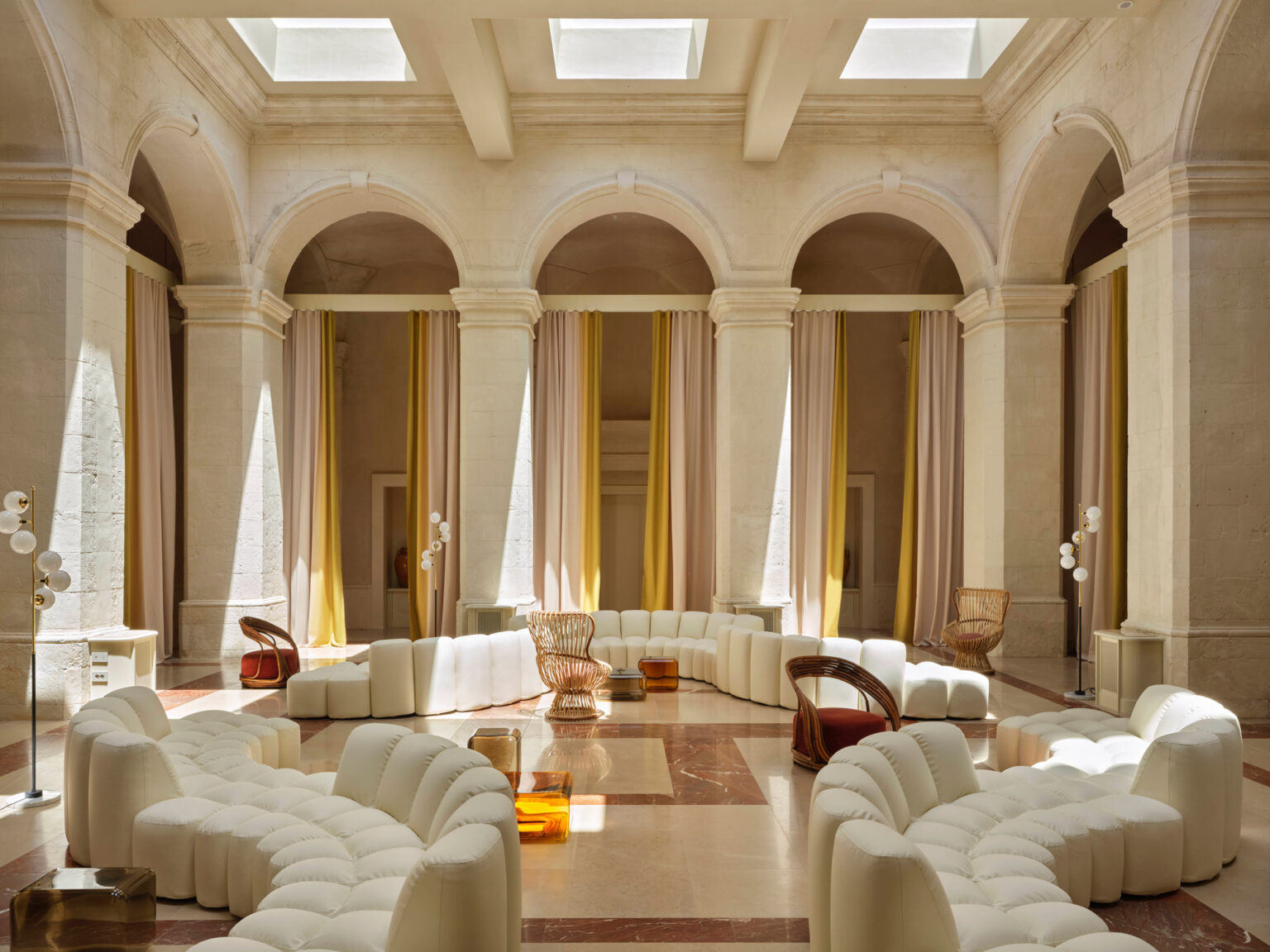
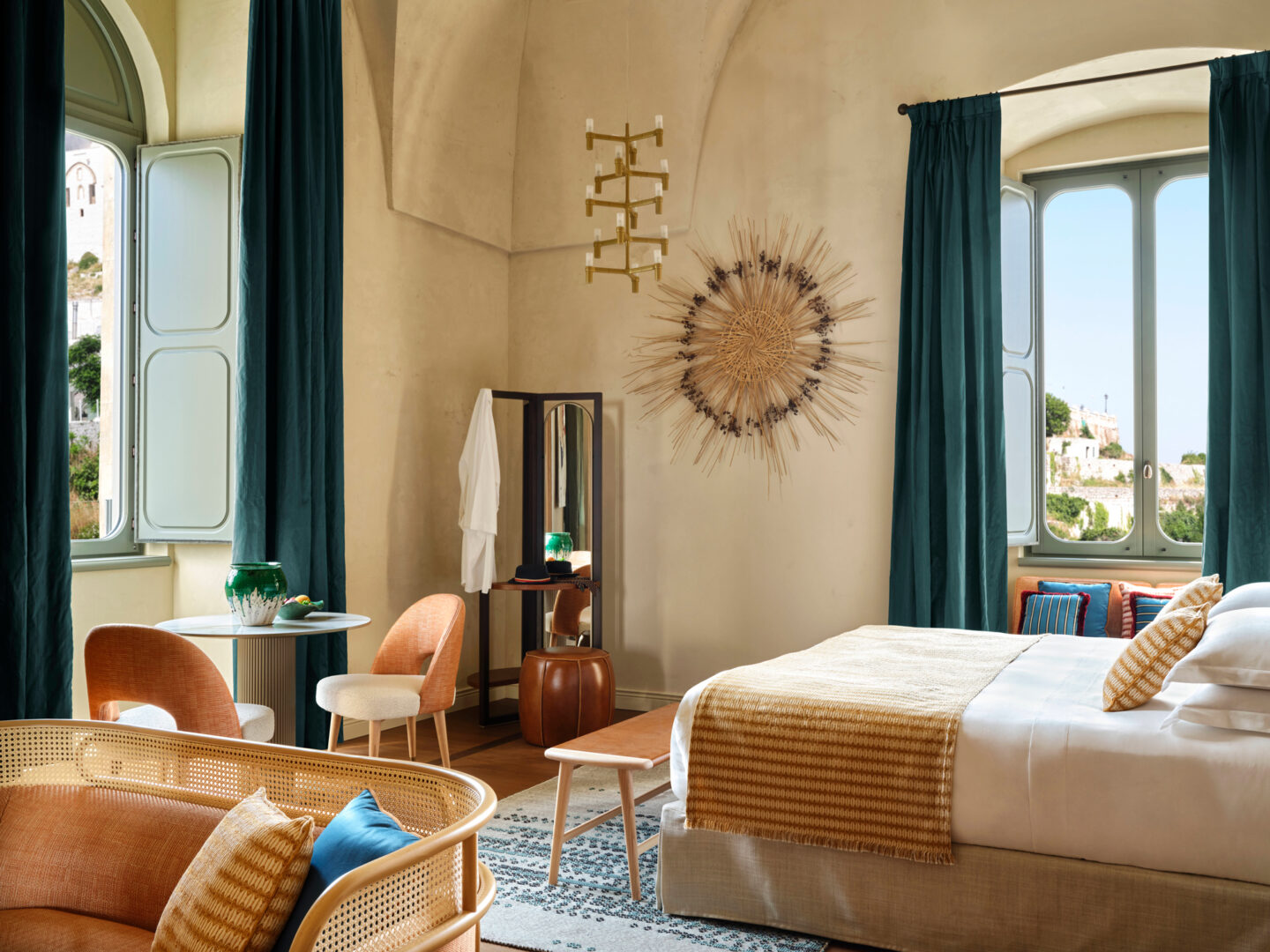
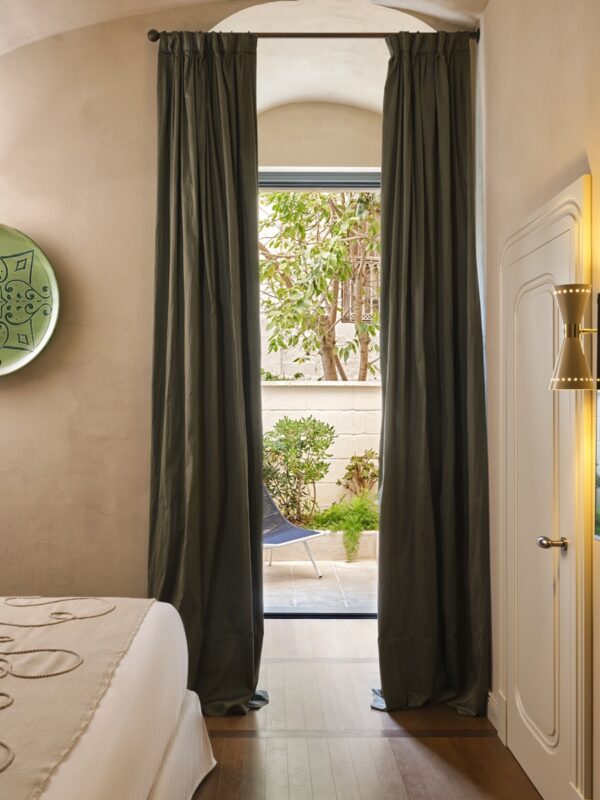
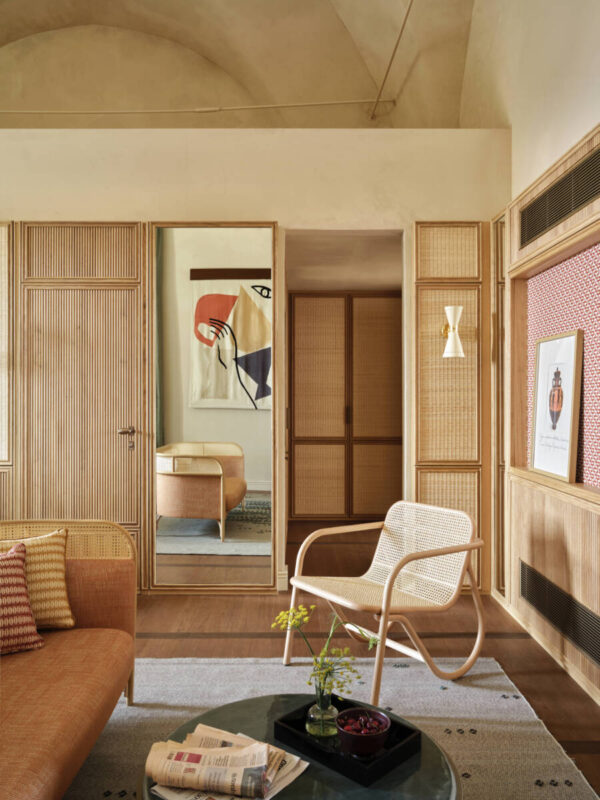
Inside, Vista Ostuni lives from the balance between old structure and calm reduction. Vaulted ceilings, pale stone and lime-white walls draw on regional building traditions, but they are paired with clear lines, quiet proportions and a lightness that never tips into precious minimalism.
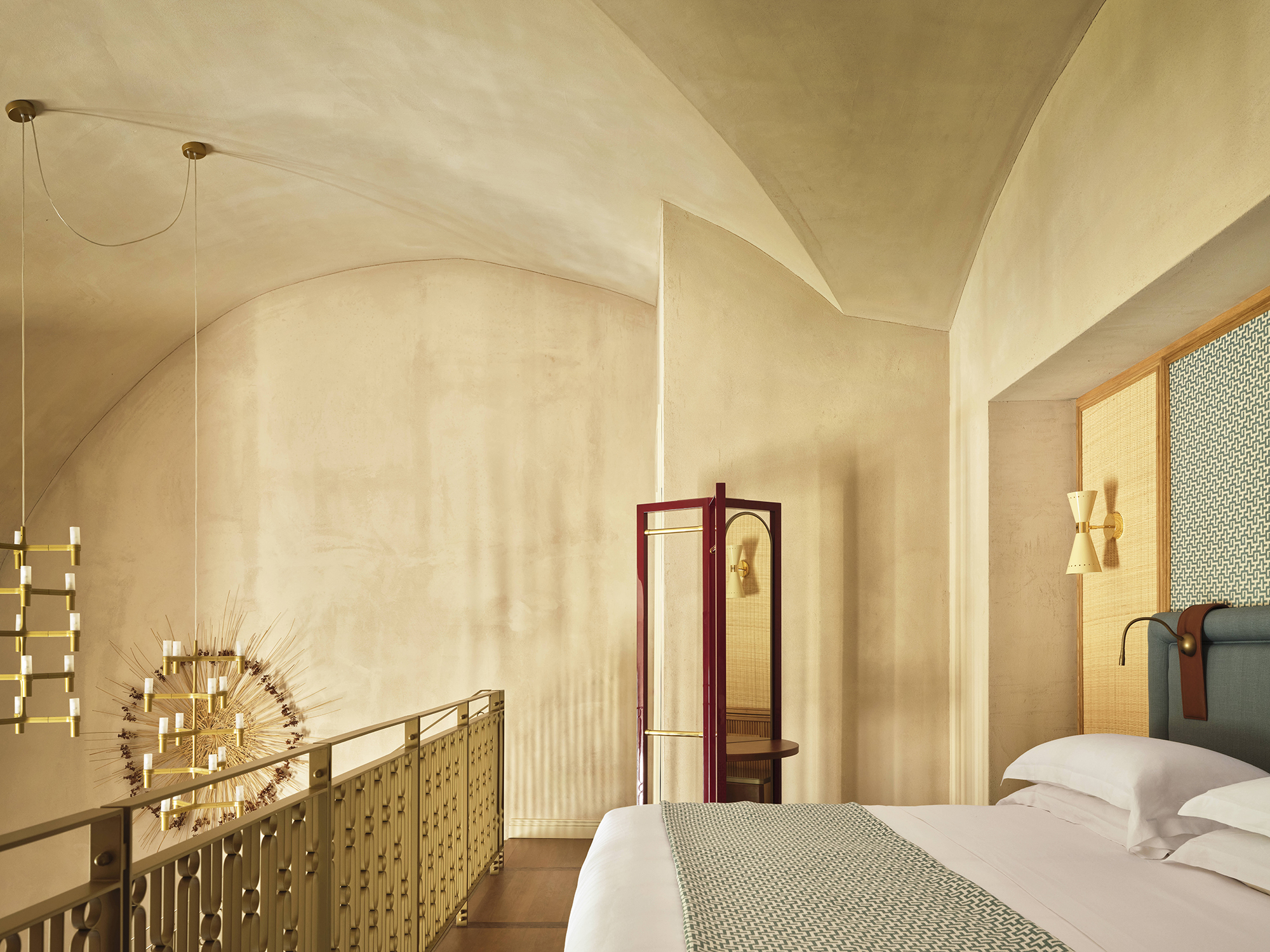
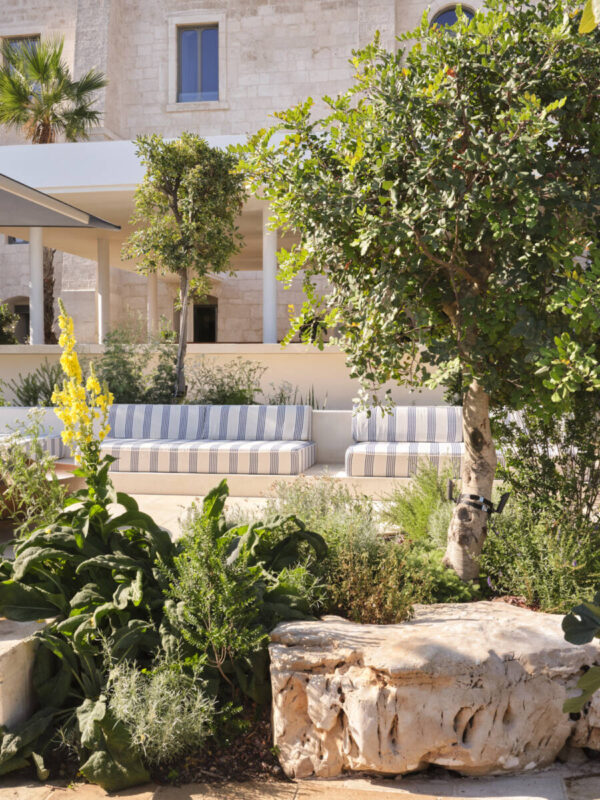
Natural materials, restrained tones in sand, white and warm earth colours, and a mix of furnishings that do not look showroom-perfect give the rooms their ease. The effect is composed rather than decorated. Outside, the same approach continues.
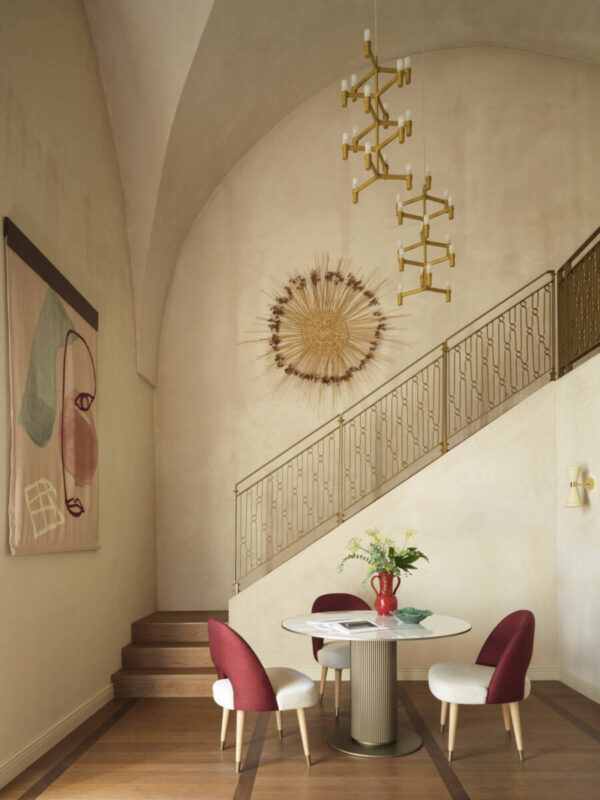
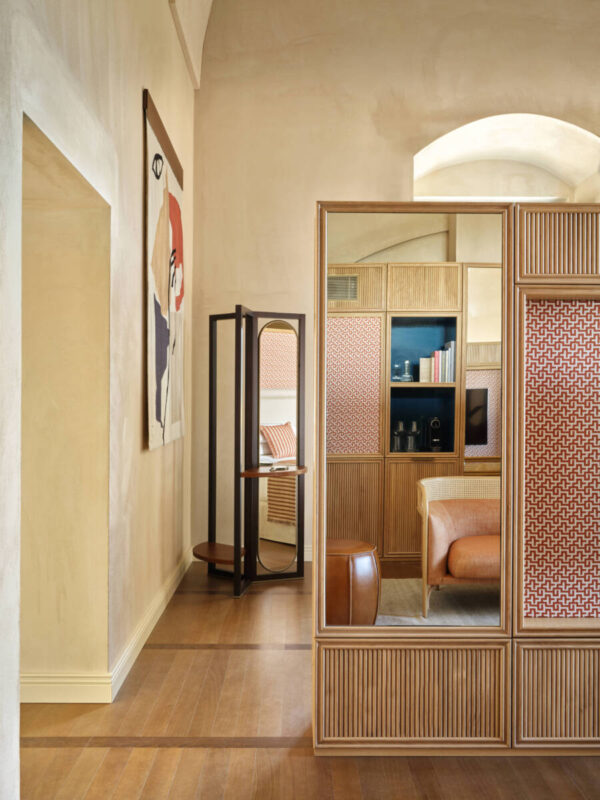
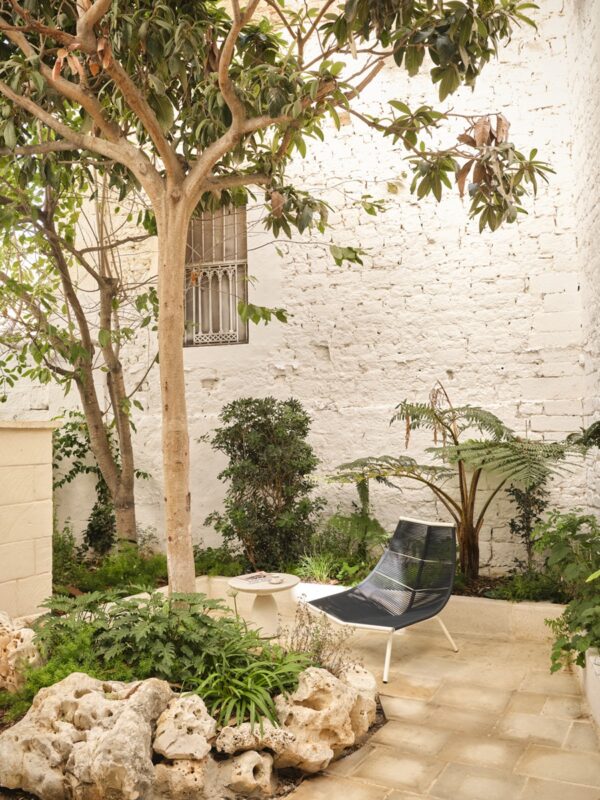
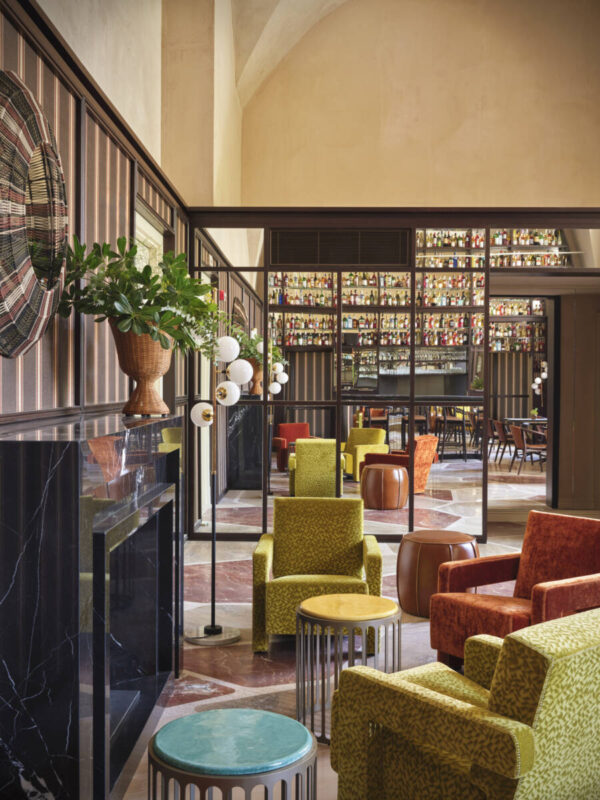
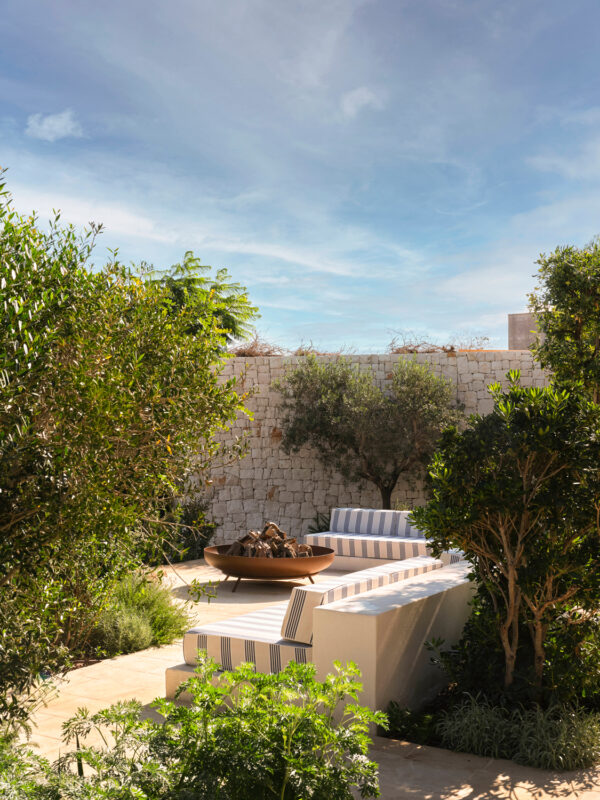
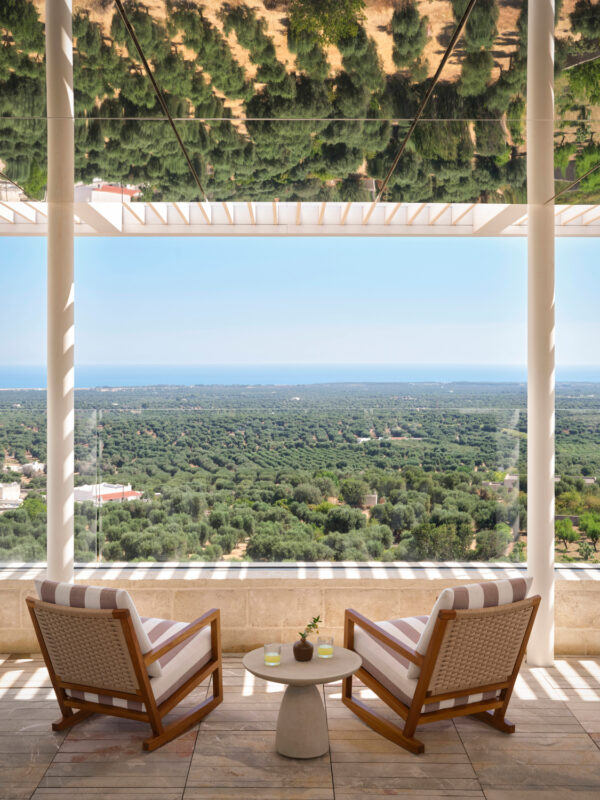
The patio, bar area, garden pool and rooftop with infinity pool are not add-ons but part of a spatial sequence in which inside and outside keep passing the baton. The palazzo feels edited, not overworked. That difference matters, especially on the third day.
A look inside
Vista Ostuni works more like a private holiday hospitality experience than a classic hotel. That is part of its appeal. At the centre is an open living area with fireplace and dining space; from here the bedrooms branch off in a layout that reads clearly and lives well.
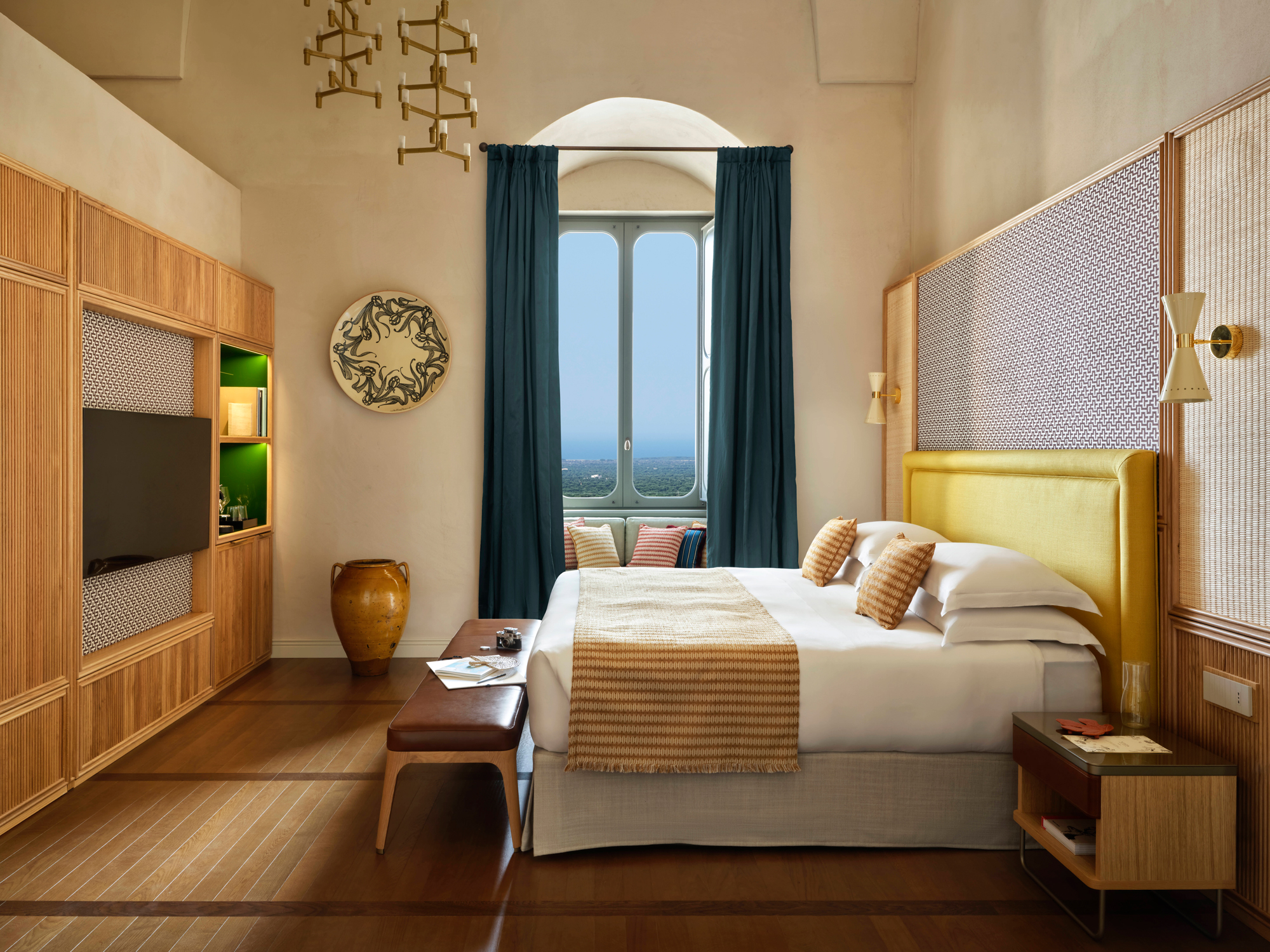
Current listings point to three double bedrooms, each with its own bathroom, plus around 180 square metres of interior space. For families or small groups, the plan creates a useful balance between togetherness and retreat.
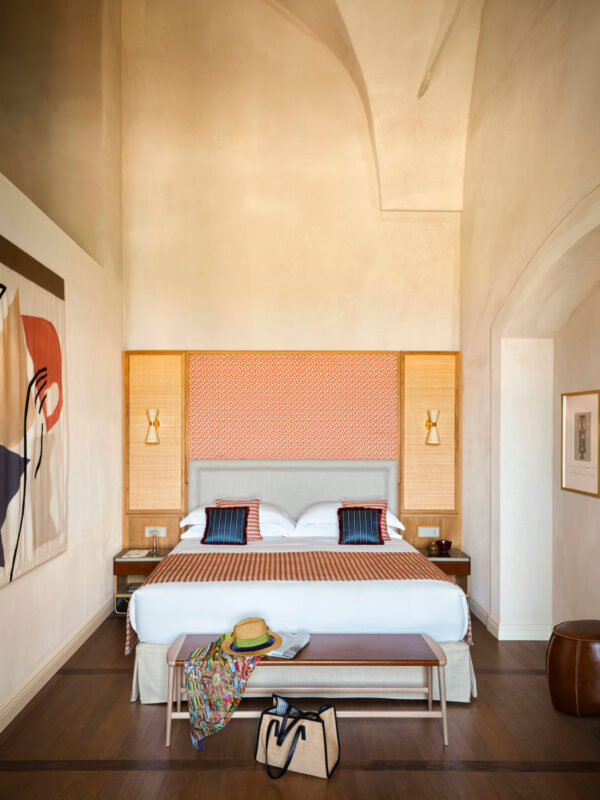
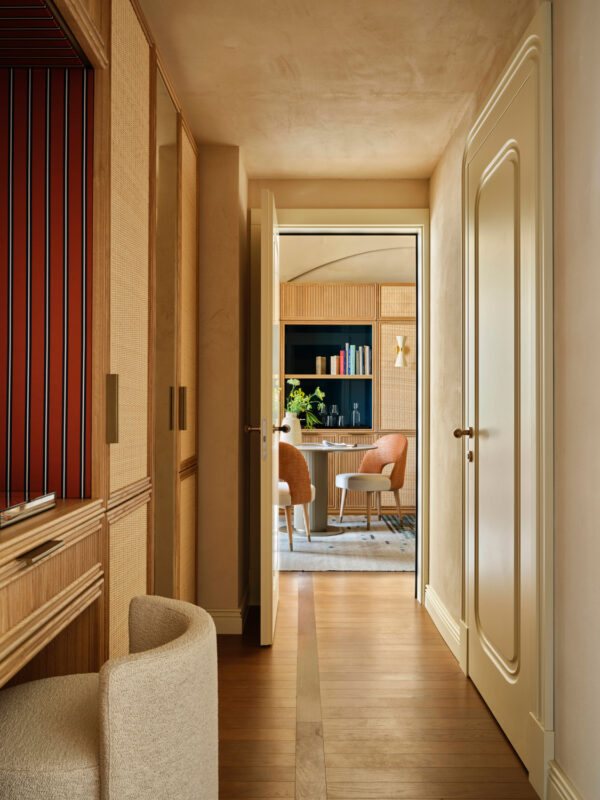
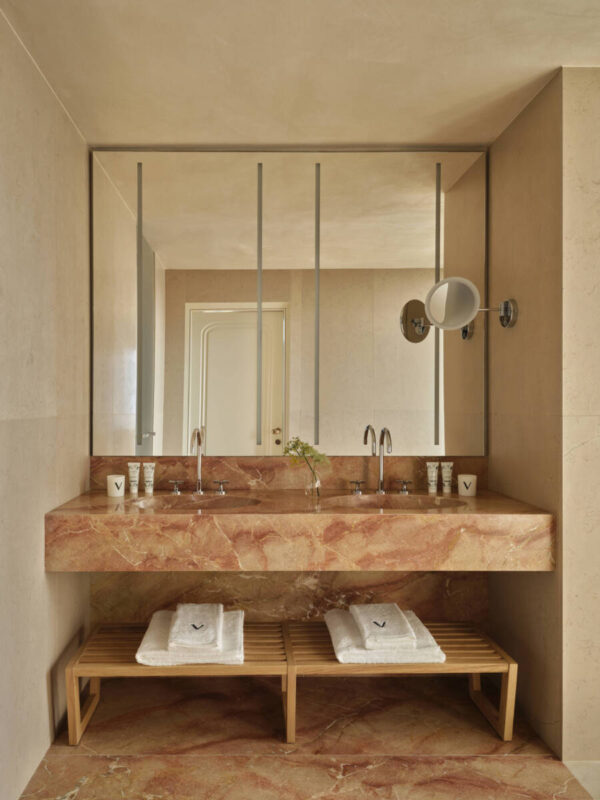
The rooms feel bright, spare and carefully equipped without sliding into standardisation. Air conditioning, good materials and easy access to terraces and garden reinforce the sense of a house that is not only comfortable, but genuinely thought through for everyday use.
Culinary
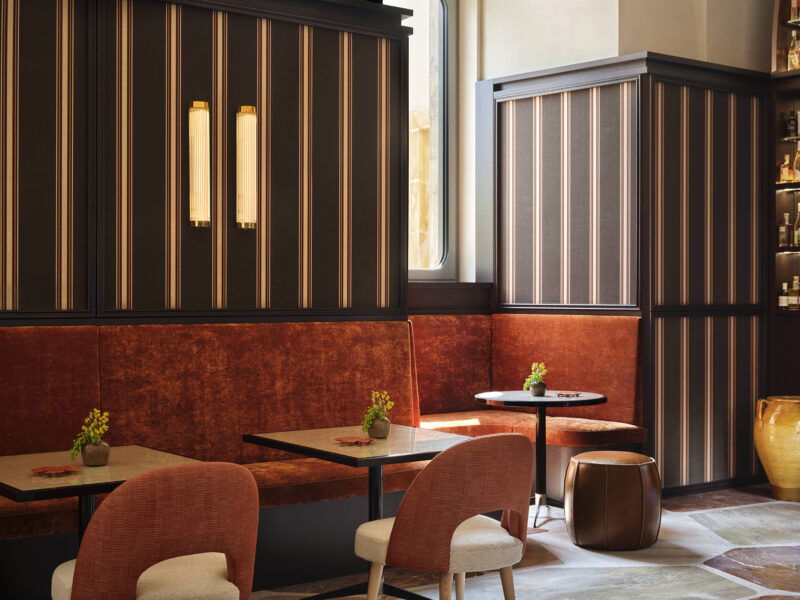
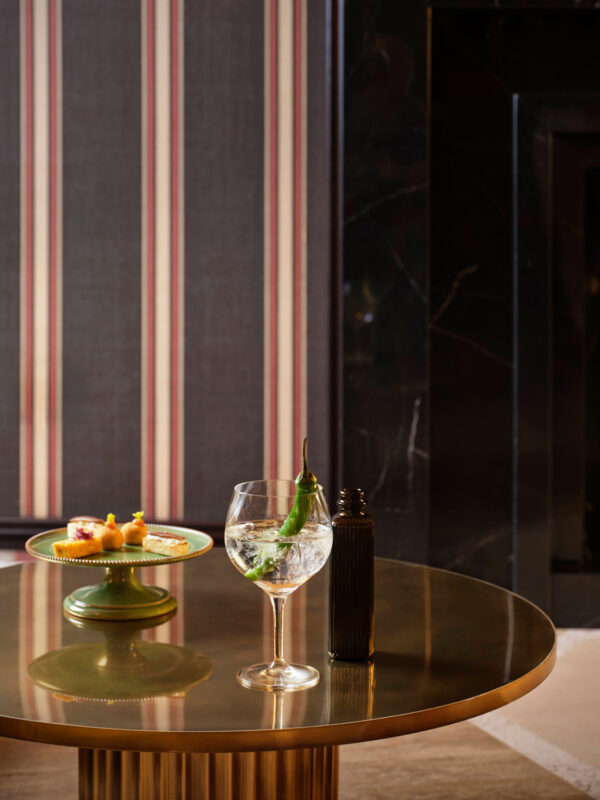
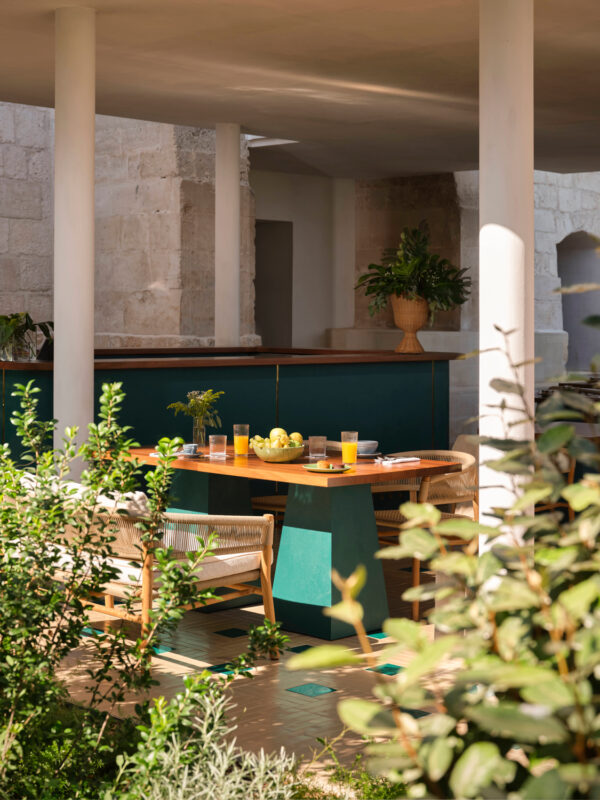
Culinary life at Vista Ostuni is centred around Bianca Bistrot, the hotel’s in-house restaurant and an essential part of the experience. Open daily from breakfast through lunch and dinner, it offers a refined yet relaxed setting shaped by regional flavours and the rhythm of the day. Two bars, including the rooftop bar and the Chiostro Bistrot, extend the experience from morning coffee to evening aperitifs.
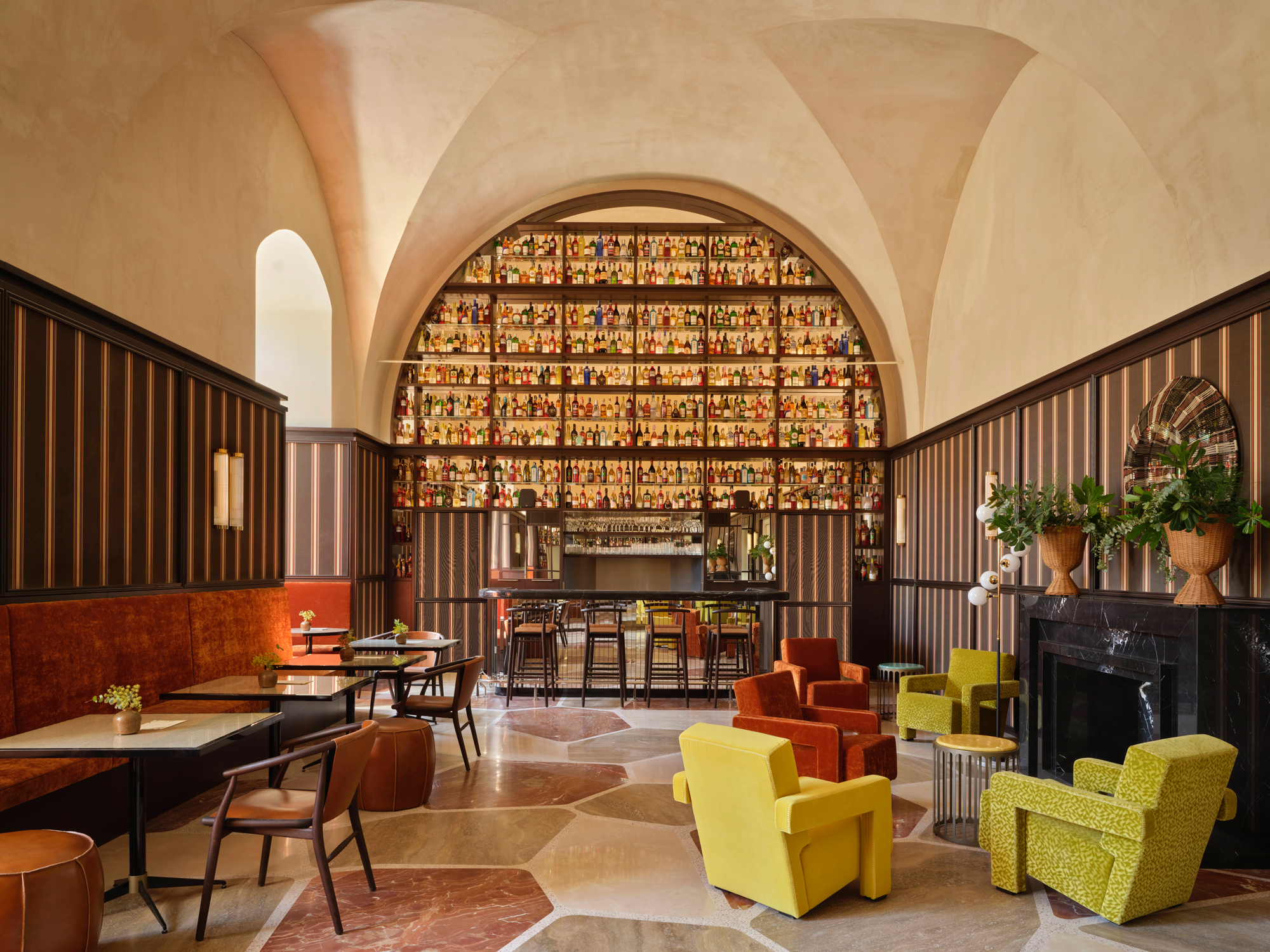
The heart of it all remains the kitchen, extended by an outdoor cooking area and terraces made for long lunches and late aperitifs that drift a little past schedule. For meals out, Ostuni and its surroundings offer plenty.
Cielo is a strong address for modern Apulian cooking, Restaurant 700 brings a more polished setting in a historic palazzo, and Già Sotto l’Arco in nearby Carovigno remains a destination for ambitious regional cuisine. For something looser, Masseria Moroseta is a good counterpoint.
Wellness & Relaxation
At Vista Ostuni, wellbeing is organised around space, landscape and water rather than a menu of treatments. The pool is the quiet centre of the property, framed by pale stone, olive trees and long open views.
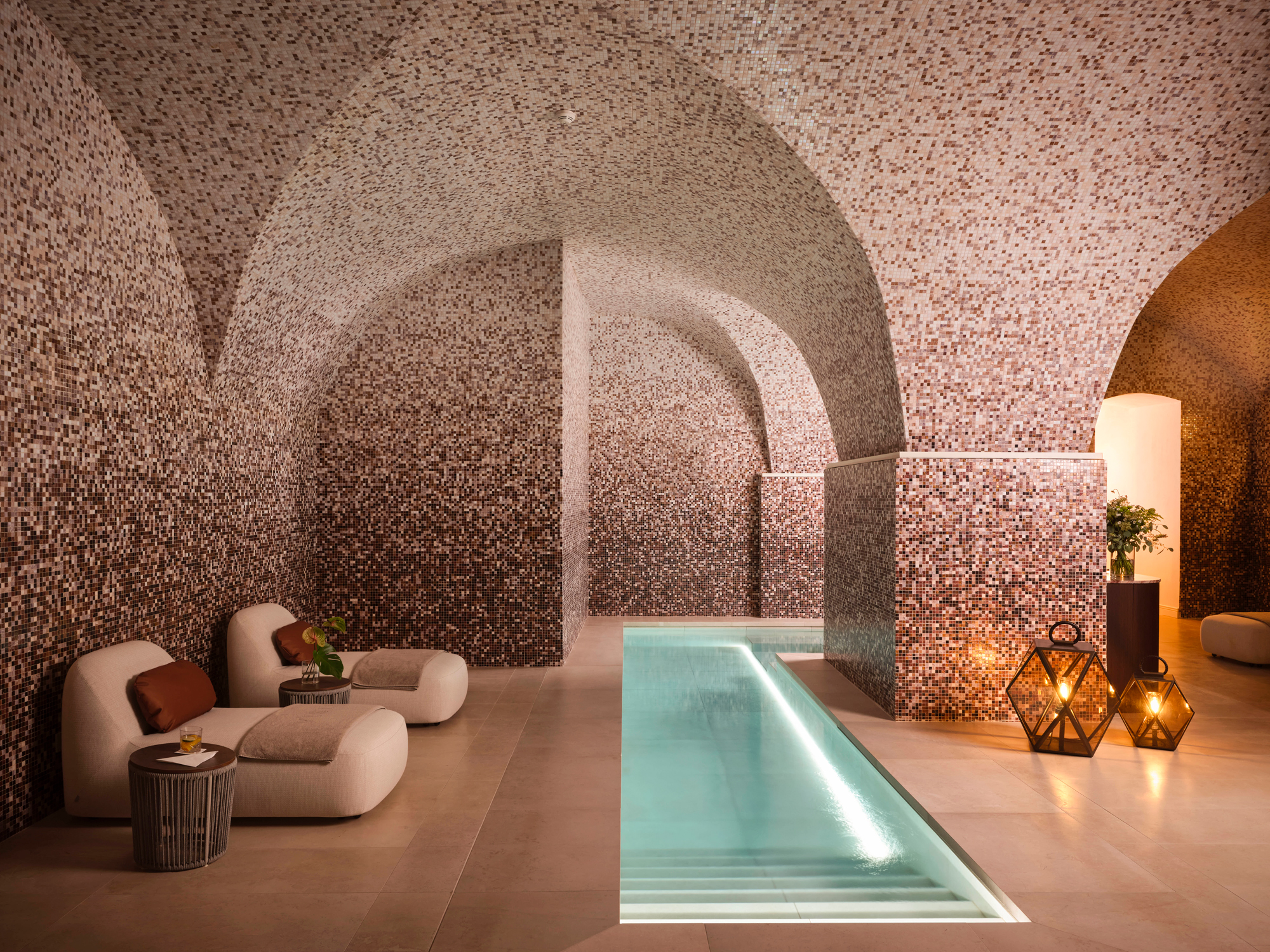
Around it sit terraces, lounge areas and outdoor showers, with enough distance from everyday life to make the point without announcing it. There is no conventional spa in the foreground.
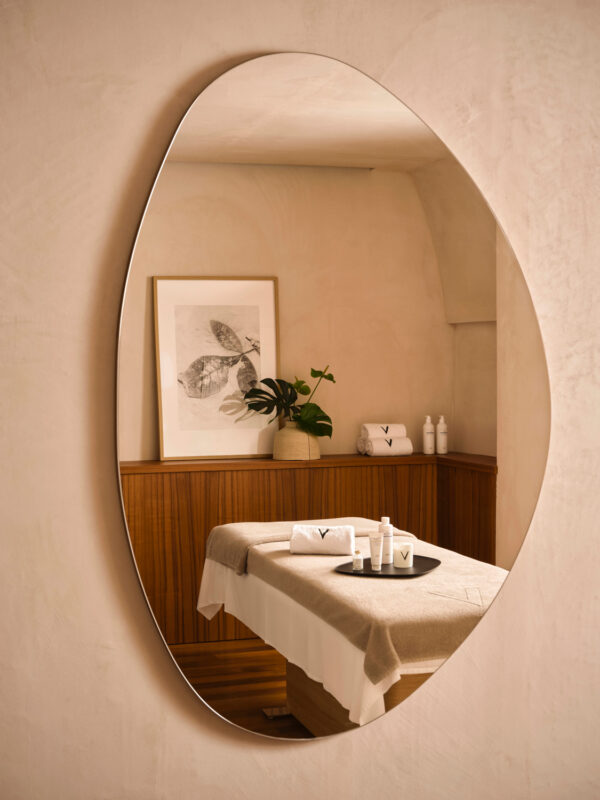
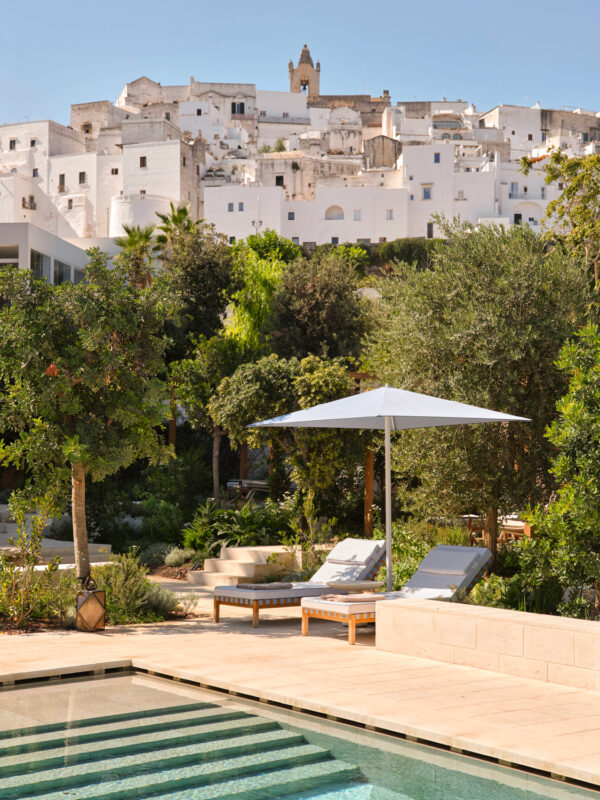
Relaxation is more direct than that: a swim in the morning, shade at midday, the roof terrace at dusk. The luxury here is not programming. It is the rare feeling of coming down a little just because the house, the air and the landscape make it possible.
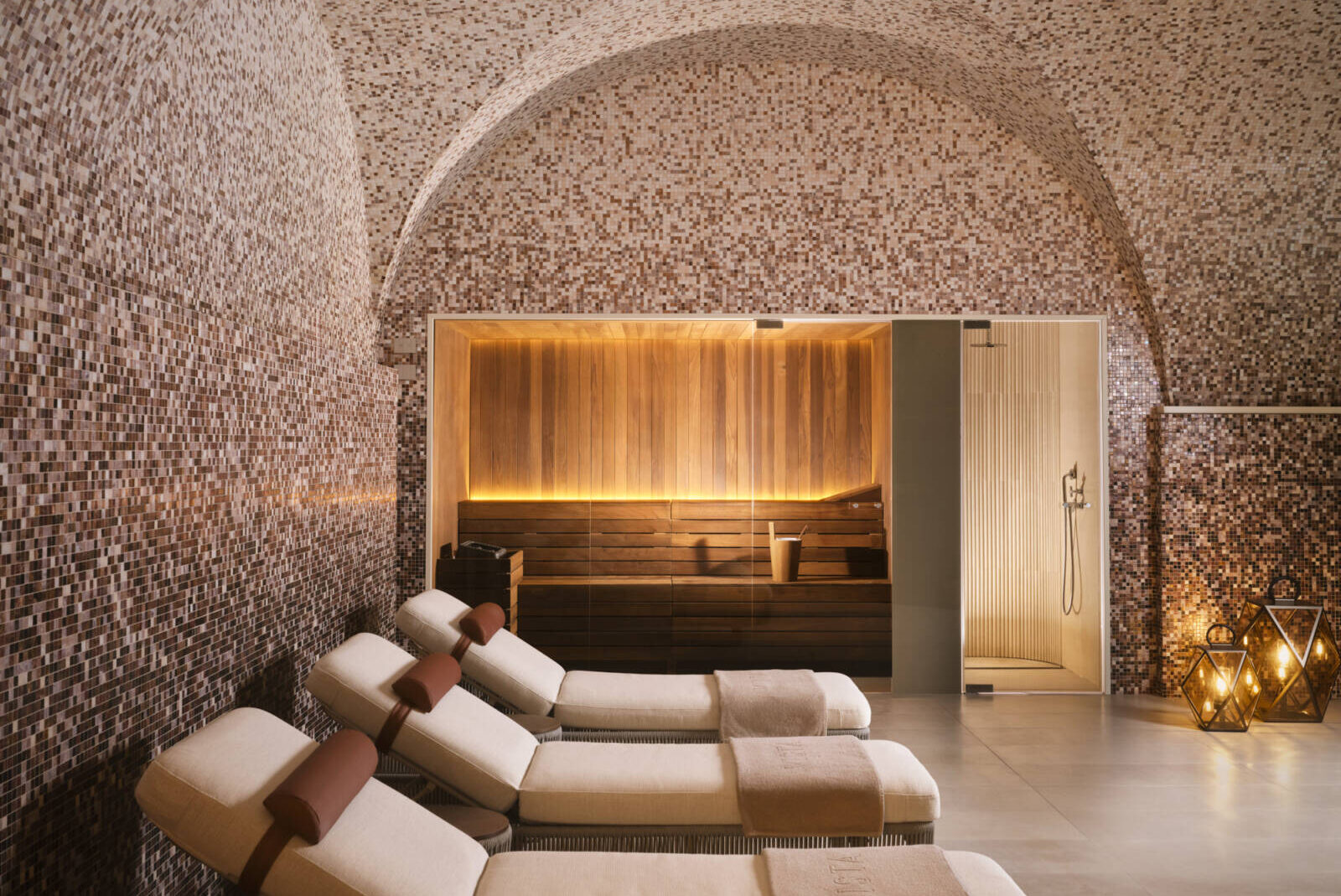
Surrounding area
Right around the palazzo, the landscape is all olive groves, country lanes and bright open ground. The cultural density begins a few minutes later in Ostuni. Beyond the well-known white streets, the Museo di Civiltà Preclassiche della Murgia Meridionale is worth real time: it gives the region archaeological depth and pulls the town out of postcard mode.
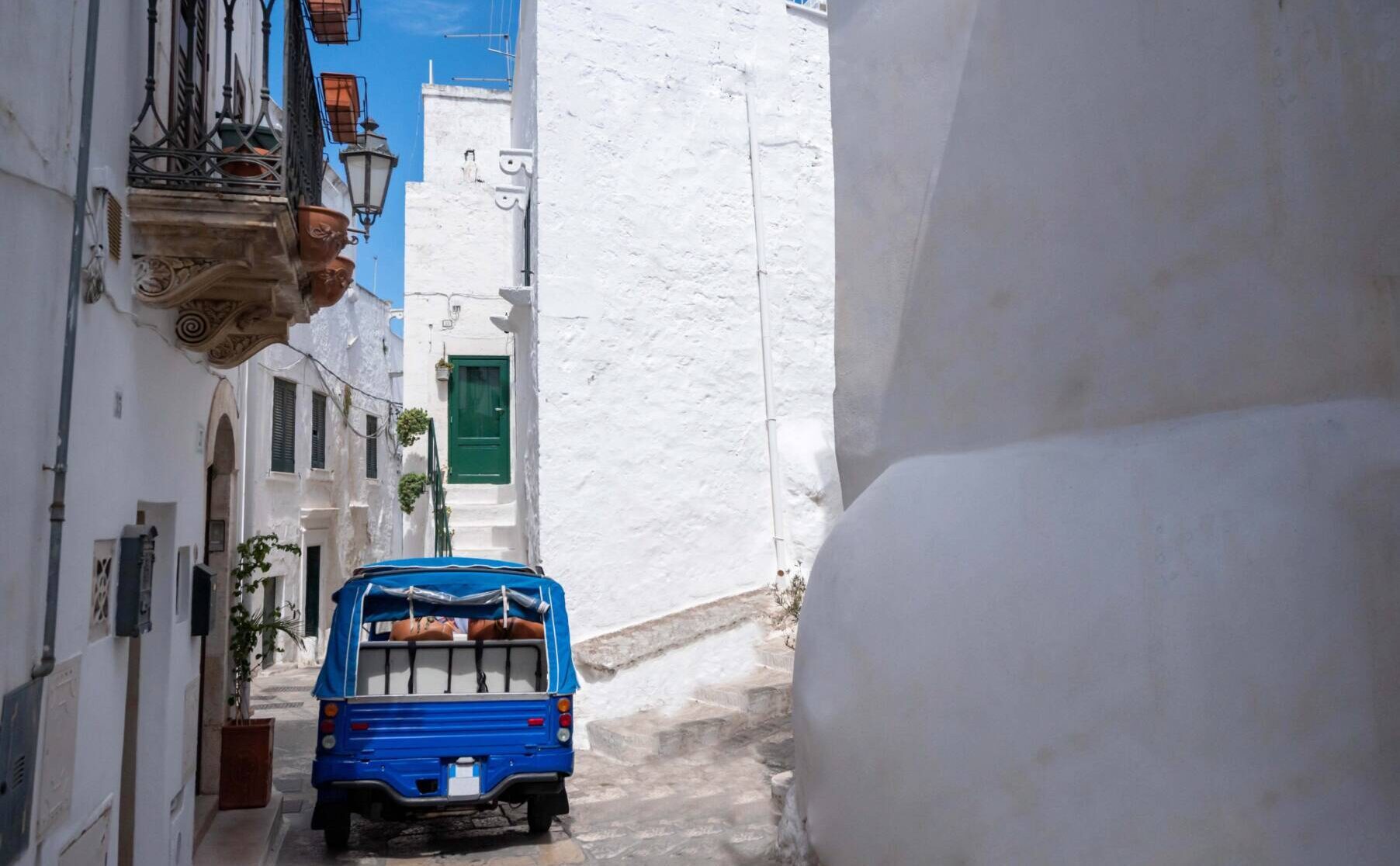
For contemporary art, Orizzonti Arte Contemporanea is a worthwhile stop; for photography, House of Lucie Ostuni brings an international programme into the city. Just outside town, Masseria Brancati offers ancient olive trees and a historic underground olive mill, a concrete way into the agricultural history of Puglia. Toward the sea, the Parco Dune Costiere opens into dunes, Mediterranean scrub and unusually calm coastal paths. For good craft, food items and everyday objects with character, Ostuni also has smaller shops that sit well outside souvenir economics. Carovigno and Ceglie Messapica make strong extensions.
Activities
For design-minded travellers: wander through Ostuni, then stop at selected galleries, independent shops and architecturally interesting masserie.
For active explorers: Ostuni, Carovigno, Ceglie Messapica and the coast combine easily; a car is strongly recommended.
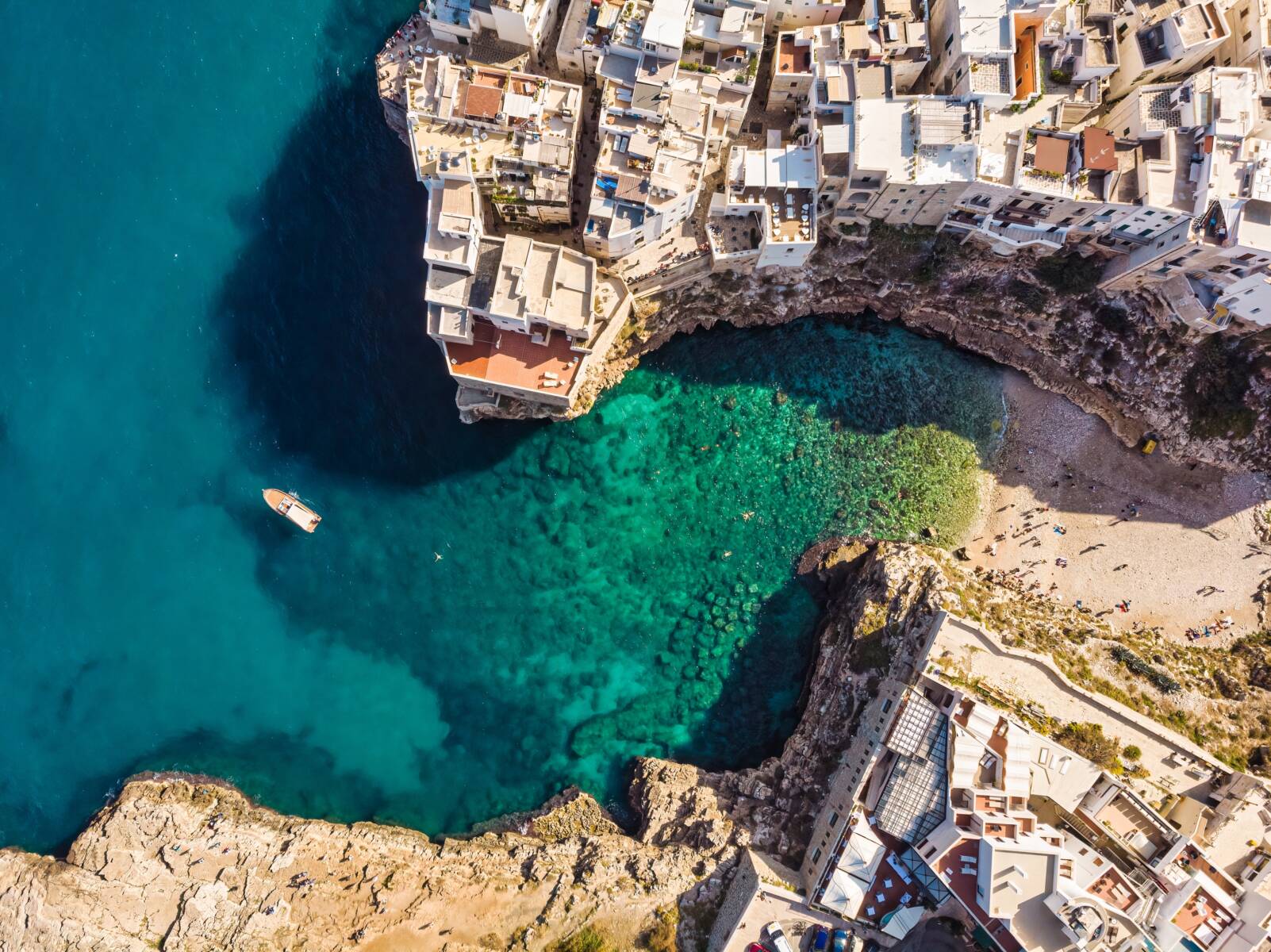
For culture-focused stays: spend time at the Museo di Civiltà Preclassiche, then pair contemporary art at Orizzonti with photography at House of Lucie Ostuni; with more time, drive to the Fondazione Pino Pascali in Polignano a Mare.
For landscape people: early walks through the olive groves, slow drives inland and unhurried hours in the Dune Costiere park show a quieter Puglia, with more horizon and less programme.
For eaters: breakfast on the terrace, a market run in Ostuni, cooking at home, then dinner out.
For couples and small groups: the palazzo suits days without strict choreography – reading, swimming, cooking, eating, heading into town later.
For people who want less scheduling: stay put for a day, move only between pool, shade, kitchen and roof terrace, and treat the absence of plans as part of the architecture.
Details
- Type: design-led palazzo near Ostuni.
- Location: rural, a few winutes walk from the old town and within easy reach of the Adriatic coast.
- Rooms: 28 suites and rooms.
- Size: about 180 sq m.
- Facilities: pool, terraces, fireplace, garden, roof terrace, air conditioning.
- Best for: couples, families, small groups.
- Mobility: a car is strongly recommended.