Between rough stone, barred windows and modern interiors, several courses are served with matching wines. With a bar, restaurant, art studios—and soon a boutique hotel—the former women’s prison has become a cultural hub in Lichterfelde.
The building: From prison to “The Knast”
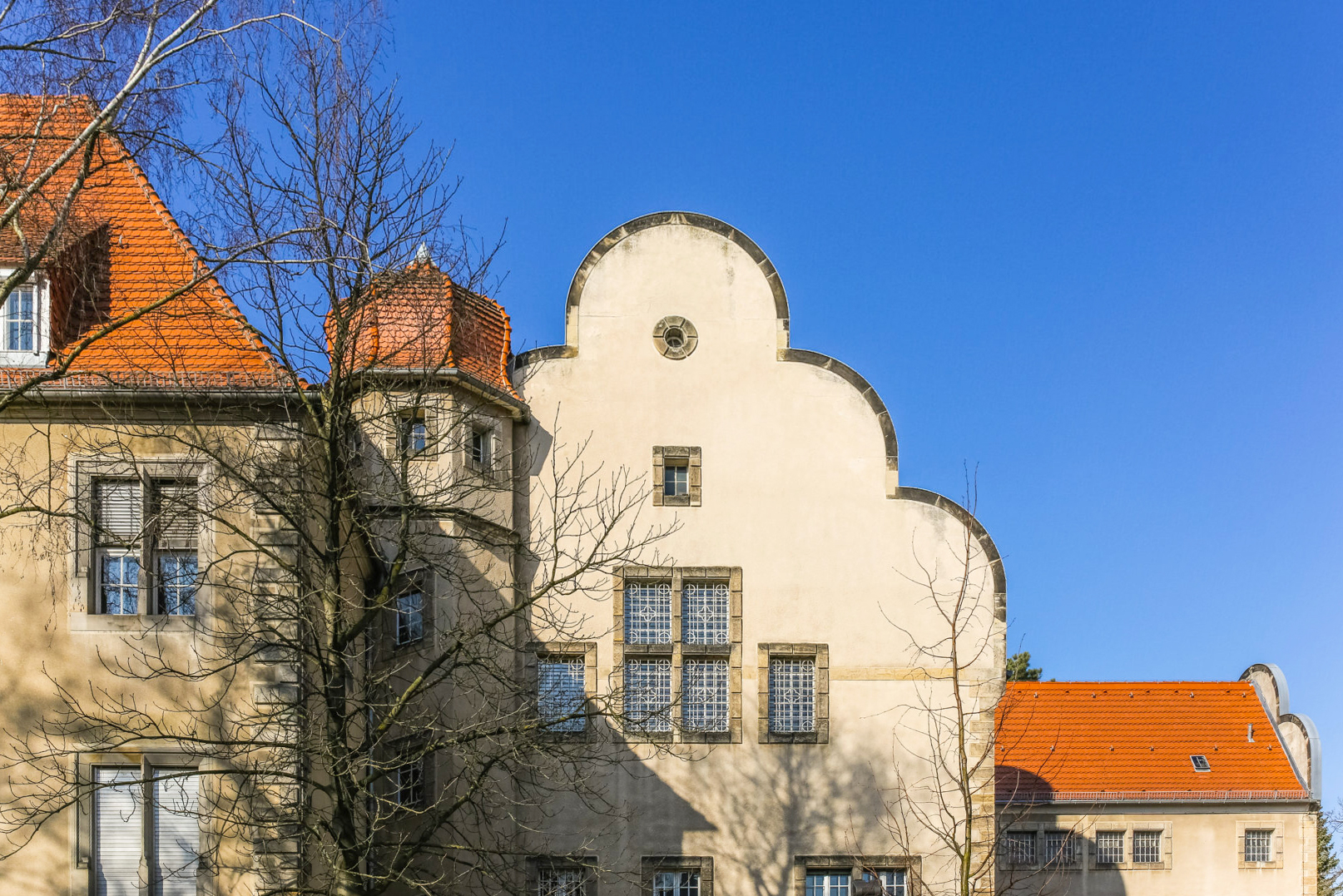
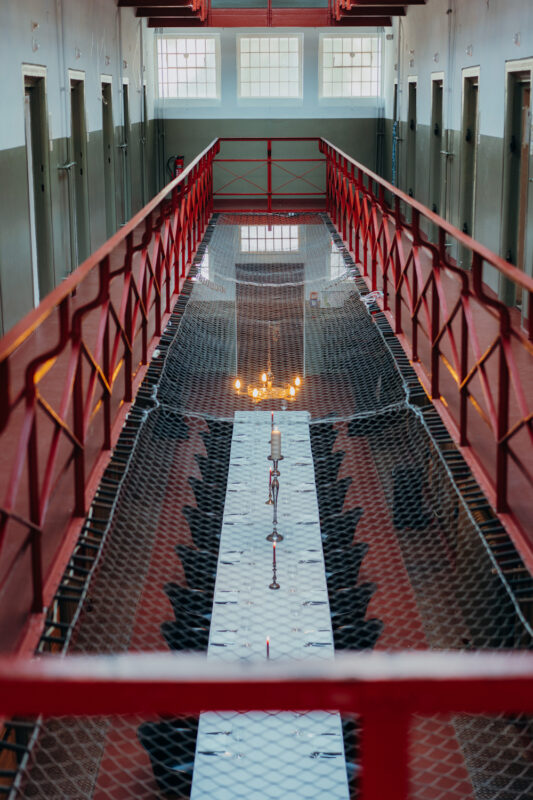
“Knast” is the colloquial German word for prison. And that is what the building was; it was constructed in 1906 in the style of a neo-Renaissance castle next to the district court, with a capacity of 70 cells. The prison building and the district court, which was built at the same time, were designed to blend in with their surroundings architecturally, with their volute gables, towers, and decorative elements.
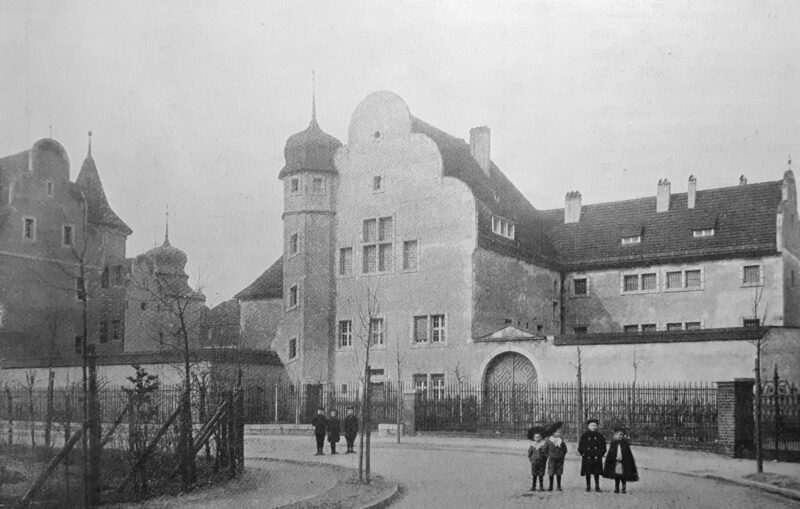
© Bauverwaltung Berlin, Gefängnis in Gross-Lichterfelde, adjusted colours, cropped, CC BY-SA 4.0
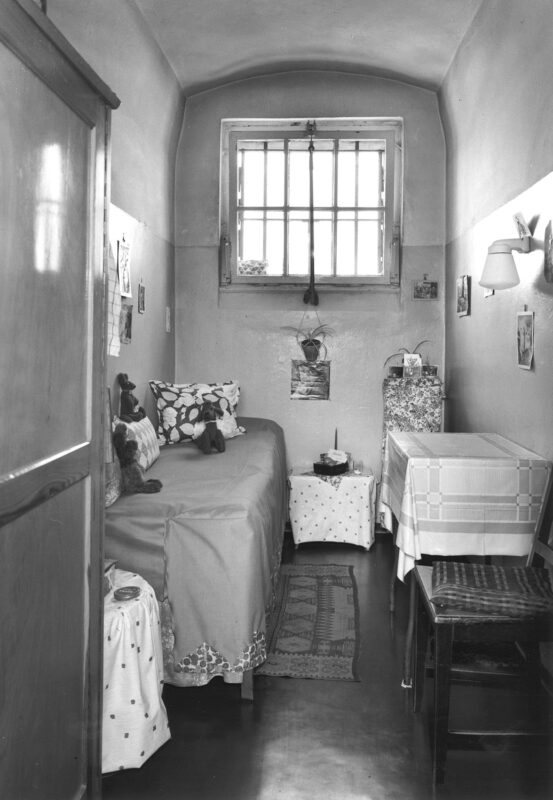
© Soeht7, Zelle-bewohnt 2, CC BY-SA 4.0
This was the intention of the architects Sarkur, Mönnich, and Thoeme; after all, they did not want the residents of the elegant villa colony of Lichterfelde, founded at the end of the 19th century, to be deterred from their building projects by the presence of a prison.
© Florian Kroll
© Florian Kroll
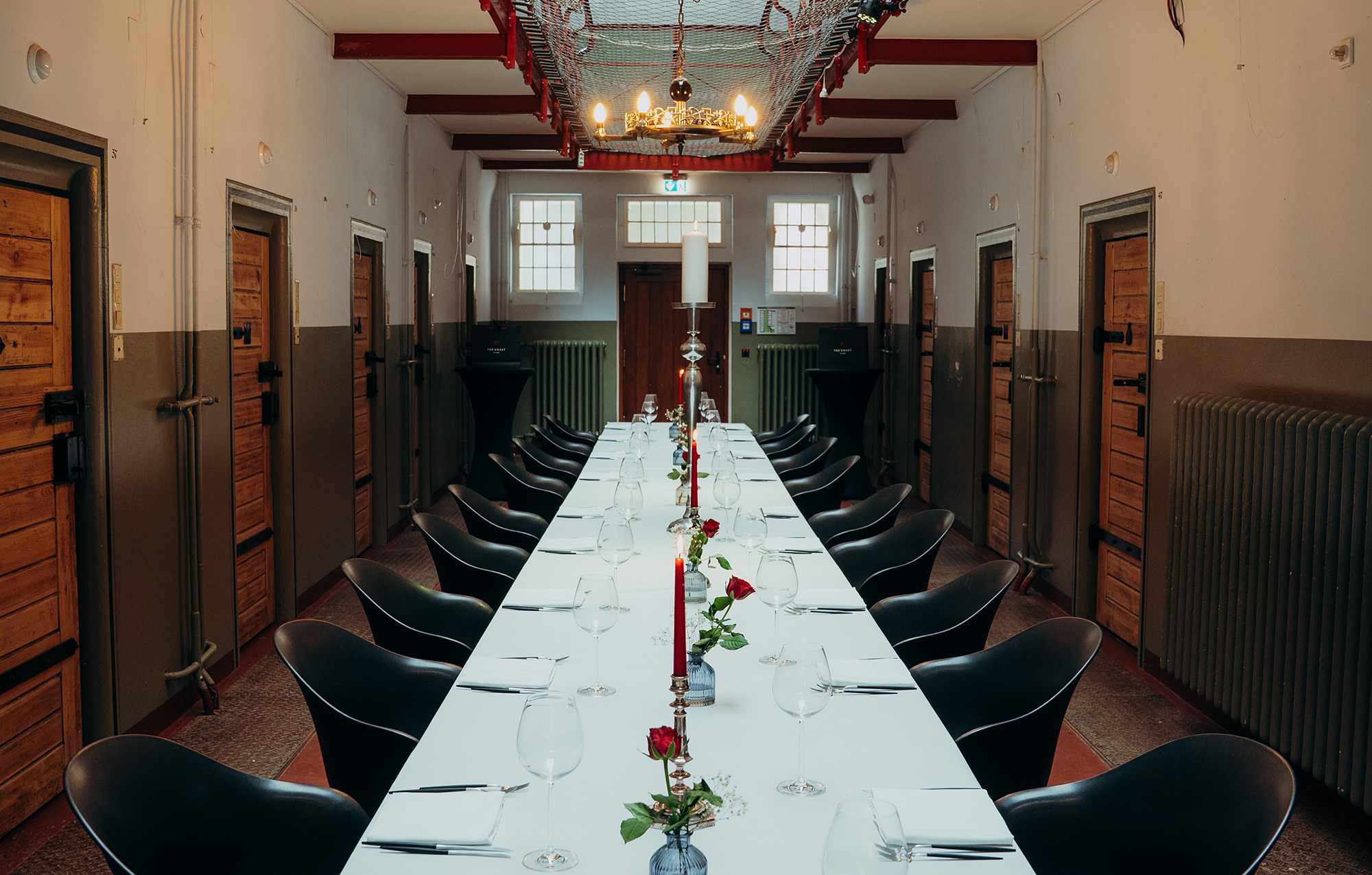
Until 1945, women and men served their sentences in the eight-square-meter cells. After the war, the American military jurisdiction of West Berlin used the prison, and from the mid-1950s onwards, it served as a branch of the women’s prison on Lehrter Strasse. From the mid-1970s onwards, as part of rehabilitation programs, prisoners on day release were housed there and were only locked in their cells at night. Among the most famous was former European boxing champion Bubi Scholz, who shot his wife while drunk. Michael ‘Bommi’ Baumann, co-founder of the terrorist organization “Bewegung 2. Juni” (Movement of June 2), also served part of his prison sentence here.
© Florian Kroll
The founders
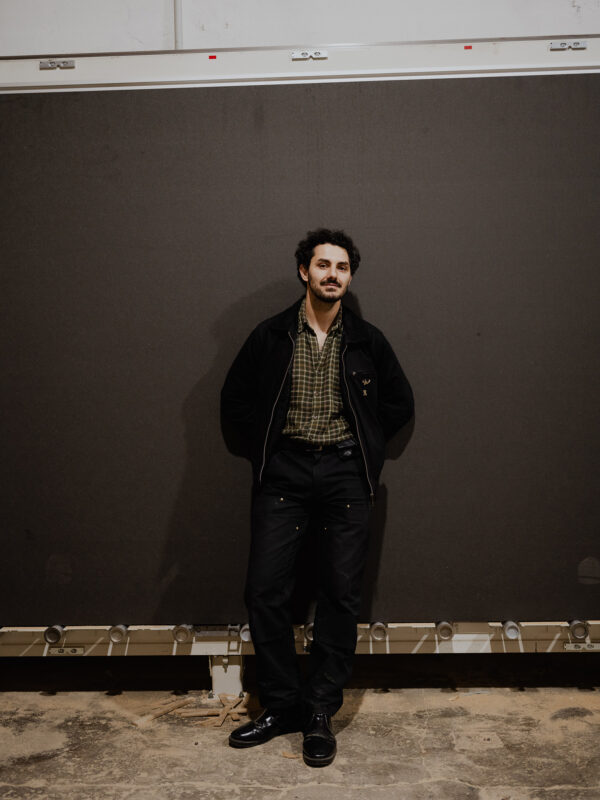
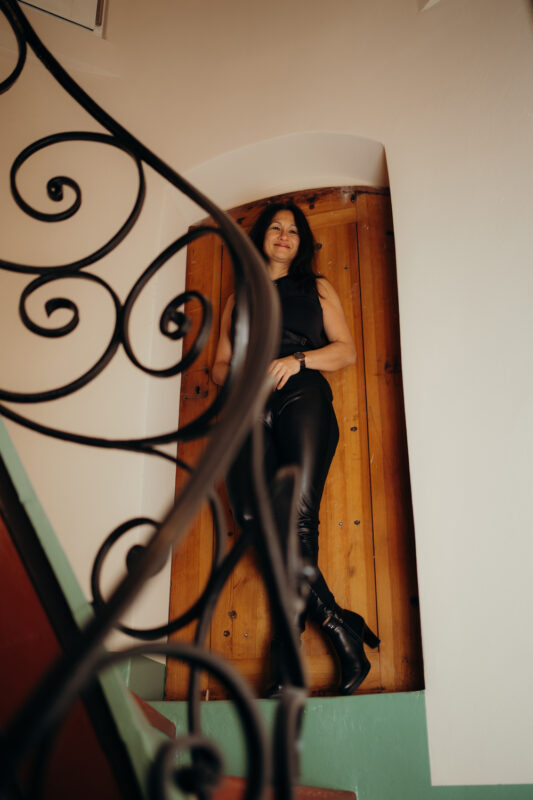
Together with his partner Janina Atmadi, entrepreneur and owner Dr. Joachim Köhrich has already developed Berlin’s Heckmann-Höfe as a creative quarter. In 2017, he acquired the property in Lichterfelde and has since transformed the former prison building and garden piece by piece into today’s cultural location “The Knast,” where art, cuisine, and conviviality come together in a holistic way. In 2024, he received the Federal Prize for Craftsmanship in Monument Preservation for the careful restoration of the prison.
© Florian Kroll
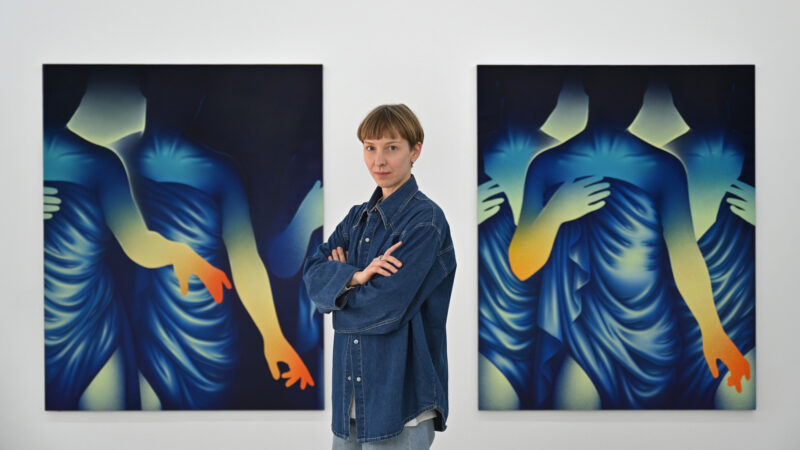
Janina Atmadi, who manages “The Knast,” is particularly fond of the bar in the domed hall, the former chapel of the prison. Instead of hard wooden benches, comfortable armchairs now stand on floorboards from an opera house, creating a cozy atmosphere. The bar is the new living room in Lichterfelde (but only for those aged 18 and over). But plans are even bigger: The aim is to develop “The Knast” into a sophisticated “hideaway” for international guests who want to treat themselves to a little more peace and quiet in the countryside, far away from the hustle and bustle of the German capital. The small, exquisite 13-room boutique hotel in the former cell block is in the planning stages and is now scheduled to open in 2026.
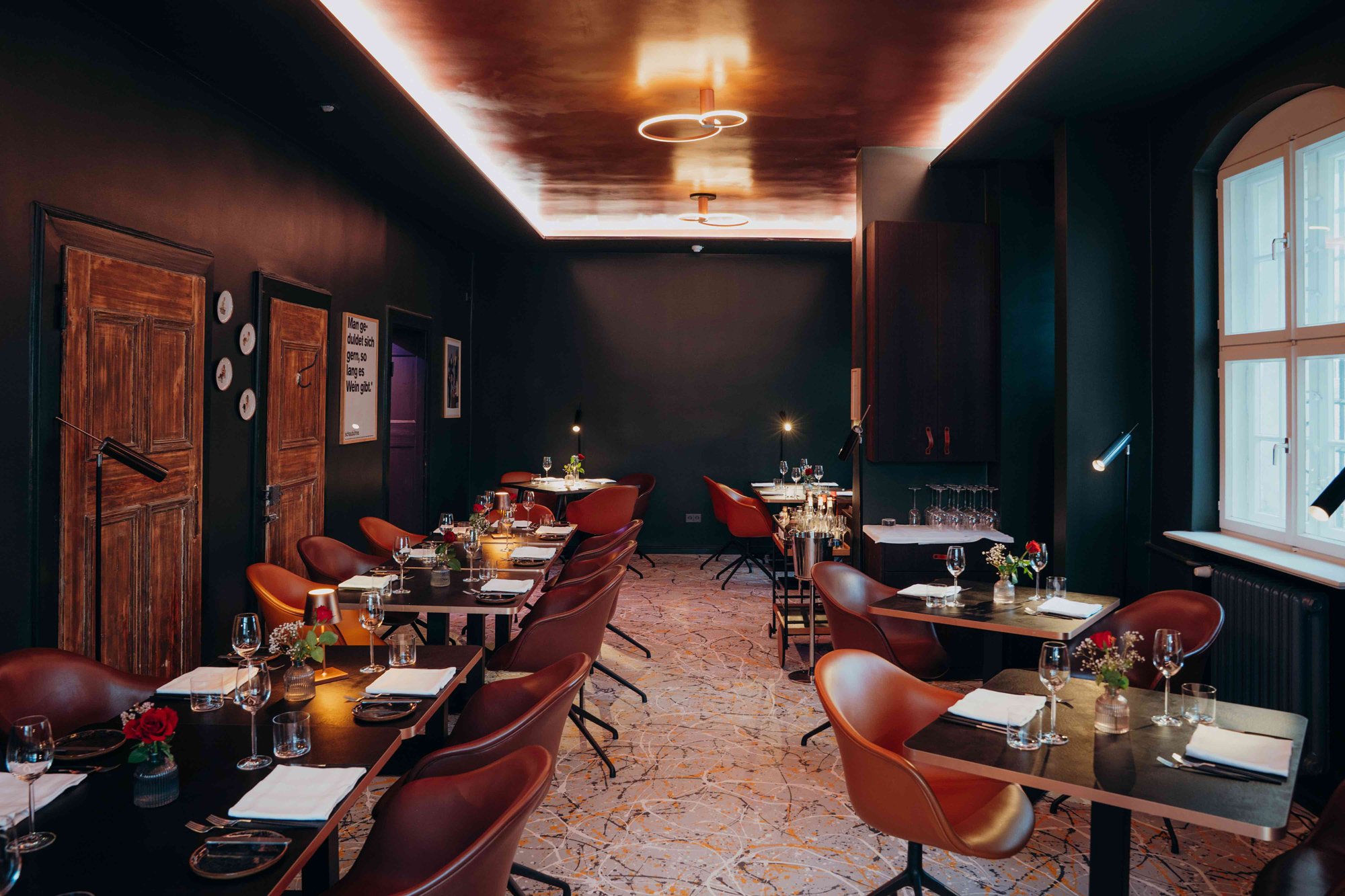
Fine dining in a former women’s prison
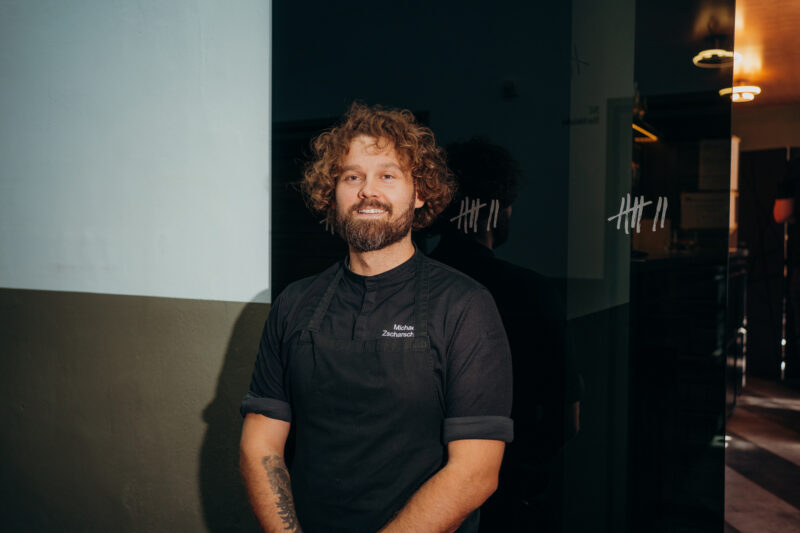
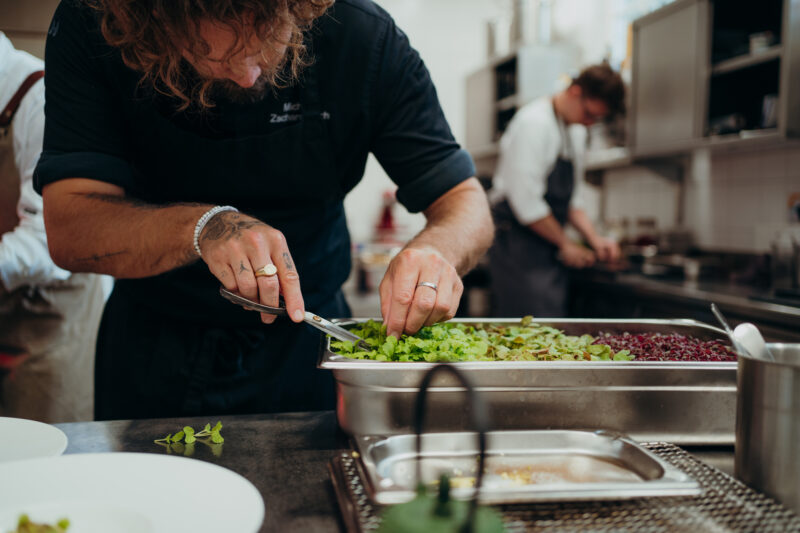
Michael Zscharschuch has been the new head chef at THE KNAST since 2025. The 33-year-old left Garmisch-Partenkirchen to give free rein to his creativity in the restaurant and develop new ideas together with the team.
Zscharschuch was previously head chef at Restaurant 4Eck in Garmisch-Partenkirchen. Other stages in his career included the position of sous chef at the Italian Retreat Restaurant at Schloss Elmau and at Hotel Reindl’s Partenkirchner Hof, where he also completed his training with Marianne Holzinger.
© Florian Kroll
© Florian Kroll
Born in Garmisch-Partenkirchen, he discovered his passion for cooking as a child. His love of experimentation has grown ever since. Zscharschuch has mastered French cooking techniques and has a penchant for Asian cuisine. This open-minded approach allows him to surprise with flavors, textures, and combinations.
© Florian Kroll
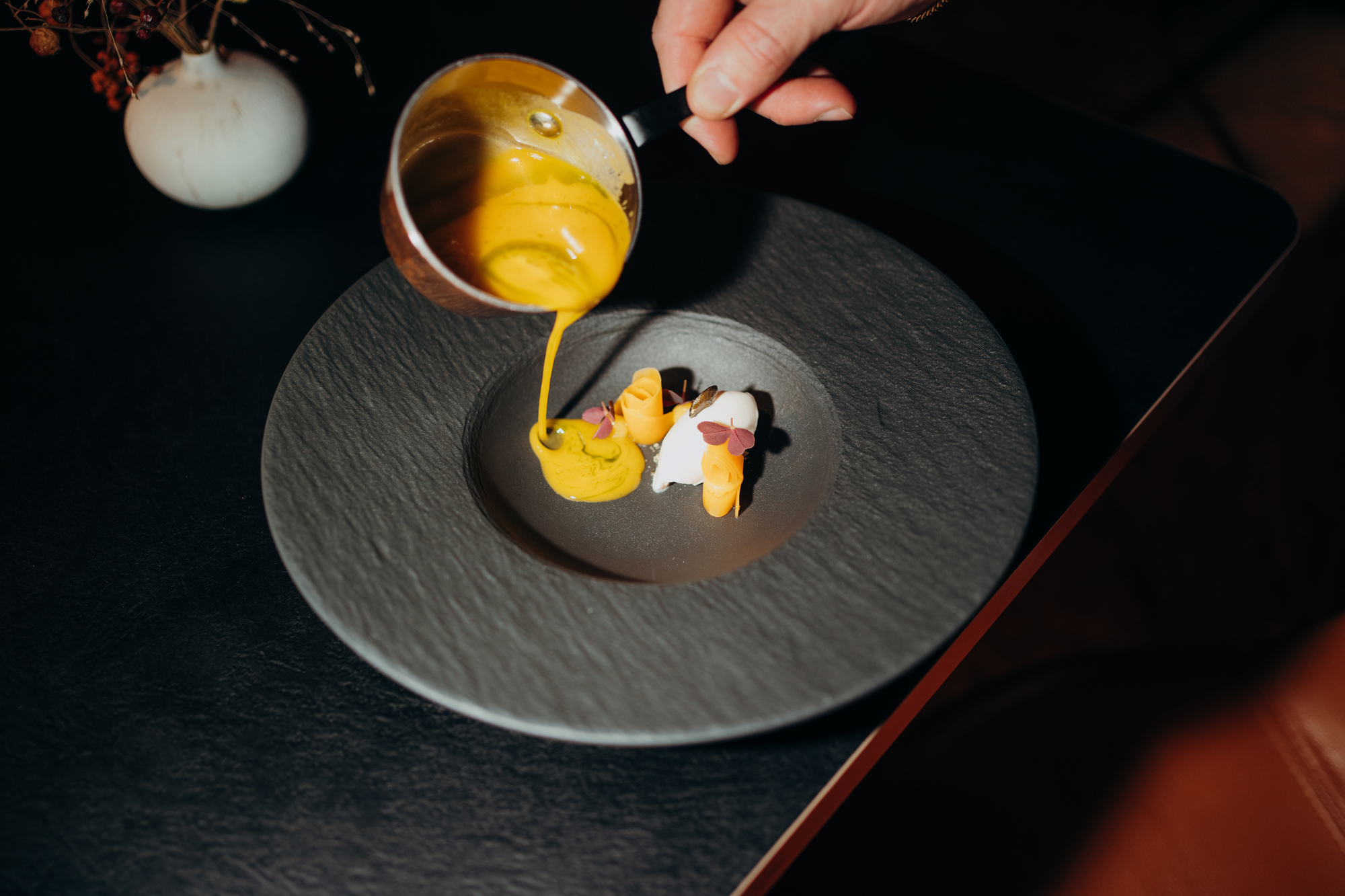
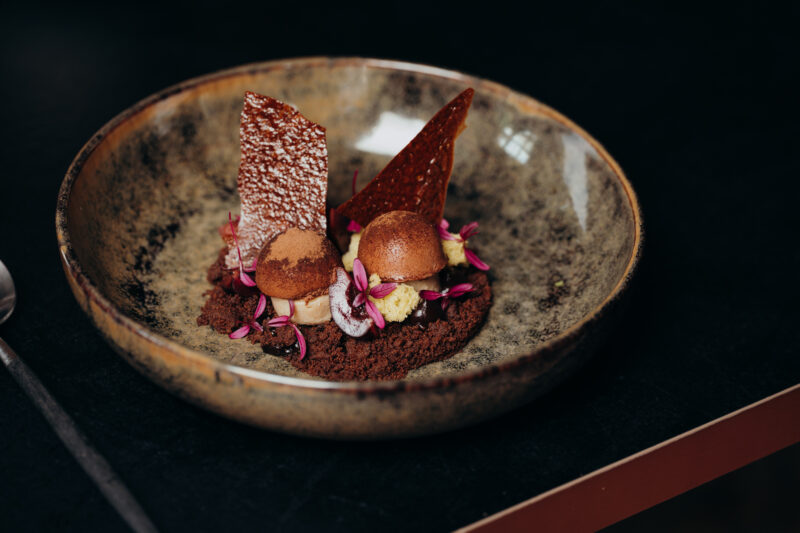
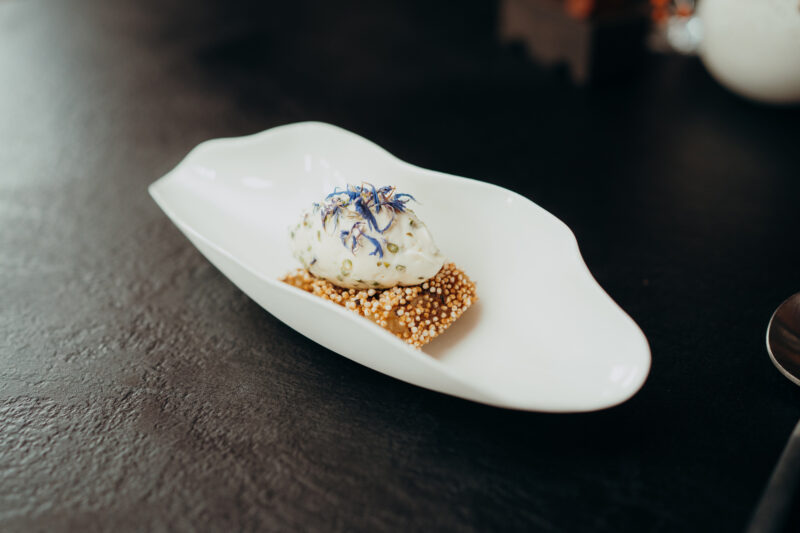
The first menu at The Knast under the direction of Michael Zscharschuch includes dishes such as char with elderberry, radish, gin, and whey, or Werdenfelser venison with root vegetables, sesame oil, and sea buckthorn. For dessert, there is a surprising combination of porcini mushrooms, sour cherries, and cocoa.
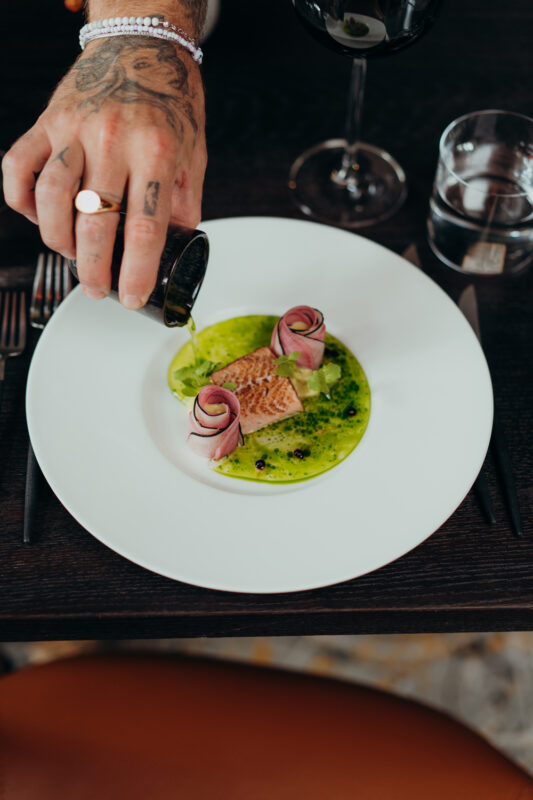
© Florian Kroll
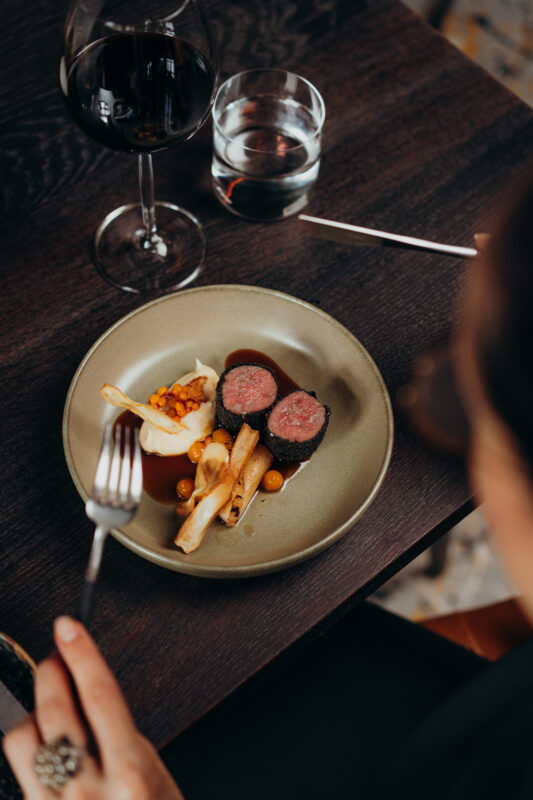
© Florian Kroll
Regionality and high quality standards are very important to Michael Zarschuch. That’s why he is gradually building up his network of regional suppliers and maintaining close contacts. He visits his partners regularly, as the origin of the products, the welfare of the animals, and the type of feed are important to him.
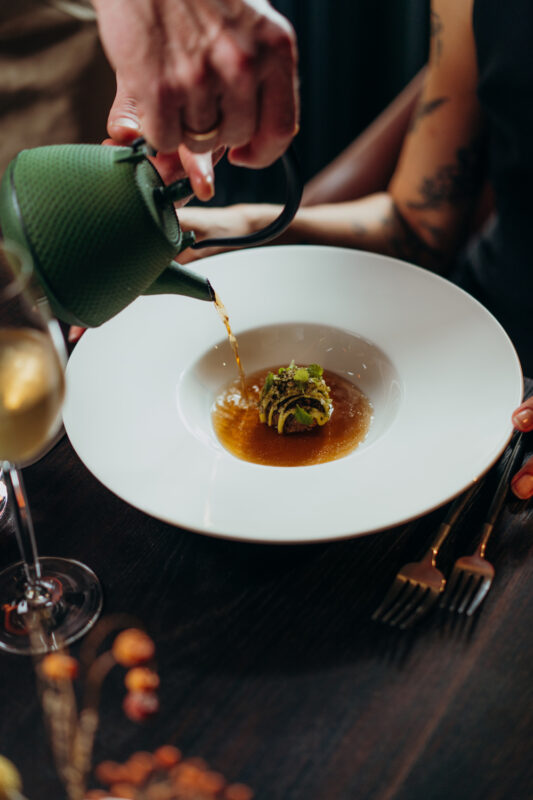
© Florian Kroll
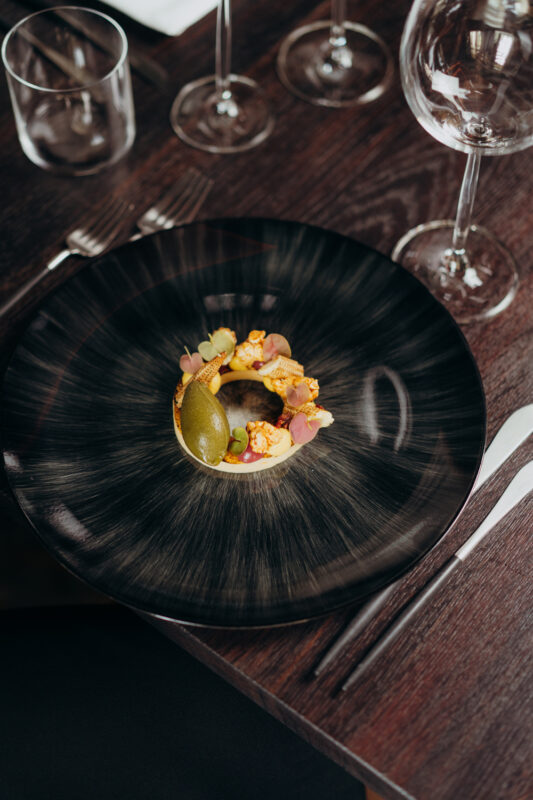
© Florian Kroll
Zarschuch does not want to always use only the most expensive parts of an animal, such as fillet or loin. His approach is “nose to tail”—everything should be used. The 33-year-old does not suffer from a lack of self-confidence and wants to cook his way to a Michelin star.
© Florian Kroll
© Florian Kroll
John Porath is responsible for the wine pairings at “The Knast.” This empathetic calming influence gained experience at the Michelin-starred restaurant “Fischers Fritz” and worked at the 3-star restaurant “De Librije” in Zwolle, Netherlands. There are around 200 items on the menu. The 35-year-old particularly appreciates small estates from Germany and Austria, ranging from single vineyard wines to Grand Crus, but also from France, Spain, Italy, and Portugal, and the same applies to red wines.
© Florian Kroll
A hidden bar in the main wing
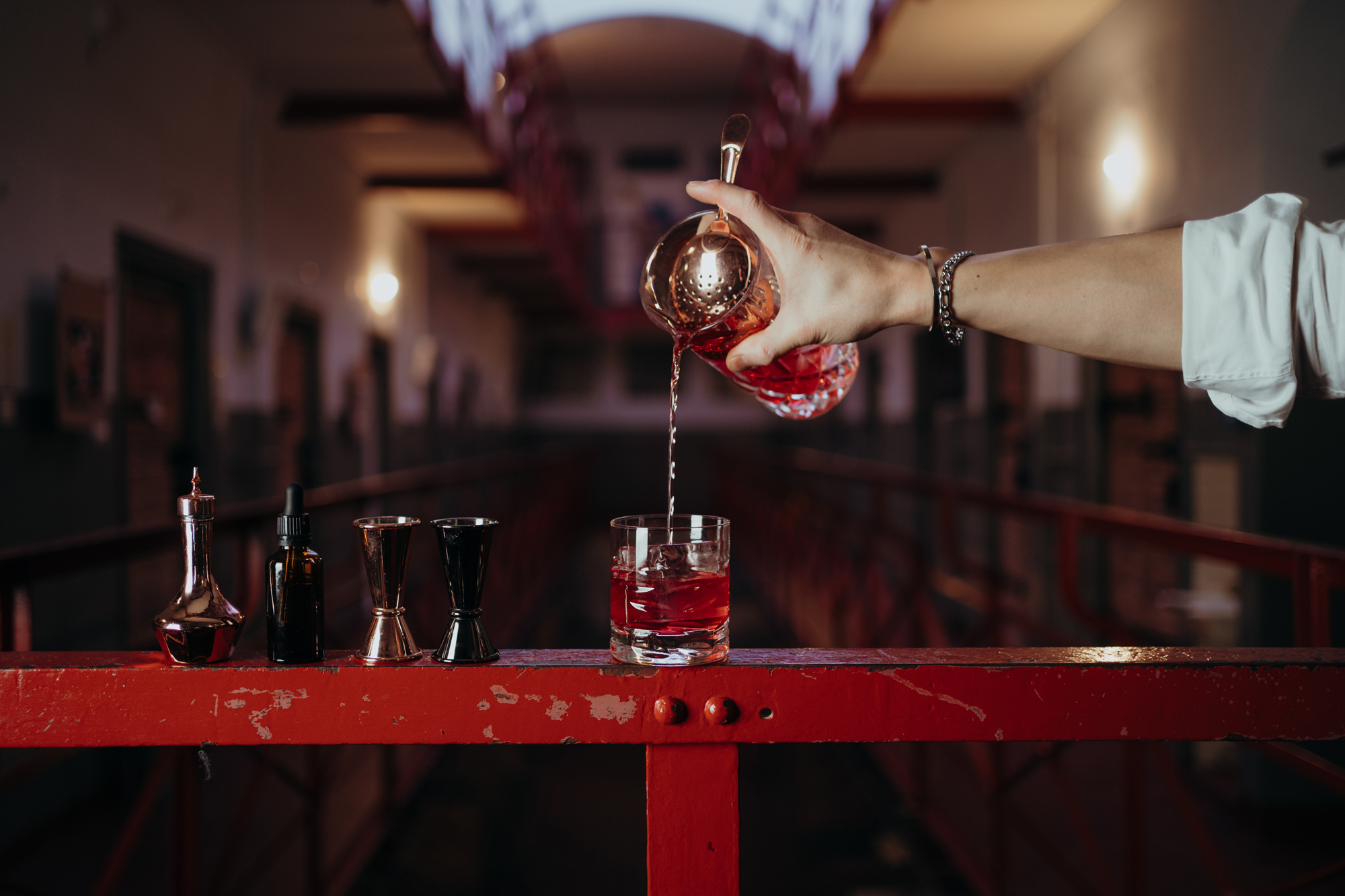
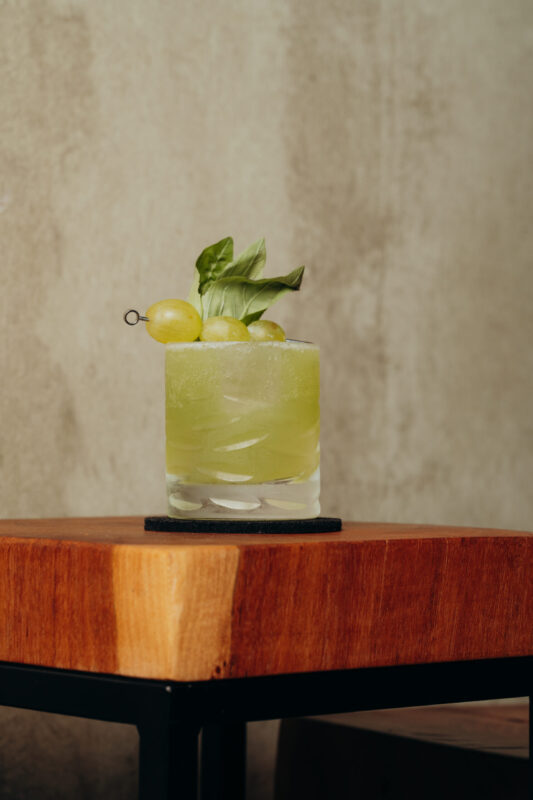
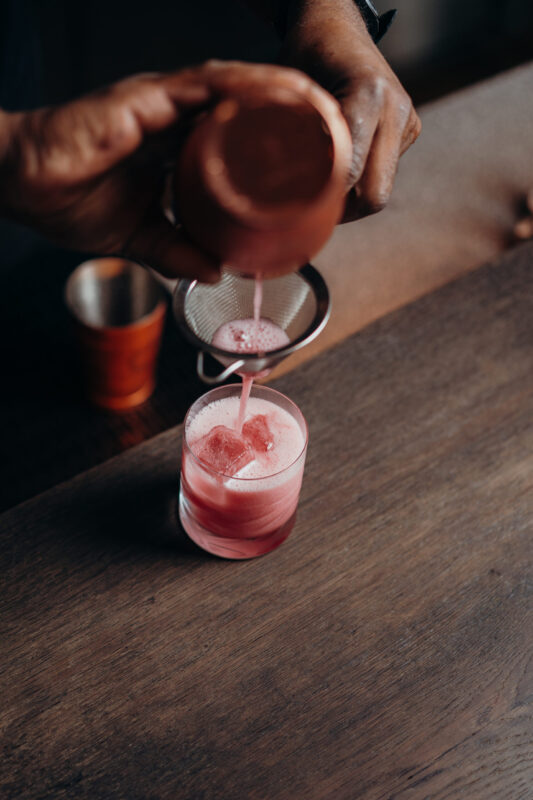
Janina Atmadi adds an extra incentive to visit with the bar in the former prayer room, a chapel-like space on the second floor above the restaurant. Photography is strictly prohibited here. The bar serves expertly mixed drinks ranging from classics such as Negroni and Pornstar Martini to the trendy Espresso Martini. The signature cocktails, such as Heavy Talk, with Earl Grey vodka, lime, sugar, mint, ginger beer, and vegan egg white, or Godwin’s Cucumber, with Hendrick’s gin, lemon, elderflower, homemade cucumber syrup, and apple juice, are very popular.
© Florian Kroll
© Florian Kroll
There is a strict ban on photography in the bar, which is why there are no photos to be seen here (even though the bar is surprisingly reminiscent of the hedonistic burlesque establishments of 1920s Berlin). The main wing also houses studios for LGTBQI-artists in former prison cells. The former prison complex has been transformed into a cultural center with a regular program of new and surprising events: in addition to sensual burlesque shows, the program also includes performances (bondage art or cabaret for ex.), art exhibitions, various concerts and Wine & Cheese events in the summertime. Upstairs in the building the secret bar, in the cell block the prison cells, downstairs the restaurant, and in front of and behind the building the large garden, all located in the picturesque villa district of Berlin-Lichterfelde — such a special blend can no longer be found anywhere else, even in Berlin.
Details
Opening hours
Restaurant:
Tuesday to Saturday 5 p.m. to 11 p.m. (last order 9.15 p.m.),
Wine & Cheese from 3 p.m. to 5 p.m.
Bar:
Tuesday to Thursday from 6 p.m. to 11 p.m.
Friday and Saturday from 6 p.m. to 1 a.m.
Website
© Florian Kroll