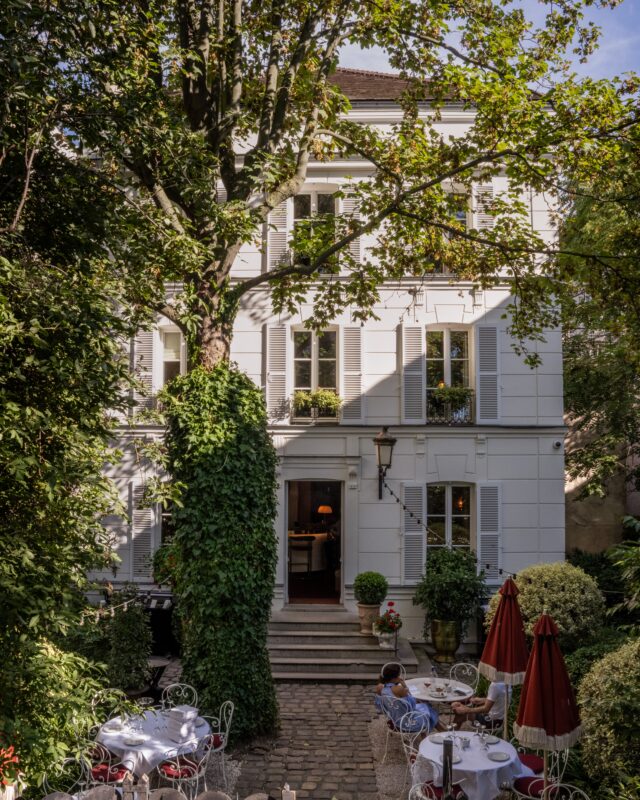
Arrival feels like a slight adjustment of perspective. Behind the gate and driveway, Paris does not disappear, but it steps back. Gravel, garden, façade, then that oddly unurban calm. You are not entering a hotel in the usual sense so much as a house with its own temperature. The first impression is not spectacle but concentration: ample space, clear intent, a discreet pleasure in form.
The location
Saint James Paris sits in the elegant 16th arrondissement, a few minutes from Porte Dauphine, Avenue Foch and Avenue Victor Hugo. Porte Dauphine metro is around 200 metres away, the Avenue Foch RER C stop about 350 metres; by car, the approach runs through calm streets between the Bois de Boulogne and Trocadéro.

From outside, the address reads like a withdrawn city mansion: neoclassical symmetry, pale stone, a monumental gate, and private gardens that soften the usual Parisian street rhythm. That contrast is what makes the first sight so persuasive: you are in Paris, yet the house stages arrival as a small escape from it.
Backstory
The story begins in 1892. The residence was built for the Thiers Foundation on the site of Paris’s first balloon landing field. For decades, scholarship students lived here; the building was less a backdrop for display than a place of talent, discipline and ascent.

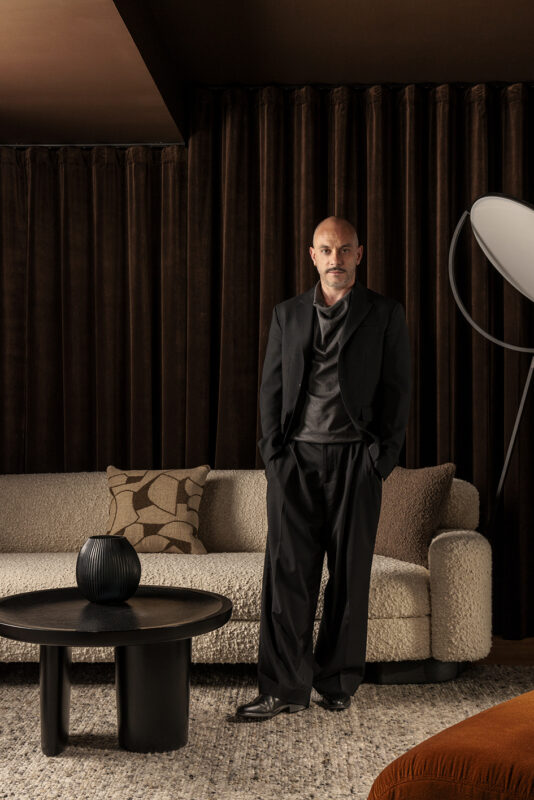
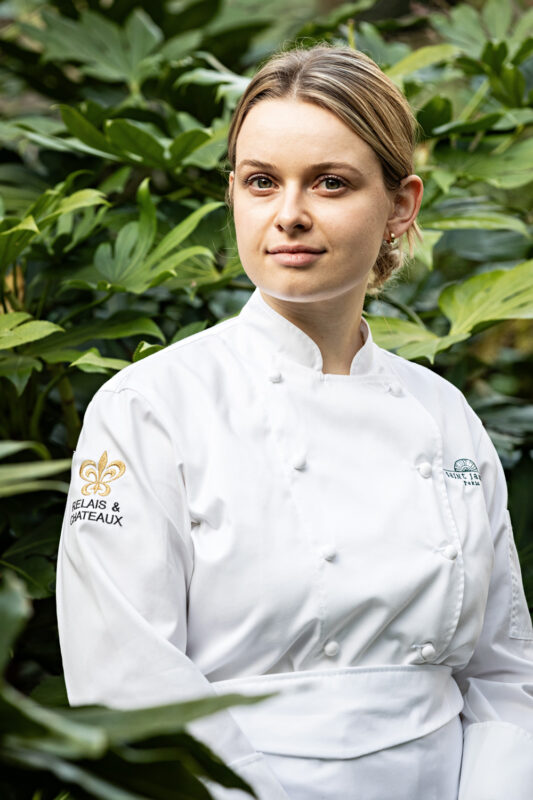
In the 1980s, the Saint James Club moved in, bringing with it that London club idea which, in Paris, immediately acquires a slightly different temperature: less tweed, more esprit. Since 1991, the estate has operated as hotel and club, and since 2011 it has been part of Relais & Châteaux. The current signature belongs to designer Laura Gonzalez, who reshaped the interiors and atmosphere in 2021 without erasing the building’s historical gravity. In the kitchen today is Grégory Garimbay, whose exact, nature-led cooking gives the house a culinary profile to match.
Interior & architecture
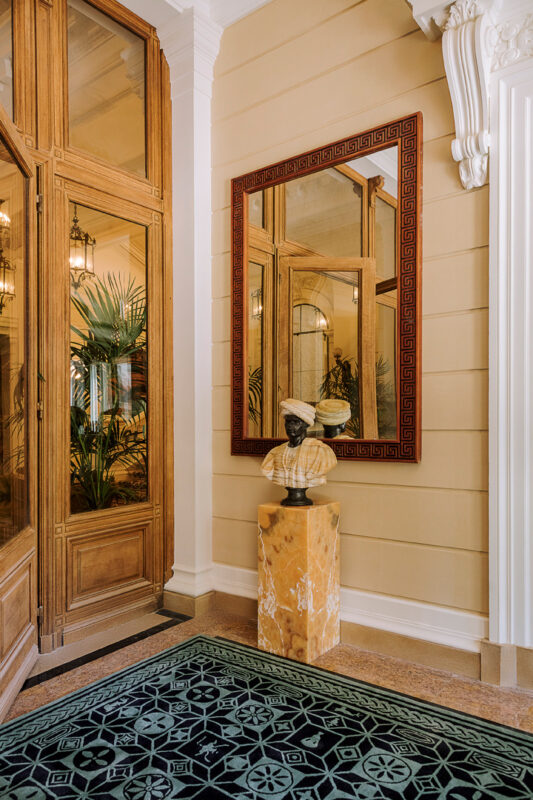
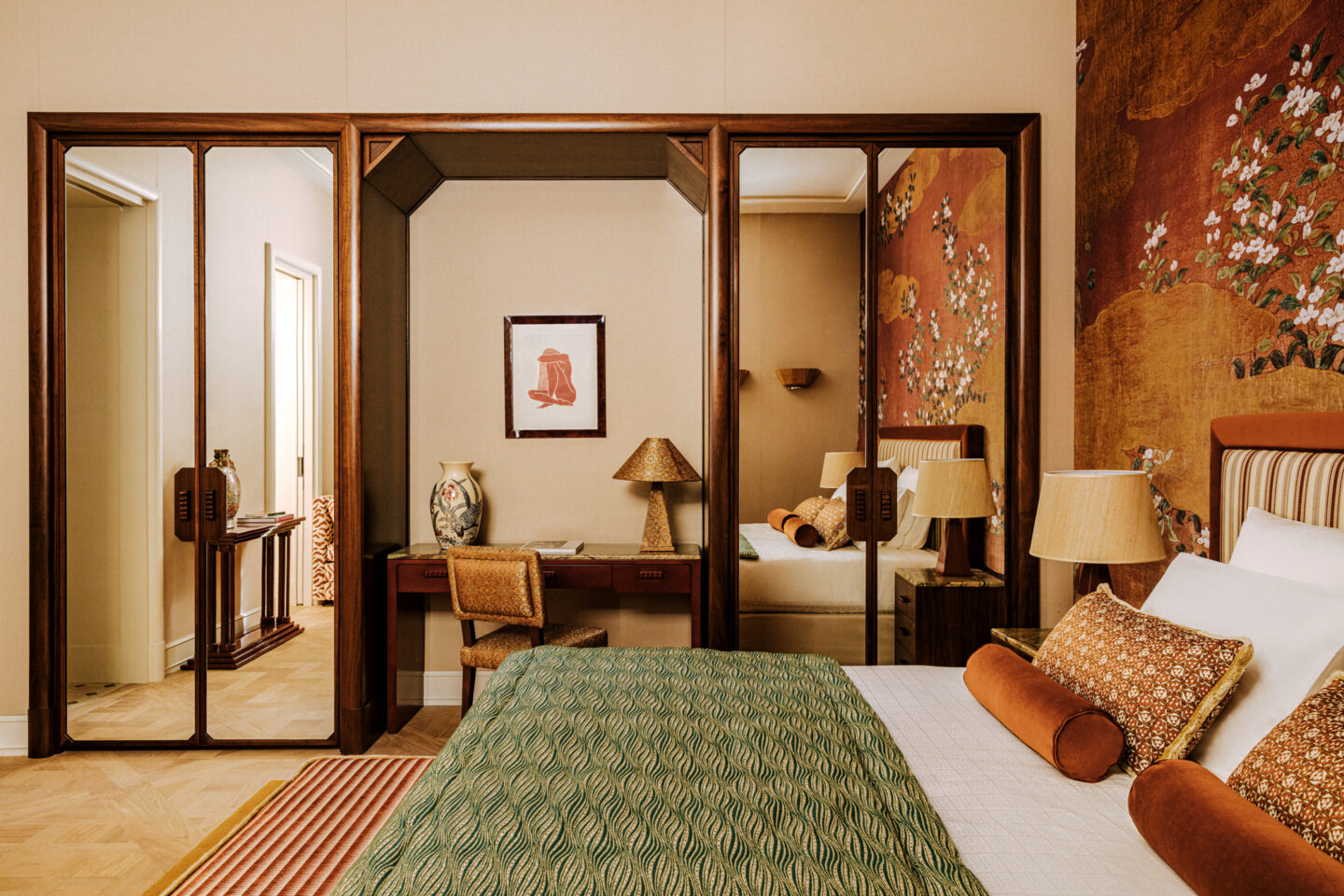
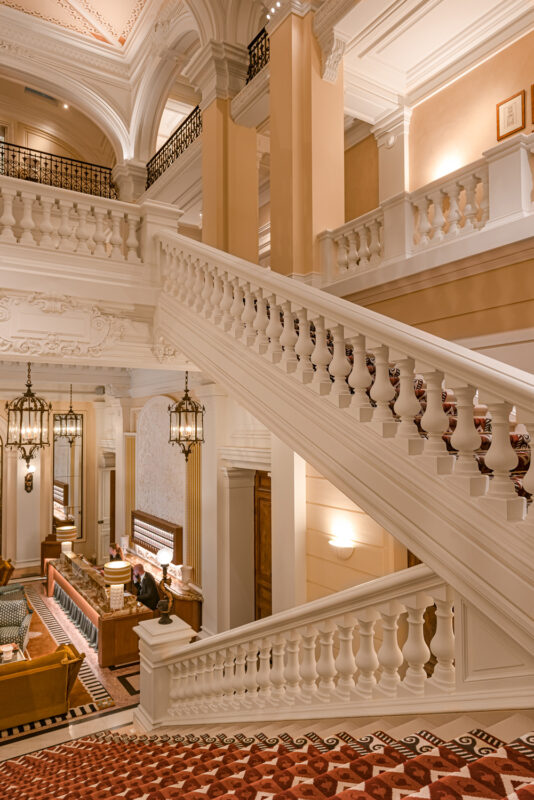
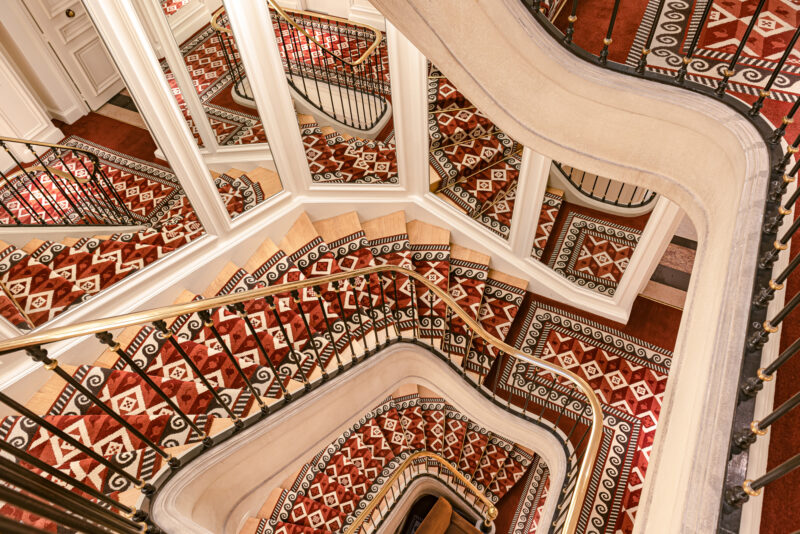
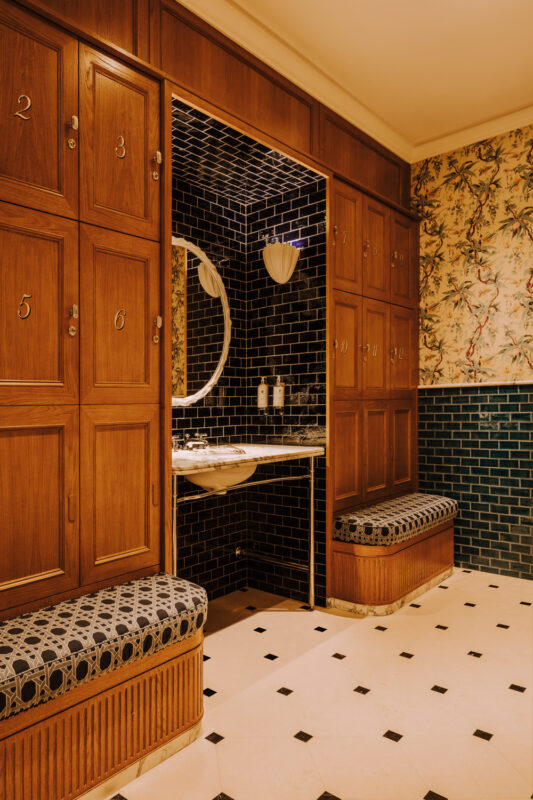
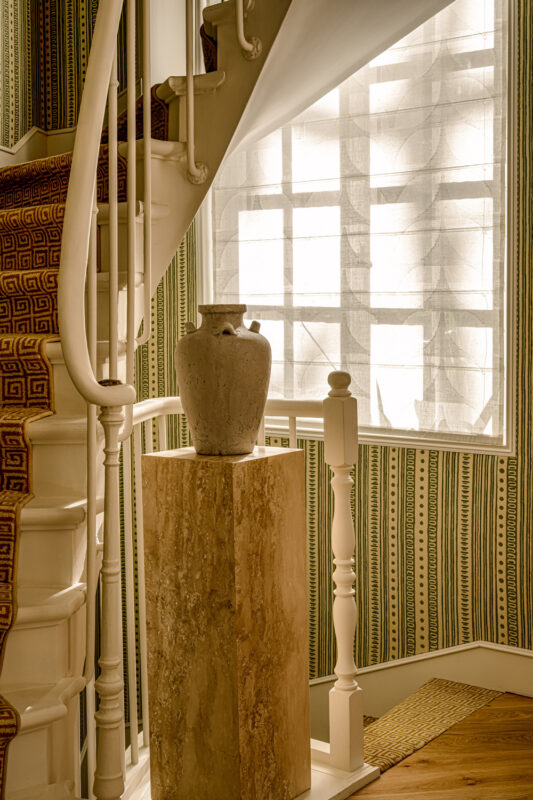
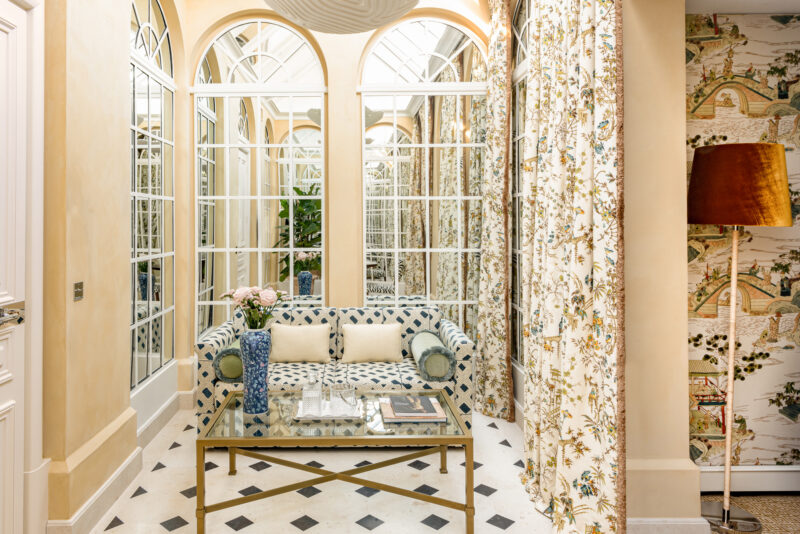
Architecturally, Saint James Paris thrives on the productive tension between château, hôtel particulier and private club. The neoclassical shell imposes order; inside, Laura Gonzalez loosens that rigour with chinoiserie notes, Art Deco echoes, mirrors, fabrics, fringe, lacquered surfaces and a precise feel for that Parisian blend of grandeur and privacy that collapses quickly when it tries too hard.

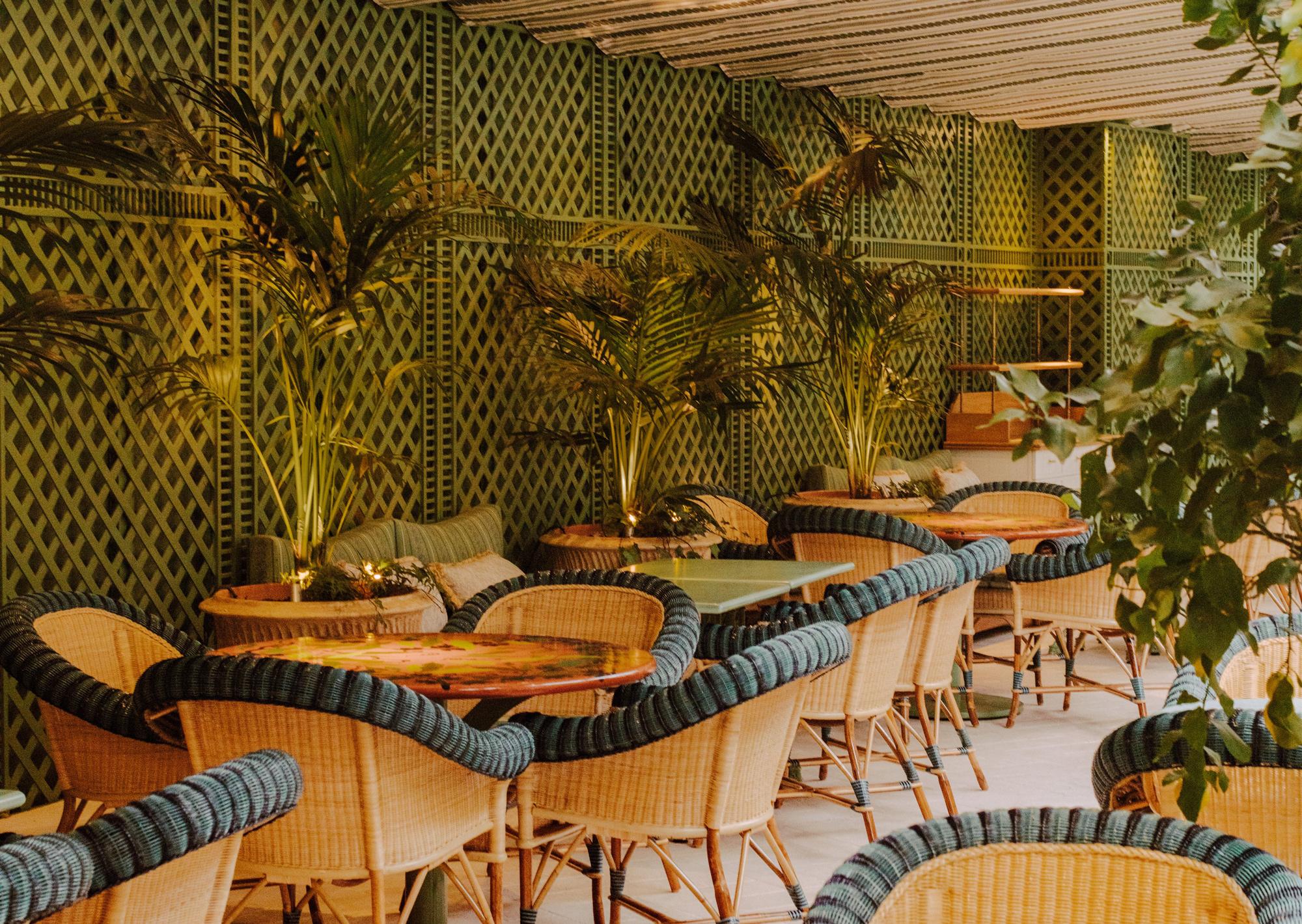
Here it does not try too hard. Mouldings, woodwork, fireplaces, black-and-beige tiles and large windows remain legible; wallpapers, textiles and furniture add warmth rather than museum hush. In the restaurant, Auduze vases planted with kentias appear; throughout the house, nature returns as a cultivated counterforce to the city.

The gardens, too, were reimagined: Xavier de Chirac created a promenade-like landscape with shifting scents and colours across the year. The result is not a historical filter, but a very controlled form of opulence.
A look inside
According to Relais & Châteaux, the house offers 51 rooms, suites and villas; on the hotel’s own website, pavilions and serviced apartments in a separate villa complete the picture. The public spaces follow the logic of a large private residence: lobby, library bar, terrace, garden, restaurant, club, spa. That alone softens the usual hotel logistics.
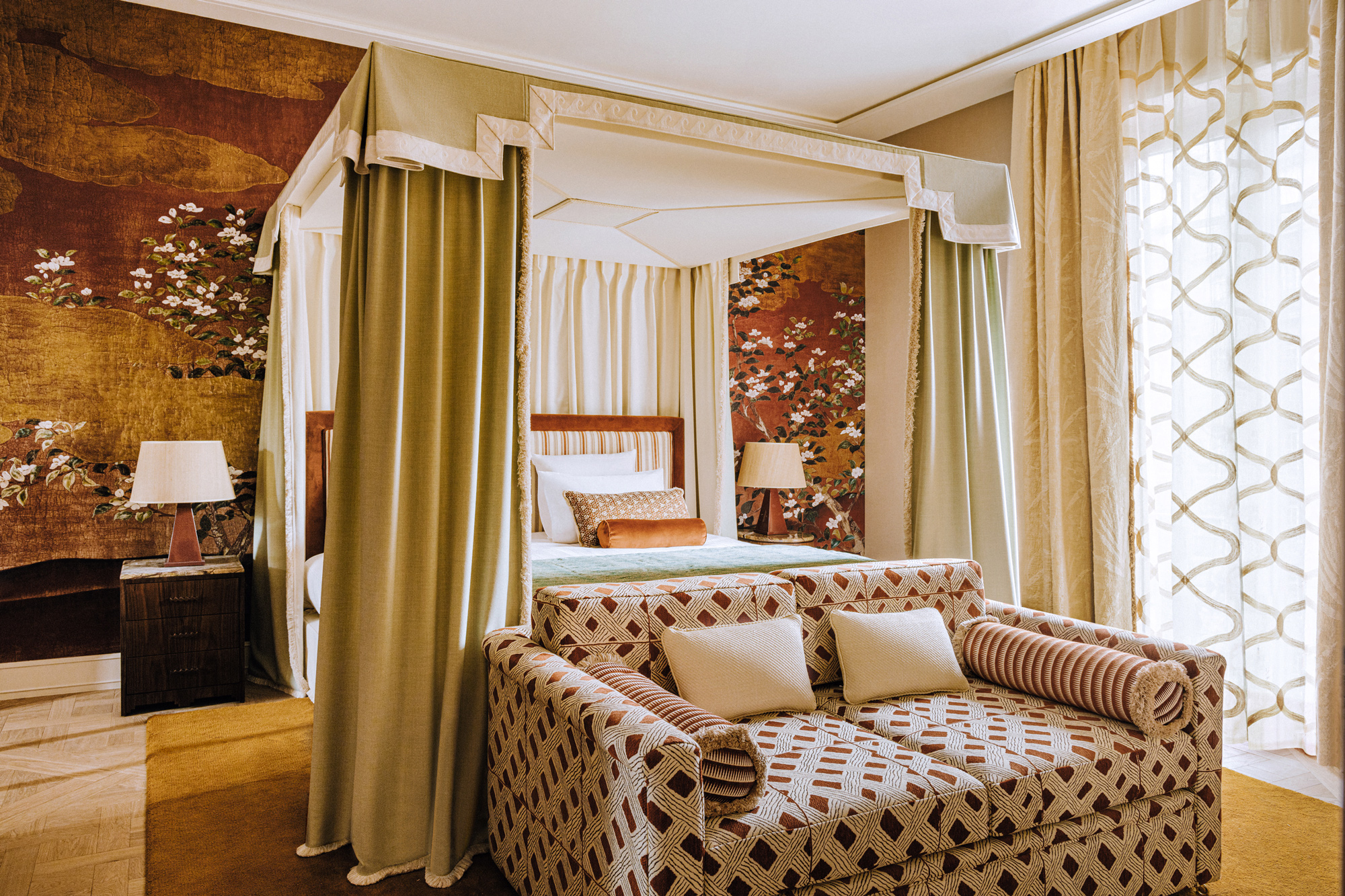
Accommodation ranges from Boudoir, Superior and Deluxe rooms to Junior Suite, Suite and Prestige Suite; added to these are Pavillon Élise and Pavillon Félicie and one private villa with four serviced apartments. Many rooms include separate sitting areas; some unfold over two levels or open under glass roofs like small winter gardens.
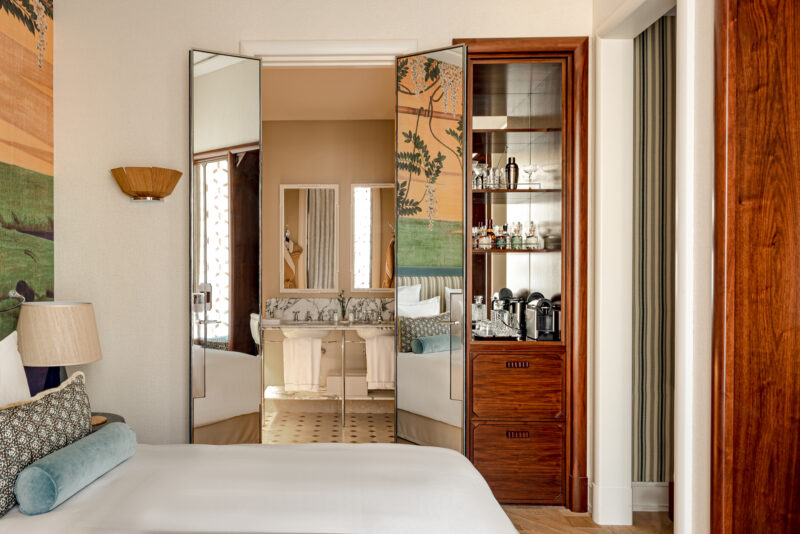
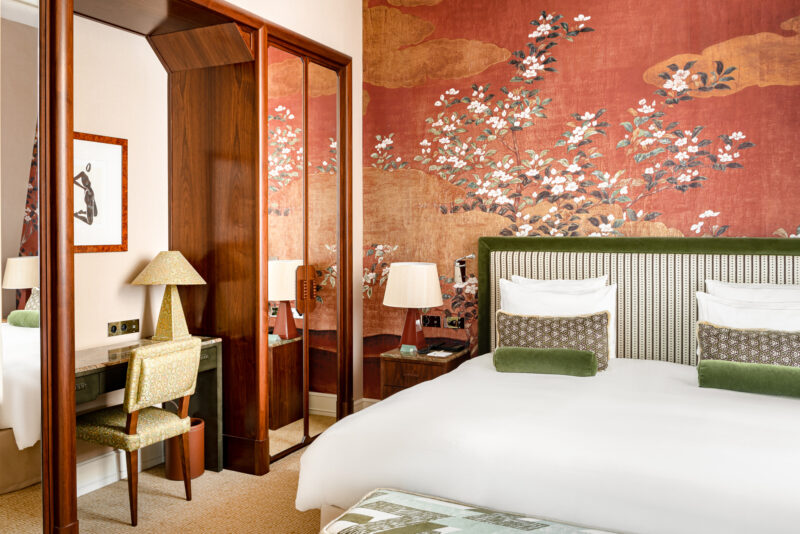
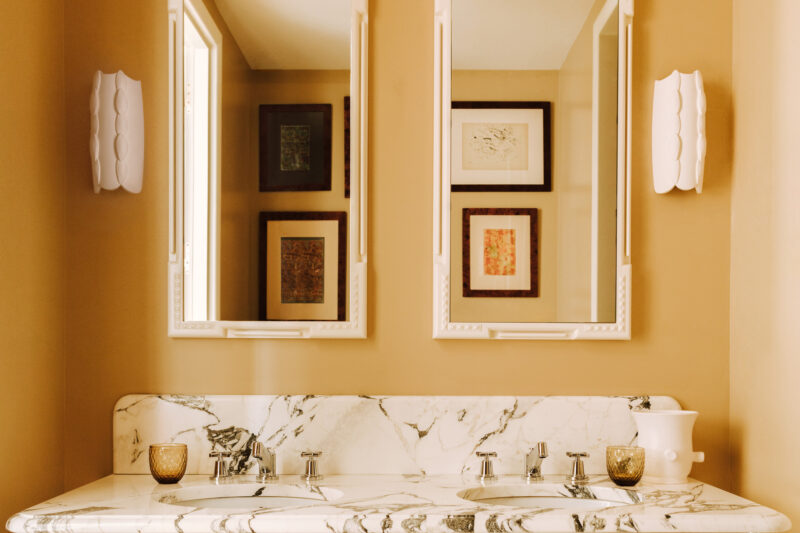
Marble bathrooms with tub or walk-in shower, Guerlain amenities, Marshall speakers, good beds and intelligent proportions: comfort here is not displayed, but well organised. Even the larger units feel lived in rather than decorated.
Culinary
The culinary centre is Bellefeuille, the house’s gourmet restaurant, awarded one Michelin star. Chef Grégory Garimbay cooks seasonally and with a distinctly nature-oriented hand; the Michelin Guide notes his whole-ingredient approach, his restrained use of meat, and the way kitchen waste is turned into compost.

This reads less as a moral pose than as a precise kitchen logic. He is joined by deputy chef Maxime Nourrissat, pastry chef Coline Doussin, restaurant director Baptiste Lataillade and head sommelier Arnaud Fatôme.
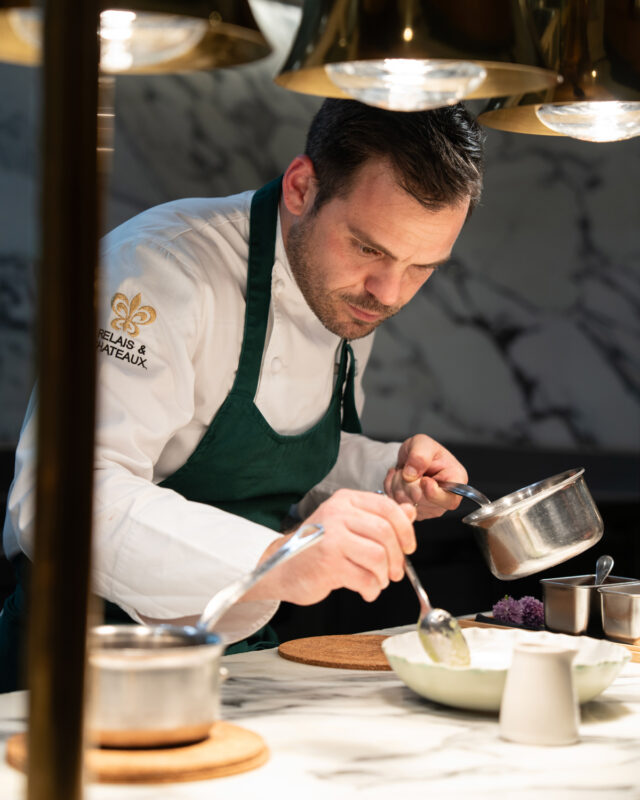
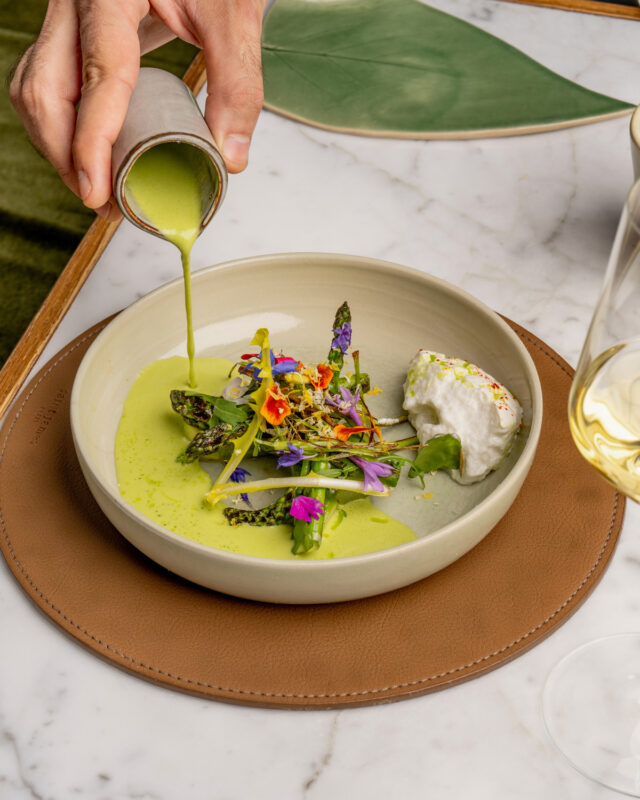
The room, also shaped by Laura Gonzalez, translates the garden theme into interior terms: winter-garden atmosphere, mouldings, woodwork, black-and-beige tiles, fireplace, mirror, greenery.

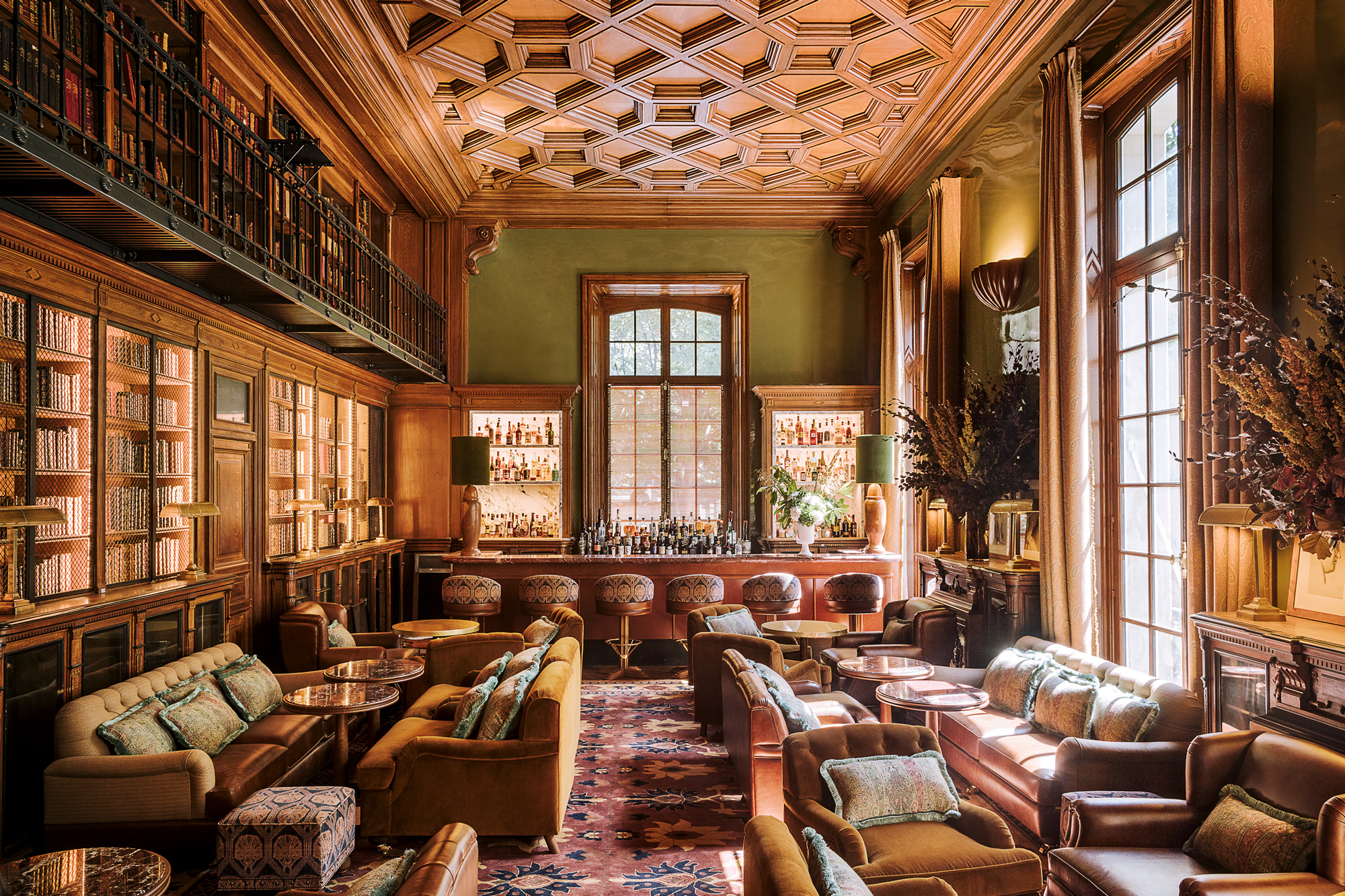
For something less formal, move to the terrace or the storied library bar. Tea Time is also served there, with sweet and savoury work by Coline Doussin on weekends. Breakfast is taken in the restaurant; room service runs around the clock. The house is not fixed to one culinary mode, but to several highly considered ones.
Wellness & Relaxation
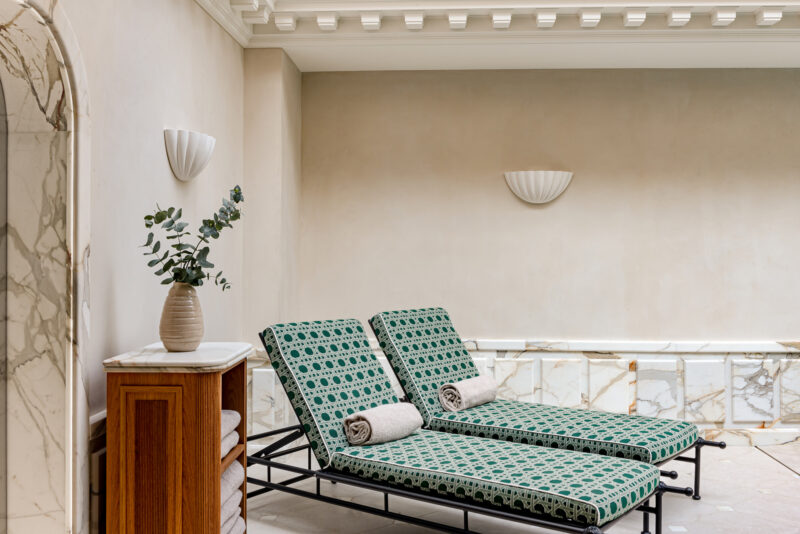
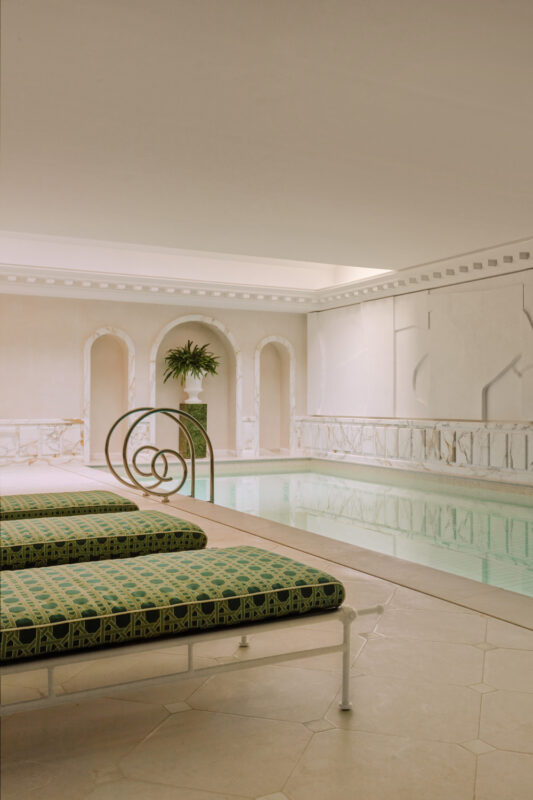
The Guerlain spa is not an appendage but a world of its own across more than 400 square metres. Three treatment rooms, including one double room, connect to fitness and a wellness area that feels unexpectedly generous.
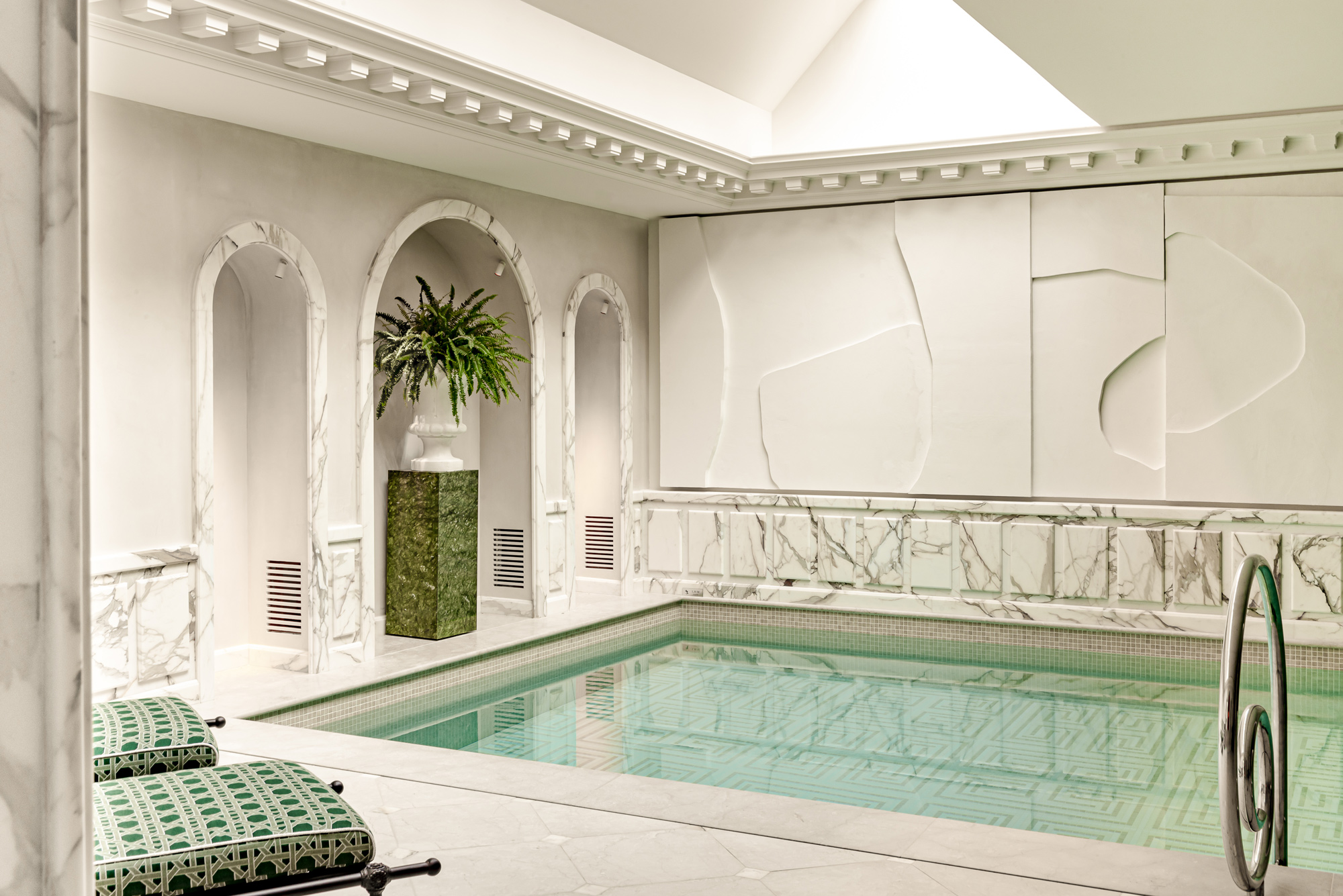
Especially strong is the descent: a Burgundy-stone staircase, vaulted spaces, Greco-Roman details, and a 15-metre bas-relief by François Mascarello beside the pool. Above the water, the eye lifts towards the sky; nearby are whirlpool, hammam and sauna. All this could easily tip into excess, yet here it remains surprisingly composed. Relaxation happens not in full spa-theatre mode, but in a carefully dimmed version of it. Those wanting movement will also find a compact, well-equipped gym and private coaching on request.

Surrounding area
The immediate surroundings show the 16th arrondissement at its best: less tourist overdrive, more cultivated self-possession. Very close by are the Fondation Louis Vuitton in the Bois de Boulogne, Frank Gehry’s glass sailing ship for major exhibitions, and the Jardin d’Acclimatation, now more elegant city park than nostalgia machine for children. Equally worth the detour is the Musée Marmottan Monet on rue Louis-Boilly, one of those houses you do not simply stumble upon and then do not forget.

Towards Trocadéro and Iéna, Palais de Tokyo, Palais Galliera and, depending on reopening, the Musée Guimet offer strong addresses for contemporary art, fashion and non-European collections. Those who prefer sitting to rushing should head to Théâtre Le Ranelagh with its wood-panelled auditorium. Avenue Victor Hugo works well enough for shopping; more interesting are the smaller delicatessens and bookshops in Passy. The area’s deeper charm lies in its controlled quiet. This is not a neighbourhood of happy accident so much as one of good order, where quality rarely needs to raise its voice.
Activities
For art-minded guests: start in the morning with the Fondation Louis Vuitton, then continue to Palais de Tokyo; together they make a persuasive contrast between architectural bravura and rougher contemporary energy. For a more intimate scale, choose the Musée Marmottan Monet and follow it with a walk through the quieter streets of La Muette. For flâneurs interested in urban texture: walk from Porte Dauphine via Avenue Foch to Trocadéro; this is Paris as a landscape of wealth, but also as a lesson in scale, façade psychology and old power set in carefully maintained stone.
For restoration seekers: a few lengths in the spa pool, then out into the Bois de Boulogne. Not radically original, but very effective. Families, or travellers with a light appetite for amusement, can spend time in the Jardin d’Acclimatation, which is more intelligently curated than its name suggests. For gourmets: Bellefeuille at lunch, Tea Time in the afternoon, the library bar in the evening. Those dining beyond the hotel will find a dense, discreetly polished restaurant scene in the wider 16th and towards the 17th.
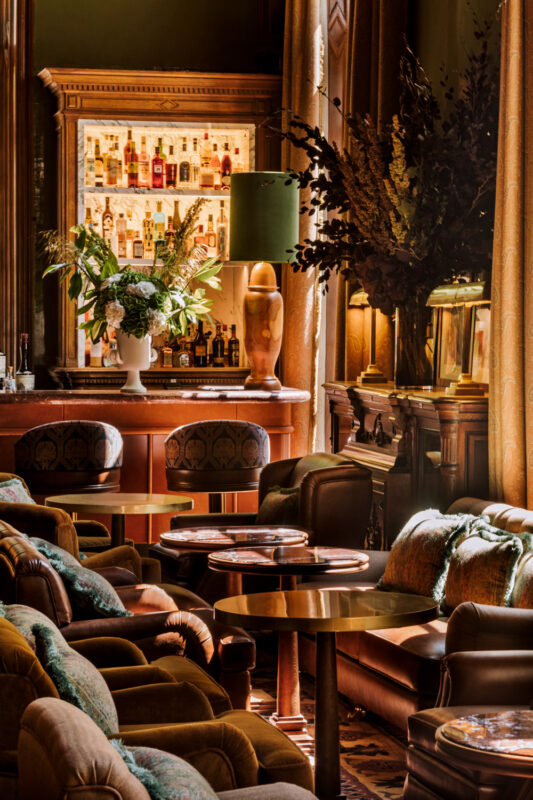
For readers, watchers, indoor types: an evening at Théâtre Le Ranelagh or simply a long drink in the library bar. For shoppers with a taste for the understated: Passy, a handful of very good food shops, and the dependable axes around Victor Hugo. And for anyone unwilling to complete Paris at a sprint: a morning with no programme at all, only garden, paper, coffee. In this city, one need not always perform. Sometimes a good room, a garden and a very precisely placed armchair will do.
Details
- 48 rooms, 2 pavillons and 1 private villa according to Relais & Châteaux, spanning Boudoir, Superior, Deluxe, Junior Suite, Suite and Prestige Suite categories, plus pavilions and serviced apartments. Larger units include the Prestige Suite and Pavillon Élise.
- Bellefeuille holds one Michelin star; there is also the library bar, terrace and weekend Tea Time.
- Guerlain spa of more than 400 square metres with three treatment rooms, pool, whirlpool, hammam, sauna and fitness.
- Clefs d’Or concierge, 24/7 room service, valet parking, EV charging, bicycles, pets welcome. Breakfast for residents and club members; serviced apartments at Villa Saint James with access to the restaurant, bar, garden and spa.