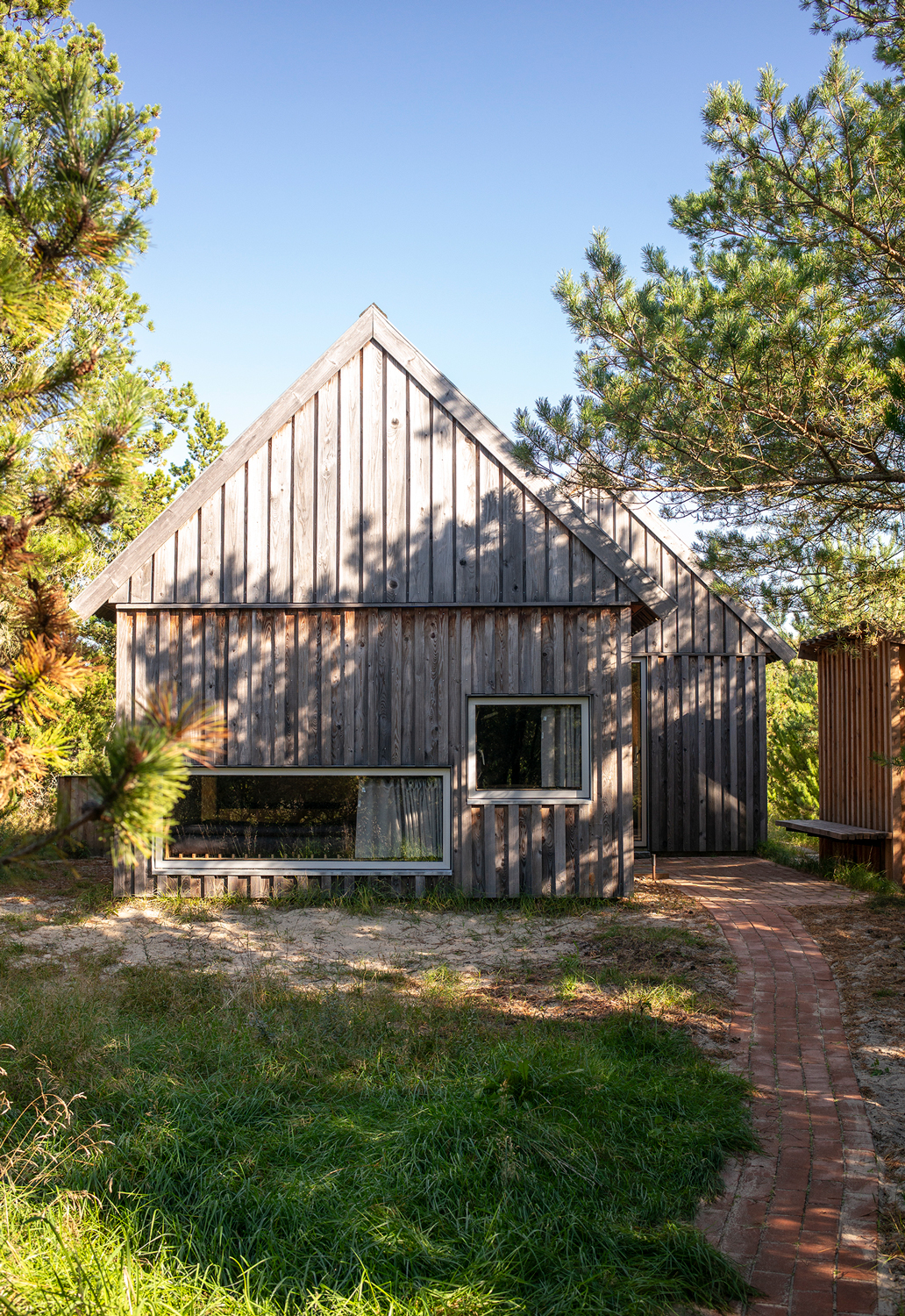

The final stretch into Klitmøller already feels like a quiet shift: less traffic, more horizon, salt in the air. Then it appears between pines and heath. Not a house trying to impress. More one that is simply there and stands out for exactly that reason. The first impression is Nordic understatement, with poise, calm and a kind of effortless confidence. Very little pose.
The location
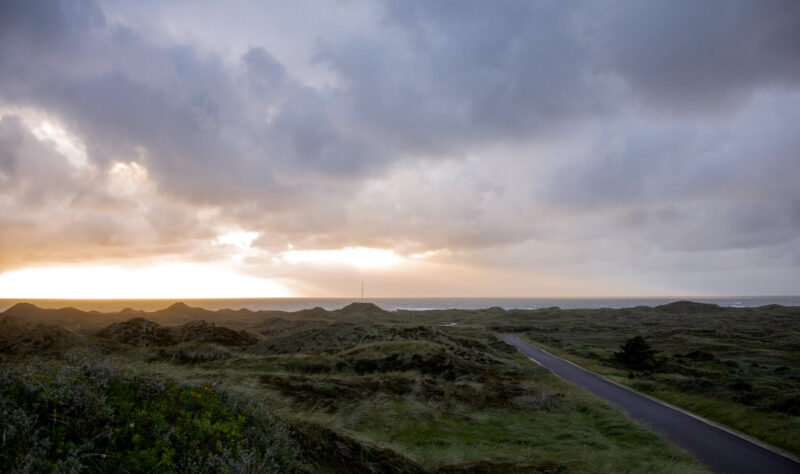
Klitmøller Hideaway sits on Spanggårdsvej in the North Jutland coastal town of Klitmøller, close to the North Sea and in the middle of the landscape of Thy. The approach runs through dune heath, low pines and a great deal of sky; the nearer you get, the clearer it becomes that this region insists on slowing things down.
© Helene Høyer Mikkelsen
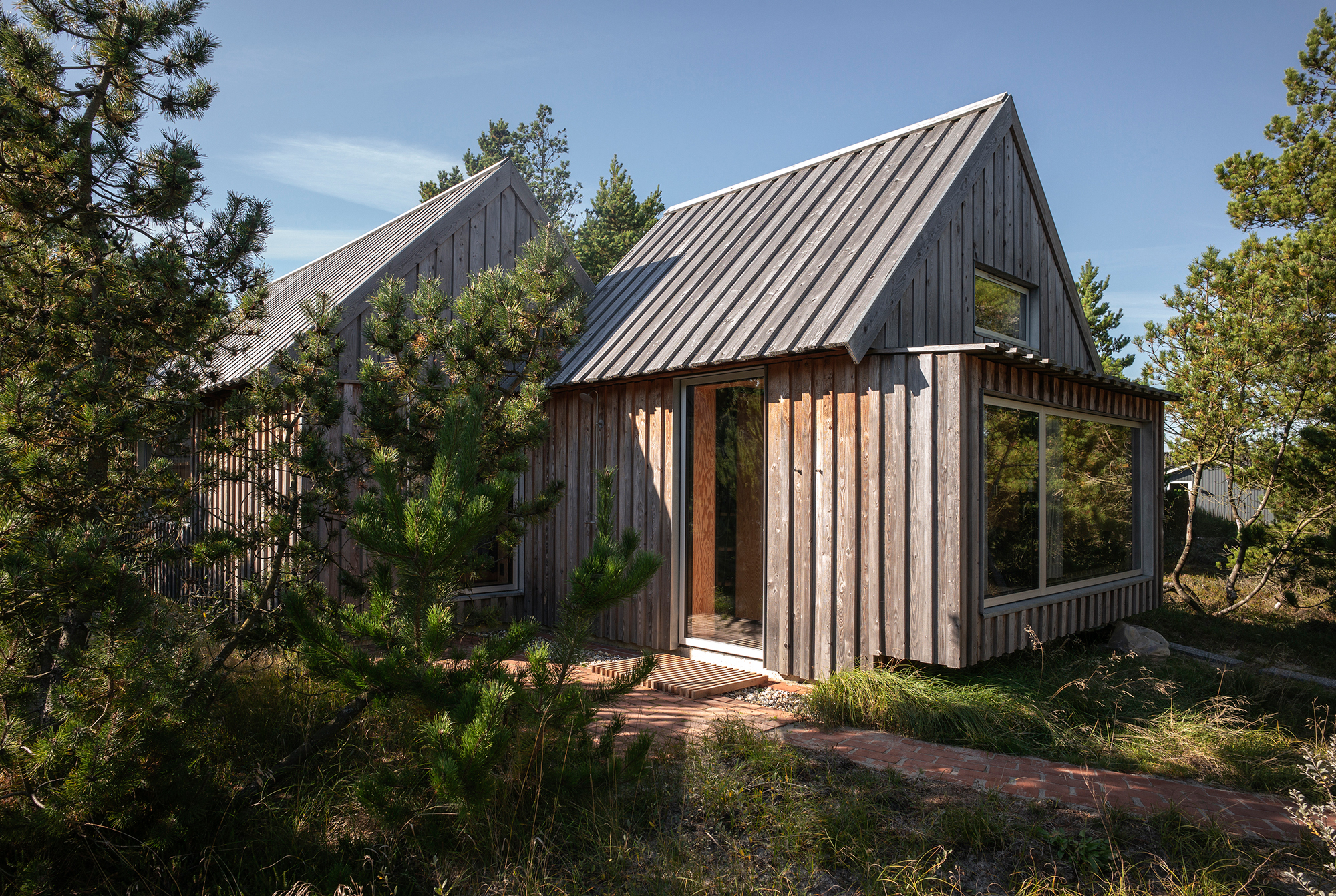
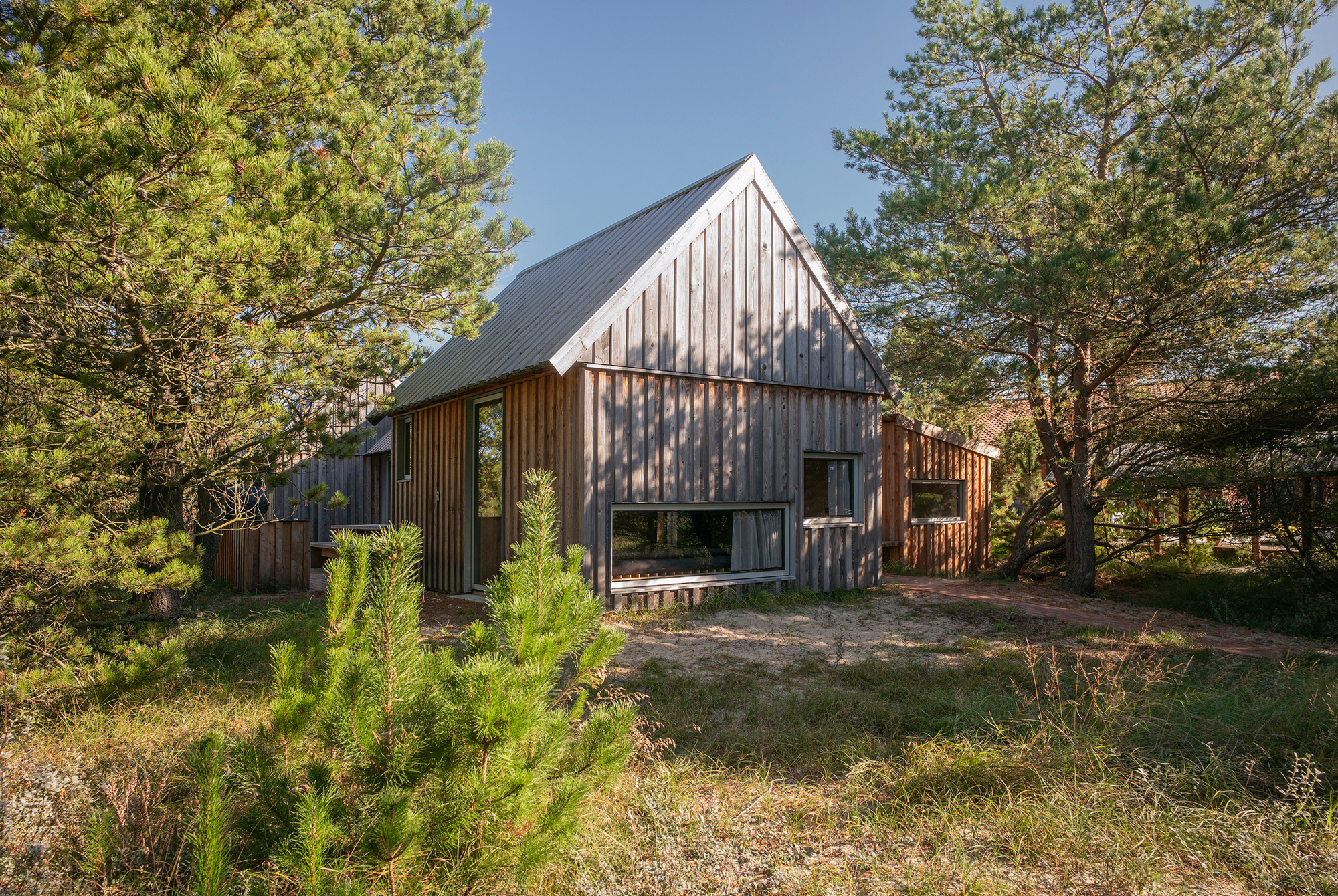
Then the house appears: dark, elongated, low in profile, placed among the trees so that it feels discovered rather than announced. Its outer form recalls a rethought longhouse. Not folklore, but a quiet continuation—built for wind, light and slightly stubborn terrain, with real care for shelter, proportion and restraint.
Backstory
Klitmøller Hideaway is not the work of a hotel group but of a personal project with deep local roots. The house was developed by four friends, all with a close connection to Thy. The idea was not simply to create a holiday property, but a place where retreat, landscape and contemporary design combine into something more than attractive temporary living. One of the active figures behind it is Troels Thorbjørnson, co-owner and architect.
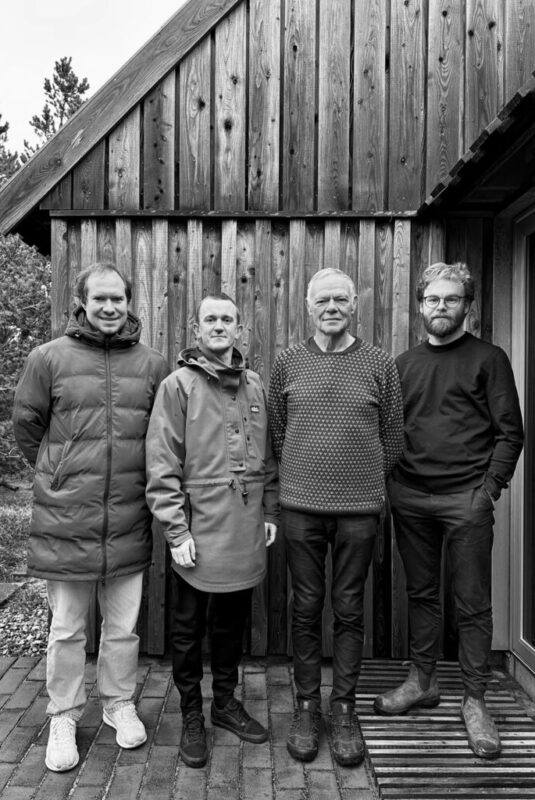
Design and construction were handled by Spant Studio, a Danish practice that worked here with notable restraint. The house says something about its hosts as well: they do not understand a holiday as programming, but as a counter-model—less scheduling, more attention; less surface, more presence. That makes it feel convincing.
Interior & architecture
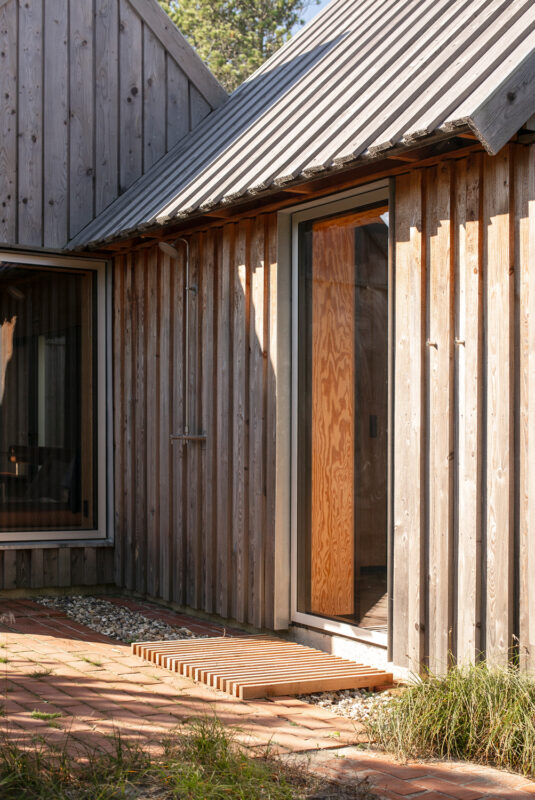
The architectural concept is based on a contemporary reworking of the Scandinavian longhouse. Spant Studio placed the volume carefully among old pines; according to the house, materials were carried in by hand so that as much vegetation as possible could remain. Outside, dark timber surfaces and a low, weather-ready silhouette dominate.
© Helene Høyer Mikkelsen
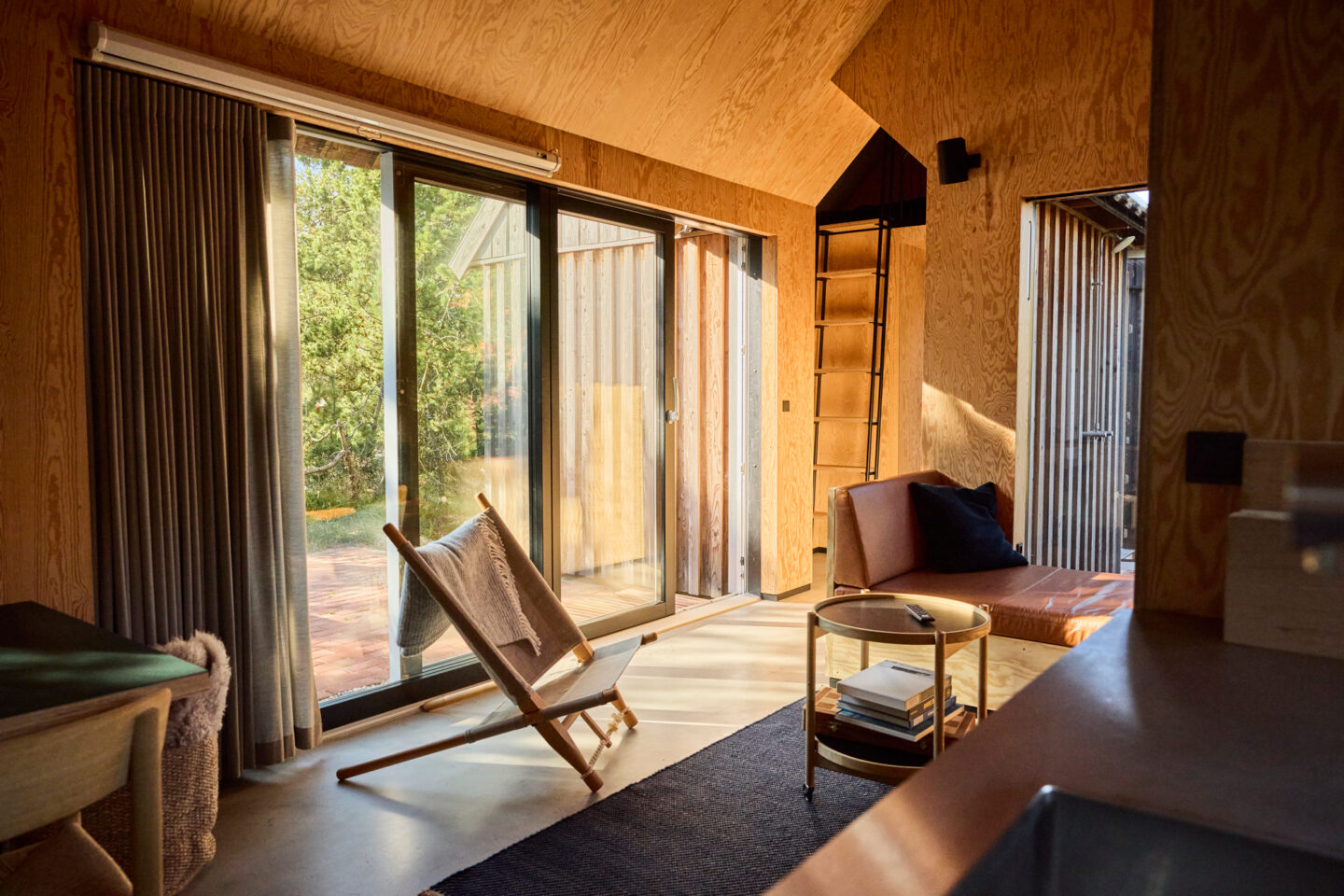
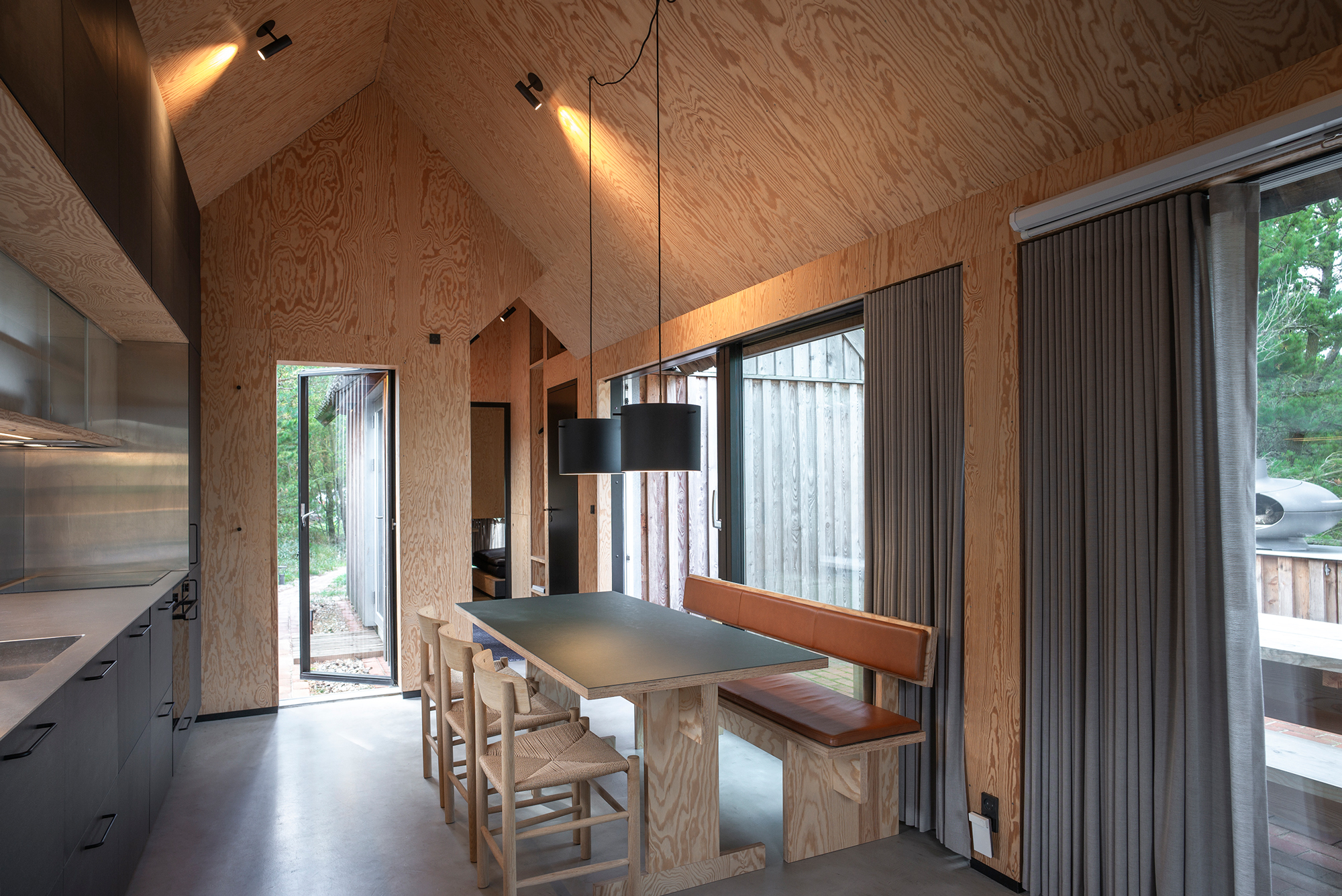
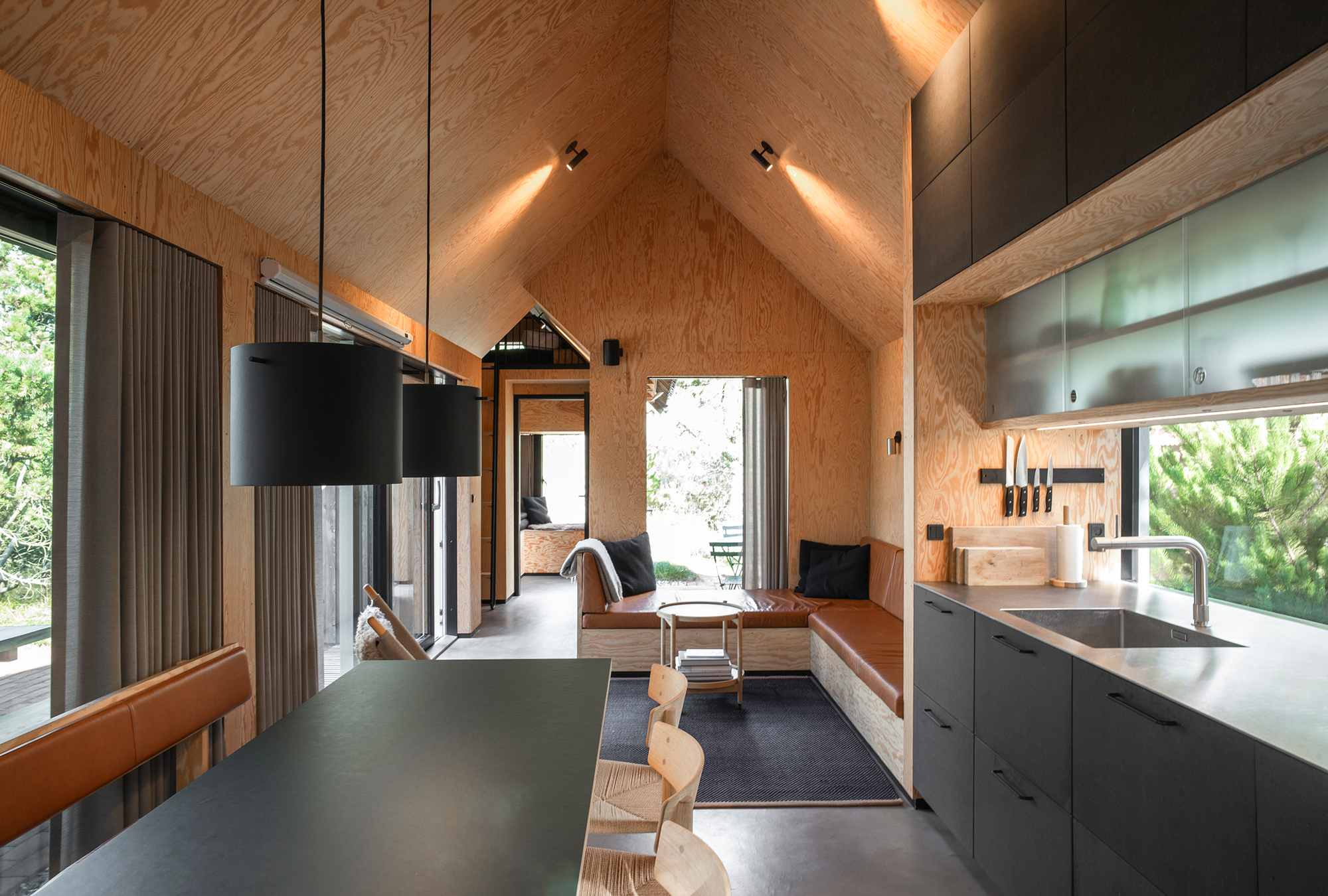
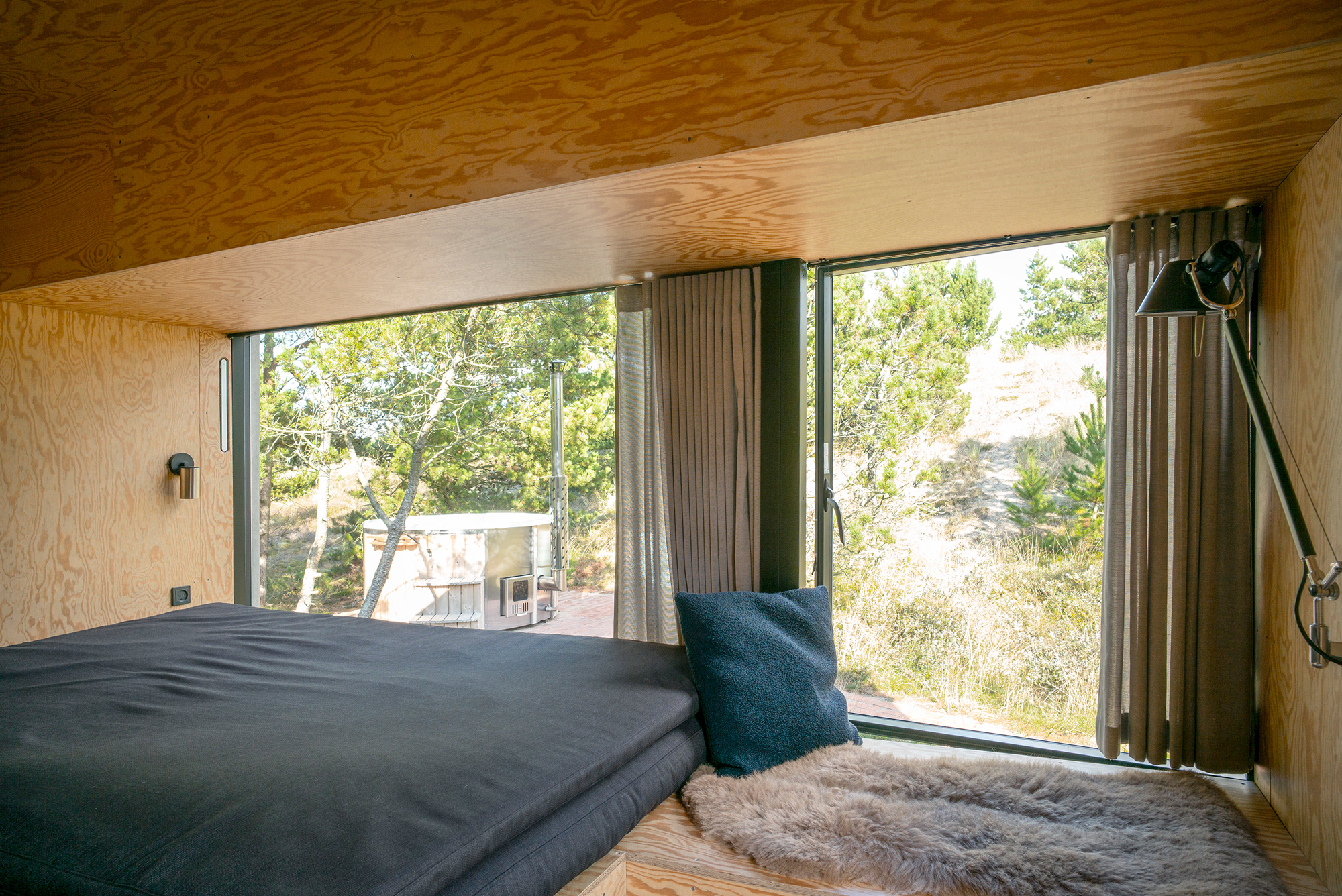
Inside come pale wood, calm finishes and precisely placed openings. An offset central section creates a sheltered west-facing terrace while improving light and views. Large windows draw the landscape into the rooms not as decoration but as lived reality.
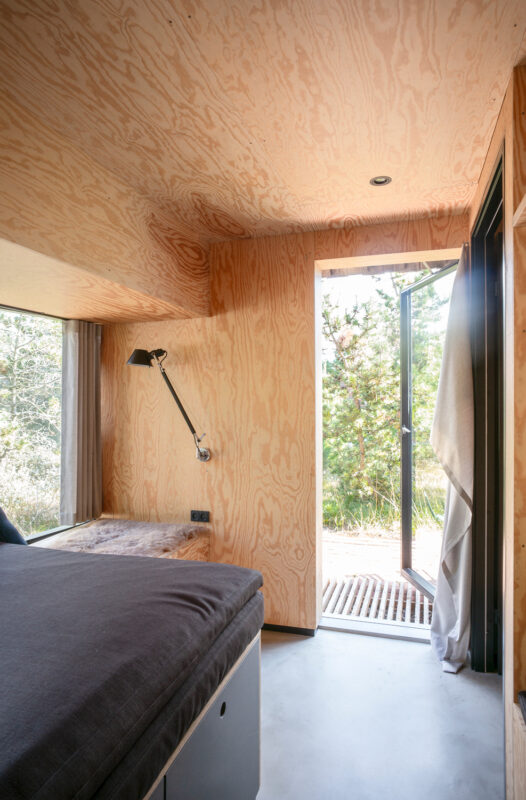
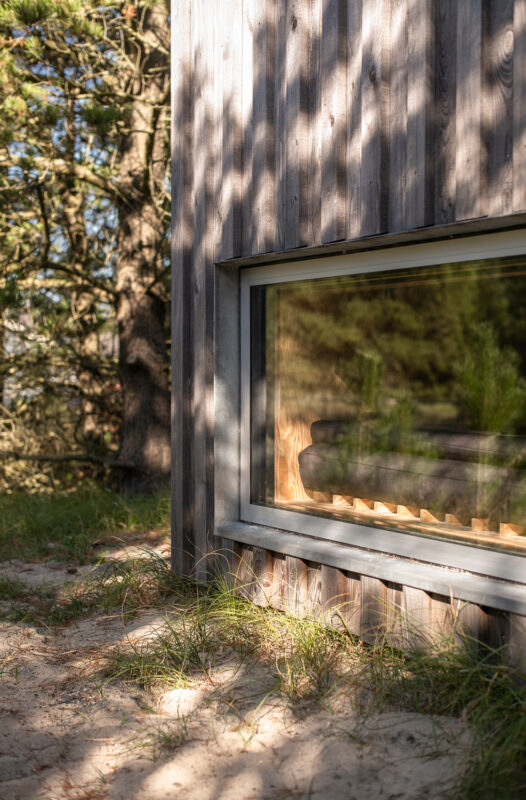
The biophilic approach stays refreshingly free of spa language: you simply notice it. In the sightlines, the light, the feeling of not being cut off from nature. Nothing feels accidental, but nothing feels overdesigned either.
© Helene Høyer Mikkelsen
A look inside
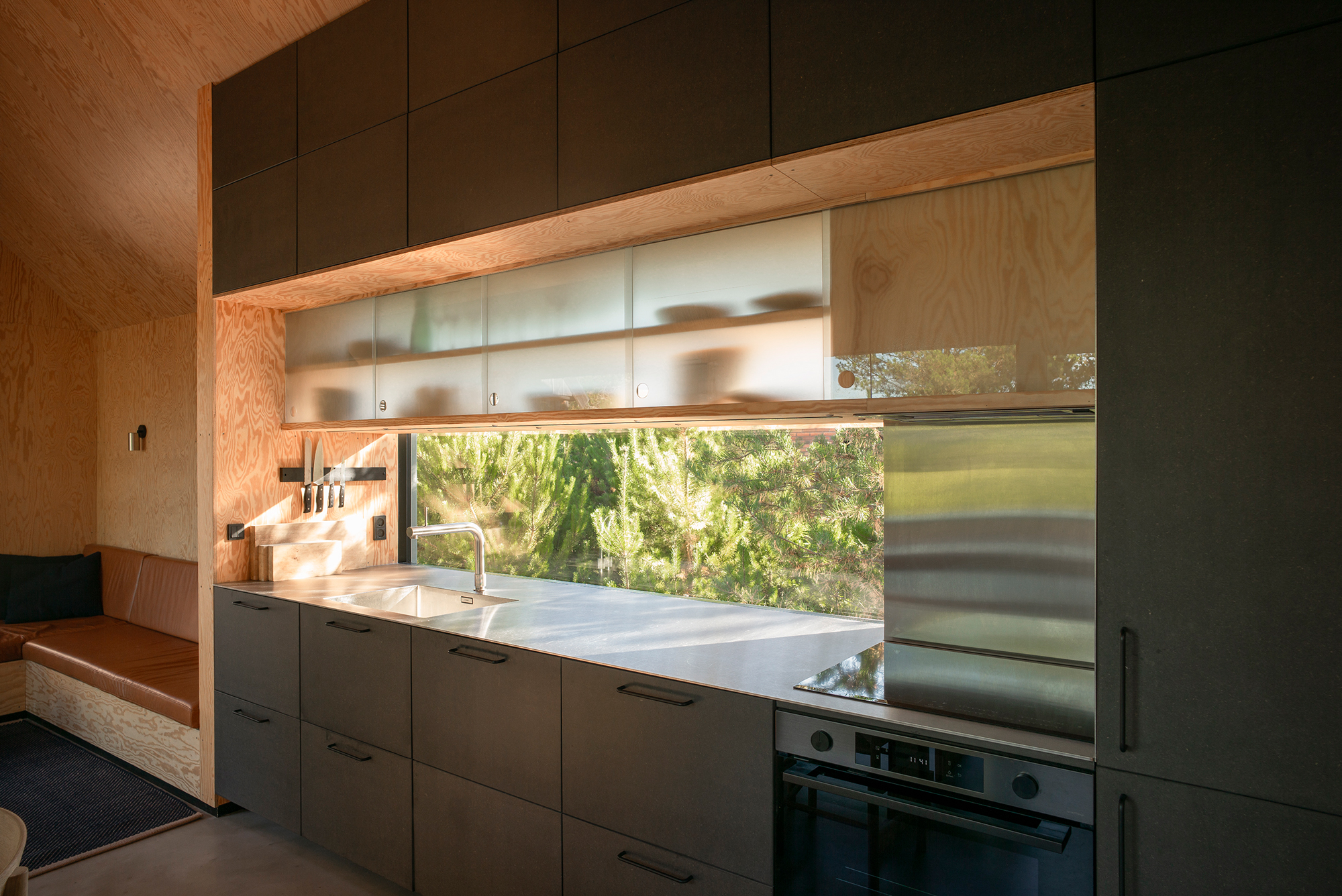
Inside, Klitmøller Hideaway is clearly arranged for shared living and easy retreat. At its centre is the open-plan kitchen, dining area and lounge, complemented by two bathrooms.
© Helene Høyer Mikkelsen
There are two bedrooms with Japanese-inspired futon mattresses as well as a sleeping loft; in total, up to six guests can stay here comfortably.
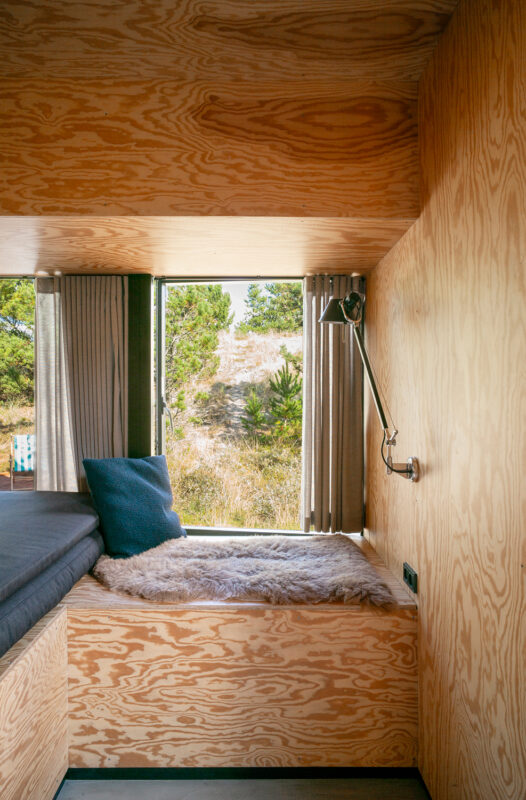
The fittings combine comfort with Nordic reserve: underfloor heating, a Quooker, Sonos, Google TV and well-integrated storage. Everything is there; nothing pushes forward.
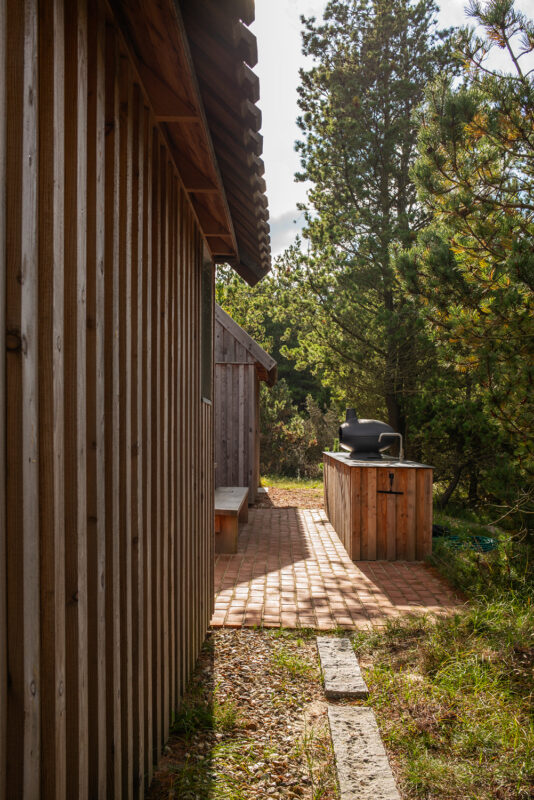
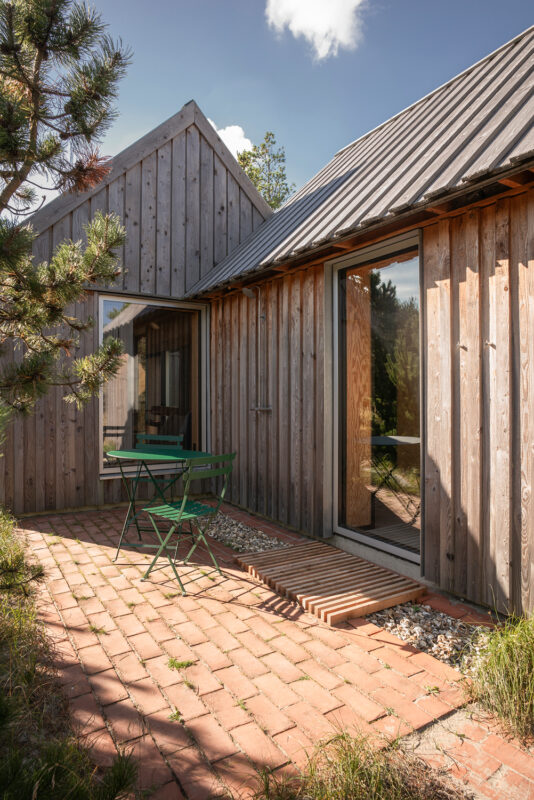
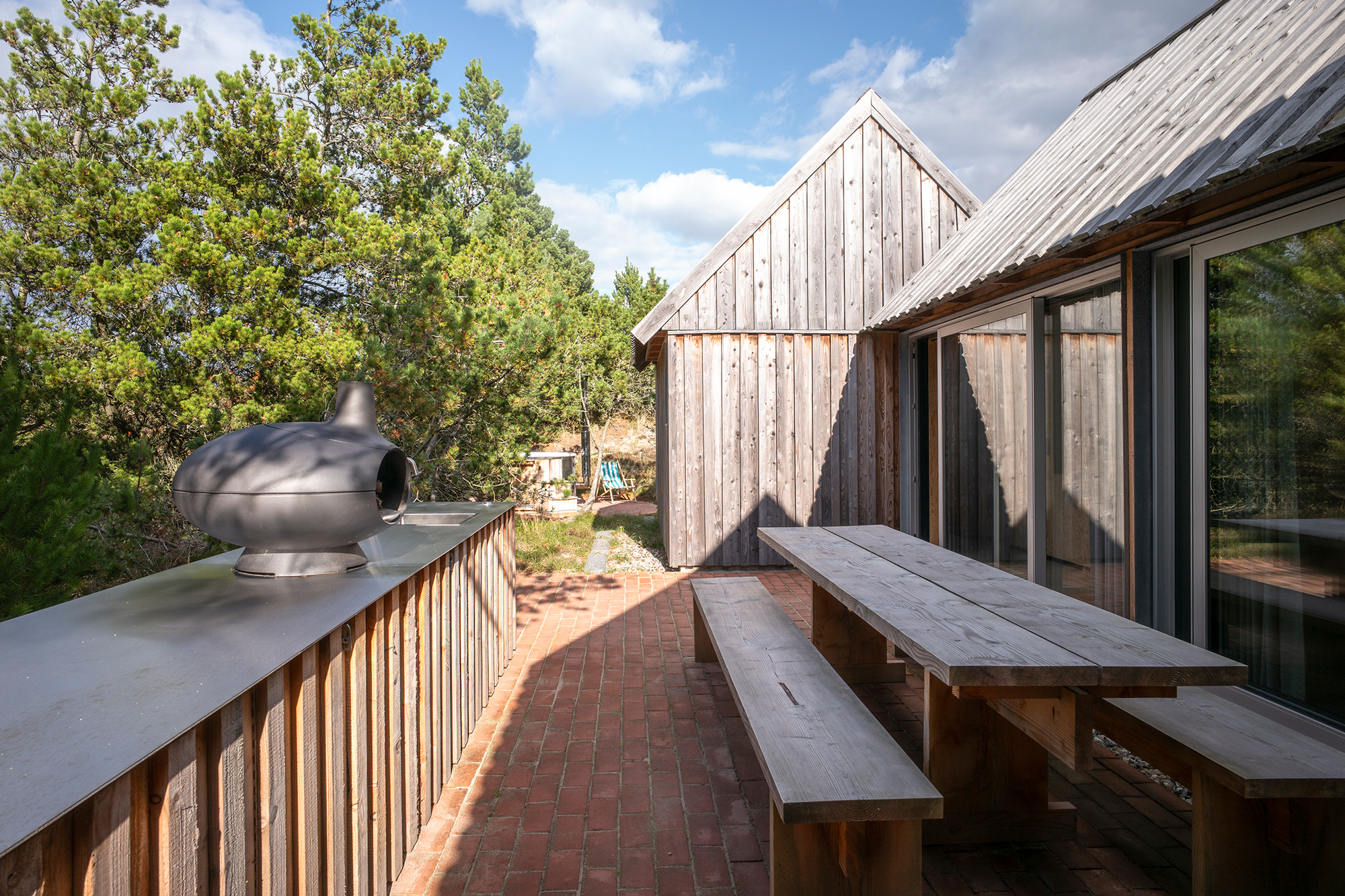
Outside, living continues with an outdoor kitchen and sink, a Morsø pizza oven, hot outdoor shower, sauna and wood-fired hot tub. You are never simply inside or outside here. More both at once. The result feels quietly timeless.
Culinary
There is no in-house restaurant at Klitmøller Hideaway. Meals are prepared in the open kitchen or outside at the outdoor kitchen with sink and Morsø pizza oven. That suits the place well: less service choreography, more self-directed rhythm. Coffee in the house in the morning, perhaps fish from the village in the evening, and in between bread, butter, wind. For those not cooking themselves, Klitmøller has a handful of strong addresses.
© Helene Høyer Mikkelsen
Café Hawgus focuses on freshly landed fish and an intimate atmosphere. Restaurant Niels Juel is the classic place for straightforward seafood with a sea view. Then there is Haandpluk, a coffee, beer and natural wine bar with its own nano-brewery, pleasantly unpretentious and ideal for unplanned afternoons. Here, food is about good produce, local character and no unnecessary performance. That, too, is part of the charm.
© Helene Høyer Mikkelsen
Wellness & Relaxation
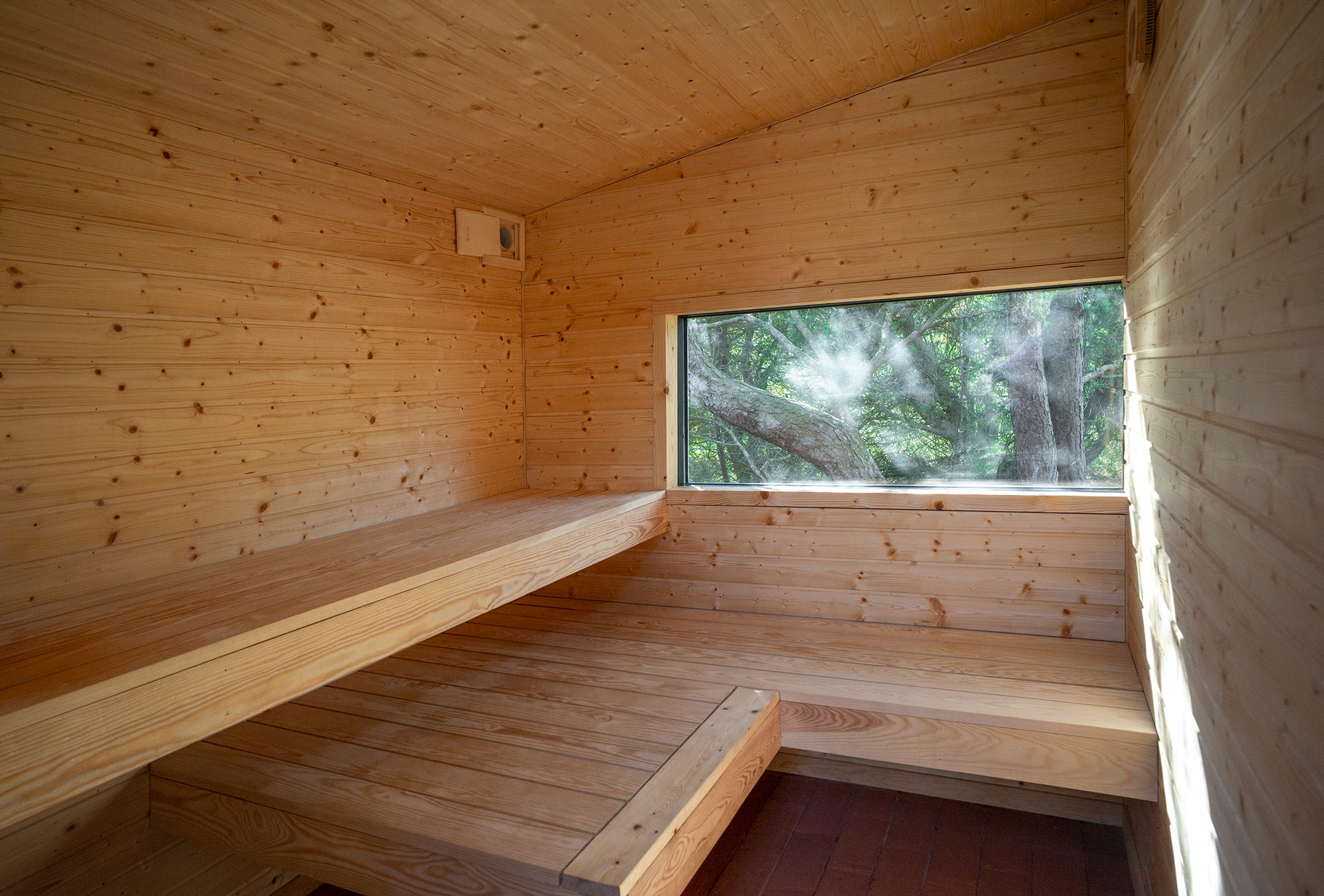
The house’s small wellness offering happens not behind spa doors but outside, in direct contact with the weather. That is exactly its appeal. After the beach, wind and long walks through Thy, the sauna, hot outdoor shower and wood-fired hot tub feel almost pleasantly pre-modern.
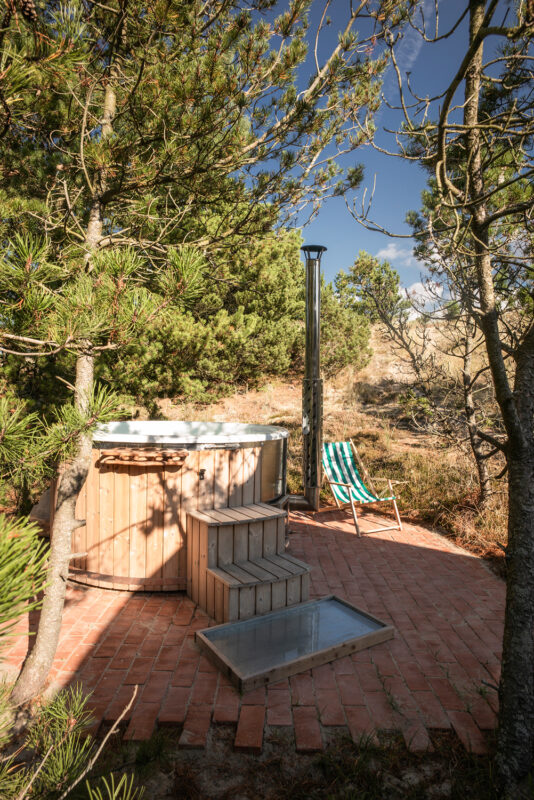
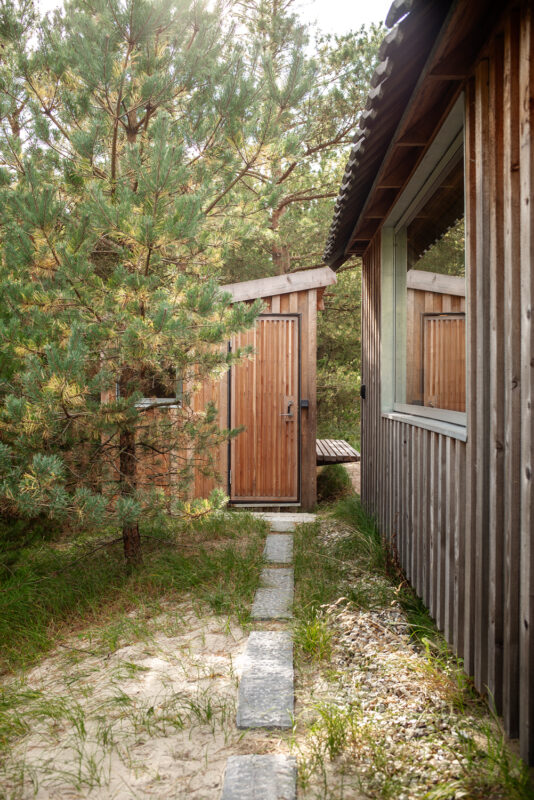
This is relaxation that does not arrive pre-packaged but remains tied to place: warmth against wind, the scent of wood against salt, silence against the head-noise of the past weeks. The sheltered terrace deepens that feeling. Luxury here lies more in what has been left out.
© Helene Høyer Mikkelsen
Surrounding area
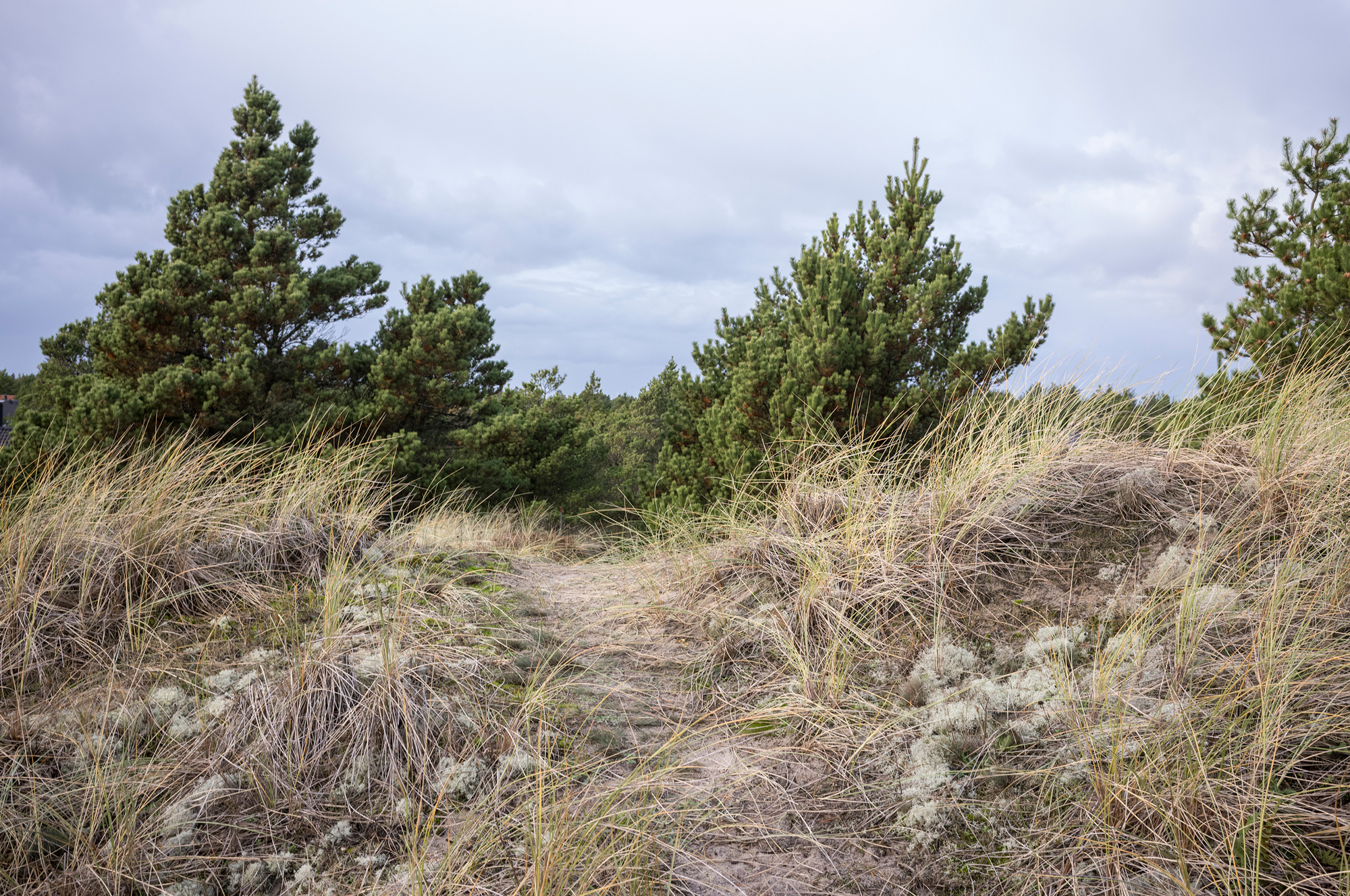
In the immediate surroundings, the distinctive mix that defines Klitmøller begins: nature reserve, working landscape and present-day culture all at once. Around the old landing site, the fishing-village past is still legible; at the same time, the international surf scene shapes the town without sanding away its edges. The beaches of Klitmøller and Ørhage are only minutes away, where Cold Hawaii can be read not just as a sports destination but as a social texture.
© Helene Høyer Mikkelsen
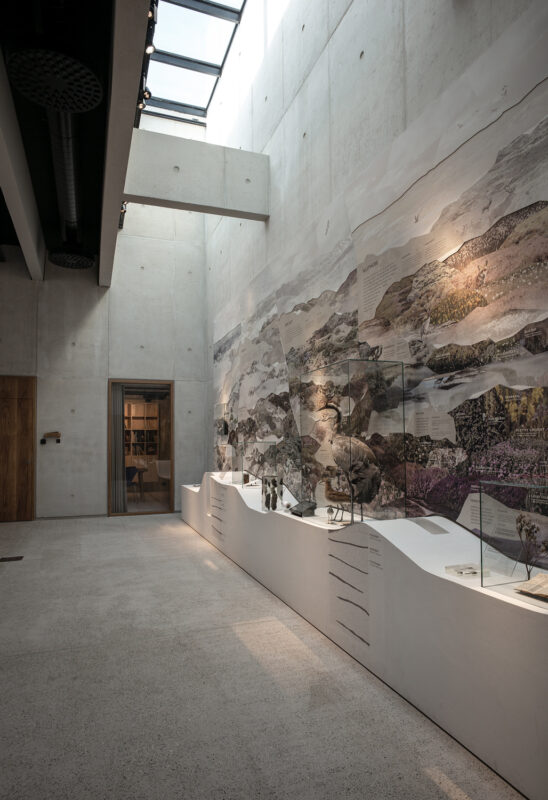
For art-minded visitors, SMK Thy in Doverodde—the National Gallery of Denmark’s outpost—is worth the drive. Historically striking is the Bunkermuseum Hanstholm, where massive wartime architecture meets open coastal space. More local and smaller in scale: coffee or natural wine at Haandpluk. Those interested in local craft can browse for ceramics and design finds in Thisted or at seasonal markets. For evening light, head to Bøgsted Rende. Coastline, sunset, very little fuss, a lot of horizon. In warmer months, small pop-ups and seasonal gathering points quietly animate the town.
Activities
For surfers: Klitmøller is the centre of Cold Hawaii. Spots such as Ørhage are close at hand; beginners can book lessons or hire gear, while experienced surfers come for reliable conditions and often stay for the relaxed scene.
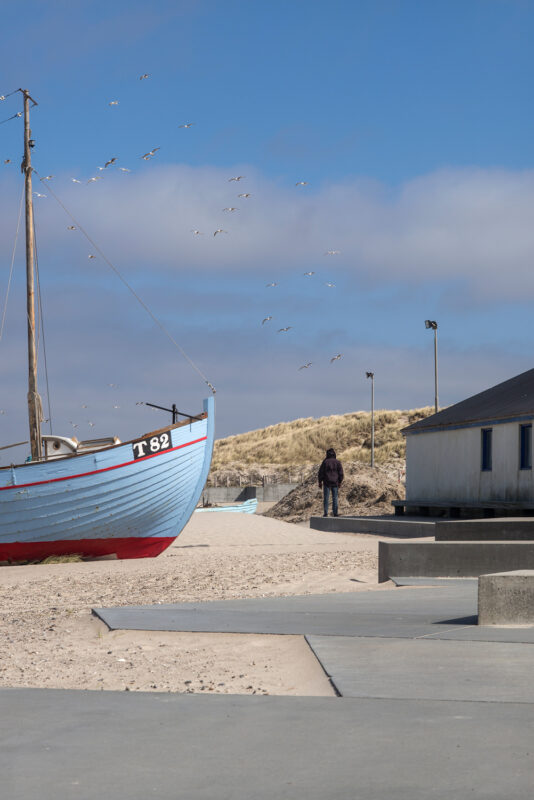
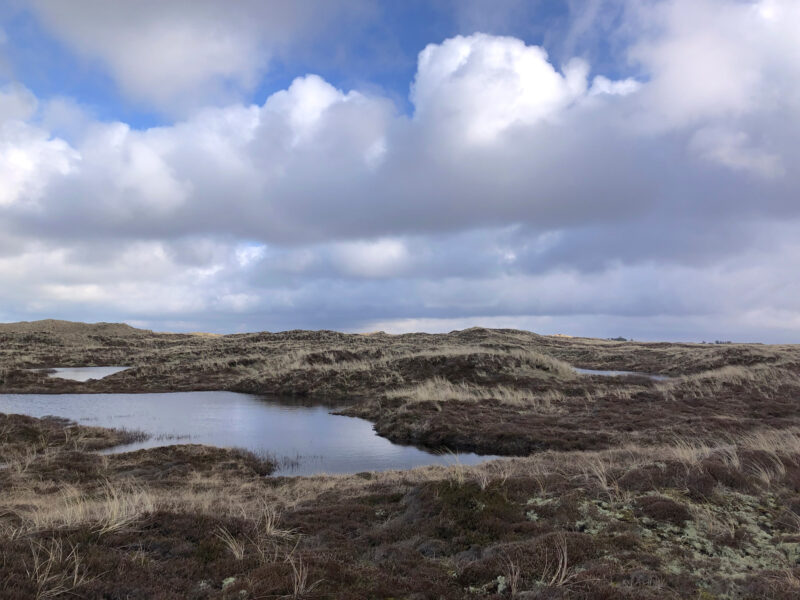
For walkers and runners: The rhythm of Thy National Park begins right outside the door, with dune paths, coastal trails and quiet woodland passages.
For cyclists: Thy reads beautifully on two wheels—little traffic, a lot of sky and long transitions between forest, coast and heath.
For families: Beach, sleeping loft, pizza oven, hot tub and cooking together turn the house itself into a small field of movement.
For culture-minded guests: SMK Thy places contemporary art in the landscape, while Bunkermuseum Hanstholm offers a historical counterpoint. Small galleries, farm shops and seasonal markets are worth short detours too.
For eaters and drinkers: Fish at Hawgus or Niels Juel, coffee, beer or natural wine at Haandpluk, then back to the house.
For those seeking quiet: Sit outside after the sauna, listen to the pines, watch the light move across Thy and stop mistaking the phone for something important.
For weather-watchers: Even days of wind, rain and slant light work remarkably well here. Then the house becomes the best viewpoint.
Details
- Holiday house for up to 6 guests
- 2 bedrooms plus sleeping loft
- 2 bathrooms
- Open-plan kitchen, dining area and lounge
- Sauna, wood-fired hot tub, hot outdoor shower
- Terrace and outdoor kitchen with sink
- Morsø pizza oven
- Underfloor heating, Quooker, Sonos, Google TV
- No in-house restaurant; self-catering is central
- Suitable for couples, friends and families
- Architecture by Spant Studio
- Contact via email, phone and Instagram
© Helene Høyer Mikkelsen