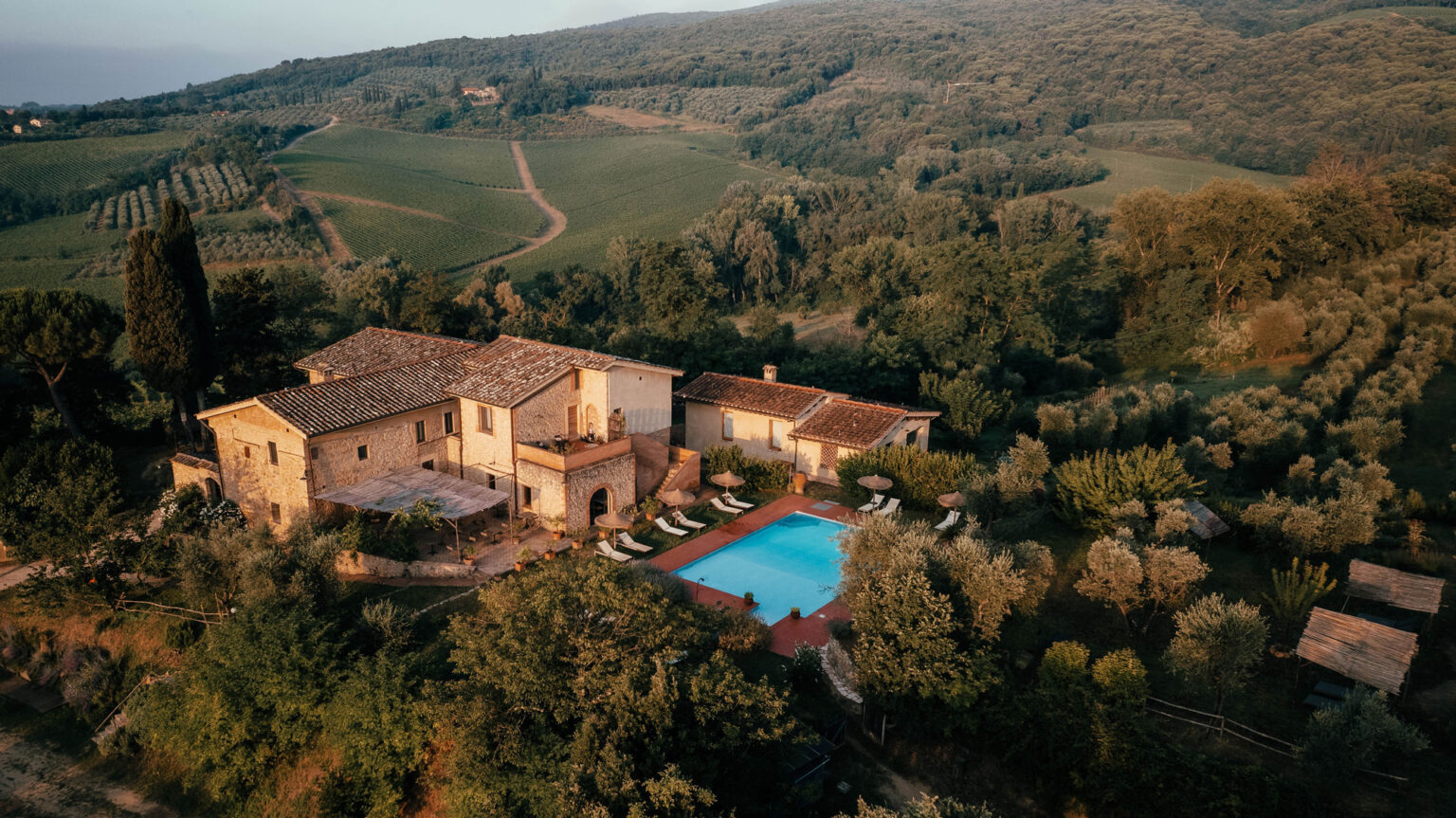

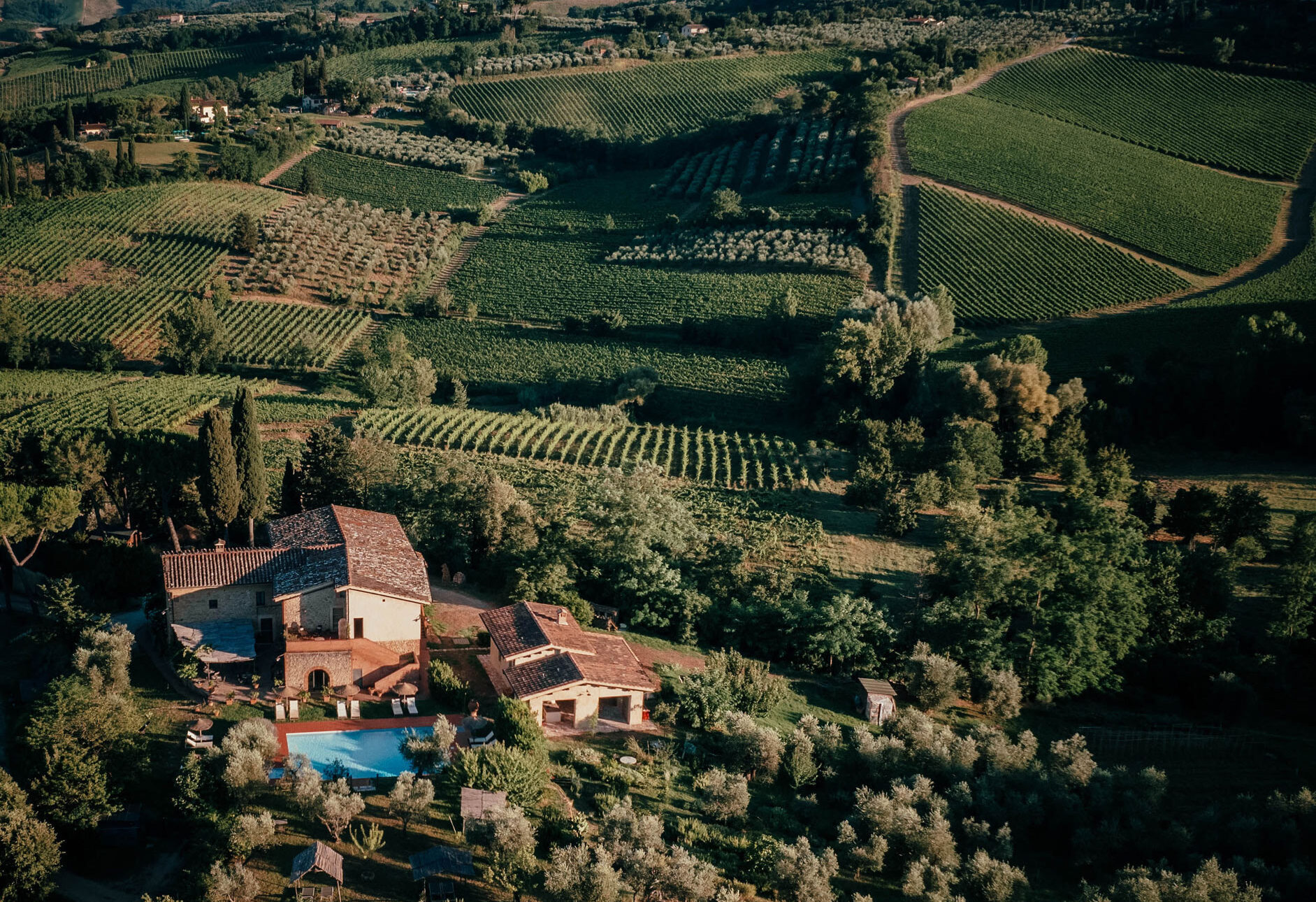
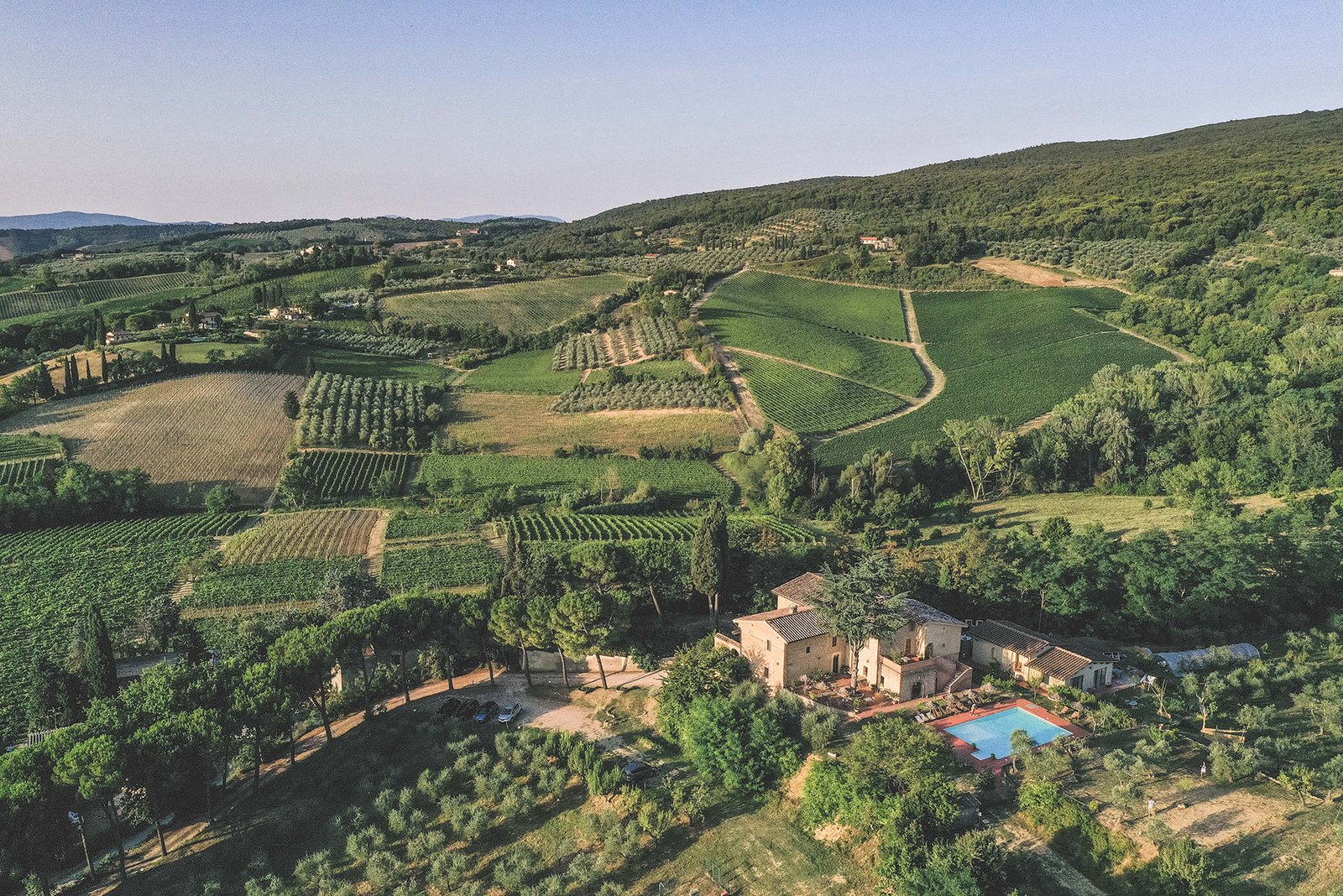
The road narrows, the traffic drops away, and at some point only this Tuscan topography of dust, stone and light remains. Behind pines and vines, the house appears, not theatrically, but with the quiet assurance old buildings sometimes possess.
© I Pini
The location
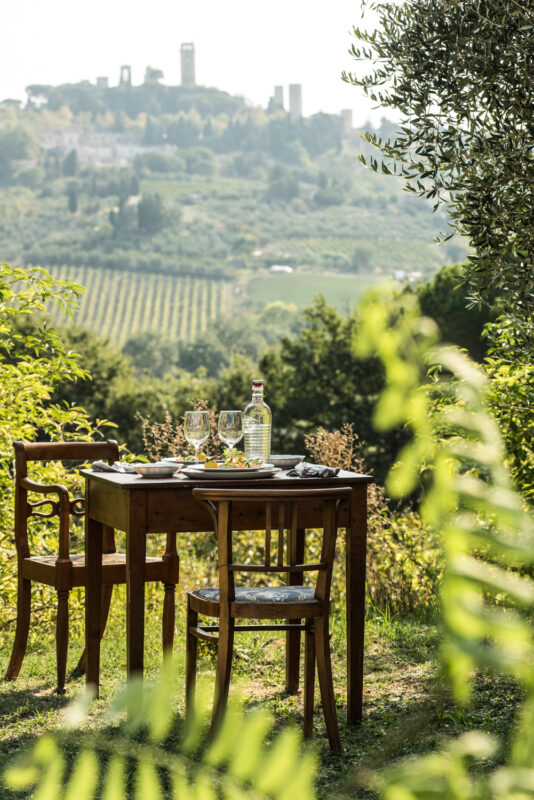
Agrivilla i Pini lies in Località Santa Margherita, a few minutes outside San Gimignano, just far enough away to see the town as a silhouette rather than experience it as a permanent tourist operating system. Those arriving by car reach the estate through the rolling lines of southern Tuscany; the nearest train station is Poggibonsi, from where the hotel arranges transfers. Florence and Pisa are the closest airports.
© I Pini
Then the first image: a stone country house set among pines, vines, olive groves and gardens, open to the landscape, with no pose and no event architecture. The exterior has something calming about it; it explains the house before one even steps inside. This is not a retreat from the world so much as a more exact version of it.
Backstory
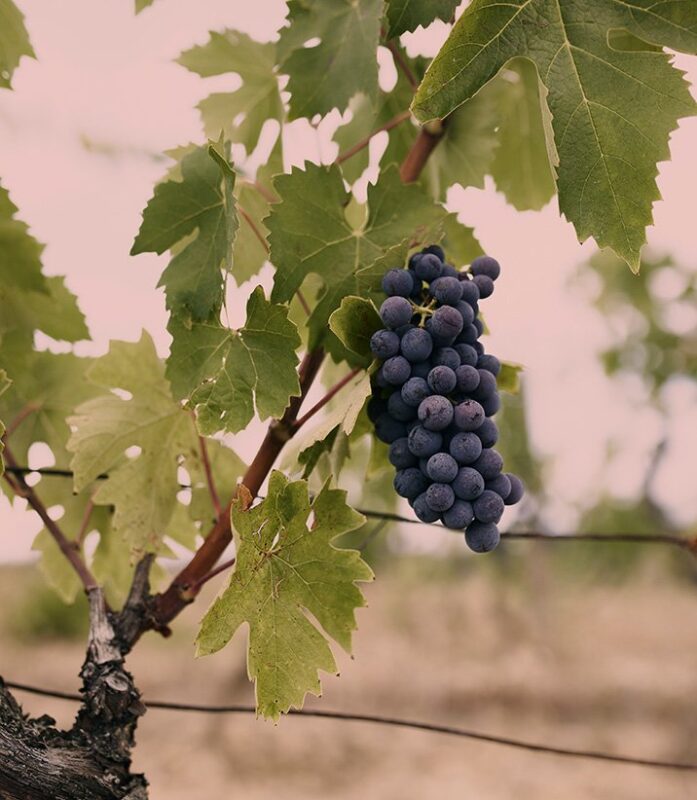
The story of this place does not begin with hospitality strategy, but with movement, fatigue and rest. For centuries, the estate offered shelter to pilgrims on the Via Francigena; later it became a working agricultural property, with wine, olive oil and that specifically Tuscan pragmatism that has never treated beauty as a separate department.
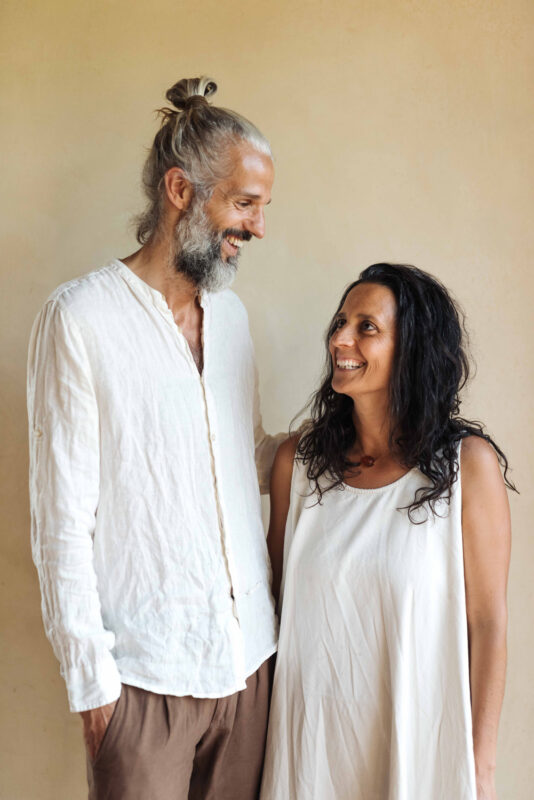
Francesca and Benjamin Posch are cited as the people behind the property, and they do not run Agrivilla i Pini as a nostalgia project but as a strikingly contemporary answer to an industry that often mistakes décor for authenticity. Their signature is clear without being loud: rigorous sustainability, reduced design and a vegan cuisine free of missionary rhetoric.
Architecture & interior
The house is built on a contradiction that does not really want to be one: historical gravity on the outside, controlled lightness within. The renovation followed principles of biological building, using local materials and natural insulation made from clay, hemp and rice husks.
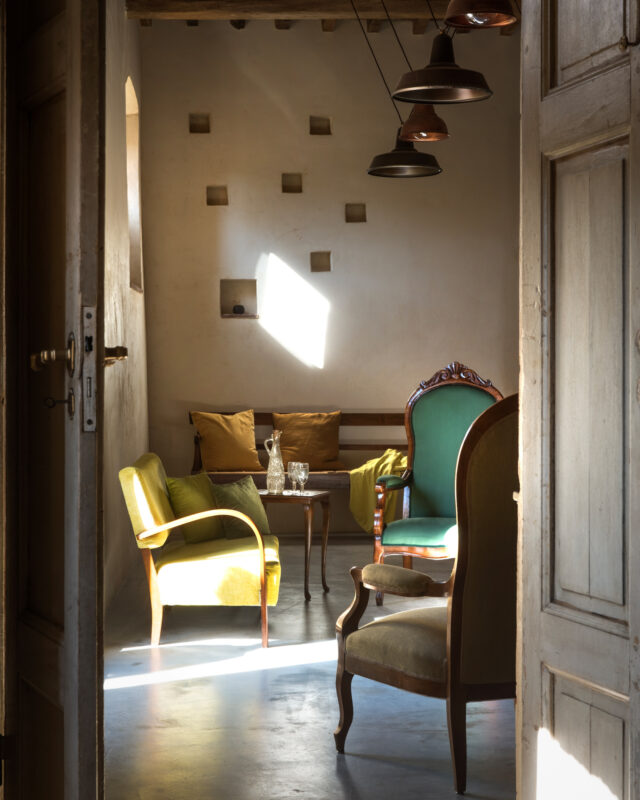
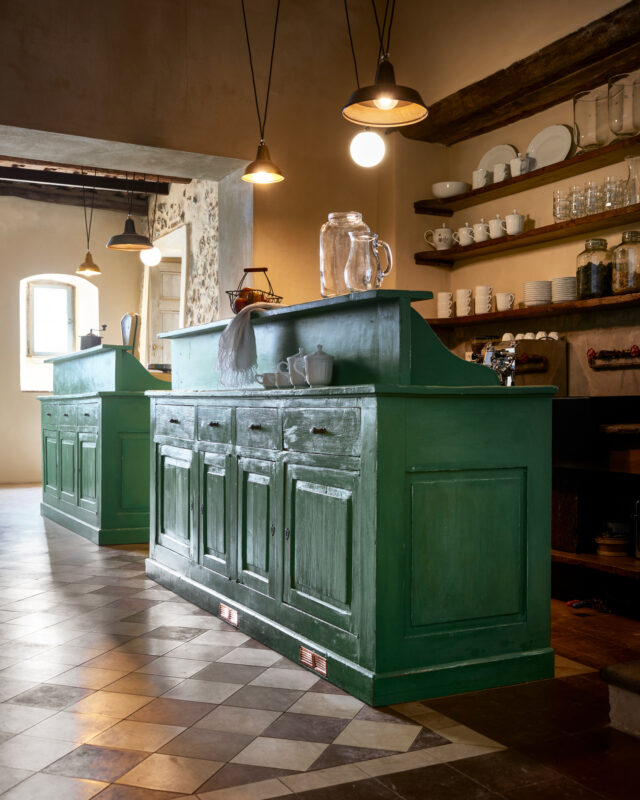
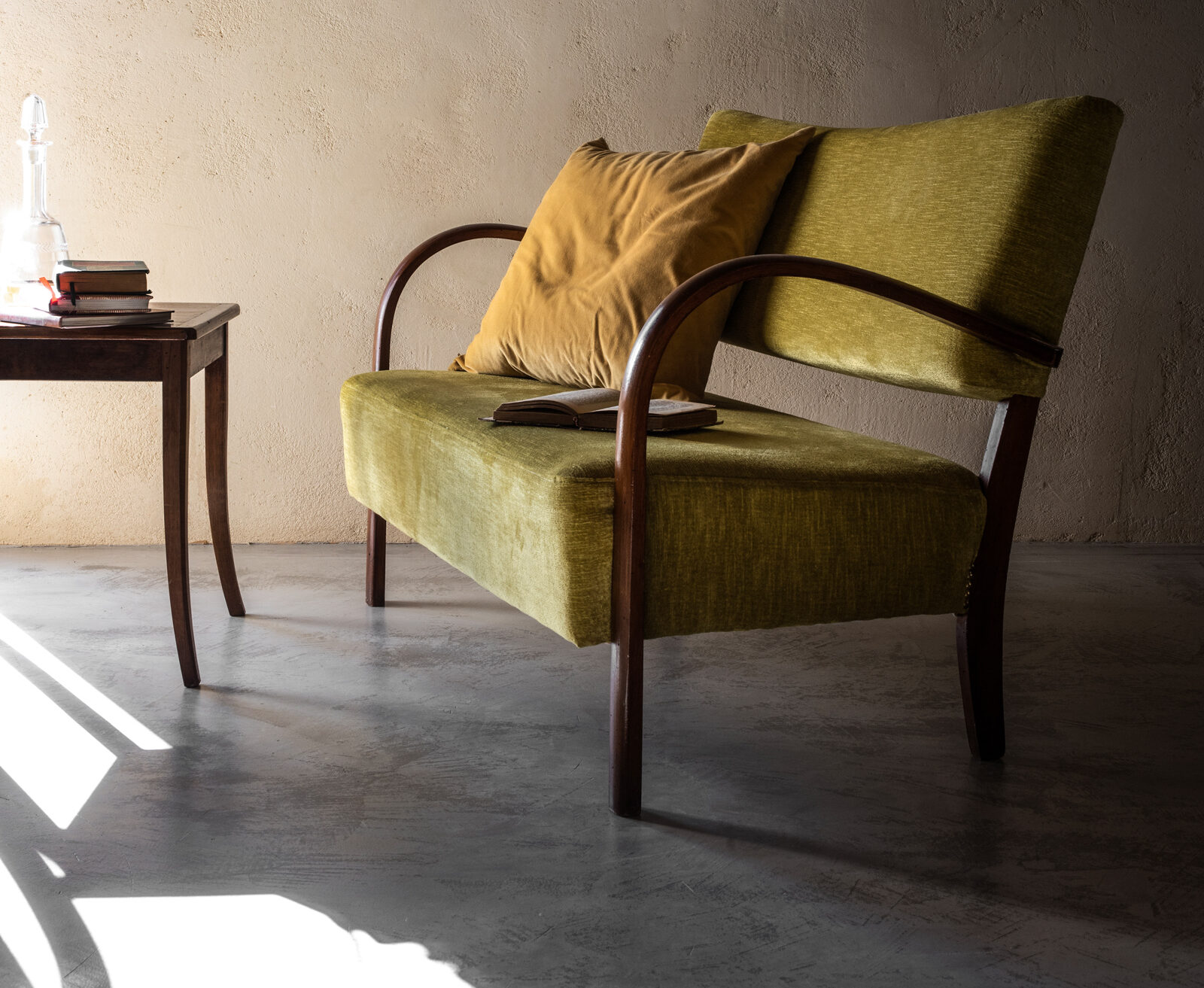
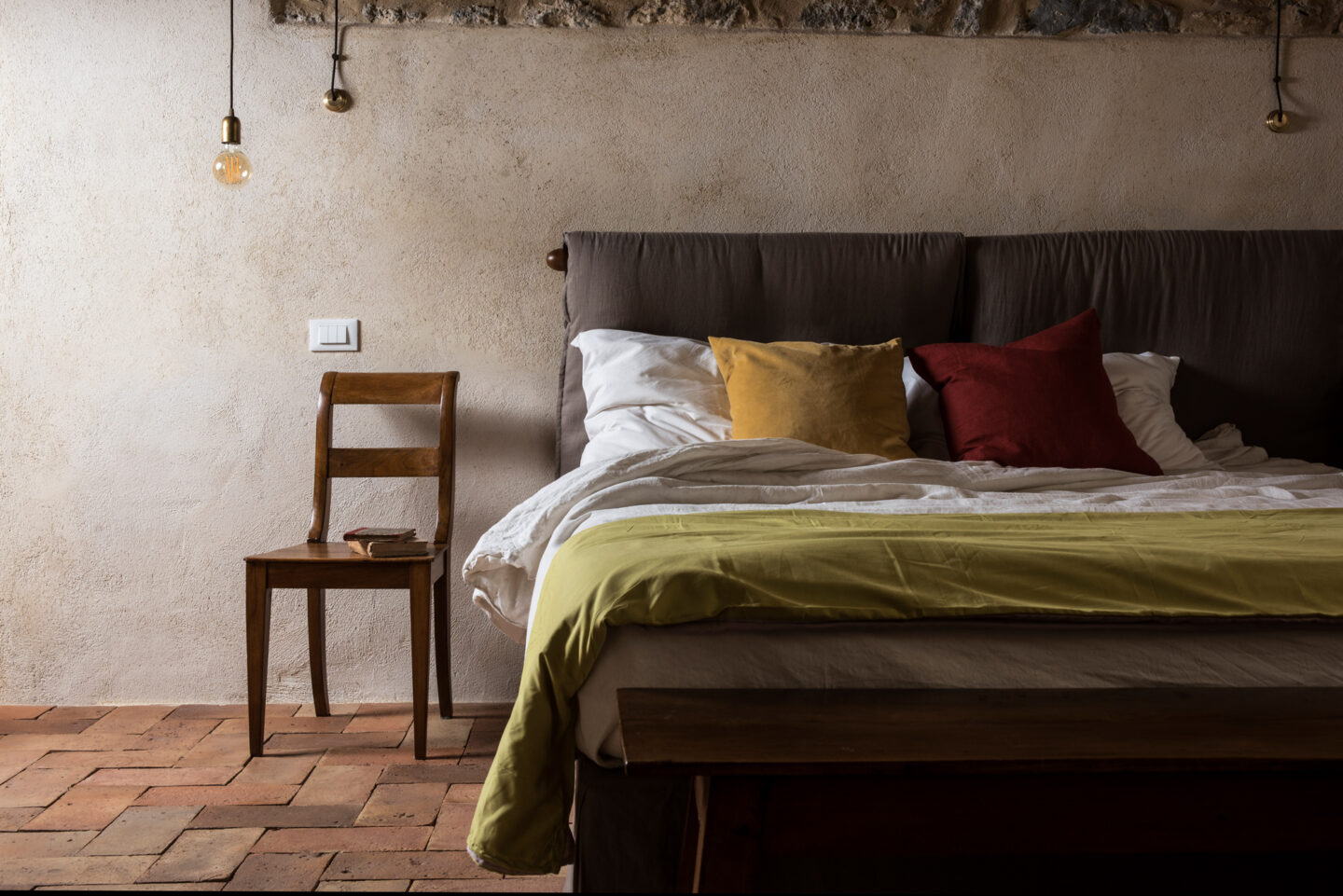
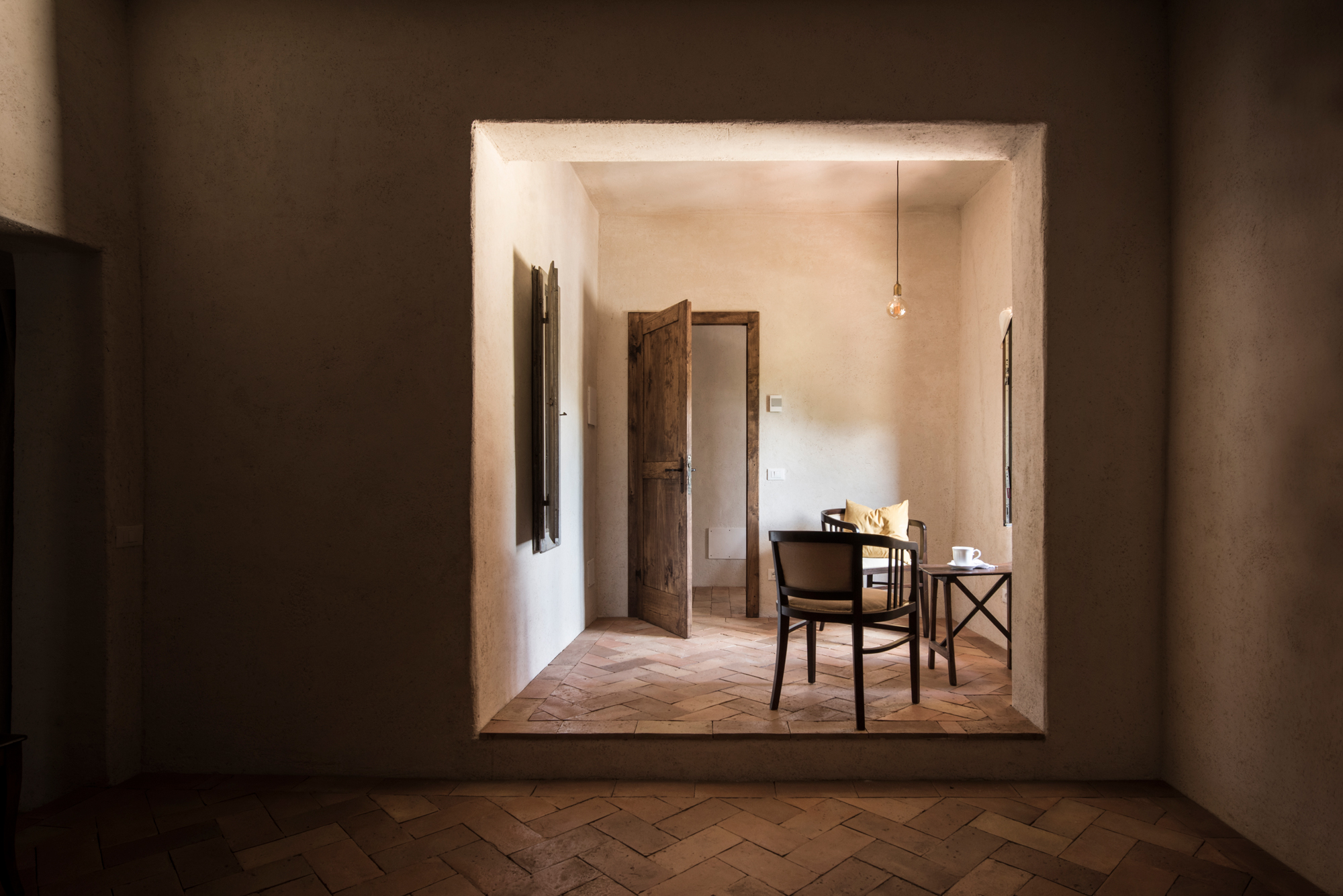
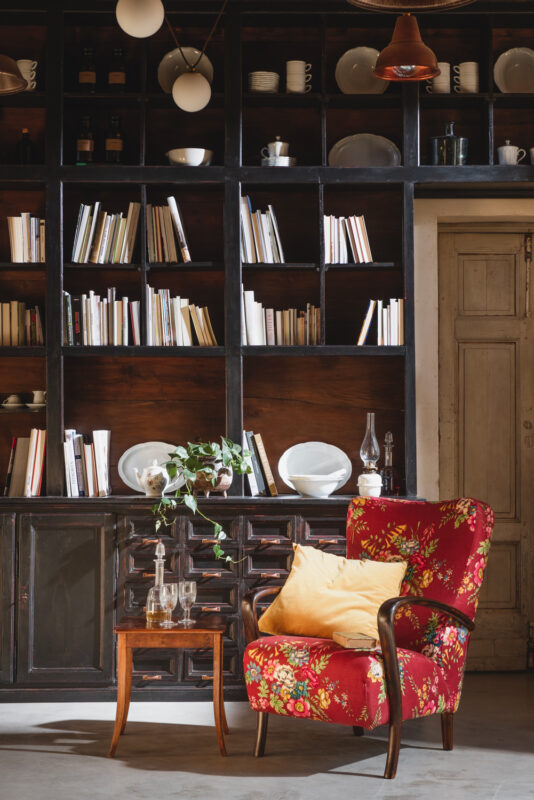
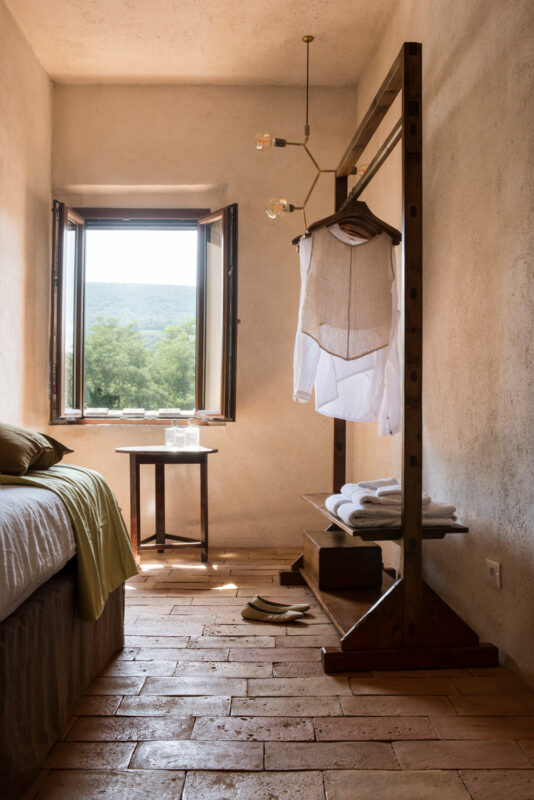
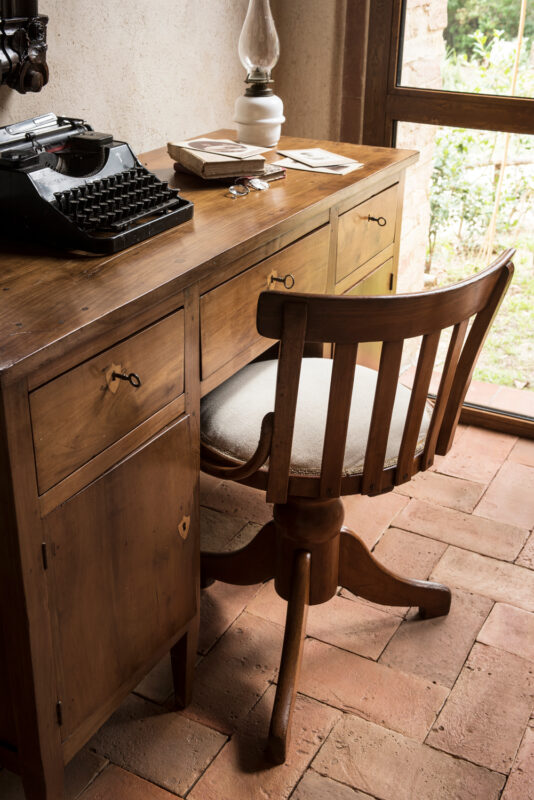
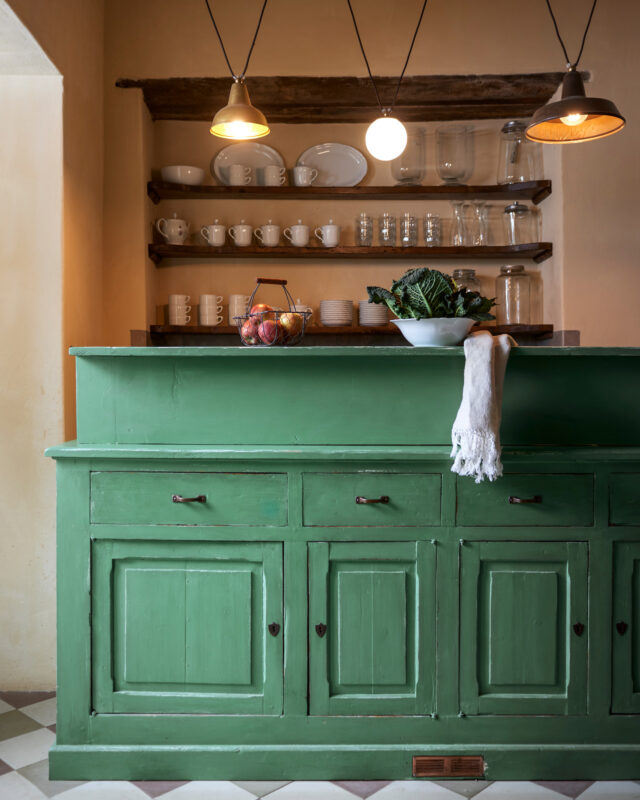
The rooms feel calm, dry, evenly tempered, almost denoised. Handmade terracotta tiles, restored vintage furniture, simple timber, linen and an earthy, chalk-pale palette create an image that is neither rustic nor over-groomed.
That is where the quality lies. Much is shaped by craft, nothing screams design, and yet the design intelligence is present throughout. Agrivilla i Pini does not stage Tuscan folklore; it proposes a kind of quiet material realism, beautiful because someone has clearly thought the place through.
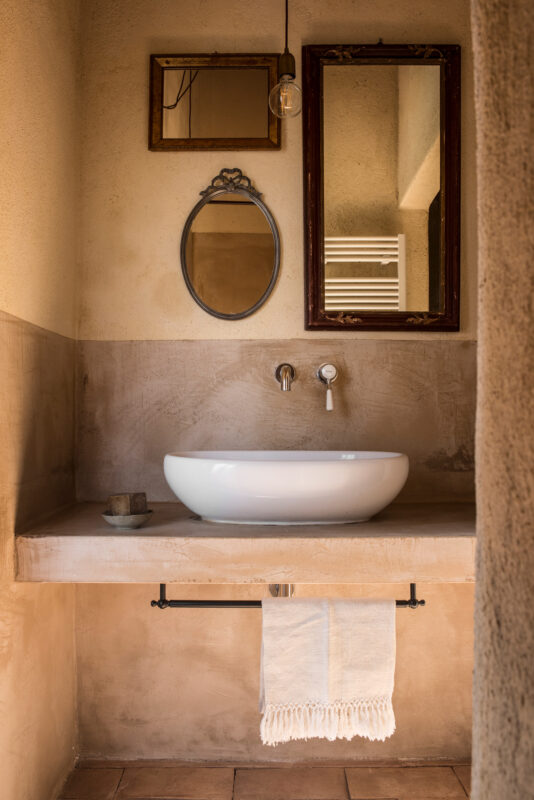
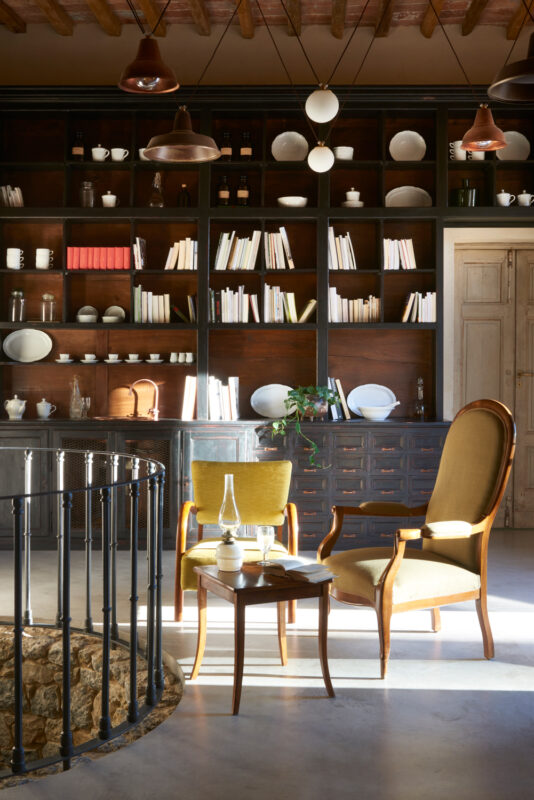
A look inside
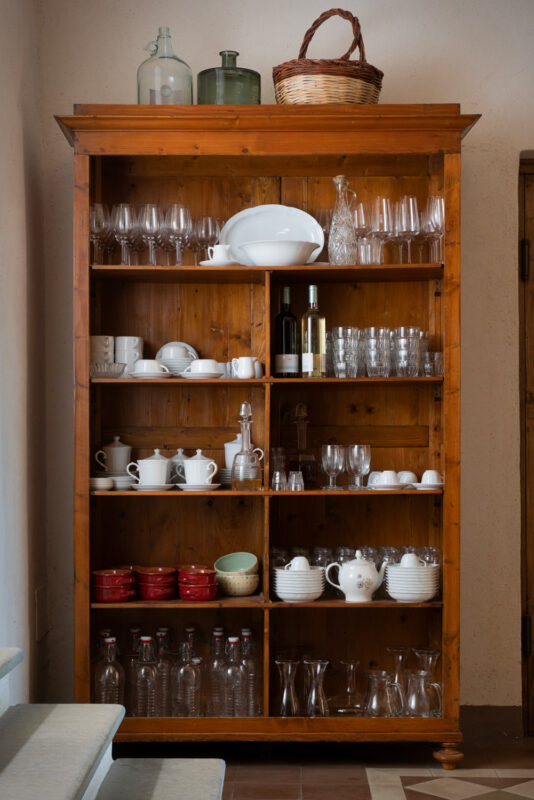
The common areas are restrained and precisely placed: restaurant, terrace, library, bottega, and the pool as the still centre of the day.
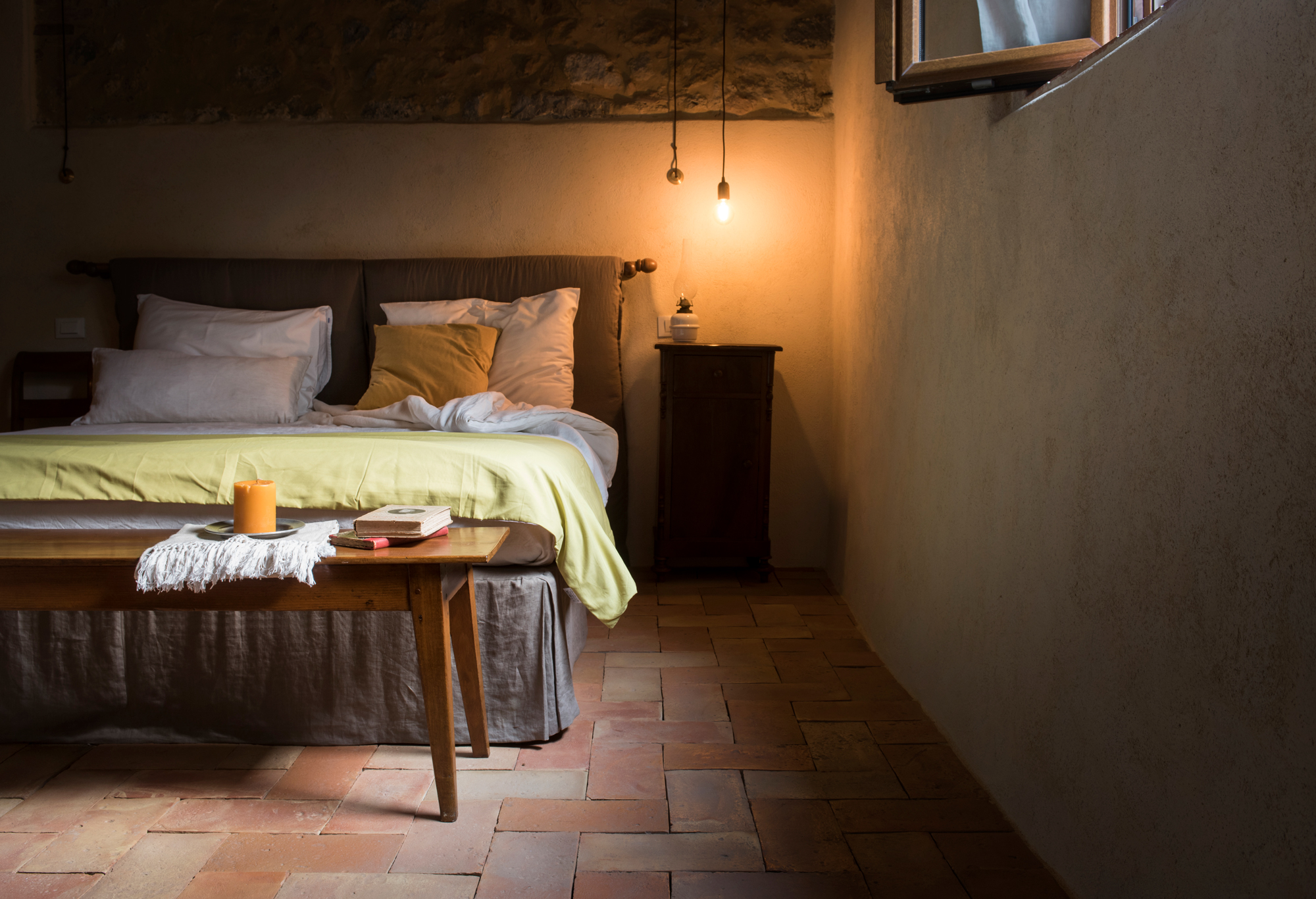
The rooms and suites occupy the historic building and avoid decorative overstatement in favour of a clear logic of light, material and quiet. Some open outward with balconies or garden access; others frame the landscape and the view towards San Gimignano.
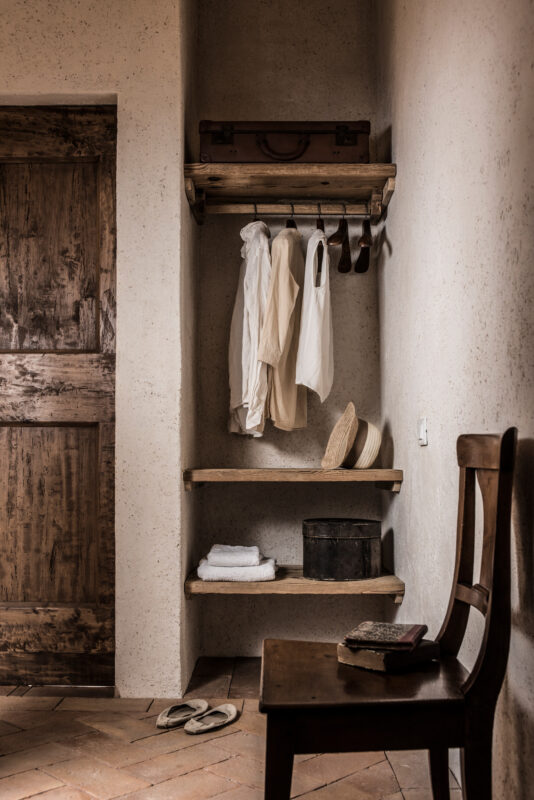
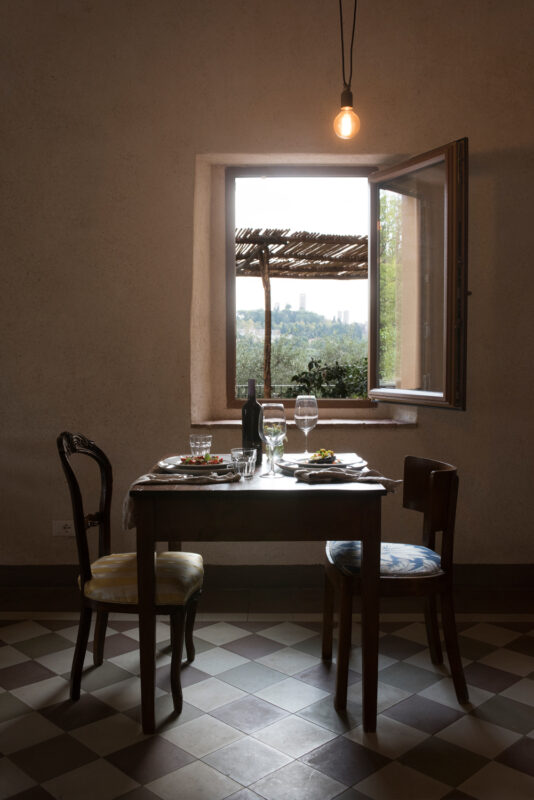
Televisions are deliberately absent; even that feels less like a gesture than a system decision. More important are good beds, linen sheets, natural materials, understated bathrooms and an atmosphere geared towards restoration rather than entertainment. Categories such as Elemento and Botanica hint at how individually the rooms are conceived.
Cuisine
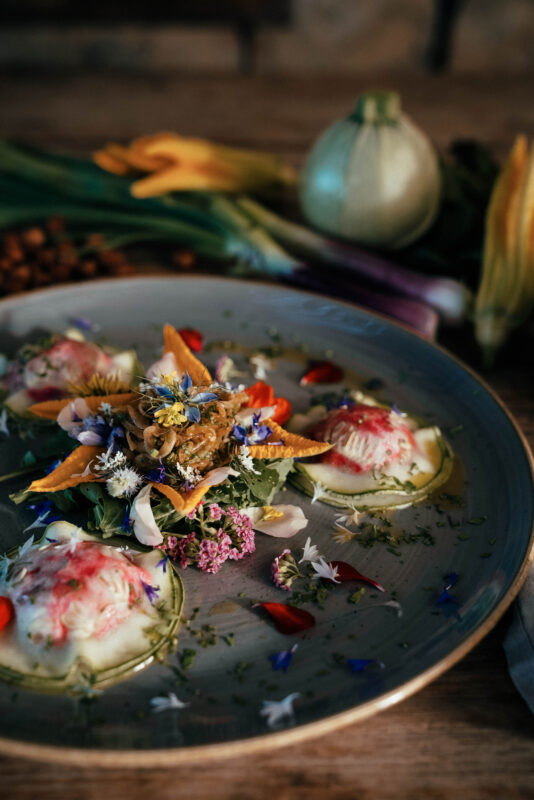
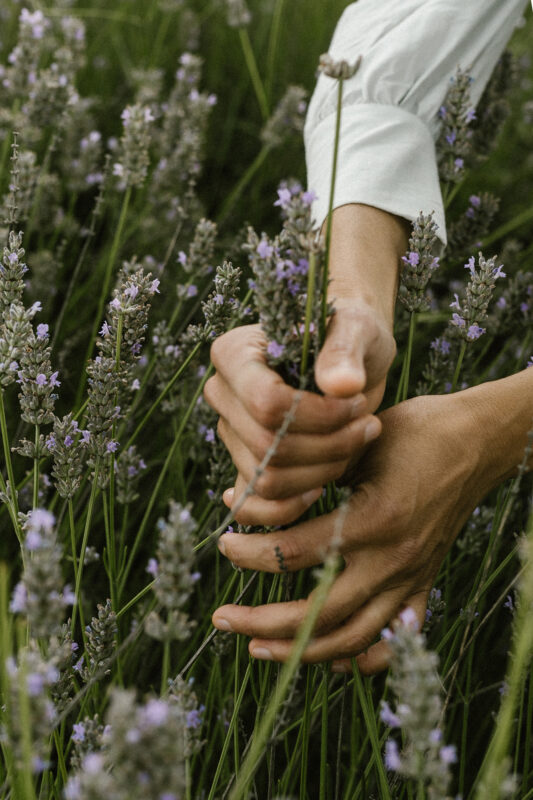
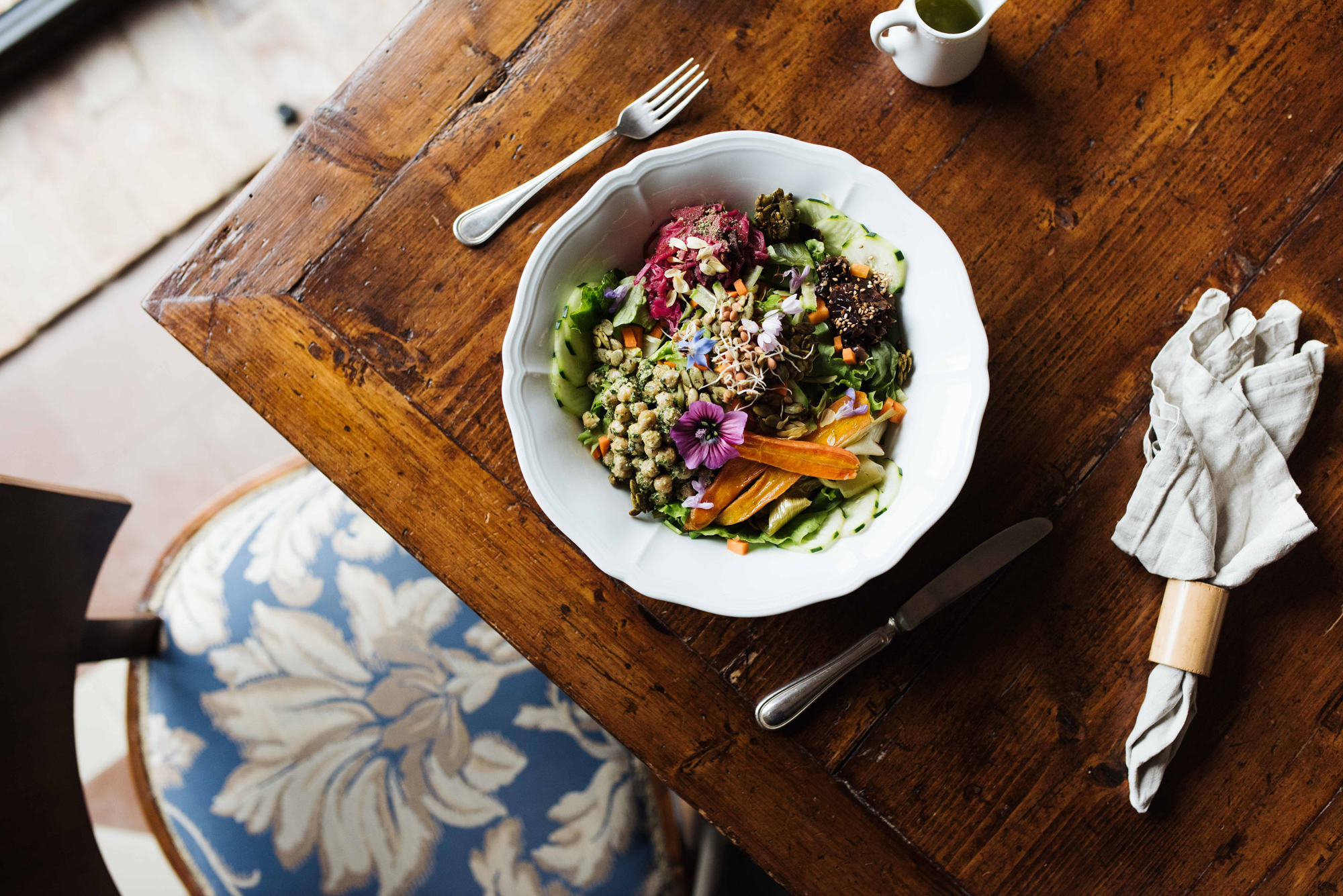
The Farm Restaurant is the intellectual and sensory centre of the house, not as a stage but as a way of thinking. Cooking is entirely vegan and organic, guided by a seed-to-table approach that feels, in the best sense, old-fashioned and at the same time distinctly contemporary. Much comes directly from Agrivilla i Pini’s gardens; the rest is sourced from small organic producers nearby.
© I Pini
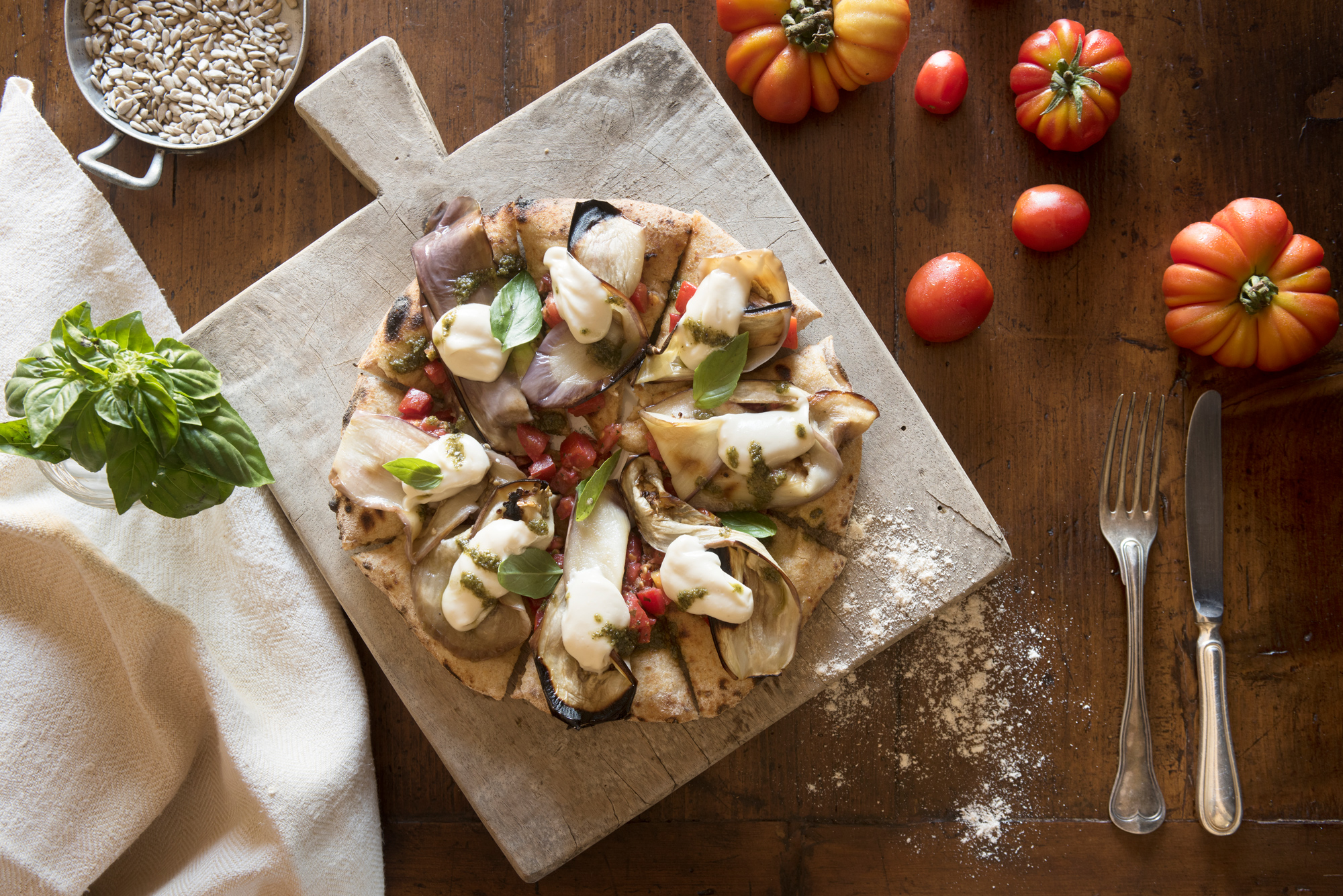
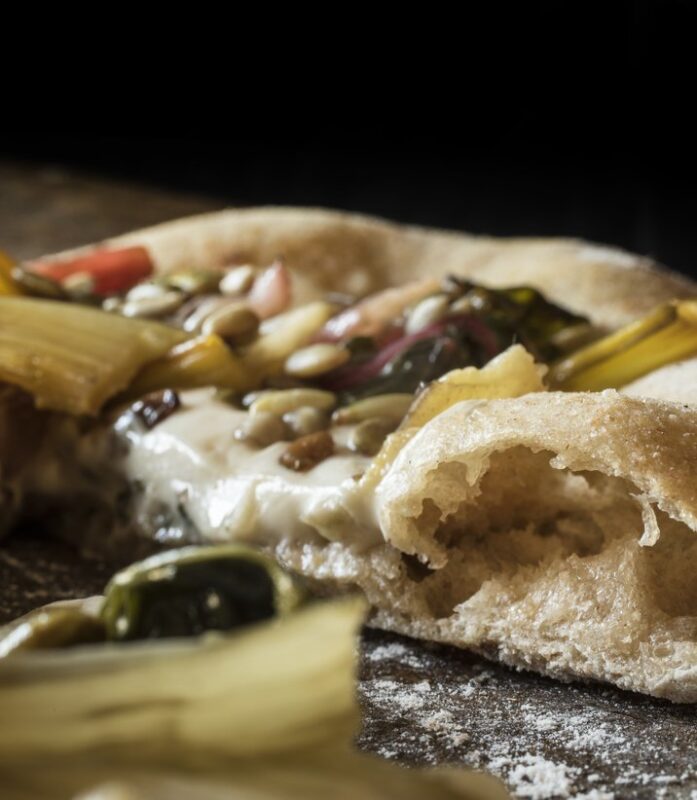
On Thursdays, pizza from the wood oven replaces the formal dinner structure, a sensible move, since seriousness need not always become stiff.
© I Pini
© I Pini
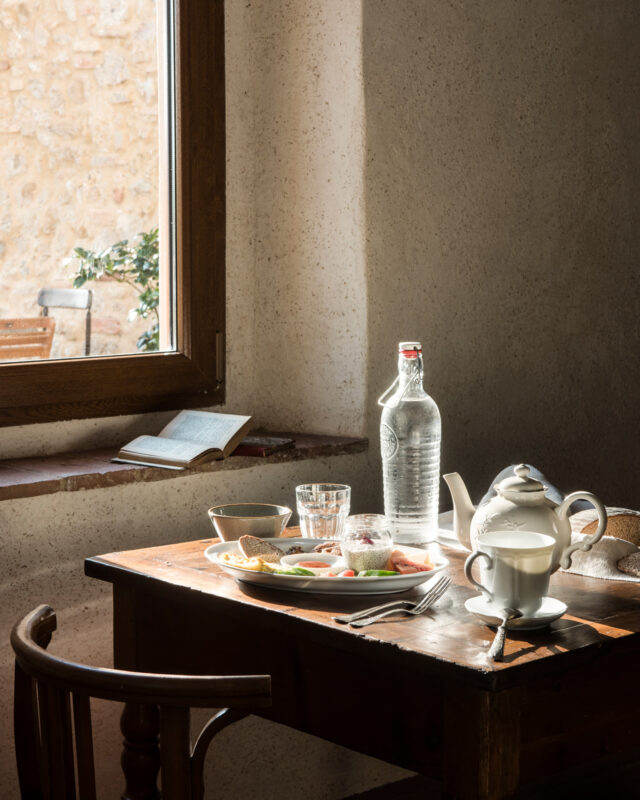
Breakfast begins with sourdough bread from the wood-fired oven, pastries, jams and cold-pressed juices; lunch stays light, and dinner takes the form of a changing four-course menu.
© I Pini
What stands out is the kitchen’s consistency: no refined sugar, refined flour, soy, corn or canola oil. The result is neither a moralised plate nor an aesthetic of substitution, but a cuisine with texture, seasonality and conviction. It shows that restraint is often only the wrong word for precision.
© I Pini
© I Pini
Wellness & Relaxation
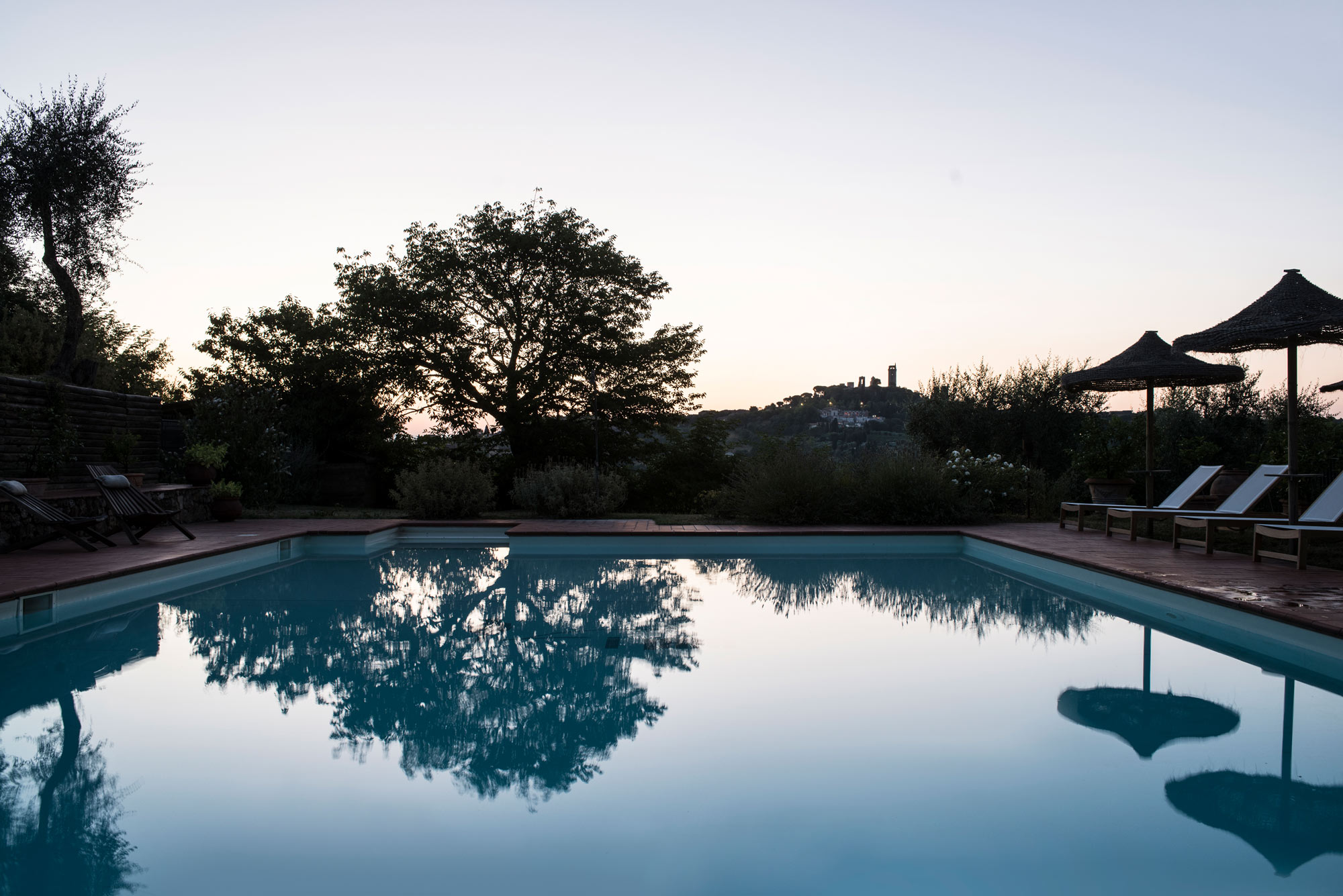
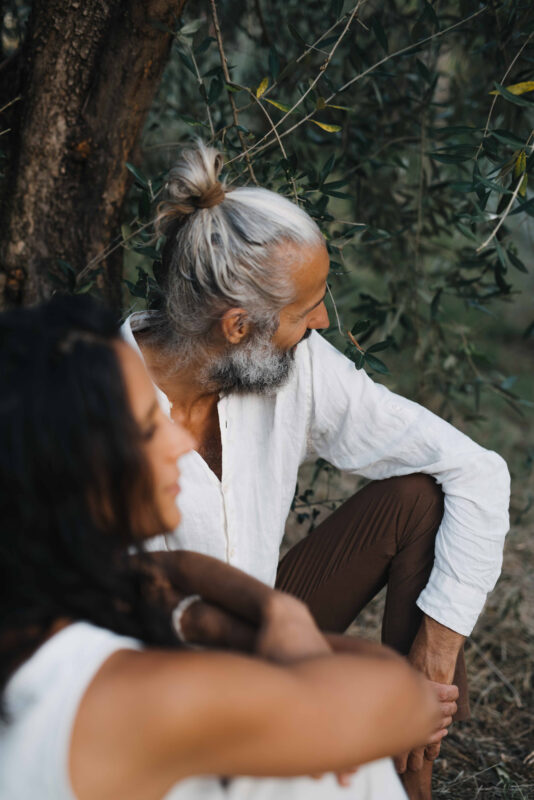
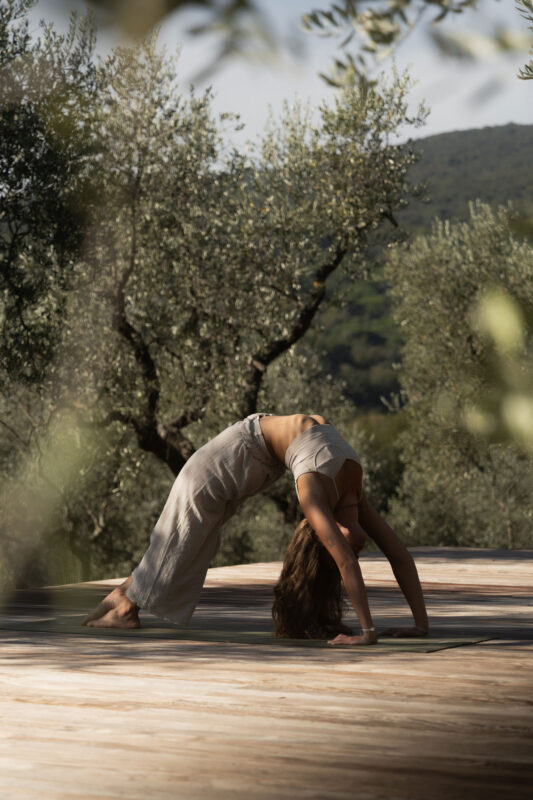
Wellness here is not administered as an infrastructure package, but understood as an atmospheric totality. The saltwater pool lies in the landscape with broad views over olive groves and hills, as if it belonged more to the land than to the hotel. There is yoga in nature, quiet places to read, terraces, shaded corners and paths through the greenery.
© I Pini
Agrivilla i Pini treats rest not as an add-on but as the consequence of good decisions: low stimulus, good materials, sensible light, functional silence. Precisely because the house does not simulate excess provision, relaxation arrives faster here than in many hotels with a far larger spa vocabulary. This is not spectacular. It is better.
© I Pini
© I Pini
Surrounding area
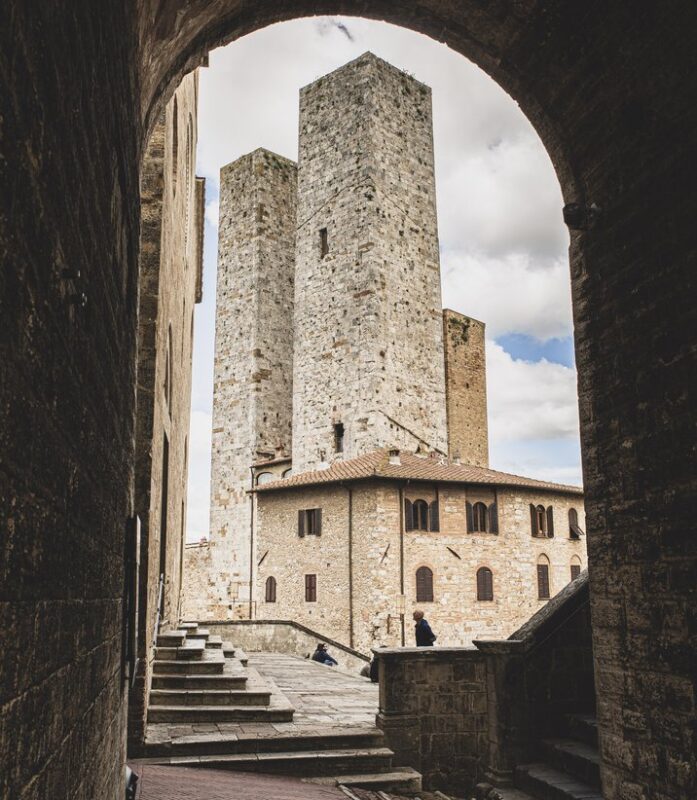
In the immediate vicinity, San Gimignano is the obvious point of reference, though one should not process the town merely as a medieval backdrop. It becomes more interesting where old stone meets contemporary intelligence. Galleria Continua has long been one of the region’s relevant addresses for international contemporary art and in this town feels almost like a small aesthetic disturbance, in the best sense. Also worth seeing is the gallery of modern and contemporary art at Santa Chiara, which gives the place a second, quieter layer.
Anyone in search of local craft should look less at the tourist display and more at the ceramic workshops; that is where something one might still call regionality without embarrassment begins. Then there is the Vernaccia Wine Experience at the Rocca di Montestaffoli, which makes wine legible not just as tasting, but as cultural history. For further excursions, Volterra and Siena are close enough not to feel overplanned. Each shifts the perspective: Volterra towards the Etruscan and the austere, Siena towards a more urban, more complex form of Tuscan beauty.
Activities
For seekers of quiet: mornings by the saltwater pool overlooking olive groves and hills; reading in the library or on the terrace; yoga in nature without wellness choreography; walks through the gardens, vineyards and the wider grounds.
For culinary travellers: breakfast with bread from the wood-fired oven, pastries and juices; dinner at the Farm Restaurant with its changing four-course menu; Thursday pizza nights; tastings of house wine, olive oil and regional products.
For guests with an eye for design: read the biological renovation as a built statement; notice the material details in terracotta, linen, timber and natural insulation; watch how historical substance and contemporary clarity interlock.
For culture-minded visitors: explore San Gimignano early or late, when the town regains contour; visit Galleria Continua and Santa Chiara as counterweights to postcard Tuscany; use the Vernaccia Wine Experience as an entry into regional wine culture; plan day trips to Volterra or Siena, each with its own cultural temperature.
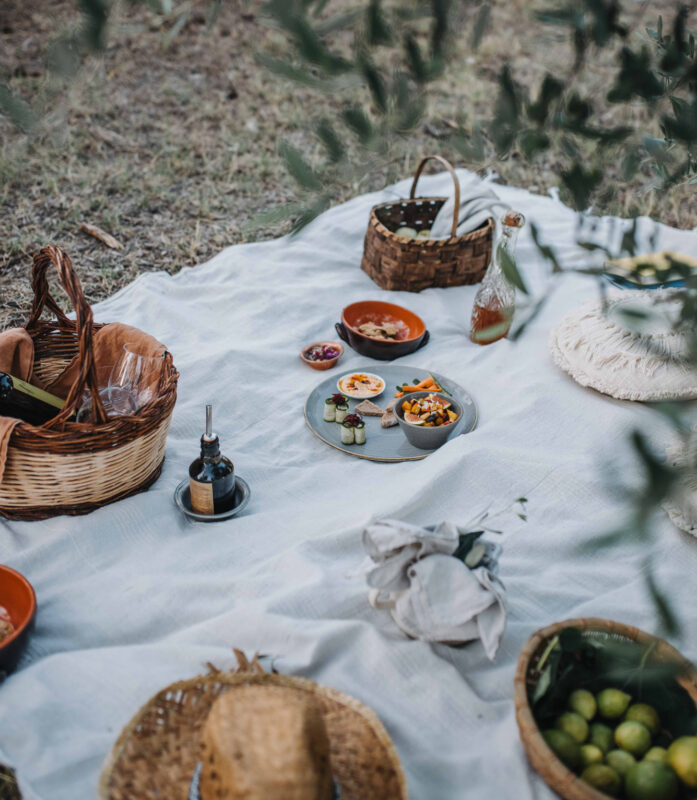
For active guests: walk sections of the Via Francigena; move through the hills around San Gimignano; take longer excursions to thermal towns and smaller country settlements.
For slow-travel travellers: arrive by train to Poggibonsi and continue by transfer; change locations less and stay present more; treat the hotel as a destination rather than a base camp; understand the region through cuisine, materiality and landscape rather than checklists.
Details
- 11 rooms and suites in a historic country estate
- individually designed categories, including the documented room types Elemento and Botanica
- Saltwater pool, library, terrace, bottega, gardens, vineyards and olive groves
- Fully vegan, organic Farm Restaurant
- Breakfast, lunch and dinner; wood-fired pizza on Thursdays
- Estate-produced wine and olive oil
- Transfer from Poggibonsi station can be arranged
- Quiet, adult-oriented slow-living atmosphere instead of classic resort programming