
Inspired by a hand-painted motif discovered during renovation work on the original 15th-century floor, the hotel’s current stag logo was created. Large parts of the house’s past serve as a backdrop for today’s eclectic interior, which boasts treasures from all over the world.

The location
Just a 3-minute walk from Seville’s famous cathedral and the Alcázar Palace stands a luxurious guest house. This typical Sevillian palace with a garden and swimming pool is situated on a small hill in the city’s Jewish quarter and is reminiscent of its glorious past, when its location protected Seville from the floods of the Guadalquivir River until the 18th century.
The house of Casa del Limonero dates back mainly to the 15th century, when a wealthy Jewish man called it his home. It was him who created the ‘Almatraya’ ceramic floor, which can still be seen today as a vertical wall in the reception area, a true masterpiece of the house discovered during a floor survey.
Backstory
In the midst of the Covid pandemic, Martina, director of Casa del Limonero, began selecting materials and planning construction work together with the French owner. But her work was not done yet. Cam was asked to manage the hotel, an opportunity she did not want to miss. She took up the post in January 2024, and a year later, in February 2025, Casa del Limonero opened its doors.
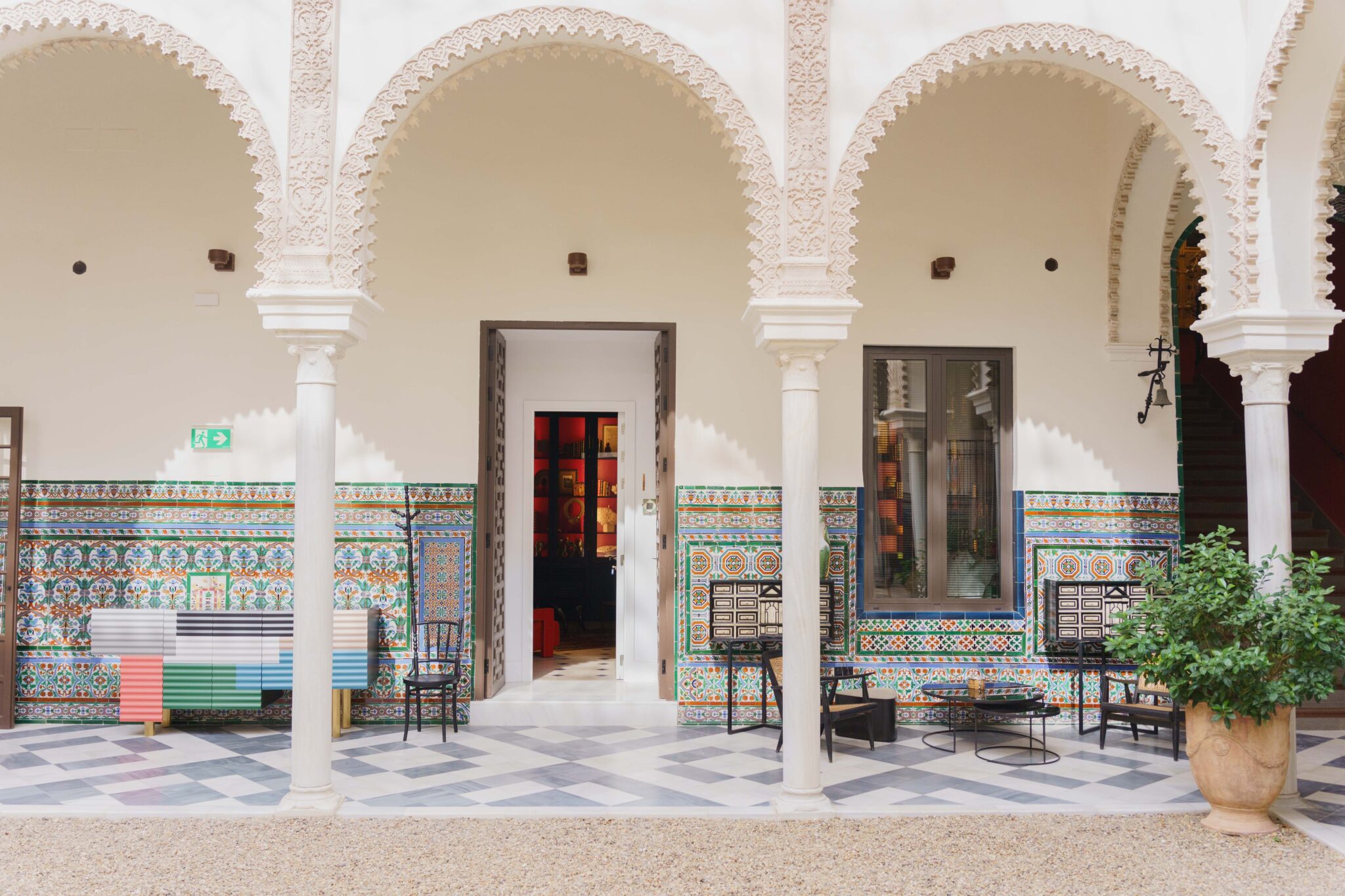
For Martina, the historic house with its international furnishings and artwork allows guests to travel through time and countries. As soon as the old wooden door closes, it feels like entering a cabinet of curiosities.

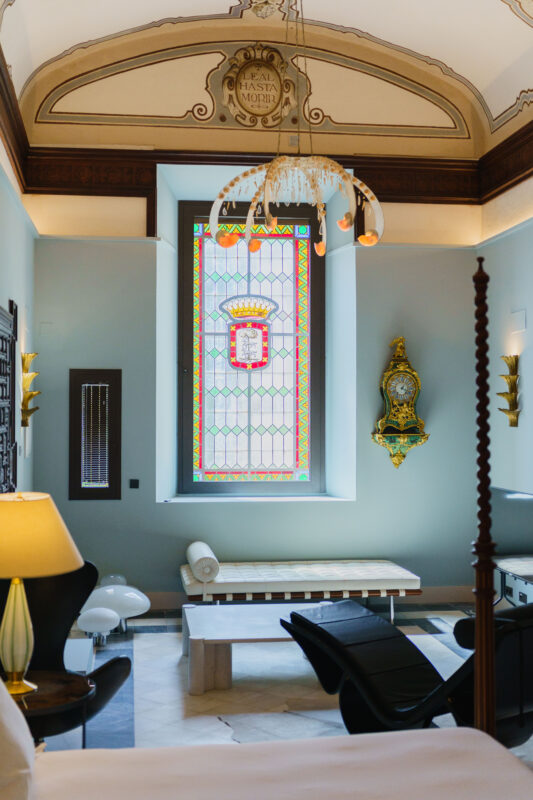
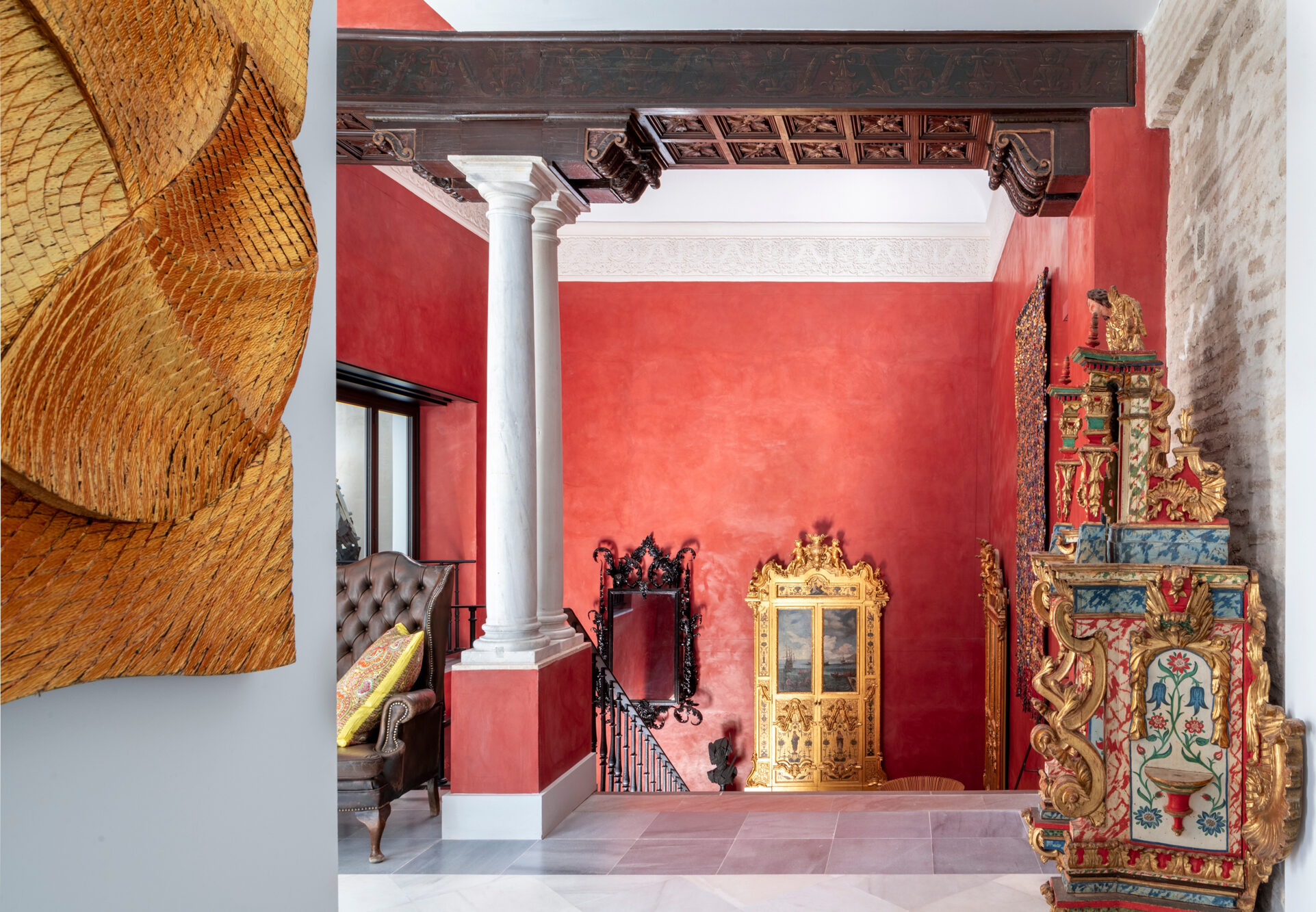
While the late Republican Roman wall surrounds the site, archaeological excavations have uncovered remains of paved roads that connected the enclave with the aristocratic domus of imperial Seville. The Mudéjar elements added in the 15th century have been preserved, including the multicoloured wooden ceiling ‘Alfarje’ in the breakfast room and the flooring made of Valencian and Sevillian ceramics. The latter combines Gothic and Nasrid motifs and can now be seen in its restored form in the hotel reception – it still bears witness to the wealth of the Marmolejo family, who converted to Judaism.
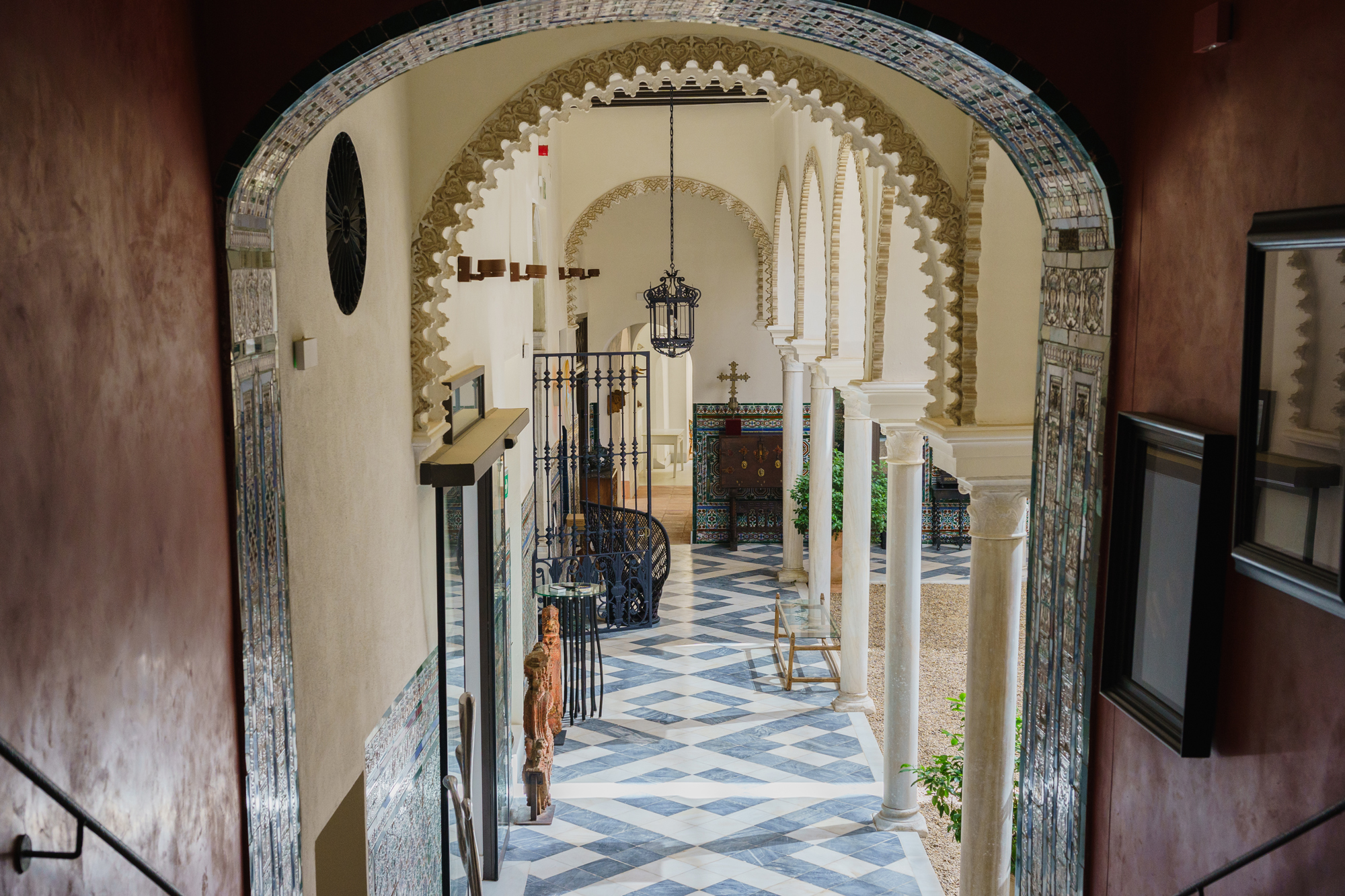
In the following century, the palace was redesigned and a marble façade was added. Renovations were not uncommon at that time. The galleries and courtyard were also redesigned, inspired by the Italian ideas of the time. When the Marquis de Urbina took ownership of the house in the 19th century, decorative mouldings were added, the interiors were refined and the ceilings were renovated. The last famous resident of the house, the Marquis de las Torres, lived here in the 20th century.
Architecture & interior
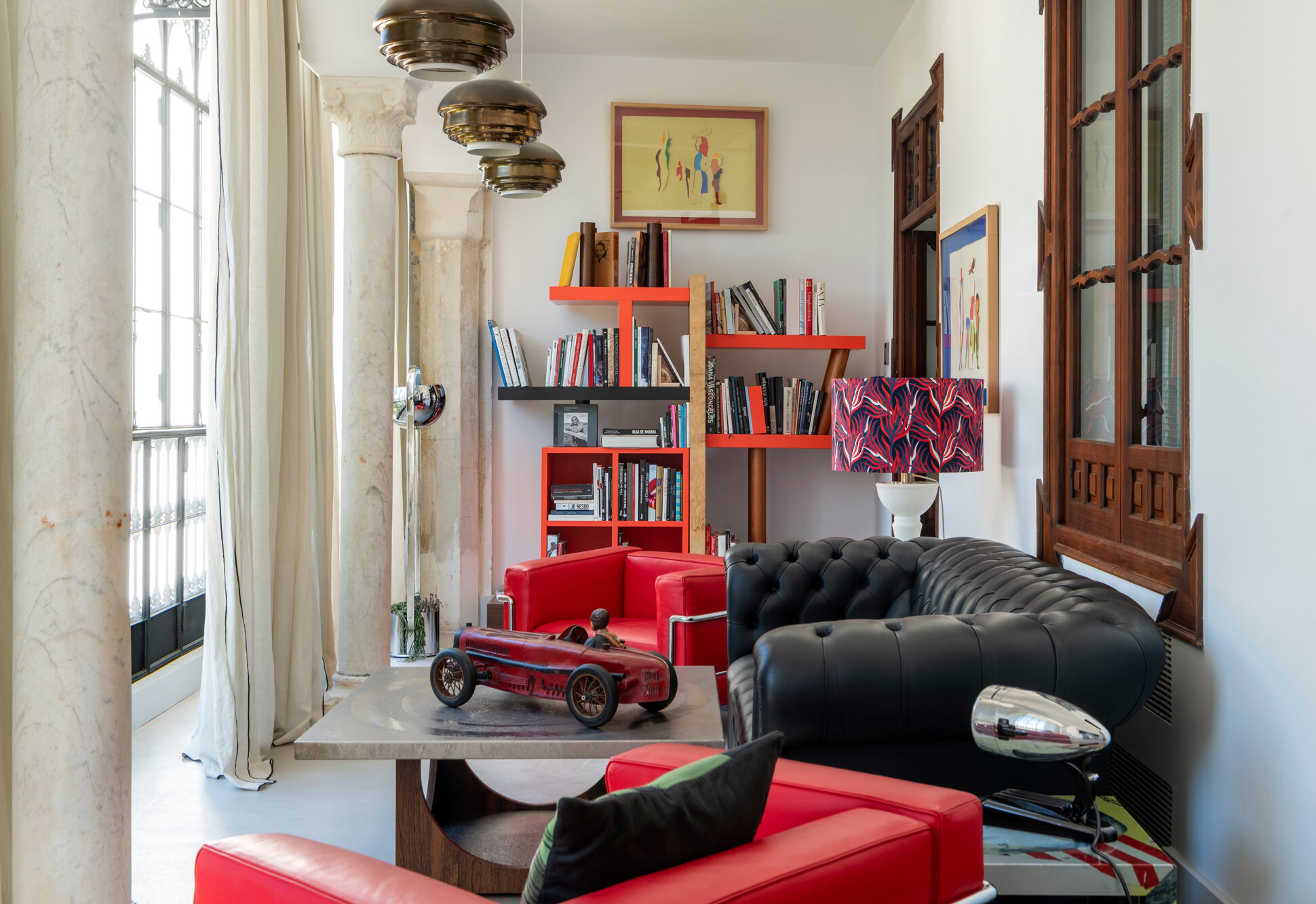
Inspired by the owners’ travels around the world, Casa del Limonero was decorated according to her personality and taste. Wooden furnishings, old ceramic tables and bathroom tiles were provided by artisans and local suppliers based on her ideas.
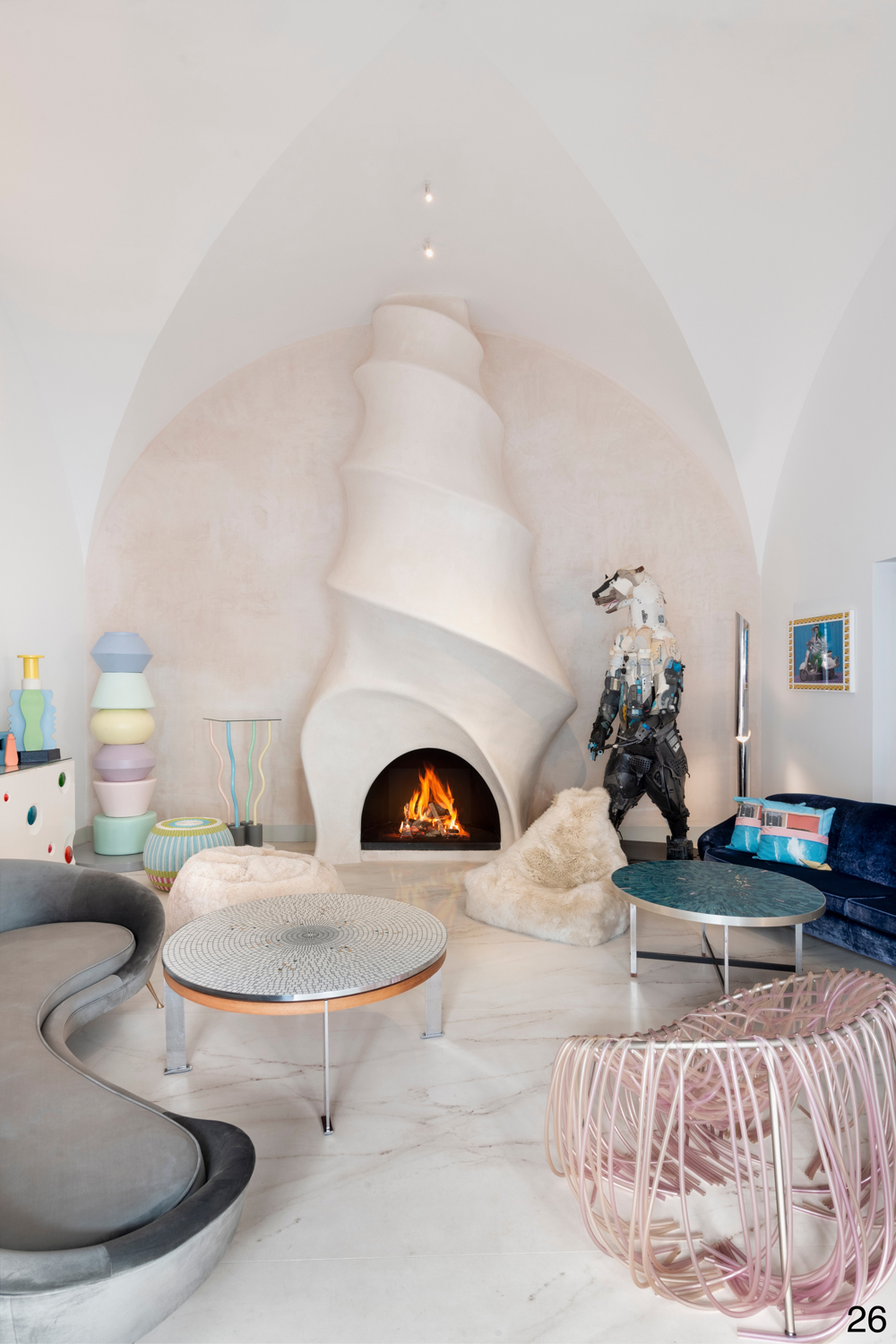
She worked with Seville-based interior designer Ernesto de Ceano, for example. His beige stucco fireplace with swirling conical forms is inspired by the shape of an elongated tower shell.
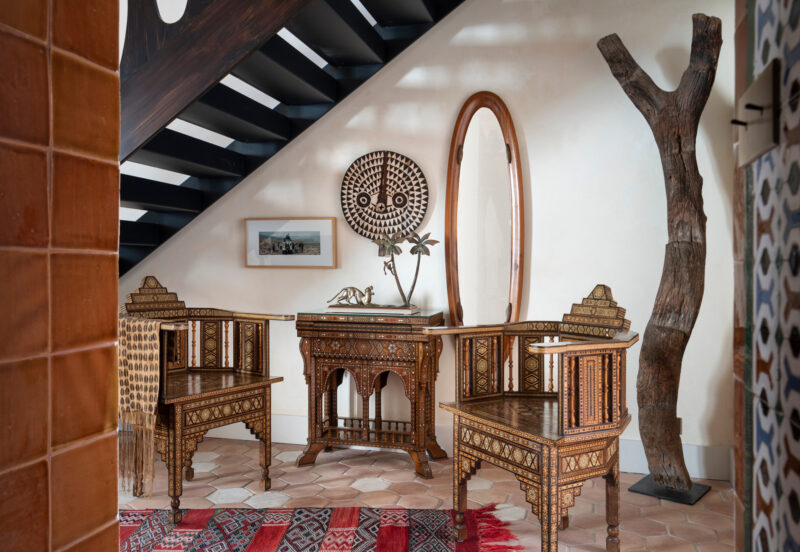
Carmen Riego, a local expert in heritage restoration, was responsible for restoring the delicate ceramic murals. And Luis Balmaseda, a cabinetmaker from Écija, worked on the original woodwork.
Casa del Limonero is not only a treasure trove of art pieces, it is also rich in colour. Night blue, which can be found in the wall plate of the front door, on iron elements and the original ceiling suspensions and kimonos, is one key colour in the house. It is also the exact same colour used by the Spanish national police.

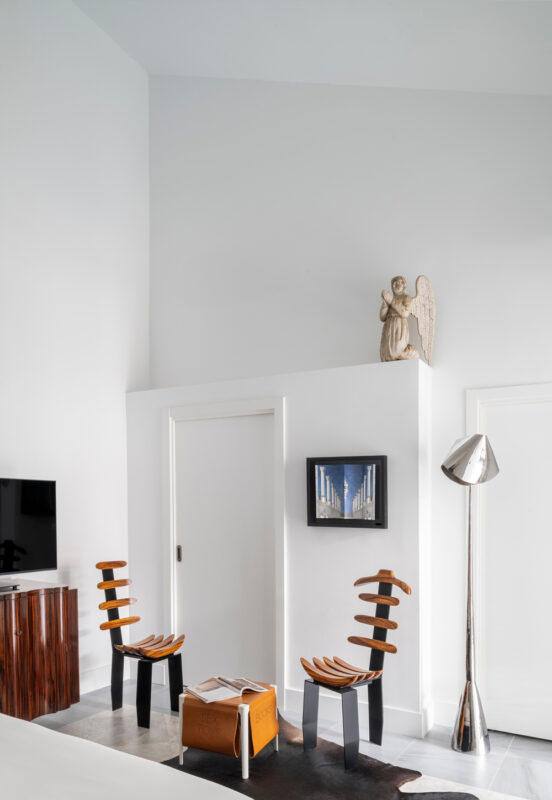
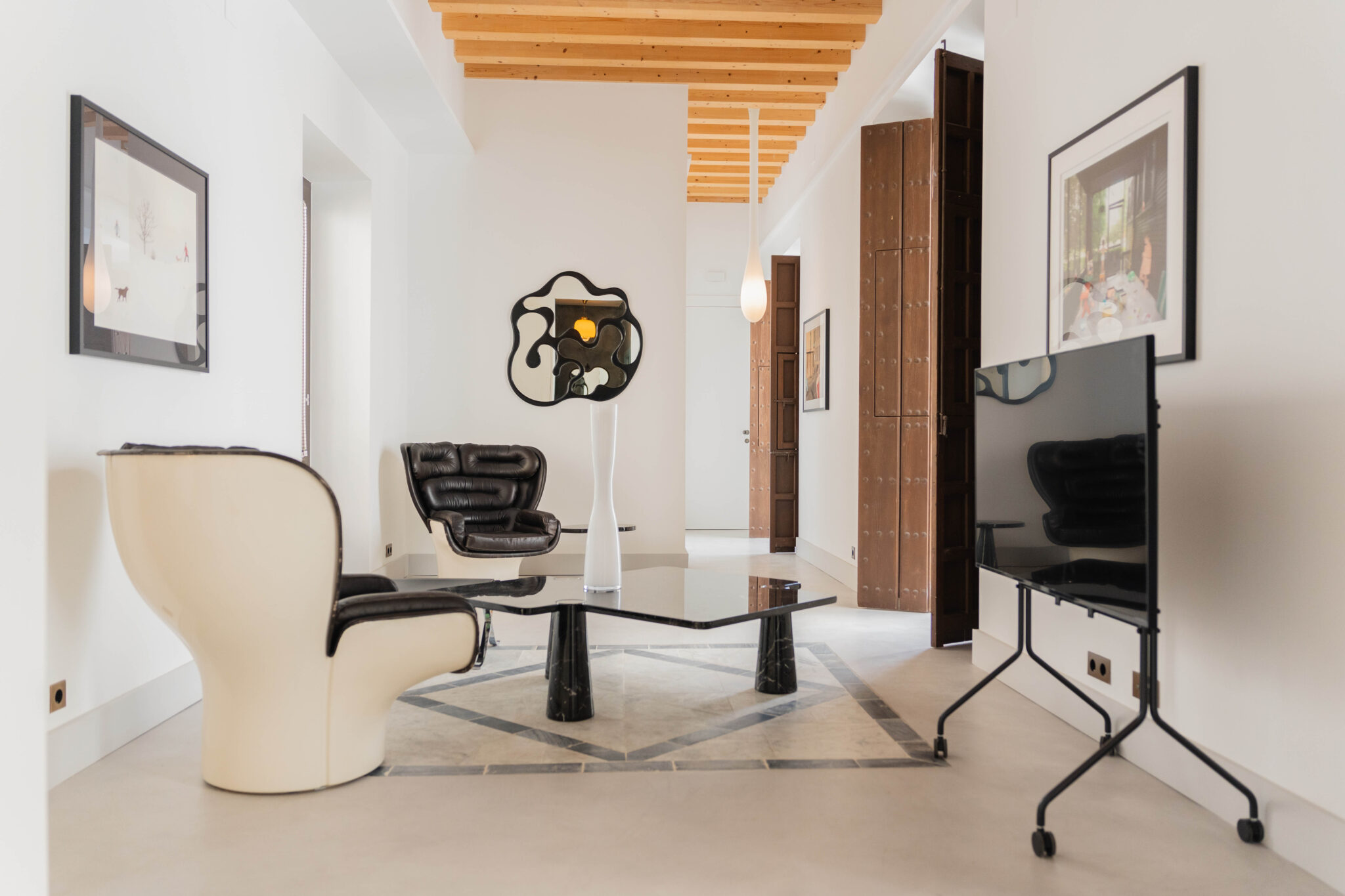
Even though the house has adapted to the fashions and needs of each era over the centuries, it has nevertheless retained its essence. Today, the interior is adorned with modern furnishings that blend harmoniously into the historical setting.
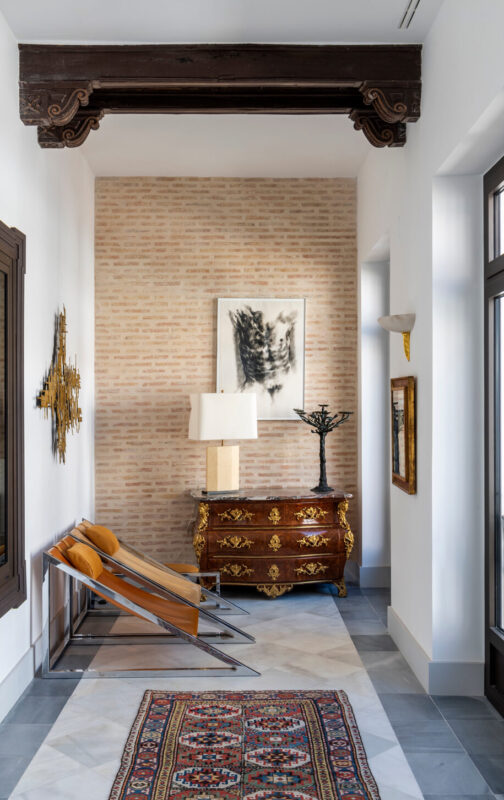
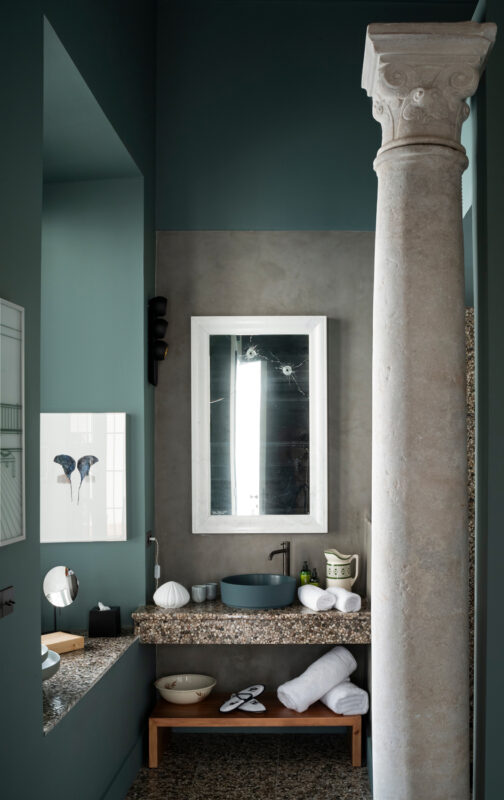
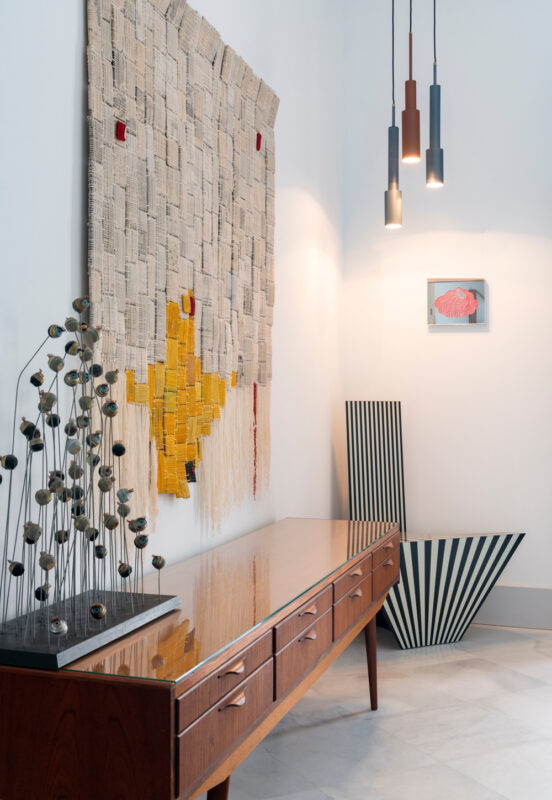
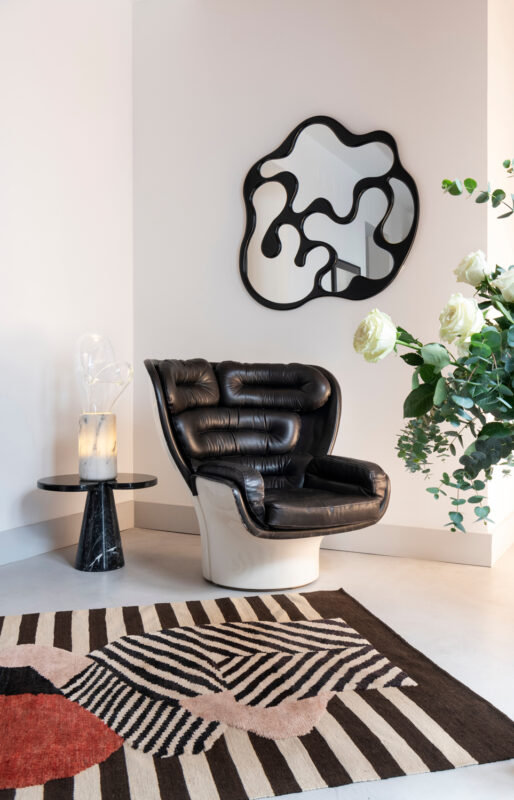
The palace is furnished with seating pieces from the 1960s “Mies” loungers by Archizoom Associati, ebony and bone bureau from Renaissance Italy. An art deco rosewood table by Jacques Adnet is paired with a Baroque church altarpiece from Mexico and a multicoloured glass and aluminium cabinet by Doshi Levien.
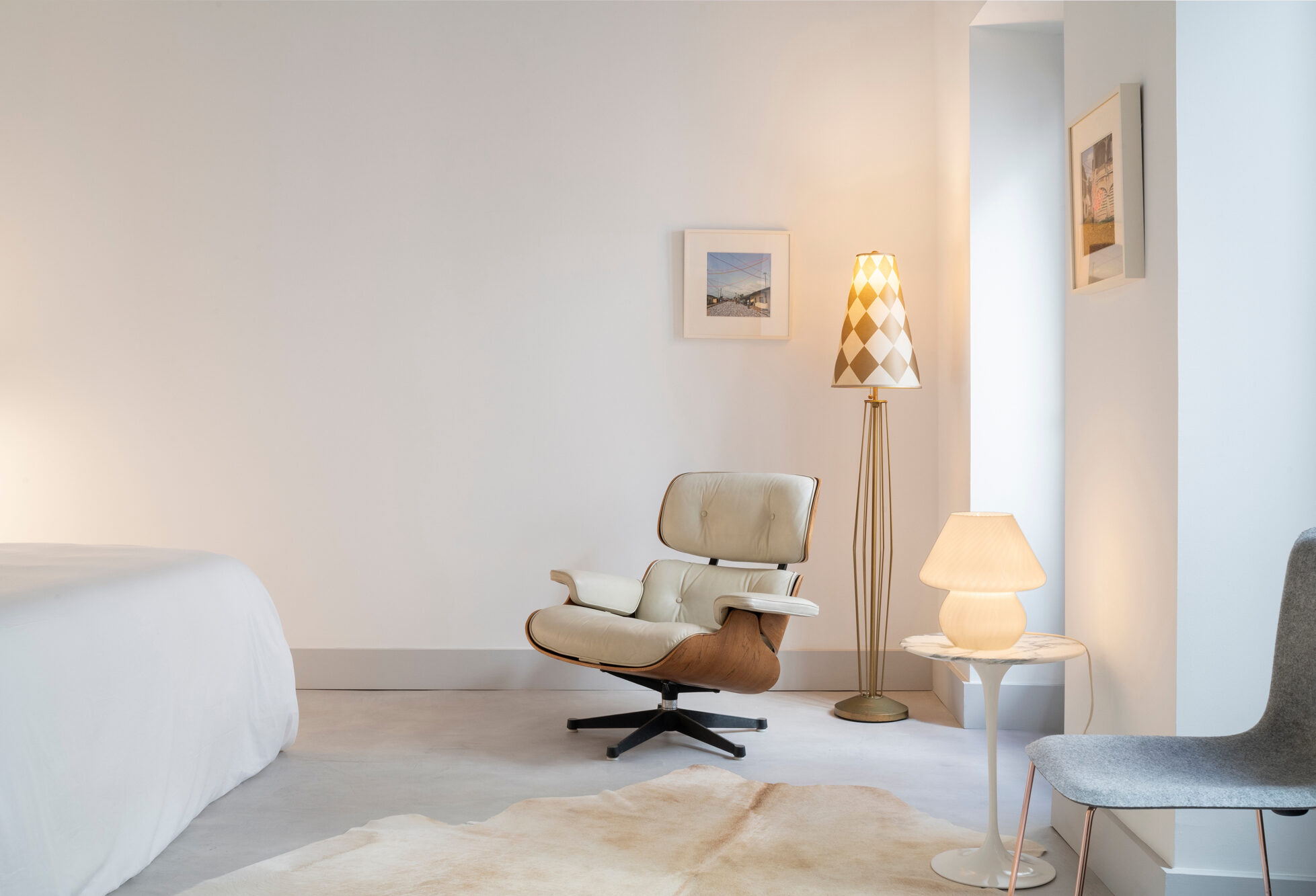
In the dining room, an abstract painting by Spanish painter Manolo Valdés adorns the interior, accompanied by a wall hanging by Malian textile artist Abdoulaye Konate and a crochet-covered bull’s head by Joana Vasconcelos.
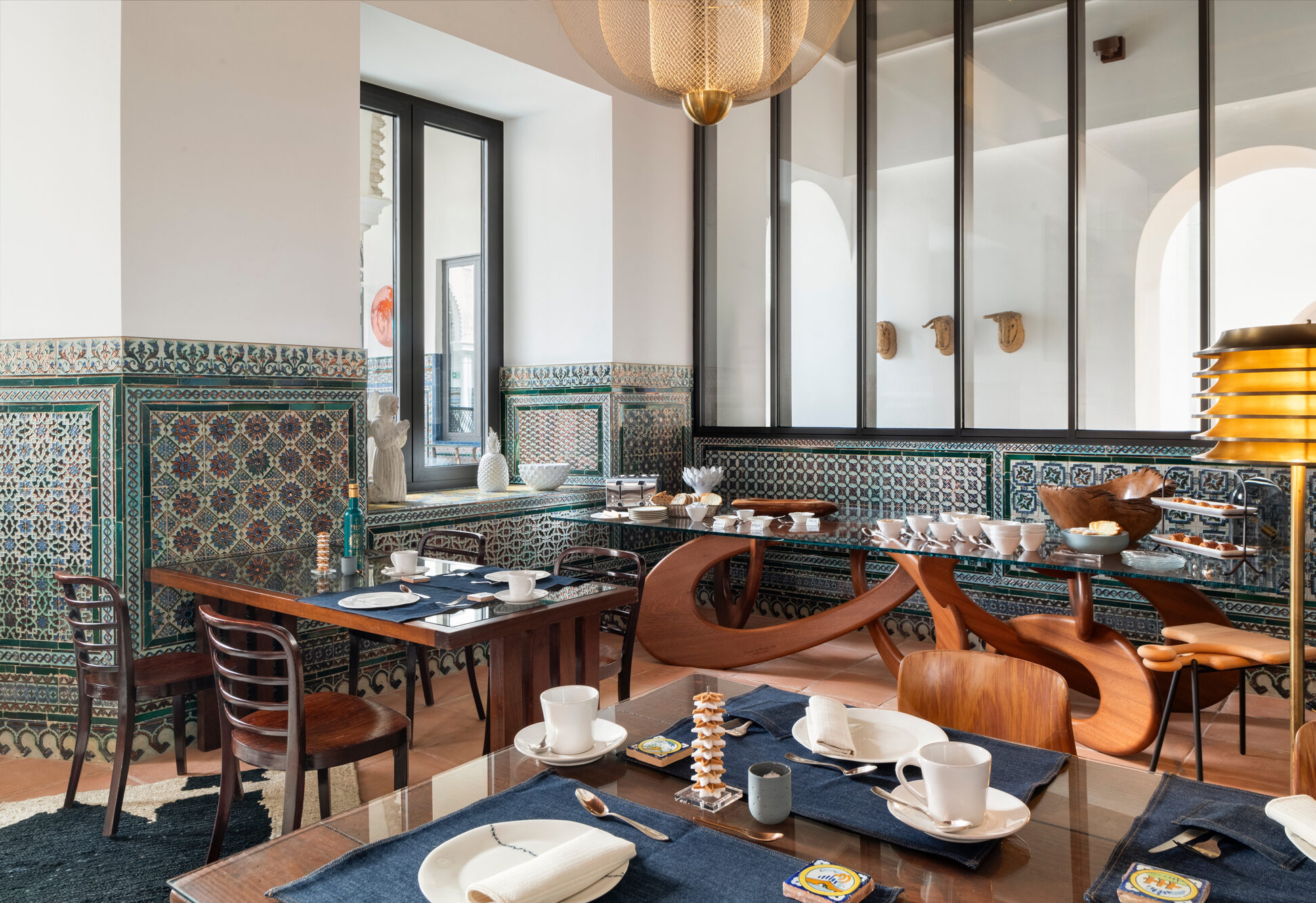
The walls of the stairway are adorned with a series of black-framed pieces by Mat Collishaw and a plaster installation by Colombian artist Olga de Amaral. The interior of the Casa del Limonero is decorated with photographs by Malick Sidibé, Hassan Hajjaj and Bae Joon Sung.
© Antonio Arévalo
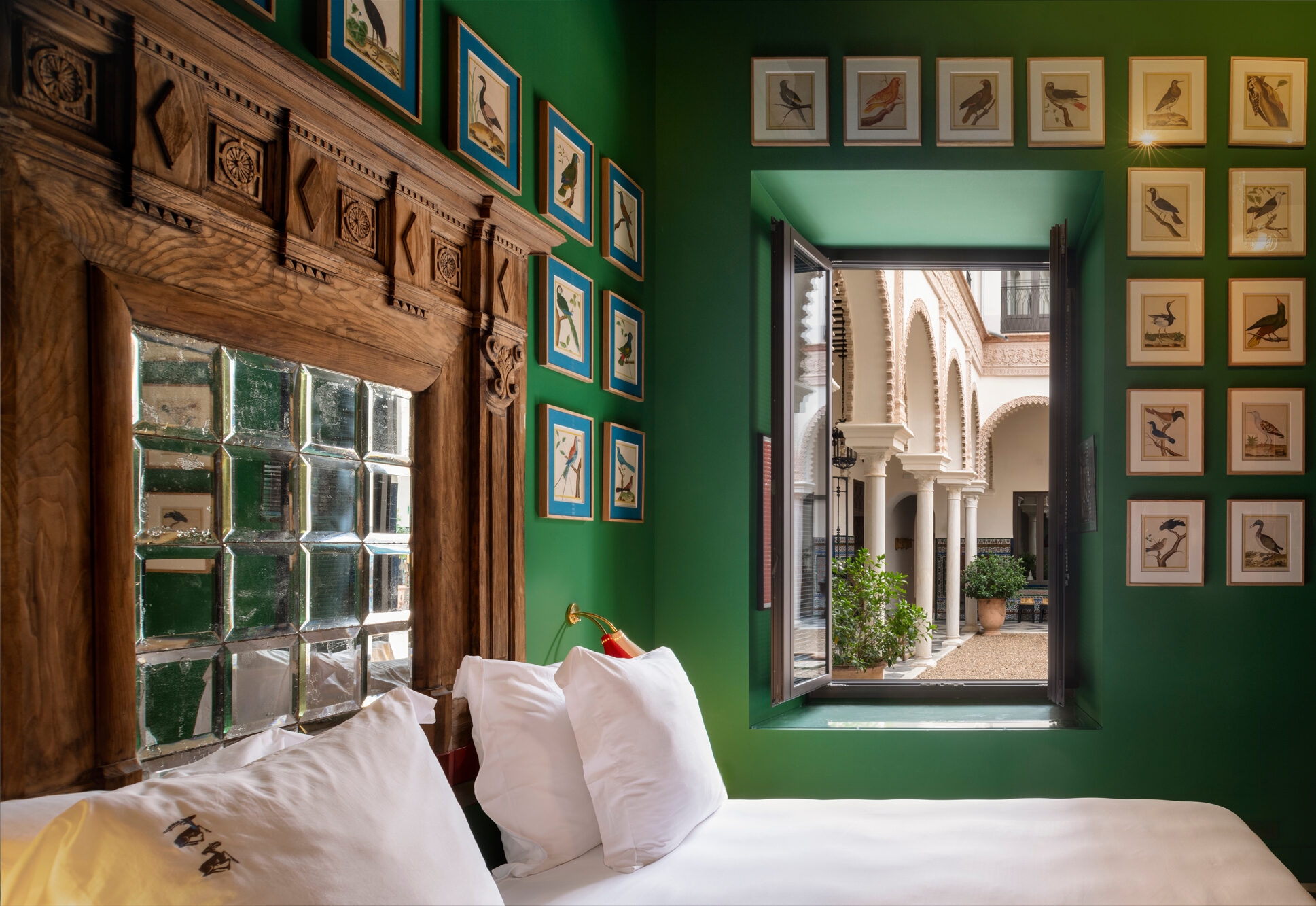
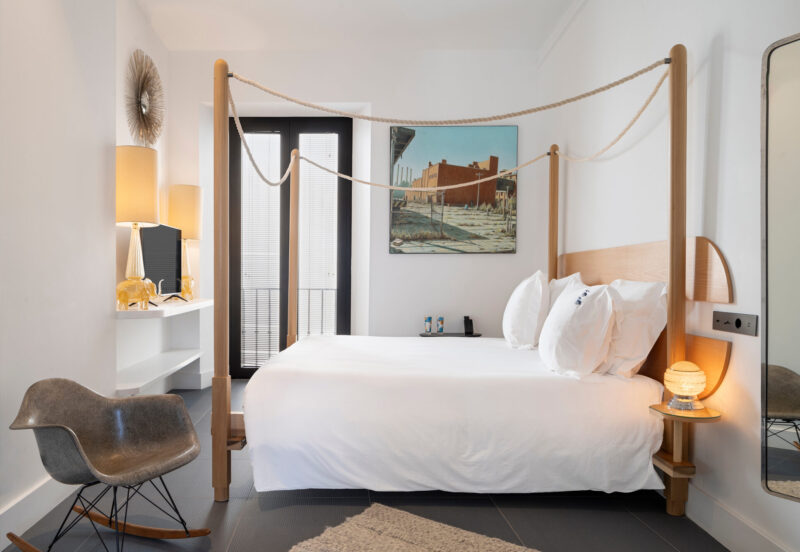
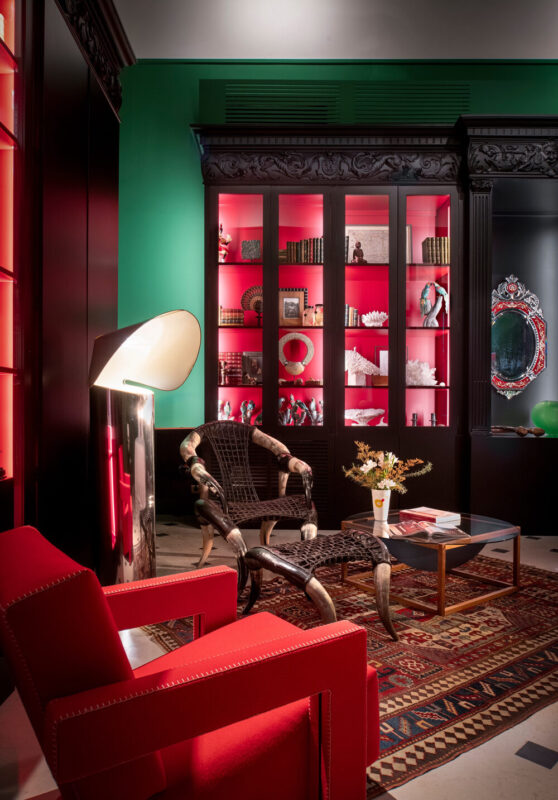
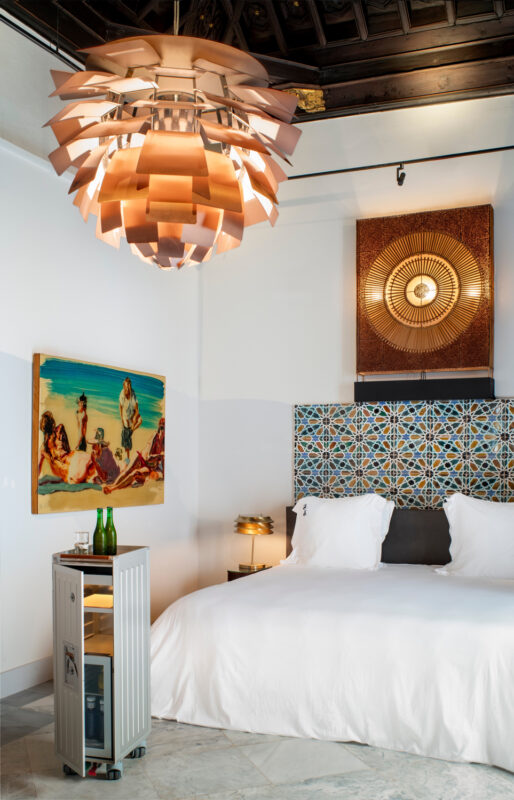
Each of the 14 rooms and suites has its own unique design concept. While the Cabinet of Curiosities room exudes a retro look with its green walls and red backlit cabinets, the Italian junior suite is furnished with a 19th-century fluted wooden bed and a steel navy safe transformed into a minibar.
High-quality mattresses from Tempur provide guests with a peaceful night’s sleep. Of course, modern comforts have not been neglected. All bedrooms are equipped with air conditioning and underfloor heating.
© Antonio Arévalo
Mudejar columns in the central courtyard and ceramic tiles hand-painted with various floral, vegetal and geometric patterns still bear witness to its past.
Wellness & relaxation
Aquamarine Italian and Moroccan tiles cover the pool and hammam area. The original pool was reduced to half its size to save water, as Andalusia has been suffering from droughts for many years. The hotel has set itself the goal of using as little water as possible. For treatments Casa del Limonero invites external therapists to offer relaxing or invigorating massages.
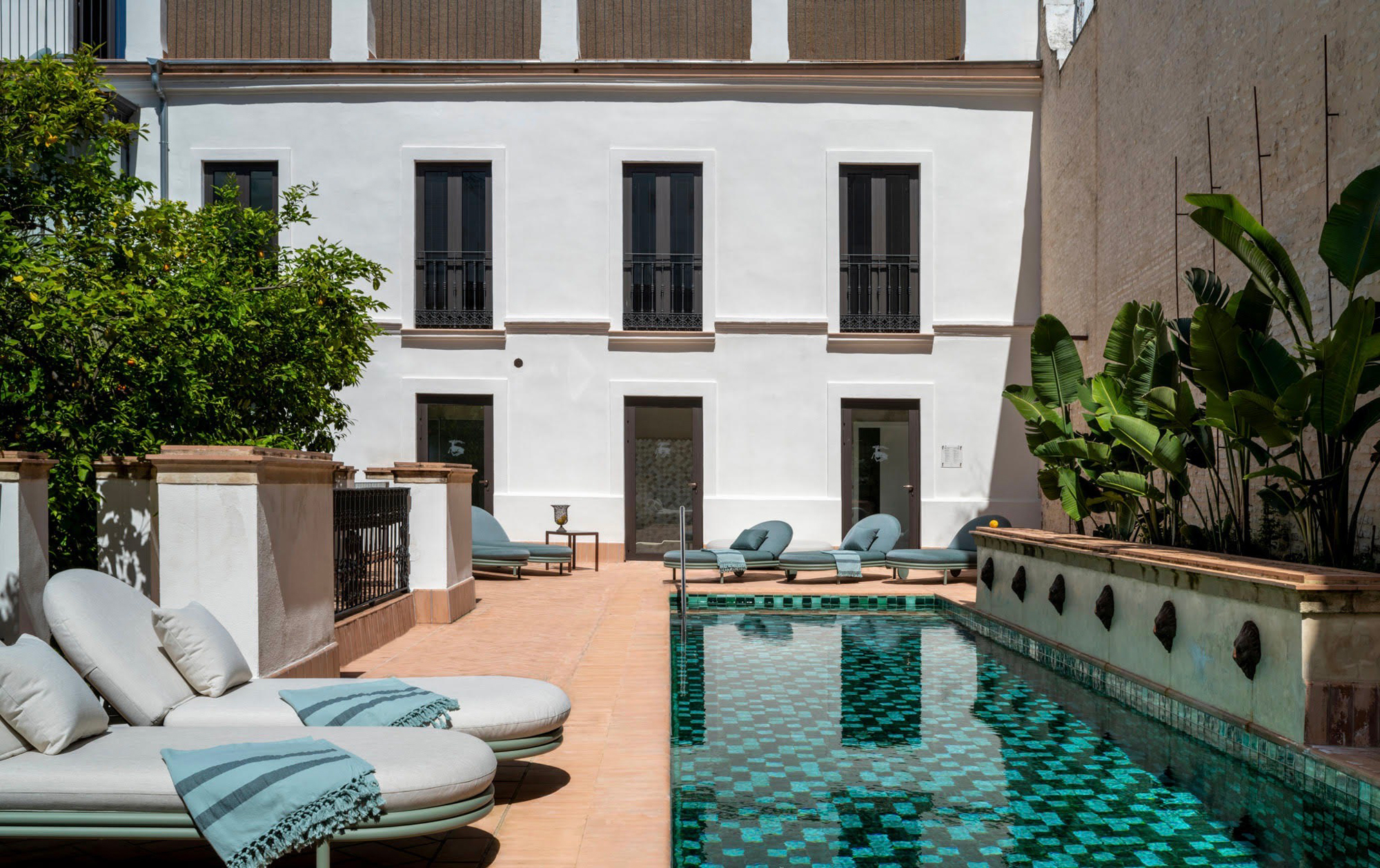
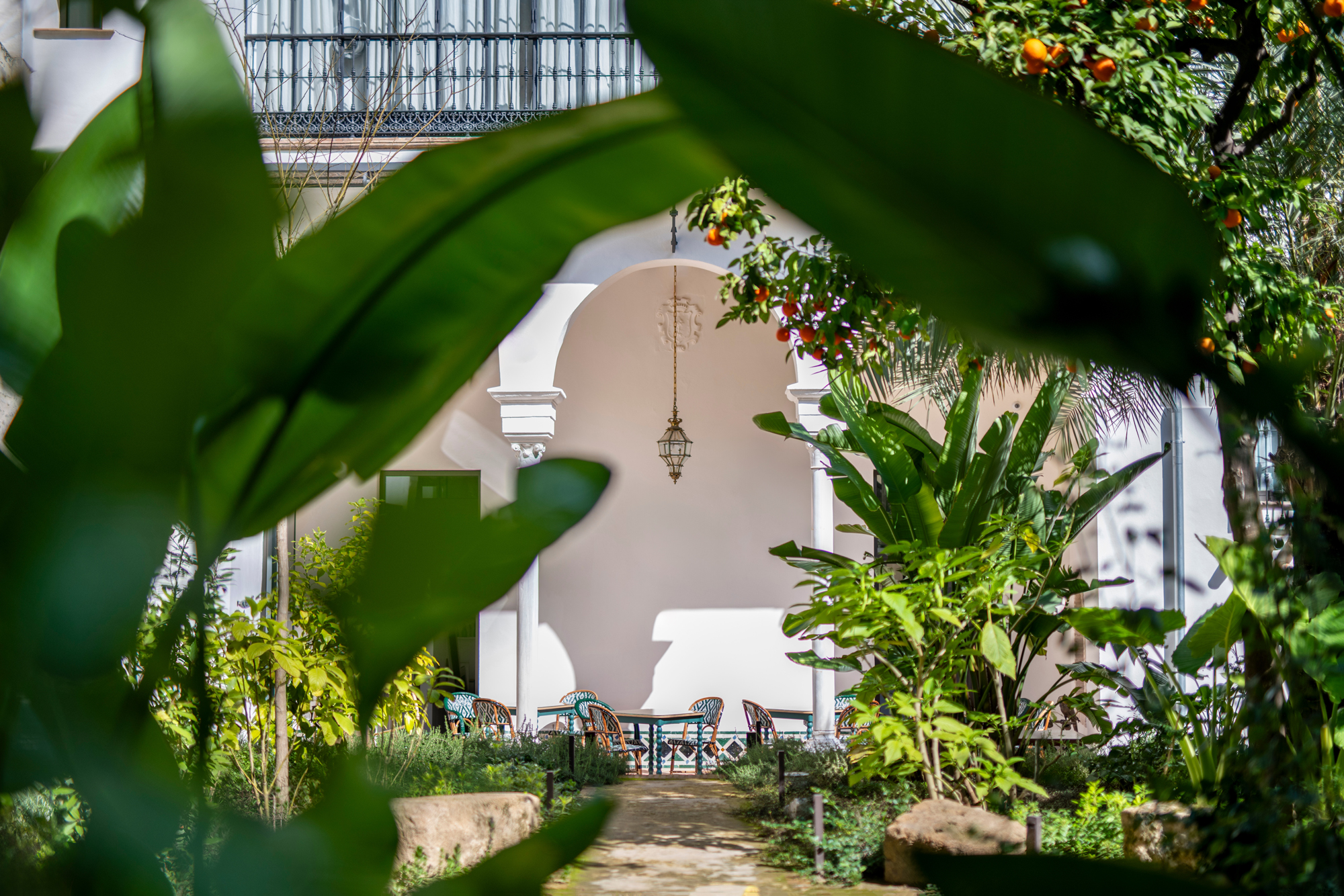
Outside, orange and lemon trees adorn the garden, inviting guests to enjoy an early evening aperitif. For those seeking a view beyond the treetops, the rooftop offers panoramic vistas. The house’s cosy library overlooking the garden and an upstairs lounge with a fireplace provide relaxed, quiet moments of seclusion.
Details
Rooms
All rooms are equipped with air conditioning, heated floors, Wi-Fi, international TV, telephone, minibar, Nespresso coffee machine, kettle, safe, kimonos, slippers and L’Occitane amenities.
Culinary
The hotel uses oranges and lemons from the garden to make its own jams. All organic waste is composted and used for the trees and plants in the garden and the minibar is equipped with plastic-free water cans.
Breakfast
Buffet breakfast from 8:00 to 12:00 a.m. in the breakfast room.
Drinks & cold aperitives
Served in the common areas from 12:00 a.m. to 11:00 p.m.
Wellness & relaxation
- Massage room: From 9:00 a.m. to 9:00 p.m. Please make an appointment in advance at reception for a relaxation or sports massage.
- Hammam: Turkish bath with humid steam. From 9:00 a.m. to 9:00 p.m.
- Swimming pool: Open from April to October. From 9:00 a.m. to 9:00 p.m. With towels at disposal.
Services
- Reception and concierge service 24 hours.
- Wake up call
- Daily cleaning service
- Minibar