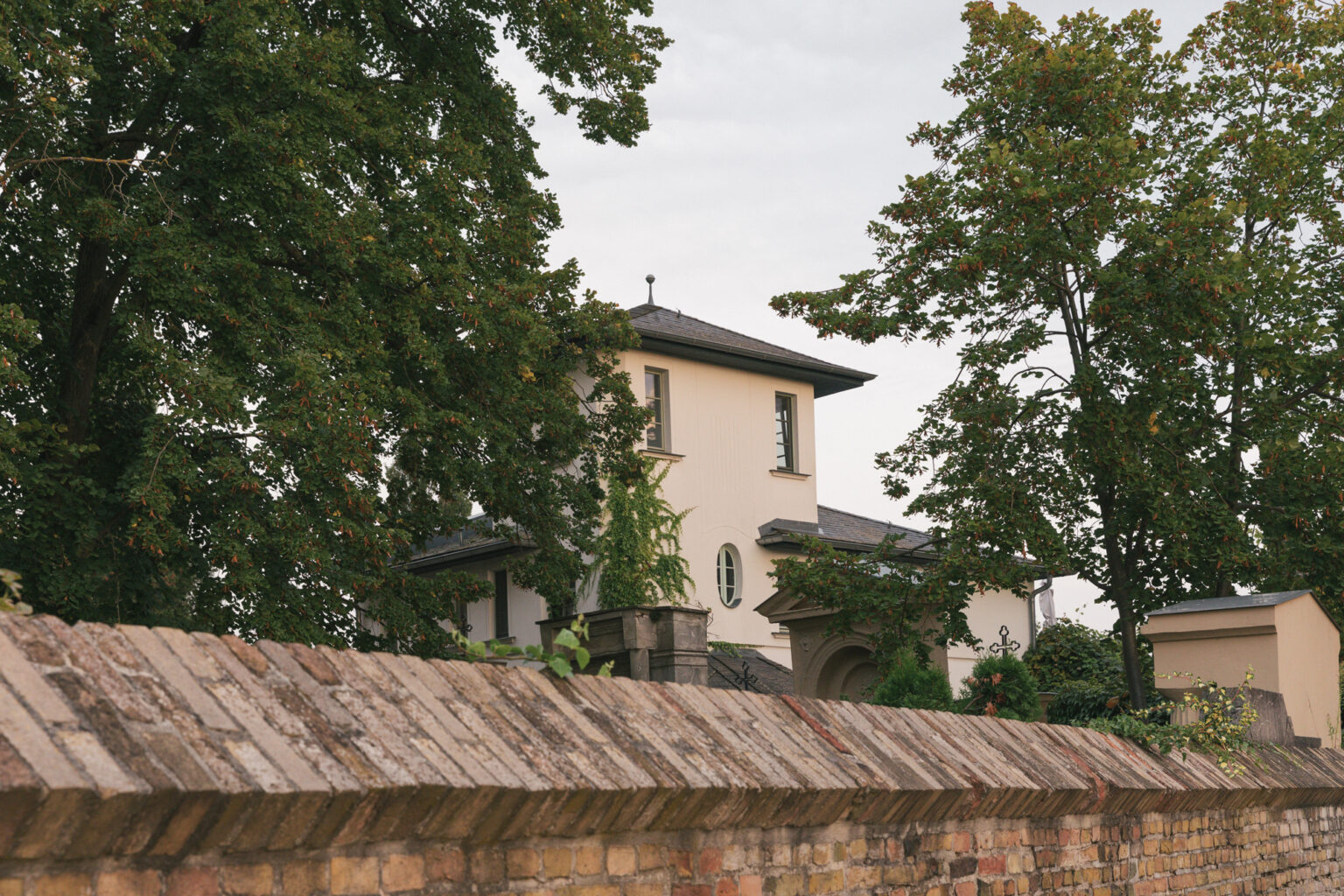

Even Theodor Fontane was impressed by Werder Island, on which the holiday apartments are located. To this day, it is characterised by its history of winegrowing, lush orchards and traditional crafts—a green oasis less than an hour from Berlin.
The location
Ancient walls dating back to the 13th century, gardens and vineyards stretch along the edge of the island. The site was once used as barracks for injured soldiers, a school camp and a garden pavilion. Today, between the Art Deco villa and the neo-Gothic Belvedere, there are rooms for relaxing or working. Wild oak trees and organic wine characterise the Mühlenberg.
Backstory
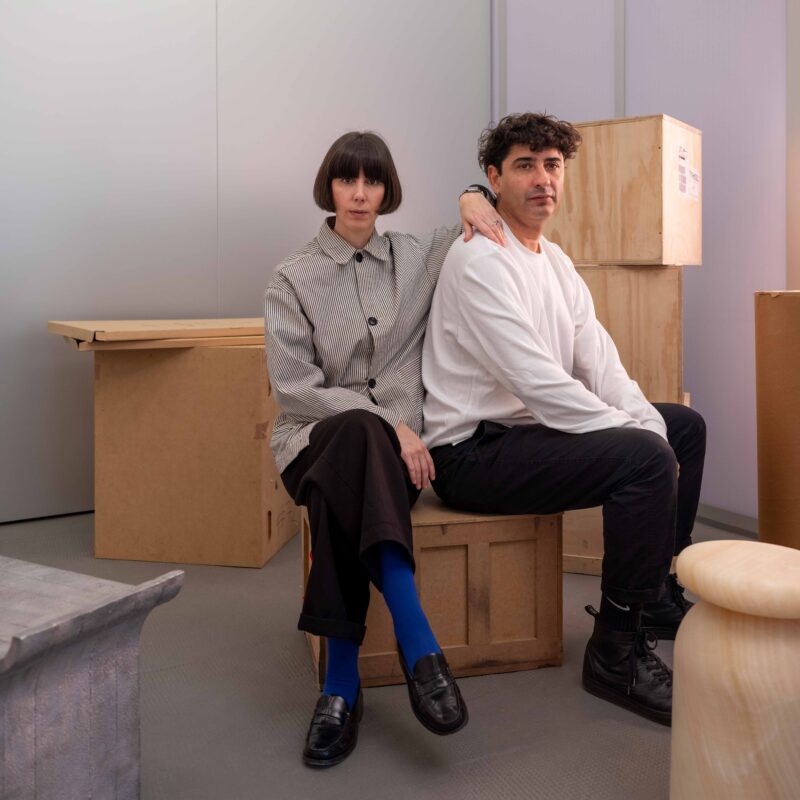
The architects Jurek Brüggen and Aimée Michelfelder have created a spacious retreat on the island of Werder. After Brüggen completed his studies at ETH Zurich, he founded the architectural firm undjurekbrüggen in 2020, with offices in Berlin and Werben (Elbe). Michelfelder, on the other hand, completed her bachelor’s degree in architecture at the FHNW Muttenz, followed by a master’s degree at the Berlin University of the Arts. From 2025-2026, she lectured at TU Berlin under Prof. Nanni Grau and at UdK Berlin under Prof. Bettina Götz. Since 2026, she has been working as an assistant for architecture at the FHNW Institute of Architecture, Master’s programme.
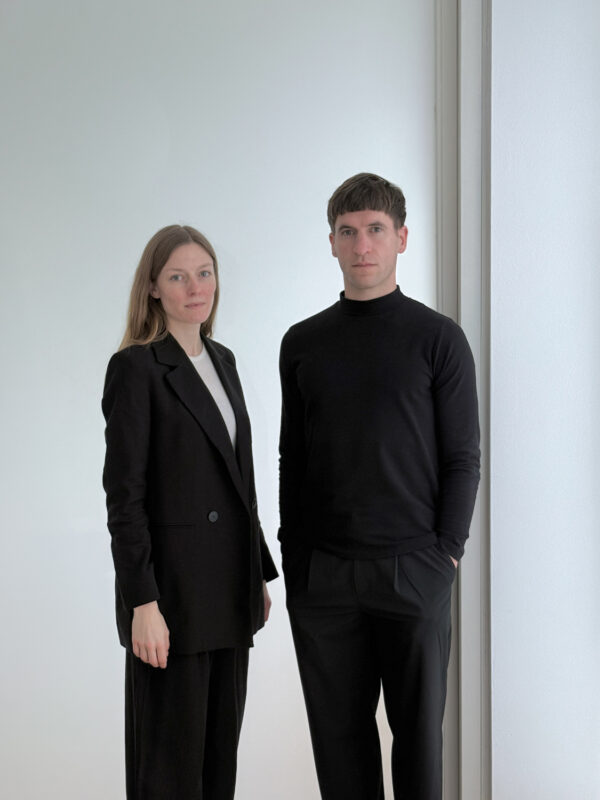
Through his projects, Brüggen seeks to contribute to the regeneration of climate and nature. Many of these projects have already won awards. Last year, in 2025, Brüggen founded the non-profit organisation AFEA – Association for Ecological Architecture together with Aimée Michelfelder. Within this framework, they work with other stakeholders to develop proposals for institutions, private actors and civil society to further advance ecological change.From April to September 2025, Brüggen has also been a visiting professor at KIT Karlsruhe, where he focuses on the management of existing buildings.
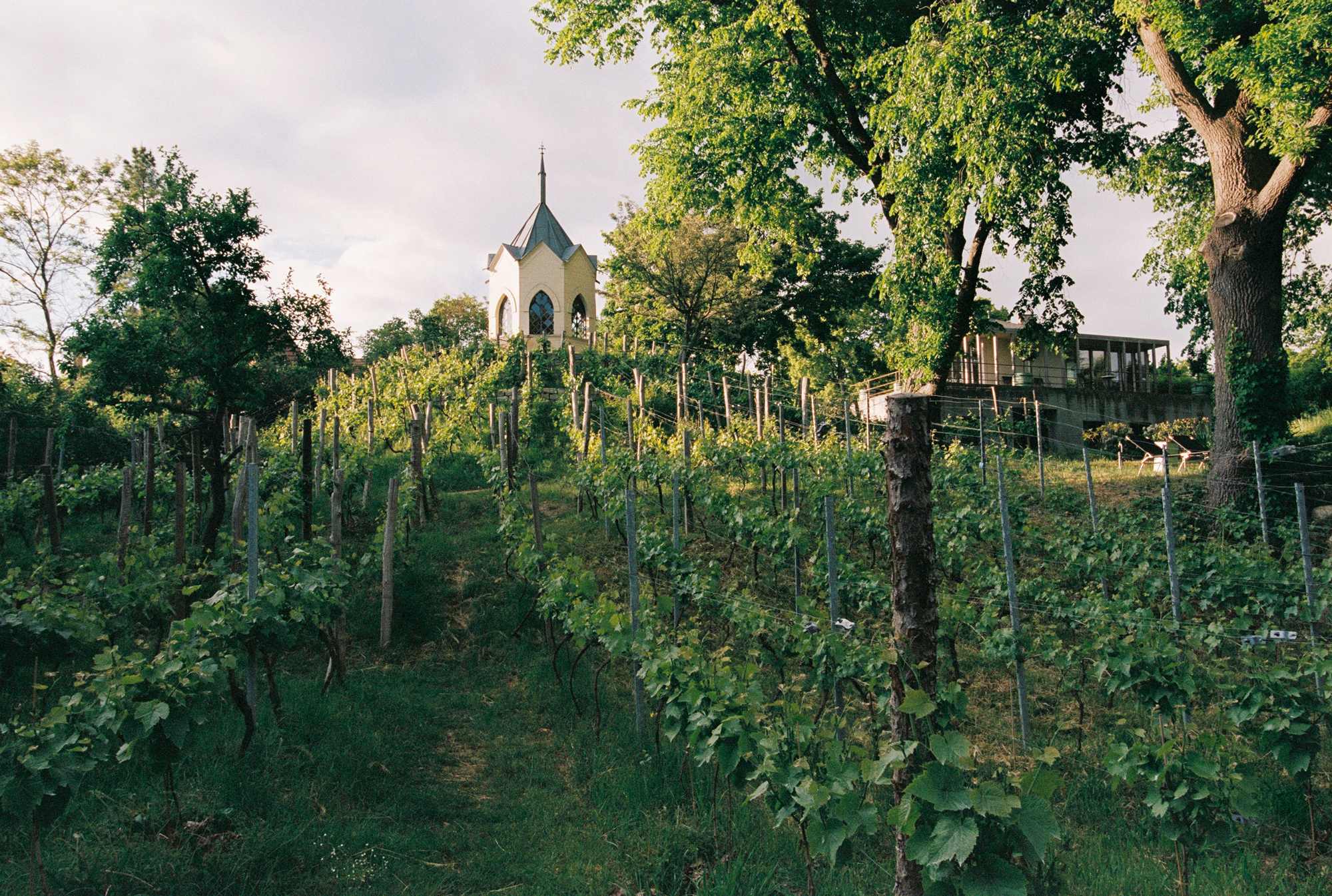
A former 18th-century military barracks with a neoclassical gabled façade and an Art Deco-style villa have been converted into two holiday homes with several apartments. Another building by Jurek Brüggen and his colleague Sebastian Sailer, the Jahreszeitenhaus, is located right next to the Belvedere, a small pavilion with stained glass windows surrounded by vineyards, built in 1858.
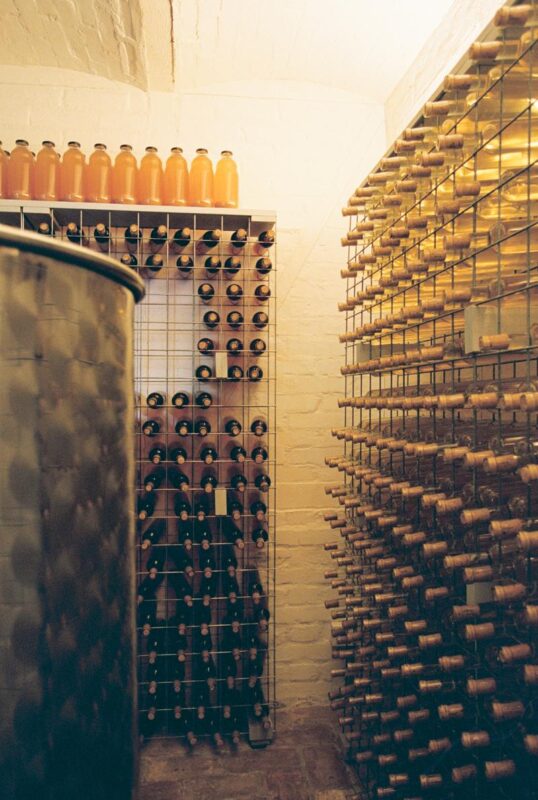
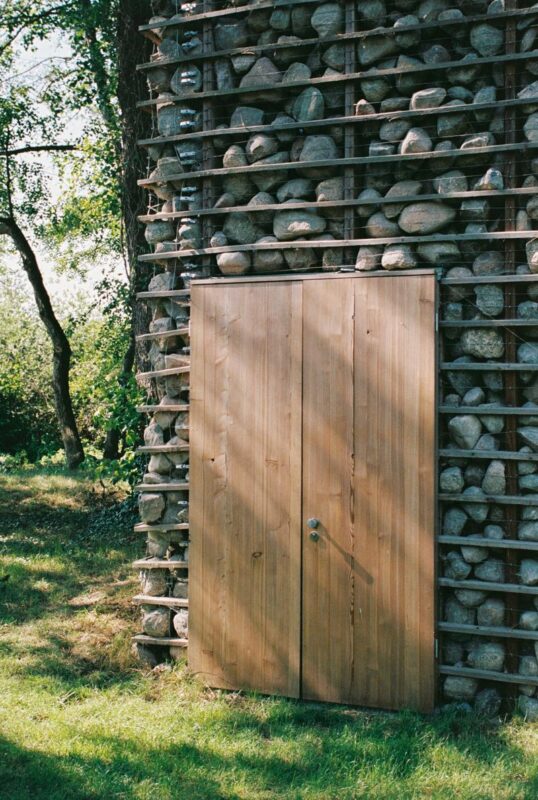
A little further down the property, among trees, lies the HAIN. A building made of field stones, wood, clay and reused bricks, it is not only used for pressing and storing fine wines, but also hosts yoga classes and workshops.
Apart from the Mühlenberg on the island, just a few hundred metres away, there are two more holiday homes directly on the mainland: the Bauhaus and the Gartenhaus.
The Turmvilla
The heritage-listed Turmvilla was originally built in the 1920s as a school camp for Berlin’s Grunewald Gymnasium. The Art Deco-style villa is spacious and flooded with light.
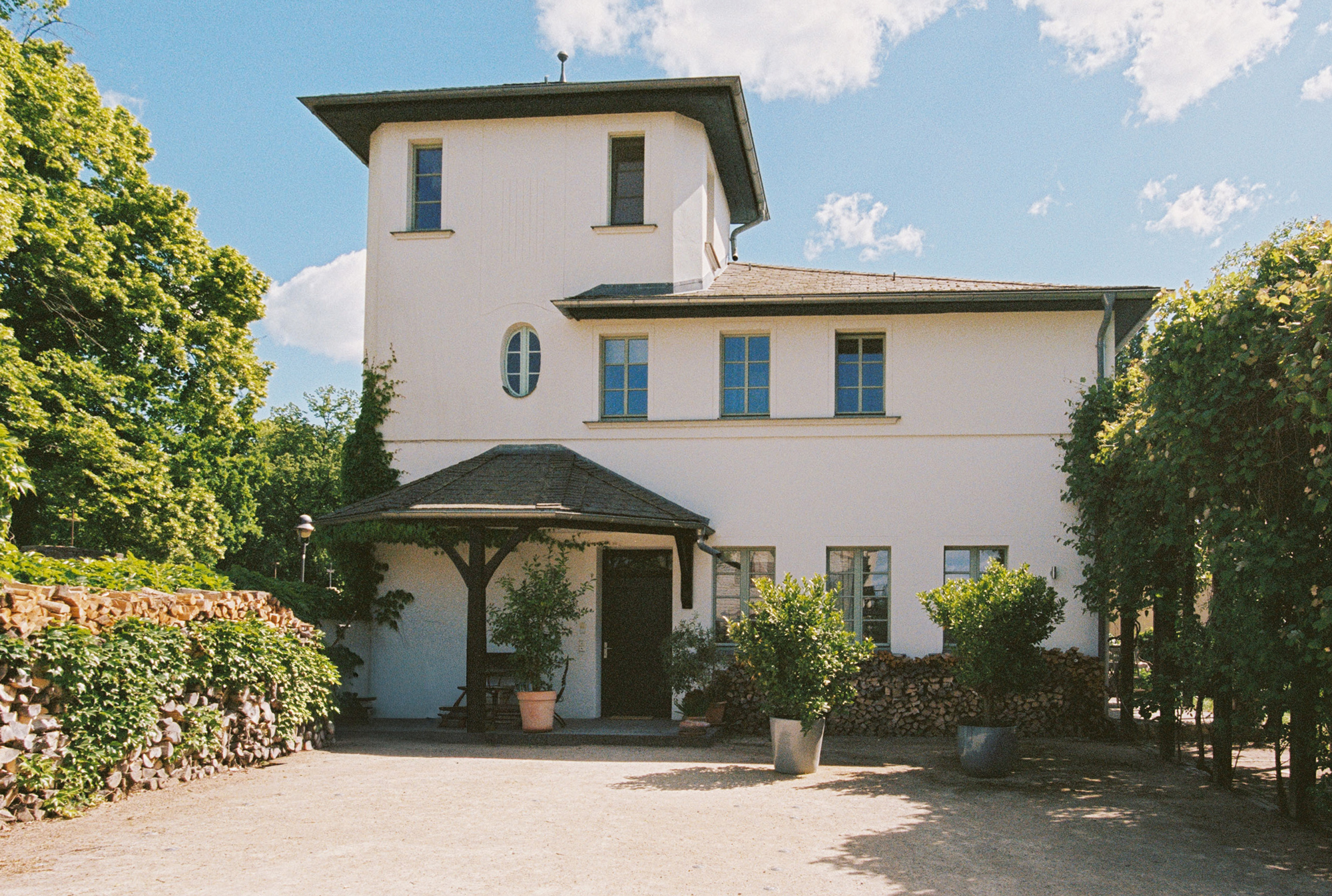
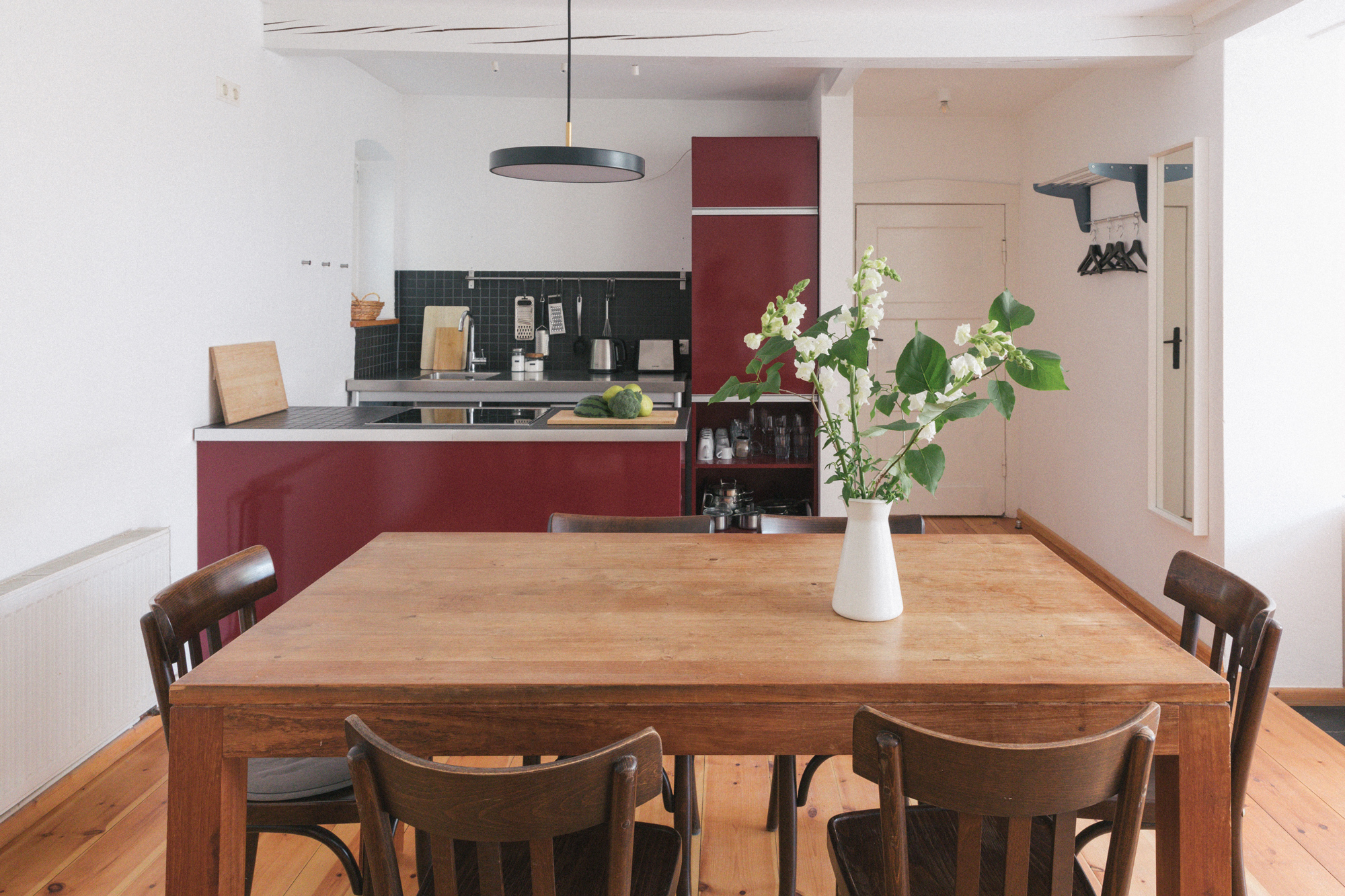
One of the three apartments in the house is located on the ground floor of the villa. With direct access to the park-like garden, which extends to the south, and its own terrace, the apartment has a spacious kitchen, two bedrooms and a bathroom with bathtub.
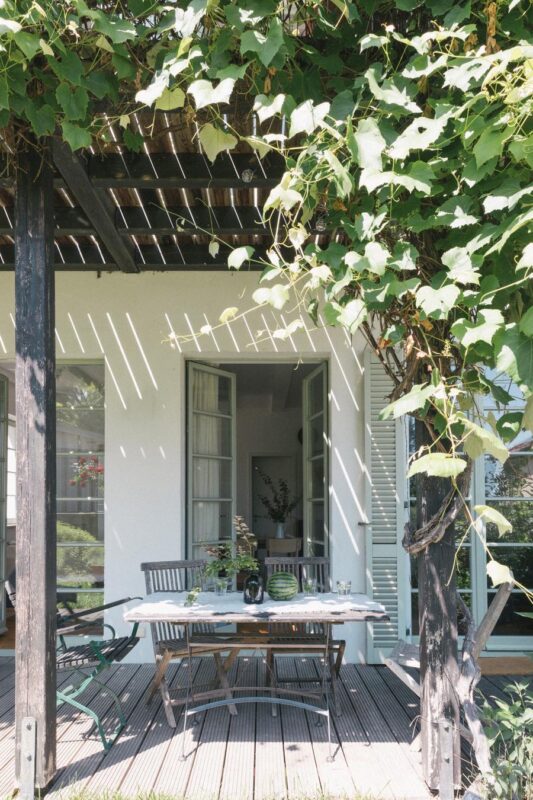
Here, at the highest point of the island, guests can enjoy the view of the greenery while having breakfast on the terrace. A pergola covered with grapevines adds a touch of Mediterranean flair.
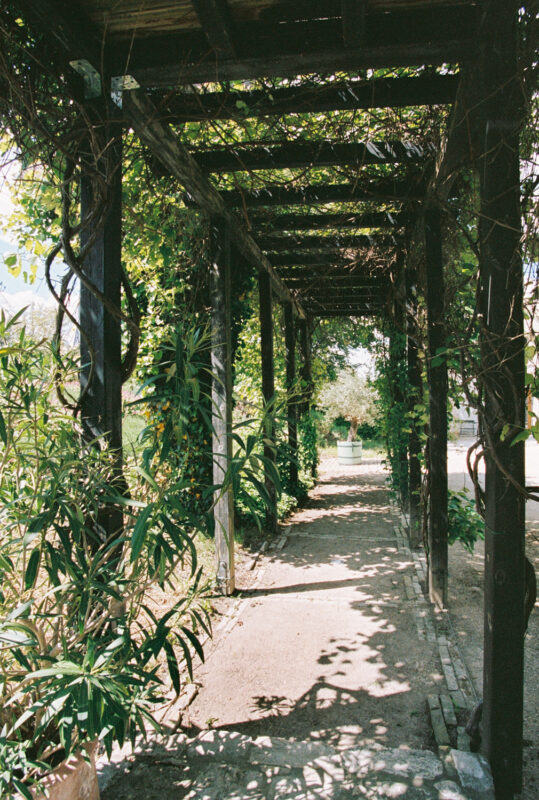
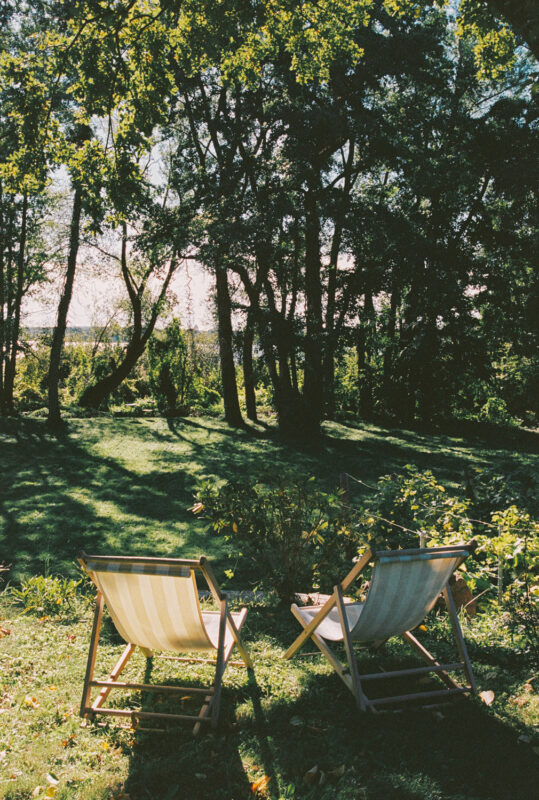
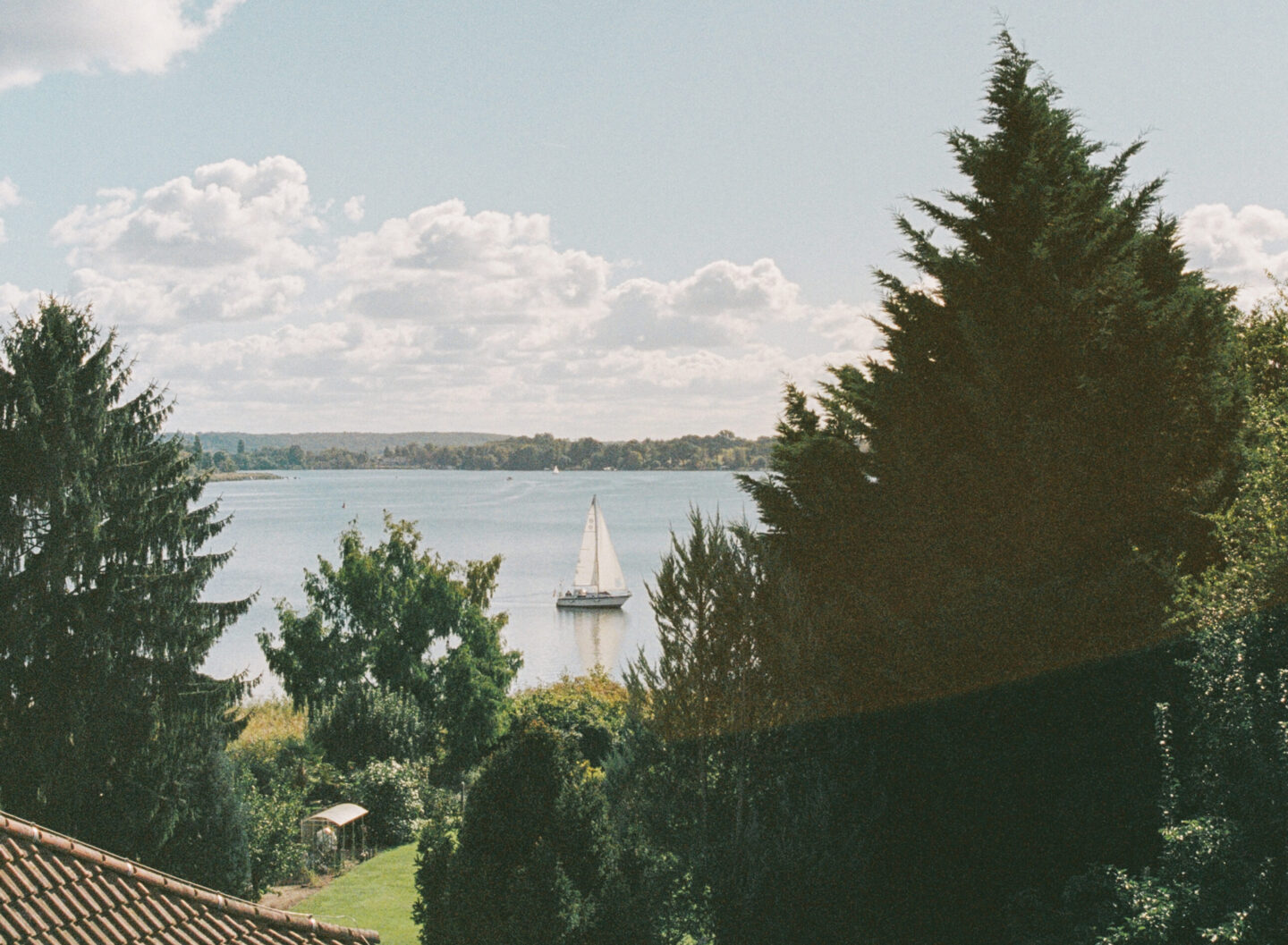
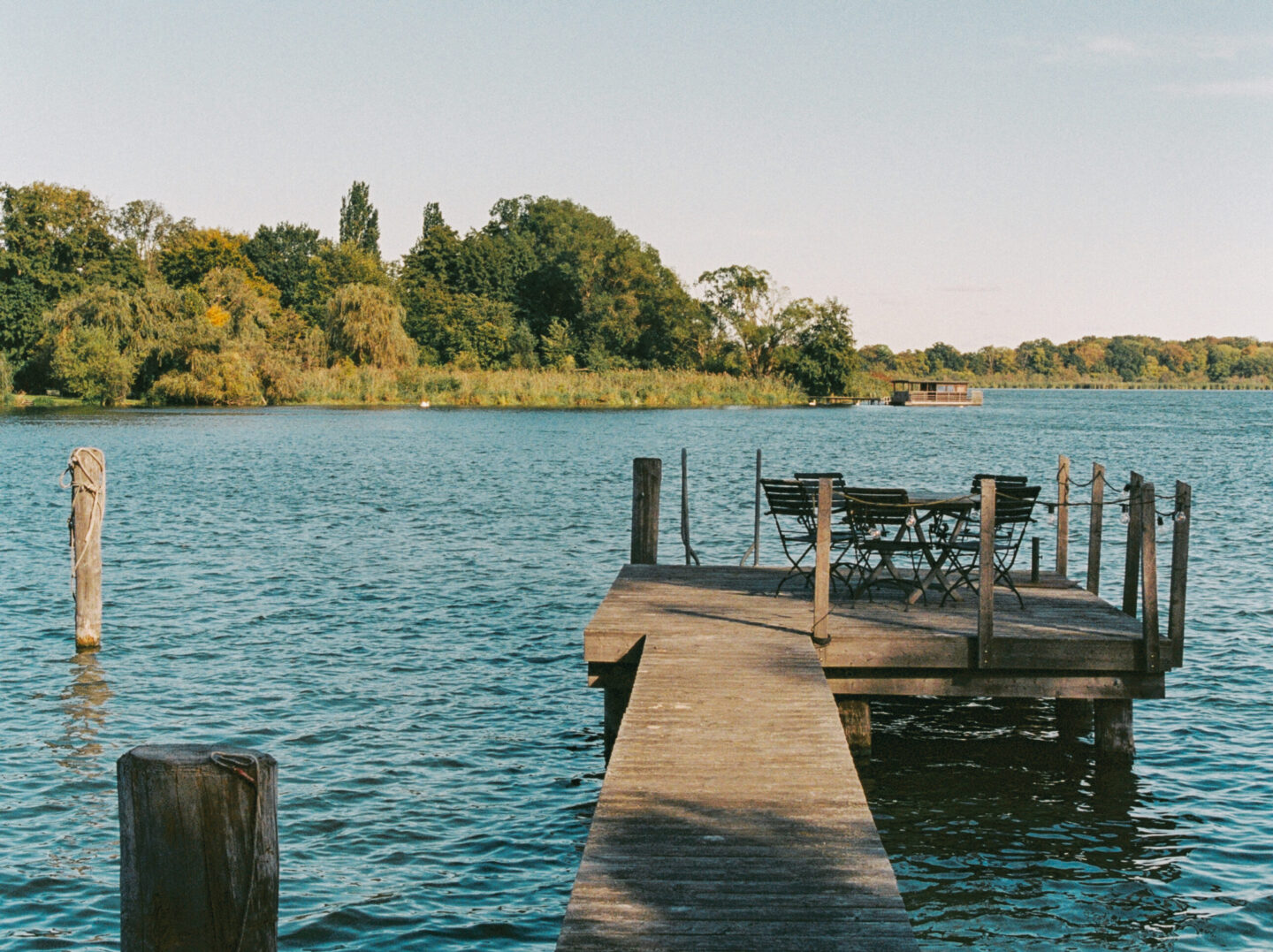
Garden paths and lush green meadows extend from the tower villa, leading to the bathing jetty or inviting you to linger. Whether it’s the grove, the spacious garden with sauna or the bathing jetty, all areas are open to guests. The flats in the authentically renovated tower villa can be rented individually or as a whole house.

The upper floor of the villa offers what is probably the most beautiful view of the River Havel. Measuring approximately 62 square metres, it has a spacious living and dining area and two bedrooms, one of which is on the smaller side and can accommodate two children or one adult.
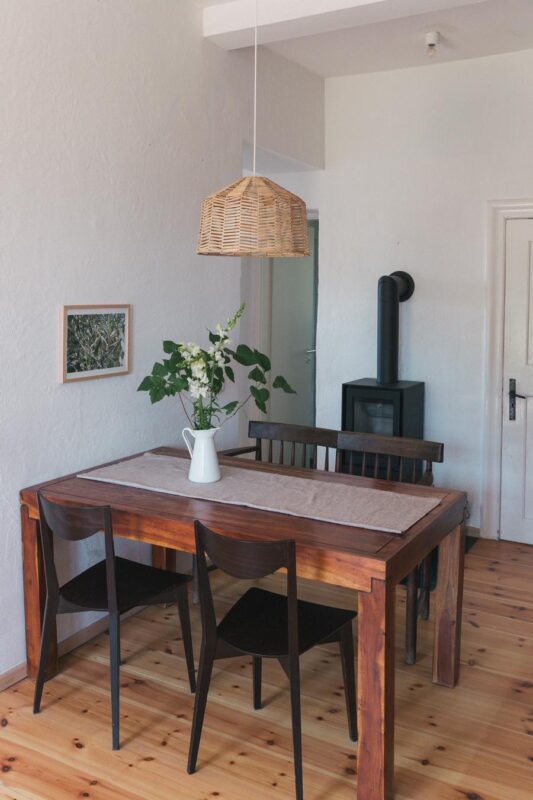

Like all the other apartments in the building, the one on the upper floor has separate entrances with its own terrace or balcony. While the spacious garden stretches out in front of the villa, the peaceful island cemetery lies behind it.

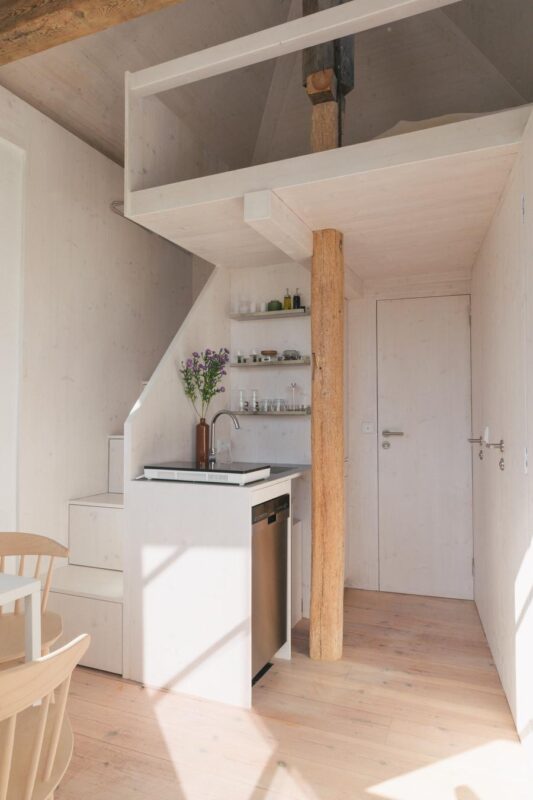
Directly beneath the tower roof, in a compact studio, rays of sunshine stream through the skylight in the morning, and in the evening guests can enjoy the sunset from the balcony. A staircase leads up to the sleeping area, which can accommodate one to two people.
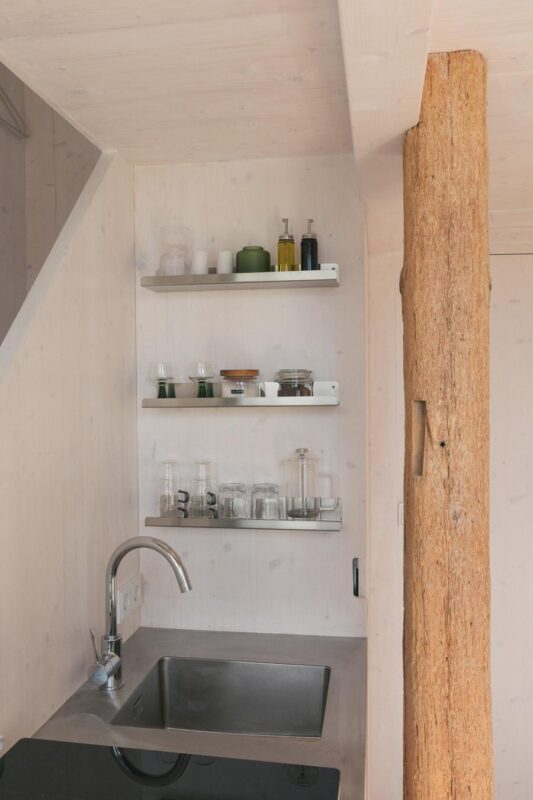
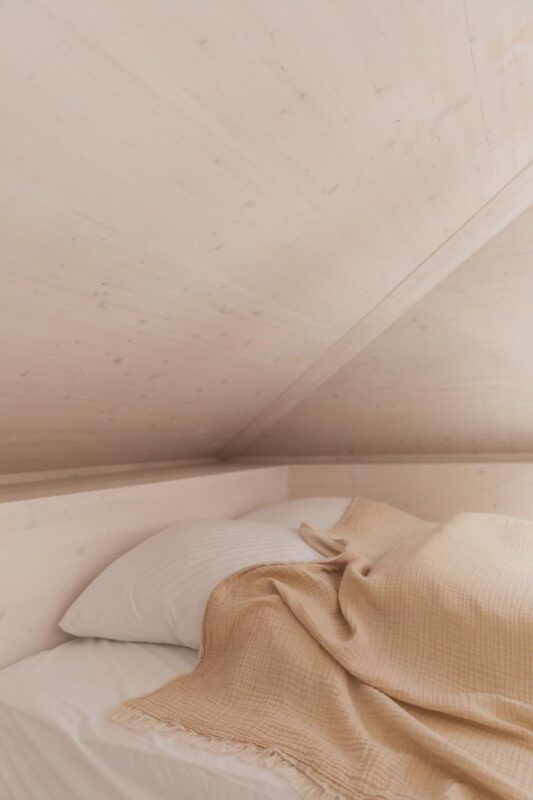
The small room has been cleverly designed to incorporate everything guests need for a comfortable stay. A long wall with cupboards conceals the toilet and shower, and directly opposite is a small kitchenette. The steps leading up to the sleeping area have built-in drawers for storage space.
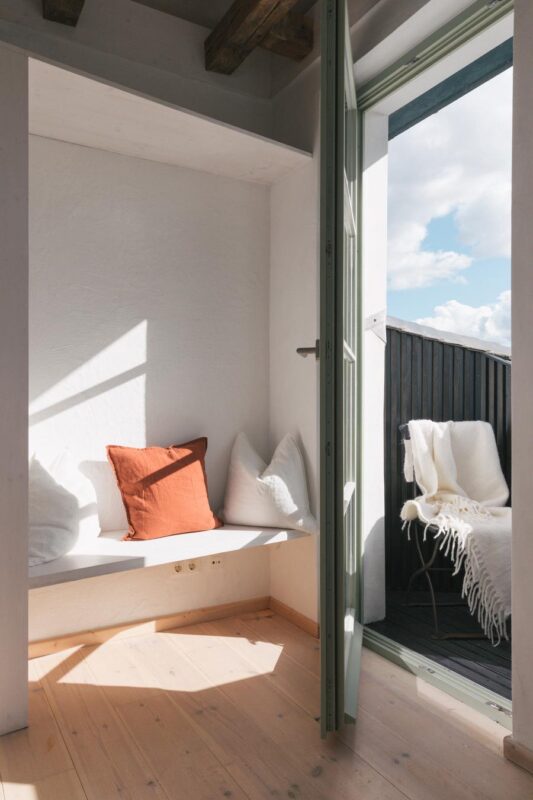

The Remise
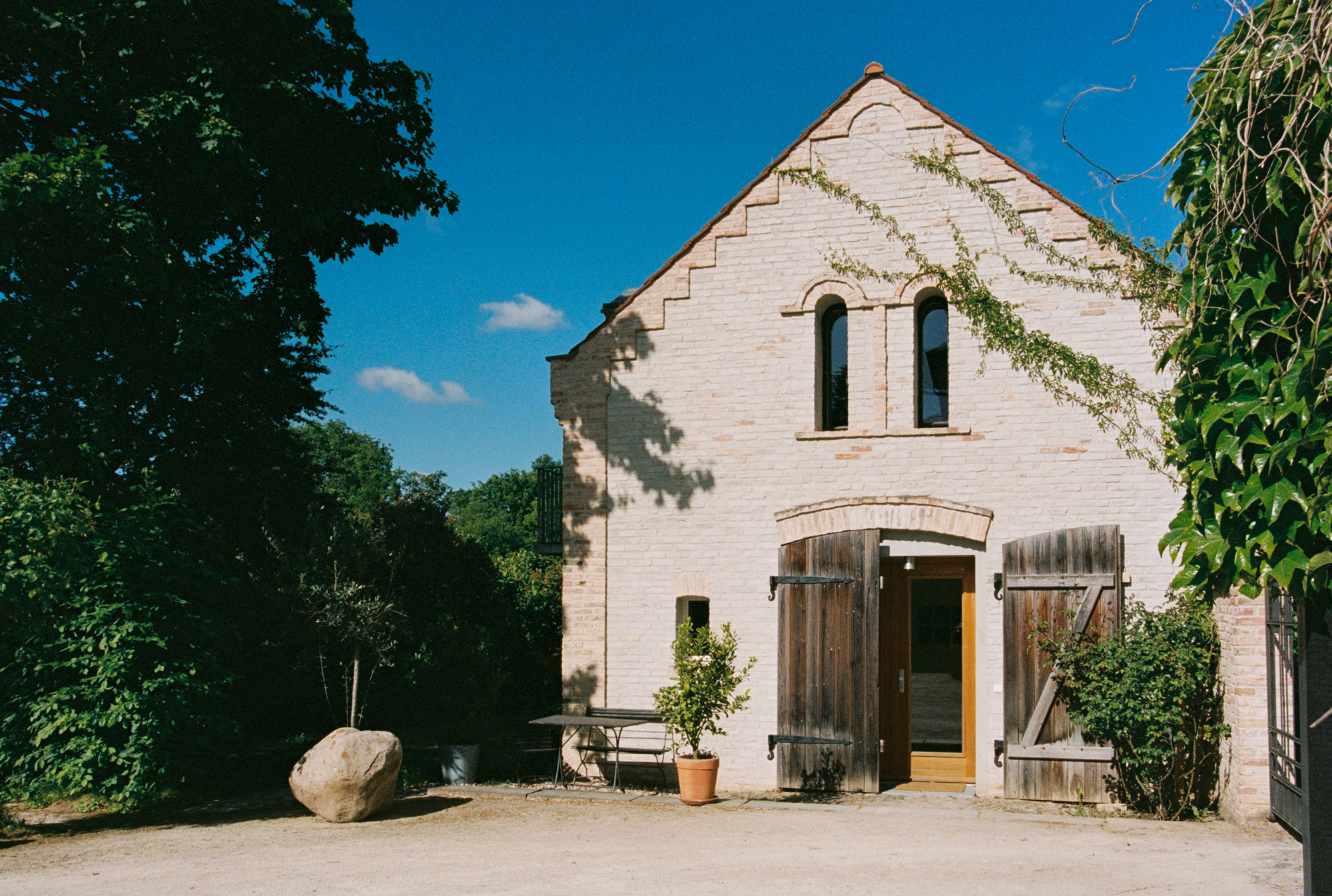
The former 18th-century invalids’ barracks now houses the Remise with three separate apartments. It was built from old, reused bricks from the region. The building, with its neoclassical south façade, is located at the highest point of the island, directly opposite the cemetery.
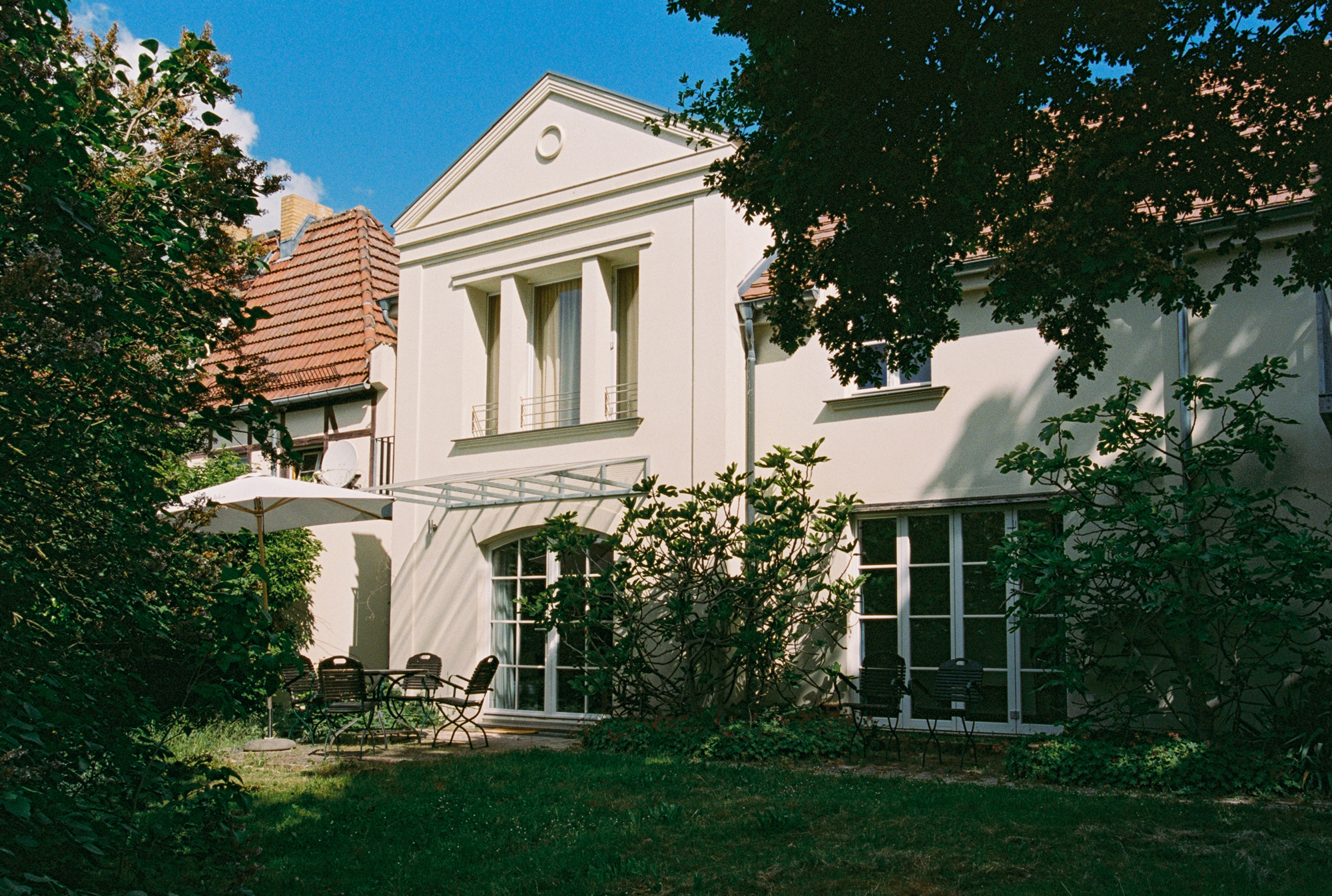
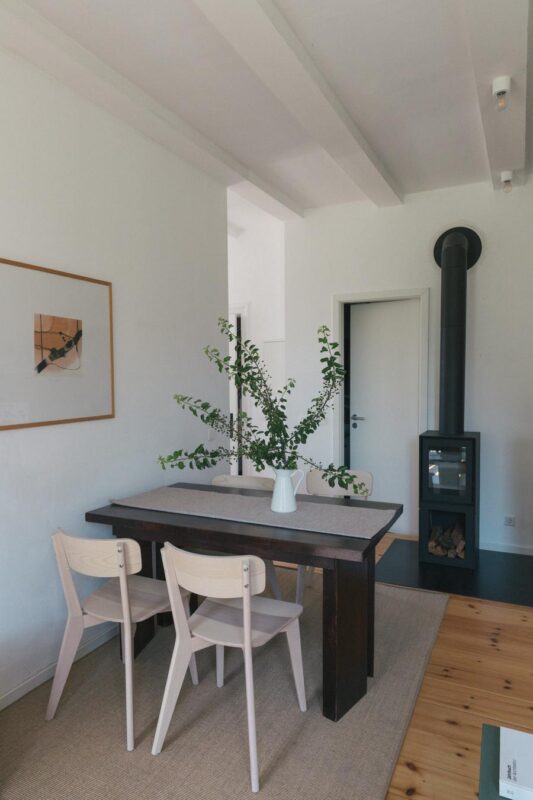
Large windows and two terraces on the ground floor of the Remise offer views of the outdoors. With a combined kitchen and dining area, an open-plan living room with a wood-burning stove, two bedrooms and a studio with two additional sleeping options, the flat, which spans the entire lower floor, can accommodate five to six people. The second, smaller terrace is accessible via the studio.
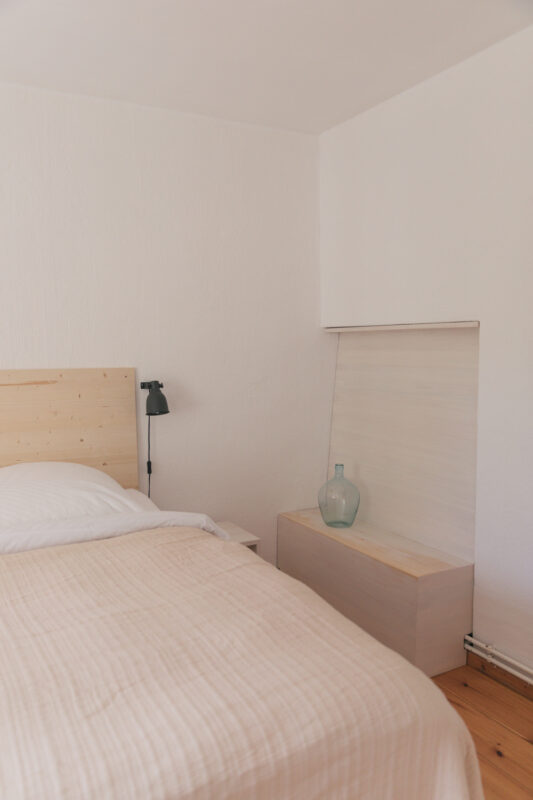
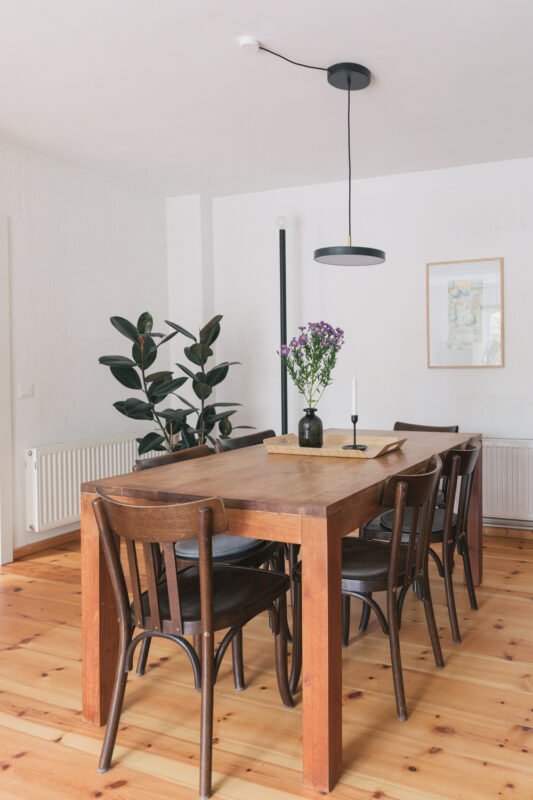
With a large bathroom with bathtub, separate shower and two toilets, the ground floor flat can be rented individually or as part of the entire house.
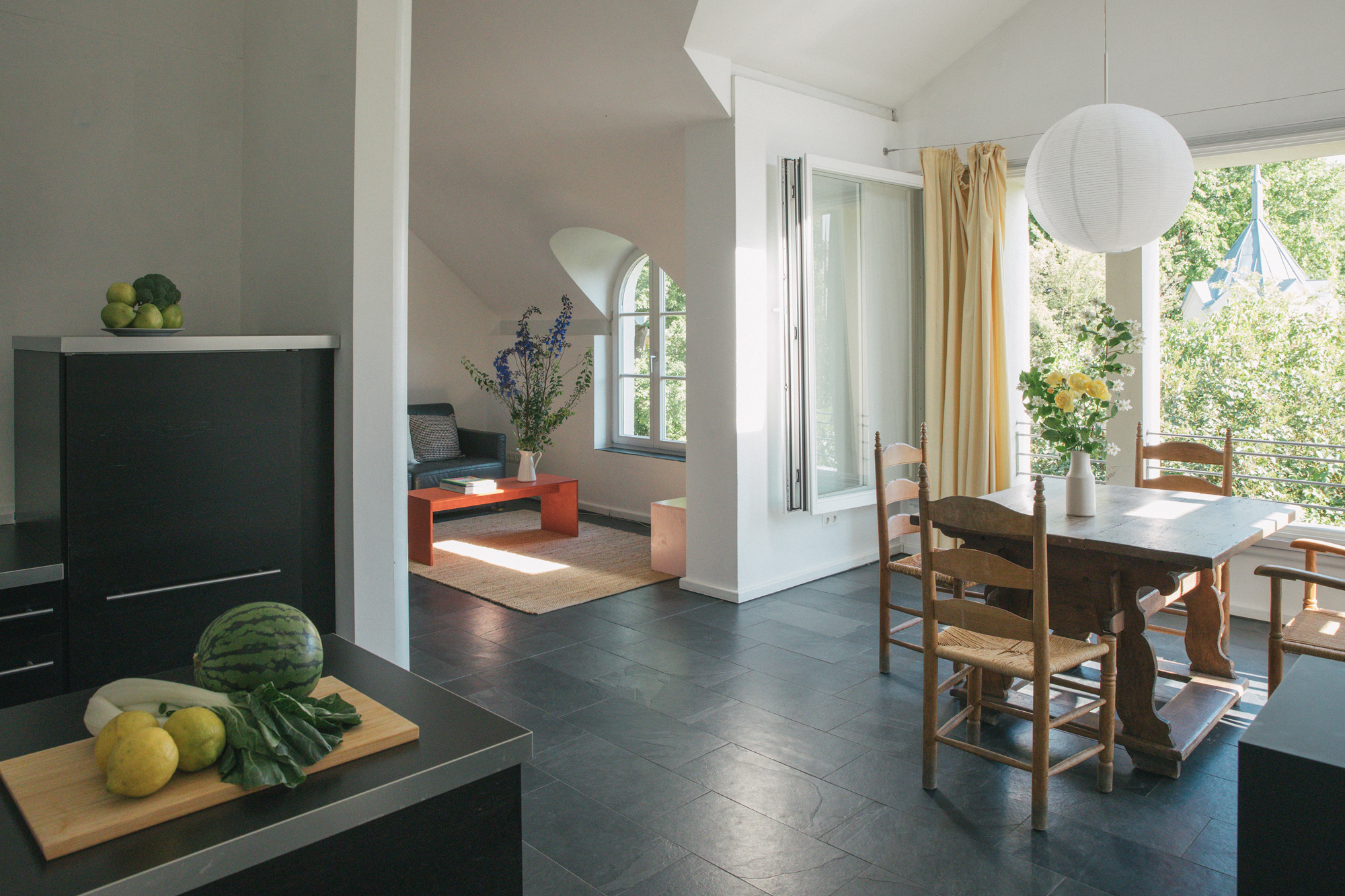
Four-and-a-half-metre-high ceilings and a large window front give the Remise Loft on the upper floor of the house a loft-like character. With its spacious living, dining and kitchen area, large bathroom with bathtub, separate bedroom for two people and a sofa bed, it is ideal for couples or small groups.
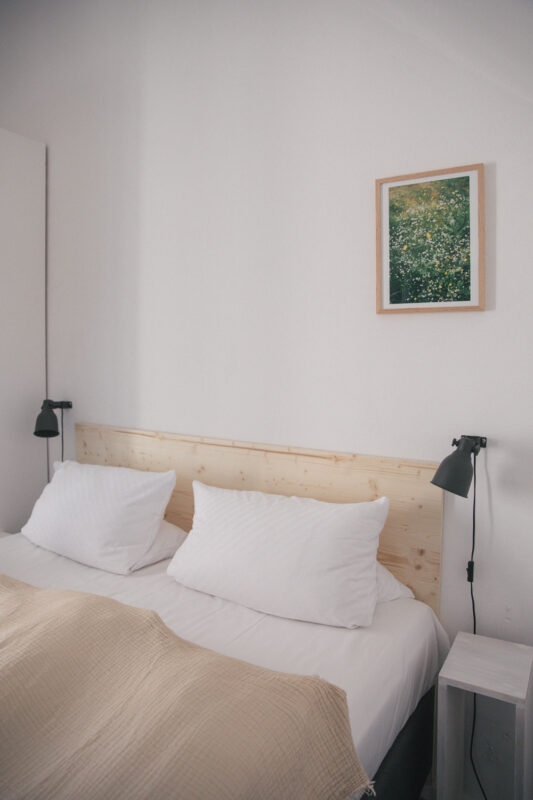
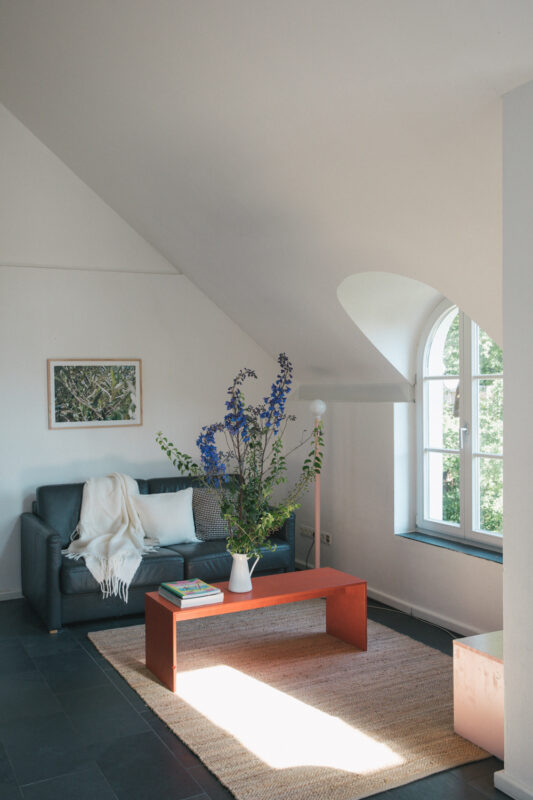
Located between the living room and bedroom, the balcony offers a view of the River Havel. When the wide window front in the dining area is open, it feels like sitting in a loggia. On colder days, the underfloor heating warms the slate tiles and provides cosy warmth.
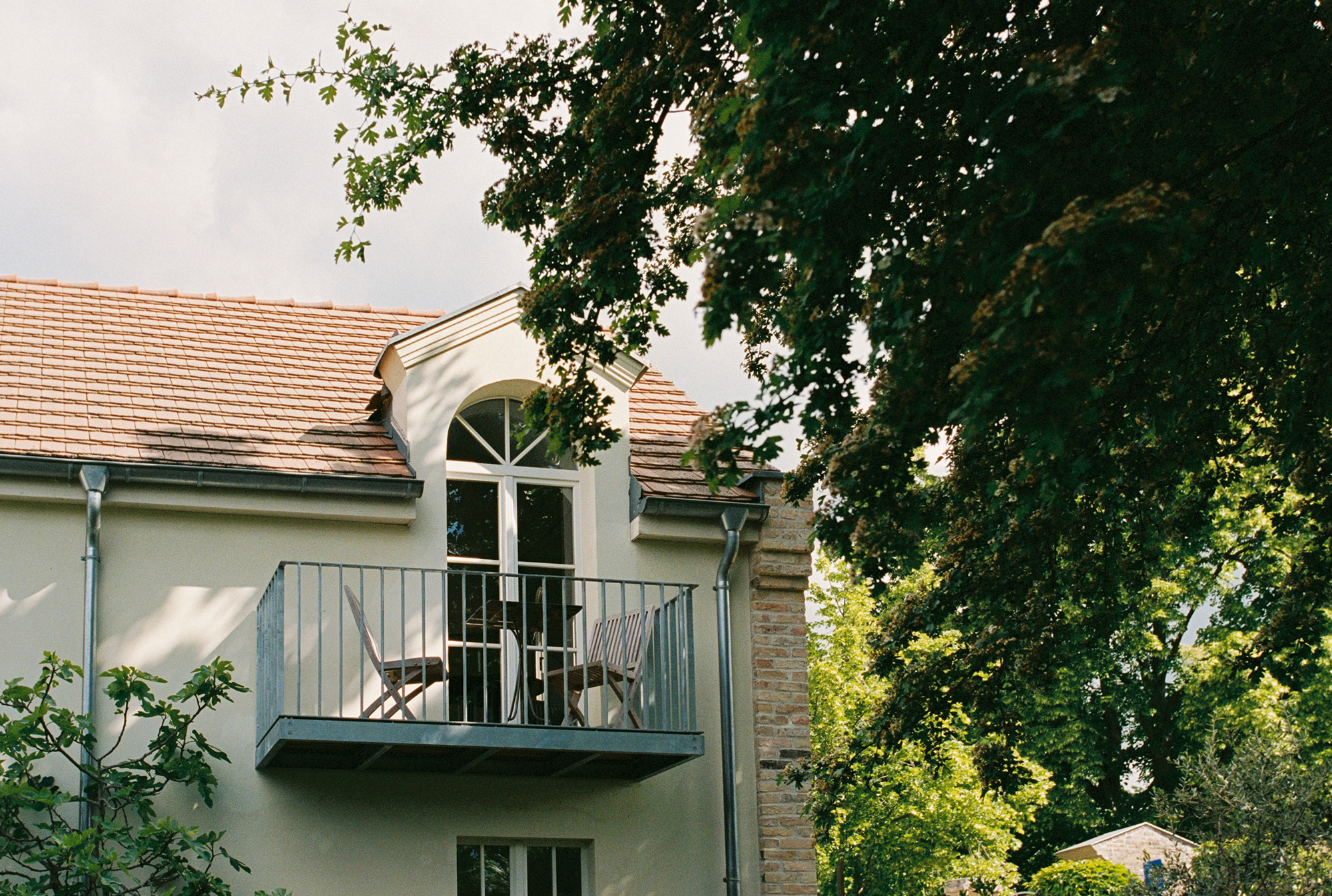
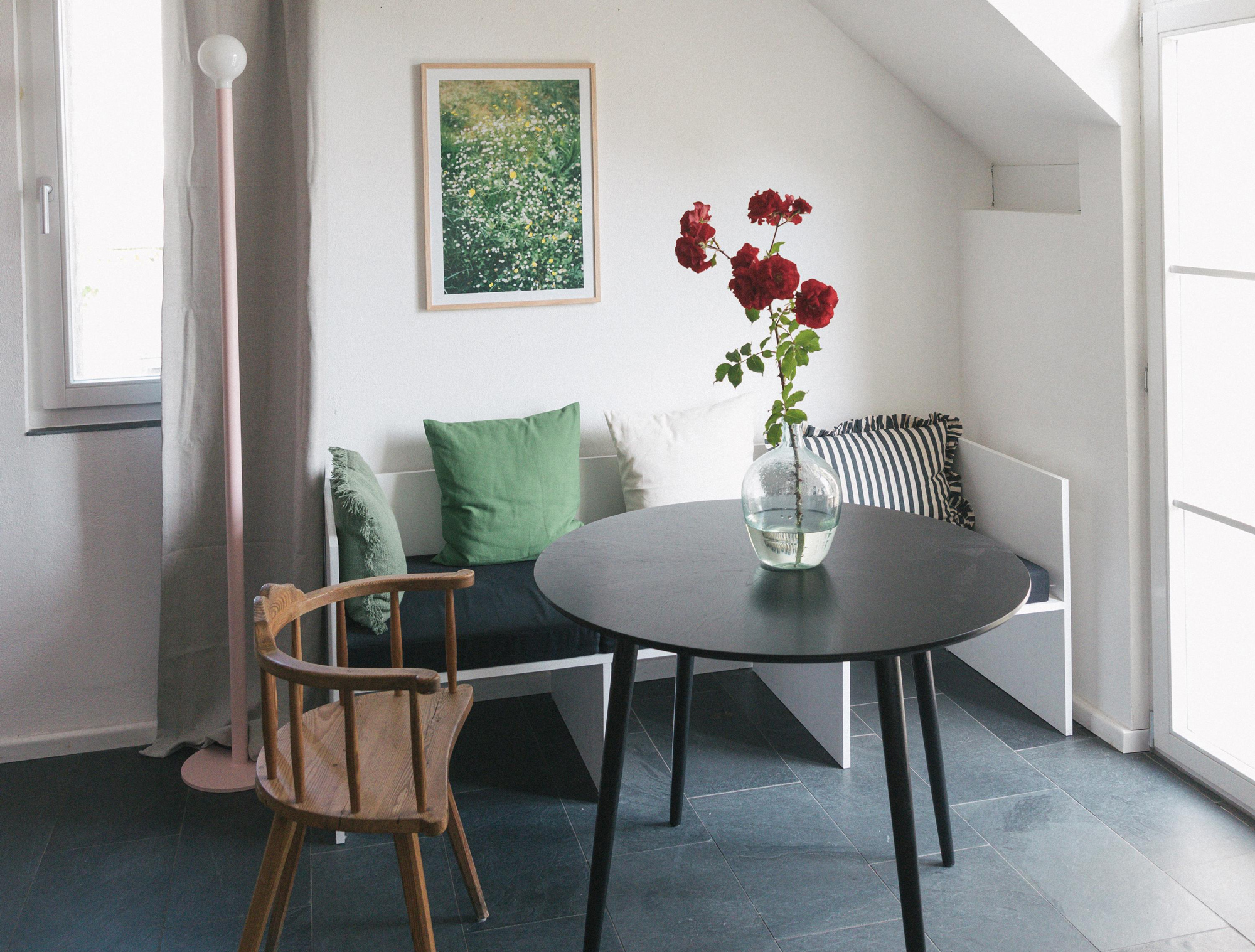
With only 23 square metres, the Remise Studio on the upper floor makes clever use of every inch of space. Surprisingly, it offers room for a large bed, an old armchair, an upholstered bench, a built-in cupboard with kitchenette, a refrigerator, a bathroom with toilet and shower, and a separate wardrobe.
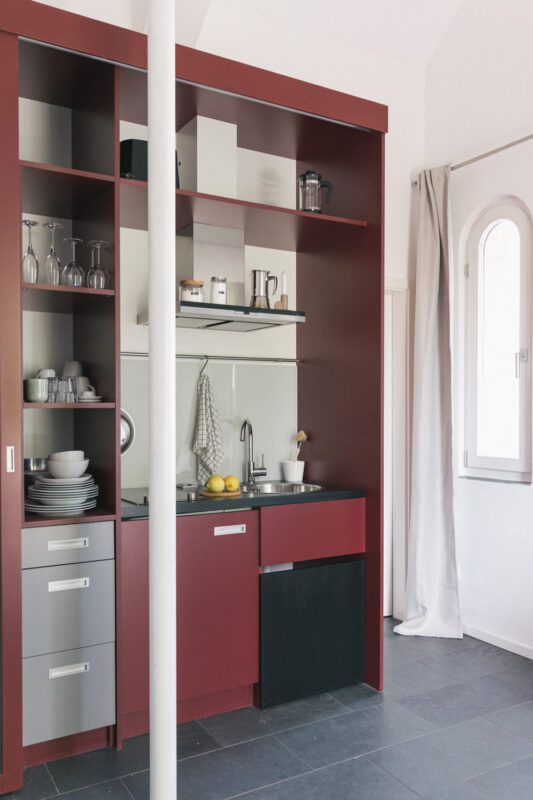

To create more space, the kitchen can be hidden behind two large sliding doors. The studio also has 4.50-metre-high ceilings and its south-facing balcony offers a view of the garden.
A house of tranquillity
The smell of wood and earth hangs in the air when you enter the HAIN house between the garden and the vineyard. It serves as a place of relaxation, for yoga, for resting after the sauna. But it also serves as a storage and production building for the small winery on Mühlenberg. And, on request, it can also be used for small groups and workshops.
One pavilion, two histories
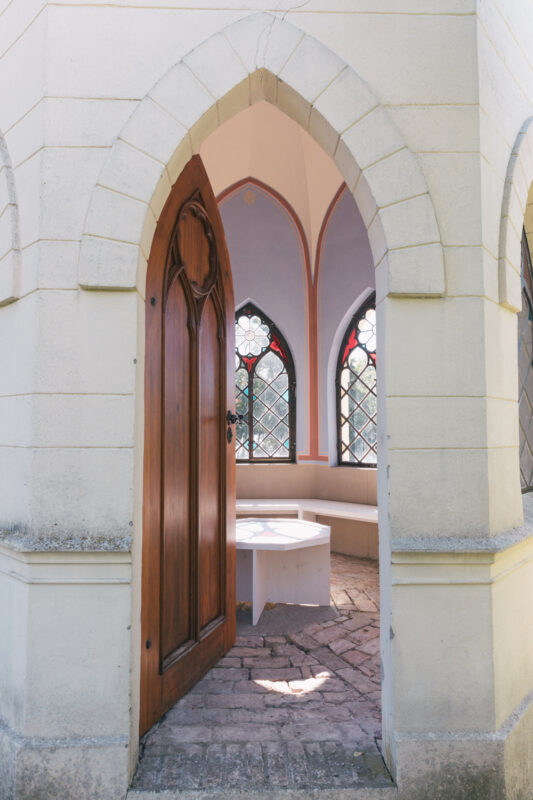
The Belvedere was built in 1858, presumably by Friedrich August Stüler, a student of Schinkel. Previously, there was an old rattling mill here, whose millstone is still visible inside.
The pavilion invites guests to linger, retreat or doze. But it also serves as a small self-service shop, where one can find homemade wine and juice.

The outdoor areas
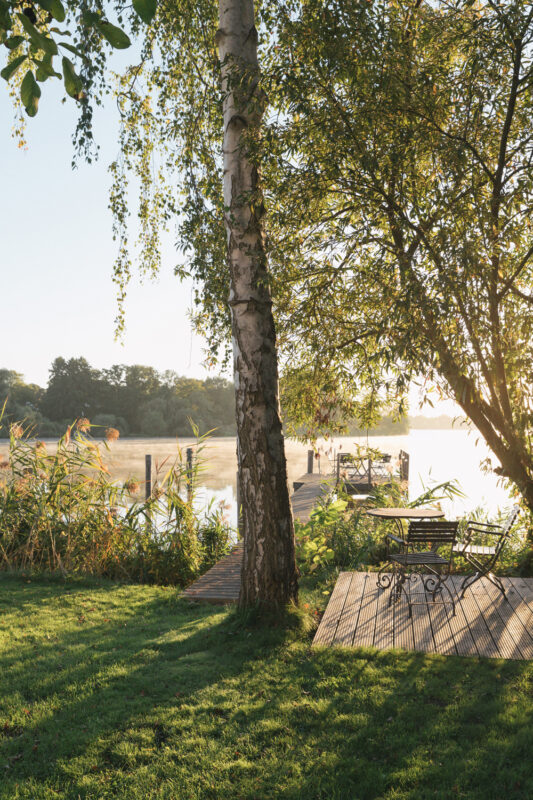
Narrow paths wind their way through the extensive 7,000 square metre grounds, past old oak trees and lush flower meadows. One of them leads to a private jetty directly on the River Havel with a view of the church in Geltow.
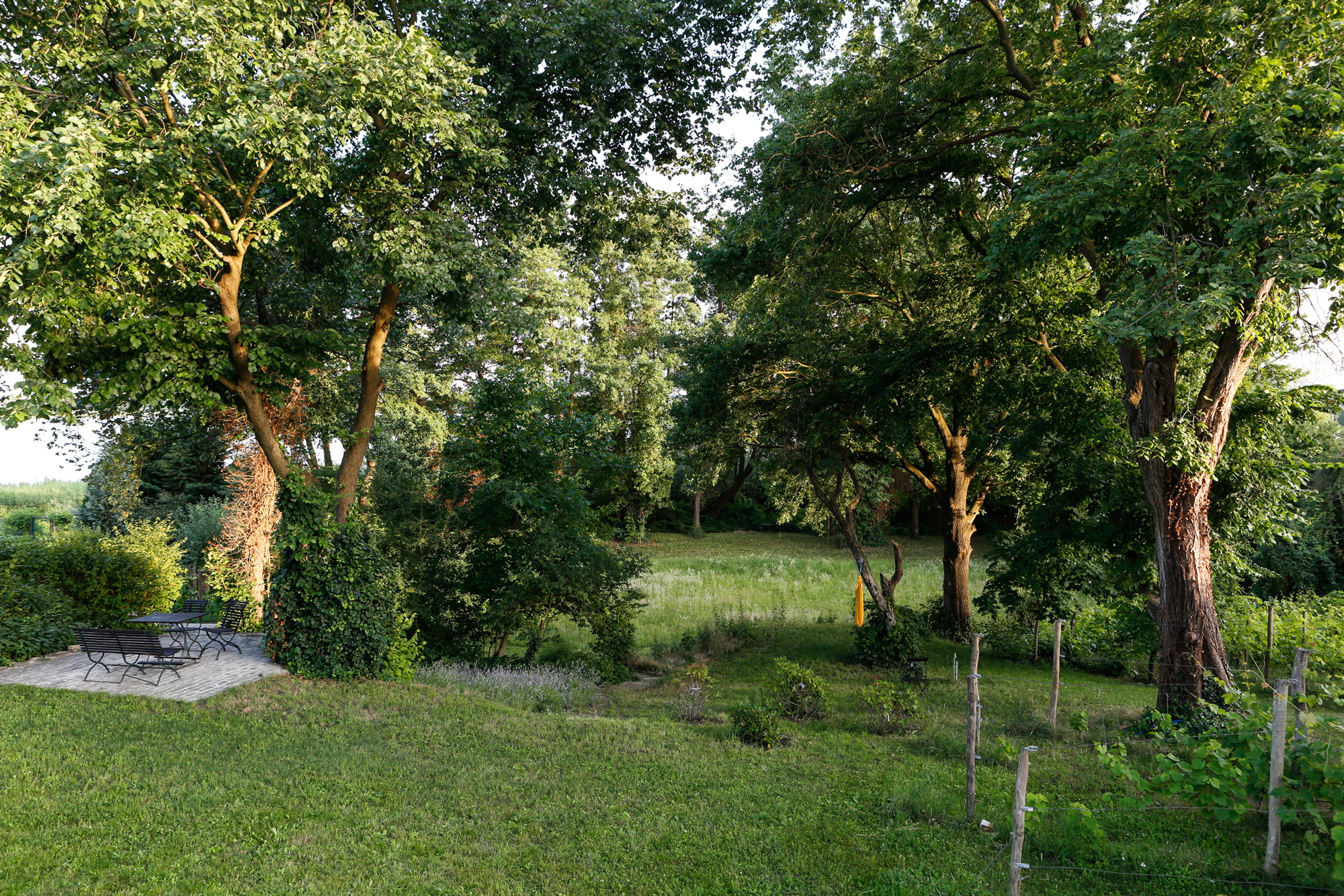
The lush greenery was deliberately designed to be close to nature and serves as a retreat not only for guests but also for insects and birds. At the beginning of the year, a sauna was added, attracting more guests to the garden in winter.
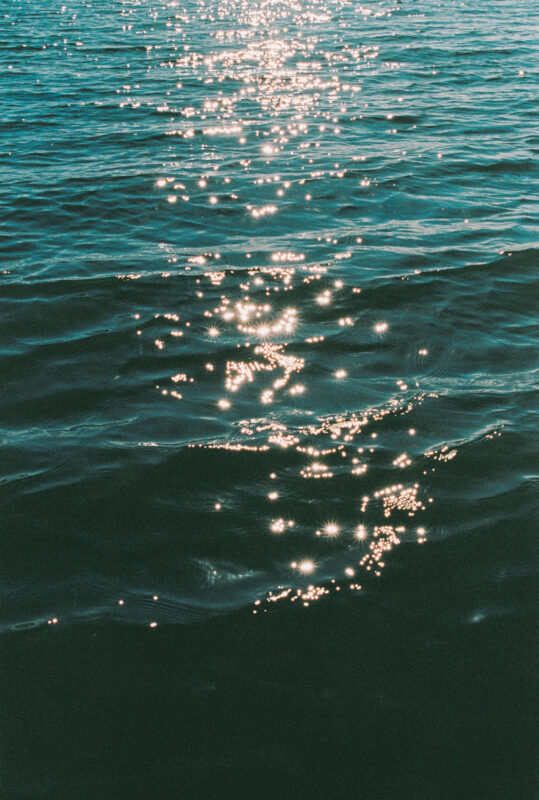
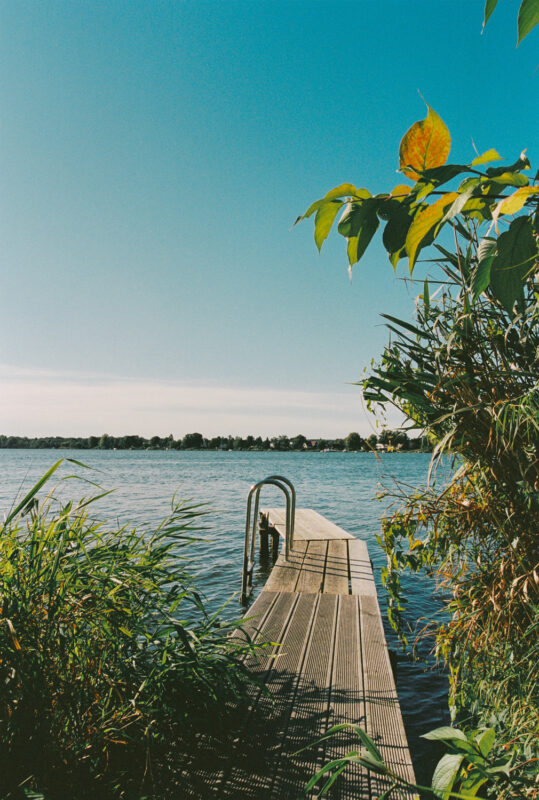
800 vines, four varieties.
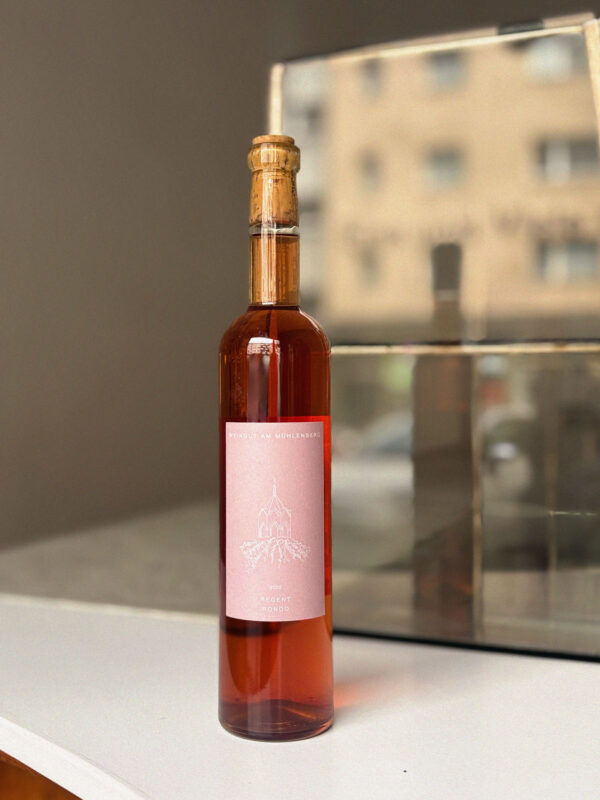
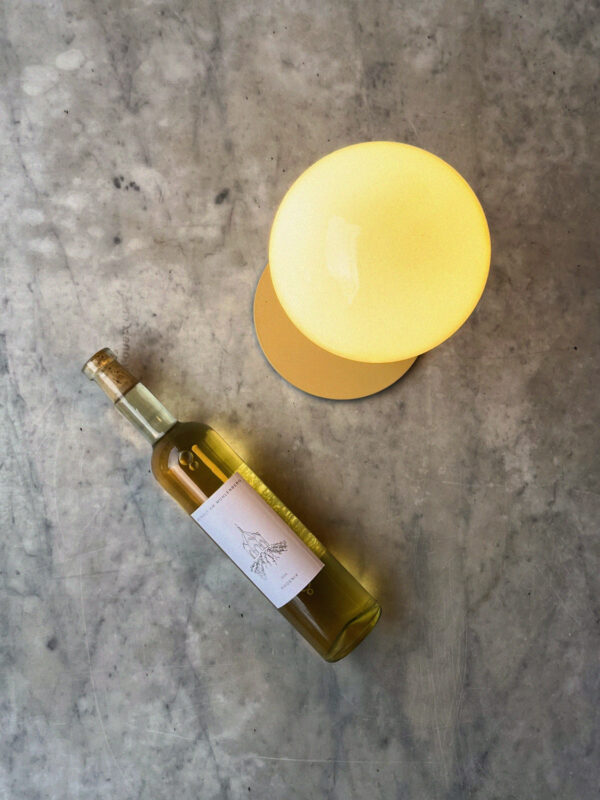
On two slopes of the Mühlenberg, Rondo, Regent, Phönix and Solaris grapes ripen for the estate’s own organic wine. This is harvested and pressed on site. As early as the 14th century, wine was produced here by the Cistercian monks of Lehnin Abbey.
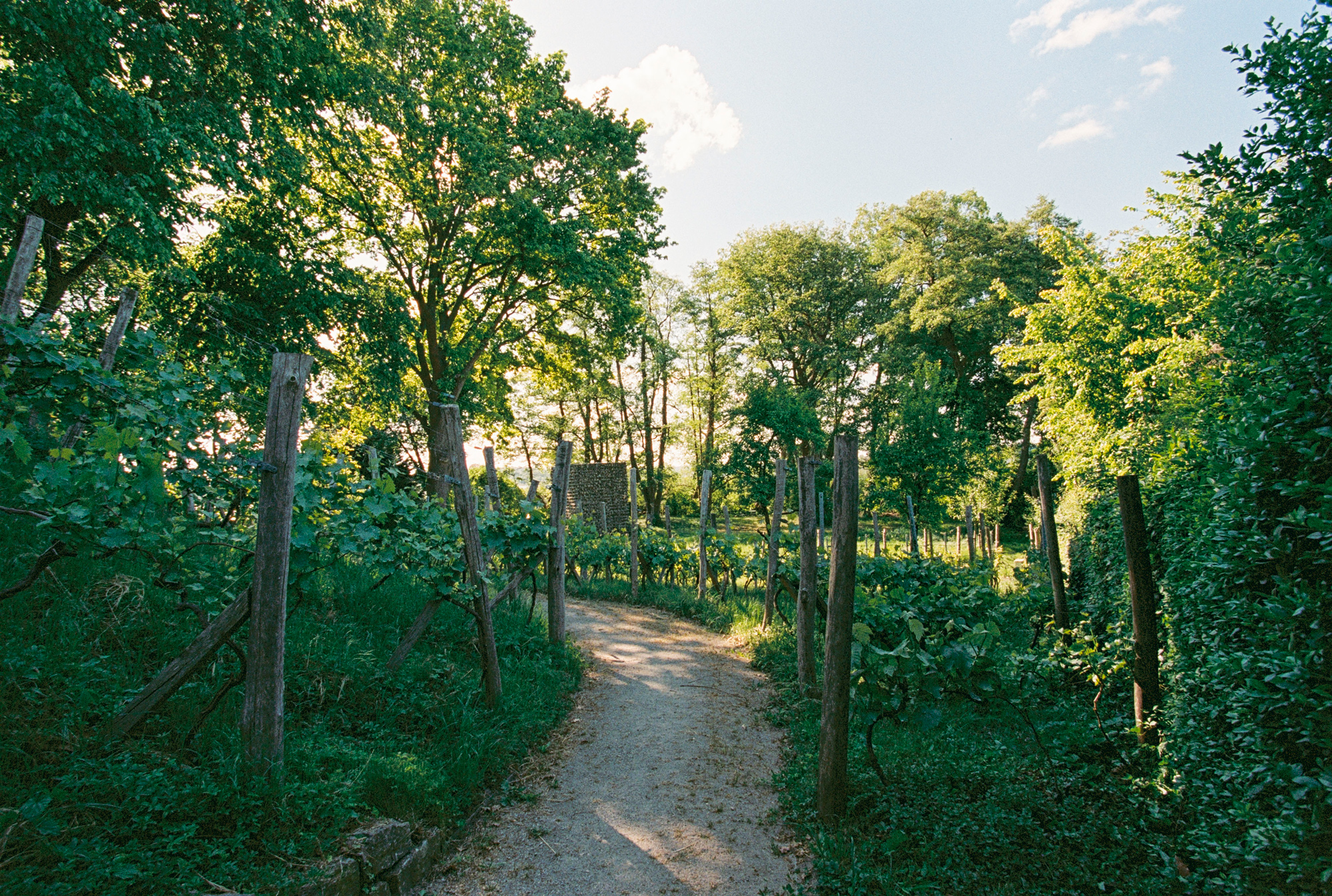
At the request of Frederick the Great, fruit trees were planted instead of grapevines. In the mid-1980s, viticulture gradually returned. Guests are expressly invited to stretch their legs among the vineyards.
Surrounding area
Cobblestone streets, riverside promenades and fishermen’s cottages: Werder offers a down-to-earth way of life and a peaceful atmosphere. Its winding alleys are home to cafés, galleries and small shops that blend into the historic town centre.
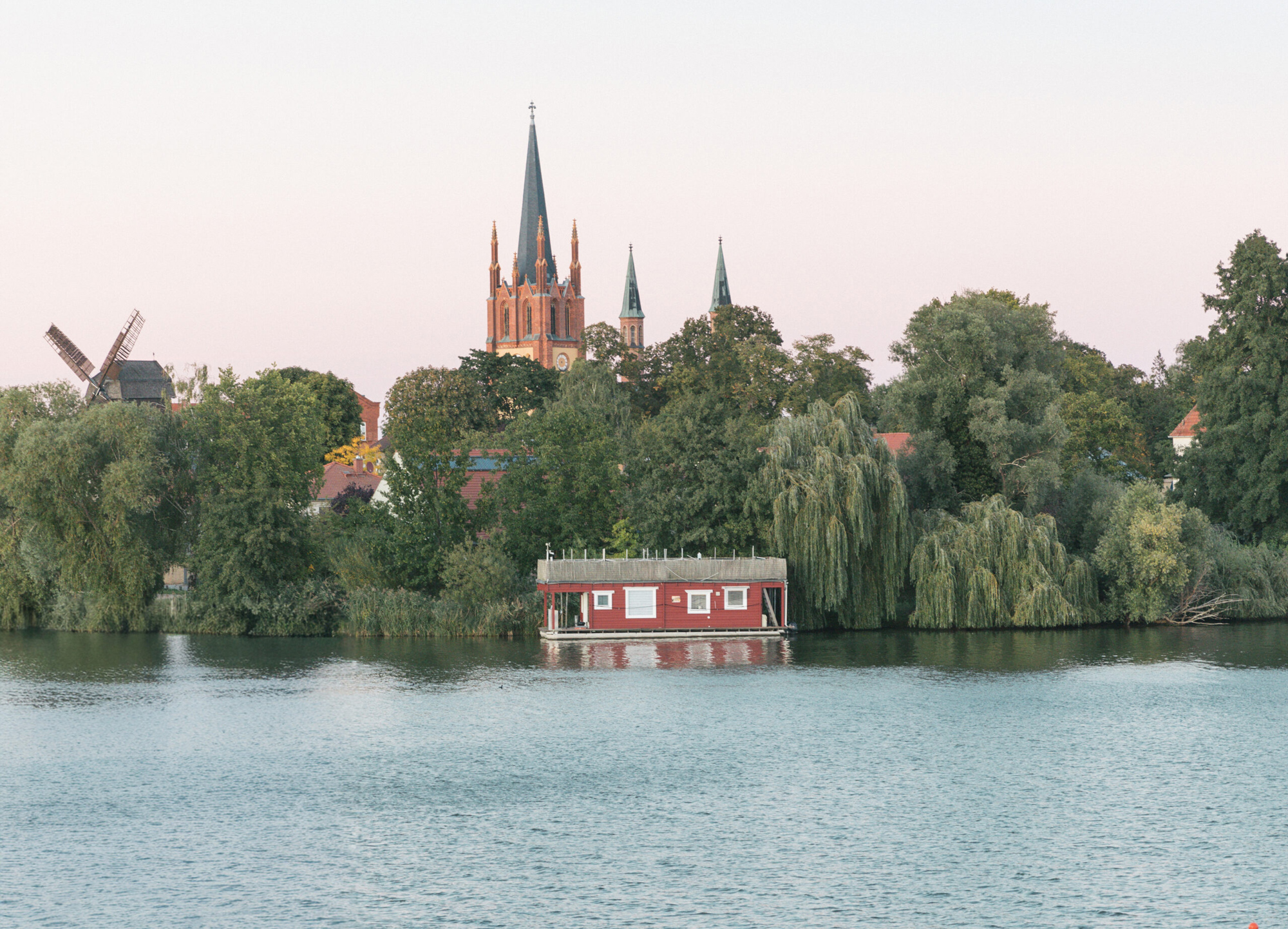
Restaurants, workshops and shops place an emphasis on seasonal and regional products rather than fast consumerism. This means that the wine or apple juice on the menu sometimes comes directly from the hillside opposite.

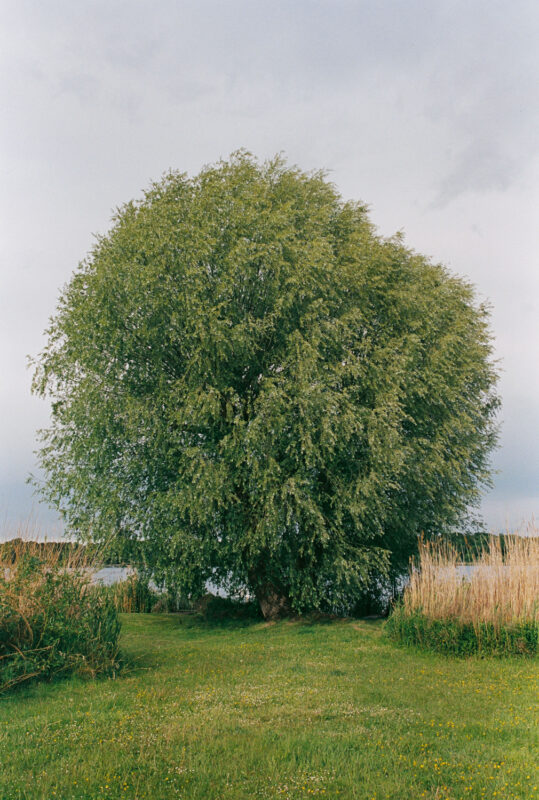
In Werder, peace and quiet can be found away from the nearby bustling cities such as the ten-minute-away Potsdam or the capital Berlin, which is 30 minutes away. The little things can be enjoyed here, such as a walk through avenues of fruit trees, a bike ride across the island or swimming and paddling in the lake.
Interesting spots
Culinary delights: Regional cuisine of Michelin-star quality can be enjoyed at the Alte Überfahrt, with a direct view of the Havel River. The Duval Wine Bar serves natural wines and good bread in a minimalist setting.
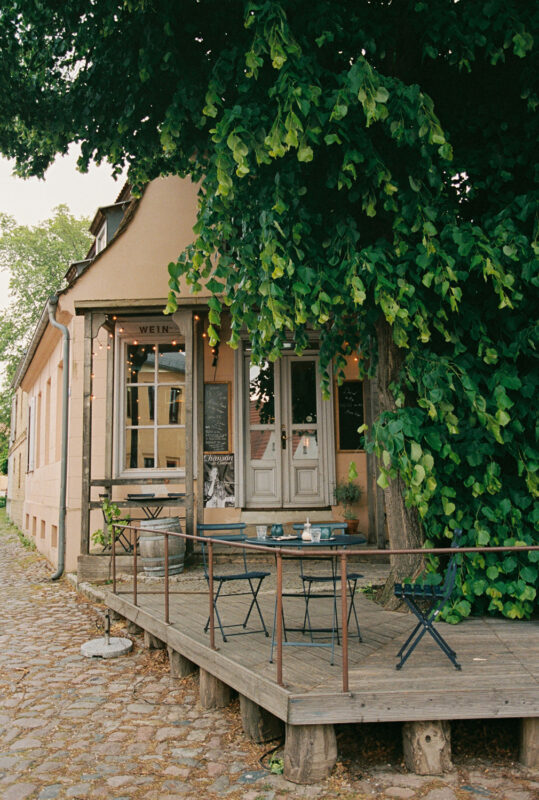
© Anne Schwalbe
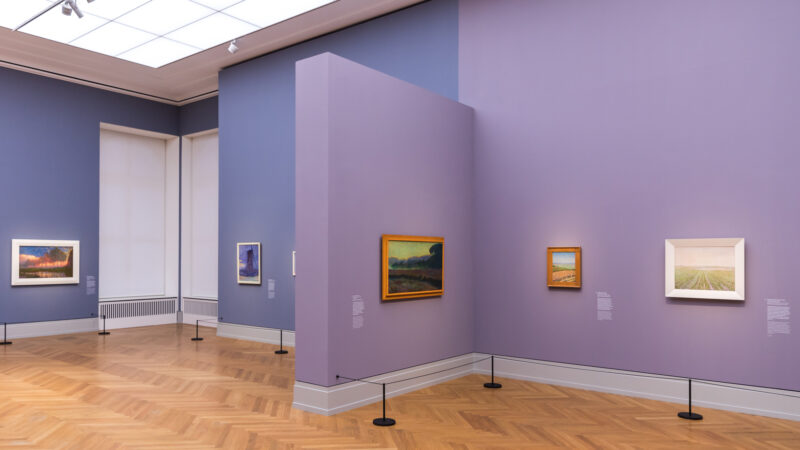
© Raimond Spekking / CC BY-SA 4.0 (via Wikimedia Commons), Wolken und Licht. Impressionismus in Holland, Museum Barberini, Potsdam-40441, CC BY-SA 4.0
A culture trip: Potsdam is well worth a visit. Impressionism is on display at the Barberini. And the Minsk highlights art from the GDR and the present day.
Summer, sun, swimming: The Großer Plessower See lake or Glindow are ideal destinations.
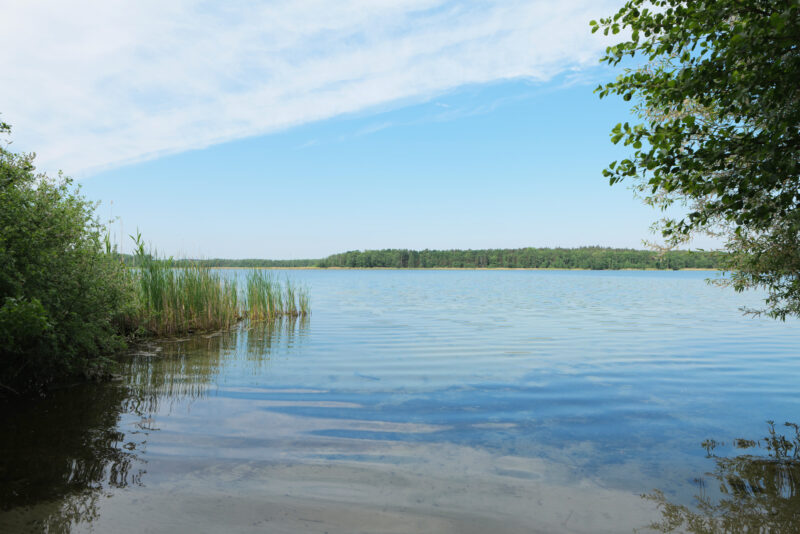
© Leonhard Lenz, Großer Plessower See, 2022-05-25 06, adjusted colours, CC0 1.0

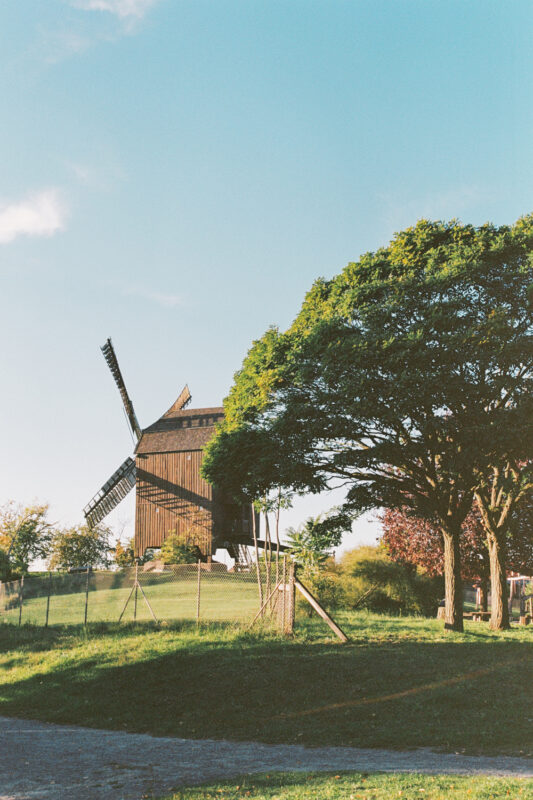
© Huth, Andreas, Auf dem Wachtelberg 08, adjusted colours, CC BY-SA 4.0
Out on the water: Visitors can rent kayaks or SUPs directly on the Havel river.
Local products: On Saturday mornings, the Plantagenplatz market offers fresh fruit, juice, wine, cheese and flowers directly from the farm.
Exploring the island by foot: whether on the circular trail that leads around the island, to the lookout point on Wachtelberg hill or through the vineyards.
Details
Mühlenberg
Apartments
- Remise
- Turmvilla
Outdoor
- Belvedere
- HAIN
- Garden, jetty & sauna
Scheunhornweg
Apartments
- Bauhaus
- Gartenhaus
Outdoor
- Garden & jetty