If you’re out and about in “old” West Berlin, the elegant part of the city between Kurfürstendamm and KaDeWe (incidentally, the largest department store on the European mainland), you’ll find a culinary gem tucked away in a side street that could just as easily be found in Paris: Brasserie Colette. The high standards of its creator, Tim Raue, probably Berlin’s best-known Michelin-starred chef, have been transferred here to a straightforward brasserie concept. And it works well – which is not surprising, because behind the brasserie is a name that has shaped Berlin’s gastronomic scene for years: Tim Raue.
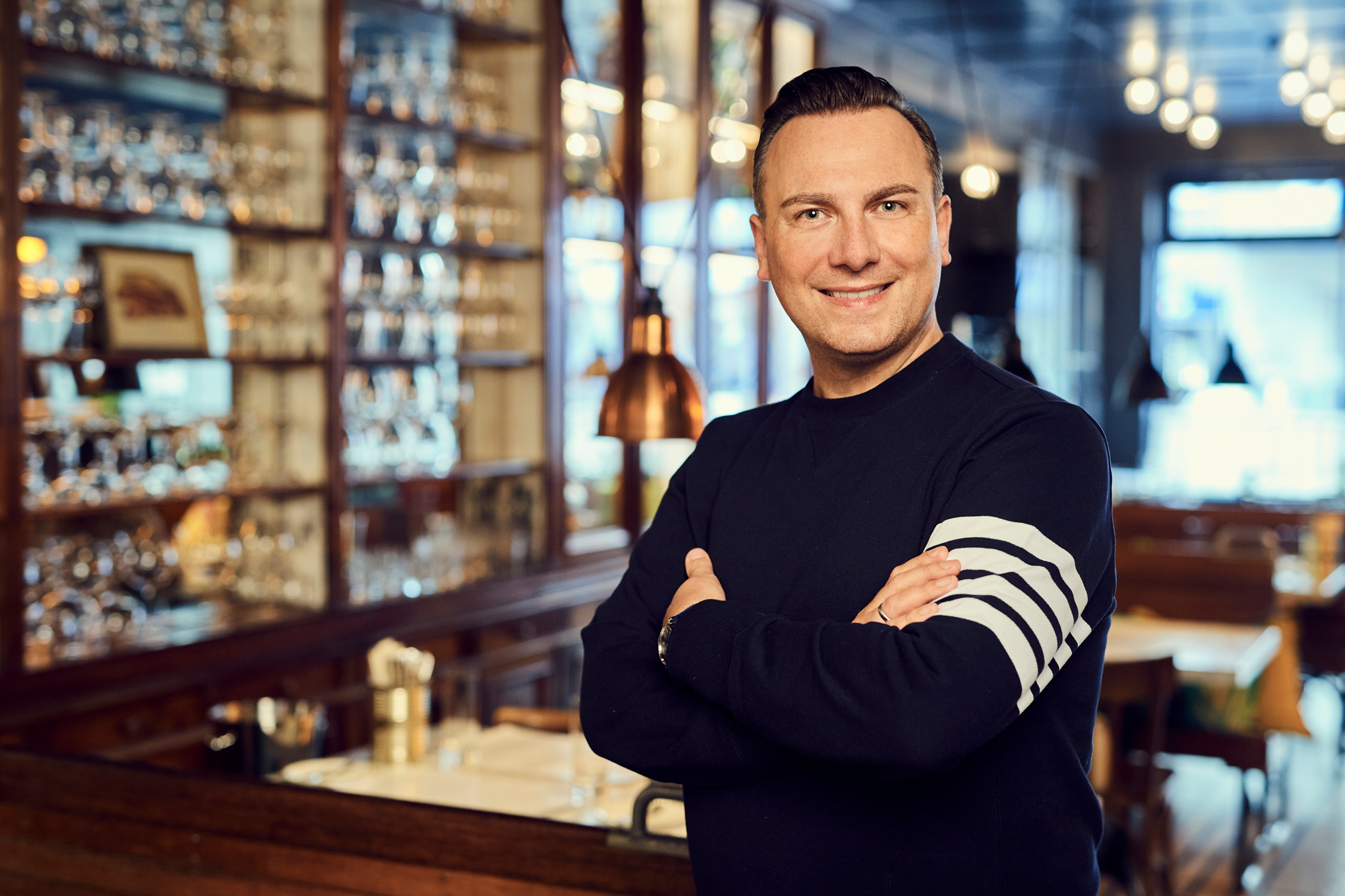
Berlin Boy: Tim Raue
Although Berlin-born Tim Raue (1974) also pursues gastronomic projects outside the German capital in Constance and Munich, his flagship projects are spread across Berlin’s city center: his main restaurant, “Restaurant Tim Raue,” is located in Kreuzberg. His restaurant has been awarded two Michelin stars (and 19.5 out of 20 points in Gault&Millau).
Tim Raue is also the only German chef to date to have had an episode dedicated to him on the world-famous NETFLIX series Chef’s Table. This may also have something to do with the fact that Tim Raue has achieved a certain omnipresence in the (at least German) media: he can be seen on television shows, on XXL posters in Berlin promoting his new restaurant “The Sphere” at the top of the Berlin TV tower, and you stumble across Rim Raue in bookstores, where his cookbooks and biography are stacked high.

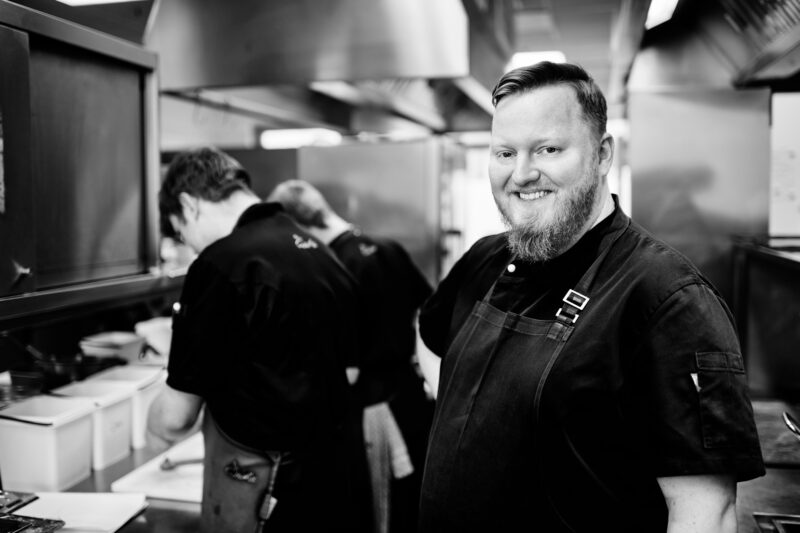
Tim Raue is a true Berliner: he spent his childhood in the gray concrete of Kreuzberg, was a member of a youth gang (the “Boys 36,” named after the old Kreuzberg zip code), and was interested in spray painters and graffiti. With iron discipline, he worked his way up, built his own empire, which now comprises ten restaurants, and serves practically 850 guests a day as a restaurateur. As a skilled entrepreneur, Tim Raue has also translated his success and fame into gastronomic and entrepreneurial projects, such as Asian inspired restaurant concepts for cruise ships.
However, Raue’s cuisine remains rooted in European culinary heritage: in some restaurants, Raue’s culinary style is based on traditional German dishes, like his new restaurant in Berlin’s TV tower, he also incorporates references to East German cuisine (e.g., when reinterpreting the typical Soljanka soup of the GDR). Others —such as Brasserie Colette—it draws on French cuisine.

The kitchen style
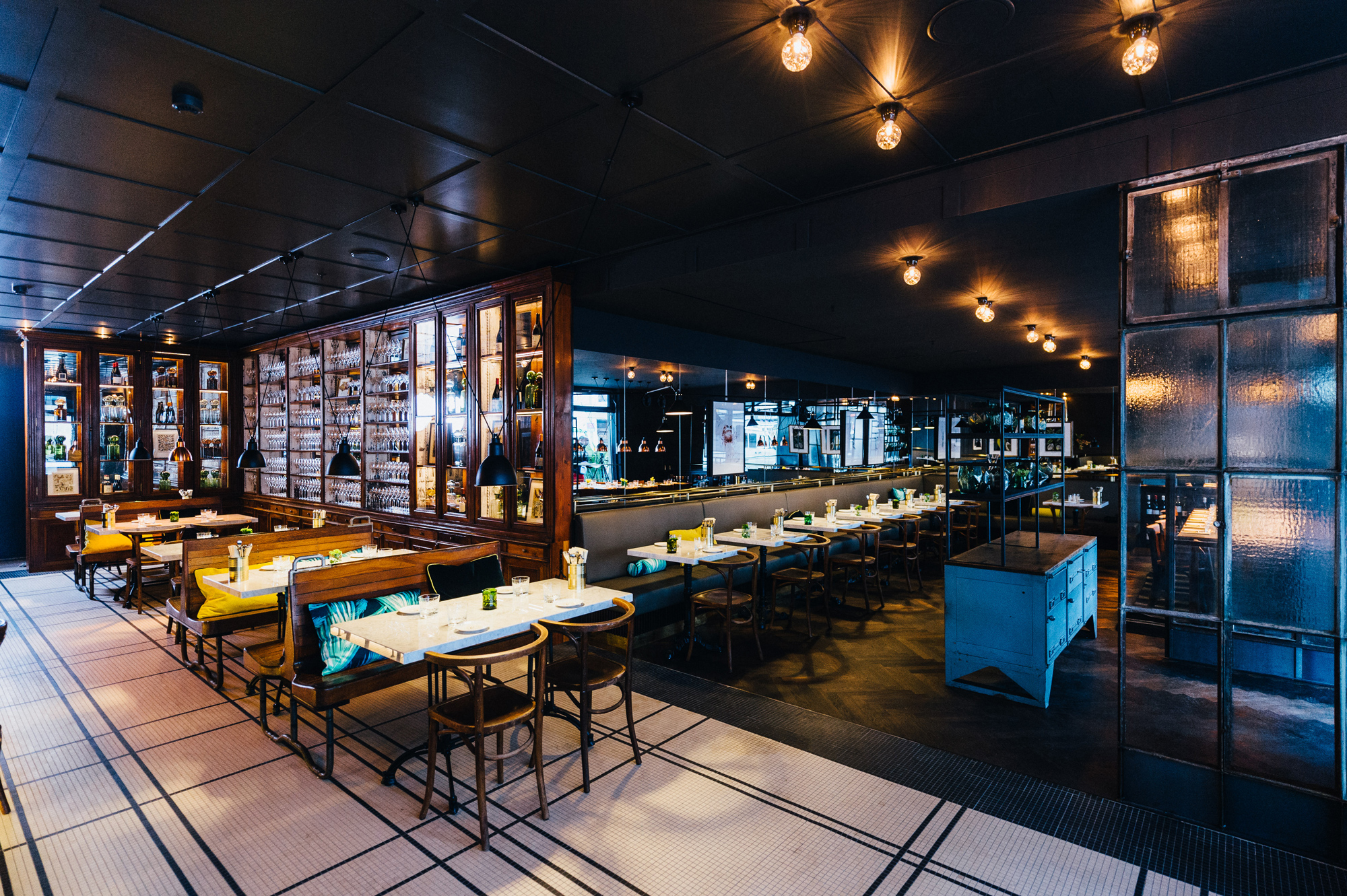
As soon as you step into Brasserie Colette Tim Raue, you feel as if you have stepped through the swing door onto Boulevard Saint Germain in Paris. The French-inspired interior is reflected in the culinary concept of Brasserie Colette. The dishes—from brasserie classics to monthly seasonal specialties—bear the signature touch of two-star chef Tim Raue, who adds his own twist to classic dishes.
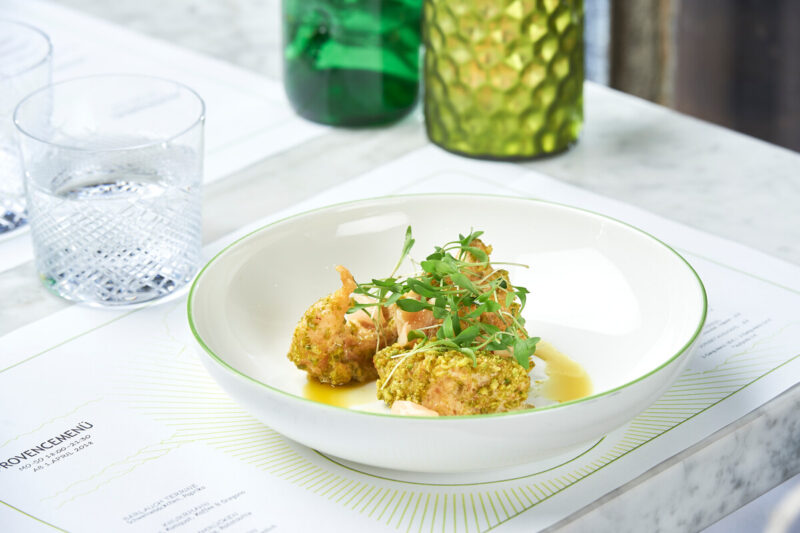
The menu includes dishes such as “Garnele Marocain,” which features fried tempura shrimp coated with vadouvan mayonnaise, sprinkled with pistachio crunch, and served with lychees marinated in rose water, pistachio oil, and coriander cress.
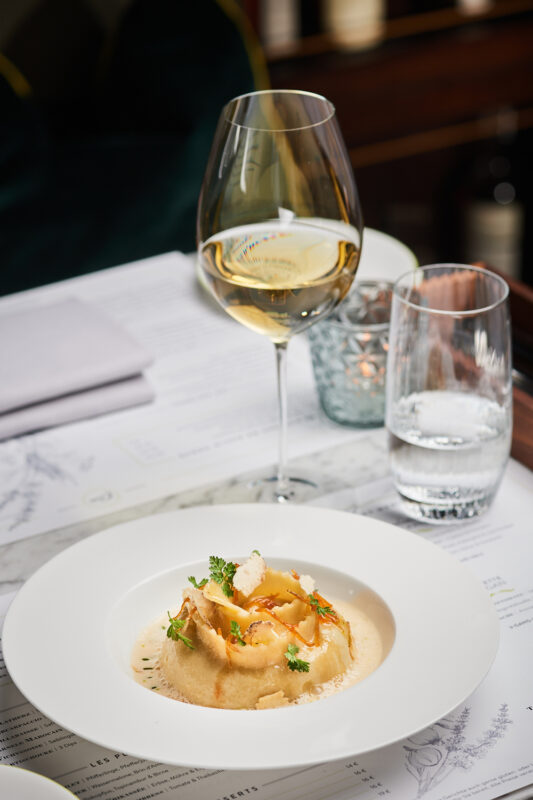

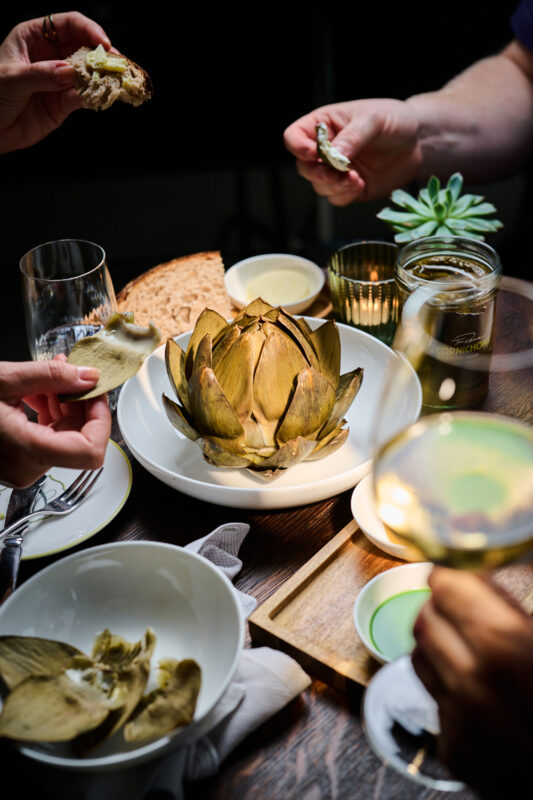
Then French classics come back into play, such as traditional bouillabaisse with toasted bread and rouille, or onion soup with brioche and cheese, oysters au gratin or artichokes with dips, and rack of lamb with ratatouille. During the Christmas season, things take a German turn with the “duck menu,” featuring duck carved at the table, followed by duck ham and onion soup.
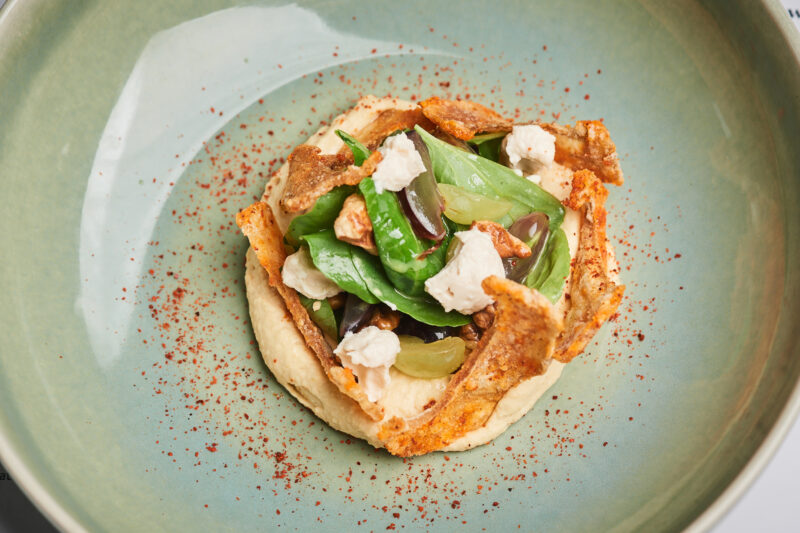
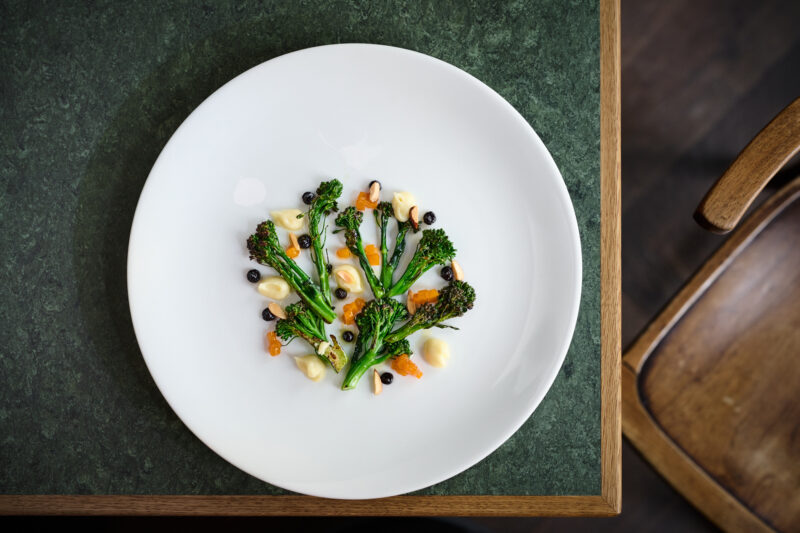
In contrast, the vegan menu at Brasserie Colette shows just how exciting plant-based cuisine can be. Colette serves combinations such as celery with gooseberries and Jerusalem artichokes or eggplant with chanterelle ratatouille.
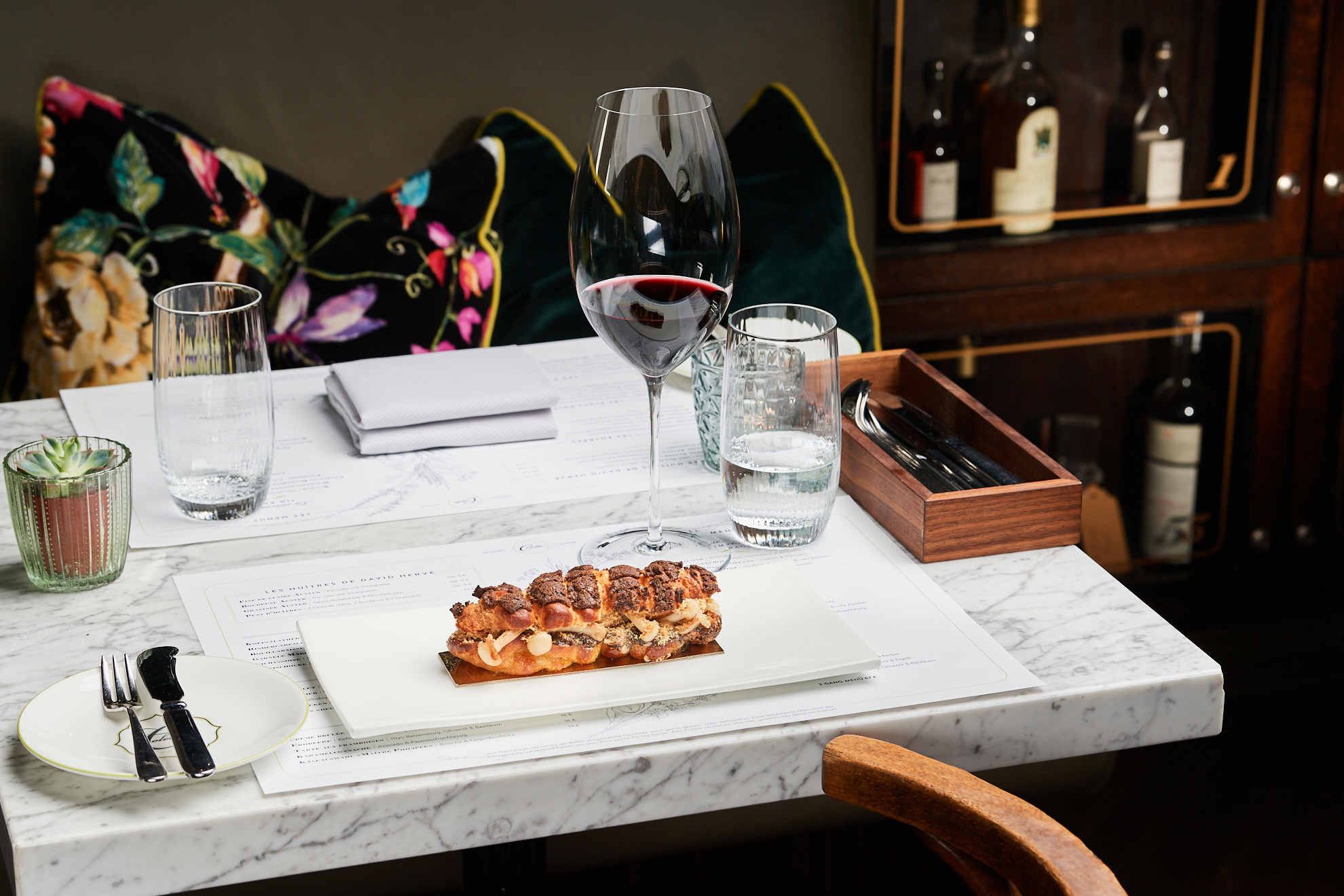
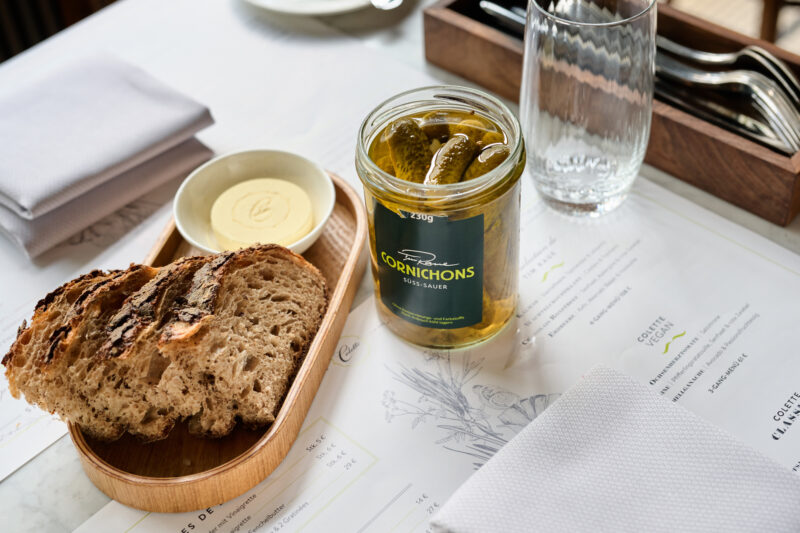
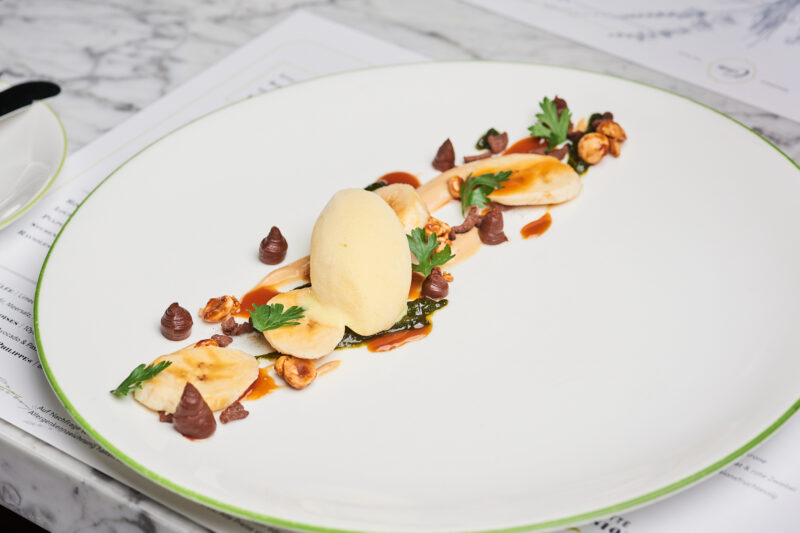
Sweetness, acidity, and spice interacted harmoniously and excitingly in many dishes—alongside spiciness, this interplay is certainly a cornerstone of Tim Raue’s style. But Tim Raue also grounds his culinary presentation immediately: sometimes the starters are simply sweet and sour pickled cucumbers, based on a recipe by Tim Raue. They are served alongside sourdough bread with hints of aniseed, coriander, fennel and caraway. The bread originates from the traditional Philipps bakery in Waldmünchen. The wine list features well-known German winemakers such as Jochen Dreissigacker and Markus Schneider, as well as numerous wine regions in France.
Relaxed atmosphere
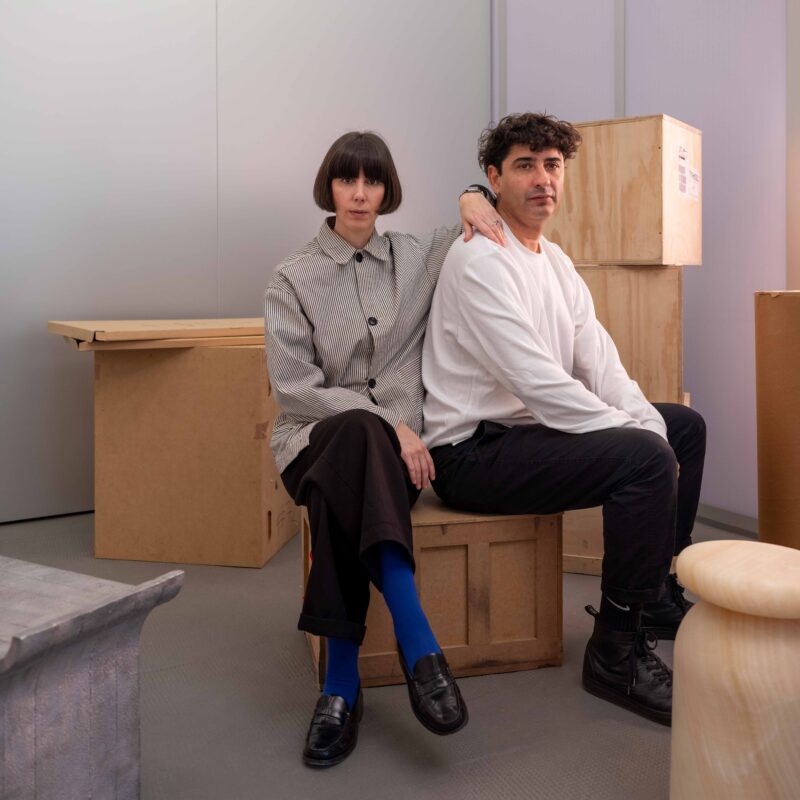
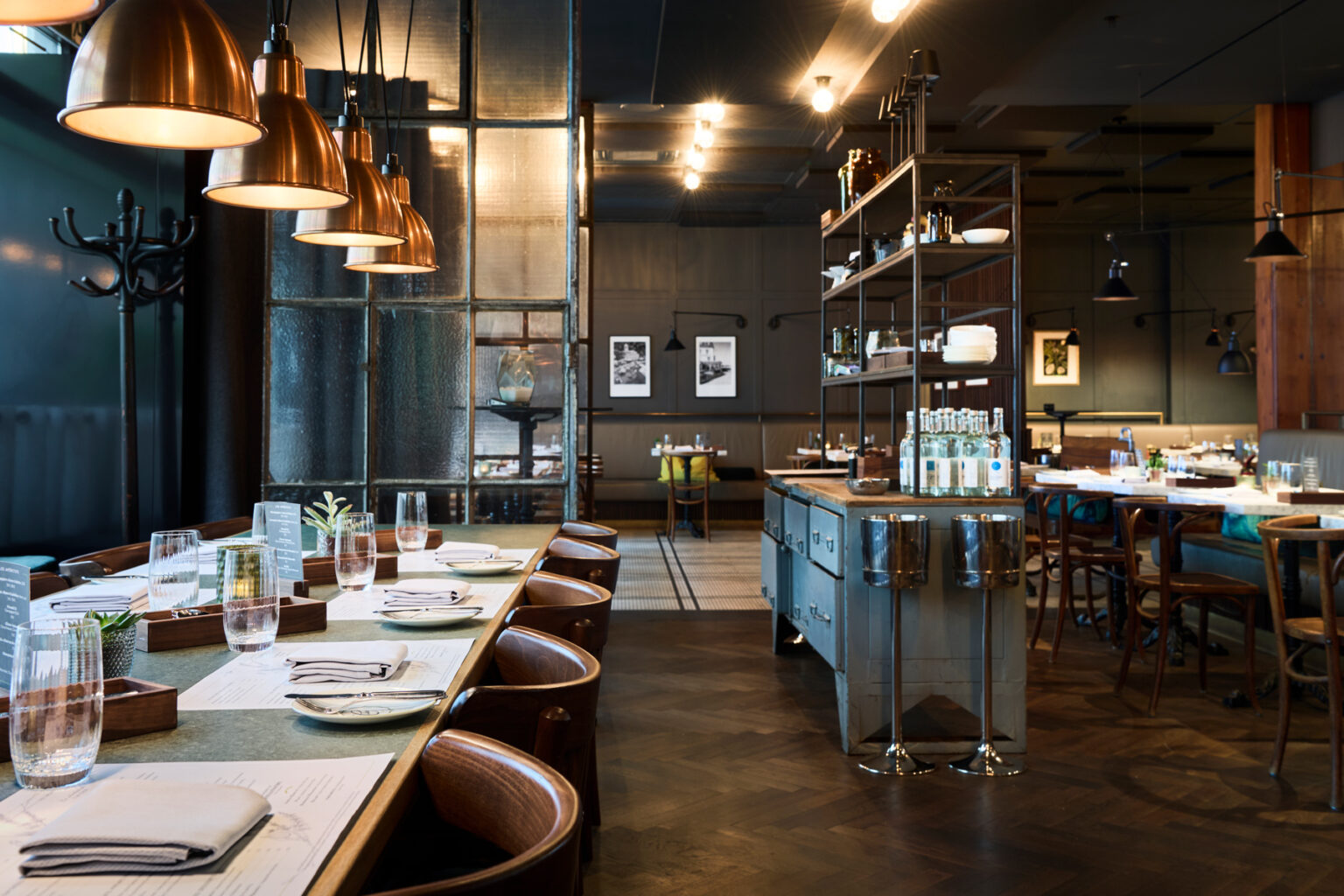
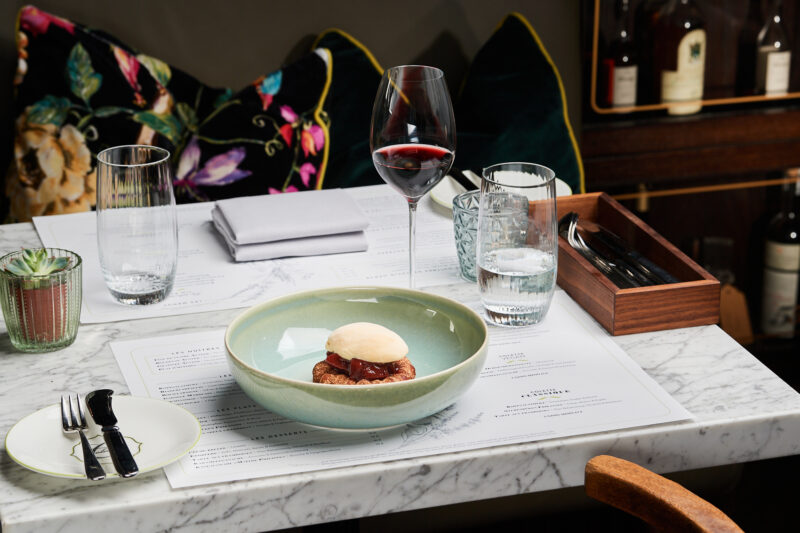
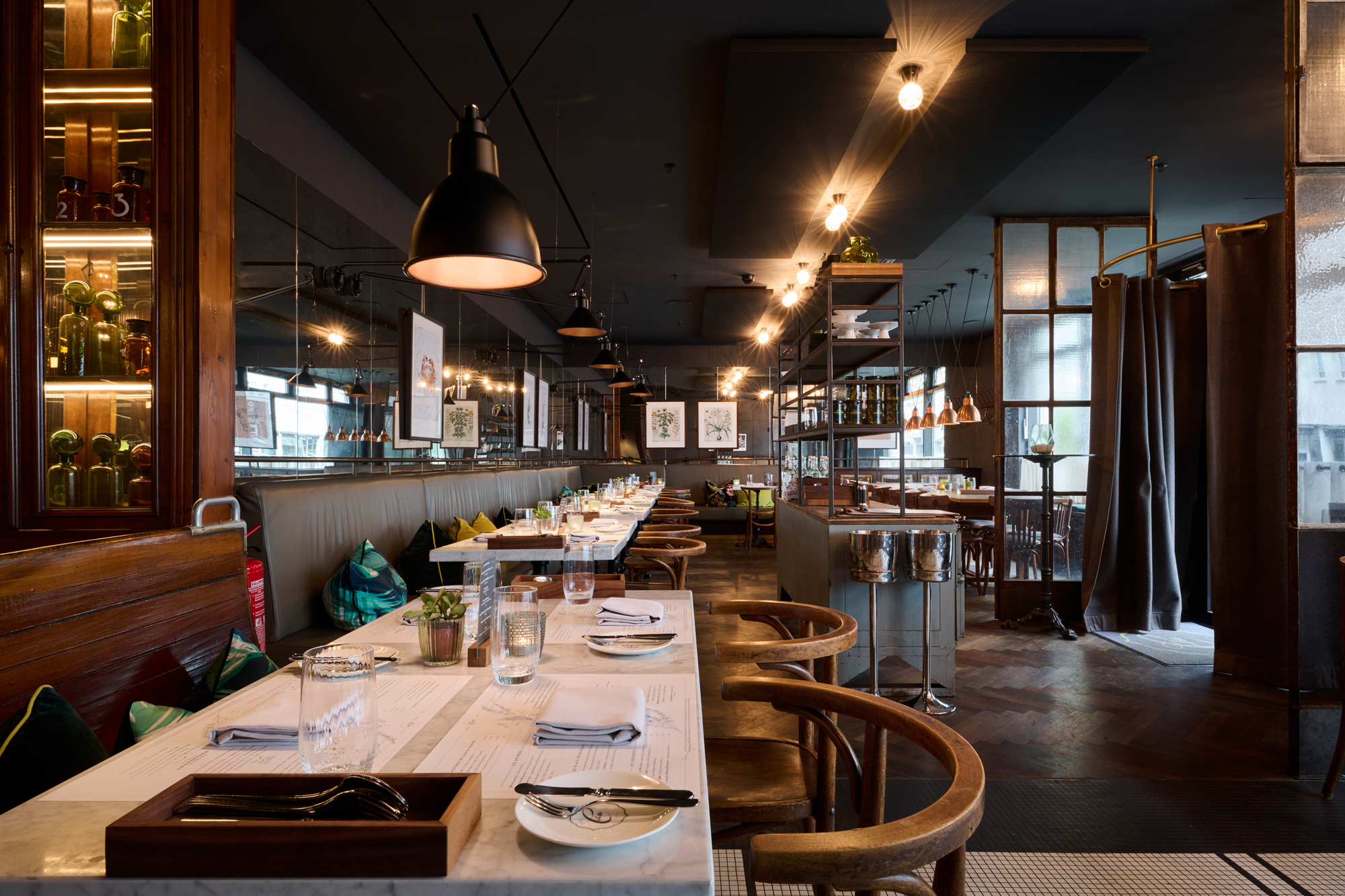
While the Tim Raue restaurant has a pure, functional atmosphere, almost like a gallery, the brasserie is primarily cozy: In the interior designed by Berlin architects Ester Bruzkus and Patrick Batek, classic brasserie elements such as continuous benches, mosaic floors, vintage brasserie chairs, antique mirrors, and marble tables create a certain degree of intimacy.
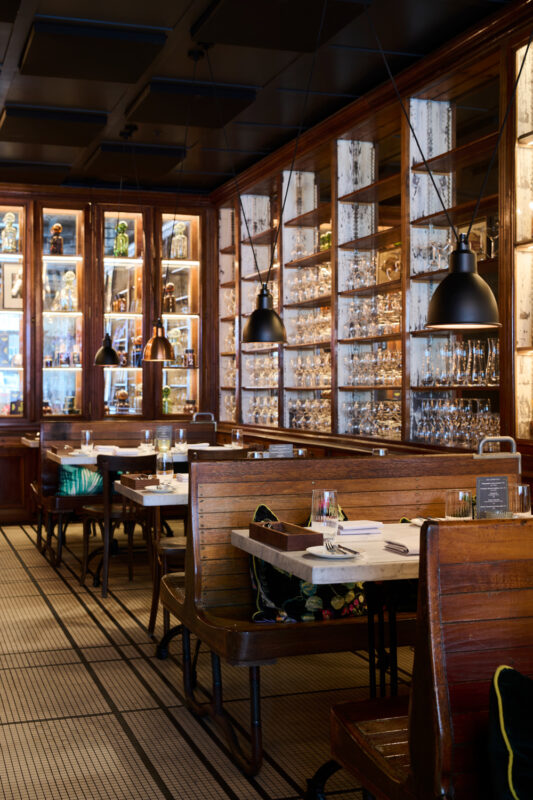

The restaurant is divided into an L-shape inside and connected to a wonderful bar. The restaurant is therefore divided into three areas. In the main area on the right, there is a spacious table that can seat up to ten guests. In the adjacent area, there are marble tables for two people each.
Modern materials such as dark gray painted walls and smoked oak parquet flooring lighten the atmosphere. A special eye-catcher at Berlin’s Colette Tim Raue is the historic wall paneling made from apothecary cabinets, which was installed opposite the bar.
Details
Opening hours
Mon–Sun: 12:00 noon to 3:00 p.m.
Mon–Sun: 6:00 p.m. to 11:00 p.m.
Other locations
- Konstanz
- Munich
Website