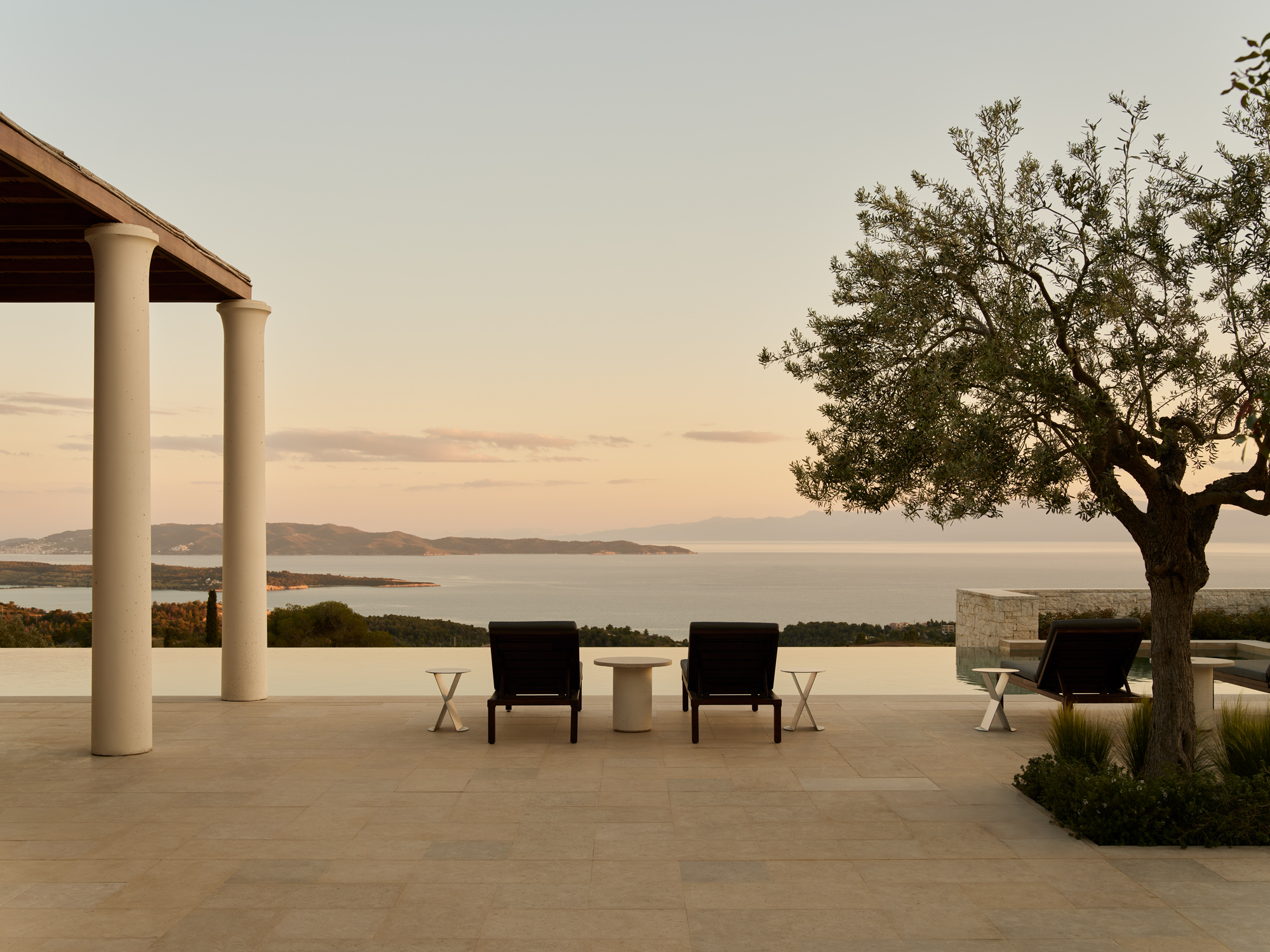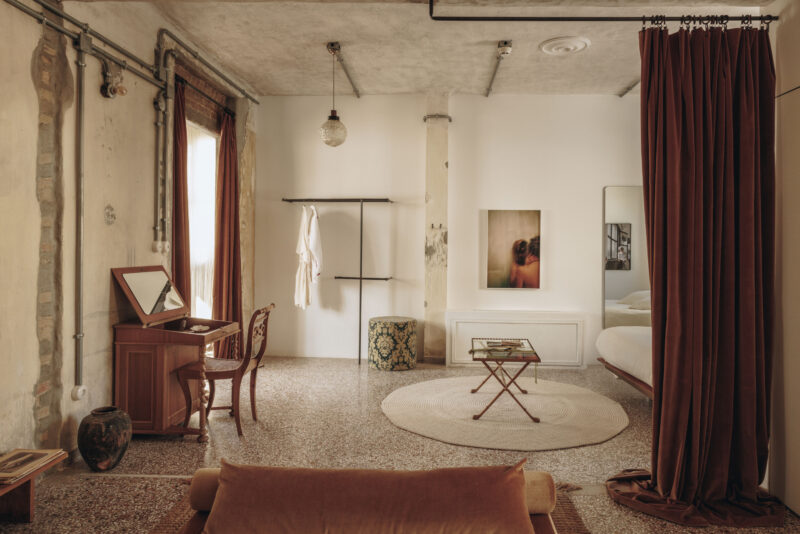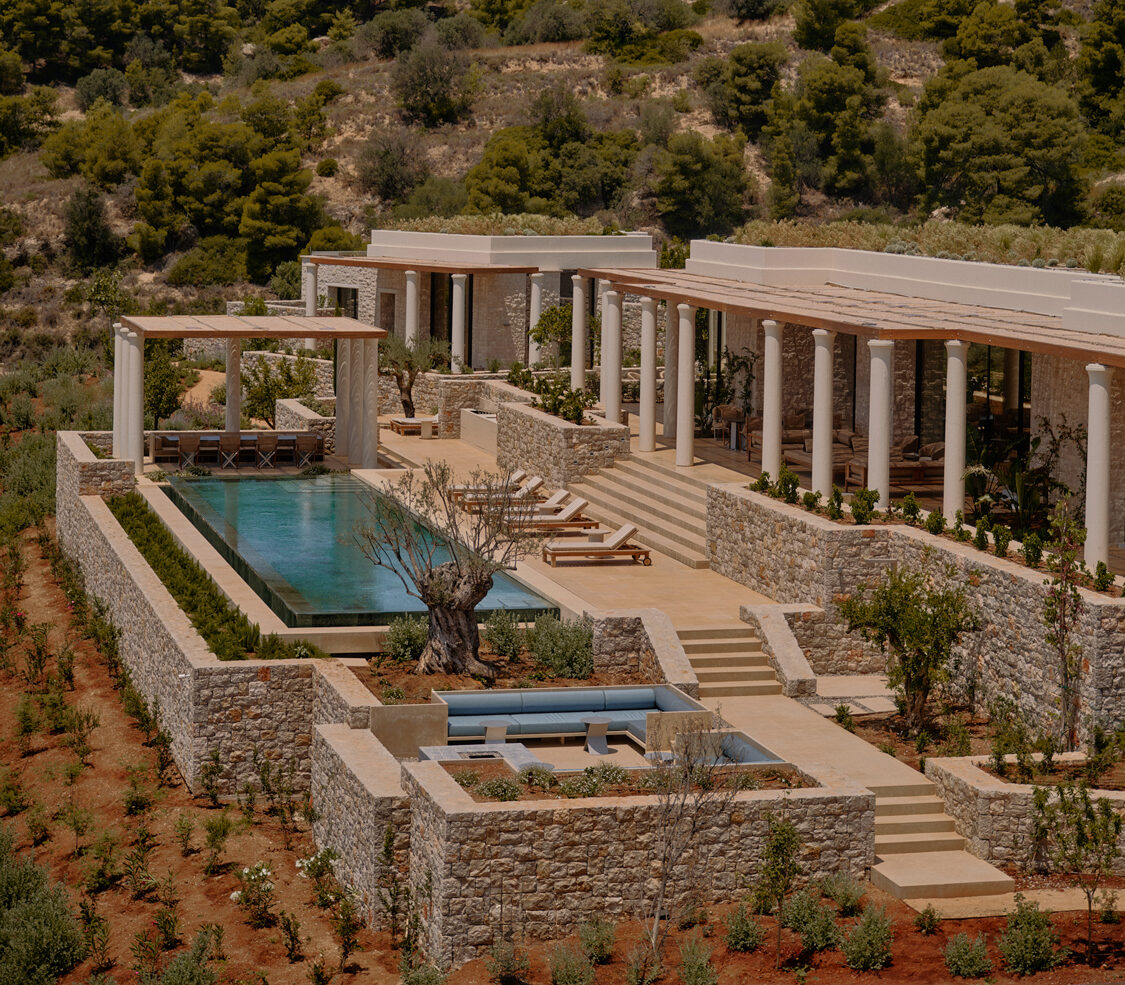
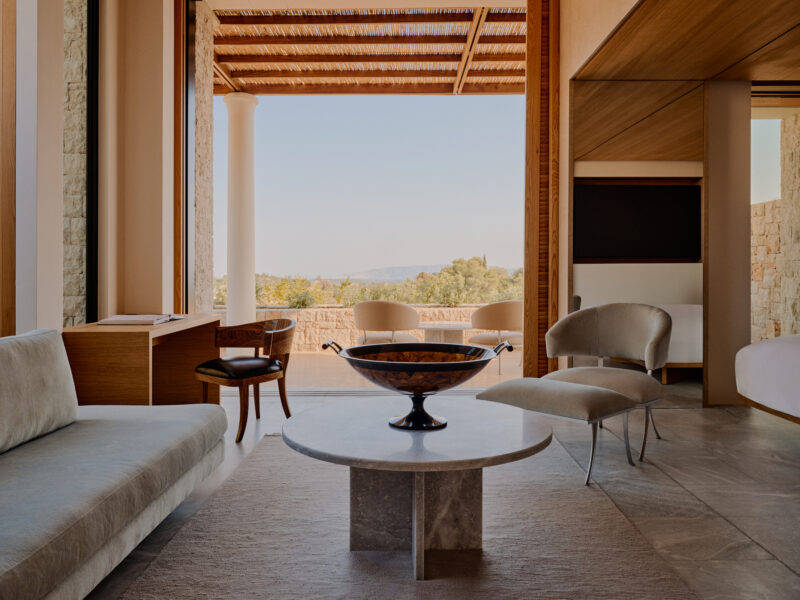
The approach moves through a landscape that has no need to advertise itself: olive groves, dusty green, sea held at a distance. Then Amanzoe appears not with drama but with control. Walls, water, shade, columns. First impression arrives less as spectacle than as carefully staged deceleration.

The location
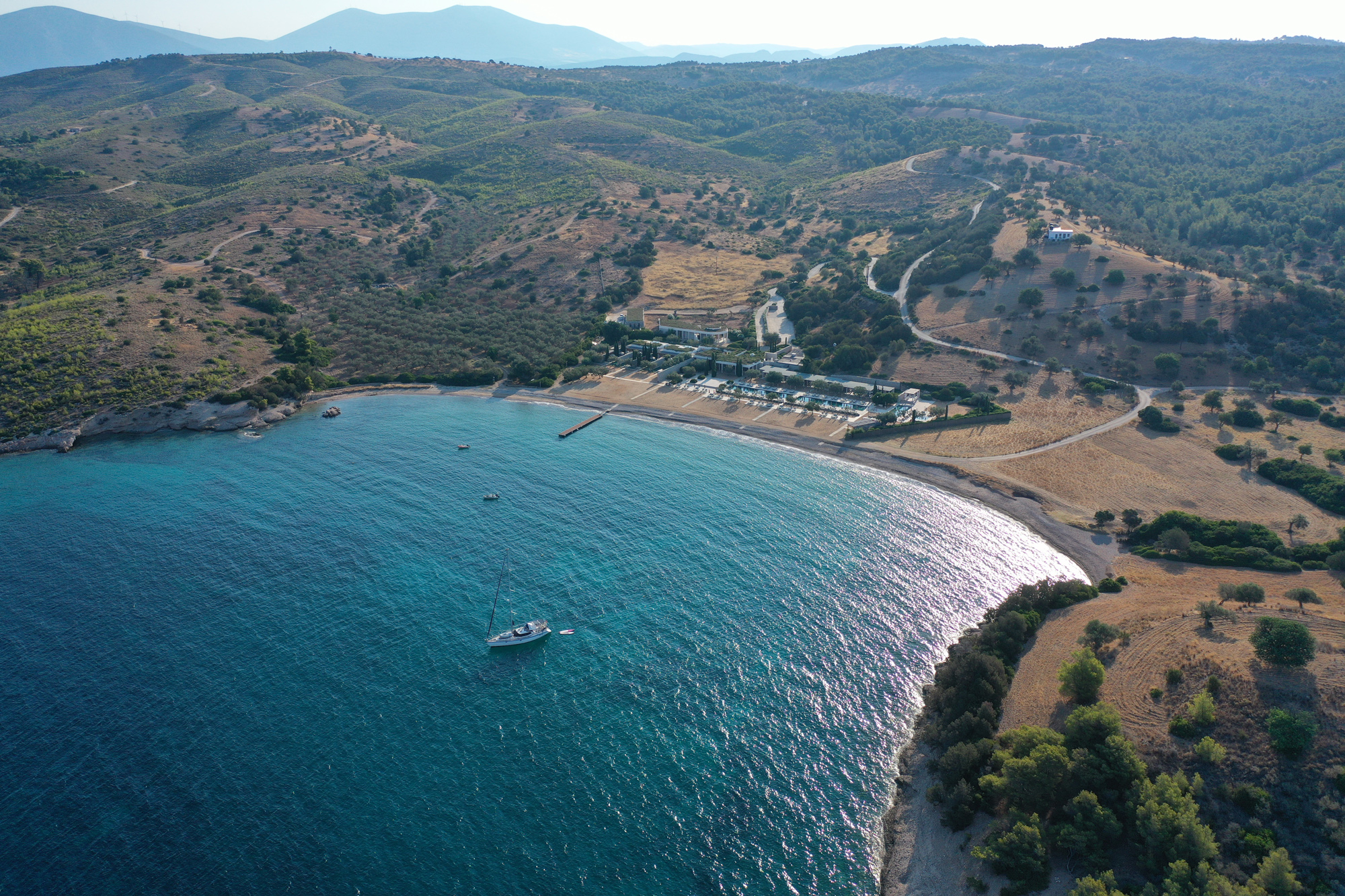
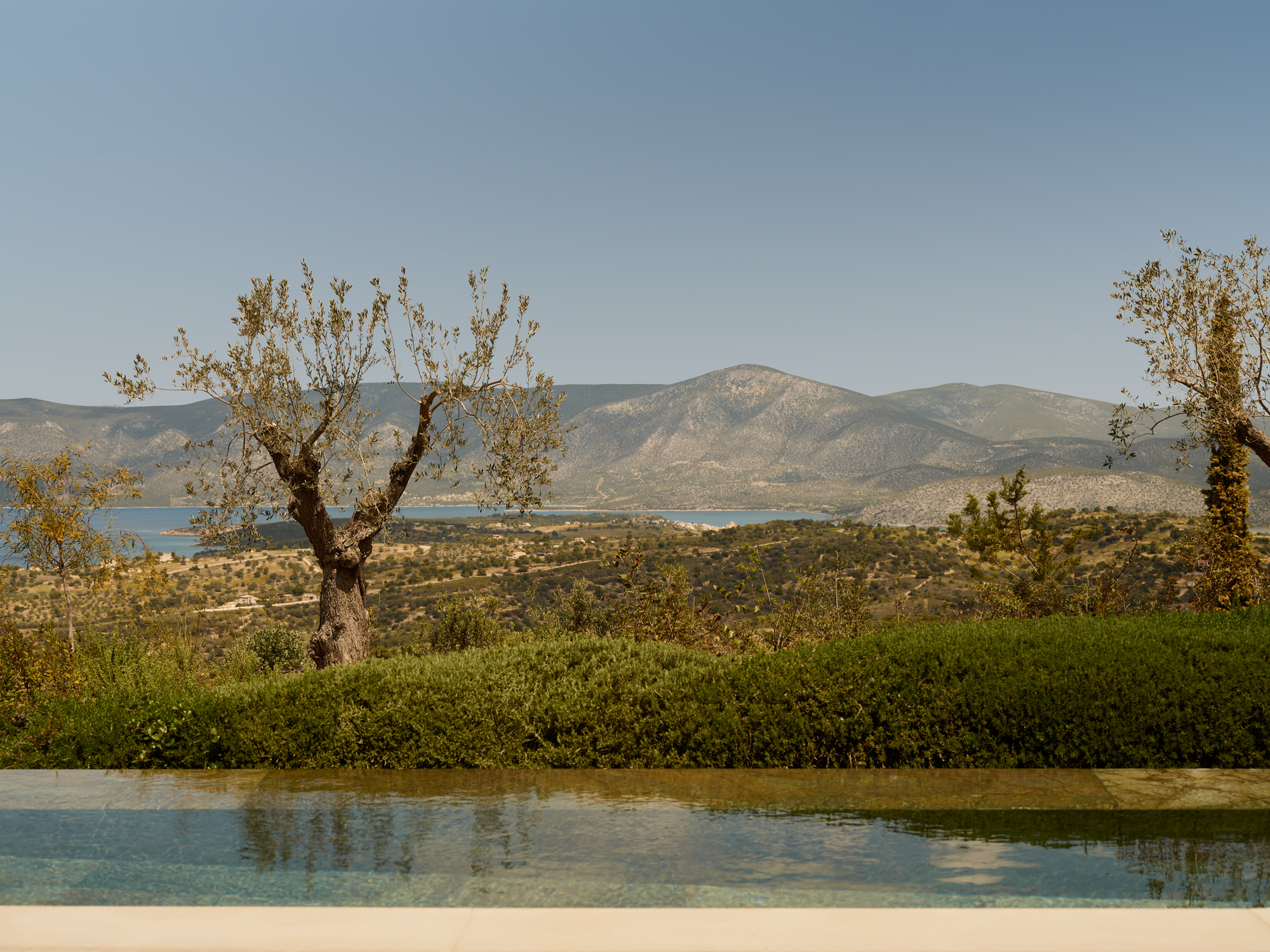
Amanzoe occupies a hilltop at Agios Panteleimonas above Porto Heli, looking across olive groves, broken coastlines and the Argolic Gulf. From Athens, the resort is roughly a two-and-a-half-hour drive; faster, almost absurdly faster, is the helicopter transfer. The ascent already begins to push daily life out of frame.
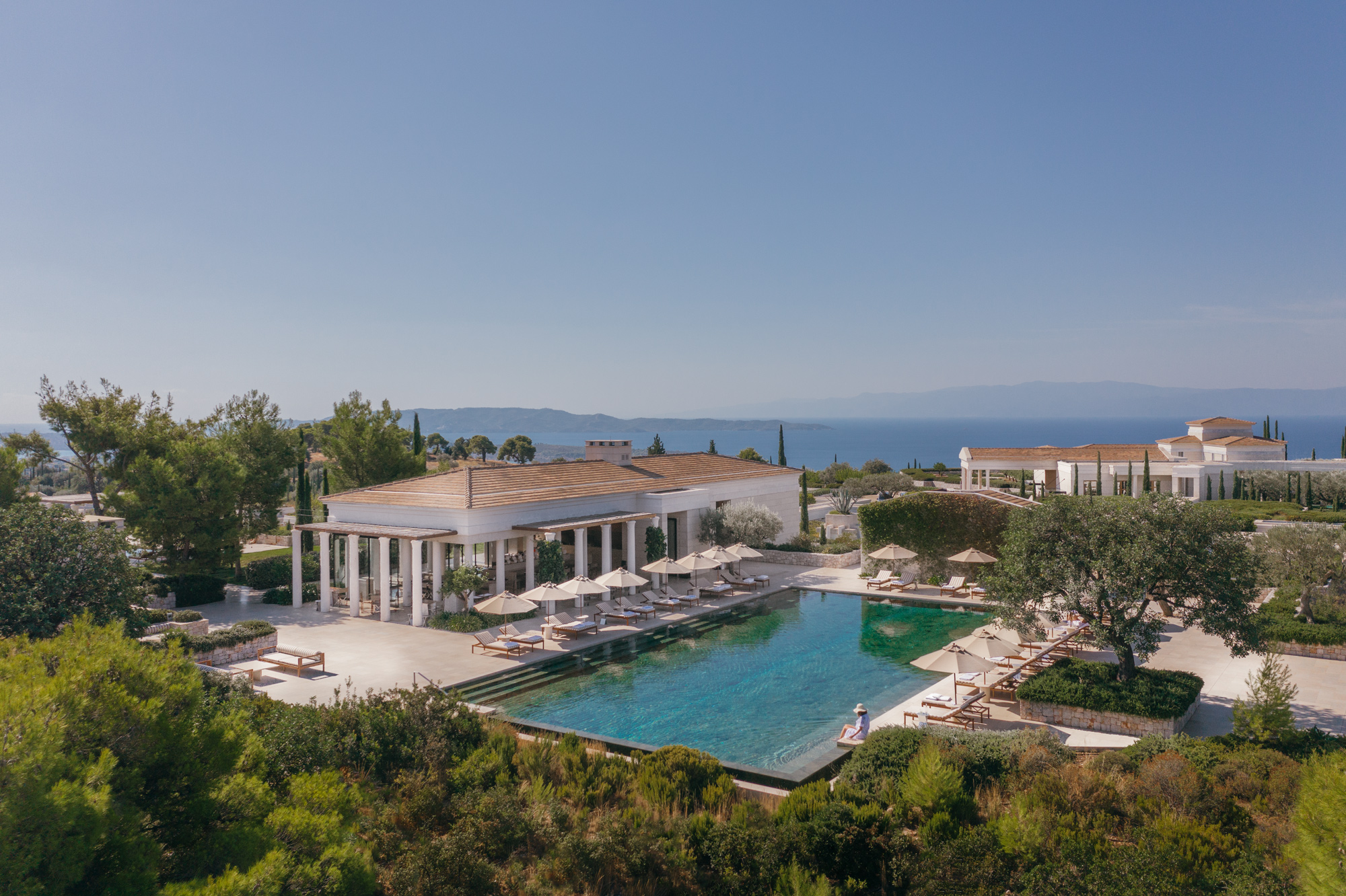
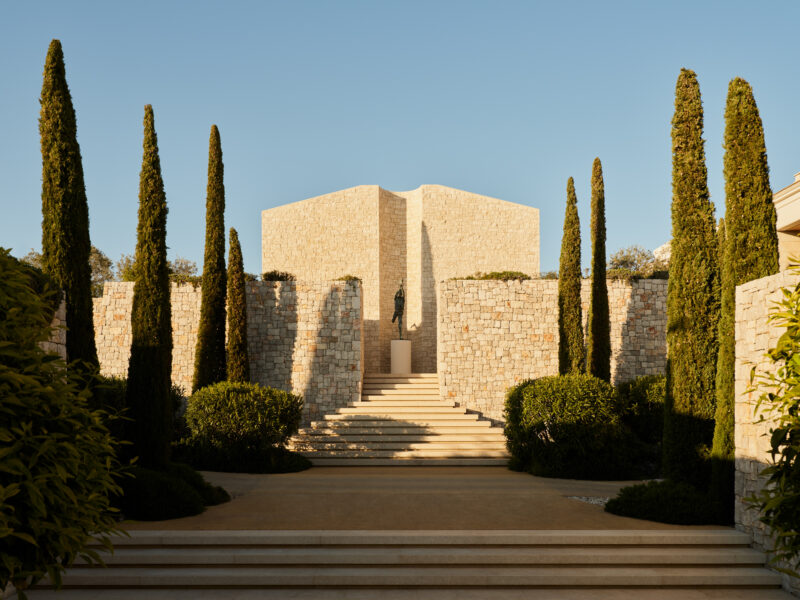
The property appears like a modern acropolis: flat roofs, pale stone planes, colonnades, reflective water lines multiplying the light. Nothing here is casually relaxed. Even the spaciousness feels composed. And yet the architecture remains open enough to admit wind, scent and horizon.
Backstory
Amanzoe opened in 2012 as the Greek expression of the quiet rigor with which Aman has placed its houses for decades. The name joins Aman, from Sanskrit for peace, with the Greek zoe, meaning life. That mix of restraint and sensual immediacy structures the resort still.
Historically, Amanzoe belongs to the line of Aman properties that do not overwrite a place but stage a concentrated reading of it. Under the current leadership of Aman Chairman and CEO Vlad Doronin, that approach continues: globally exacting, locally alert, never merely decorative. The human signature of the house lies less in demonstrative hostmanship than in Aman’s particular form of attentiveness, where service functions as discreet intelligence. You are not embraced. You are noticed.

Interior & architecture
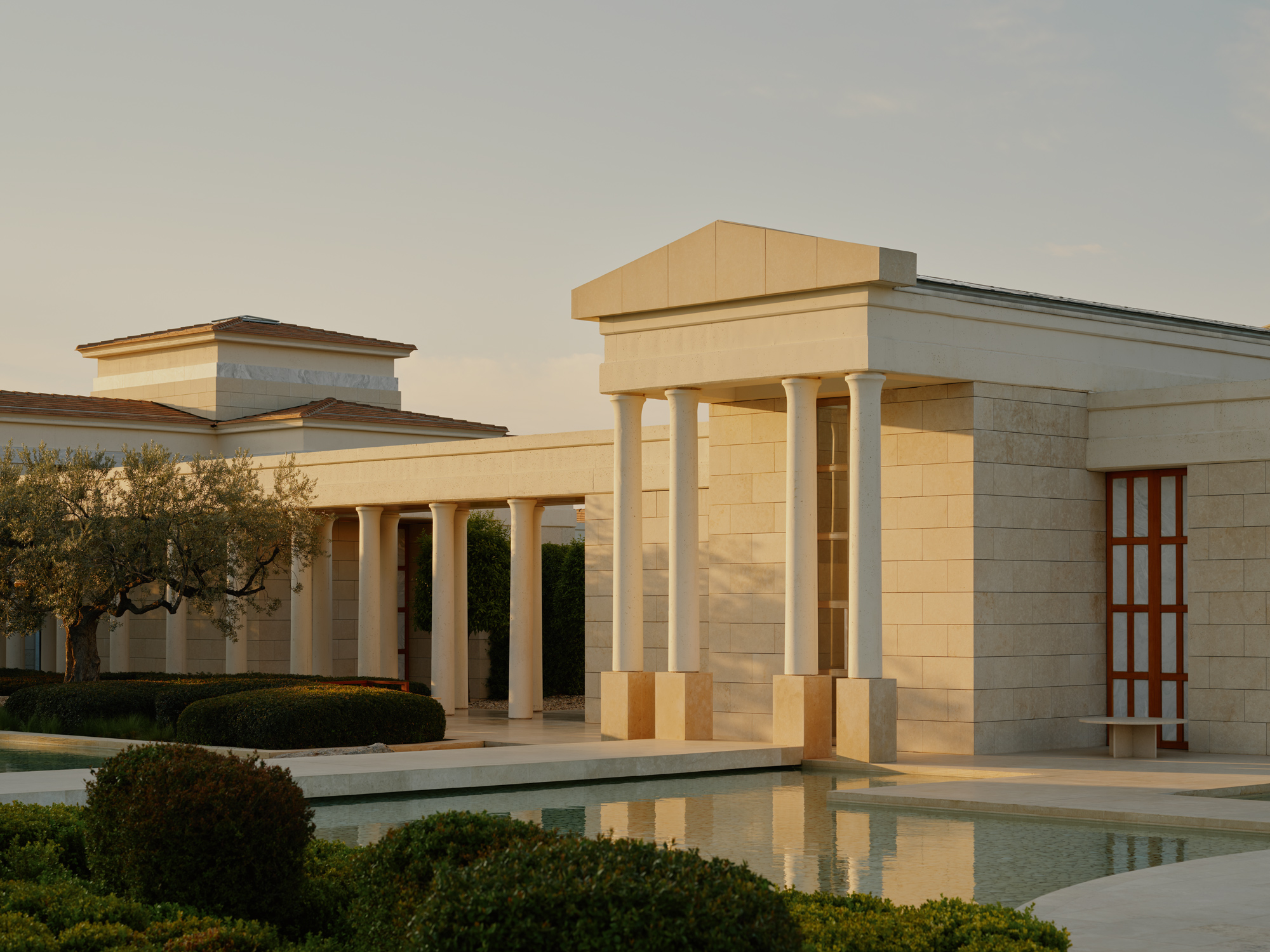
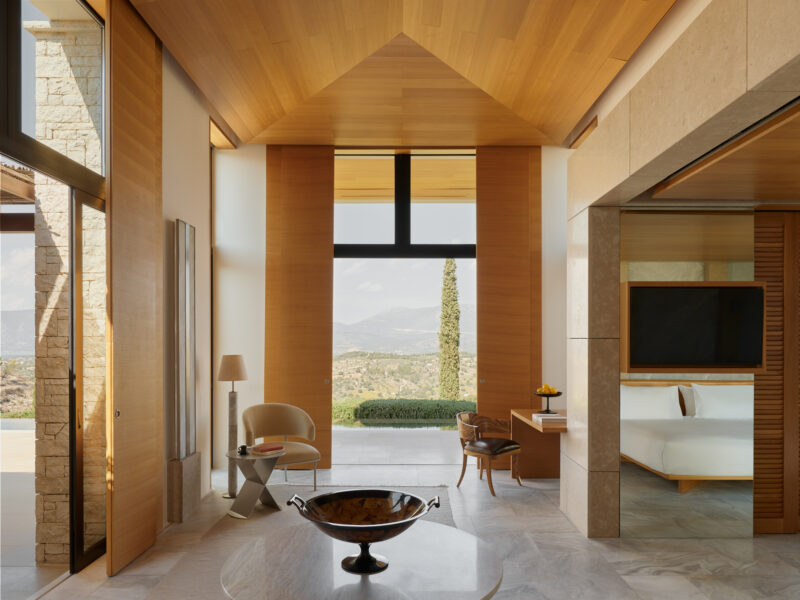
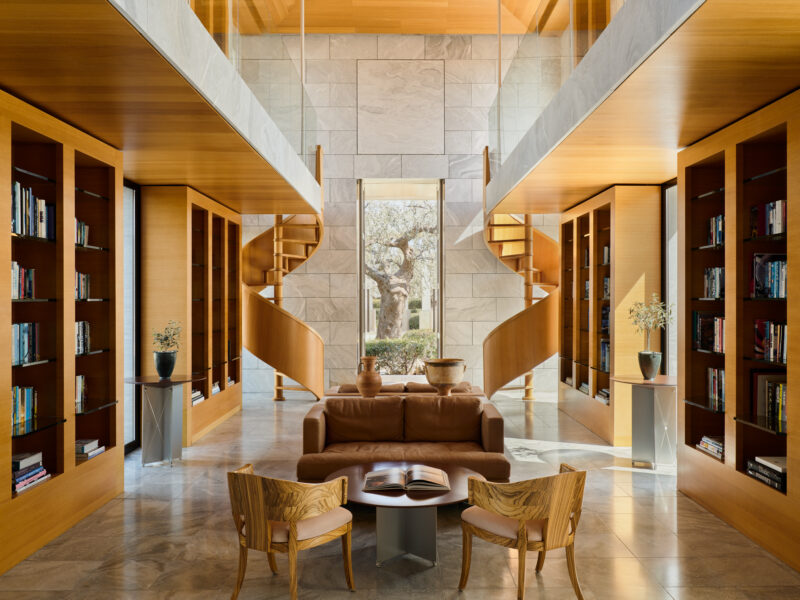
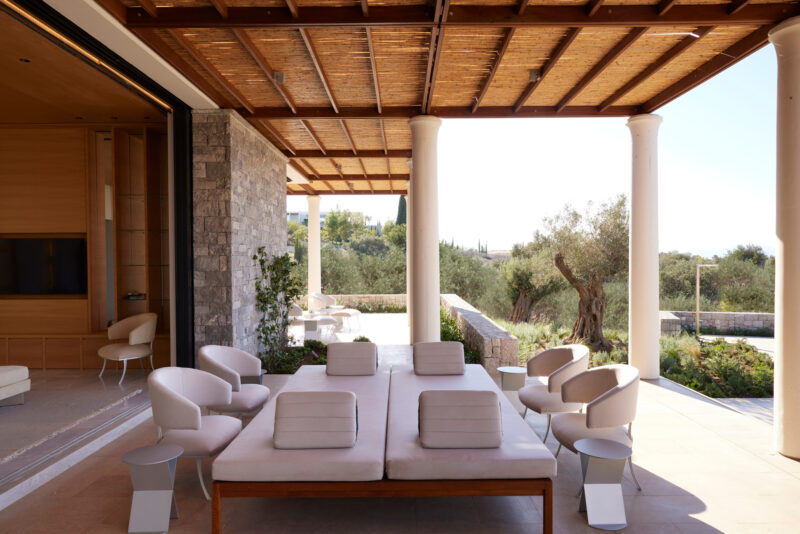
Amanzoe was designed by Ed Tuttle, the architect who shaped the Aman chain. He believed that, alongside tranquillity and order, “a sense of classicism and proportion is of paramount importance—and, of course, beauty”. His dialogue with classical Greek architecture is unmistakable, but never museum-like: colonnades, courtyards, symmetries, axes of view. Add high ceilings, stone walls, marble floors, natural stone and warming oak accents.
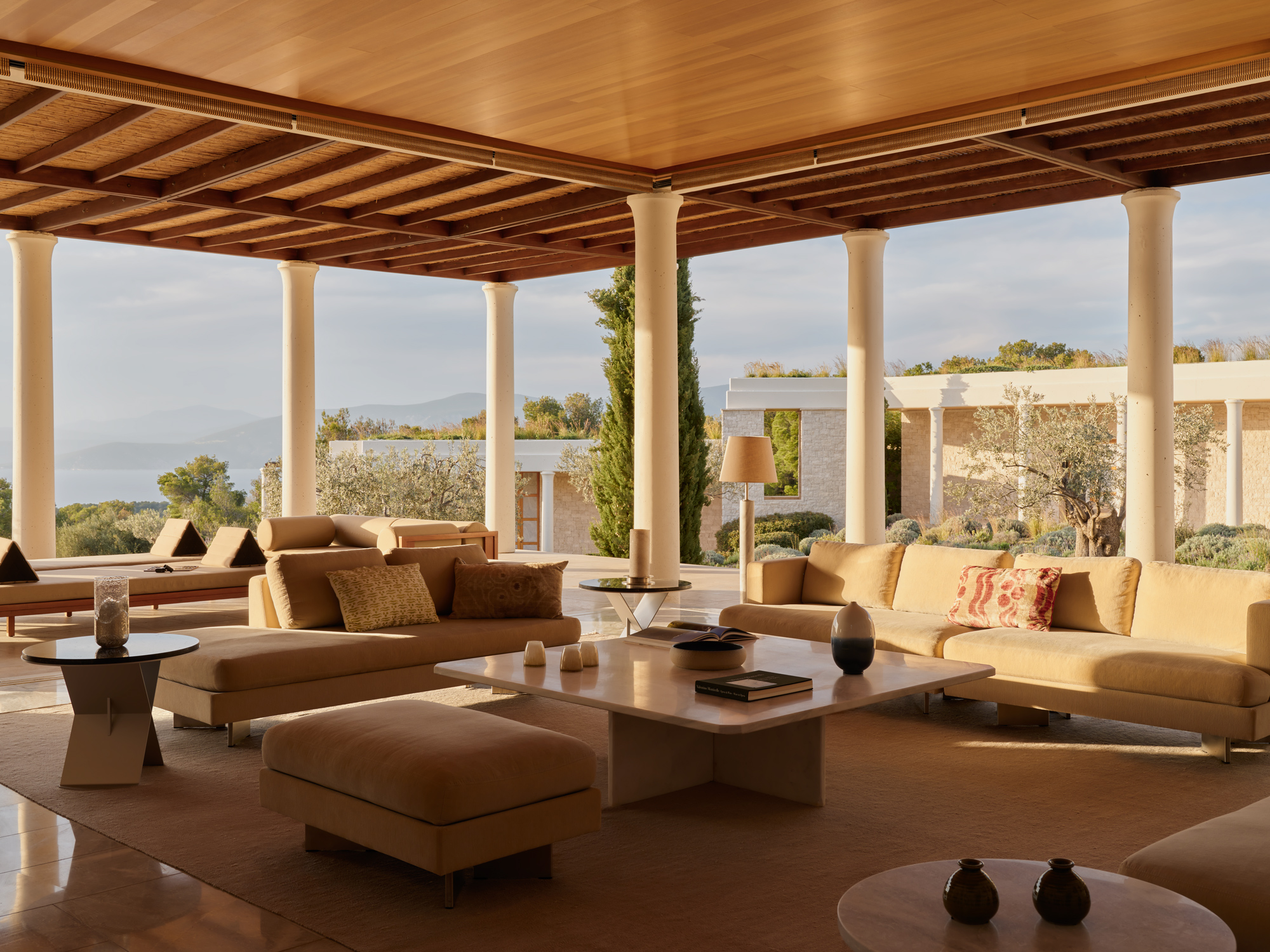
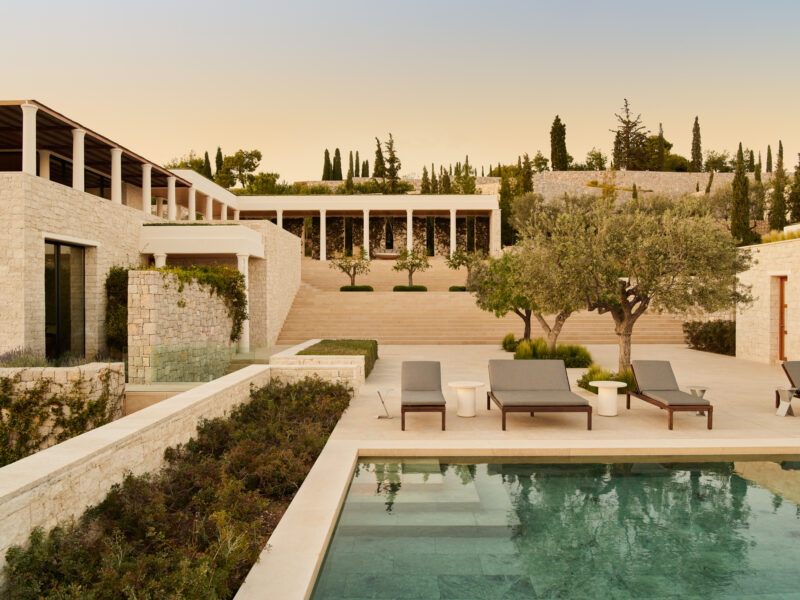
The Pavilions open through terraces and private pools into the landscape; inside and outside are not divided so much as differently tempered. The villas work in a similar register, with dry-stone walls, concrete colonnades and broad openings towards the sea.
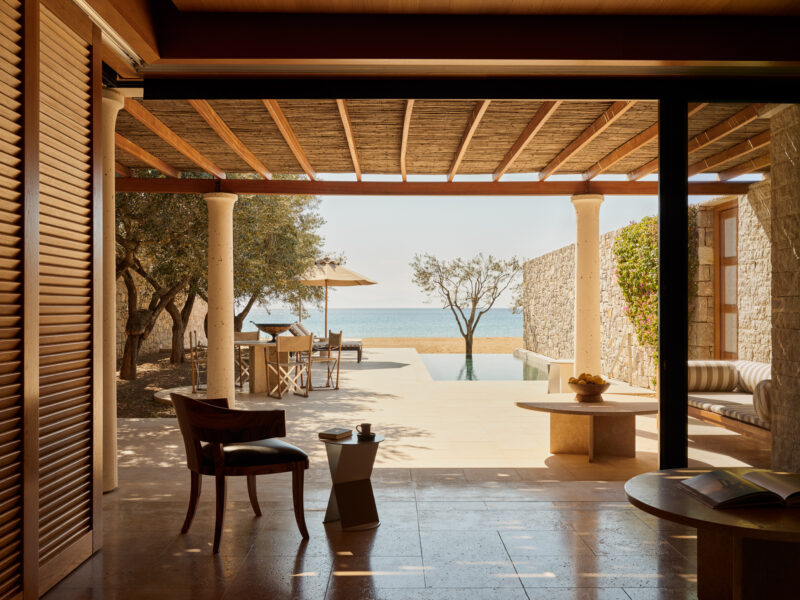
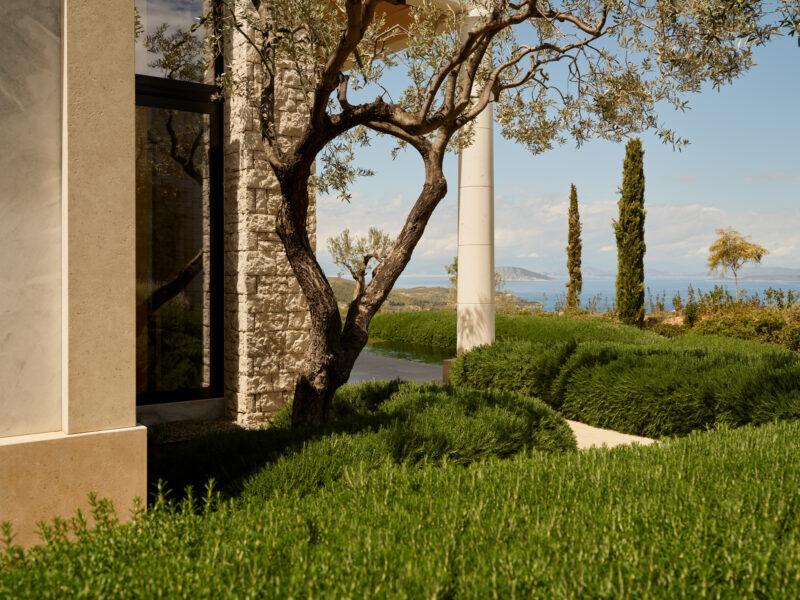
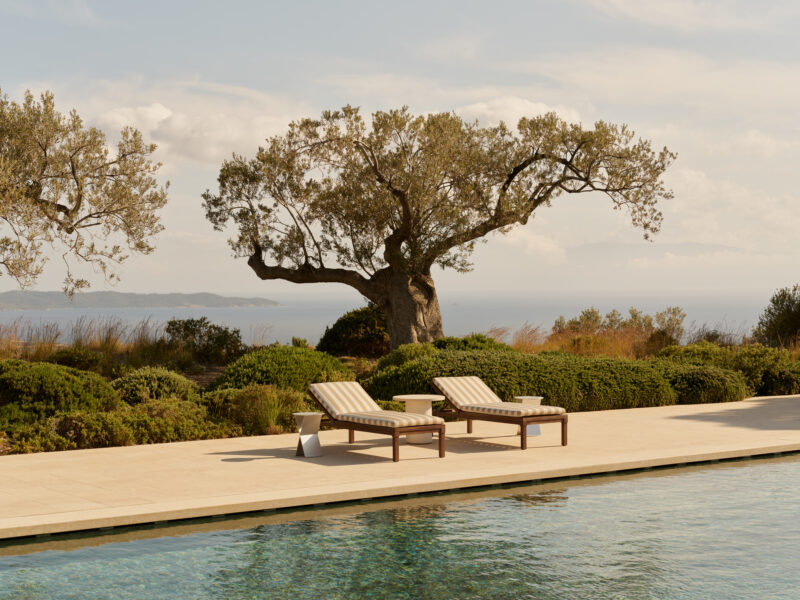
The grounds, shaped by landscape architects Doxiadis+, retain old olive trees, maquis, vines and agricultural stonework not as scenery but as structure. Green roofs, photovoltaic water heating and a bioclimatic approach further the point. Even the hardness of the materials is softened here by shade, water and tightly controlled proportion.

A look inside
The property unfolds generously across the hill and down towards the Beach Club. At its centre sit the main pool, restaurant, bar, library, boutique, gallery, amphitheatre, tennis courts and the spa, yoga and Pilates areas.
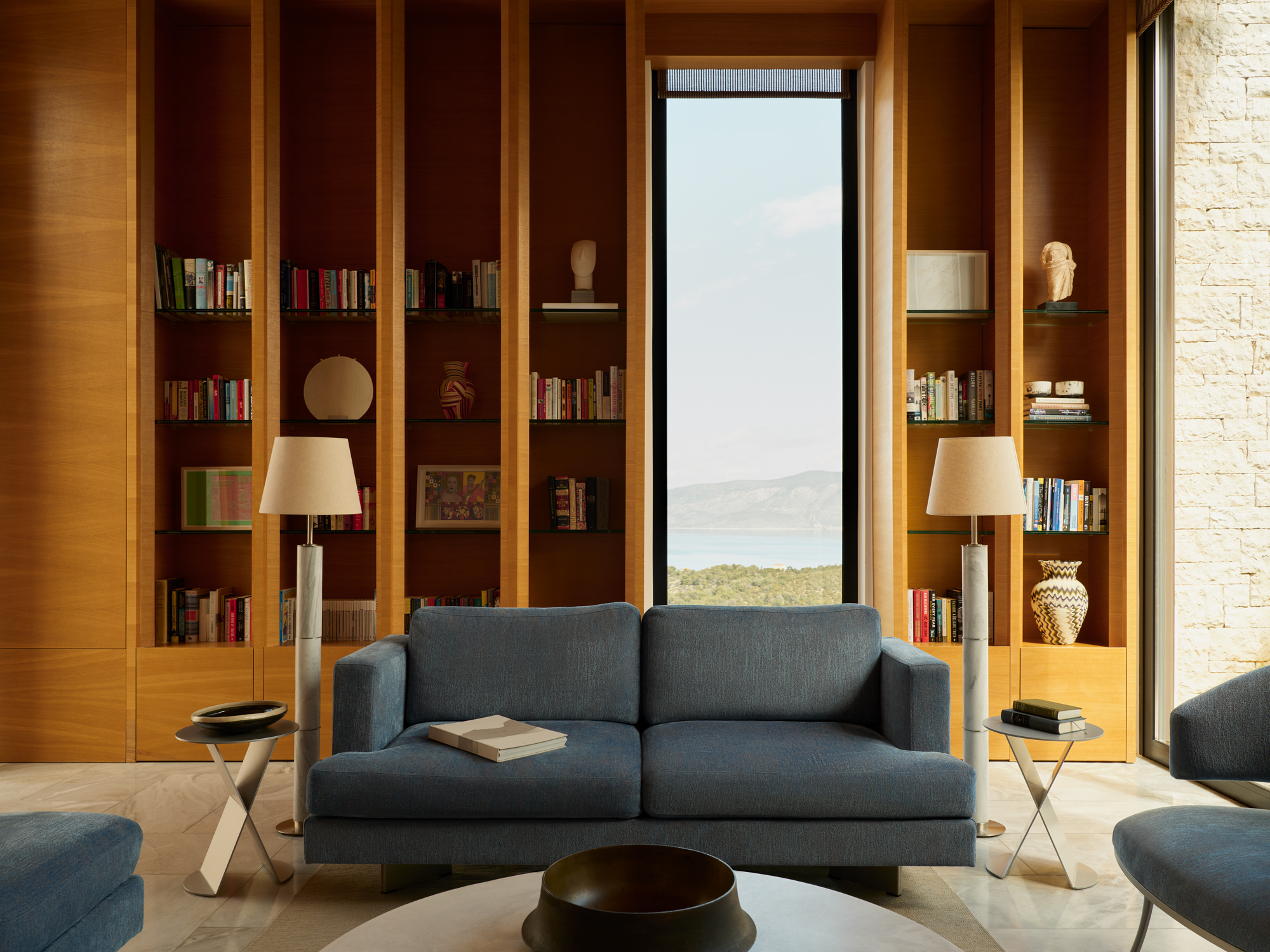
The rooms are called Pavilions, and each is a freestanding retreat with its own wall, its own courtyard and its own pool. The default logic is already one of abundance. Pool Pavilions and Sea View Pavilions offer 210 square metres of interior and exterior space; Deluxe versions extend the pool to 12 metres.
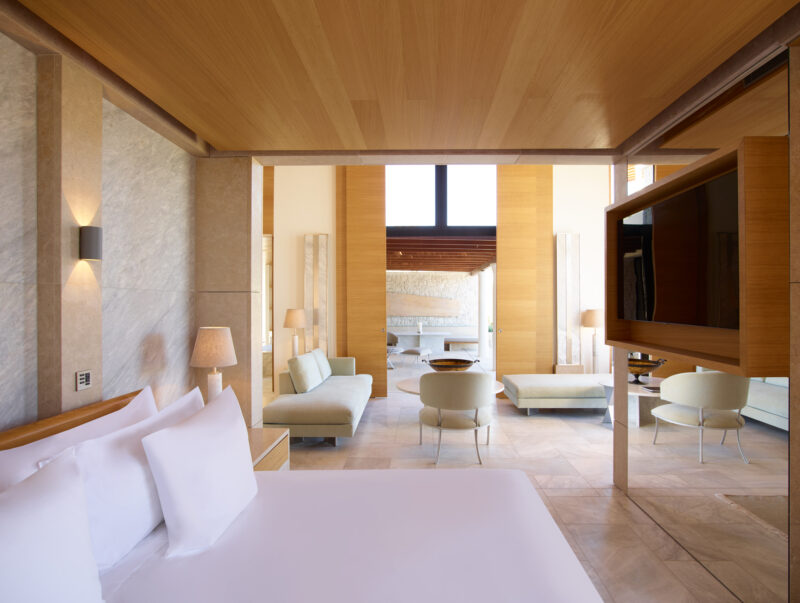
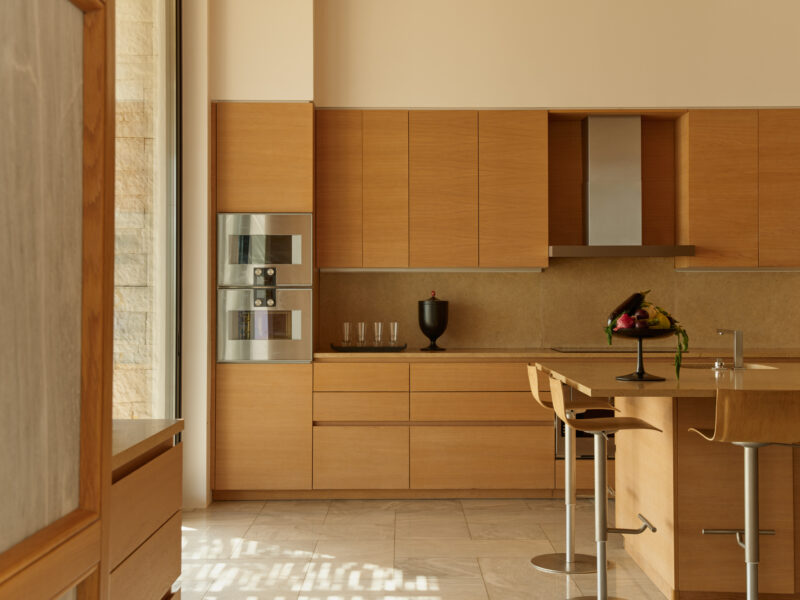
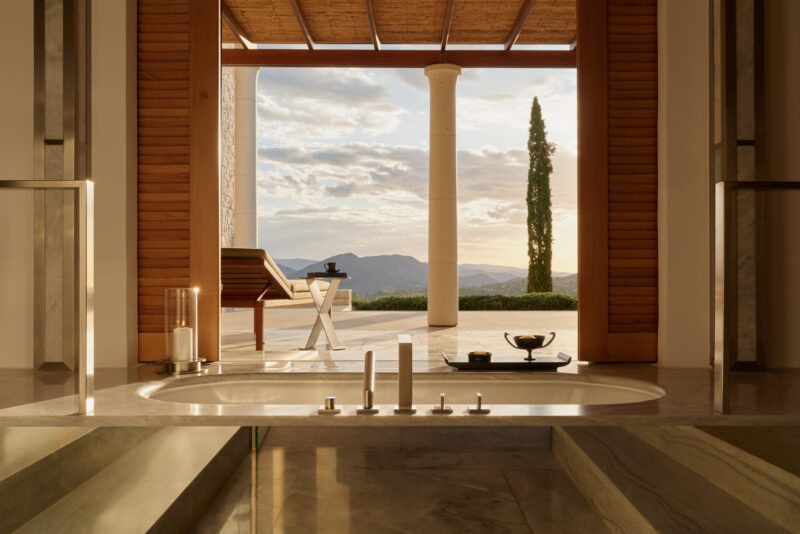
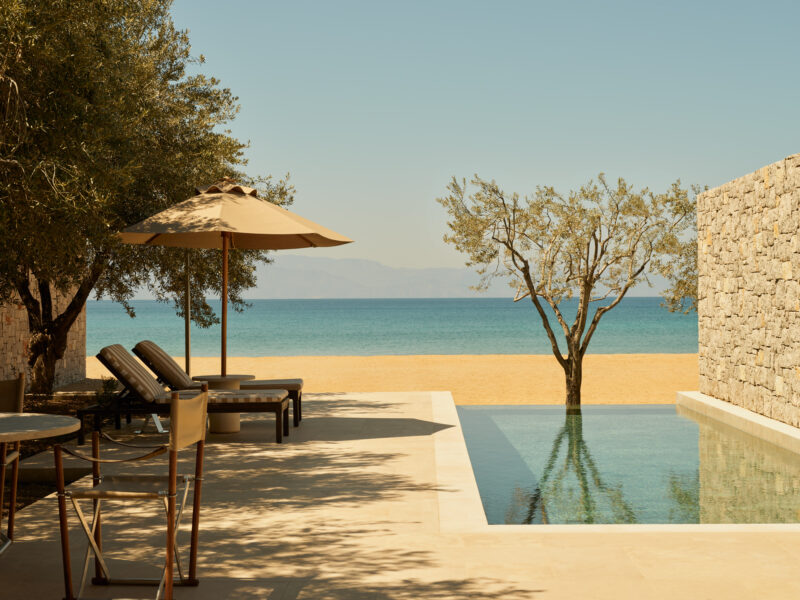
The three Beach Pavilions sit directly on the sand with 9.5-metre pools, pergolas and private access to the water. Beyond them are villas, up to Villa 20, a multi-level private world with 11 pools and its own spa. Beds sit in marble alcoves; bathrooms are generous; terraces are arranged so privacy never feels like withdrawal.
Culinary
Amanzoe handles food with the welcome absence of circus. At the hilltop Restaurant, the day begins with breakfast and ends in a Greek-rooted kitchen that uses seasonal produce, vegetables from the resort’s own bostani, Aegean fish and pasture-raised meat with clarity rather than plate gymnastics.
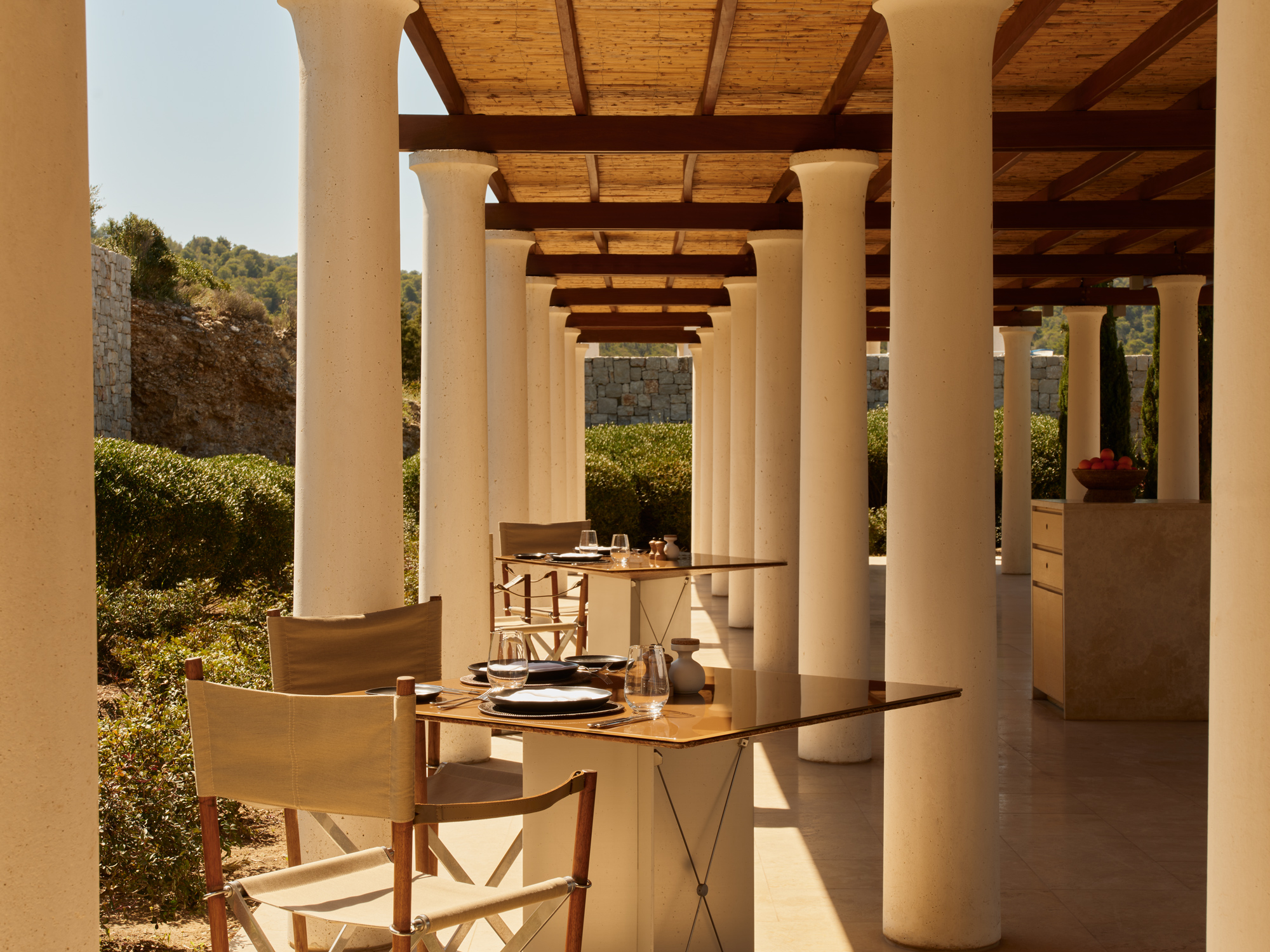
Akari provides the counterpoint: authentic washoku cuisine, sushi and sashimi served with vast views and a nearly contemplative precision. Down at the Beach Club, Nura works the Mediterranean line from lunch into dinner, with charcoal grilling, mezze, seasonal salads and seafood close to the water. Then there is the Pool Restaurant, serving lighter dishes somewhere between Greece and Japan, and the Bar for snacks and cocktails. Many ingredients come from within Greece, a large share from a tight local radius; the kitchen garden supplies fruit, herbs and vegetables. Food here is not a prestige performance but a quiet infrastructure of wellbeing. Honey, olive oil and wine tastings deepen the local flavour without turning it into a lecture.
Wellness & Relaxation
The 2,850-square-metre Aman Spa is not a fitness annex wrapped in fragrance branding, but a serious machine for retreat. Light, stone, lavender and long lines create the kind of calm that does not immediately advertise itself as wellness and works all the better for that.
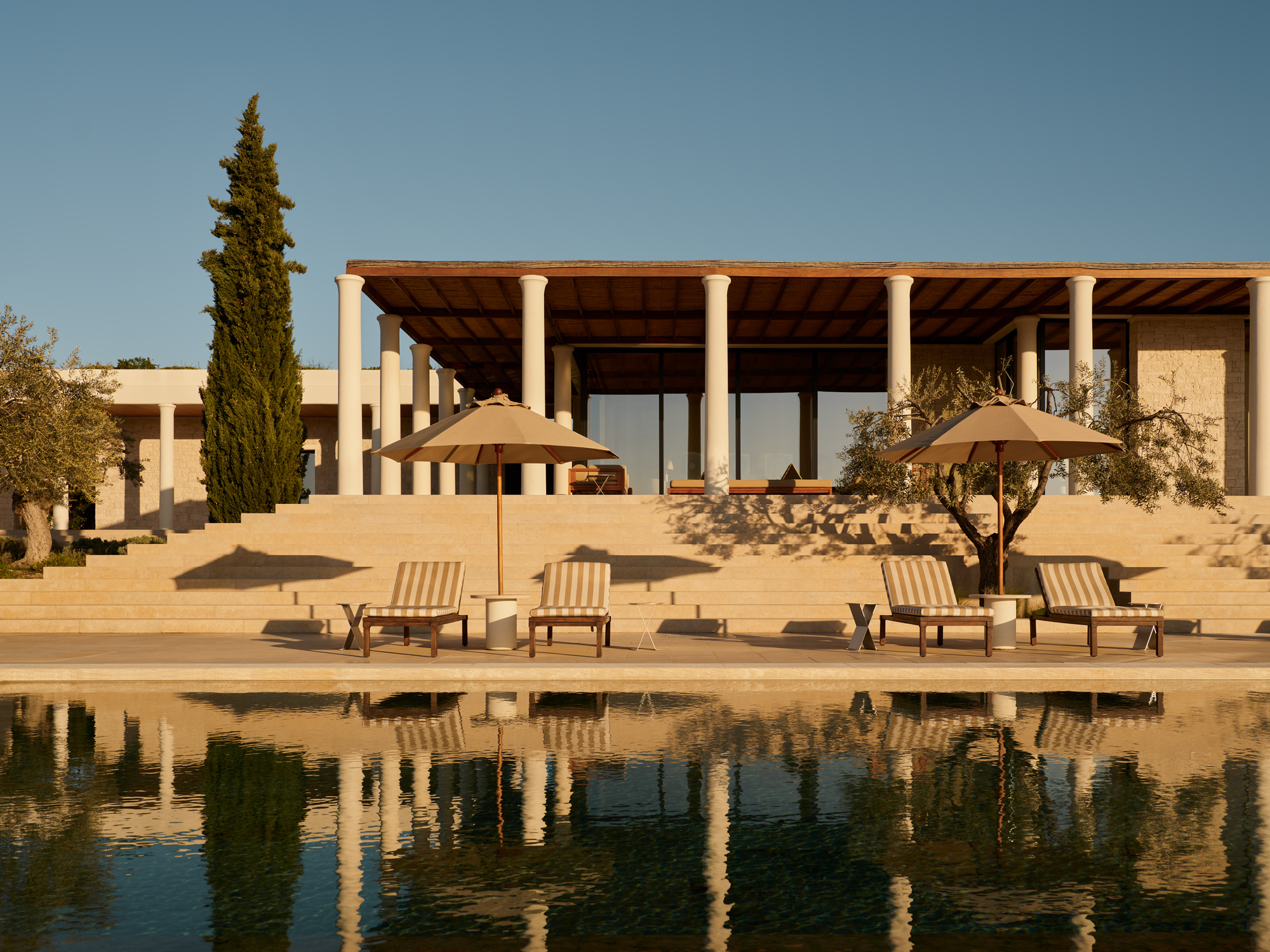
Classical spa rituals are joined by modern recovery technologies such as Cellgym and MesoJet, as well as a Mobility & Recovery programme curated in collaboration with Novak Djokovic. There is also yoga, Pilates, a gym, tennis and a smaller sea-facing spa outpost at the Beach Club with two treatment rooms. Four pools by the shore and the main hilltop pool make relaxation pleasingly concrete. One can recover properly here, or very professionally pretend one has never known fatigue.
Surrounding area
The eastern coast of the Peloponnese is a mountain range that stretches from Astros to Cape Malea. This rugged, wild landscape is sparsely populated. Only seven small harbours are scattered along its coastline, which is almost 100 kilometres long. Porto Heli itself stays understated; the region grows more interesting in its folds. Just a few kilometres away, above Kiladha Bay, lies Franchthi Cave, one of Europe’s most important prehistoric sites.
Anyone who does not confuse culture with souvenirs should continue to Ermioni and across the Bisti Peninsula, where pine forest, a white windmill and traces of ancient sanctuaries run into one another. By boat or short transfer, Spetses offers neoclassical mansions and the Bouboulina Museum, while Hydra delivers its Historical Archives Museum, steep lanes and that car-free strictness that slows arrival at once.
Further out lie Epidaurus and Mycenae, places where Greek antiquity reads not as a brand but as space. For contemporary culture, Nafplio is worth the detour for its Archaeological Museum, the Peloponnesian Folklore Foundation, the National Gallery branch and the Fougaro cultural centre. Add olive-oil, wine and beekeeping visits, and the region begins to feel less scenic than intellectually stocked.
Activities
For culture travellers: private outings to Epidaurus, Mycenae and Nafplio; boat days to Hydra and Spetses; visits to Franchthi Cave, the Bouboulina Museum and Hydra’s Historical Archives Museum. Anyone after more contemporaneity can pair Nafplio with Fougaro or a compact museum circuit rather than the usual old-town self-documentation.
For active guests: guided hikes and bike rides through Ermionida, across the Bisti Peninsula, through Katafyki Gorge, to Iliokastro or up to chapels and rock monasteries such as Agios Dimitrios of Avgo. Sunset riding is also possible.
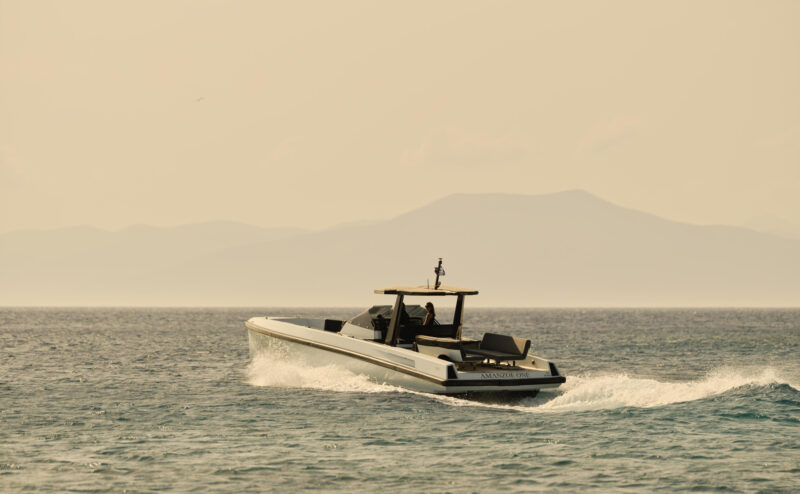
For sea people: snorkelling, paddleboarding, kayaking, waterskiing, dive excursions with courses from beginner to Dive Master, plus private motorboat and yacht charters to coves, islands and tavernas. Fishing trips with local fishermen and picnics on remote beaches can be arranged too.
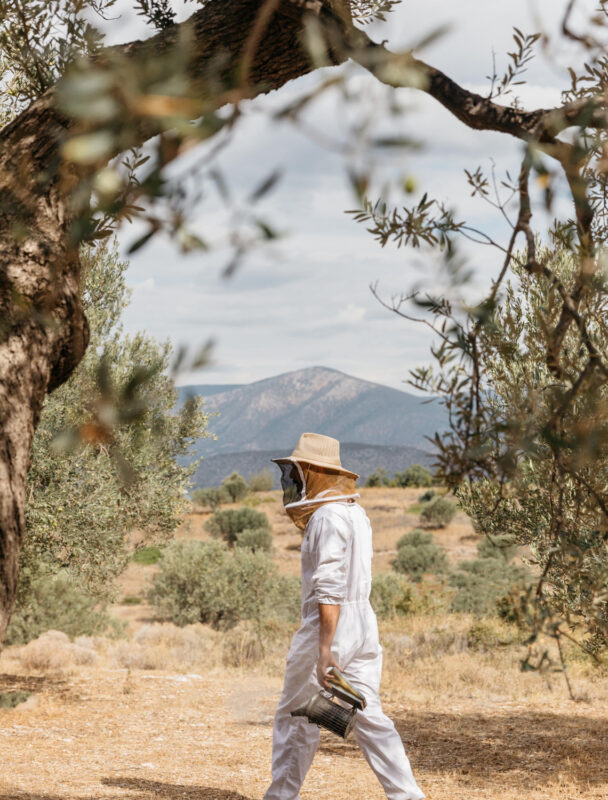
For gourmets: honey tastings with the Bairaktaris beekeeping family, active since 1914, farmhouse breakfasts, cooking classes, olive-oil tastings led by a certified sommelier and trips to the Nemea wine region, including Domaine Skouras.
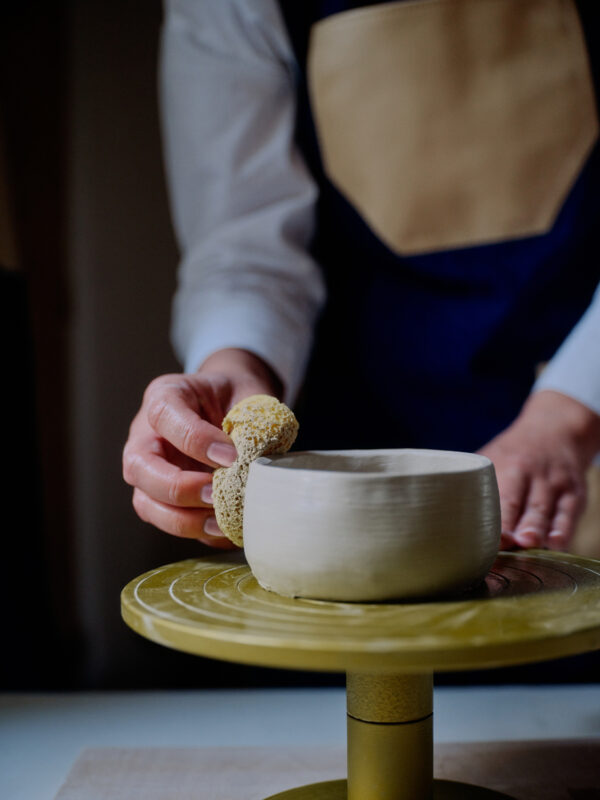
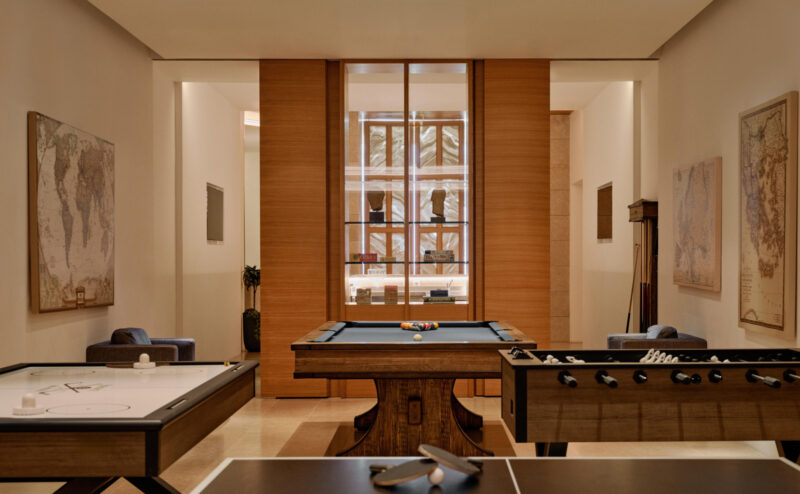
For families: children’s cooking classes, mosaic and mask workshops, sports sessions, a games room and childcare that sounds far less like an obligation than it usually does.
For those craving retreat: yoga, Pilates, recovery rituals, spa days on the hill or by the sea, tennis in softer light and the rare holiday activity that has nearly vanished from real life: doing absolutely nothing, and treating it seriously.
Details
- 38 Pavilions, 3 Beach Pavilions, 13 villas.
- Largest accommodation: Villa 20, Six-Bedroom Villa, Five-Bedroom Villa.
- Pavilions with 6- or 12-metre pools; Beach Pavilions set directly on the sand with 9.5-metre pools.
- 2,850-sq-m Aman Spa, yoga and Pilates areas, gym, tennis courts and an additional sea spa at the Beach Club.
- Dining venues: The Restaurant, Akari, Nura, Pool Restaurant, Bar.
- Private boat excursions, complimentary non-motorised watersports equipment, farm and beekeeping experiences, family programming.
- Villas with dedicated host and chef; some also include a study, media centre or gym.
- Confirm pet policies, tailored transfers and special services directly with the resort.