

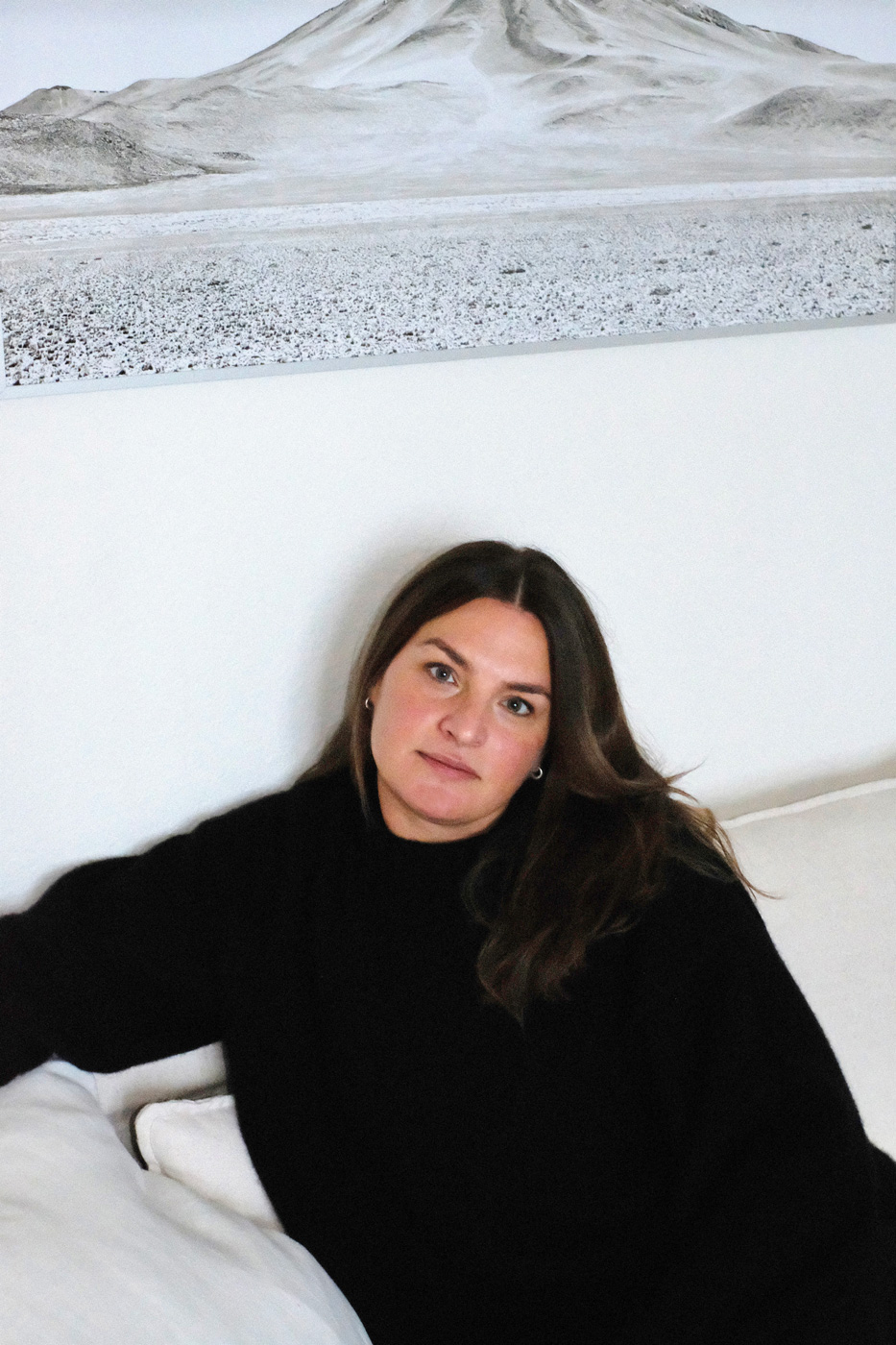
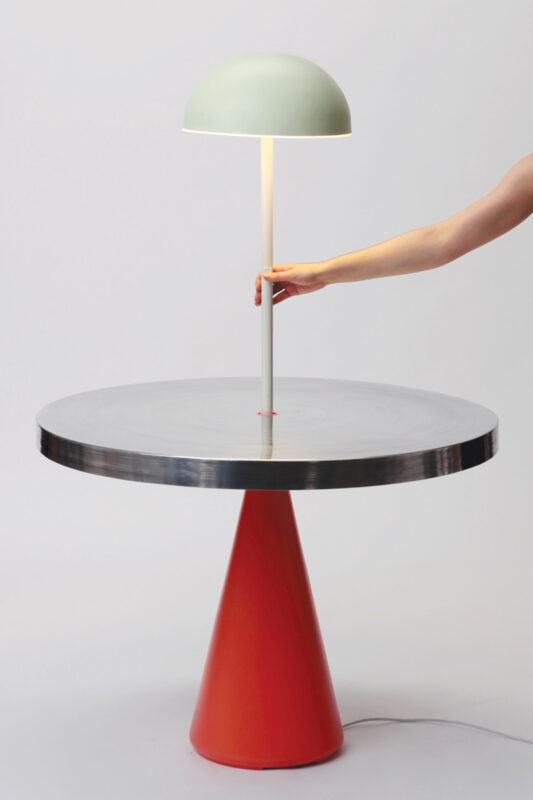
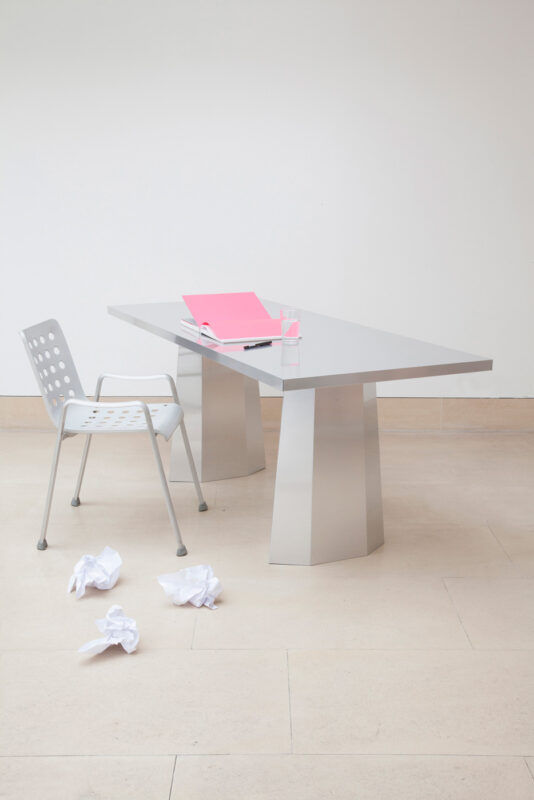
Based in Zurich, Stephanie Hornig works at the intersection of functional design and artistic expression, creating furniture that responds directly to the realities of everyday life. This approach becomes tangible in pieces such as her desk, which can be assembled and disassembled with remarkable ease.
Similarly, her foldable shelving system reduces storage to its essentials—it can be collapsed flat when not in use, making it ideal for changing spaces and evolving needs. Rather than creating static design statements, she develops pieces that adapt: they move, fold, travel, and transform.

© Courtesy of the artist
Which place do you currently call home and where do you work on your projects?
I live in Zurich, in the heart of Wiedikon, though I split my time between Switzerland and Vorarlberg, where I’m originally from. I have a small studio for everything that happens on a laptop, but I try not to fix myself to one place. My flat has turned into a quiet archive — part living room, part collection of prototypes and objects gathered over time. I like when work blends into daily life, when ideas appear while walking, talking, or sitting in someone else’s studio. And when it comes to building things, I go to my dad’s workshop in Austria —he still knows how to solve every technical problem.
© Courtesy of the artist
© Courtesy of the artist
Where is your studio located & how does it look?
My studio is part of a temporary collective near the Kasernenareal, surrounded by other designers and small cultural spaces. I share the space with two very talented graphic designers. It’s minimal and bright—a good counterpoint to my flat, which is more like a cabinet of curiosities. I like the rhythm of the area: close enough to Langstrasse to feel the pulse of the city, but still calm enough to think.
Are there any projects that are personally important to you—whether recently completed or currently in progress?
I’ve lived between Austria, Milan, Berlin, London, and now Zurich, and that rhythm has shaped how I design. I like objects that are practical, that don’t need to be precious—things that slip easily into everyday life but still carry a sense of freedom. There’s something beautiful about furniture that travels with you, that can be taken apart and reassembled, yet still feels like home. My project Camp still lives with me; even though I’ve settled down now, I often feel the urge to change the setting. I’ve always loved simple, everyday objects—the ones that have quietly proven themselves over time, with those small, clever details that define good design.
© Courtesy of the artist

© Courtesy of the artist
Do you have a favorite place in your area where you like to relax and linger?
Zurich changes completely with the seasons. In summer, I live for the Badis—Utoquai, Frauenbadi, or Letzigraben—anywhere I can swim and watch the light move on the water. Sometimes you just go for a five-minute dip, even without heading to a Badi—wherever you find water—and it feels like the whole city does the same; it’s quite amazing. In winter, I go to Hallenbad City—I love its calm geometry, the soft light, and the feeling of swimming indoors while snow drifts outside. When I need space, I walk through the forests around Dolder or drive into the mountains; there’s always somewhere to disappear for a while. I used to ski race as a kid, so in winter I still try to get to the slopes as often as possible.

© Letzigraben Wellenbecken 2014 HAL 009944, adjusted colors, CC BY-SA 4.0
Are there any urgent political issues or problems in your region?
Zurich is beautifully organised, but sometimes almost too polished. In recent years, it’s become harder for small studios, cafés, and collectives to hold on—rent and regulation push out the improvised corners that give a city character. There’s a sense that space itself is becoming a luxury, which quietly shapes how people create and live.
In your opinion, what has developed well in the last 5 years—and what has not?
I moved to Zurich about six years ago, just before COVID. During that time, we had more freedom than in many other countries, and the limited exchanges—sometimes just five people—became something quite special. From my still slightly outside perspective, I’d say people have become more aware of sustainability and local production; it’s visible in how we shop, eat, and talk about design. There’s a stronger sense of responsibility, which I find hopeful. At the same time, the city feels less accessible for those who create without big budgets. Zurich has gained polish but lost some of its looseness—the kind of spaces where things can still happen by chance.
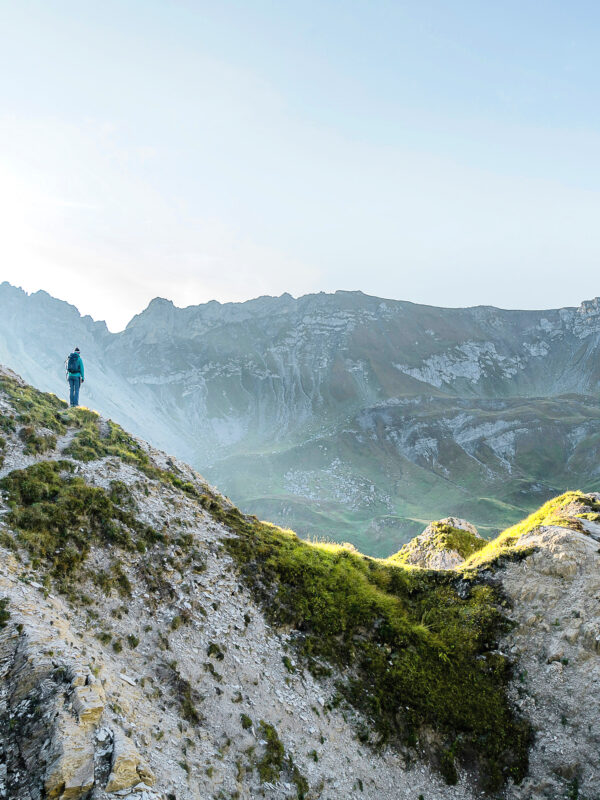
© Patrick Stadler Photographer, Unsplash
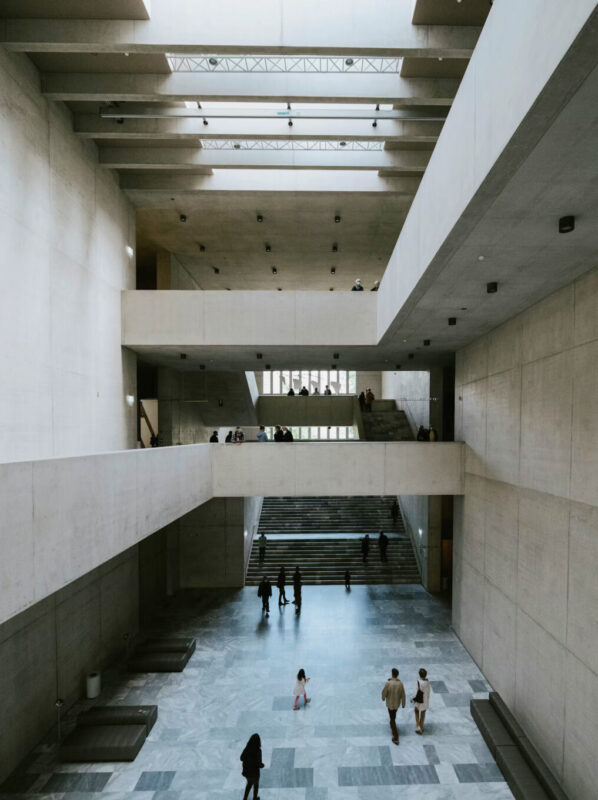
© Photo: Claudio Schwarz, Unsplash
Do you know a hidden gem when it comes to local manufacturers—whether it’s arts and crafts, sustainable products or food?
What I notice lately is how many new people are arriving—guest chefs, curators, small gallery owners. It gives Zurich a kind of quiet buzz. You feel that something is forming here, a scene that’s still small but becoming more confident. Hidden gems like Second Nature Gallery or the maker-run studio HotWire Extensions reflect this quietly growing energy—spaces where ceramics, textiles and material experiments are presented with care and intention. At the same time, brands like Freitag remain a locally produced classic, deeply embedded in the city’s identity and still rooted in material innovation. I think Zurich could easily become one of Europe’s creative hotspots—it has all the perks of calm, order and quality of life, but more and more people are bringing warmth and curiosity into that mix.
Is there anything particularly innovative in your region? Also in comparison to other places you have already visited?
In Zurich, innovation feels quiet—more about refinement than reinvention. It often goes unnoticed, but I believe it’s significant. People here take time, care for detail, and improve what already exists. After living in faster cities like Berlin or London, I’ve come to appreciate this slower rhythm. It’s less about spectacle, more about precision. Studios like Freitag, Qwstion, or my friend Fabio Hendry’s Hot Wire Extensions project show how innovation here grows from responsibility rather than trend.
When it comes to restaurants, I’m not one for the new—I’m more of a fan of the old. I like Italian trattorias and places where old and new quietly connect, preferably historic spots in the Quartier, which sadly are starting to disappear. In summer, I love Mönchhof am See—sitting by the harbour with fresh fish from the lake and a glass of white wine feels like a small holiday. In winter, Ooki is my go-to. It’s warm and loud in the best way, and their tantanmen is unbeatable.
Do you have a secret restaurant tip that you would like to share with us?
When it comes to restaurants, I’m not one for the new—I’m more of a fan of the old. I like Italian trattorias and places where old and new quietly connect, preferably historic spots in the Quartier, which sadly are starting to disappear. In summer, I love Mönchhof am See—sitting by the harbour with fresh fish from the lake and a glass of white wine feels like a small holiday. In winter, Ooki is my go-to. It’s warm and loud in the best way, and their tantanmen is unbeatable.
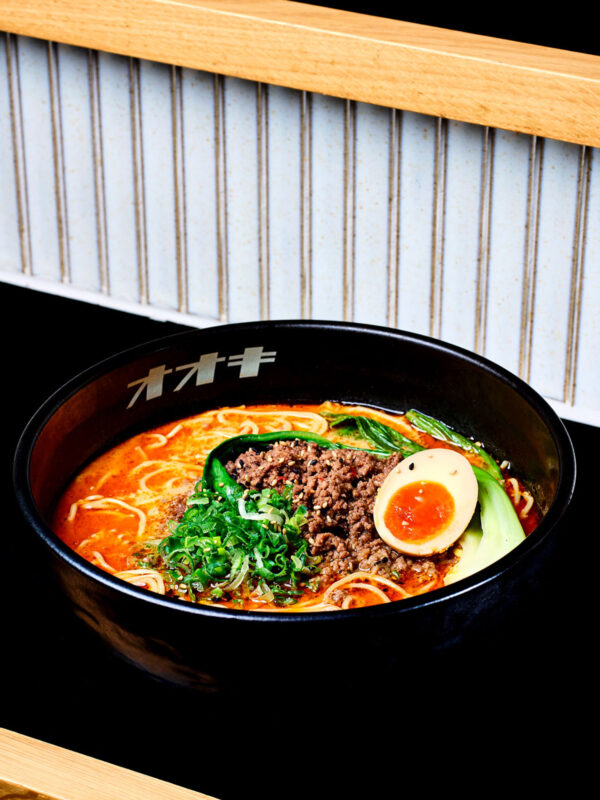
© Ooki

© Ooki
Is there a local shop whose products are only available in your region?
Switzerland has a strong sense of the local—but what I appreciate about Zurich is how this unfolds in specific places. The Markthalle im Viadukt, for example, brings together regional producers and independent shops under the railway arches, creating a space that feels distinctly rooted here. At the same time, smaller stores like El Maiz introduce international ingredients you won’t easily find elsewhere in Switzerland. It’s this balance between regional identity and everyday cultural layering that defines the city for me.
What are your 3 favourite apps that you use every day and couldn’t live without?
Swiss Meteo—love the cloud animations. The Pattern, because I can’t help looking for cosmic confirmation. And AllTrails, for a good hike anywhere.
Do you have any favourite newspapers or online magazines? And how do you keep up to date with politics or social and cultural issues?
Over the years I’ve become quite critical of mainstream media, so I try to gather information from different sources to make up my own mind. My best source, though, is people—I like asking questions and having real conversations with friends and strangers from all over the world. I think that’s still the best kind of news there is. On the side, I watch late-night ZIB, and sometimes BBC, The Guardian, or Arte News.
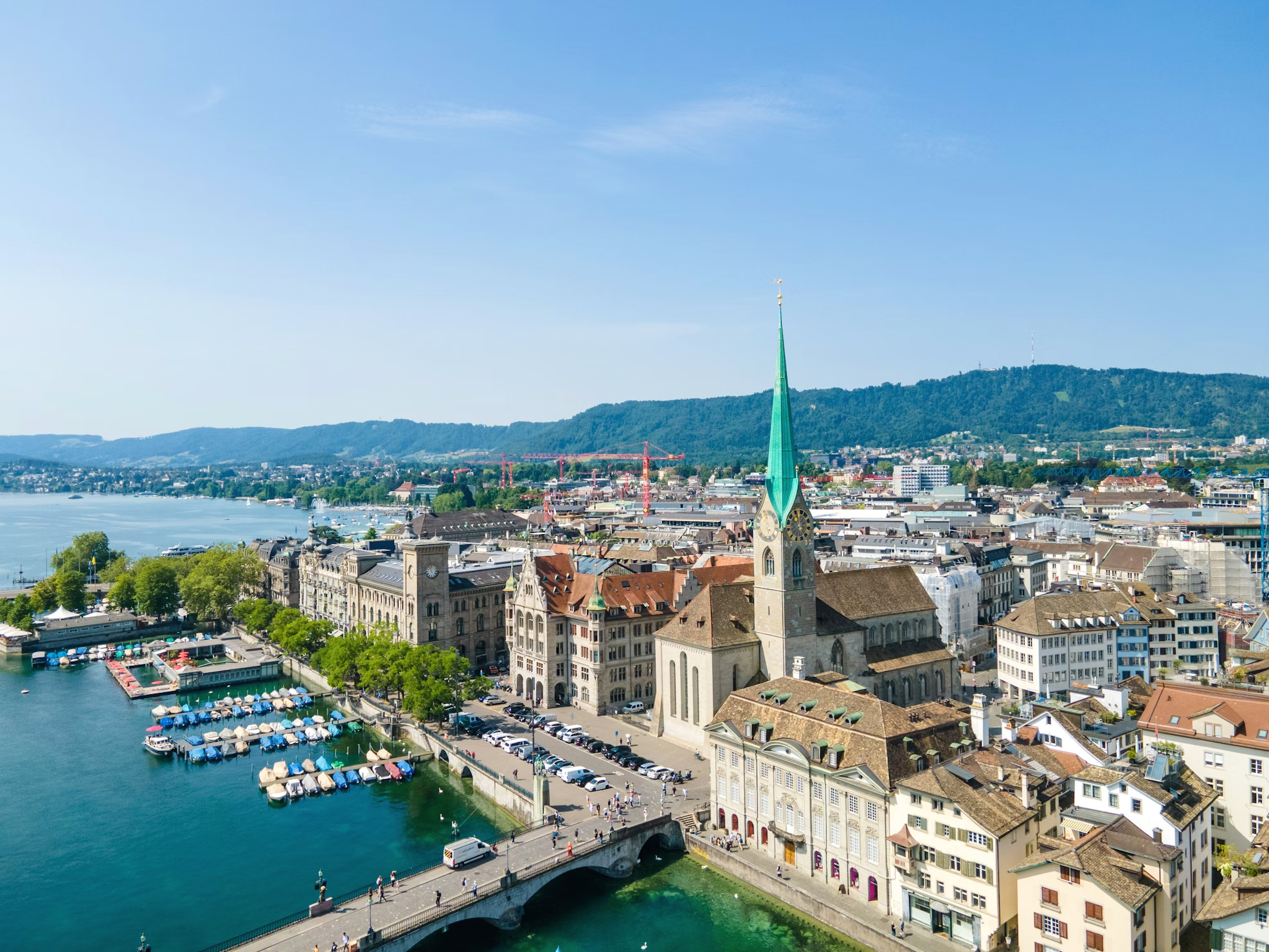
© Photo: Florian Schmid, Unsplash
Imagine you could be mayor for a year—what would you change?
More affordable living space!!!
One last question: If you could choose another place to live—regardless of financial or time constrains—which one would you choose?
Right now, I wouldn’t want to live anywhere else. But I’d love a life with the freedom to spend a few months every year somewhere new—exploring different cultures and being immersed in nature. This year I was in Sri Lanka and Ladakh, where I did a long hike at high altitude and had the chance to meet the Dalai Lama.


