


Rituals, symbols, prehistoric graffiti, fragments of poems and grimoires: these are the sources of inspiration for Sara Bologna. Based on iconographic, semantic and historical findings, she deconstructs and reconstructs all these influences and translates them into objects using a narrative approach.
Hovering between research and craft, her work transforms symbols, myths and gestures into contemporary design languages. From home furnishings and accessories to social projects, she explores the symbolic life of objects and the way they convey values, memory and identity.

© Andread Aversa
Which place do you currently call home and where do you work on your projects?
At the moment, my home is Milan, where I live and work. Although I am originally from Vigevano—a small Renaissance town about 30km from Milan—and I often travel for various projects, this is the city I am always happy to return to.
Where is your studio located & how does it look?
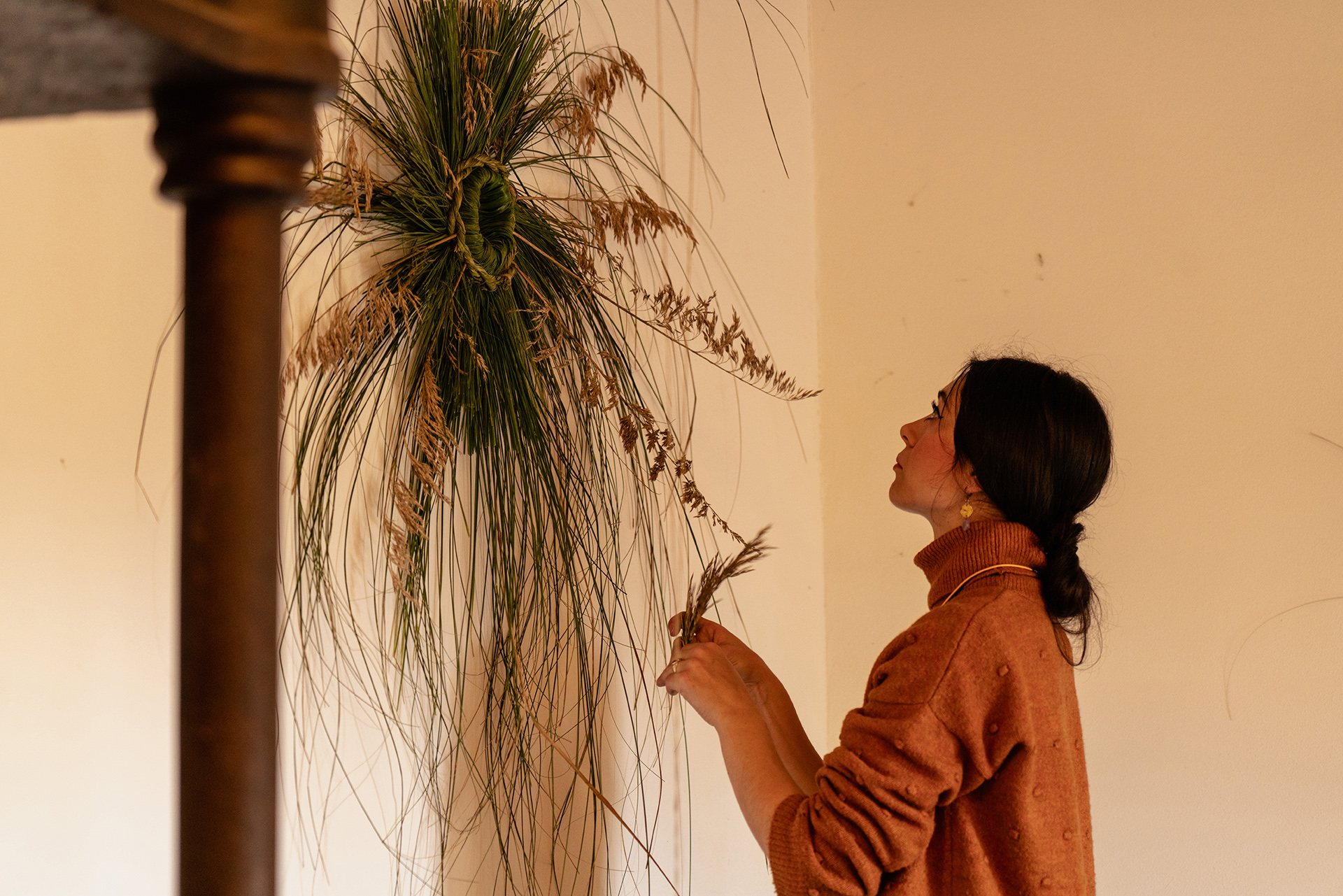
The studio, which is also my home, is located in the NoLo neighborhood. The space where I live and work with my partner Luca Gruber, with whom I also founded BGGB studio, is located in a characteristic Milanese balcony house, where all the apartments overlook the same balcony facing a shared courtyard. The apartment has been renovated with great care and taste by Ilaria Bianchi, also a designer, who has cleverly organized the limited space. It is a small but cozy space, which we have furnished with vintage pieces combined with more modern ones, a self-produced bookcase designed by Enzo Mari, and a modernist sofa with an aluminum frame, also self-produced. And then, of course, many prototypes of objects designed by us.
© Marco Deodati
Are there any projects that are personally important to you—whether recently completed or currently in progress?
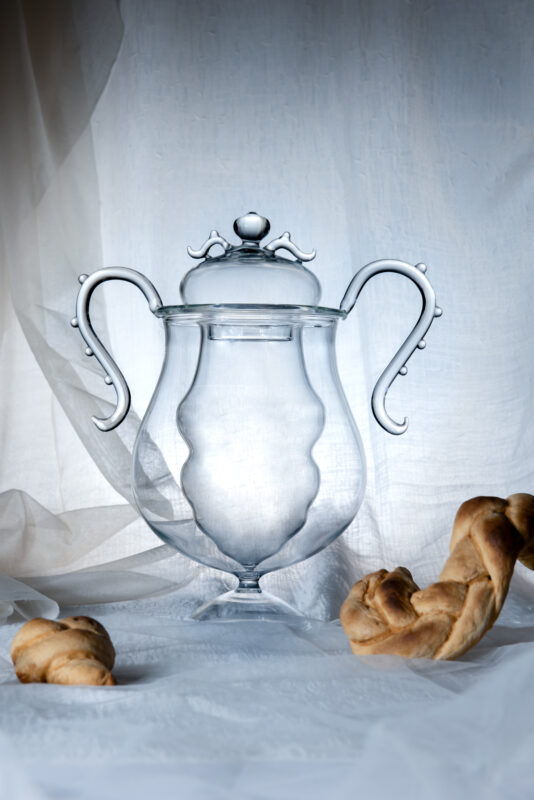
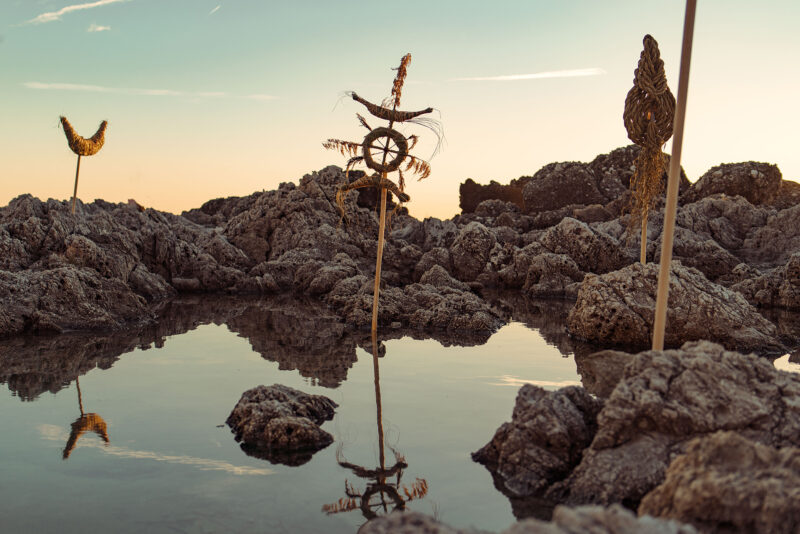
For me, even before creating physical objects, design creates imagery. I try to transfer a little bit of vision into every project, as a kind of poetic activism. This is why I am very emotionally attached to projects that are a little freer from commercial constraints but have a direct social impact, such as my collaborations with Nuova Libbaneria Mediterranea and MitiMeth, two social enterprises—the former in Italy, the latter in Nigeria—that use design and craftsmanship as tools for promoting local areas and empowering local communities. The products I have designed for them are story activators: they convey, through aesthetics and symbolism, their vision of a more local, fair, and sustainable future.
© Nasrin Abbasi
© Marco Deodati
Do you have a favorite place in your area where you like to relax and linger?
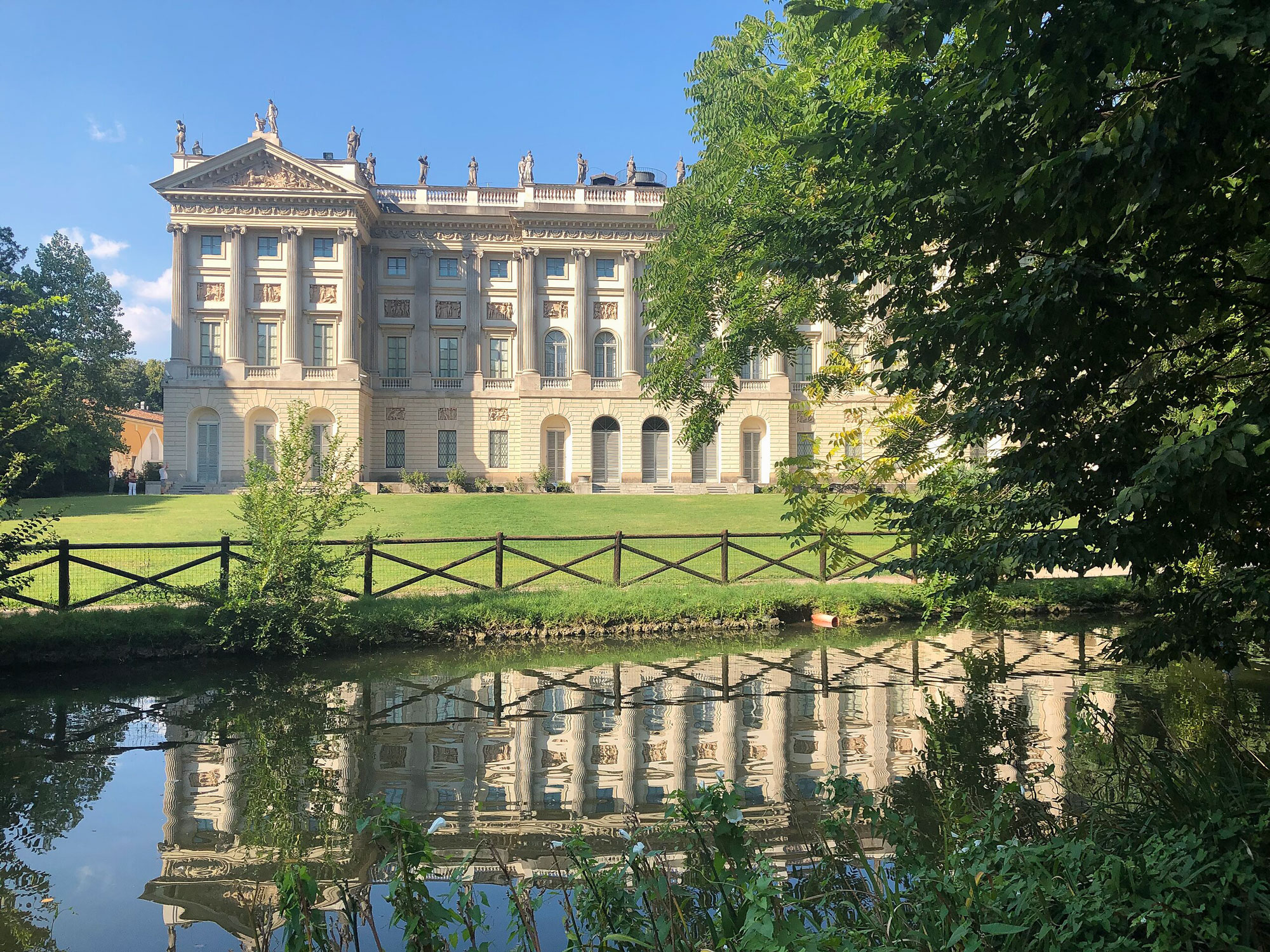
One of my favorite places in Milan is the park of the GAM, Galleria d’Arte Moderna (Modern Art Gallery). The garden is picturesque and quiet, and I especially like it because it’s almost a secret place, frequented by very few tourists. Access is free, but the park is hidden behind the façade of the Villa Reale, which houses the GAM. The same complex also houses the PAC, Padiglione d’Arte Contemporanea (Contemporary Art Pavilion), and the LùBar, a café with a magical atmosphere located in the villa’s old lemon house. For me, it’s the perfect corner of Milan for a relaxing afternoon immersed in art and nature.
©Dbaldassari71, Villa Reale, adjusted colours, CC BY-SA 4.0
Are there any urgent political issues or problems in your region?
One issue that saddens me in Italy is the lack of funding and investment in contemporary culture, and a general lack of sensitivity on the part of the government towards cultural and creative industries. Without going into political orientations, just add Kafkaesque bureaucracy to the mix and you have a rather discouraging environment for anyone wanting to pursue a creative career.
In your opinion, what has developed well in the last 5 years—and what has not?
Milan is a large city and, like all large cities, it is subject to ambitious redevelopment projects, investments, and often, unfortunately, speculation. Over the past five years, a new metro line has been opened and sustainable mobility options have improved, with the expansion of cycle paths and a wide range of bike and car sharing services. New green areas have been redeveloped, such as the BAM and the Oasi Ca’ Granda, a large agricultural park in the heart of the city. It remains a difficult city that demands a lot, with ample room for improvement in terms of sustainable urban development and housing accessibility. But what I like about this city is its drive to constantly renew itself. For every story that ends, it always has a new one ready to begin.
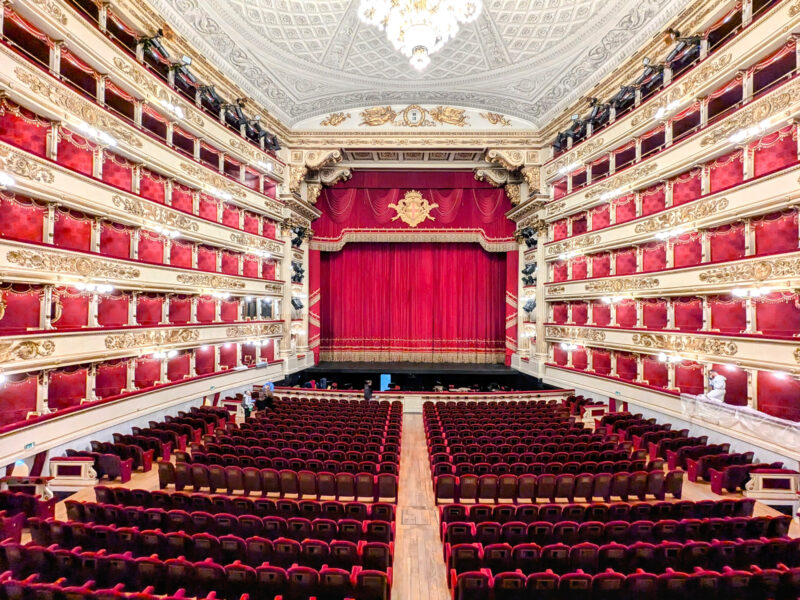
© Bramfab, Platea teatro alla Scala vista dal palco reale, CC BY-SA 4.0
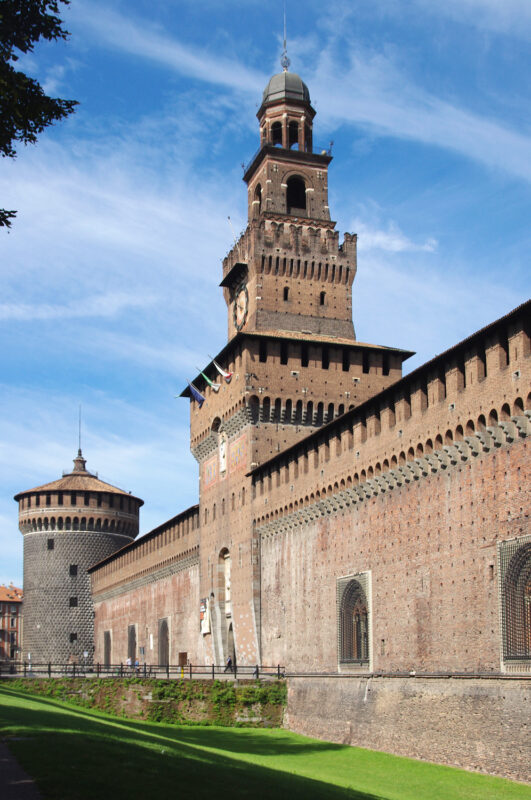
©Jakub Hałun, 20110725 Castello Sforzesco Milan 5557, adjusted colours, CC BY-SA 4.0
Do you know a hidden gem when it comes to local manufacturers—whether it’s arts and crafts, sustainable products or food?
A special hidden gem is Fornace Curti, a paradise for ceramics lovers. From the moment you step inside, you get the impression that everything is made of ceramics. In addition to several artists’ studios overlooking a main courtyard, there is also a well-stocked shop selling clay, tools, glazes, and everything you need to work with ceramics. I’m also a fan of bread and bakeries. For food lovers, the Grissinificio Edelweiss is a must-see. A historic Milanese institution that has been producing the best breadsticks on the planet for 70 years. I also love the bread from Le Polveri, a micro artisan bakery that still uses sourdough, and with whom I had the pleasure of collaborating on the design of Atanor, an object dedicated to the ritual of bread making.
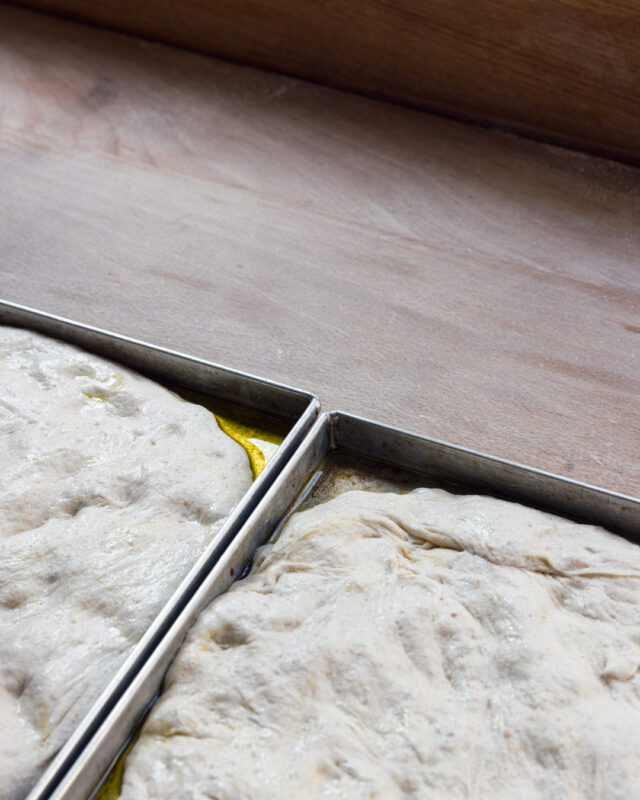
© Le Polveri
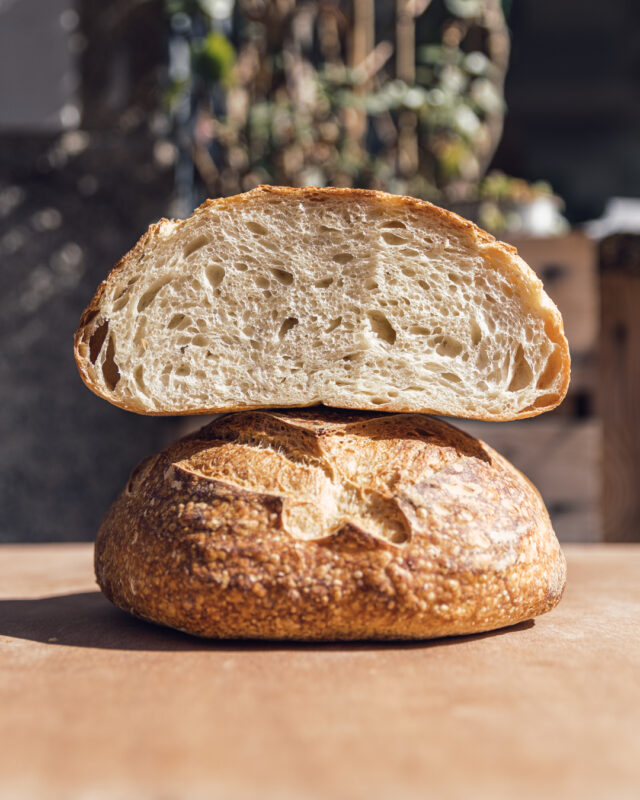
© Le Polveri
Is there anything particularly innovative in your region? Also in comparison to other places you have already visited?
Lombardy is a creative ecosystem where industry, services, research, and culture intertwine synergistically. Milan is its beating heart, where former industrial or agricultural areas are being transformed into hybrid hubs for experimenting with new ways of creating culture and sustainability starting from the social fabric, such as BASE Milano, Mare Culturale Urbano, Cascina Cuccagna, or Drop City.
But the entire region has a historic vocation for technological innovation—Lombardy alone accounts for more than 20% of national patent applications in Italy. Its productive fabric enables the reinterpretation of traditional craftsmanship with experimentation in new biomaterials and circular production systems.
Do you have a secret restaurant tip that you would like to share with us?
I love going out and trying different restaurants in different parts of the city. It’s really difficult to choose, because Milan has so much to offer in terms of variety and quality.
The best advice I can give is to go to a place that’s authentic, one of those rustic spots where the food is like grandma used to make (and not some expensive imitation). Il Brutto Anatroccolo is a forever favorite in the Conchetta area, with a simple interior, a traditional Milanese menu, and no reservations.
What are your 3 favourite apps that you use every day and couldn’t live without?
Vinted, where I find lots of vintage materials and fabrics
Lime, a bike-sharing app available in several European cities
Instagram, which I find very useful for staying in touch with the creative community and keeping an eye on new opportunities, open calls, and design-related events
Do you have any favourite newspapers or online magazines? And how do you keep up to date with politics or social and cultural issues?
There are two podcasts that I always listen to with great interest: “Fuori da Qui,” which comments on current events, and “Altri Orienti,” which reports on what is happening in politics, economics, and society in Asian countries. Both are hosted by journalist Simone Pieranni.
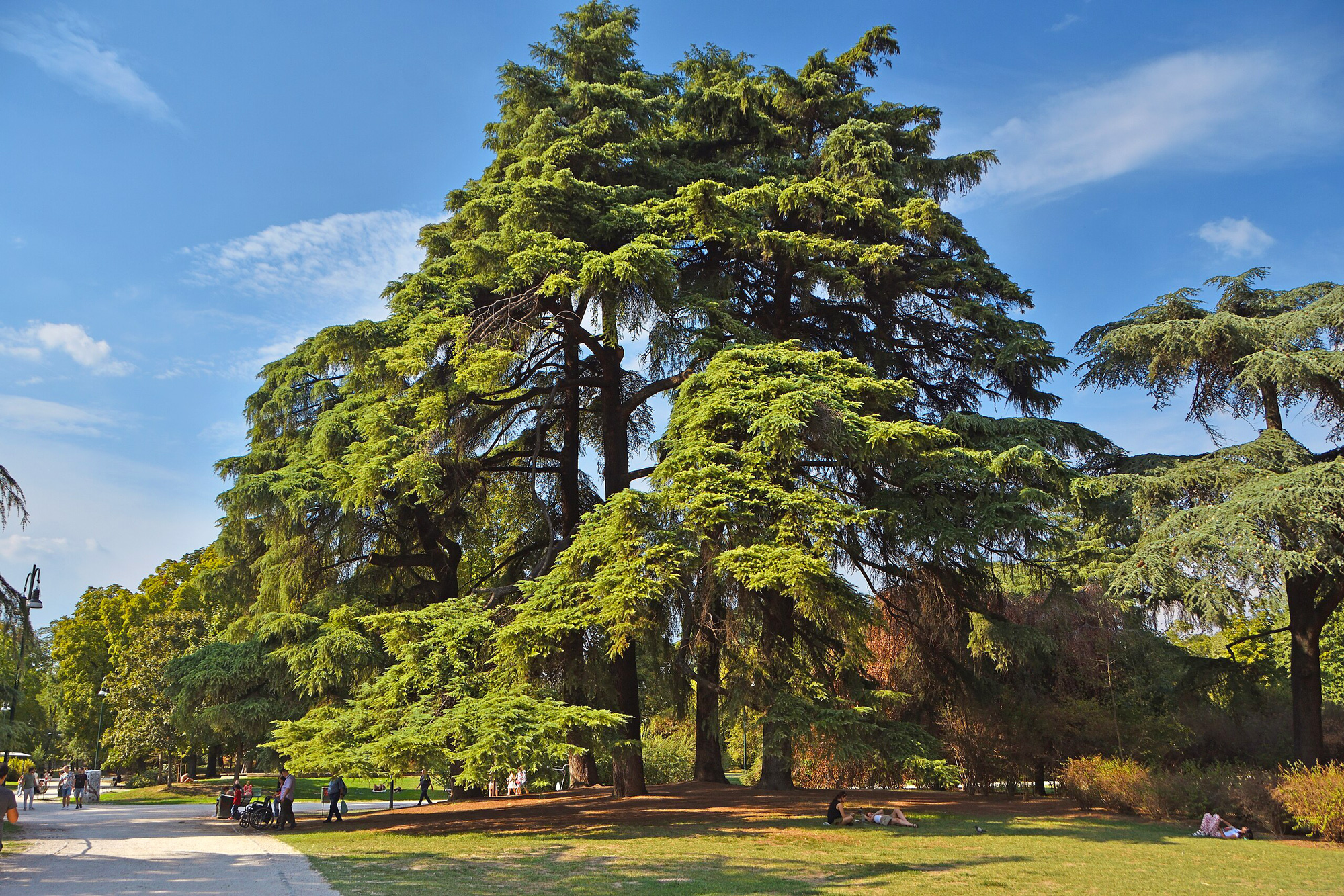
©Ludvig14, Milan ParkSempione 016 3448, adjusted colours, CC BY-SA 4.0
Imagine you could be mayor for a year—what would you change?
I would work on making housing in Milan more accessible, not only economically—by capping rents and introducing measures to regulate the real estate market—but also socially, by promoting entrepreneurial and cultural initiatives that facilitate integration and participation in civic life for different segments of the population.
One last question: If you could choose another place to live—regardless of financial or time constrains—which one would you choose?
Vienna is a European city that inspires me a lot. It seems to offer a good quality of life and an interesting creative scene, and I would love to live there for a while. The truth is, unfortunately, I love Italian food too much to consider living anywhere else permanently!


