

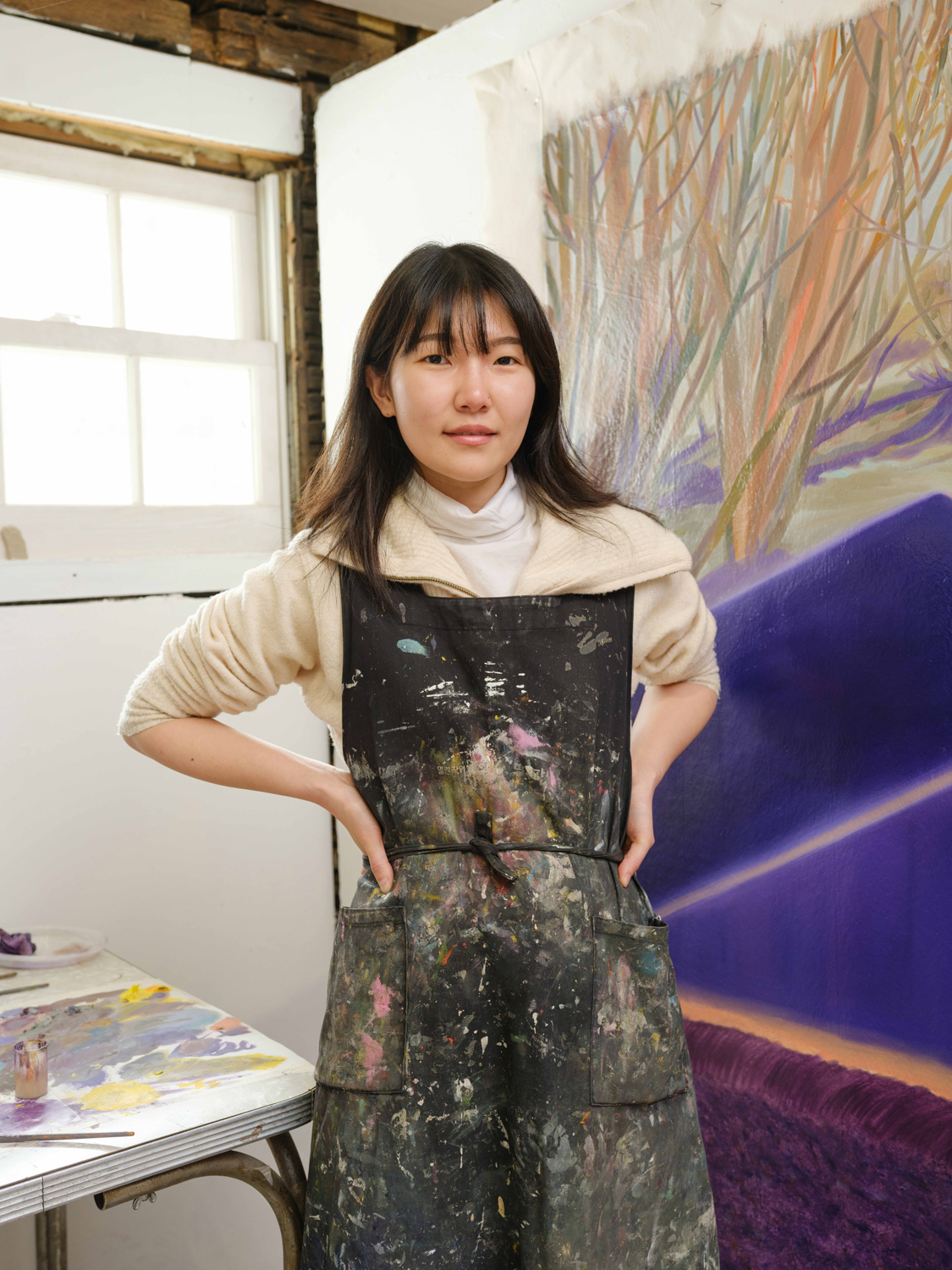
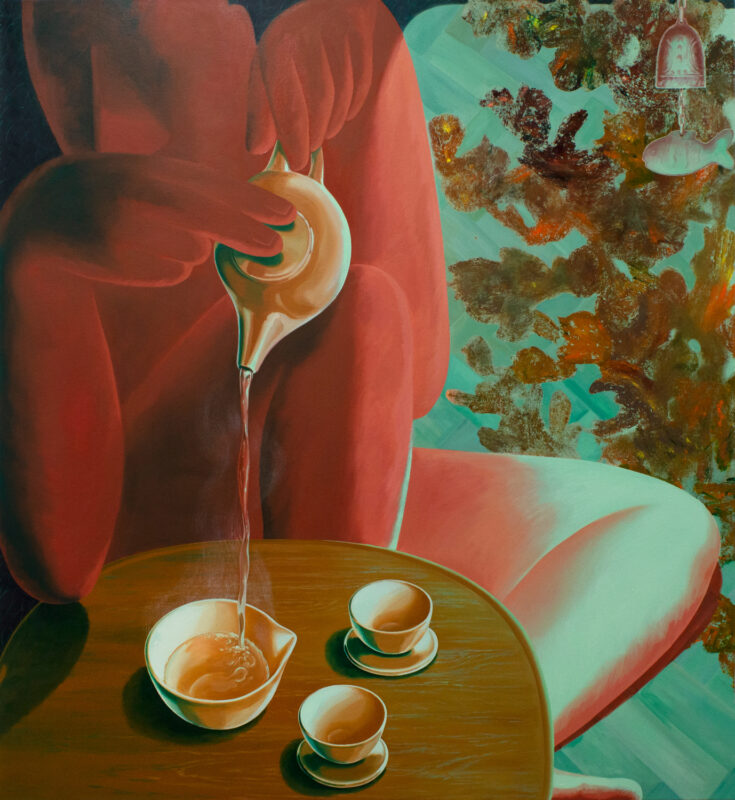
In Heejo Kim’s paintings bodies speak through gesture, touch, and proximity. Identity becomes fluid, no longer fixed to recognizable markers, but held in fragile moments of relation. Drawing from ideas of decolonial love and actor-network theory, Kim explores intimacy as incomplete and asymmetrical—an ongoing negotiation rather than a closed bond.
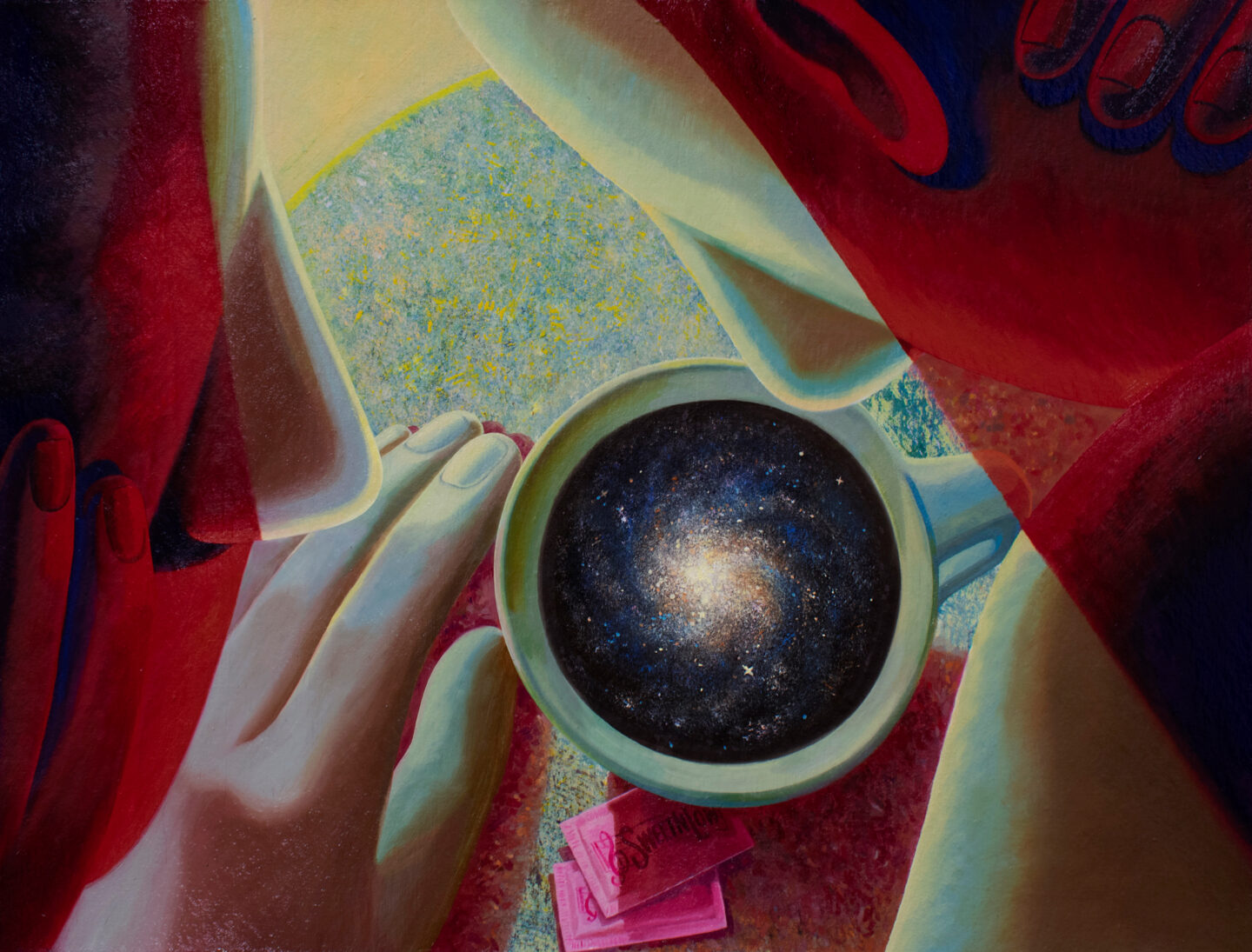
© Courtesy of the artist
Which place do you currently call home and where do you work on your projects?
I’m currently living in Baltimore, Maryland, US. I relocated here from South Korea over four years ago. Sometimes it still feels a little strange to call Baltimore my home, since I have a deep connection to Korea through my memories and my family, whom I miss dearly. But I also feel that it’s fair to consider this place home, as I live physically and have begun a new chapter, building relationships with this wonderful community and the artists I’ve met here.
What brought me to stay in Baltimore initially was the program I graduated from two years ago at the Maryland Institute College of Art. After graduation, I thought a lot about what my next steps would be and which city might offer the experiences I was seeking. I ended up staying after meeting so many supportive artsits and mentors here. Thanks to this nurturing environment, I’ve been able to dedicate myself to my art, and most of my work over the past few years has been created here.
Where is your studio located & how does it look?
I moved into a new studio space this summer. My previous studio was in the Crown Industry Building in Highlandtown, Baltimore. It was to be a large factory that was transformed into an art hub for many artsits, and I truly enjoyed sharing that space with two friends for two years. However, commuting became a major challenge for me, so I decided to find a new studio closer to home.
My new studio is conveniently located near where I live, and I absolutely love it. It’s in a two-story building that was completely renovated by one of my artist friends, Amy, and her partner. I was amazed when I learned that the building had no roof when they started the renovation—now it looks incredible. There are around 10 studios in the building, and you can feel Amy’s attention to detail everywhere, even in small touches like the restroom tiles and mirrors.
My studio itself is in the basement, thought it’s a bit unusual: from the front entrance it’s technically a basement, but from the back door—which all the artists use as the main entrance—it feels like the first floor. The space is long and slightly narrow, so whenever I hang my paintings, whether in progress or finished, it transforms into a hallway full of artwork. I love this, because it allows me to imagine how my paintings might feel when installed in a gallery.
I’ve arranged the space along the concrete walls with furniture like a sofa and a desk, and I’ve stacked some finished paintings there like storage. On the other walls, I’ve hung paintings that are in progess. Since I haven’t been in the studio for very long, it still feels quite empty, but I’m excited to see how the space will evolve as I spend more time here.
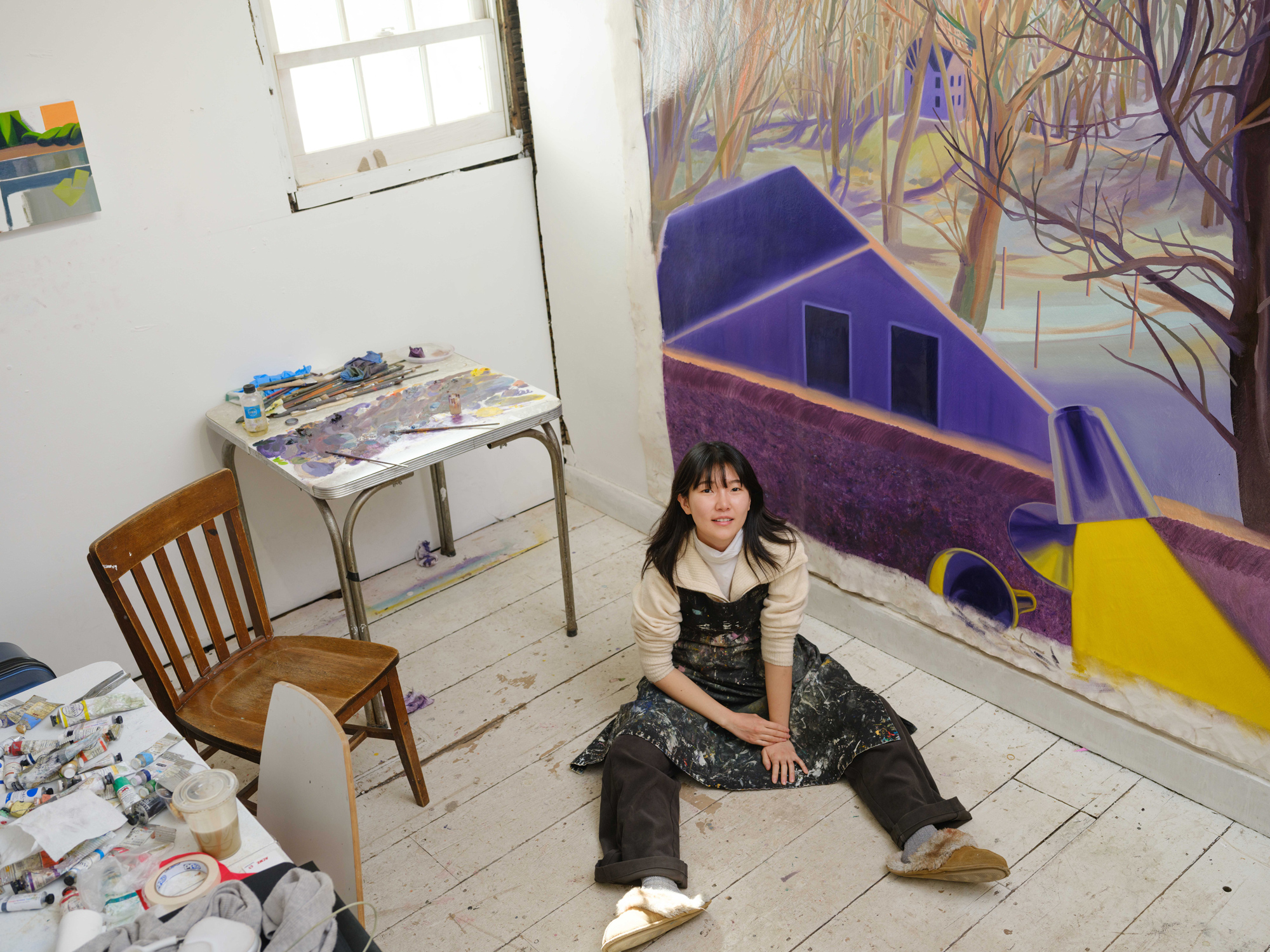
© Courtesy of the artist
Are there any projects that are personally important to you—whether recently completed or currently in progress?
All of my projects stem from my core artistic inquiry: exploring interconnectedness by capturing moments where tenderness emerges between people, objects, and environments. I draw from Roland Barthes’ idea of tenderness—a quiet, enduring form of love—as a way to examine how we relate to one another. The figures in my work remain intentionally ambiguous, transcending gender, age, nationality, and ethnicity. This apporach is deeply inspired by the Buddhist concept of dependent arising, which teaches that the self is never fixed but continuously shaped through relationships with others, objects, and space.
Living in both South Korea and the United States, I have experienced many moments of unfairness and vulnerabiliity as a woman, and Asian, and an immigrant. These experiences led me to question my existence, identity, and how to live alongside others whose perspectives may never fully align with mine. Thorugh loss, conflict, and hurt, I often flet exposed and blamed myself because I didn’t yet know how to cope with those moments. But in understanding the inevitability of our interconnectedness—and the quiet power of kindness—I realized that sometimes simple answers can address profound questions. This realization has been grounding for me.
A small but important project I’m currently pursuing involves expanding the spatial dimension of my paintings, particularly thorught the presence of nature. Having grown up in Seoul and later lived in Baltimore, my work has between people and the largely focused on indoor, urban spaces. Recently, I’ve become increasingly interested in the intertwined relationship between people and the natural world—how we shape our envrionments and how they shape us in return. I was at the Sitka Center for Art and Ecology in Oregon and Monson Art residencies to immerse myself in nature. I haven’t yet figured out how these experiences will manifest in my paintings, but I trust that being close to nature will guide me in new directions.
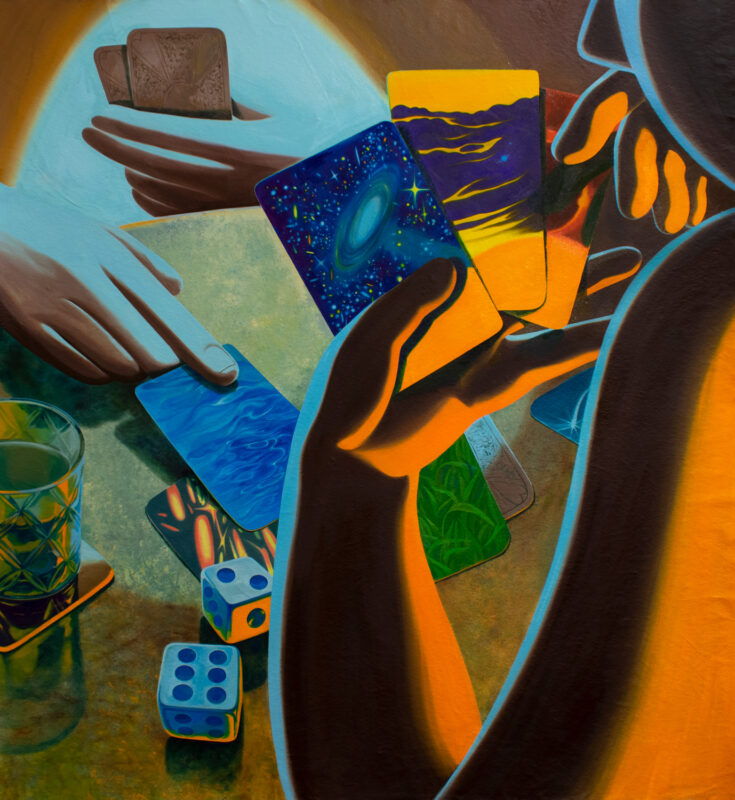
© Courtesy of the artist
© Courtesy of the artist
Do you have a favourite place in your area where you like to relax and linger?
There are a few places in my area that I visit when I need to relax. One of my favorites is the Baltimore Museum of Art. I go there often—partly because it’s free except for special exhibitions, but mainly because its collection is incredible. They have a large selection of Matisse paintings, and their contemporary wing regularly highlights emerging artists as well as many Baltimore-based artsits. Whenever I feel overwhelmed in my own practice, I visit the museum to clear my mind and find new inspiration. They also update or rearrange their displays often, so even familiar works feel fresh when seen in a new context.
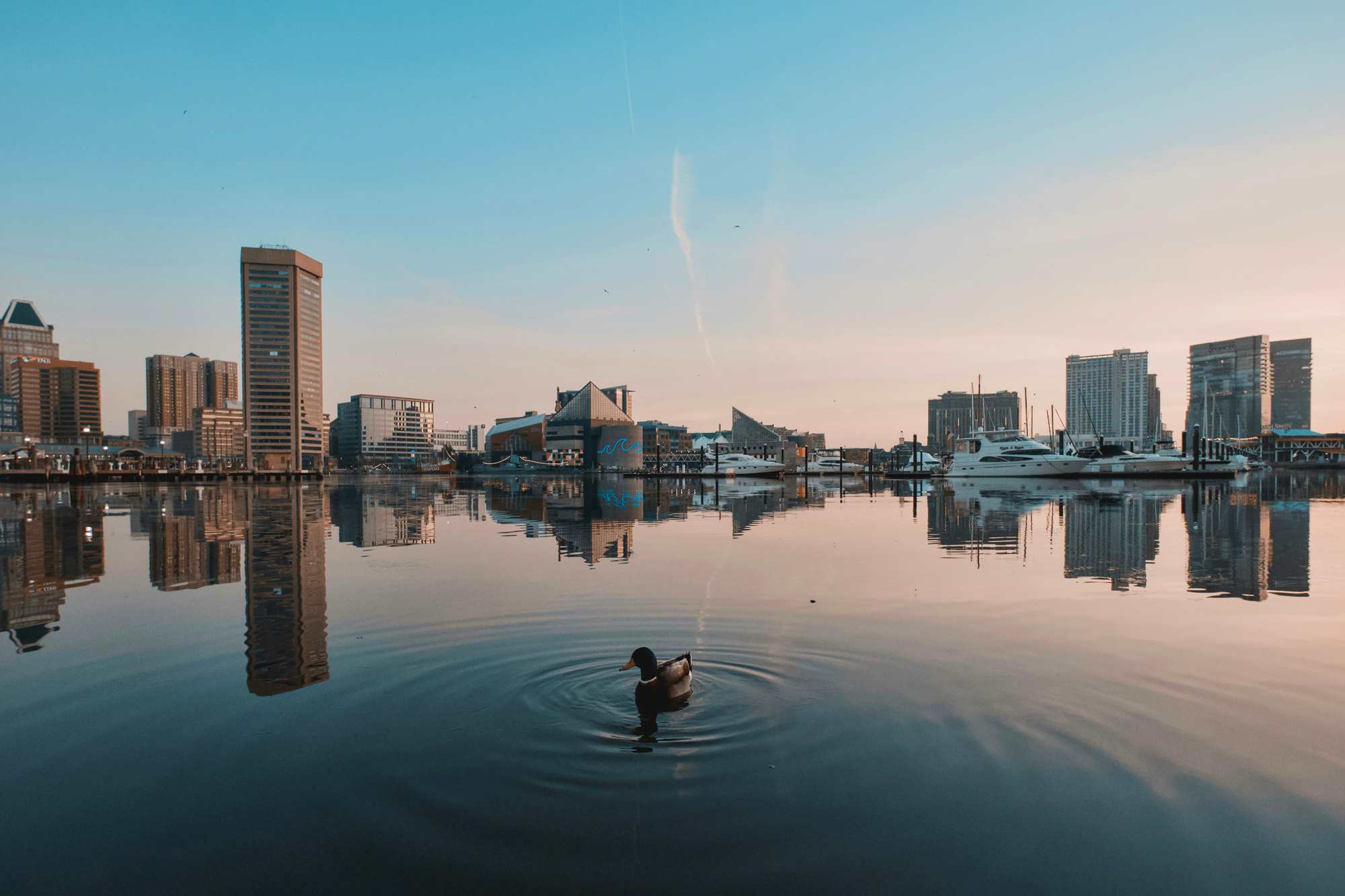
Another place I love is the Baltimore harbor. I used to go there a lot, and although it’s about a 20-25 minute walk from where I live, the long walk makes the view even more rewarding. In the winter, there’s a small ice-skating rink and a charming German Christmas village filled with food and crafts. I remember buying an ornament there of a snowman and Santa with their arms around each other, it was so sweet. The harbor itself is a calming place to walk or simply stare at the water and the reflections of the sun. It has helped me soothe my emotions many times.
© Photo: Aaron Burden,Unsplash
In your opinion, what has developed well in the last 5 years—and what has not?
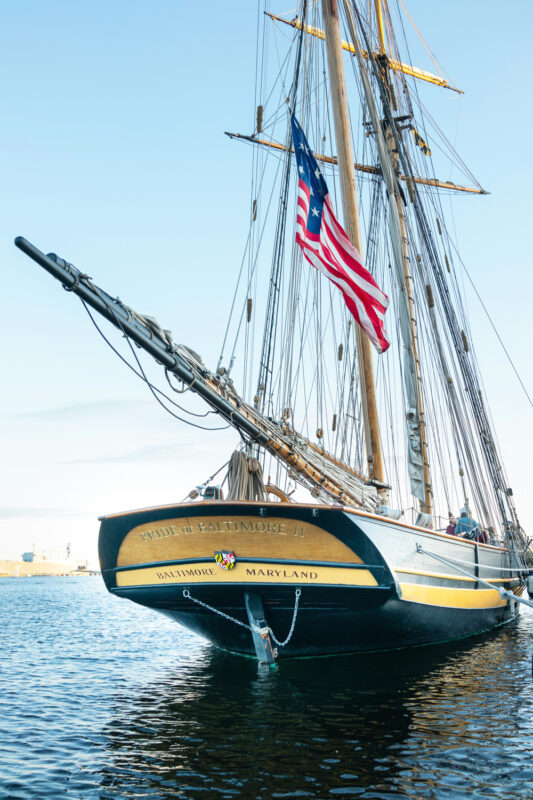
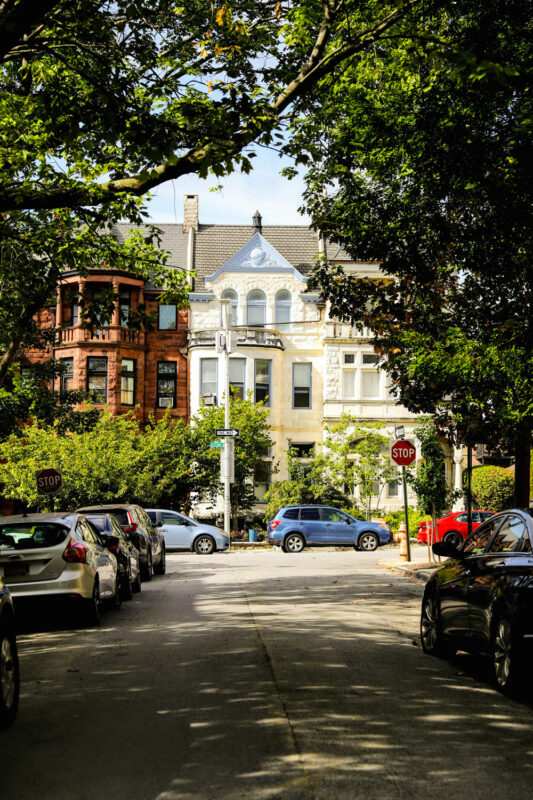
I’ve lived in Baltimore for almost four and a half years now, so it feels close to five. When I first arrived, I was fully committed to my MFA program for the first two years, which meant I didn’t have much time to explore the city beyond walking or relying on public transportation. Over time, as I became more rooted here, my understanding of the city has grown alongside my practice.
What feels most developed in recent years is the growing visibility and initiative of artsit-led movements. Many local artists—friends and peers of mine—have started their own galleries, run independent studio spaces, organized group exhibition outside institutional systems, and created platforms for emerging artsits and students. There is a steady, grassroots energy that feels increasingly present and self-sustanining.
At the same time, I think there is room for broader visibility. There are many strong exhibitions and meaningful artistic activities happening in Baltimore, but I sometimes wish they reached a wider audience beyond the immediate art community. The creative energy is already there, it simply deserves to be seen and supported more widely.
© Photo: Austin Kirk,Unsplash
© Photo: Nicky M,Unsplash
Do you know a hidden gem when it comes to local manufacturers—whether it’s arts and crafts, sustainable products or food?
I’m particularly drawn to artist-made jewelry and small handcrafted objects that I encounter in museum shops or through local makers, even at the flea market. Many of them are thoughtfully produced in small batches, carrying a strong sense of material care and intention.
Their prices often reflect the labor, skill, and time behind the work, and I truly respect that. While I’m not always able to purchase them right away, I keep following their practice and hope to support them more directly in the future. Even quietly admiring their work feels meaningful to me.
I feel a similar appreciation for local food makers. I love places like Ekiben, where the food feels both inventive and rooted in strong flavors. Recently, I’ve also been a bit obssessed with pastries or bread, and I really enjoy Cafe Dear Leon. They recently opened La Maison by Cafe Dear Leon near my place, and I love visiting. It feels like supporting a small, evolving local story.
Whether it’s objects or food, I’m drawn to things that carry a sense of care, craft, and personal touch.
Is there anything particularly innovative in your region? Also in comparison to other places you have already visited?
In Baltimore, innovation often comes from community rather than scale. Many local artists take initiative organizing exhibitions in underused spaces, forming nonprofit groups, and creating platforms outside of traditional gallery systems. There’s also a growing emphasis on public art, which makes creativity feel emnbedded in the city itself.
While the city may not move at the same spped as lager art capitals, there is a steady and committed momentum. It’s a quiteter but persistent form of growth, and that continuity gives the artistic community a strong sense of presence.
Being part of this artist-led environment has influenced how I think about connection and shared space in my own work. The emphasis on collaboration, care, and sustained engagement resonates deeply with my exploration of identity and relational existence.
Do you have a secret restaurant tip that you would like to share with us?
I don’t really have a secret restaurant tip, but if a place has a happy hour, I make sure to plan accordingly—sometimes ordering an extra drink or two before it ends. You never know when inspiration (or a long studio week) might call for it.

© Ekiben
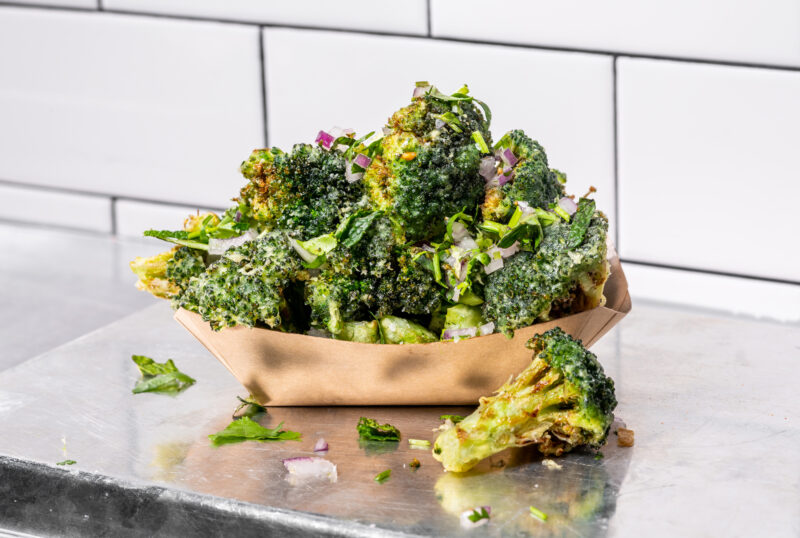
© Ekiben
Is there a local shop whose products are only available in your region?
One local platform I’d love to mention is Bmore Flea. It doesn’t operate as a permanent shop, but instead opens on scheduled dates, moving between a couple of main locations. Many loval vendors participate, selling handmade products and often hosting craft activities that invite public engagement.
During larger city-wide events, the flea market expands significantly—sometimes stretching from the Mount Vernon area down toward the Harbor. As you walk block by block, you encounter new vendors, performances, and small happenings along the way. It feels less like shopping and more like experiencing a living, creative ecosystem.
I once met a local maker there who upcycles secondhand clothing, carefully repairing and transforming them into entirely new pieces. I ended up buying a jacket that I instantly fell in love with, it actually appears in one of my profile photos that I use frequently. Moments like that make the market sepcial to me.
It’s a place where you can discover unique products with unexpected colors and character—things that feel deeply rooted in Baltimore’s creative community and aren’t easily found eleswhere.
What are your 3 favourite apps that you use every day and couldn’t live without?
The three apps I use every day and probably couldn’t live without are Instagram, Netflix, and KakaoTalk.
Instagram functions almost like a portable gallery for me. I use it to share updates about my artwork and to see what other artists are creating. Of course, I strongly believe that experiencing art in person, at galleries or museums, is the most meaningful way to engage with it. But with a busy schedule, Instagram becomes a convenient way to stay visually connected and inspired.
Netflix is my go-to app during my leisure time outside the studio. I enjoy exploring films and series from around the world. Recently, I’ve also started watching anime. Well-crafted anime, especially those with fictional universes or historical references, gives me space to imagine and wander mentally. That imaginative escape often feeds back into my creative process.
KakaoTalk is a messaging app widely used in Korea. It’s similar to WhatsApp, but for me, it carries a more perosnal meaning. Since it conencts me primariliy to people with Korean accounts or phone numbers, it feel like a direct line to my family and friends back home. Living abroad, it becomes an emotional bridge, an intimate way of staying to my family and friends back home. Living abroad, it becomes an emotional bridge, an intimate way of staying connected to Korea.
Do you have any favourite newspapers or online magazines? And how do you keep up to date with politics or social and cultural issues?
There are several online magazines I follow, but locally, BmoreArt is especially helpful. It’s a great resource for keeping up with exhibitions in Baltimore and learning about what local artists are working on. They regularly publish exhibition listings and articles, which makes it easy to stay connected to the city’s art scene and plan which openings to attend.
For broader political, social, and cultural issues, I often read The New York Times, mainly to stay informed about major developments and general context. I don’t follow every update in real time, but I try to remain aware of significant events and reflect on them thoughtfully.
For me, staying informed is less about consuming everything and more about cultivating critical awareness, especially around issues of social equity, representation, and cultural dialogue. These concerns naturally shape how I think about community, identity, and interconnectedness in my own practice.
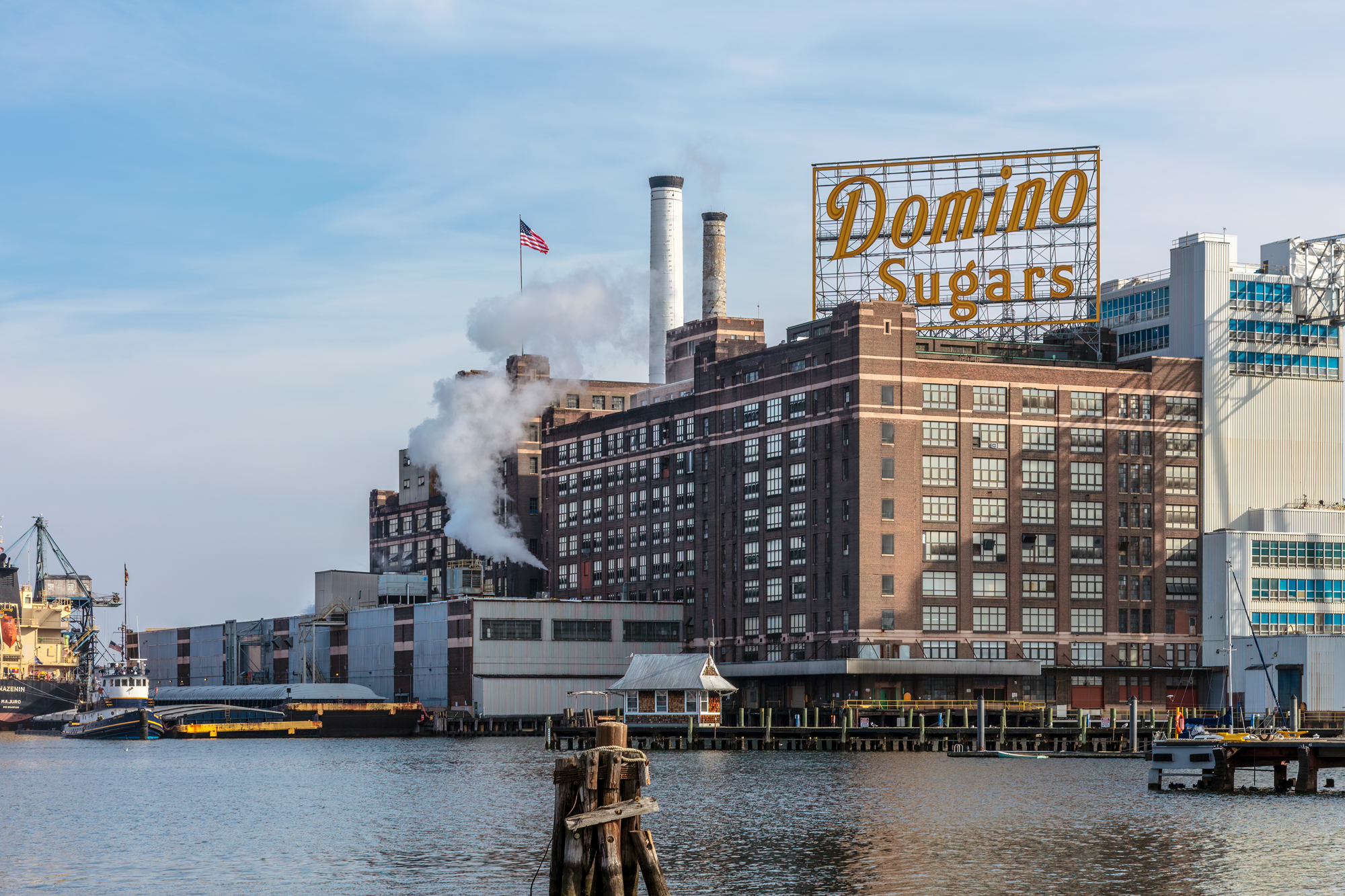
© Acroterion, Domino Sugar refinery Baltimore MD1, Adjusted colours, CC BY-SA 4.0
Imagine you could be mayor for a year—what would you change?
If I could be mayor for a year, I would focus on creating more opportunities for artists in the community. I would organize open calls and public programs so that more artists could participate, and provide financial support or exhibition opportunities when possible. I would also encourage collaborations with other regions to build stronger connections among local artists. As an individual artist, there is only so much I can do, but as a mayor these initiatives could happen on a larger scale and create more meaningful opportunities. Because a thriving art community benefits not only artists, but the cultural life of the entire city.
One last question: If you could choose another place to live—regardless of financial or time constrains—which one would you choose?
I haven’t had the chance to visit many other states yet, and there are still so many places I’d like to explore. But if I think in terms of countries I’d love to live in for a few years, two come to mind.
The first is Portugal. I traveled there once for two weeks, and the entire experience felt dreamlike. Many buildings are covered with beautifully patterned blue tiles, the Azulejos; you can see the Atlantic Ocean almost everywehre; and the fresh seafood with port wine was unforgettable. If I could live there without finanacial constraints, I would love to spend my time wandering through museums and galleries, studying the architecture, and indulging in the landscape and food culture.
The second place would be Thailand. When I visited, I was struck by how present Buddhist culture is in everyday life. Even though I’m not a devout Buddhist, much of my work is comceptually connected to Buddhist philosophy, especially ideas of interconnectedness and dependent aristing. Living in Thailand would offer a meaningful opportunity to study this culture more deeply—by visiting temples, observing daily rituals, and understanding how Thai people interpret Buddhism in ways that may differ from Korean traditions. I feel it would broaden my perspective both personally and artistically.
So, if I could choose freely, I would love to experience both Portugal and Thailand—one ofr its rich architectural and aesthetic atmosphere, and the other for the philosophical and cultural depth that could inform my work.


