

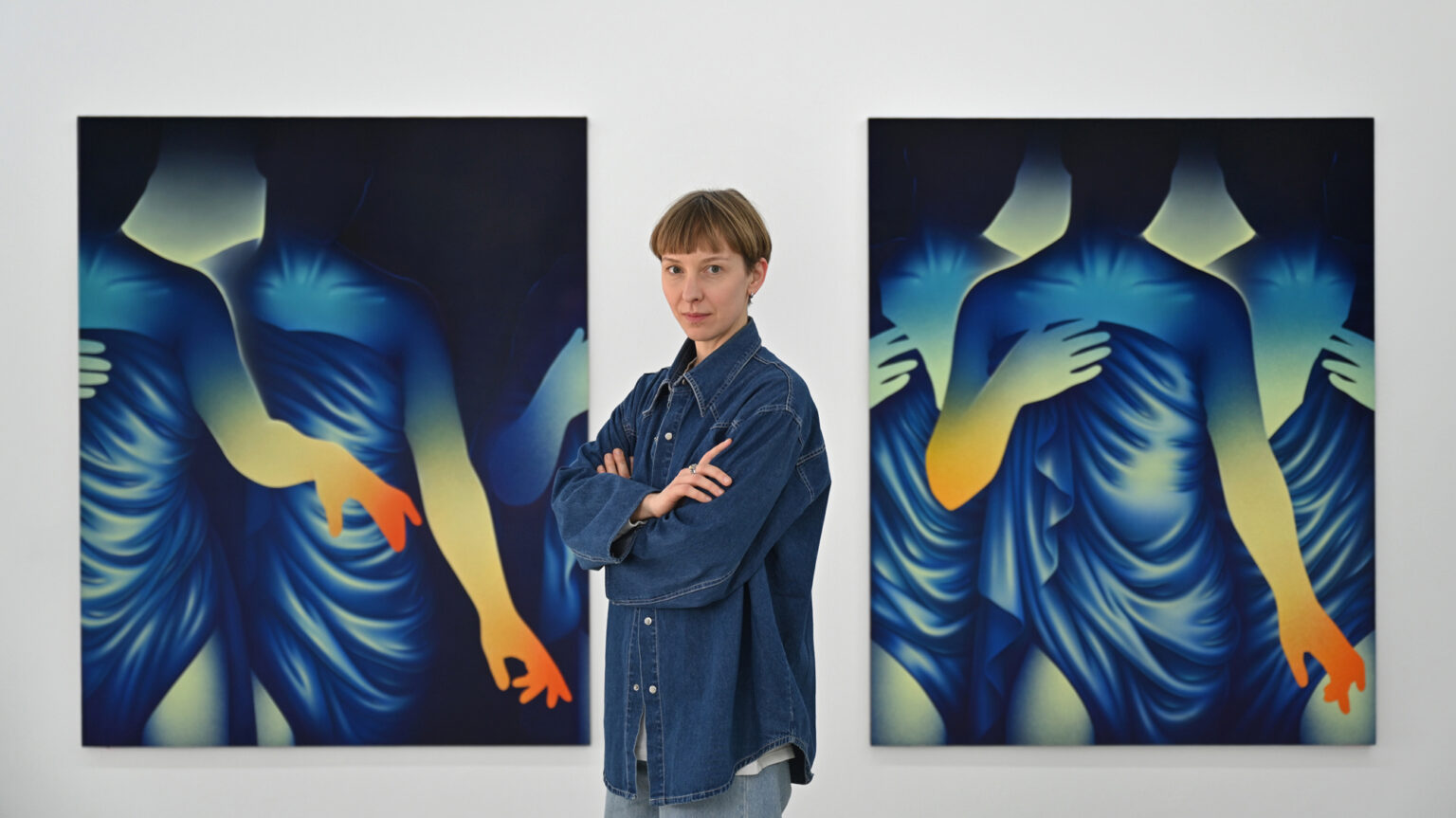
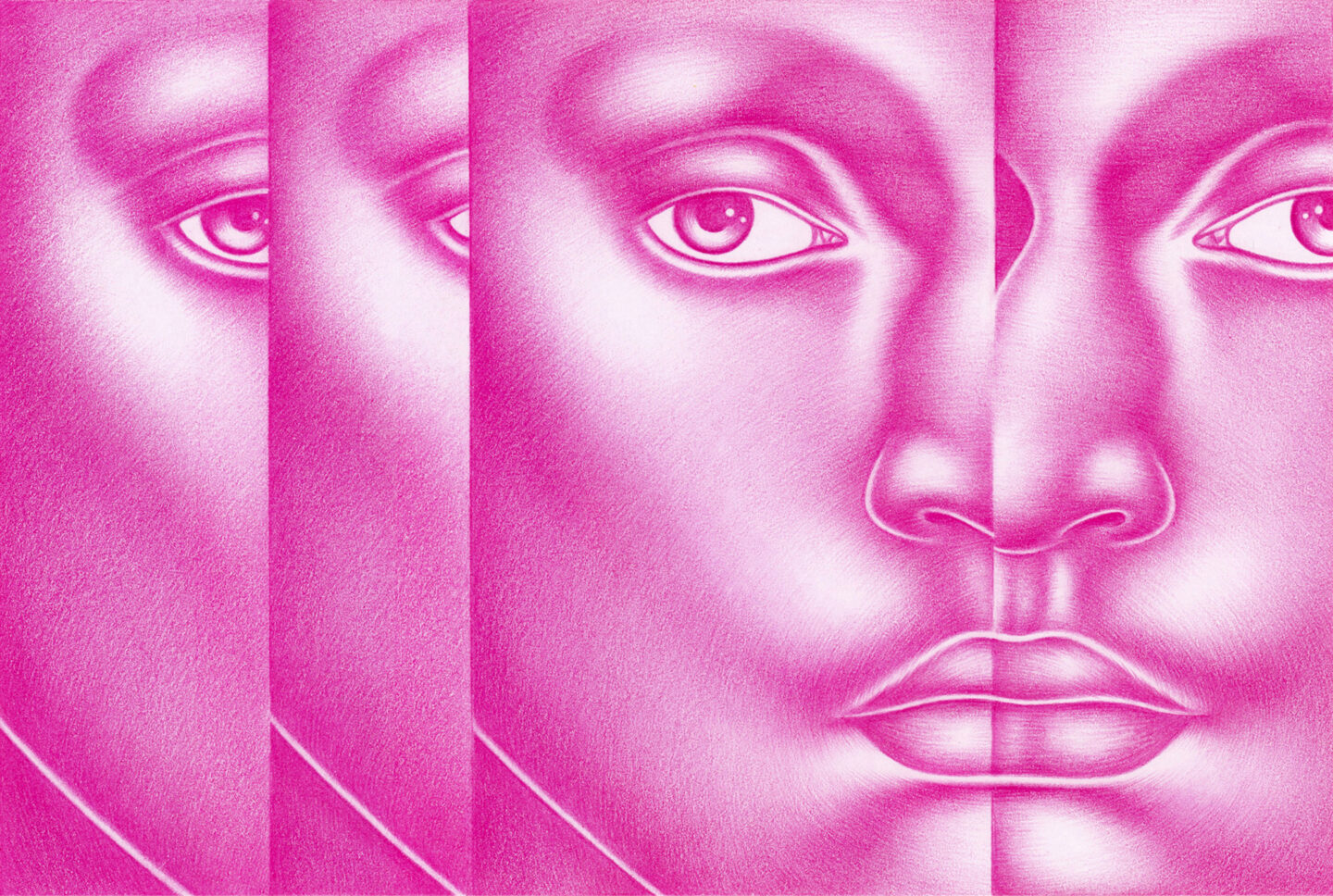
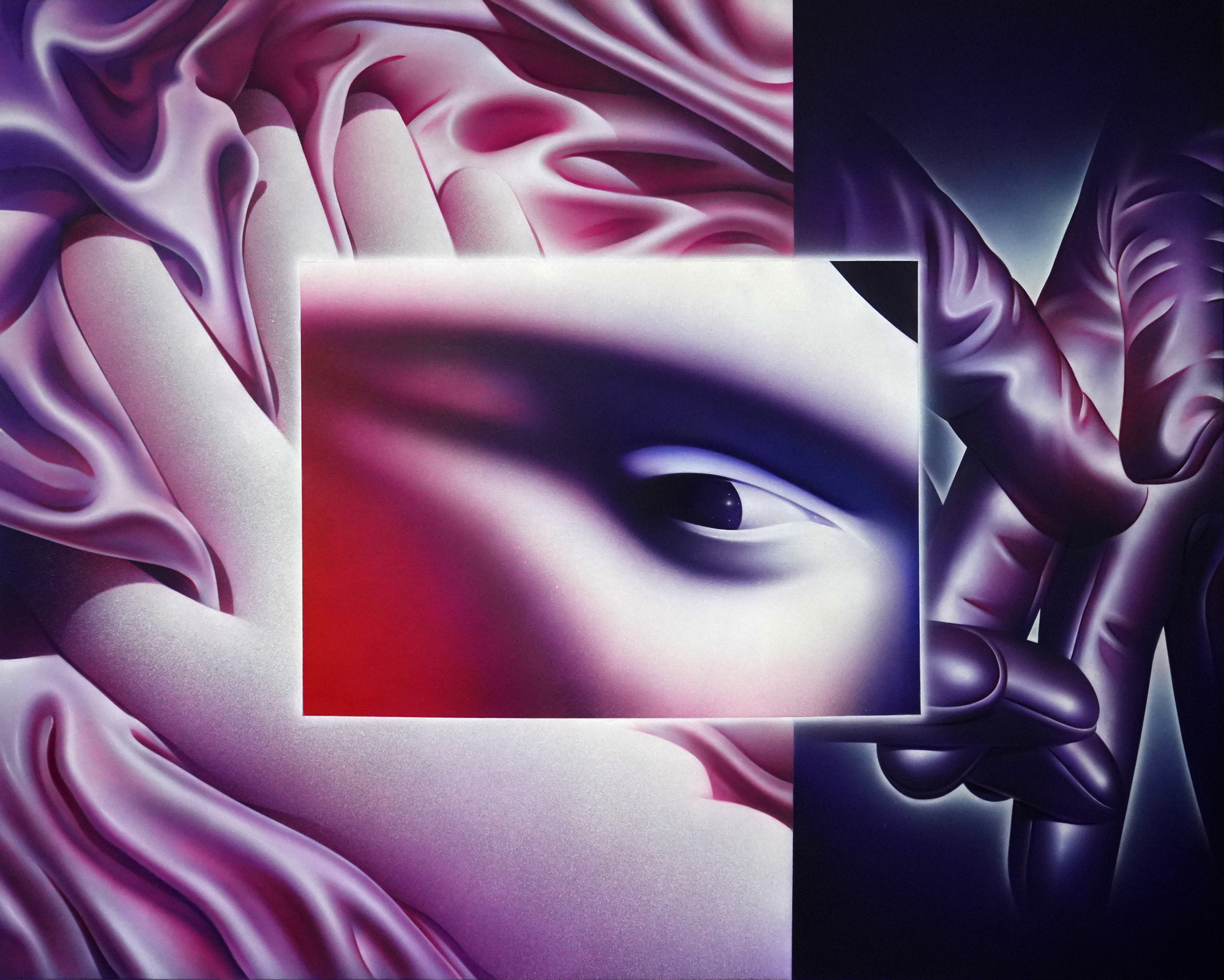
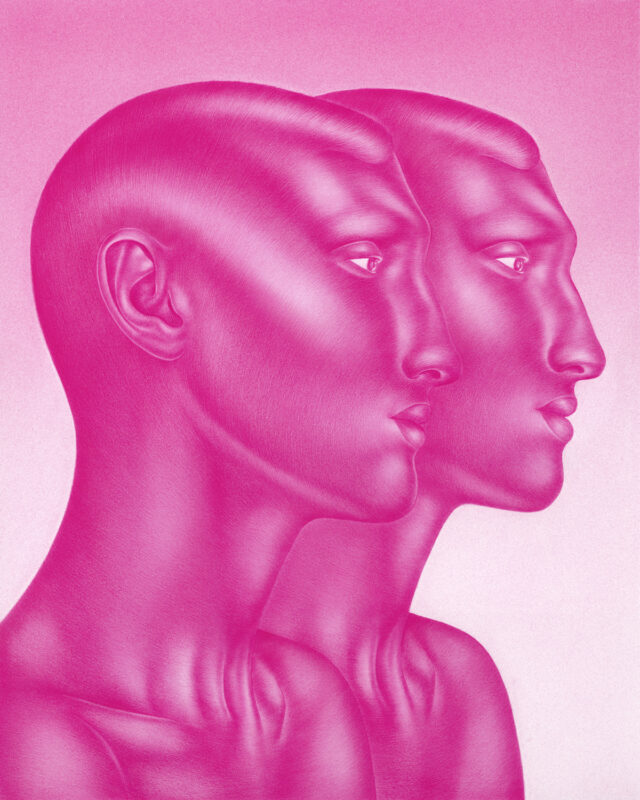
In the work of Aistė Stancikaitė, intimacy unfolds in fragments, a gloved hand, a turned shoulder, a gaze that never fully settles. She composes her paintings with meticulous care, layering tone and texture until the figures seem to hover between clarity and disappearance. Once rooted in strict monochrome, her palette now opens gently, allowing colour to deepen the emotional charge of each scene.
The spaces around her subjects remain undefined, heightening a sense of quiet tension and introspection. What lingers is not a fixed story but a subtle atmosphere, tender, distant and quietly unsettling. Working mainly with painting and drawing, she builds her images through careful layering, repetition and partially obscured figures, exploring the body as a space of psychological tension and quiet narrative.
© Courtesy of artist and GNYP gallery
Which place do you currently call home and where do you work on your projects?
Berlin is where I spend most of my time and have my home base, however I often try to take breaks from it—either through residencies elsewhere or by returning to where I’m originally from, Vilnius.
Where is your studio located & how does it look?
My studio is in Friedrichshain, it is a beautiful space tucked away in a backyard in a very busy area, which makes it a quiet haven. The studio is spacious, with four metre high ceilings and large south facing windows. I’m lucky to get so much sunlight, although it can sometimes be a little distracting while working. I use only half of the space for my work; the rest is set up as a cosy lounge and relaxation area, with a massive sofa thats perfect for studio movie nights.
© Courtesy of artist and GNYP gallery
Are there any projects that are personally important to you—whether recently completed or currently in progress?
I’ve recently opened my first museum show in my hometown (Vilnius, Lithuania) which was a very emotional and important moment for me, a real personal and professional milestone. Almost simultaneously, I also opened my first institutional solo show in Germany at the Dresden Kunstverein. Having both exhibitions happen at the same time feels like a significant marker in my career. The museum show in Vilnius presents works from across my practice up to now, while Echoes in Dresden is entirely new, conceptually driven, and future-oriented show.
© Courtesy of artist and GNYP gallery
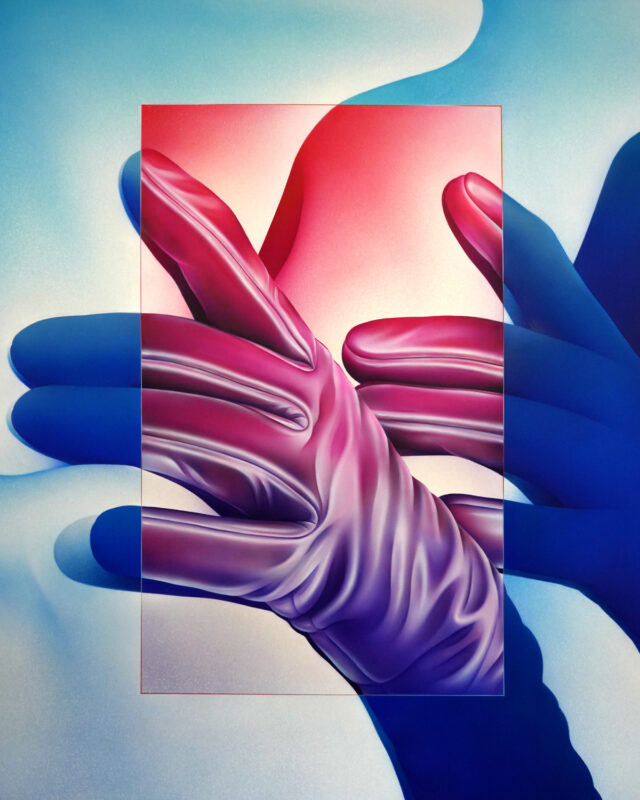
© Courtesy of artist and GNYP gallery
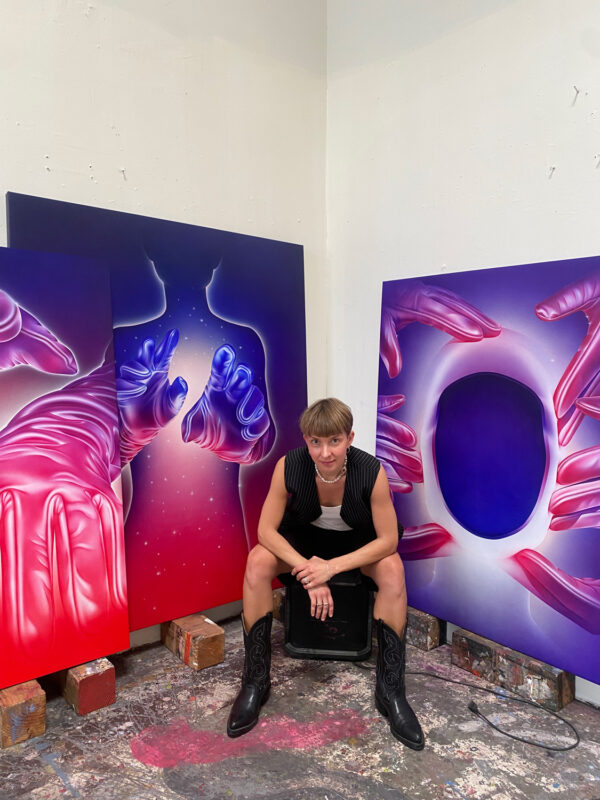
© Courtesy of artist and GNYP gallery
Do you have a favorite place in your area where you like to relax and linger?
I love a small park near my studio by Weberwiese U-Bahn station. I don’t think it’s even officially marked as a park on the map but it’s beautiful, surrounded by elegant buildings and a small fountain in the middle. It’s always very clean and well maintained, which isn’t a given for public spaces in Berlin. It’s also undiscovered by party crowds, so it remains calm and quiet.
Are there any urgent political issues or problems in your region?
There are several. The housing situation in Berlin is extremely difficult, with rent prices rising very quickly and intense competition. Many people are forced to leave the city because they can’t find a place to live. Homelessness and drug use are another major issue. There are quite a lot of people living on the streets compared to other cities in Germany or Europe, and it feels as though the city lacks either the resources or the political will to meaningfully improve the situation and care for those affected.
In your opinion, what has developed well in the last 5 years—and what has not?
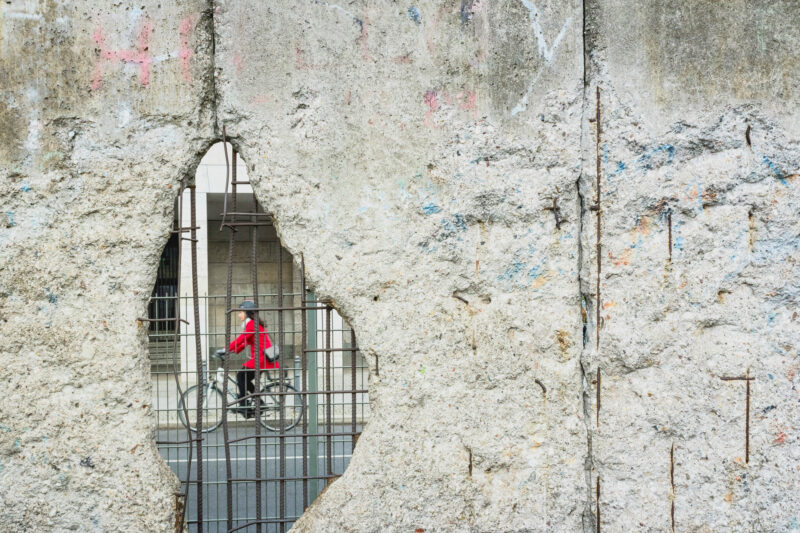
When I moved to Berlin, it was still very affordable compared to other major European cities. Over the past years, however, the cost of living has increased significantly, from food to housing. For example, the famous Berlin kebab costed around €2.50 eight years ago; now it’s closer to €8.
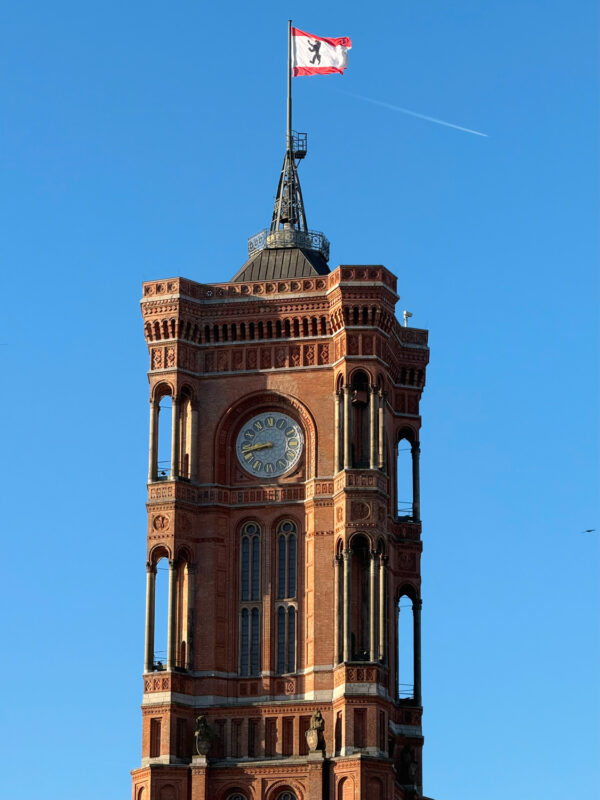
© Photo: Kyria Bazu Lao
© Photo: Morgana Bartolomei,Unsplash
Do you know a hidden gem when it comes to local manufacturers—whether it’s arts and crafts, sustainable products or food?
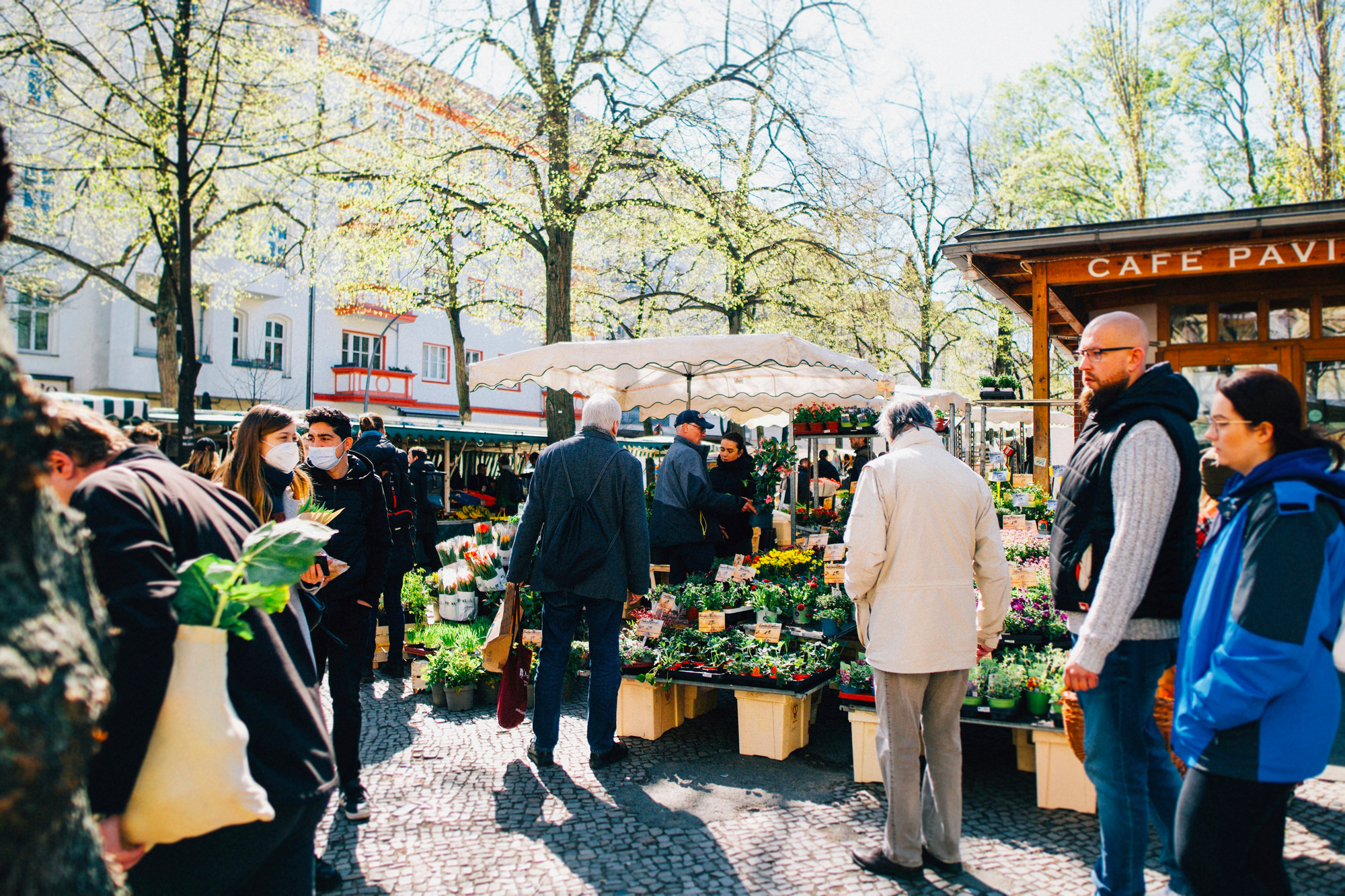
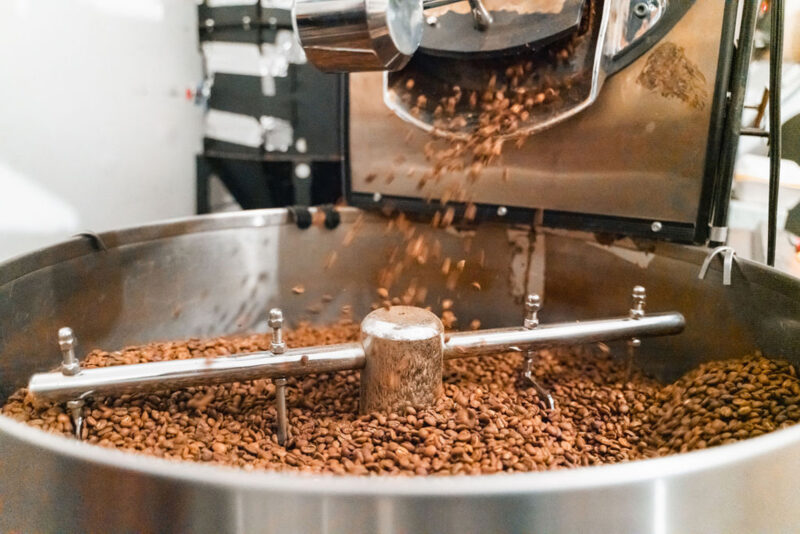
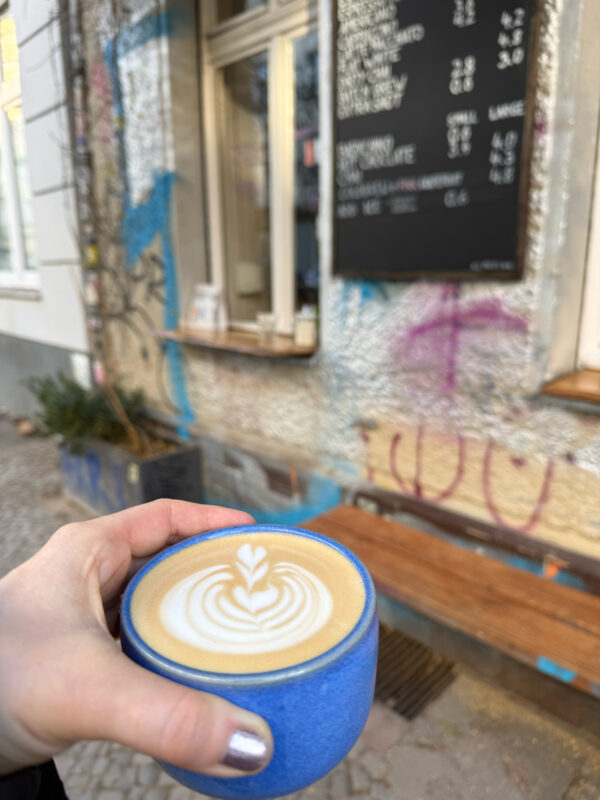
I love Blaue Bohne Roastery near where I live. It’s run by lovely people and is a very low-key neighbourhood café, far from the usual tourist paths in Friedrichshain. Another great spot is the Saturday food market in Friedrichshain, busy but still relatively undiscovered by tourists, and a wonderful place to get lunch, coffee, or fresh vegetables on a sunny day.
© Photo: Sebastian Elm
© Ana Martinelli
Is there anything particularly innovative in your region? Also in comparison to other places you have already visited?
I think Berlin is unique in its openness and weirdness. It’s a place where there isn’t a single prescribed life path and where the idea of“ normal” doesn’t really exist in my eyes. That freedom is very relaxing. Berlin allows people to be themselves, find their communities, and shape ways of living that suit them, without the pressure to fit into a dominant narrative.
Do you have a secret restaurant tip that you would like to share with us?
Nutts Thai Kitchen. It’s a small, family-run restaurant downstairs from where I live, run by very warm people and a chef from Thailand, specialising in Northern Thai cuisine.
Is there a local shop whose products are only available in your region?
Berlin feels special because it’s such a melting pot of cultures. I can’t think of a specific product that’s only available here. It might be something like a local butcher or a particular bakery, rather than a single distinctive item.
What are your 3 favourite apps that you use every day and couldn’t live without?
I think I would manage to live without apps if I had to.
Do you have any favourite newspapers or online magazines? And how do you keep up to date with politics or social and cultural issues?
I read various online newspapers from different countries to follow political news, and I keep up with art and cultural developments through platforms such as Artnews, Artnet, and similar.
Imagine you could be mayor for a year—what would you change?
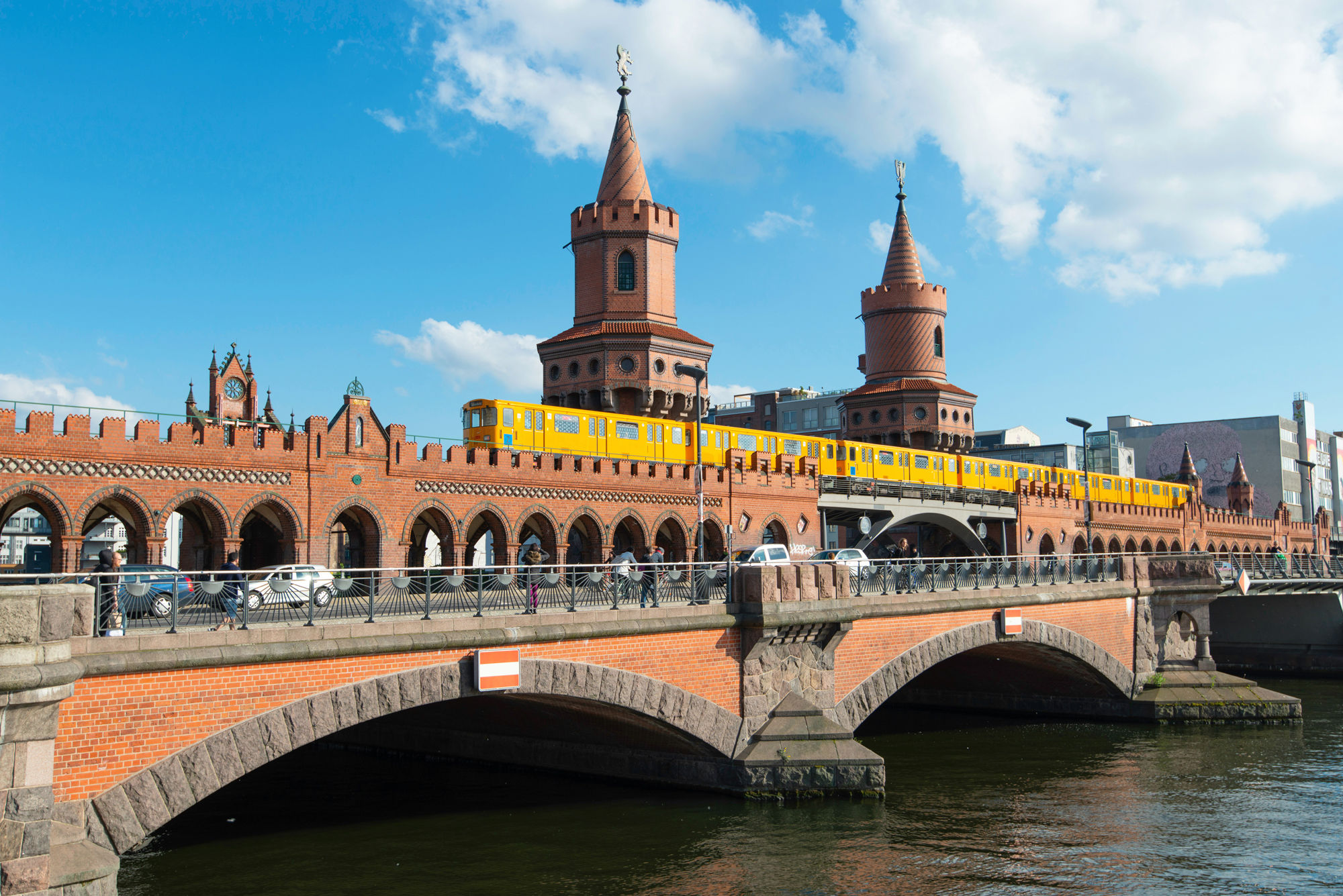
I would try to get the housing situation under control and change regulations that currently favour high-earning native German residents, which feels inaccessible and exclusionary for a city like Berlin. I would also allocate more resources and effort toward addressing homelessness and improving cleanliness in public spaces.
One last question: If you could choose another place to live—regardless of financial or time constrains—which one would you choose?
New York or Los Angeles (under different political circumstances) if I wanted a big-city life, or Antwerp or Lisbon for something smaller and more compact.
