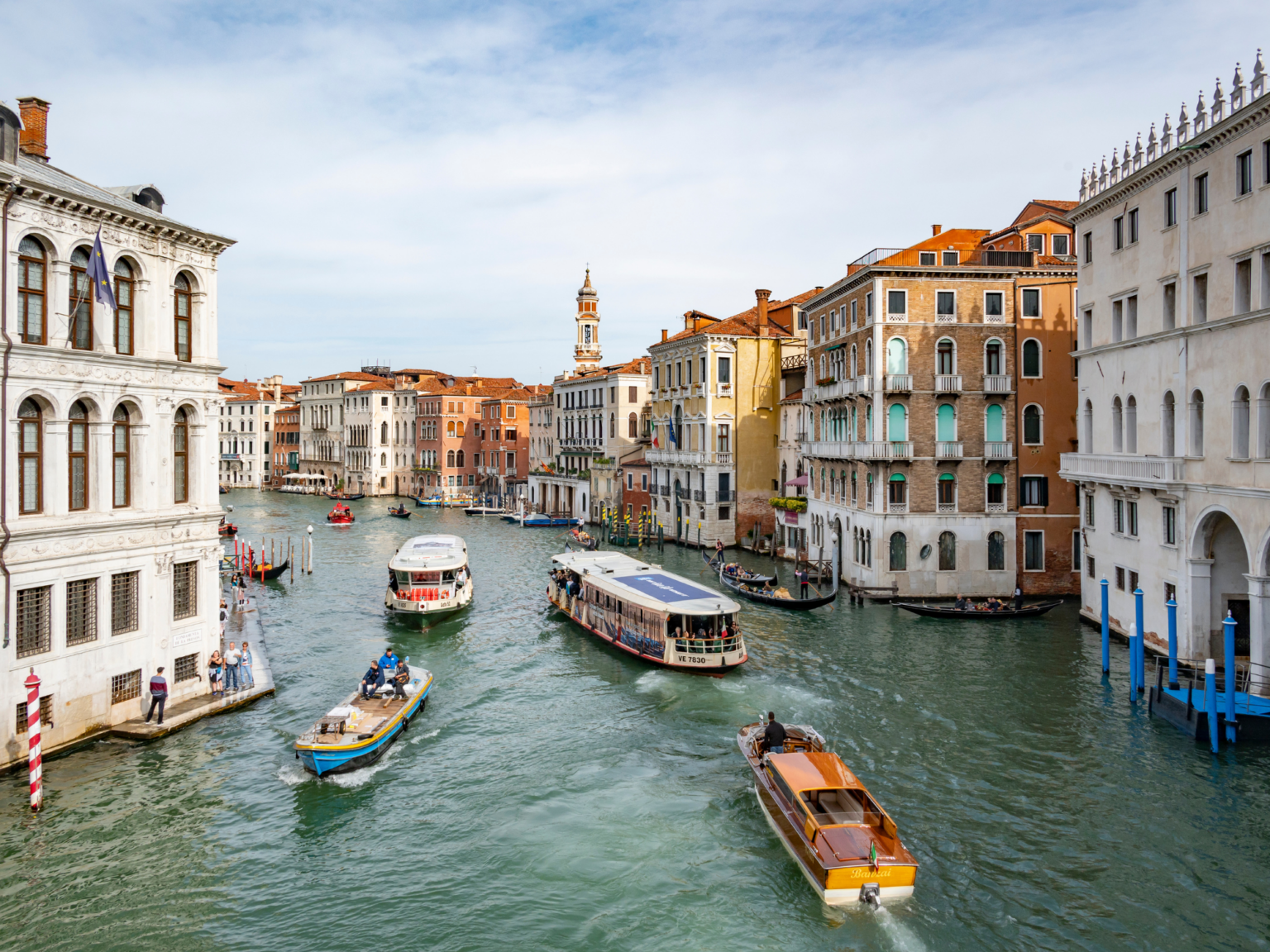

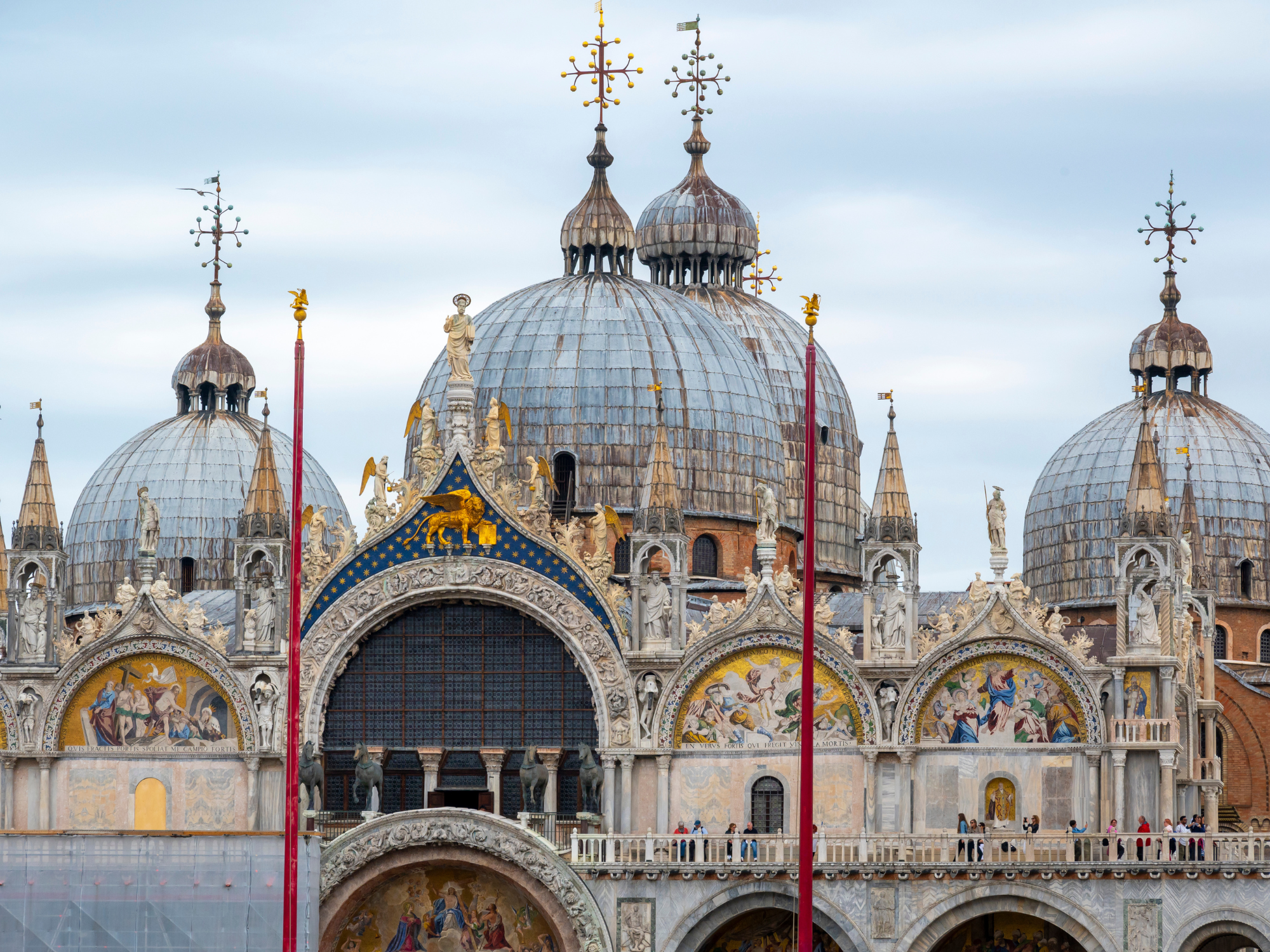
There are two versions of Venice. First, the real city: authentic, layered, alive. Then the image the world has made of it. The second has long since, perhaps too long, taken the place of the first. We arrive in Venice having already seen her. We have seen her in films, on covers, in advertisements, on the phones held up in front of us by other travellers. The strange consequence of being one of the most represented places on earth is that, when the moment comes to cross the threshold of San Marco, one must summon a certain determination to accept seeing her again, properly, under her own light.
This duality is nothing new. Canaletto was selling copies of the lagoon to the English aristocracy three centuries ago. The vedute were postcards before postcards. What is new is the scale, and the speed. Close to fourteen million people visit Venice every year. Around 27,500 people still live in the historic centre today, most Venetians have long since moved to the mainland. In the eighteenth century, the resident population approached 140,000. The verdict is unambiguous: the city has become a minority in the face of its own image.
And yet. A bell. A footstep. The sound of water against the hull of a moored boat. The slow pull of a rope. A small campo with no queue, no sign, no urgent photograph to be taken. That is Venice too. Perhaps that is Venice above all. But this Venice asks for a presence that the modern visit does not always provide.
Venice is not hidden because no one has seen her. She is hidden because too many people have seen too little, too quickly.
© Photo: Bruckmann Verlag, Udo Bernhart
A city is not a postcard
You can cross Venice in a few hours. Many people do. Vaporetto from the station, photographs at Rialto or San Marco, espresso, gelato, the glass bridge back to Piazzale Roma, the train home. The trouble with this four-hour Venice is not that it is false. It is that it is barely beginning.
A city is not a postcard. It is a complex system of arrivals and pauses, places and moments.
Take the gondola. Seen in two seconds, it becomes a souvenir. Looked at more carefully, it becomes a body of knowledge. At the Squero di San Trovaso, in Dorsoduro, one of the last squeri, those traditional gondola yards, the boats are still built and repaired by hand. Their making demands time, balance, and an inherited precision. What unfolds before the visitor on any given afternoon is not merely a Hollywoodian image: it is a genuine archive, a living heritage made of wood, water, and work.
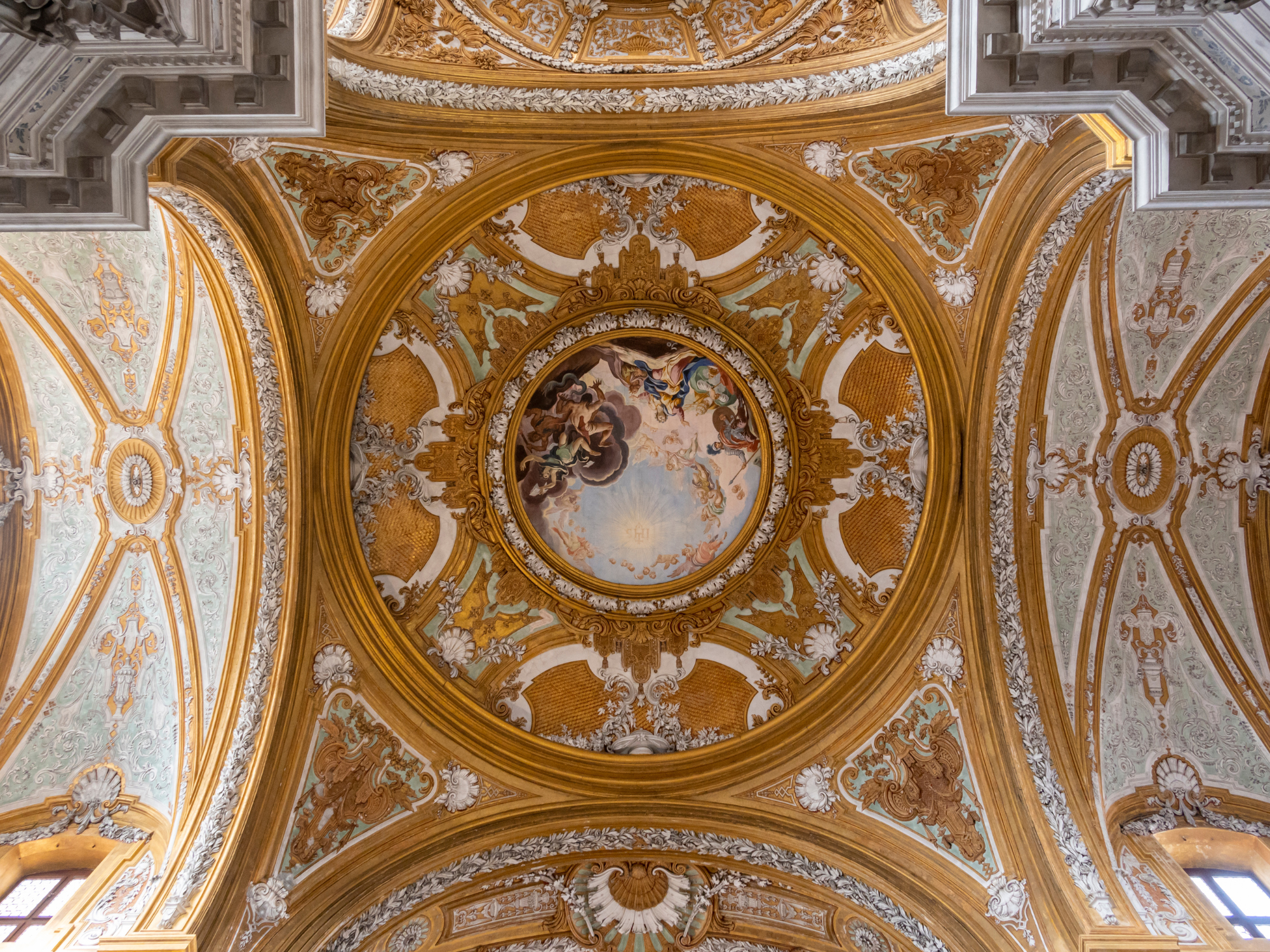
Or step inside the Chiesa dei Gesuiti, in Cannaregio. Domenico Rossi completed the interior in the eighteenth century, and the effect remains almost theatrical. The walls appear to be dressed in fabric: white and green marble, pleated, draped, falling as if softness itself could be carved. The eye reads textile. The hand expects velvet. It is stone. Venice often works this way. An illusion whose details must be given time and attention before its depths can be appreciated.
© Photo: Bruckmann Verlag, Udo Bernhart
The window that is closing
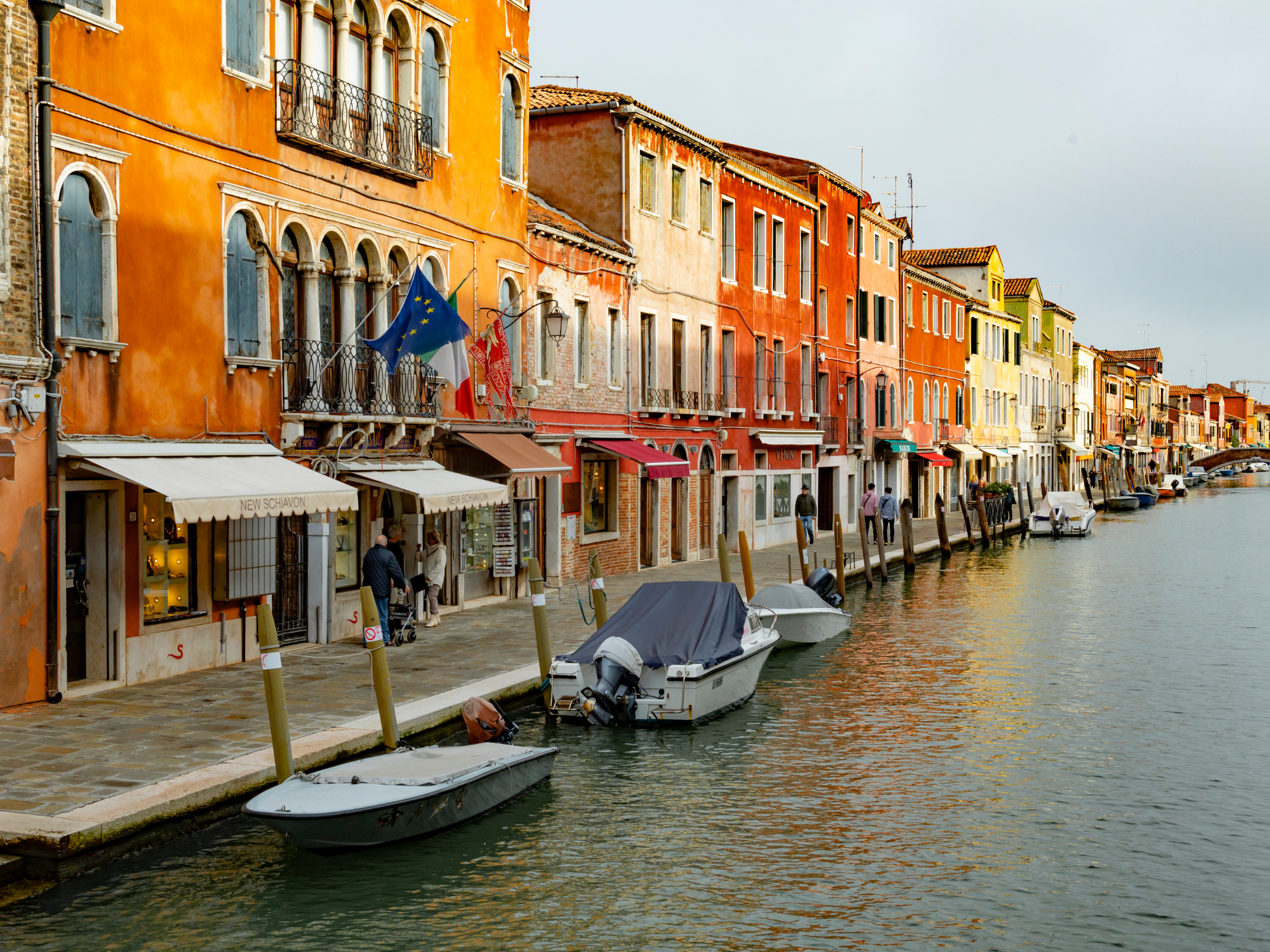
To write about Venice today is to write inside a window that is narrowing inexorably. The image we carry of Venice does not disappear. That version of Venice is immutable, timeless. What is endangered is more fragile: Venice as a place where people simply live. Where they work, do their shopping, argue, repair things, cook, wait, come home.
The historic centre has lost much of the residential density that once made it a normal city as much as an extraordinary one. Short-term lets, the cost of living, the erosion of local commerce, and the conversion of everyday infrastructure into visitor infrastructure have shifted the balance. Beneath all of this, the lagoon itself is under the pressure of rising water, subsidence, climate, and the relentless maintenance demands that make Venice one of the most visible urban emblems of beauty under ecological constraint.
Recently, measures have been trialled in response to the pressures of overcrowding: entry fees imposed on large visiting groups, restrictions on cruise ships. None of these measures resolves the problem on its own. But together they signal something important: Venice is no longer simply managing tourists. It is trying to protect the conditions that allow it to be something other than a backdrop.
© Photo: Bruckmann Verlag, Udo Bernhart
Thomas Migge’s quiet method
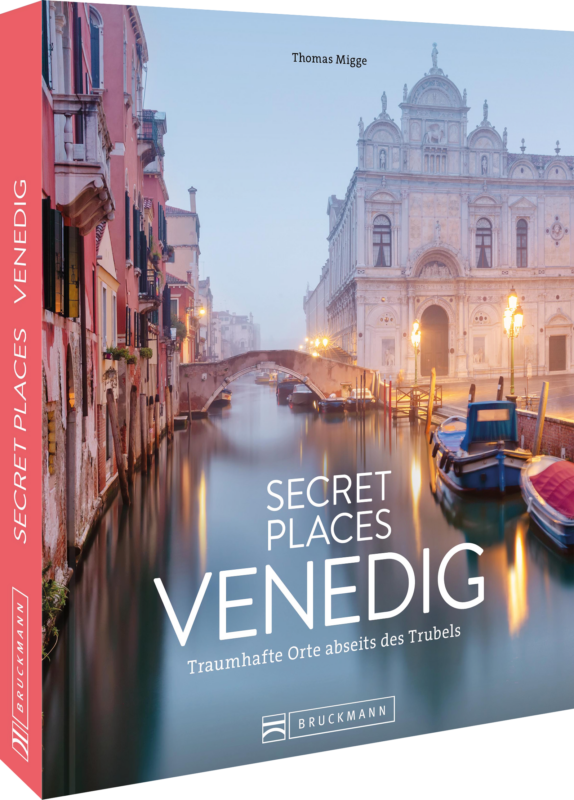
This is where ‘Secret Places: Venedig’, by Thomas Migge, becomes useful. Not as a guide for consuming more places, not as a checklist of hidden gems: the book functions rather as a discipline of attention.
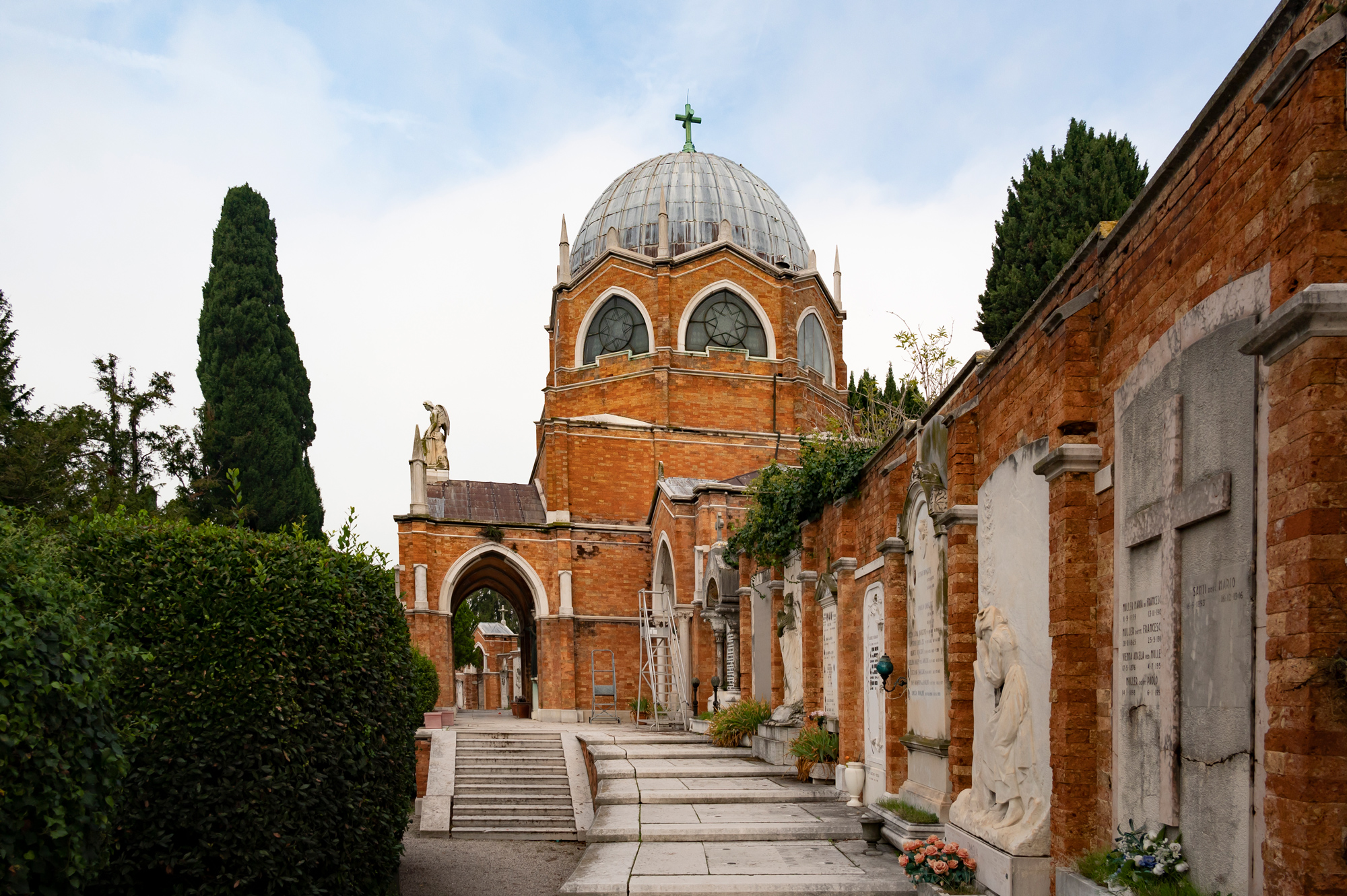
With photographs by Udo Bernhart, its principle is simple: even in a city one believes to be overexposed, there are still places that resist the postcard. An underwater crypt. A forgotten cemetery. A quiet workers’ quarter. A gondola yard. A glass house. Gardens behind walls. A palazzo that looks more Roman than Venetian. A theatre that changed the history of opera and might one day be reborn.
What Migge proposes is not the secret in the marketing sense. He does not claim to have discovered a private Venice reserved for initiates. The value of the book is more subtle. It teaches the traveller to turn aside, to look at the margins, to enter slowly, to give attention to places that still carry a use, a memory, or a gesture.
In this sense the book is less a guide than a cartography of attention. It reminds us that Venice has not been exhausted by its own fame.
The hands that still work
To look at Venice differently is, above all, to look at what is still made there.
On Murano, the story begins with fire. By order of the Venetian Republic, the glassmakers were moved to the island at the end of the thirteenth century, partly to protect this wooden city from the permanent danger of their furnaces. From that exile was born one of the great artisanal lineages of Europe, older than certain European monarchies, and one of the rare cases of craftsmen who gained noble privileges: Barovier e Toso. Founded around 1295, the name is not merely a historical one.
After the fall of the Venetian Republic in 1797 and the loss of their privileges, they had to reinvent themselves. How? By working with the avant-garde designers of the twentieth century, treating glass less as a craft than as a continuous experiment. The Coppa Barovier, made by Angelo Barovier in the fifteenth century, is preserved at the Museo del Vetro on that same island. A goblet. A lineage. A refusal to disappear.
It is almost a rare kind of continuity: glass as family memory, technical and artistic experimentation, and once again a symbol of Venetian survival.
© Photo: Bruckmann Verlag, Udo Bernhart
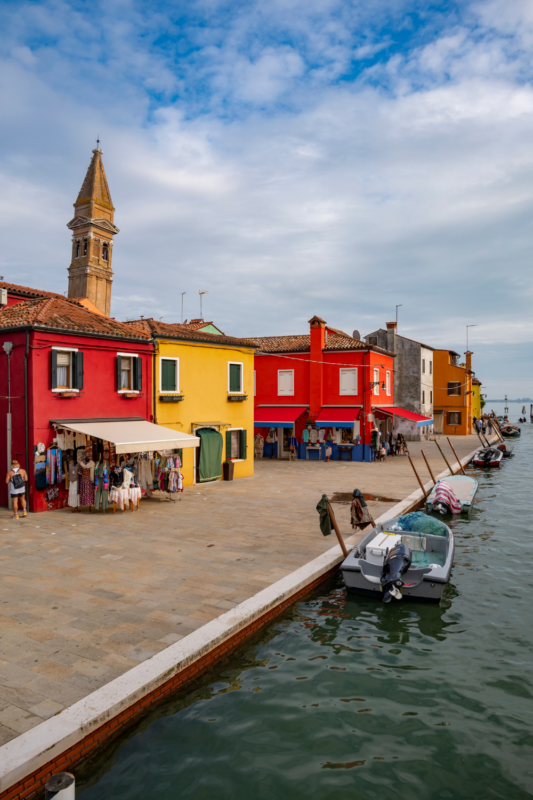
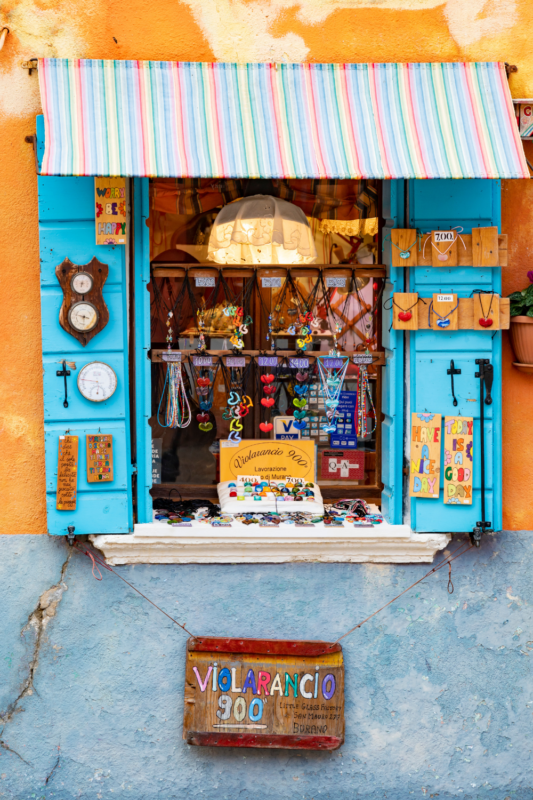
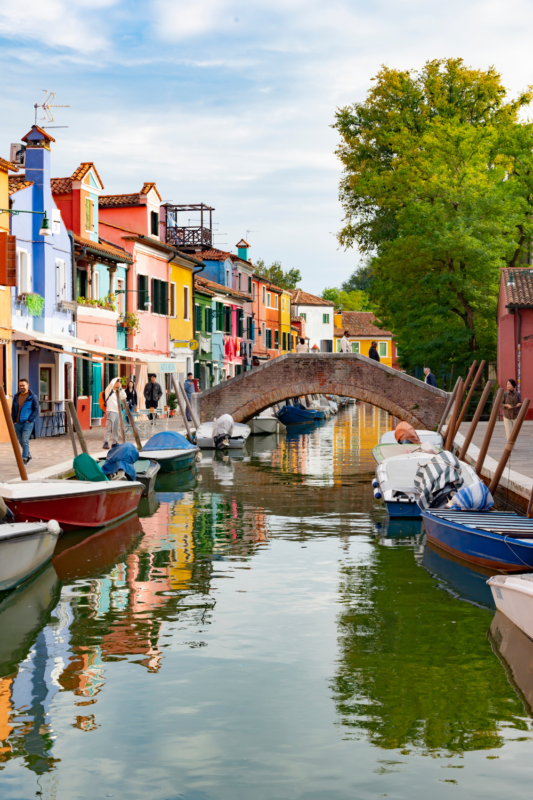
On Burano, lace tells a quieter story. The merletti di Burano belong to a history of female labour, aristocratic patronage, and near-disappearance. The craft once flourished under the patronage of elites, declined, was revived in the nineteenth century, and survives today in reduced but precious form through places such as the Museo del Merletto and the Atelier Martina Vidal. A lacemaker at work is almost the exact opposite of the tourist economy that surrounds her: slow, precise, almost silent, impossible to accelerate without destroying the very thing being made.
These trades do not survive outside of tourism. They survive in tension with it. That tension is uncomfortable, but honest. Once it was the aristocratic commission that fed them; today it is most often the curiosity of the visitor. The question is whether that curiosity is patient enough to sustain what it admires.
© Photo: Bruckmann Verlag, Udo Bernhart
The city that still lives
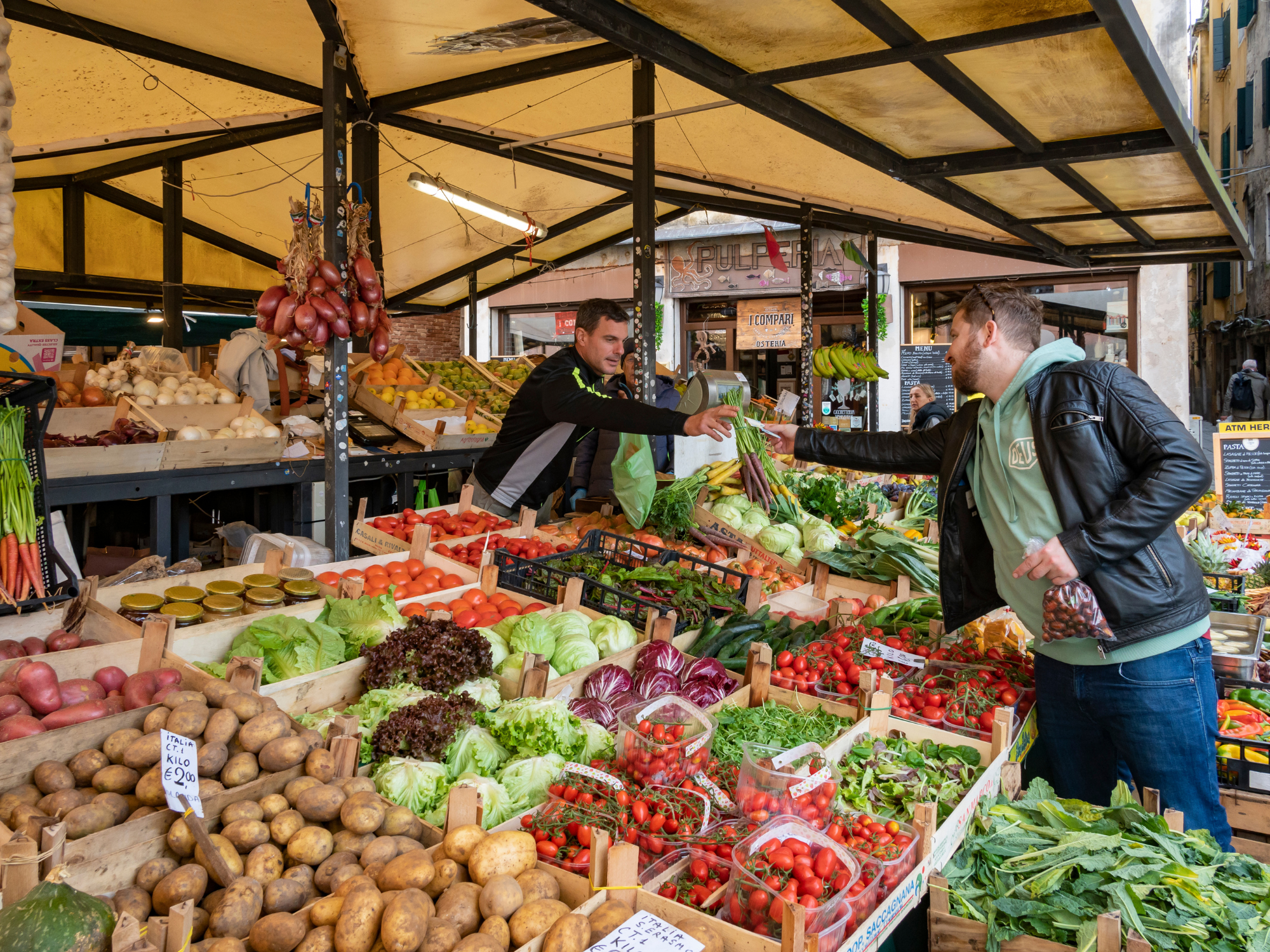
At the eastern edge of Castello, beyond the usual circuits, Sant’Elena offers another correction of the gaze. The quarter has nothing spectacular about it at first glance, and that is precisely why it matters. Built in the twentieth century as a neighbourhood for workers and soldiers, it holds parks, modest houses, local routines, the only football stadium in Venice, and a church dedicated to Saint Helena.
Every two years, thousands of Biennale visitors pass nearby. Few cross the small bridges that lead into the quarter. The reward is not a great revelation, but something rarer in Venice: normality. Children, pensioners, dogs, shade, small tables, the feeling of a city still organised for its inhabitants rather than only for its spectators.
This is where the word “secret” ceases to be decorative. Sant’Elena is not secret because it has been locked away. It is secret because it has not been converted into a tourist attraction. It still belongs, imperfectly but visibly, to daily life.
Perhaps this is the most important hidden place in: not the most beautiful room, not the rarest chapel, but any part of the city where the visitor can sense that people still live here without performing Venice for anyone.
© Photo: Bruckmann Verlag, Udo Bernhart
Below, behind, beside
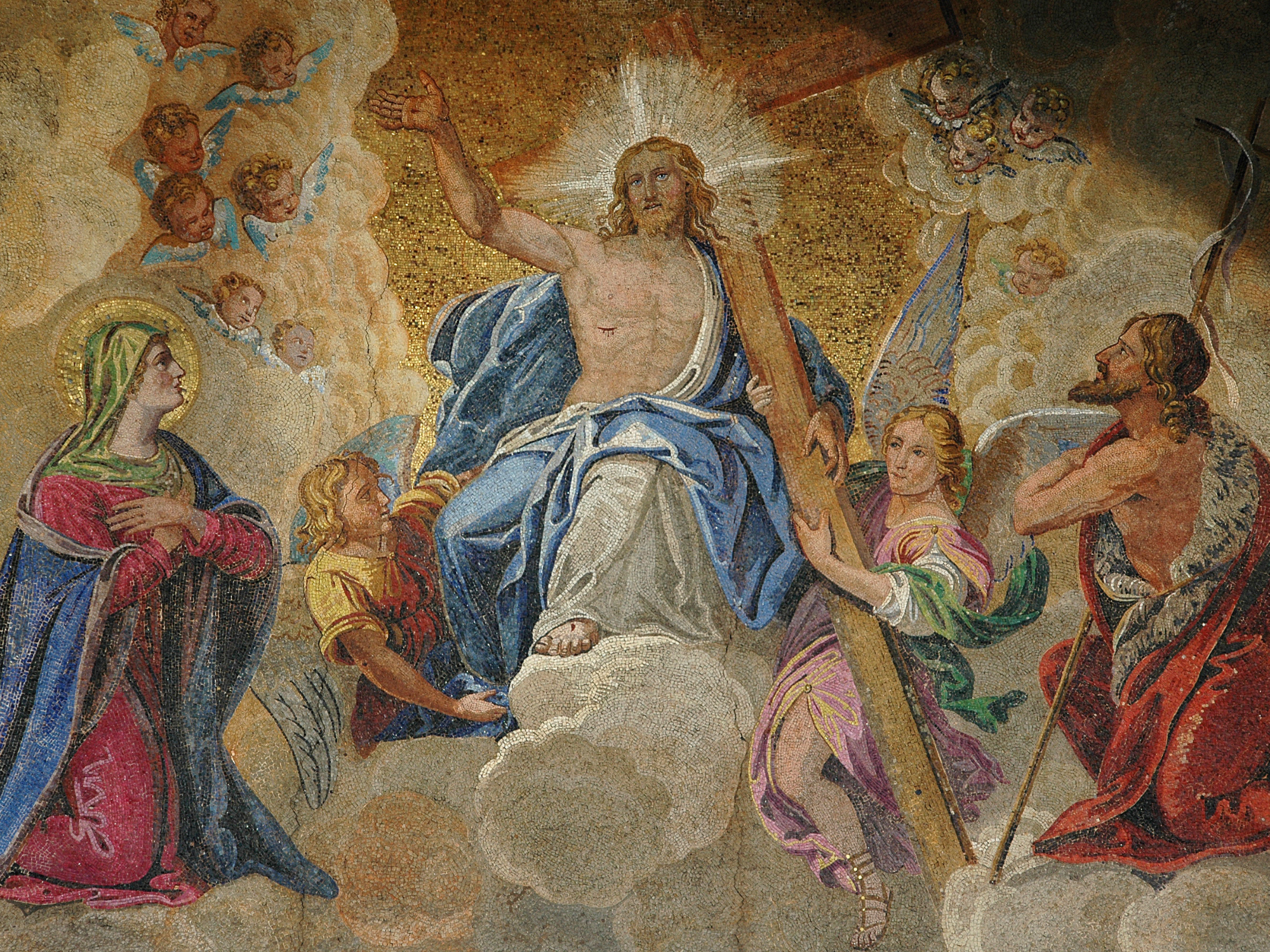
Under the floor of San Zaccaria, near the Piazza, lies one of the strangest spaces in the city. The crypt dates from the early Middle Ages and sits so low that the lagoon has entered it, and stayed. Visitors move along raised walkways when the water level allows. Columns emerge from the water. Stone and reflection become a single surface. The place does not dramatise ruin. It simply holds time differently.
This is not the Venice of vistas. It is Venice as pressure, salt, burial, silence, and water. It changes the scale of the city. Suddenly the lagoon is not outside the architecture. It is inside the room.
© Photo: Bruckmann Verlag, Udo Bernhart
In Castello, the Palazzo Grimani offers another form of concealment. Built in the sixteenth century for a family that gave three doges to Venice, it is strange because it does not feel entirely Venetian. Giovanni Grimani wanted to bring Rome under a Venetian roof. The palazzo became a place of antique sculptures, marble, displayed knowledge, and architectural theatre. Its Tribuna, inspired by classical models, transforms a private palace into something resembling an intimate museum of Antiquity.
Venice is full of palazzi, but this one complicates the image the city projects of itself. It serves as a reminder that Venice was never pure. It absorbed, collected, translated, staged, and reinterpreted. Its identity is not a single surface but a succession of appropriations.
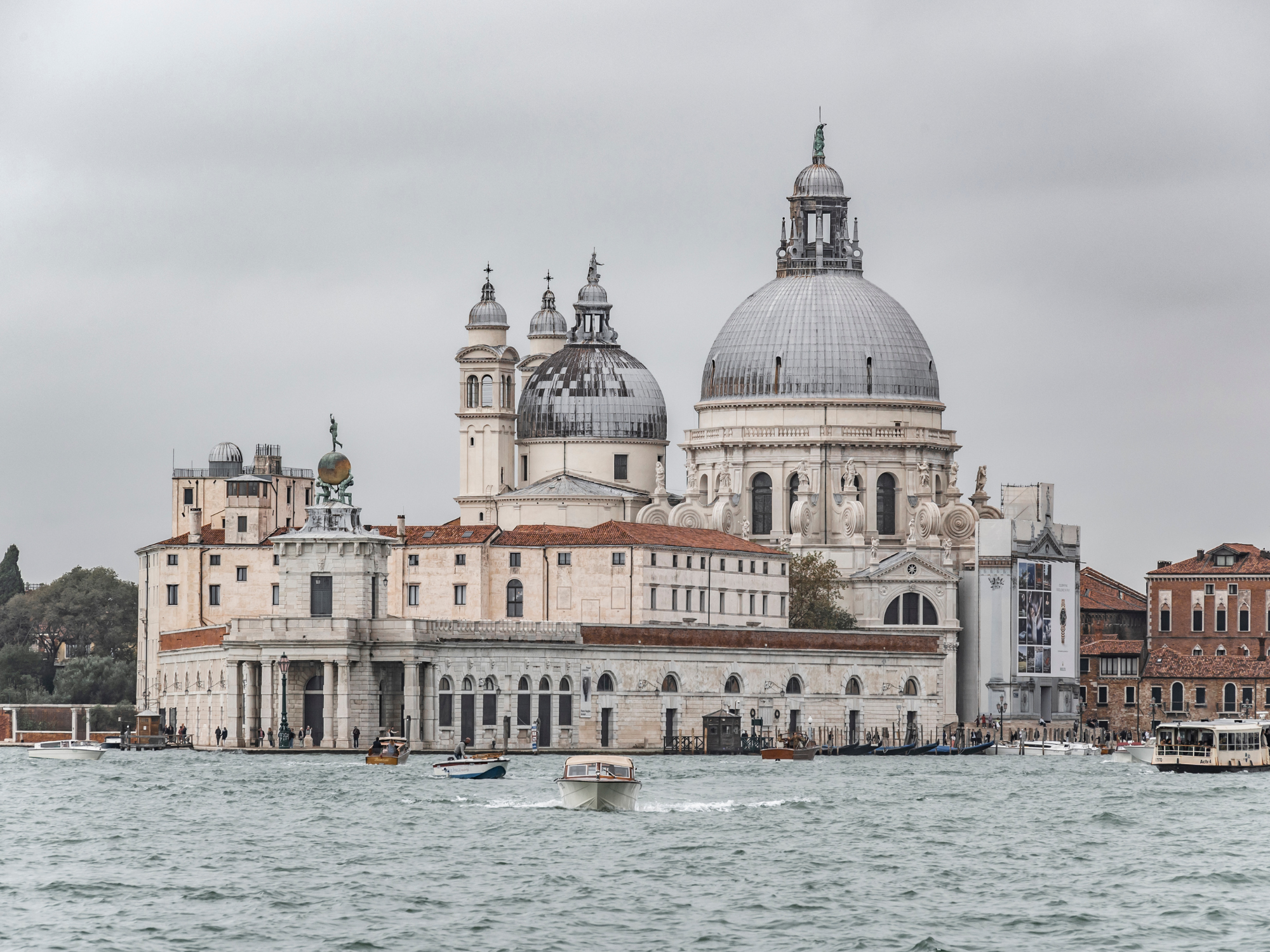
In Dorsoduro, the Magazzini del Sale replays this idea in a more contemporary register. Former salt warehouses, they now house the Fondazione Vedova, dedicated to Emilio Vedova, a Venetian abstract painter whose work carried, in gesture and matter, a political and existential force. Renzo Piano’s restoration did not erase the warehouse character of the space. It allowed the paintings to move through it. Salt, labour, abstraction, memory: the crowd presses elsewhere, but here Venice speaks in a lower register.
In Venice, depth is rarely in front of you. It is below, behind, beside.
© Photo: Bruckmann Verlag, Udo Bernhart
The green Venice
In a city built on water, shade can take on the air of a secret.
Venice’s gardens count among her most silent refusals. Some belong to hotels or to palazzi, others to monasteries, others to the public, others still to the Biennale. They are not part of what makes the city famous, and that is precisely why they matter. They interrupt the grammar of stone and water with something slower: leaves, walls, benches, roots, paths, the pause of a cypress, the passing mercy of green.
The Giardini Napoleonici, created by Napoleonic decree in the early nineteenth century, are today inseparable from the Biennale. The Giardino Rizzo Patarol shelters behind the Palazzo dei Dogi in Cannaregio, carrying the memory of an eighteenth-century botanical estate. The Giardino Savorgnan opens near the station as a public garden of unexpected generosity. Elsewhere, palace and monastery gardens preserve smaller, more private forms of breathing.
These gardens do not contradict Venice. They complete her. They remind us that even a city made of stone, water, and commerce has need of withdrawal.
A city that can still rehearse
One of the most unexpected stories in Migge’s Venice is that of the Teatro San Cassiano. Opened in 1637, it was the first public opera house in Europe: a place where opera was no longer reserved for courts and aristocratic circles, but made available to a paying public. Closed under Napoleon, then demolished, it survived for centuries in the form of archives, plans, and theatrical memory.
Today a reconstruction project exists. Whether or not it is ever fully realised, the idea itself is revealing. Venice is often described as a museum, but a museum does not rehearse. A theatre does. The San Cassiano project suggests that the future of the city cannot consist only of preservation. It must also include forms of return, of experimentation, and of renewed use.
This may be true of the whole of Venice. The task is not to freeze it. The task is to let it continue.
© Photo: Bruckmann Verlag, Udo Bernhart
Why this book matters today
‘Secret Places: Venedig’ matters because its hidden places are not all hidden in the same way. Some are working spaces. Others are green spaces. Others are sacred, flooded, domestic, industrial, theatrical, or nearly forgotten. Taken together, they suggest a more careful, more attentive way of being in Venice.
The book has no need to frontally denounce overtourism. Its response is more discreet, and perhaps more useful: look elsewhere, stay longer, enter with more care, support what is still alive, let the famous image loosen its grip. A glassblower visited with attention, a lacemaker bought from properly, a salt warehouse entered, a garden walked through, a quarter respected: none of these gestures is heroic. Their accumulation is not nothing.
The method is also portable. What Migge’s teaches in Venice can be carried to other over-seen cities: Kyoto, Istanbul, Marrakech, Paris, New York, London. It is not about possessing secret knowledge. It is about learning to notice what the main image excludes.
The postcard asks for two seconds of attention. This book asks for something that is rather more like time.
Venice does not need to be seen one more time. She needs to be read. And for now, Migge’s book offers one of the most generous ways of doing so.