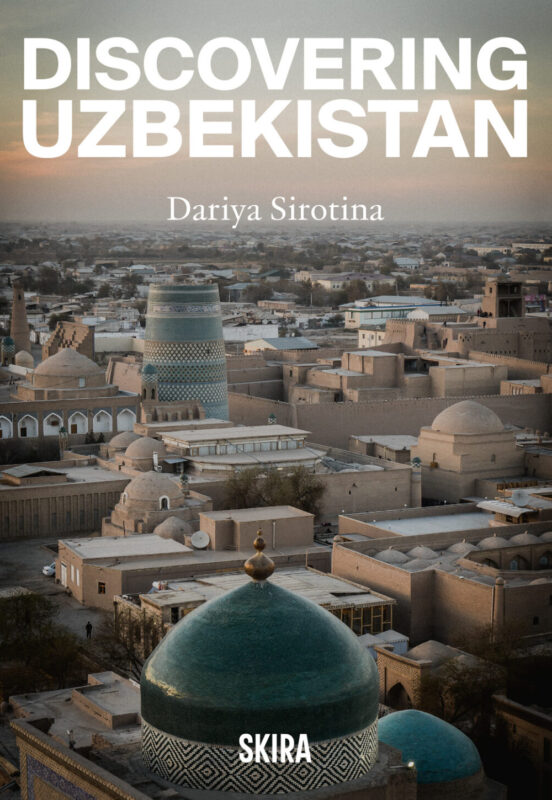
To travel to Uzbekistan is not to enter an open-air museum of turquoise and clay. The country is peaceful enough to be travelled and contradictory enough to be more than a beautiful backdrop. Dariya Sirotina’s Discovering Uzbekistan takes that tension seriously. It reads the country through people, crafts, meals, teahouses and regions—through the everyday forms in which history is not archived but carried forward. Combined with current political and scientific perspectives, the result is a portrait of a place that asks for attention, not admiration.
A country that does not yield at first glance
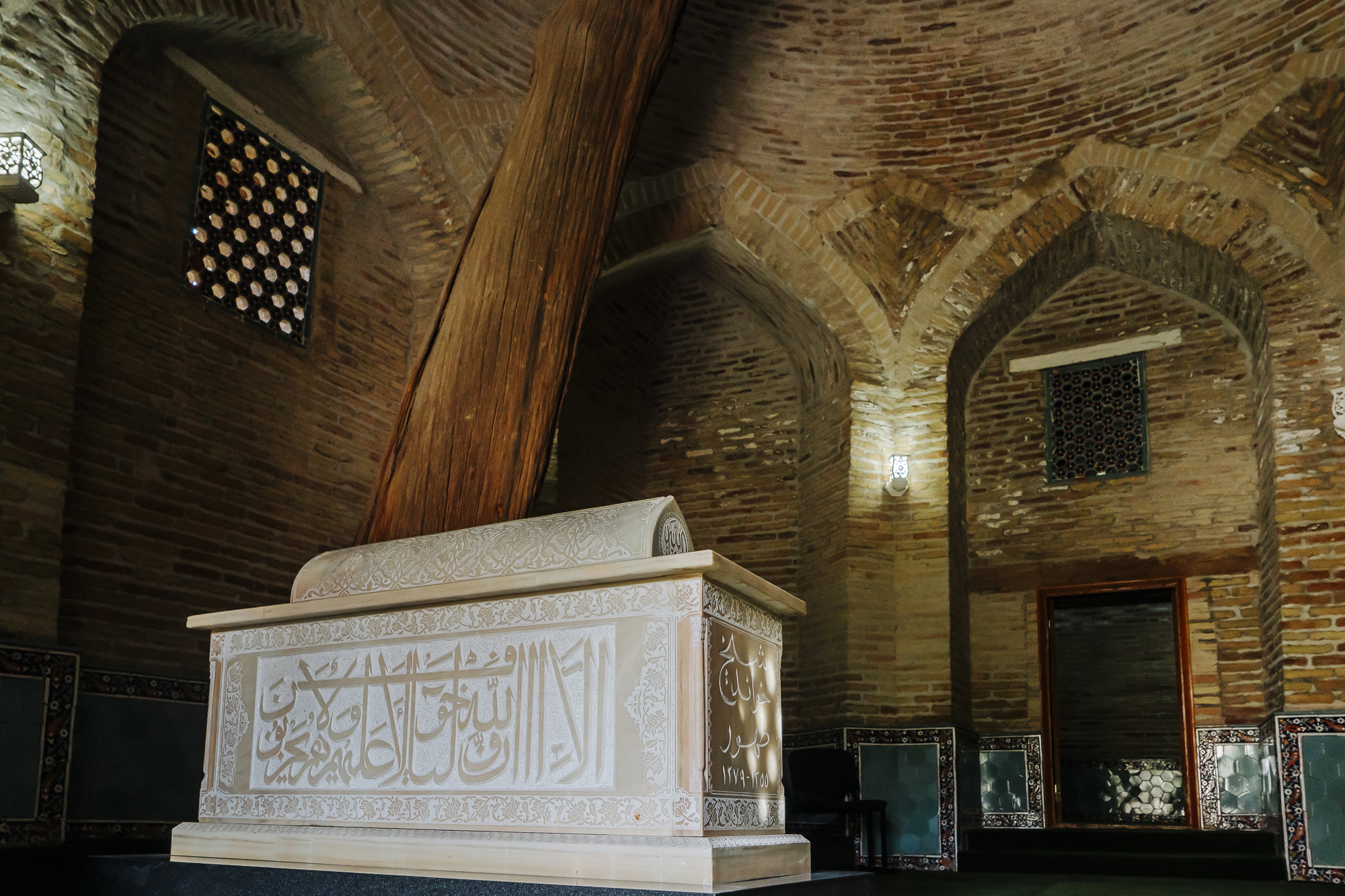
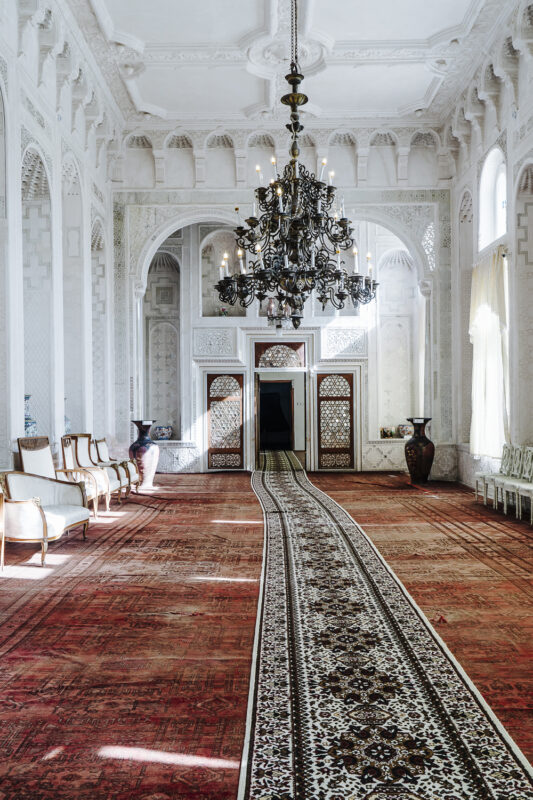
Uzbekistan begins with a correction of the eye. You arrive with a fully stocked internal image bank—the Registan, domes, the Silk Road, Timur, a little ornamental grandeur, a little world history—and notice quite quickly that these images are not wrong, only insufficient. The country is not interesting because it is beautiful. Many places are beautiful. It is interesting because beauty here has not been fully separated from use. It does not sit only on facades. It is in bread, bowls, courtyards, fabrics, workshops, in the rhythm of a table, in the tone with which tea is poured.
Dariya Sirotina begins Discovering Uzbekistan exactly there. Not with monuments but with people, workshops, teahouses, wineries—with those systems of everyday life in which a country continues itself. In her foreword she says this directly: her real access was not the buildings but the people; Uzbekistan appears in her book as a rich, diverse, vivid country whose greatest wealth is precisely that lived vitality.
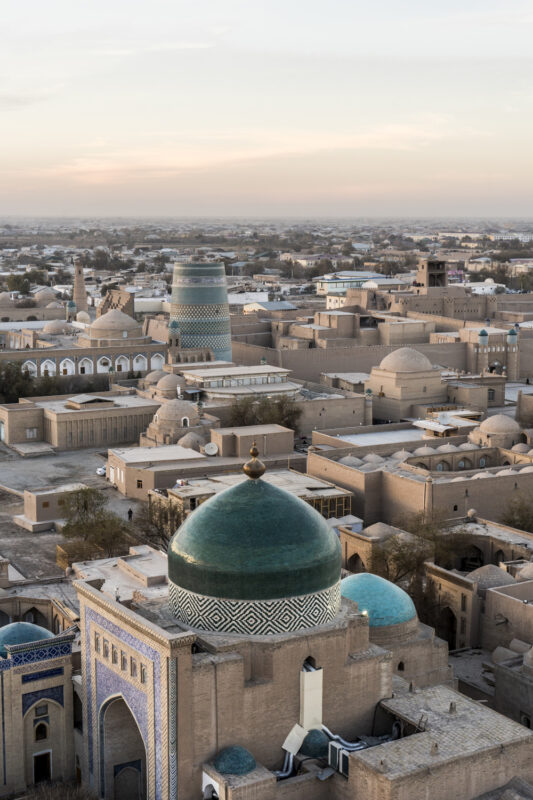
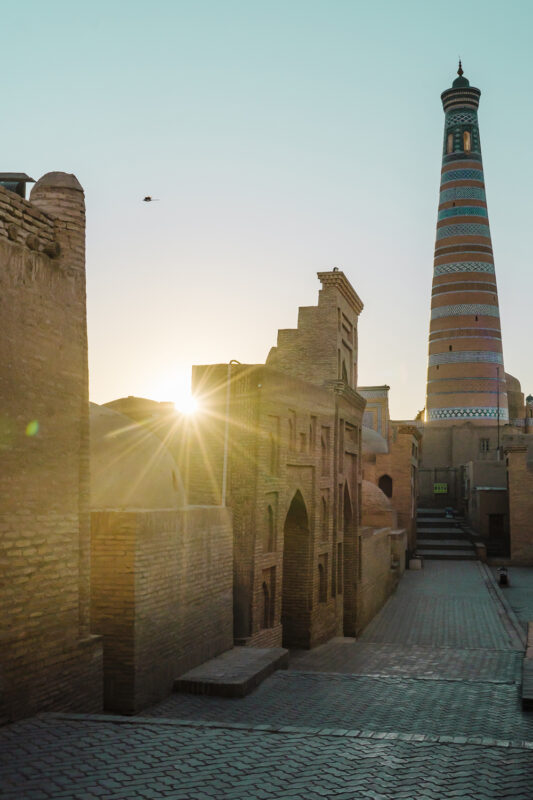
That is not a nice formula. It is a method. Uzbekistan does not reveal itself as a list but as density. Tashkent is not merely a capital but a post-Soviet surface charged with new digital tension. Samarkand is not only the big blue; it is also a city in which imperial scale and culinary pride form an unexpectedly stable alliance. Bukhara feels as if even its shade had become historical. Khiva has that clay-coloured severity that first makes you small and then calms you down. The Fergana Valley has a different temperature again: denser, more domestic, more sharply outlined socially. Sirotina reads these distinctions with precision and avoids the standard error of treating Central Asia as one large backdrop.
One could also say that Uzbekistan is a country that has not left its history behind, yet is not trapped inside it like a museum either. The Silk Road is not a slogan here. It is an aftersound in the structure of everyday life. Caravanserais, bazaars, water channels, workshops, scholarship, trade, teahouses: these are not pretty relics for visitors but remains and continuations of an old logistics of exchange. Sirotina reminds us that major parts of that infrastructure ran through what is now Uzbekistan, and that from it emerged the cultural polyphony the country still carries.
That is why Uzbekistan becomes interesting as a place to travel only if one loosens the word destination a little. Anyone who comes here should not hope for a finished experience. The country is not a neatly curated climax. It is more a place where perception has to become slower and more exact. Tea is poured several times. Bread is broken, not simply served. Ceramics are a form of use and a form of memory at once. Hospitality here is still an institution, not a hospitality concept. Warm, but not soft. Inviting, but without submission. A country with that bearing does not need a pose. It already has form.
Why now
Why travel to Uzbekistan now? Because the country lives in a present that does not sort itself comfortably. There is no war there, and in regional terms the situation is considered relatively stable. That makes the country travelable. What makes it interesting is something else: its internal tension. Uzbekistan is an authoritarian modernising state that is opening economically and infrastructurally without becoming politically open in any full sense.
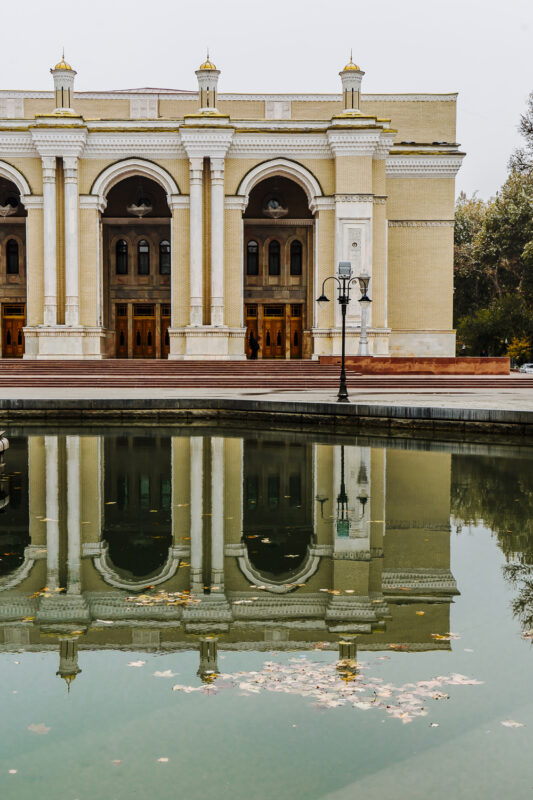
That is where its present relevance lies. Since 2016 there have been reforms and some genuine improvements; at the same time opposition parties still cannot operate freely, the media remain tightly controlled, and parliament and courts remain effectively subordinate to the executive. Human rights organisations continue to describe pressure on bloggers and activists, allegations of abuse in detention, and an inadequate reckoning with the violence that followed the protests in Karakalpakstan. None of this turns the country into a place of overt emergency. It does make it a place whose calm has to be read, not merely enjoyed.
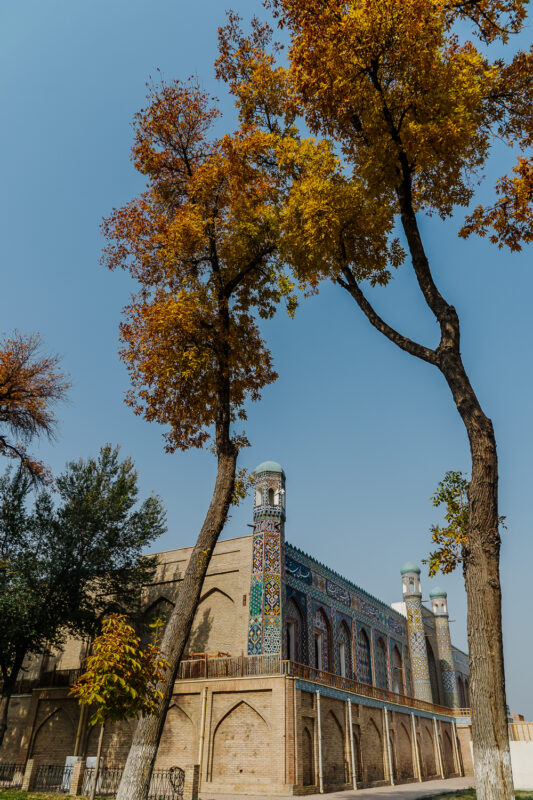
The crucial point is that one does not always feel that political narrowness immediately. Uzbekistan is not a country of loud coercion. It is more a country of courteous control. That makes the matter harder to read, not more harmless. The traveller encounters order, friendliness, a remarkably calm public sphere. What is not immediately visible are the limits under which that calm is produced. A place can feel friendly and still be unfree. The thought is unsentimental and useful. It protects one from the oldest error of travel: mistaking atmosphere for truth.
At the same time it would be too easy to see only the authoritarian element. The economy has grown robustly in recent years, deficits have narrowed, reserves remain strong, and reforms continue. That language is dry, but it has visible effects. Tashkent is the clearest shop window for them: new digital infrastructures, new patterns of consumption, a technocratic confidence that older images of Central Asia did not really plan for. Even the imprint of Sirotina’s book mentions Uzum, the country’s first IT unicorn, as a sign of this new economy.
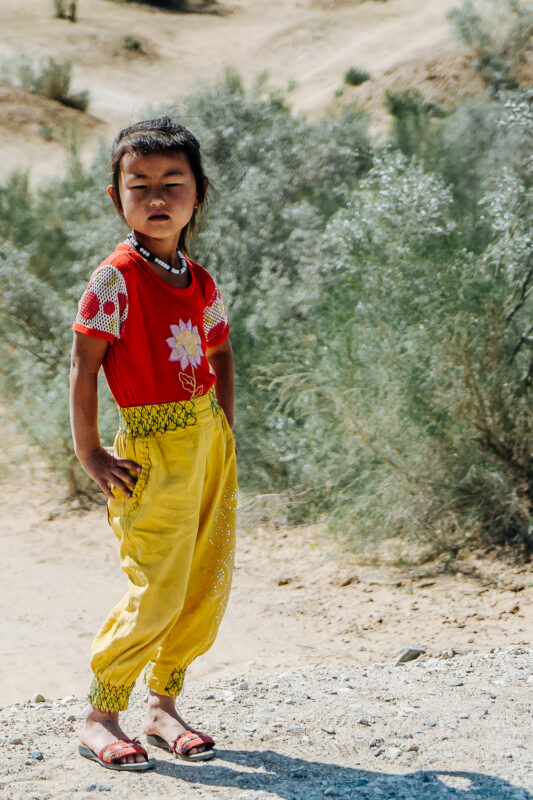
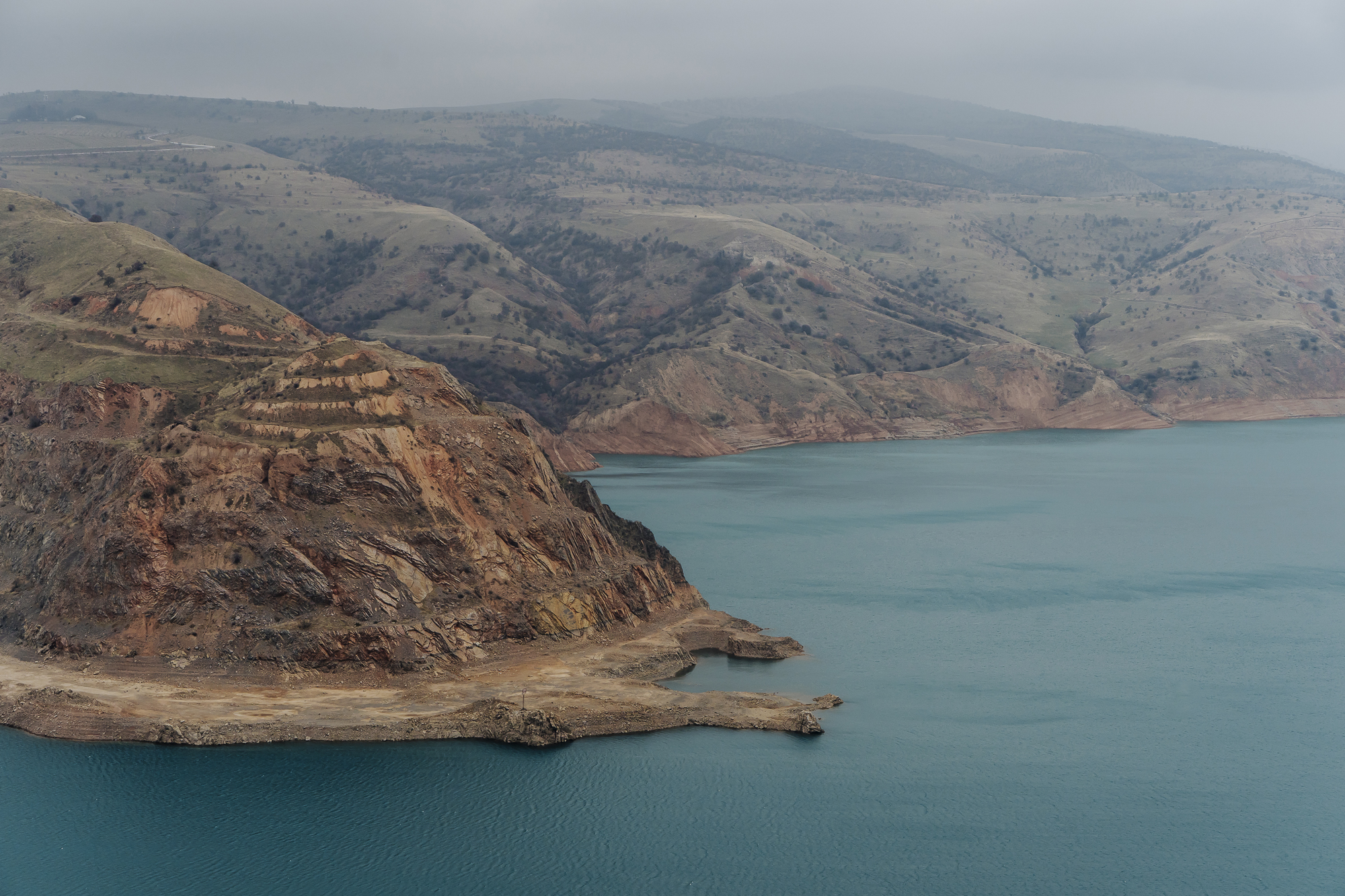
Yet beneath that modernisation works a second, harder present: the ecological one. Uzbekistan is highly vulnerable to climate stress and water scarcity; irrigated agriculture consumes most of the water, while dust, heat, soil degradation and the consequences of the Aral Sea catastrophe already burden health, productivity and daily life. Recent scientific work underlines that water scarcity, transnational conflicts over use, and the combined pressure of climate and land-use change are structural for the region, not episodic. This concerns not only Karakalpakstan and the Aral Sea zone. It also lies, more quietly, beneath the oasis cities. To travel to Uzbekistan now is therefore not to enter a conserved past but a society negotiating its future under real pressure.
That is exactly why the journey matters now. Not because everything is coherent. Because several times are speaking at once: imperial past, post-Soviet after-order, authoritarian present, digital modernisation, climatic vulnerability. To travel to such places is not to travel into a destination but into a condition. And conditions are almost always more productive than sights.
A writer who looks at the right things
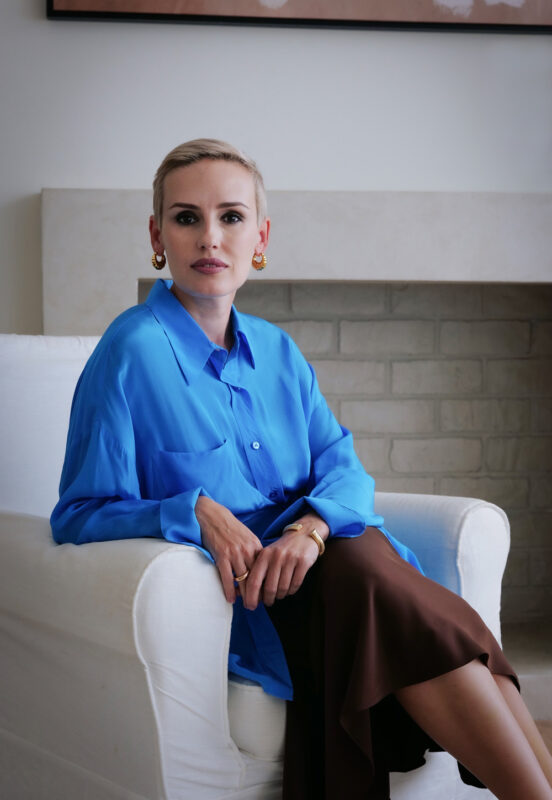
Dariya Sirotina is a good companion for that kind of gaze because she does not approach the country with the reflexes of rapid travel consumption. According to the publisher, she is a travel writer, blogger, photographer and a specialist in food and wine. What matters, though, is not the portfolio of roles but the quality of attention. Discovering Uzbekistan is not a guide in the usual sense, even if it contains practical and cultural-historical information. It is an attempt to read the country through its material and social ties: decorative arts, regional cuisine, teahouse culture, winemaking, family businesses, landscapes, regional self-images.
In her foreword Sirotina states her intention with unusual openness. She wants not only to inform but to direct attention to artisans, cooks, vintners and workshops so that traditions may survive and people may continue living and working in their regions. That is attractively unperfumed. It also shows that the book is not neutral in the museum sense. It is partisan on behalf of lived culture. For exactly that reason it works as the main source for an essay that wants to understand Uzbekistan not as a decorative elsewhere but as a place in the world.
That she gives wine, embroidery, ceramics, teahouses and regional recipes the same seriousness she gives broad historical lines is no side issue. It shifts the perspective. The country appears not as a monument park with local additions but as an ensemble of lived forms. That is where the strength of the book lies. It does not write against travel. It writes against its flattening.
Tea, rice, workshops
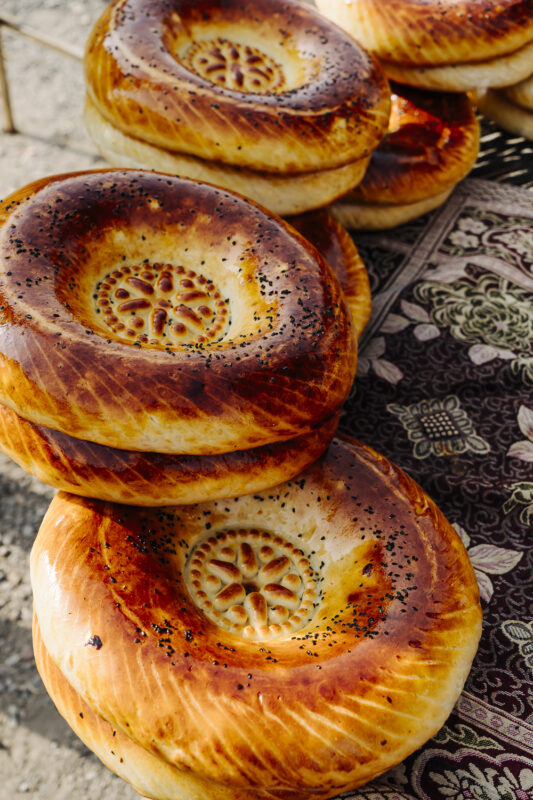
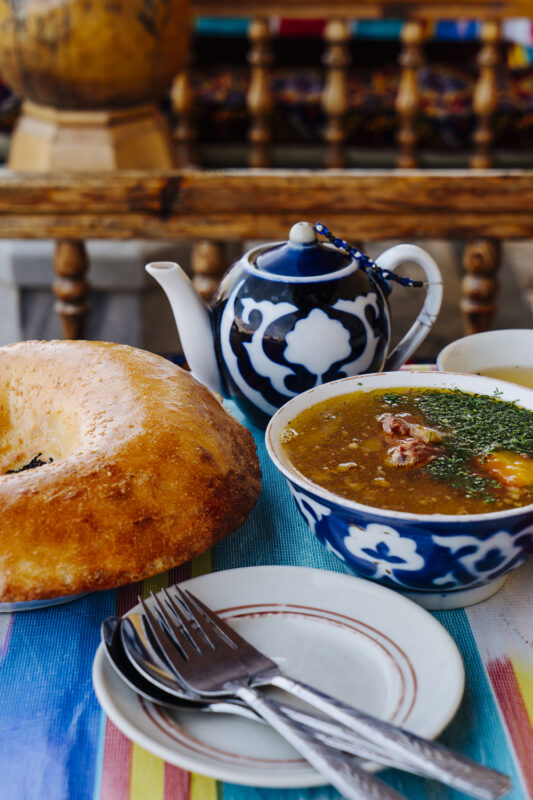
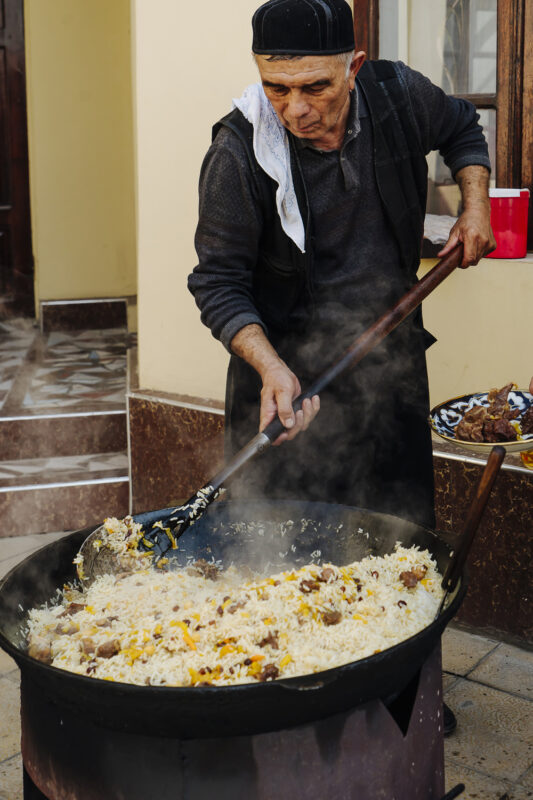
Perhaps Uzbekistan is understood fastest at the table. Not because food is always the safe point of entry; that is the standard lie of travel journalism. But because food here really is social form. Sirotina writes that the cuisine changes every fifty or hundred kilometres, even though the list of dishes looks quite short at first sight. Plov, manti, lagman, samsa, shurpa: the same names, different orders, different textures, different truths. Every cook believes his method is the right one, every region defends its produce with almost metaphysical seriousness. In a country where food is treated with near-religious zeal, cuisine is not lifestyle but territorial feeling. One often learns more through rice and bread than through any official narrative.
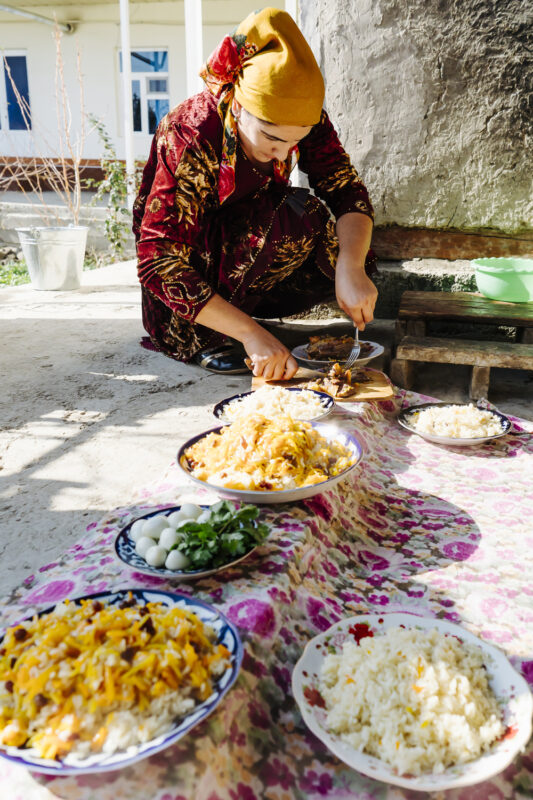
The Uzbek table also has a form of generosity that is not always relaxing for western European nerves. Much is, as Sirotina notes, an understatement. The dastarkhan tolerates no empty space. Bread, nuts, fruit, sweets, compote, pickles, tea, more tea, and only then the main dishes. Hospitality here is not a soft gesture but an obligation to abundance. Beautiful, yes. Also faintly coercive. One is not merely welcomed; one is placed under generosity.
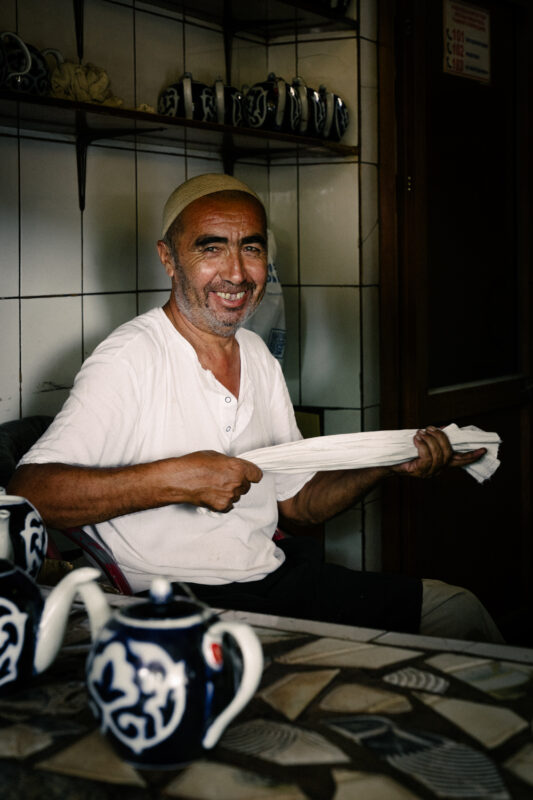
The country becomes even more legible in the choyxona. The teahouse in Uzbekistan is not folklore but institution. Sirotina describes it as a fundamental social form: a place for tea, food, pause, business and conversation, historically bound to caravanserais and trade routes. Once one understands that a teahouse here is closer to social infrastructure than to picturesque service, one already understands more of the country than after three monument circuits. Newer research confirms this: teahouses in the Fergana Valley are described as nodes of informal public life where community, commerce and an everyday kind of civility come together.
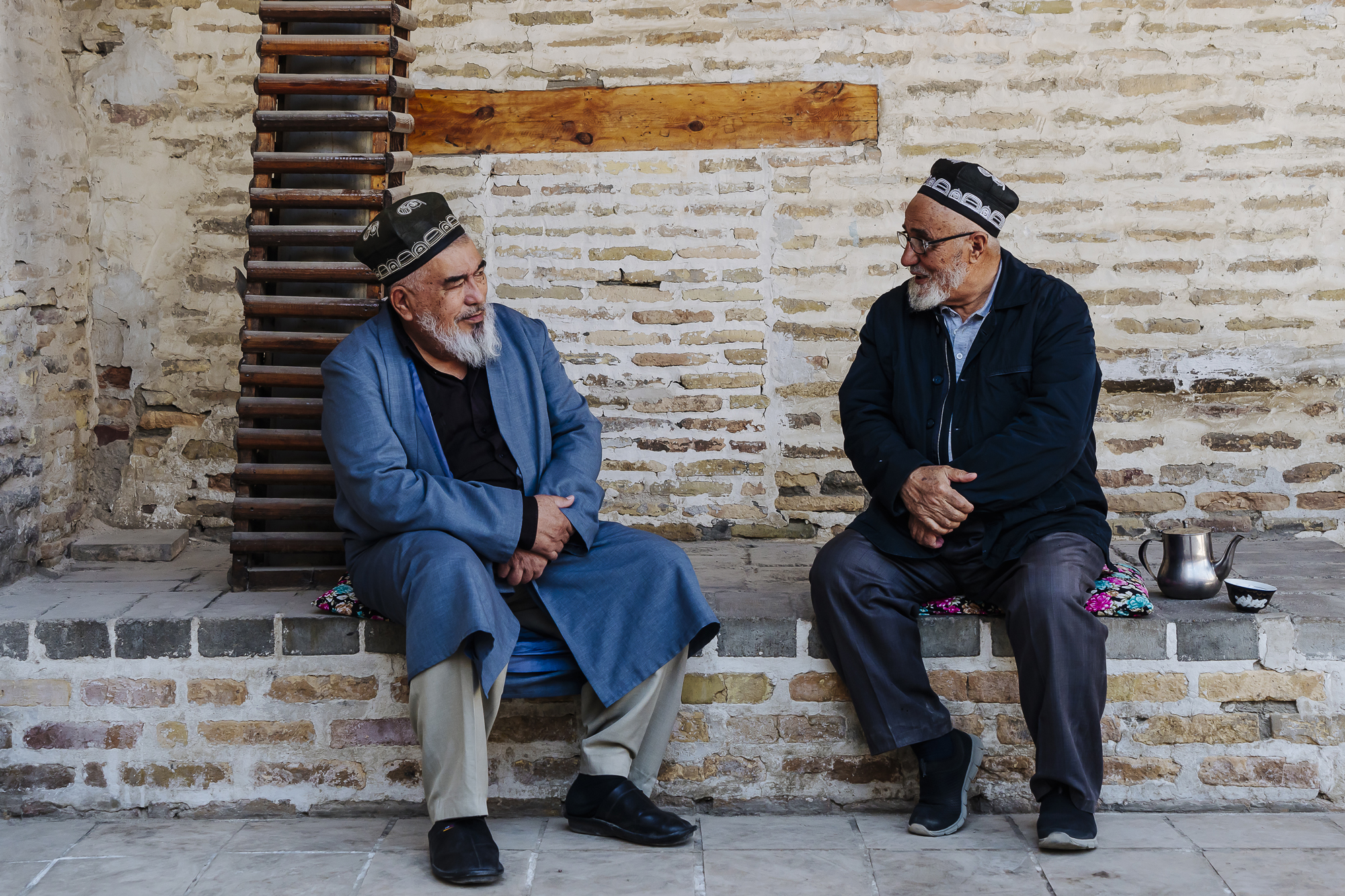
That matters because public life in Uzbekistan is organised differently from the self-descriptions of liberal societies. It is more personal, more male, more local, more ritualised. Sirotina notes that classic choyxonas are especially common in the Fergana Valley and that groups of older men with tea, games and pilaf belong to the ordinary scene there. An older man in a teahouse: half host, half commentator on the state of the world, entirely convinced that everything important can also be done sitting down. That is, of course, a type. But good types are not condescension. They are compression.
Then the workshops. Here too Sirotina is strongest when she does not swoon but specifies. Uzbek craft, she writes, lives in close connection with tourism, in some places even only where visitors create demand. The workshop is at once a space of tradition and a point of sale, a family system and an economic survival strategy. That is very contemporary, even if it looks old. The old techniques survive only when they enter present circuits. A painted plate, a stamped textile, a hand-hammered copper jug: all of these are heritage, yes, but also merchandise. Anyone scandalised by that usually has a surprisingly comfortable relationship to the word authenticity.
Sirotina describes this tension without fuss. Uzbek crafts, she writes, always balance between art and the need to earn one’s bread. The problem could hardly be formulated better. In Samarkand, Bukhara or Rishtan that ambivalence lies openly on the surface: the workshop is a scene of skill, but also of trade. It would still be cheap to extract cynicism from this. Much of what today looks tourist-facing would simply have disappeared without visitors. Continuity costs money. Tradition has invoices too.
Then there is the family logic. Sirotina repeatedly speaks of the continuity of dynasty: sons take over fathers’ professions, workshops stay in families, techniques are not abstractly taught but passed on. To western eyes that quickly appears patriarchal, and often it is. At the same time it is a real form of stability in a country where labour migration, market shifts and regional inequalities strongly shape daily life. For women Sirotina points especially to embroidery and carpet weaving as fields of relative economic autonomy, particularly in rural family structures. One does not have to approve of every social form in order to see that it carries weight.
One of the book’s most elegant acts of resistance to cliché is its chapter on wine. Uzbekistan and wine: at first it sounds like a faulty edit. Which is exactly why it is interesting. Sirotina describes Uzbek winemaking as a development despite everything: despite Islamic traditions of abstinence, despite heat, despite Soviet burdens. She shows how the country is moving slowly from an industry of simple base wines towards a place of more differentiated oenogastronomic ambition. The market, she notes dryly, is still in a somewhat chaotic process of self-search, crowded with labels and stylistic experiments, but that is part of what makes it alive. A wine country in formation is often more interesting than a wine country already secure in its own myth.
In Samarkand this mixture of history and contemporaneity becomes especially clear. Sirotina speaks of medieval globalisation: Timur drew not only artisans and scholars but also tastes, ingredients and culinary procedures into his capital. Samarkand’s cuisine remains marked by that historical concentration, and even plov is argued over there with the kind of domestic dogmatism every serious food culture needs. A city that cannot agree on whether rice should be layered or stirred is usually healthier, culturally speaking, than one that fuses everything without comment.
Behind all this lies the long history of the country, and Sirotina wisely tells it not as a heroic line but as a series of overlays: Islamisation, pre-Islamic layers, Alexander, Genghis Khan, Timur, Ulugh Beg, Avicenna, Russian expansion, Soviet reordering. The effect is crucial. Uzbekistan appears not as a national essence but as a space shaped by different empires, religions, sciences and ways of life. That is why it feels so dense now. A country with many layers does not need invented depth. It already has more than enough of the real thing.
Read, not sightseen
And then, almost against one’s resistance, the sentence from Sirotina’s foreword remains: it was the people, not the monuments. In travel writing such sentences are often a warning sign of impending vagueness. Here not quite. In the case of Uzbekistan the line is true in a precise way. Not sentimental, not heroic, but structural. This country really does reveal itself most clearly where one takes its social rituals seriously: the breaking of bread, the pouring of tea, family labour, workshop pride, regional vanity, abundant hospitality, courteous control. If one only looks, one sees a great deal. If one listens, one begins to understand something.
Uzbekistan is no hidden gem. That phrase belongs to the petty criminality of tourism marketing. It is something better: a country that still resists rapid access. It has images one recognises immediately and realities that disclose themselves only gradually. It is stable enough to be travelled and contradictory enough to be more than a backdrop. Politically it remains unfree, economically in motion, ecologically under pressure, culturally strikingly self-possessed.
That is where its literary force lies. One does not go there to touch a decorative past but to read a present built from very old materials. Tea, bread, rice, clay, fabric, copper, water, dust, conversation: the country consists of such things at least as much as of its domes. And perhaps that is the best definition of a place in the world: that it does not want to be sightseen, but read.