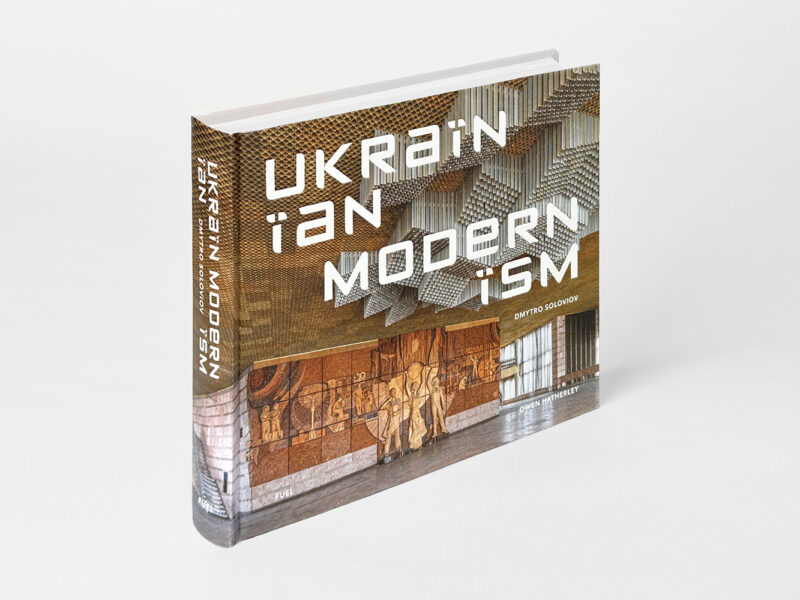

That is exactly why a different gaze matters: not only toward domes, historic centres and the familiar images, but toward libraries, culture palaces, railway stations, housing blocks, mosaics and that modern built world in which the country’s real life takes place. Dmytro Soloviov’s book Ukrainian Modernism, with an introduction by Owen Hatherley, opens precisely that field of vision. It shows a country that must not only be defended, but also remembered.
A Country That Does Not Prepare Itself For The Quick Glance
There are countries that lean toward the eye. They know how to appear: a waterfront, a historic centre, a few good facades, a local dish, and a portable sentence of history. Then the usual programme begins. You arrive, and recognition starts running. Ukraine works differently. It has no polished front surface. It cannot be folded into three views and a cultivated tone of voice. Anyone approaching it notices quickly: this is not a country that explains itself at first touch. And that is probably a gift.
Ukraine is too large, too layered, too contradictory for that. Kyiv, for instance, is not a city that gently slots you into a narrative. It is too topographical, too sprawling, too frayed at the edges. Golden domes, broad avenues, courtyards, steep slopes, metro stations, administrative blocks, housing estates, parks, bookshops, cafés, improvised flower stalls, and then those abrupt zones of openness where the city suddenly seems exposed. Lviv speaks differently. Odesa differently. Kharkiv differently. Dnipro differently.
Ukraine is not made of symbols. It is made of textures. Surfaces, thresholds, routines, proportions. A railway station can tell you more here than a monument. A housing block more than a panoramic street. A foyer more than a national self-description. Ukraine does not reliably disclose itself through emblems. More often it discloses itself through what lies between them.
Countries are often not just misread, but conveniently misread. Ukraine was long understood as the edge-zone of other empires, a blurred East, a transit space between supposedly more important centres. Today another reduction threatens: to see it only as a war image. Both erase the country’s concrete urban and social reality.
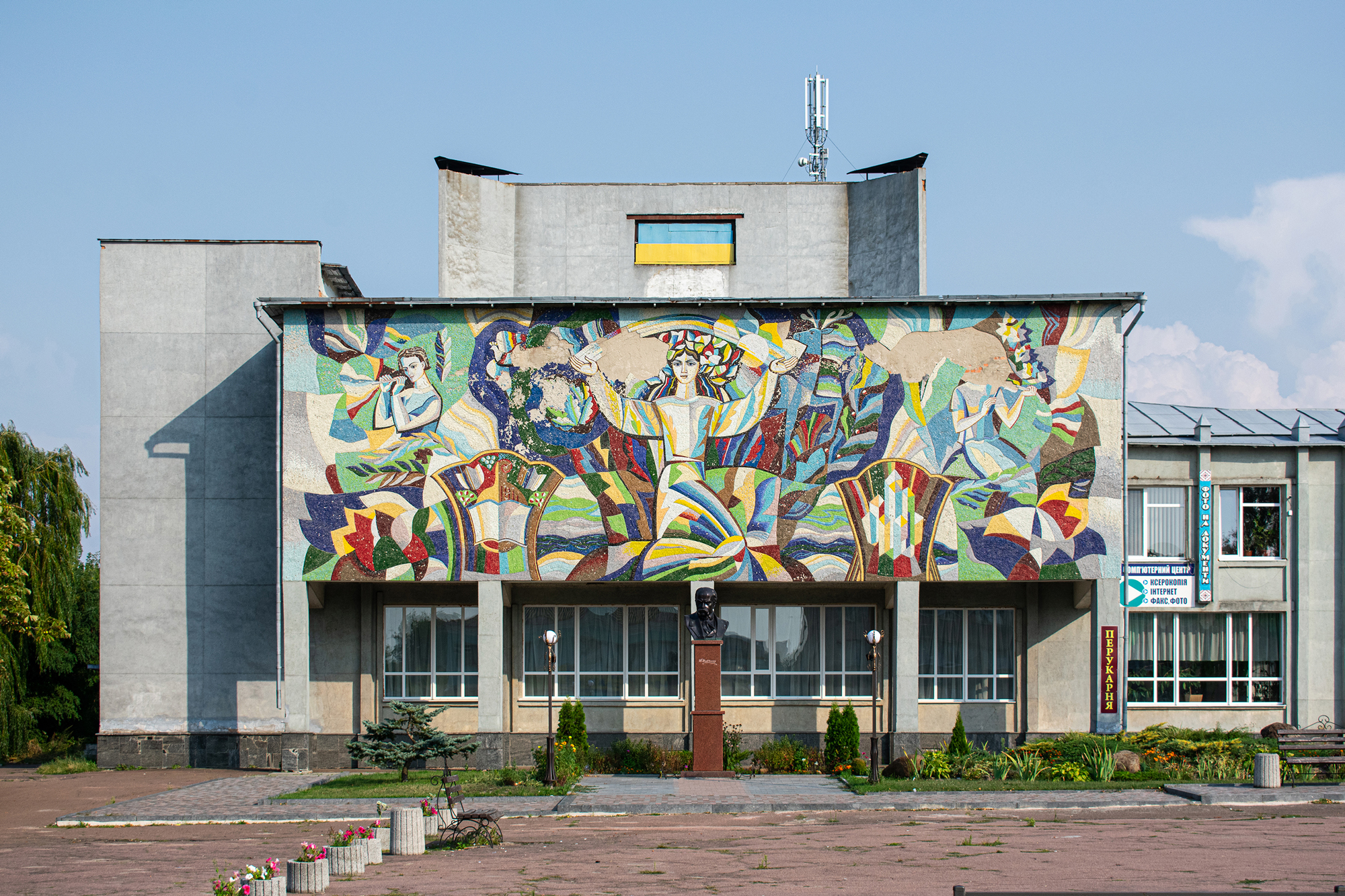
This is exactly where Dmytro Soloviov’s Ukrainian Modernism begins. The book does not lead us into the expected spaces of national representation. It leads us into the more ordinary, and often overlooked, layers of Ukraine: culture palaces, libraries, universities, sanatoriums, airports, bus stations, cinemas, housing estates, squares, foyers, mosaics, halls. In his introduction, Owen Hatherley argues that the country threatened by war consists not only of gold and domes, but of a far less understood modern built landscape—futurist public buildings, mass housing, public art, neglected spaces where plants break through granite and concrete. You read that and realise immediately: this is more than architecture history. It is a shift in scale.
The Wrong Question Would Be: Why Go Now?
The moment Ukraine becomes the subject of a travel magazine, the text enters difficult territory. The question arrives at once: are we even allowed to write this way? Are we allowed to speak about landscape, architecture, hotels, light, materials, hospitality, the rhythm of daily life, when the country is at war? Are we allowed to register beauty while other realities—violence, fear, destruction, loss—overhang the place? Or is that already a tonal mistake?
The practical situation is clear enough. International travel advisories still warn strongly against travel to Ukraine, or suggest considering it only under very narrow conditions. There is no such thing as tourist normality here. Ukraine is not, at present, a destination in the usual sense. Any text pretending that the country can simply be placed back into the old grammar of cultural travel would not be brave. It would be inaccurate.
But the matter does not end there. It would be too easy to block every aesthetic or cultural approach on moral grounds. The scholarly literature on travel to conflict and crisis zones makes clear that such places cannot be understood only through sensation or voyeurism. There are troubling forms of dark tourism, of war fascination, of that warped economy of attention in which violence is ultimately processed as intensity. But there are also approaches aimed at witnessing, remembrance, peace-building, or forms of solidarity. The field is not clean. That is exactly why the question matters.
In Ukraine’s case, that means this: the country cannot be approached with tourist innocence. But nor should it be read only as a frontline report. Beauty is not the opposite of seriousness here. It is part of what is under attack. In March 2026 UNESCO recorded more than five hundred verified damaged cultural sites in Ukraine, including religious sites, historic buildings, museums, monuments, libraries, an archaeological site and an archive. What is at stake, then, is not infrastructure in the narrow sense alone, but cultural continuity, urban form and public memory.
Perhaps the point can be sharpened like this: Ukraine cannot be treated as an experience product. But one may—and must—look at its built world, its culture, its urban rhythms and its spaces of ordinary life. Otherwise one ends up seeing only with the eyes of war.

Dmytro Soloviov, Who Shifts The Gaze
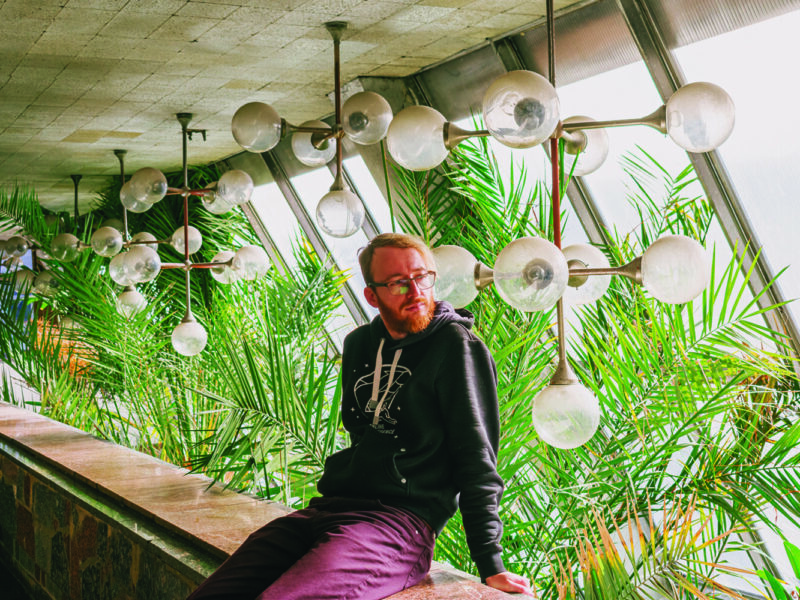
Dmytro Soloviov is the ideal figure for this change in perspective. Not simply because he has made a book, but because he recalibrates vision. Hatherley describes him as a photographer, tour guide and activist; within the book Soloviov is not a neutral cataloguer but someone who brings buildings, spaces and landscapes into a new visibility. His images complicate many assumptions about Ukraine and its struggle for survival. They show not only a threatened country. They also show the achievements of Ukrainians in the Soviet period and remind us that this modern built environment is, in fact, where most people live.
That is an important correction. From the outside, Ukraine has often been read either too historically or too morally. Soloviov’s book works against both habits. It does not chase the icon. It does not gather prestige objects in order to convert them into an exportable narrative. Instead it directs attention toward buildings that normally drop out of the frame, even though they help define the country more than almost anything else.
This includes the route by which Soloviov came to the subject himself. Hatherley notes that he grew up in Zaporizhzhia, later lived in Kyiv, and only relatively late—through travel and architectural-activist circles—came to his passion for Ukrainian modernism. In childhood, he suggests, he did not perceive these buildings as “modernism”; the concepts came later, the gaze first. That biographical route matters. It explains why the book so rarely sounds like professional casing and so often sounds like real urban space.
Soloviov first became known through tours—beginning with a walk on late Soviet Podil in Kyiv, then far beyond it. Since Russia’s full-scale invasion in 2022, those tours have acquired a different function. Hatherley quotes Soloviov’s sense that culture and heritage are especially relevant now, and that people also need moments of normality. Participants described the walks as the happiest moment since the war began, or as a way to interrupt, for a while, the continuous pressure of twenty-four-hour news consumption. That does not read as escapism. It reads as a serious argument that attention, in wartime, is not a side issue.

The Other Visible Ukraine
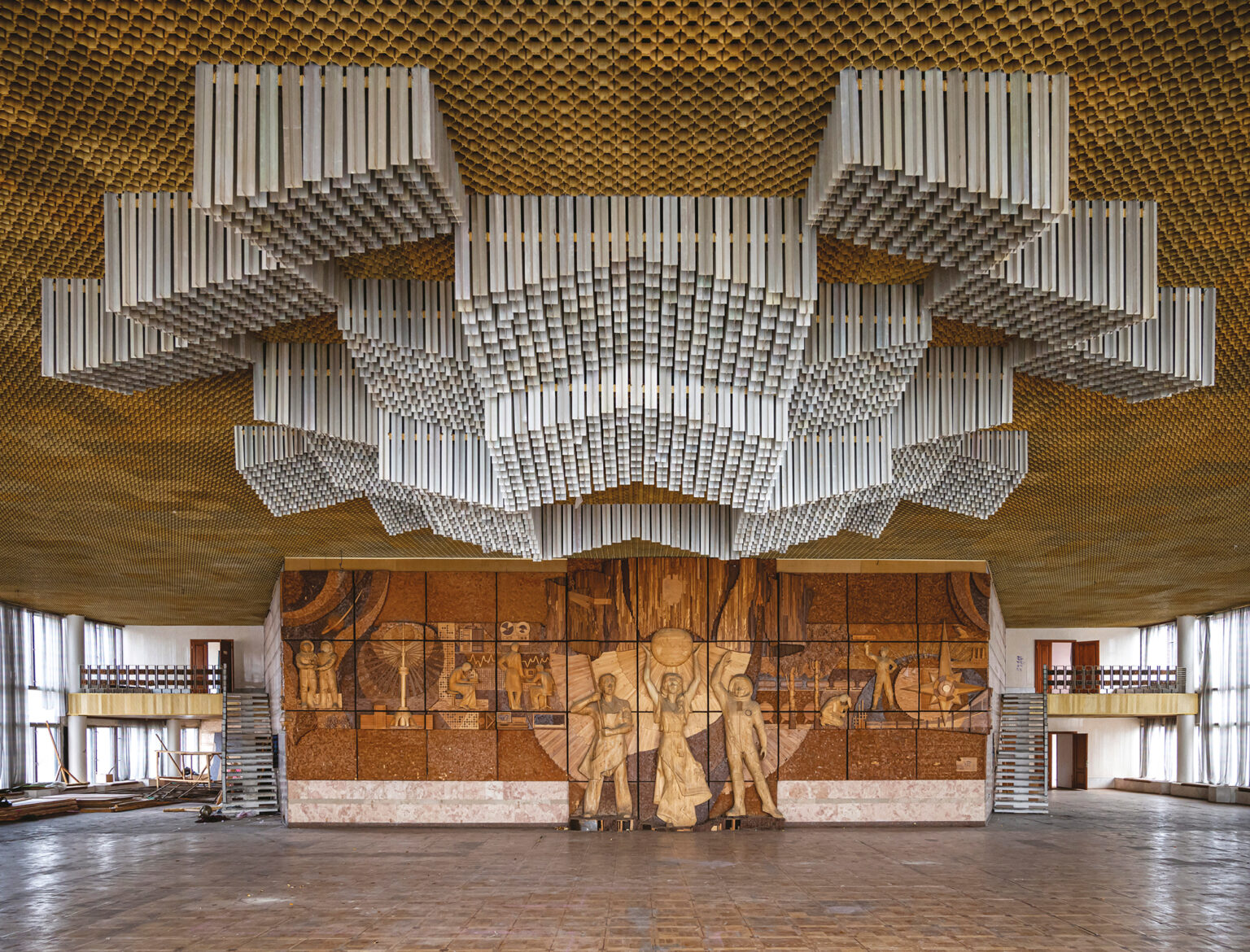
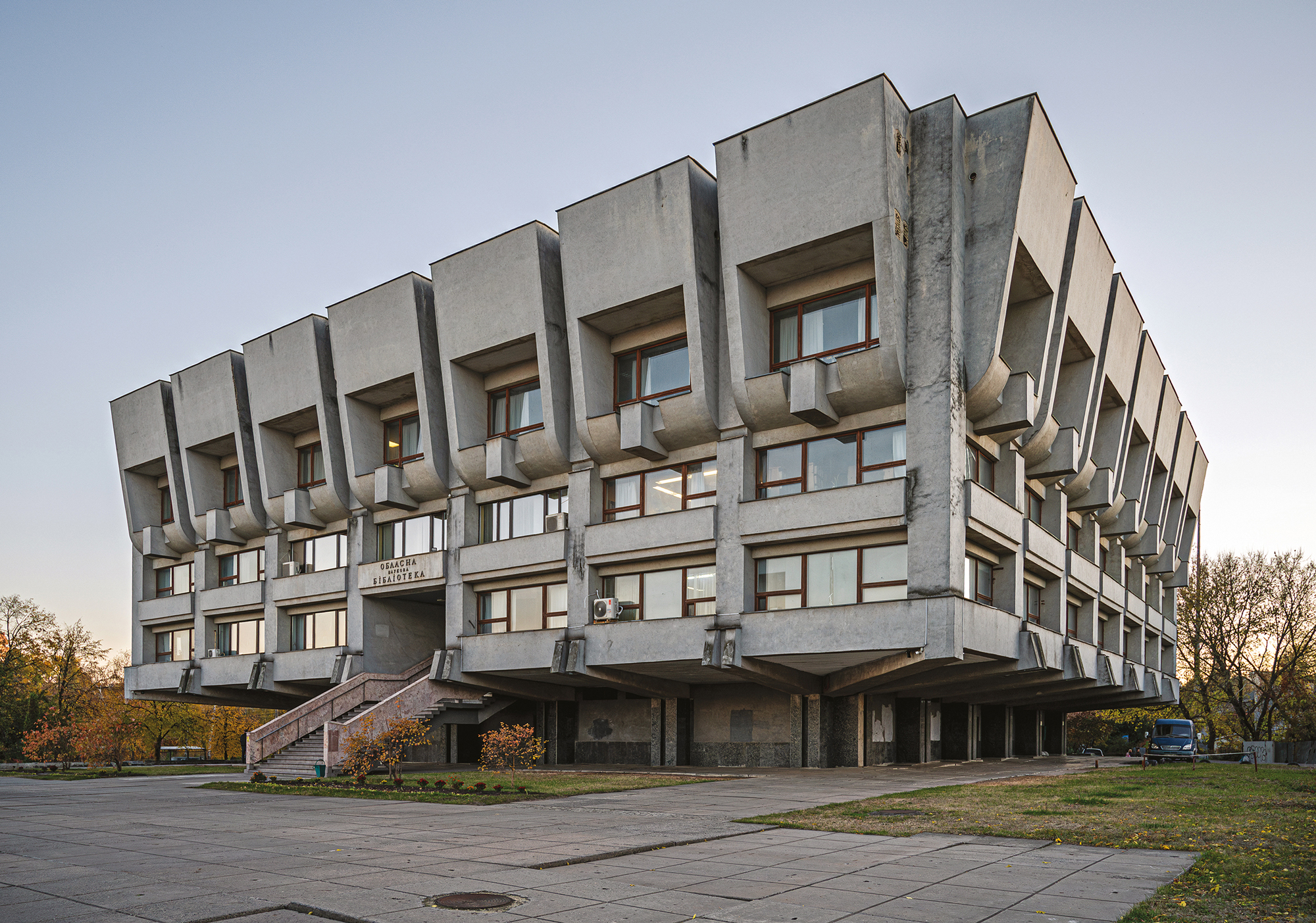
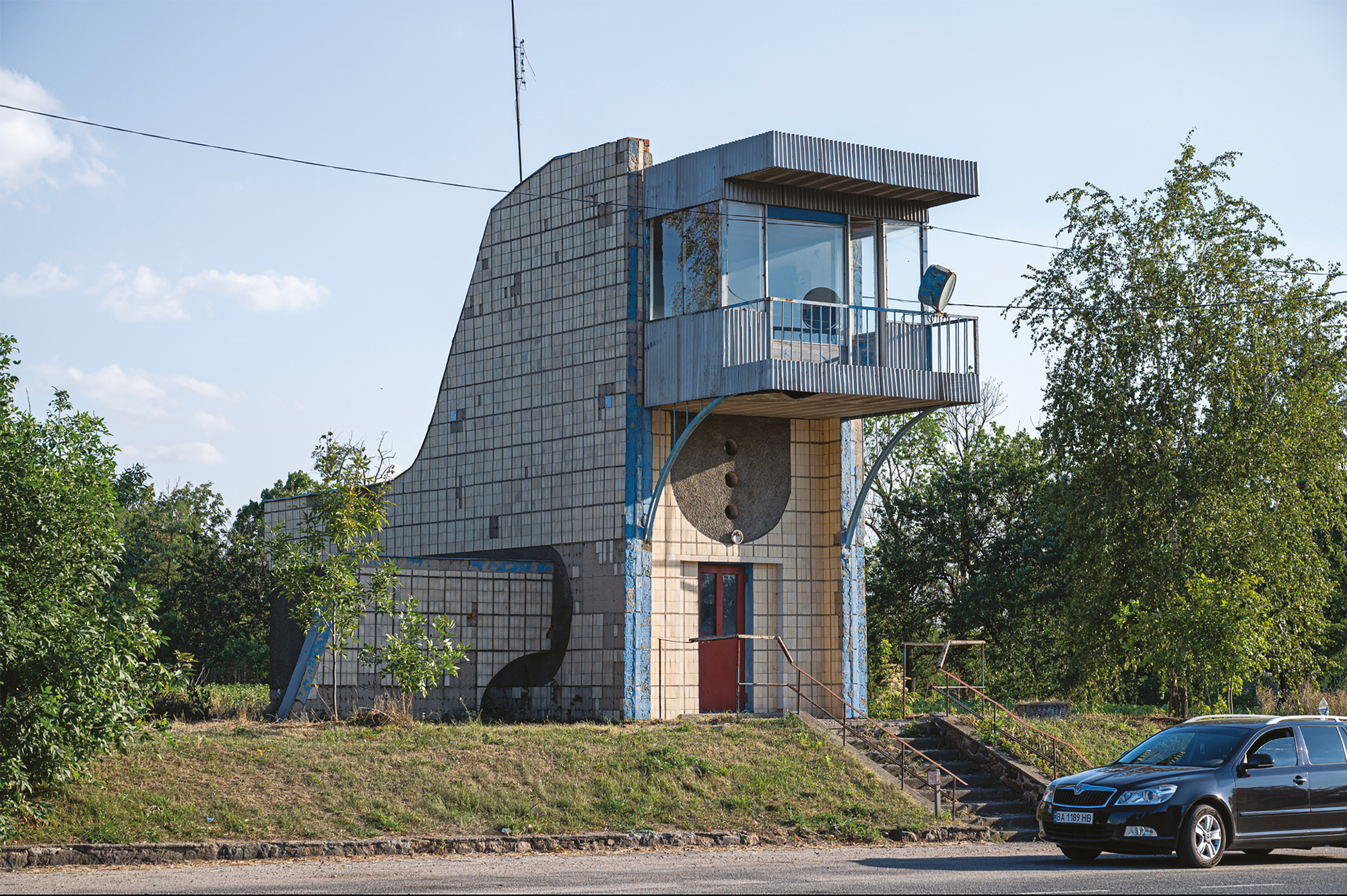
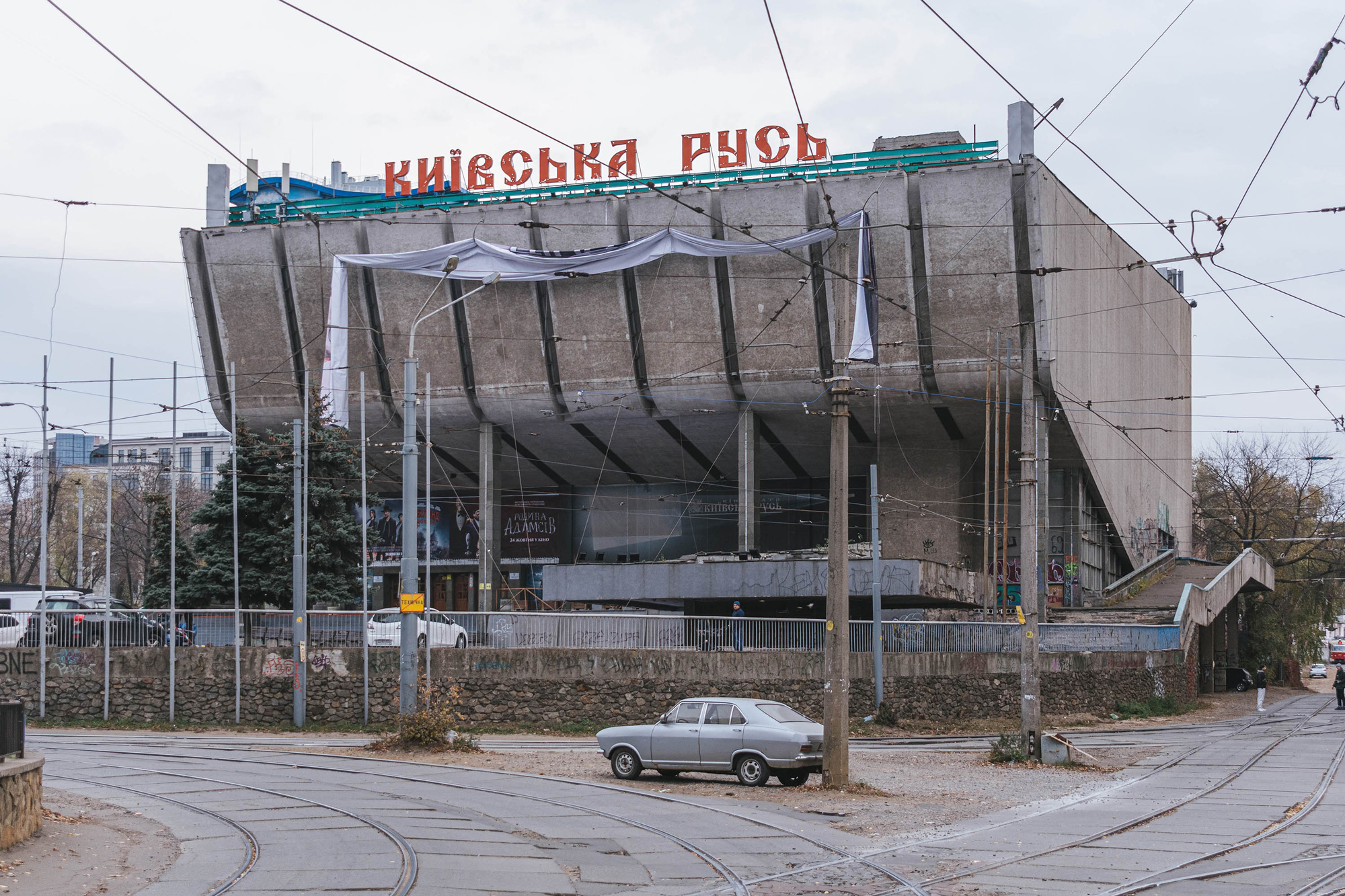
Perhaps the sharpest point of Ukrainian Modernism is that the book dismantles a Western hierarchy of attention. The assumption still persists that cultural depth resides mainly in what is historical, ornamental, easily legible as sacred or old—in other words, where history has been allowed to age beautifully. Soloviov’s book pushes directly against that reflex. It presents a Ukraine of concrete, glass, ceramic, mosaic, halls, staircases, administrative facades, housing fronts, control towers, foyers. Not as a fallback. As a world.
Modern architecture in Eastern Europe is often trapped, in the West, by two equally convenient ways of seeing. The first is contempt: too grey, too heavy, too ideological, too much the residue of failed utopia. The second is secondary nostalgia: concrete as elegant decay, socialist form as atmospheric image value, architecture as a good surface for retroactive melancholy. Both miss the point. Neither asks the central question: what did these buildings mean to the people who lived, worked, studied, waited, danced, travelled, learned and read inside them?
In his introduction, Hatherley shows that Ukraine does not stand at the margin of modernism’s history. The first wave—constructivism in the 1920s and early 1930s—was deeply rooted here, in Kharkiv, Kyiv, Dnipro and Odesa. That first wave was brutally interrupted and only taken up again decades later in a second one. For the early Soviet years, Hatherley describes considerable cultural autonomy, with Kyiv and especially Kharkiv as centres of the European avant-garde. Kharkiv’s Derzhprom and Dnipro’s Ilyich Palace of Workers stand as emblematic examples. Then came repression, Russification, famine, the murder or erasure of avant-garde artists, and a neo-tsarist heaviness replaced the open thrust forward.
The second wave after 1953 reconnects to that legacy differently. The 1960s and early 1970s appear as a period of light, functional modernism that later became more monumental and more imaginative. International influences—from the International Style and New Brutalism to Brazilian modernism and Japanese Metabolism—were absorbed in Ukraine and reworked in its own terms. Hatherley sees a special concentration of experimental late modern architecture in Dnipro, often extended by monumental mosaics and reliefs. He also points to regional strands, such as the dialogue with Hutsul traditions in western Ukraine.
Soloviov’s selection gives all of this a form. There is the airport in Cherkasy, which remained largely in its original state after regular service ended, including its wayfinding pictograms. There is Cherkasy’s bus station, explicitly marked in the book as having been damaged by a Russian explosive drone on 23 October 2024. There is the Peremoha cinema in Chernihiv, revived in 2023 by students and activists as a technology and culture-oriented venue while retaining its facade and relief. There is the Ilyich Palace of Workers in Dnipro, a constructivist building whose protection status and restoration remained contested after 1991. There is the control tower of the Kaniv hydroelectric station, the high-rise as an urban accent in a Dnipro housing district, the Palace of Children and Youth, the university library. These buildings do not tell a clean success story. But they do tell a story of public ambition.
The crucial point is this: this architecture is not simply “Soviet” and therefore disposable. That is exactly what Hatherley and Soloviov argue against. Ukraine’s modern built environment is not a compromised format to be morally scrubbed away. In material terms, it is the world in which most people lived. This architecture, more than the official historic heritage, forms the country in which most people live—and therefore the very spaces at which Russian missiles and artillery are aimed.
What War Does To The Gaze
War changes not only the place. It alters the gaze directed at it. Things that might once have counted as secondary motifs suddenly carry different weight. A culture palace is no longer simply an interesting building mass. It is vulnerable. A library is not only an institutional room. It is a knot of continuity. A mosaic is not merely beautiful. It is a material remainder of what public life once imagined itself to be.
That is why the aesthetic question is so delicate here. There is a false form of seriousness that assumes one must remove beauty from language in times of violence in order not to seem frivolous. In truth, that often just moves the issue into abstraction. If war attacks culture, urban form, everyday ritual and built memory as well, then the description of those things belongs not at the margin but at the centre.
Soloviov’s own work is remarkably precise on this point. Hatherley stresses that the book contains no ruin porn—no images that push misery theatrically into the face. The traces of war are there, but often only if you look closely. That is an ethical decision. The country is not to be consumed in the mode of shock. It is to remain visible in its wounded wholeness.
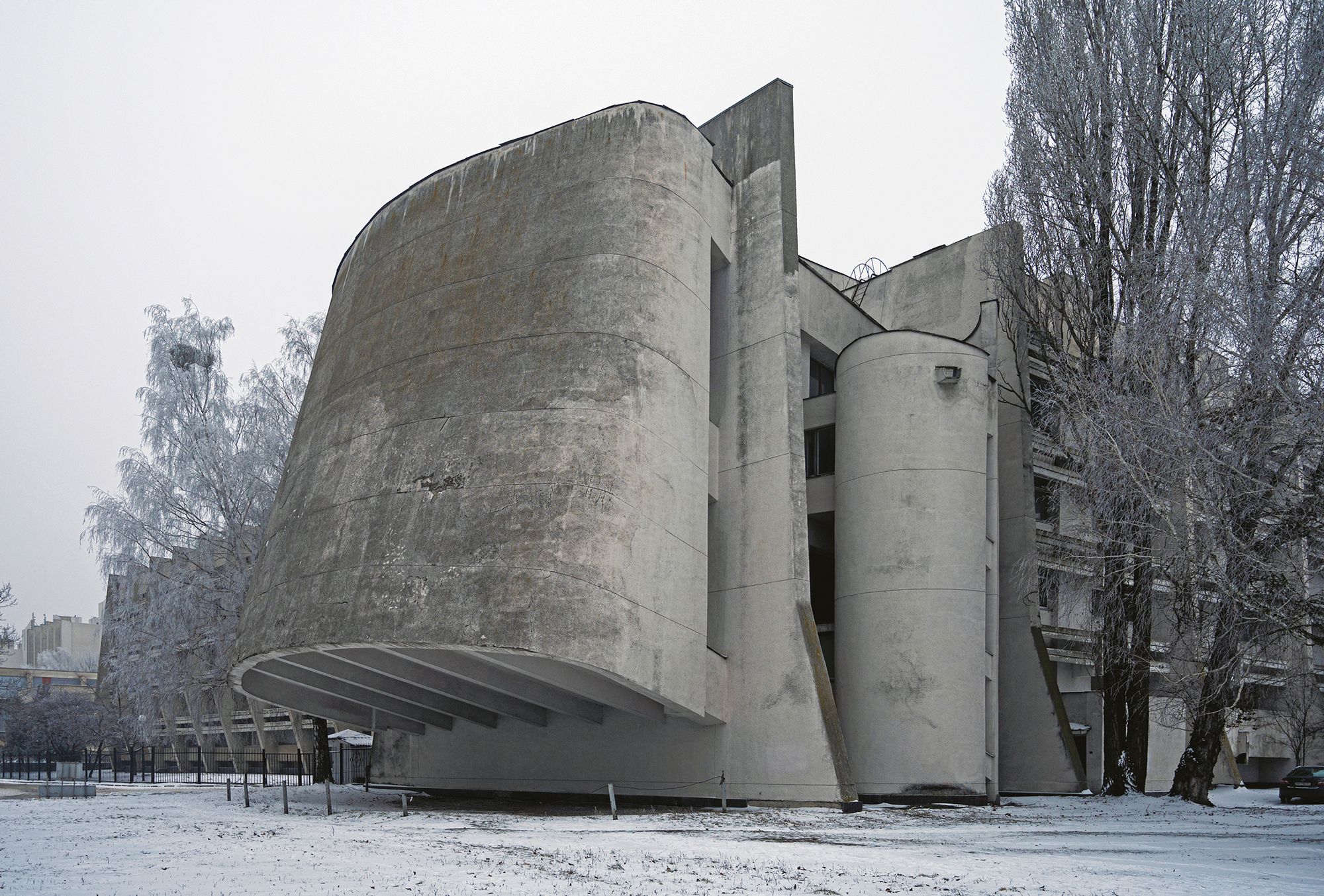
One powerful example is Kyiv’s crematorium, which Hatherley describes at length: an organic concrete sculpture by Avraam Miletskyi, enclosed by a wall that addressed war, fascism and Stalinism and was therefore covered over in concrete during the Soviet period. Activists later began uncovering those layers again. The building stands not only for preservation but for something more difficult: revealing what had been covered, suppressed and sealed. Hatherley presents this as the starting point for a more honest conversation about the forces that have repeatedly exposed this country to suffering: dictatorship, militarism, nationalism, and the overbearing power habits of great states.
The Life That Cannot Be Pushed Out Of The Frame
What Soloviov’s book and Hatherley’s text show especially well is something easy to miss: culture does not reside only in monuments, but in the continuation of everyday life. In tours, conversations, small groups, Telegram chats, tea after a walk, in the willingness not only to photograph buildings but to live with them. Hatherley describes Soloviov’s tours almost as a form of social infrastructure: a mix of education, community, political thought and practical self-organisation. Since 2022 they have become both his main source of income and a central social space.
That may sound small. It is not. War does not only destroy buildings. It also places a country’s social operating system under stress: habits, assumptions, routines, the atmosphere in which people move. That is why it is not trivial when cultural actors in a city such as Kyiv or Ivano-Frankivsk continue to organise tours, maintain spaces, and reread places. This is not luxury. It is a form of civic temperature control.
For an internationally read magazine, that may be the key point. The question is not: how beautiful is Ukraine despite the war? That would be flat. The question is: which forms of beauty, order, hospitality, publicness and attention continue to exist—and what do they mean under pressure? A good foyer. A restored cinema. A mosaic that was not covered over. A breakfast that is not staged but simply right. In wartime such things change their gravity. They move from surface to stance.
Not Travelling As Usual, But Reading Anew
None of this yields a simple travel recommendation. Quite the opposite. Ukraine is not, today, a country for the harmless curiosity of weekend tourism. Anyone who goes there does not move through a neutral field of experience. For many readers, the more appropriate form of approach, for now, will lie in reading, supporting, understanding and looking closely rather than in rapid itinerary-making.
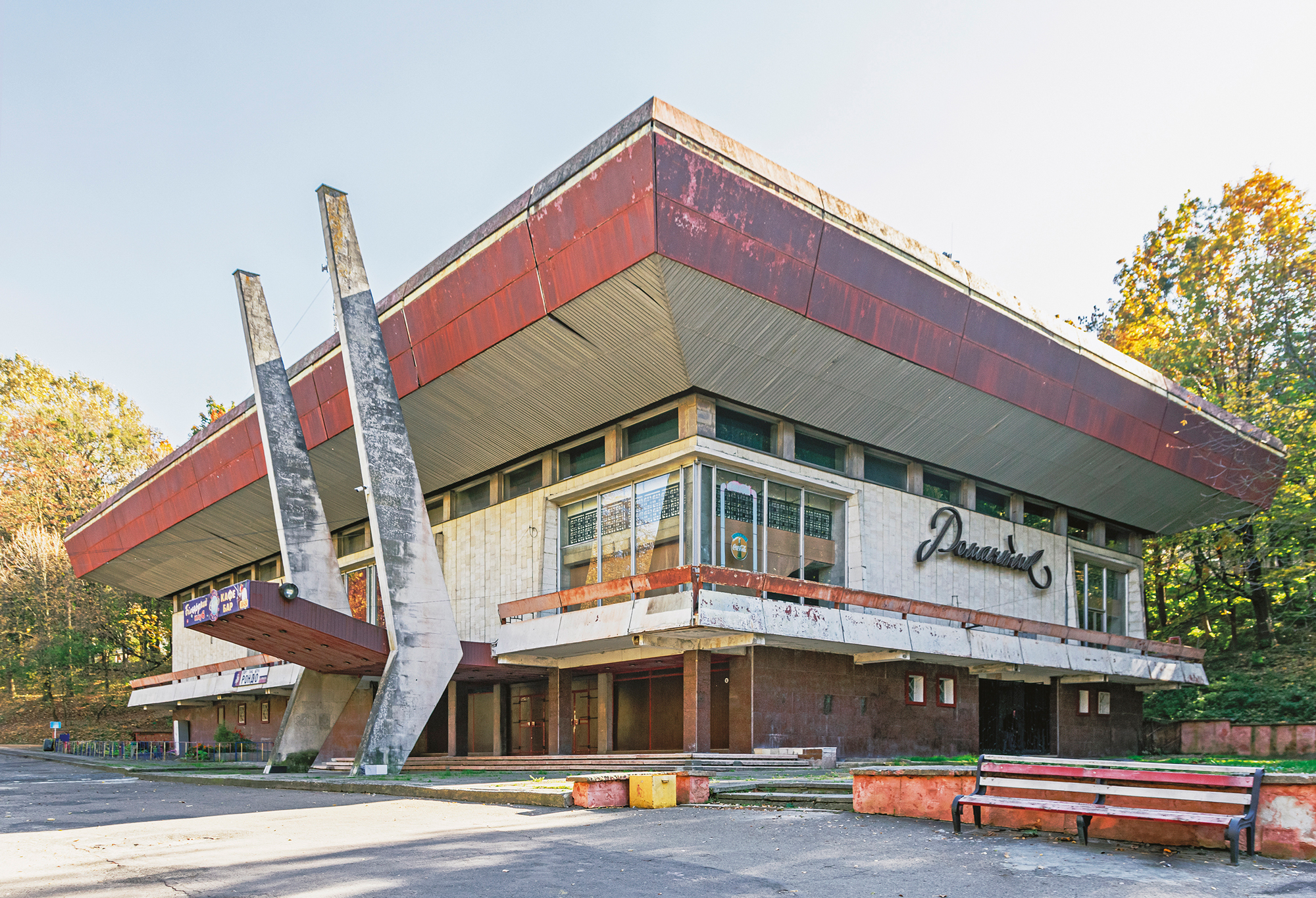
That is also why a different kind of travel writing matters. One that does not make a place available, but restores its complexity. Ukraine is not a country that wants to be scenery. Not a moral tableau. Not an exotic edge of Europe. It is a modern, built, wounded, intensely contemporary country. A country whose concrete, glass, mosaics, halls, squares, libraries, hotels, bus stations and housing fronts say more about its reality than any smooth narrative ever could.
That is exactly what Soloviov’s Ukrainian Modernism does. The book rescues more than buildings into visibility. It rescues standards. It reminds us that public life was once taken seriously in spatial terms. That the future was once imagined not only as private improvement, but as a collective form. And that what is under attack today is not only territory, but also a built idea of the common.
Perhaps what remains of Ukraine, when one searches for the right way to write about it, is not a finished picture but a correction. Afterwards one looks differently at cities, at buildings, at what is lazily called everyday life, at the question of what a country really consists of. Not only its monuments. Not only its headlines. But the spaces in which it lives. That is why Ukraine, despite the impossibility of ordinary travel, remains a central subject for travel writing. Not because it can be consumed. But because it makes the gaze more serious.
About the author
Dmytro Soloviov is a Ukrainian photographer, tour guide and activist for modern architecture. In Ukrainian Modernism he documents twentieth-century architecture across different regions of Ukraine, with a particular focus on public buildings, transport spaces, culture palaces and everyday architectures. In his introduction, Owen Hatherley explicitly describes him as a photographer, tour guide and activist. The book is dedicated to Soloviov’s parents, and its imprint lists Kyiv as his location.
About the book
Title: Ukrainian Modernism
Author/photographer: Dmytro Soloviov
Introduction: Owen Hatherley
Subtitle: Modernist Architecture of Ukraine
Publisher: FUEL Design & Publishing
Year: 2025
ISBN: 978-1-7398878-7-2
The volume gathers photographs and short texts on modernist and late-modern architecture across Ukraine—from constructivism to the late Soviet decades, with a focus on culture palaces, libraries, housing, transport structures and public art.