

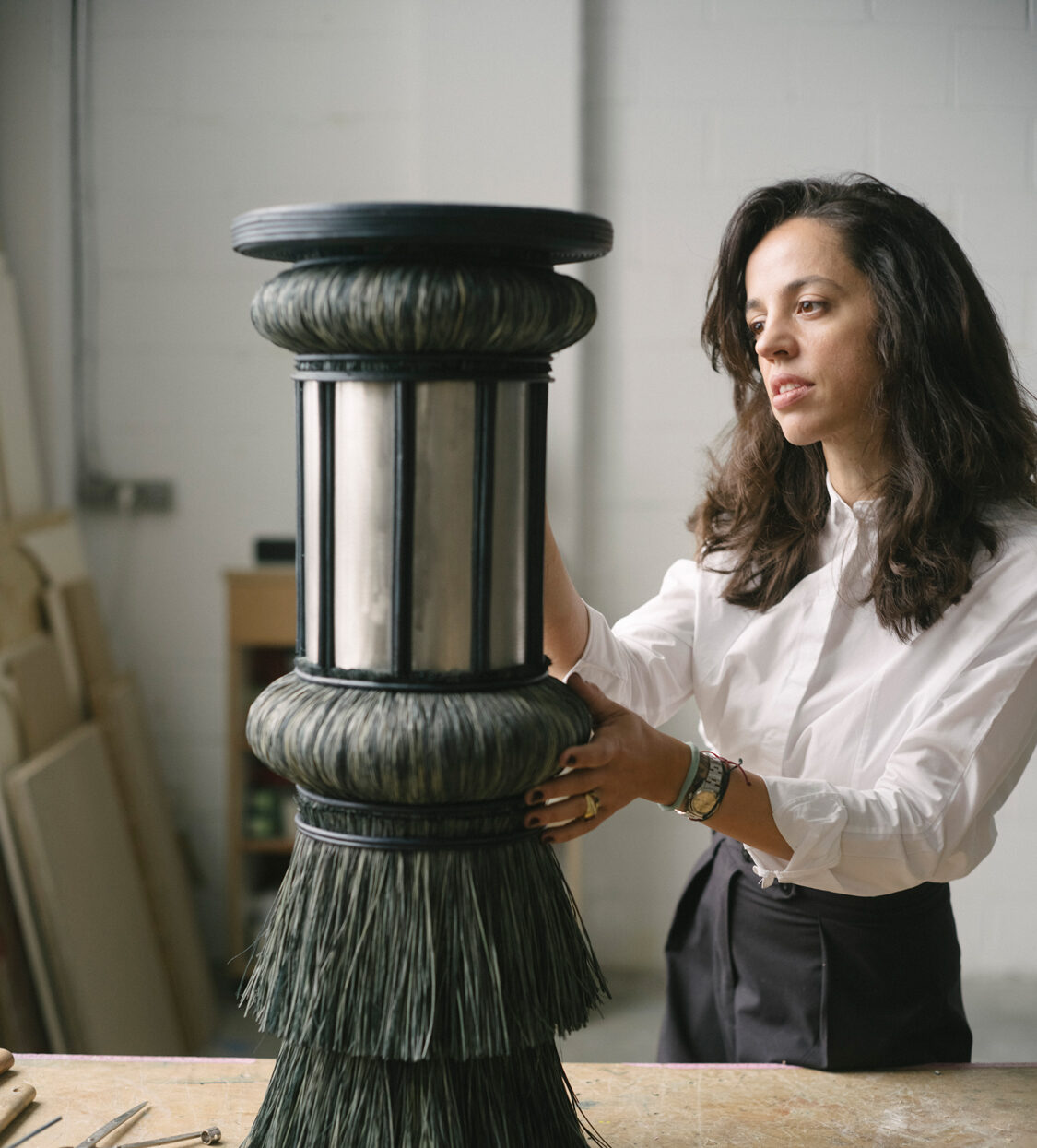
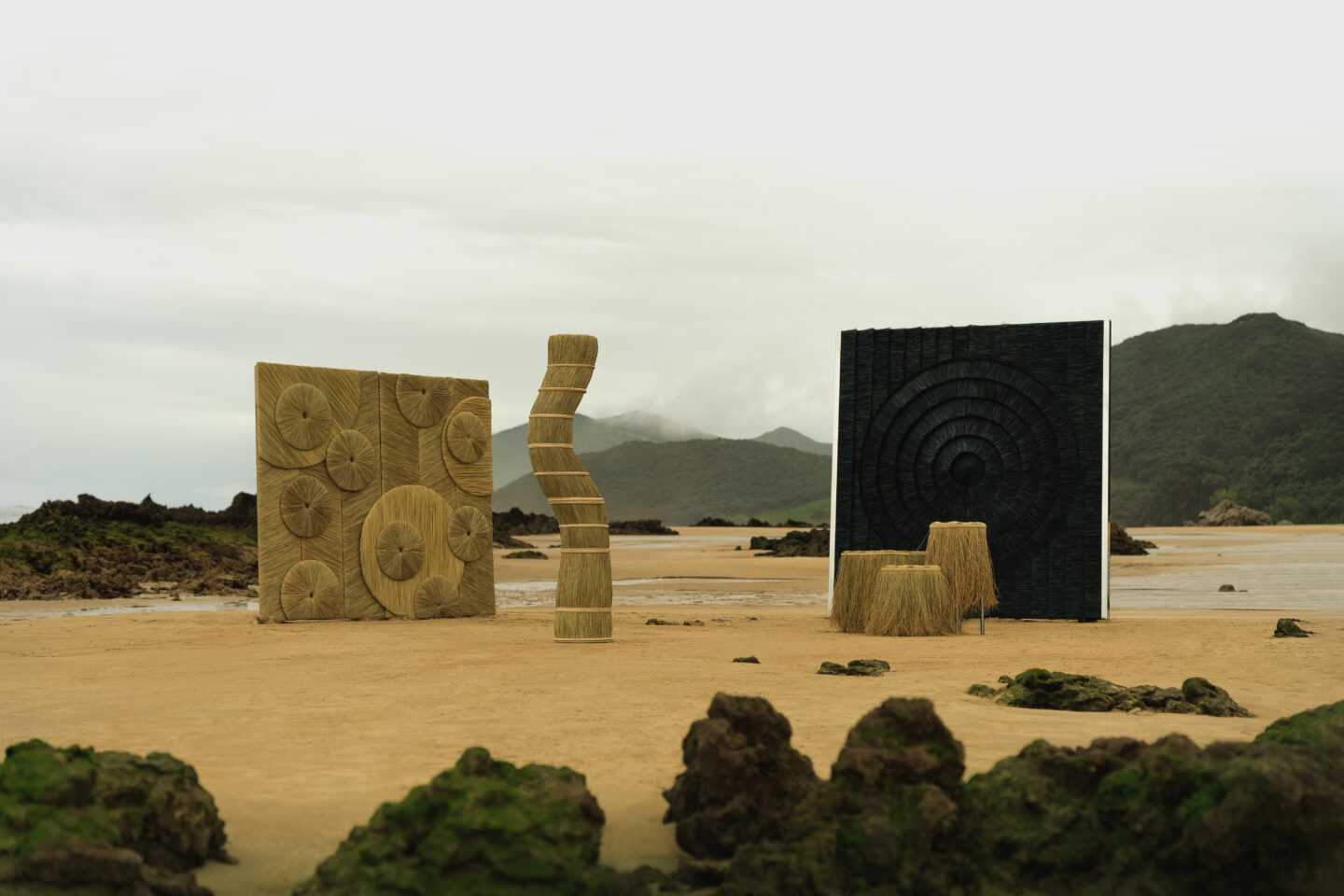
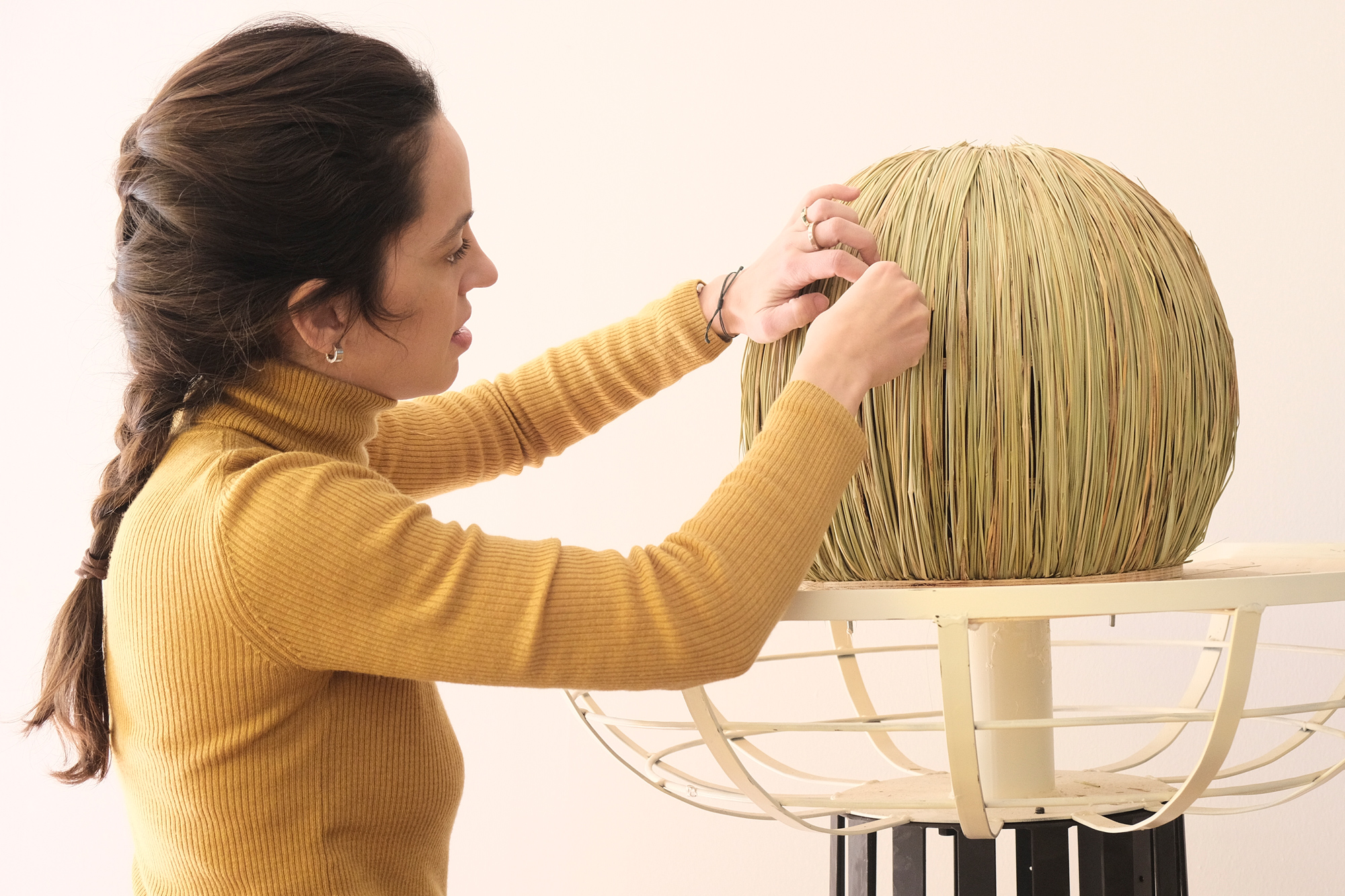
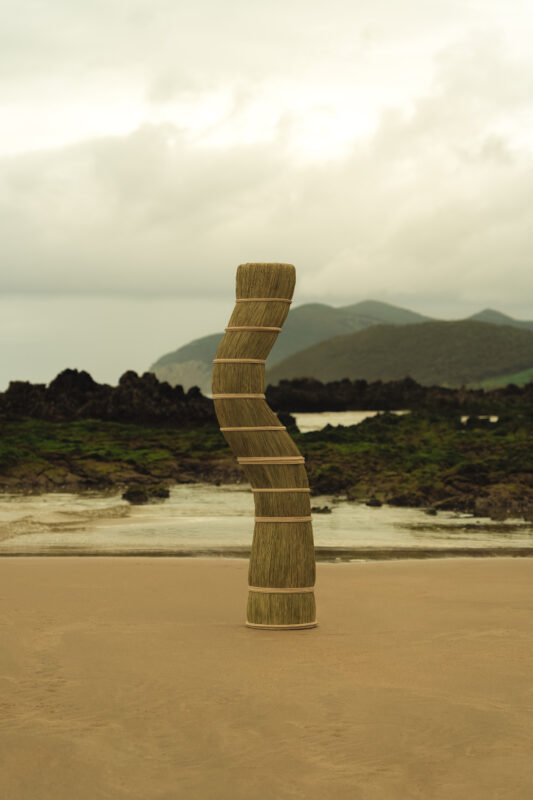
In the work of Gabriela Sagarminaga, fibre becomes both structure and story. Drawing from ancestral basket-weaving traditions, she bends esparto grass and other natural materials into sculptural forms that feel as if they have grown rather than been constructed. What begins as a simple strand slowly unfolds into woven topographies, quiet and grounded, like fragments of a landscape suspended in air.
For her, craft is a bridge: between past and present, between people and the environments they inhabit, she seeks to create timeless works for lived spaces. Each piece holds a reason for being, a story embedded in its making, as if the fibres themselves remembered where they came from.
©Courtesy of the artist
Which place do you currently call home and where do you work on your projects?
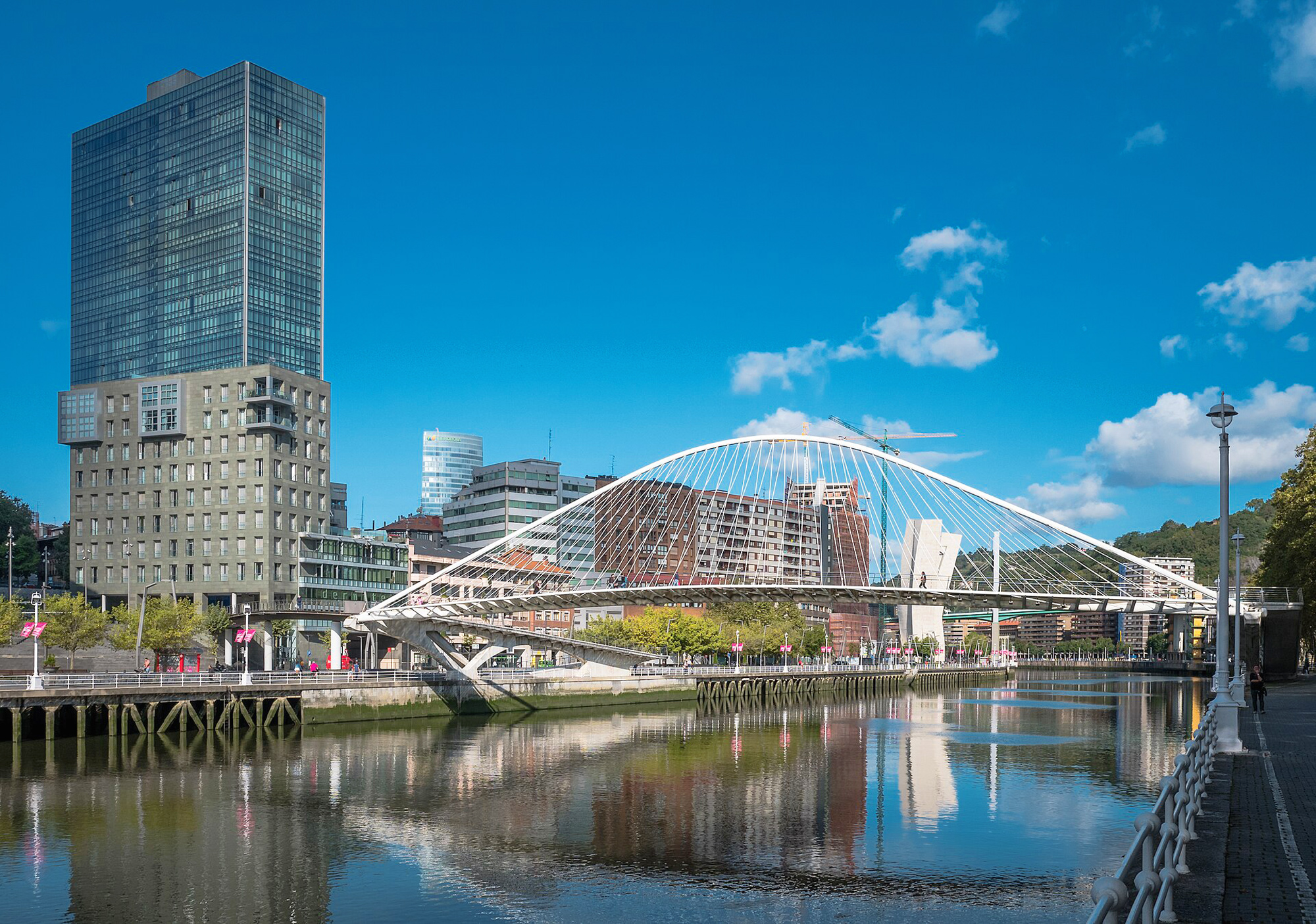
I live in Getxo, a town close to the sea, located 20 minutes from Bilbao. I live in front of the Puente Bizkaia, a suspension bridge that link two towns separated by the river. I was born in this town and after traveling and living elsewhere I decided to come back.
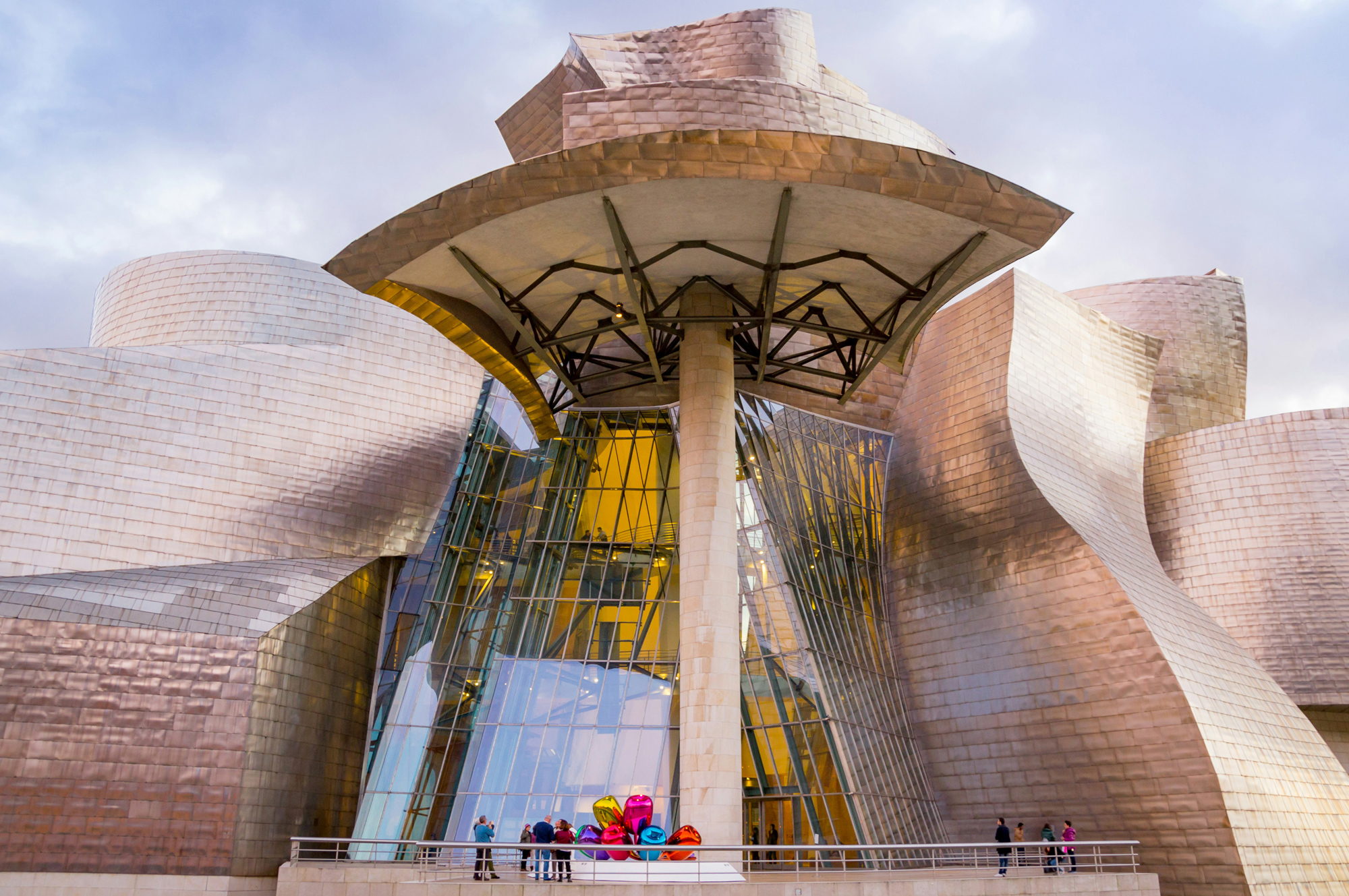
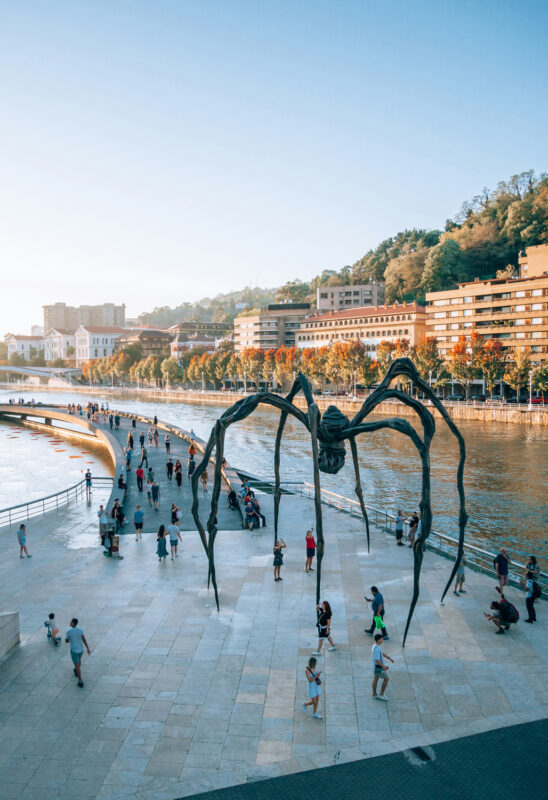
I work in Bilbao (Biscay). I run my Atelier in Matiko neighborhood, 15 min walking from the Guggenheim, it is familiar and quiet neighbourhood close to the city center.
Where is your studio located & how does it look?
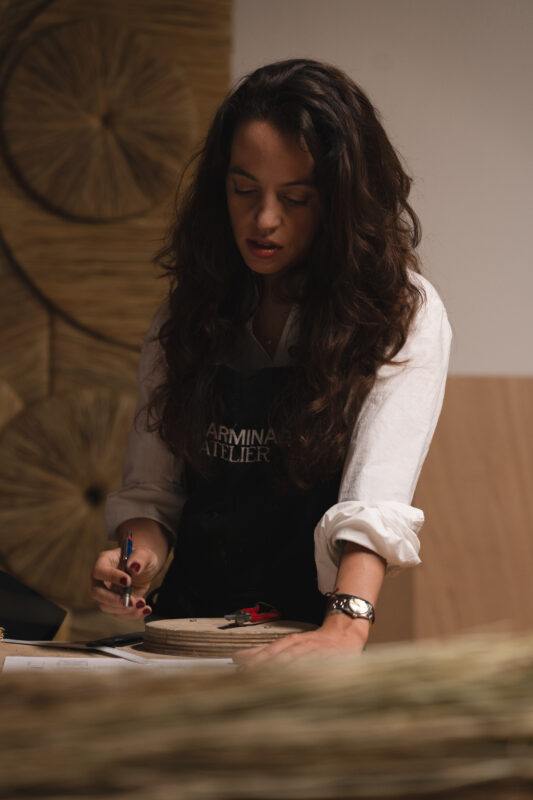
My atelier is a large, dynamic creative environment designed to foster research, experimentation, and artisanal production. It is divided into specialized areas, including metalwork, textiles, design, and an office space for conceptual development and administrative work. I continuously explore unique colour palettes and new techniques, and I am currently expanding my practice by integrating leather into my pieces. With a team of nine dedicated professionals, the atelier thrives as a collaborative space where creativity and craftsmanship come together.
©Courtesy of the artist
Are there any projects that are personally important to you—whether recently completed or currently in progress?
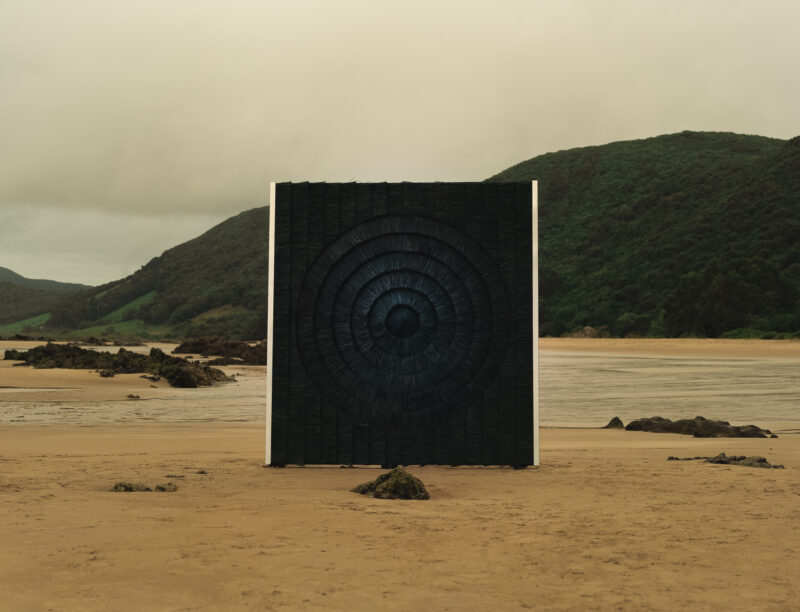
Among my most meaningful projects, I particularly value the installation at Hôtel Regina in Biarritz, my collaboration with Hermès for their flagship in Barcelona, and my current work with Artewalls for Milan Design Week. Looking ahead, I’m excited about future projects, including a new collaboration with Hermès in Amsterdam.
©Courtesy of the artist
©Courtesy of the artist
©Courtesy of the artist
Do you have a favorite place in your area where you like to relax and linger?
I like to go to the sea, to Barrika beach. It’s a wild, secluded beach with challenging access. You can only enter at low tide and are allowed to stay for a maximum of seven hours. The fact that it is difficult to access means that not many people go there, in winter it is empty only a few surfers go.
© Photo: Piotr Musioł,Unsplash
Are there any urgent political issues or problems in your region?
In the past, Basque Country had very turbulent political and social years. Now, we are calm despite the instability in Spain and Europe, there are problems related to lack of employment, poverty and extremists.
In your opinion, what has developed well in the last 5 years—and what has not?
Biscay is committed to services, technological innovation and talent. But it also recognizes the importance of creativity and cultural innovation as a driver of income and value creation. In recent years, it has also invested in cultural and creative industries.
As in the rest of the country, the health system has less resources. There are growing issues of social inequality linked to immigration, and the population is aging rapidly while fewer children are being born.
© Photo:Anushree Deshpande,Unsplash
© Photo: Yoav Aziz,Unsplash
Do you know a hidden gem when it comes to local manufacturers—whether it’s arts and crafts, sustainable products or food?
Handicraft:
– Proyecto Hemen
– Soledad Santisteban
– Zearreta
– Arkaia tables at Mosel
Special food:
– Charamel Gozotegia (bakery and cafe)
– Ribiera market for fish and meat
– Labeko bakery
– Ultramarinos Gregorio Martín (codfish specialty)
– Arrese (chocolate truffles)
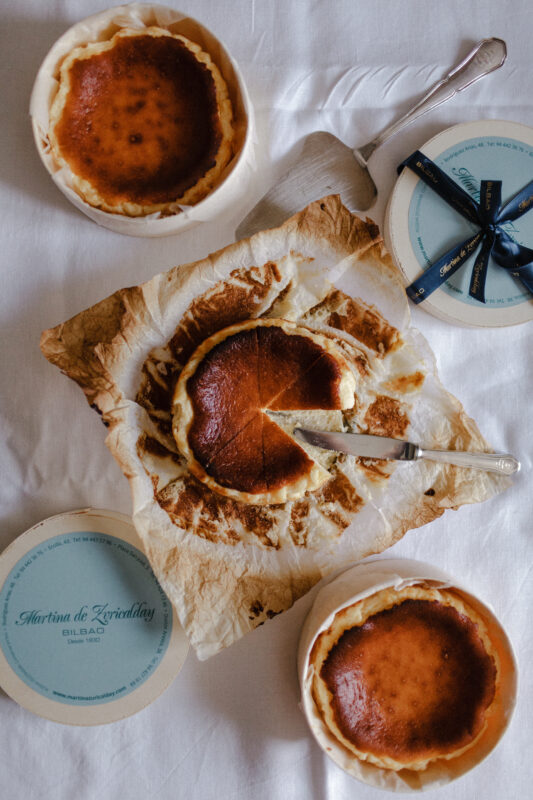
– Zuricalday bakery (butter buns)
– La Mozzeria de Biribil (Burrata)
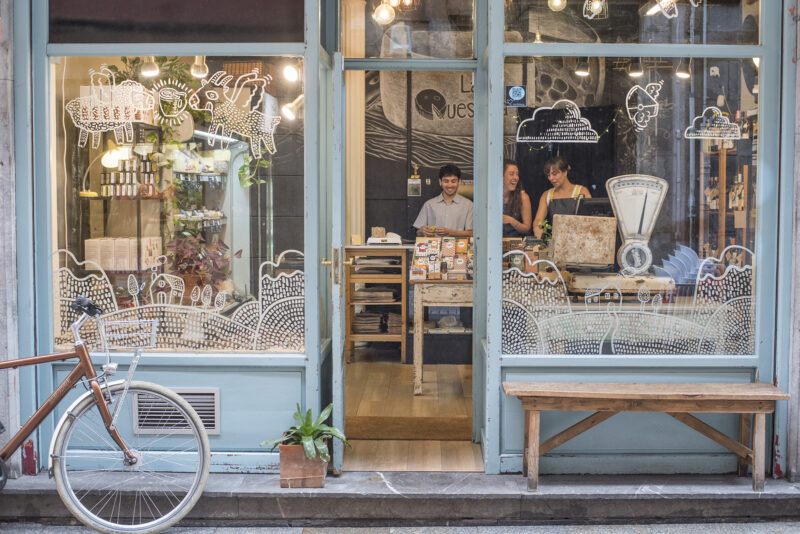
– La Quesería de Bilbao
© Photo: Martina de Zuricalday Bilbao
© Photo: La Quesería de Bilbao
Is there anything particularly innovative in your region? Also in comparison to other places you have already visited?
In Bilbao you can go anywhere in 20 min by foot. We are surrounded by mountains and at the same time we live in a city close to the sea. It is small and manageable city and the food is really good. It is a good place to start an innovative business, the government helps to develop new business proposals.
Do you have a secret restaurant tip that you would like to share with us?
There are many in Bilbao I love la Taska de Isozaki for all type of local food (meat, fish and a paellas), Islares (creative restaurant), Amaren (specialised in meat). In the coast Itxas Gane in Barrika go to taste the best fish.
Is there a local shop whose products are only available in your region?
Boinas Elosegi is a beret factory that dates back to 1858, it is a characteristic element of traditional Basque clothing that is still maintained “Txapela“
What are your 3 favourite apps that you use every day and couldn’t live without?
I rather use apps as a tool to work than to have much fun with them, I rely on Gmail, my bank app and Instagram.
Do you have any favourite newspapers or online magazines? And how do you keep up to date with politics or social and cultural issues?
I read Deia, Info Libre, SER, also BBC physics, AD french magazine, Elle decoration UK, Manera Magazine, Arquitectura y Diseño, Encens magazine. For cultural agenda I also like to read Noiz Agenda and Mondo Sonoro.
© Photo:Basotxerri, Bilbao – Zubizuri 07, adjusted colours, CC BY-SA 4.0
Imagine you could be mayor for a year—what would you change?
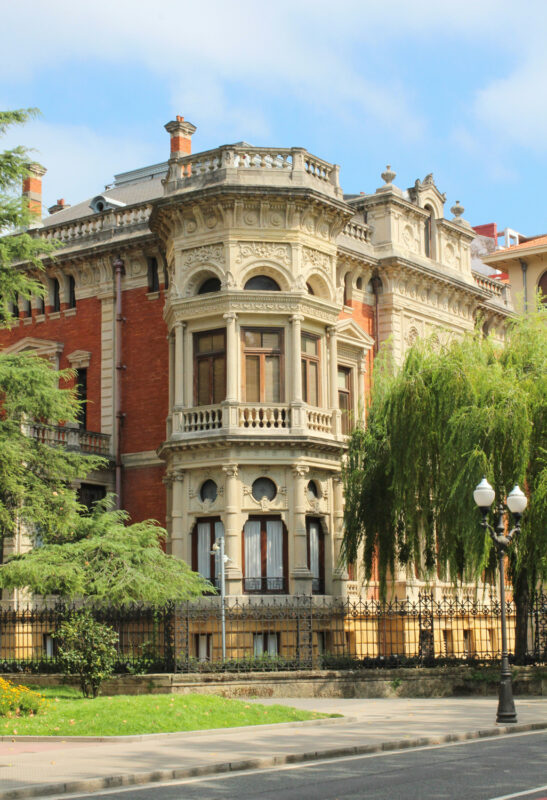
I would love to ask for overall harmony in buildings and better public spaces, to improve people’s life quality.
One last question: If you could choose another place to live—regardless of financial or time constrains—which one would you choose?
Mmmm…. Probably for half of the year in New York and the other half in Maldives.


