

© Courtesy of the artist
Which place do you currently call home and where do you work on your projects?
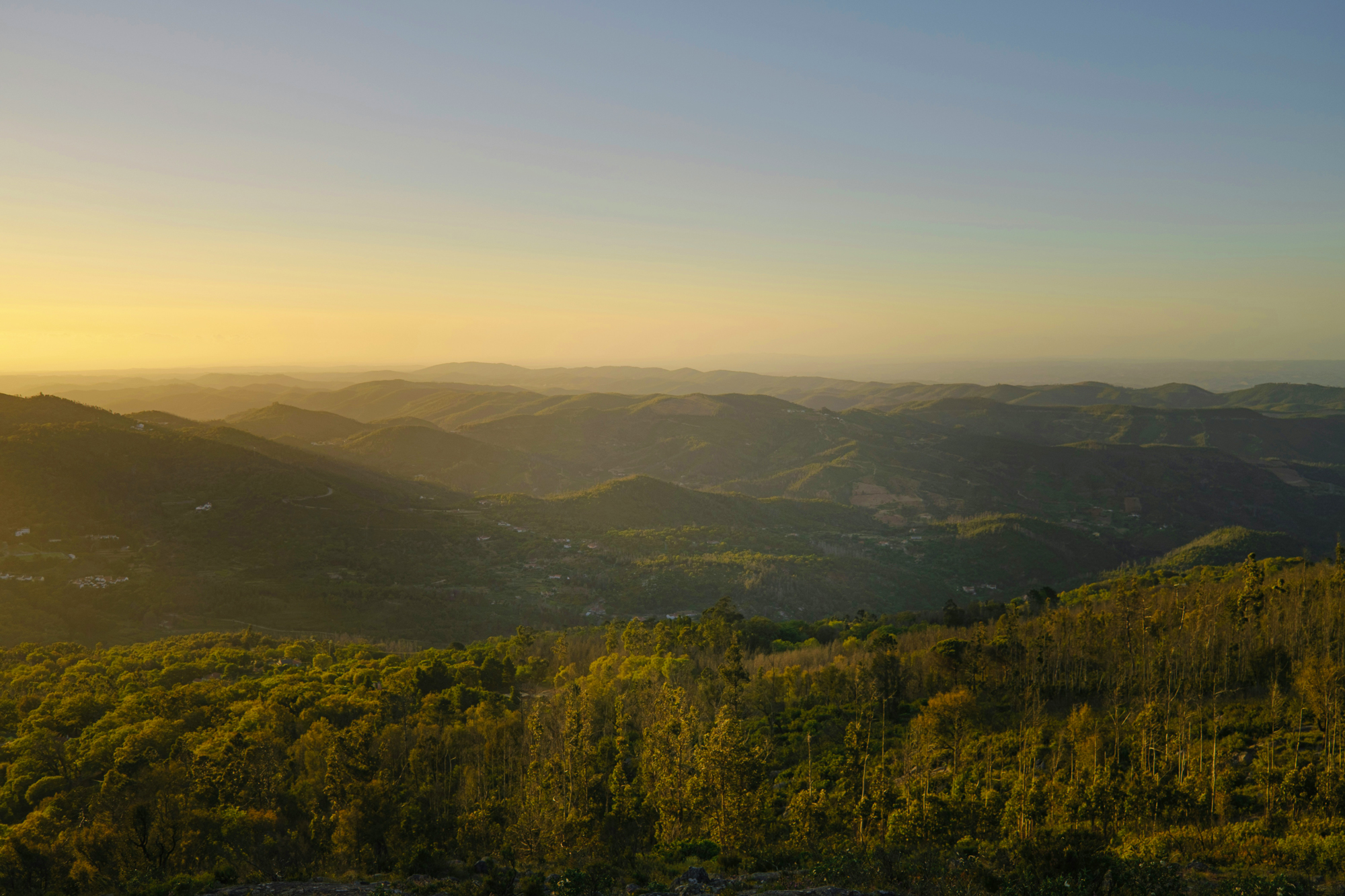
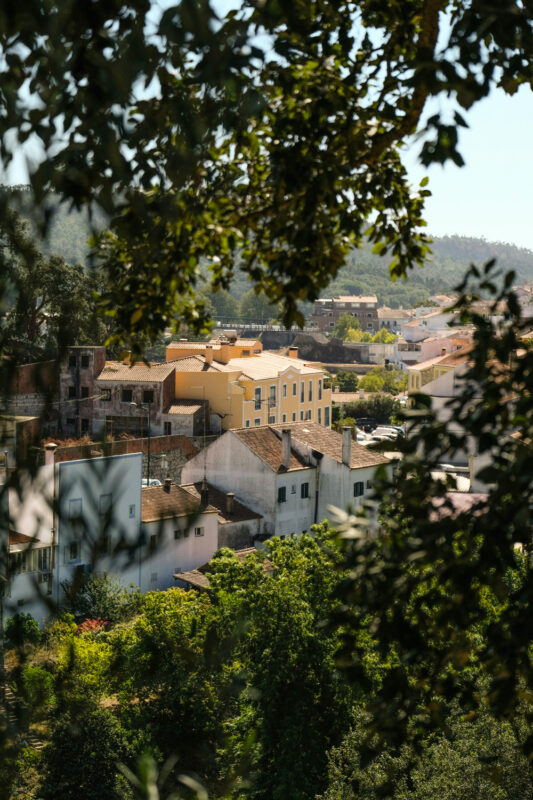
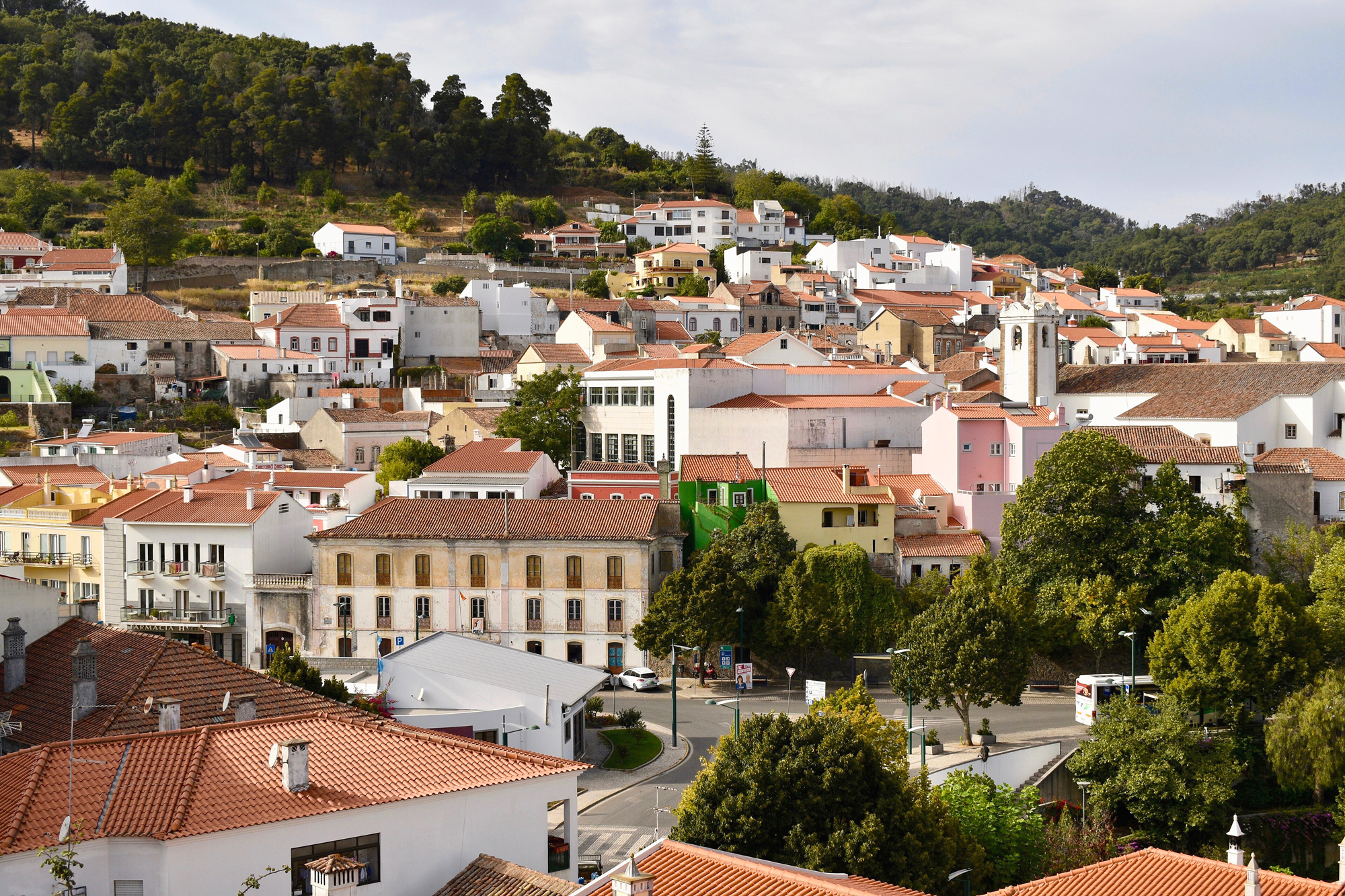
I currently call Monchique my home—a peaceful mountain town in the Algarve, south Portugal, surrounded by lush forests, fresh springs, and breathtaking views. It is the highest point in southern Portugal, where you can see the South and Southwest Atlantic.
It’s a place where nature feels close, the air is pure, and life moves at a calmer, more authentic rhythm. It’s the place where I had the privilege of growing up until I was 18, and after eight years of being away, I returned to become part of my family’s ceramic studio and work side by side with my father. Living here makes me feel connected to the beauty and simplicity of the Serra de Monchique and to my roots.
Where is your studio located & how does it look?
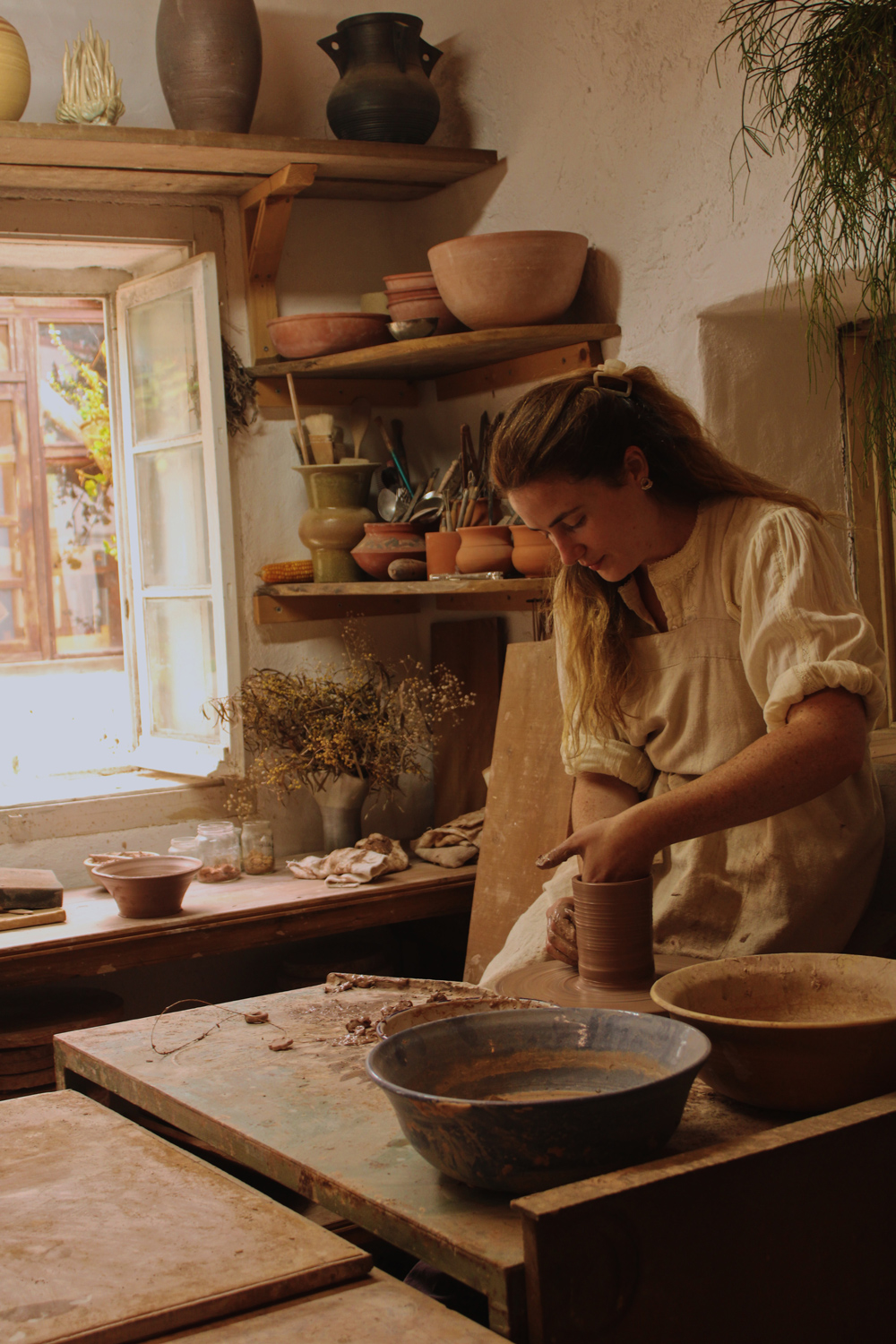
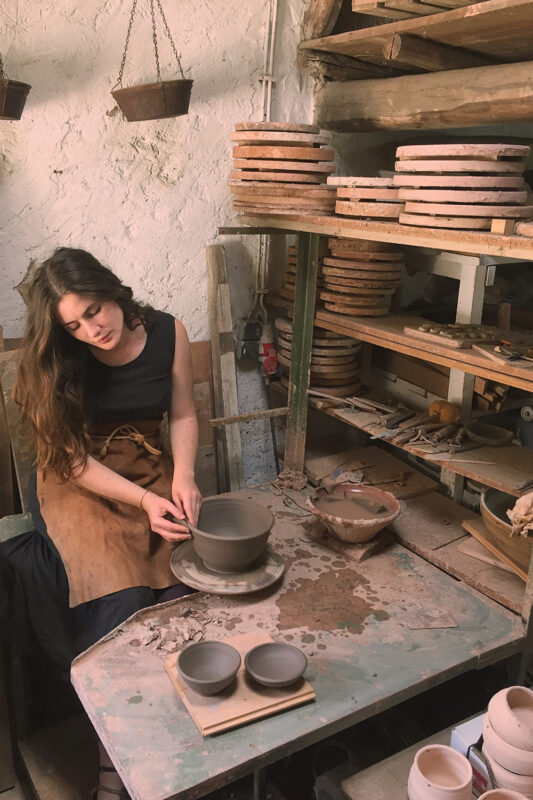
My ceramic studio is located in the village of Monchique, in the hills of the Algarve, Portugal. It sits inside my family home, a house that is more than 200 years old. My family bought it thirty years ago, and it was carefully restored by my father and my grandfather. The space where I work today was originally an old horse stable, with thick granite walls that are perfect for keeping the clay cool and soft during the hot summer months.
The studio has a cozy, intimate and earthy atmosphere, being surrounded by dreamlike landscapes deeply shapes my work. I use traditional techniques at the potter’s wheel, and I prepare much of the local clay myself.
The studio is embraced by a garden filled with Mediterranean and native Algarve plants. I spend half of my time working inside the atelier and the other half in the garden, growing and caring for the plants that influence my creative process.
© Courtesy of the artist
© Courtesy of the artist
Are there any projects that are personally important to you—whether recently completed or currently in progress?
In recent years, I’ve had the privilege of creating pieces for several important projects in the Algarve region. They all share a principle that is essential to me: a commitment to sustainability. These projects work exclusively with local raw ingredients and materials, excellent seasonal produce, creating a platform that connects regional producers with their customers. In doing so, they foster long-term socio-economic activity while preserving the identity of both the community and the region.
For each collaboration, I create pieces that reflect the project’s individual identity, while remaining true to my own creative vision.
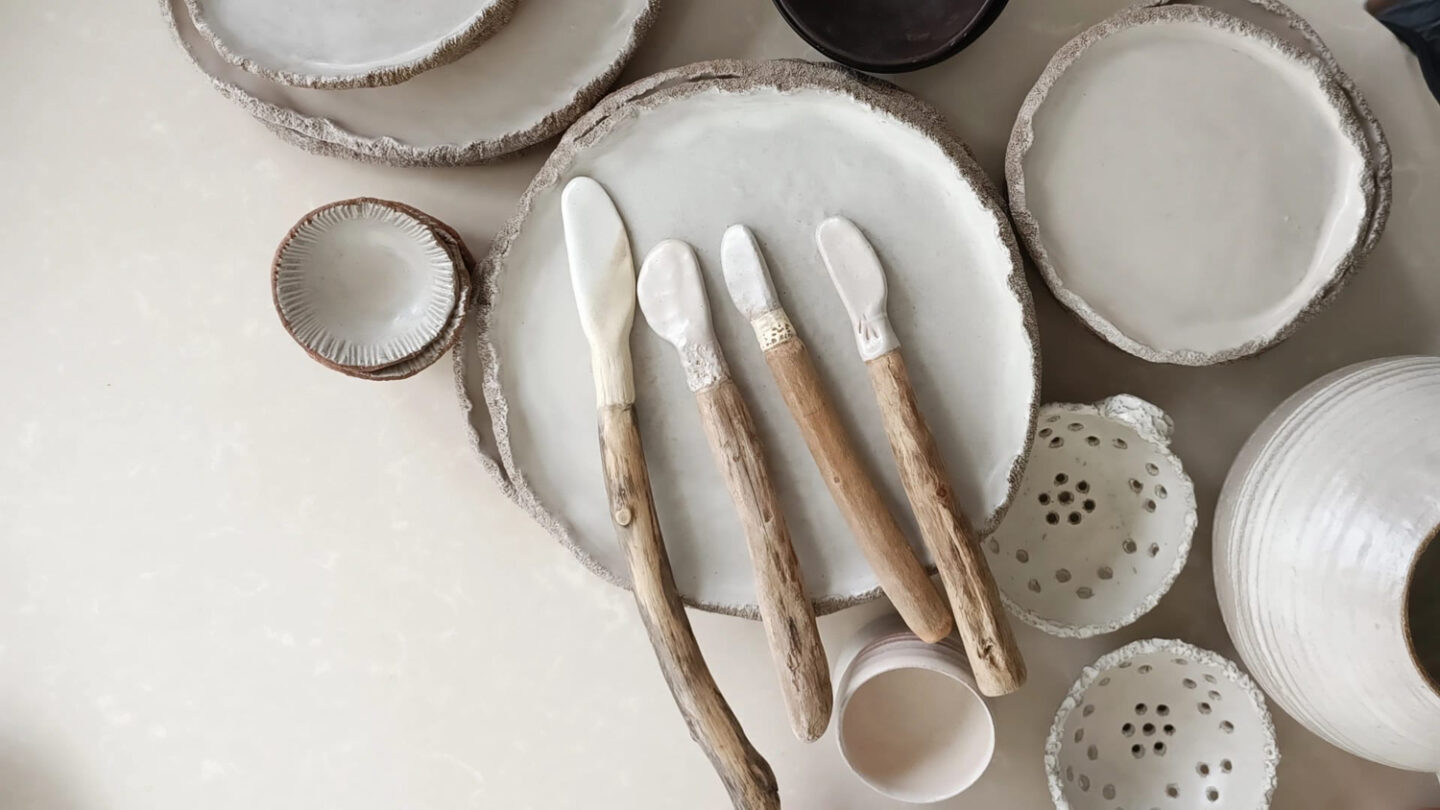
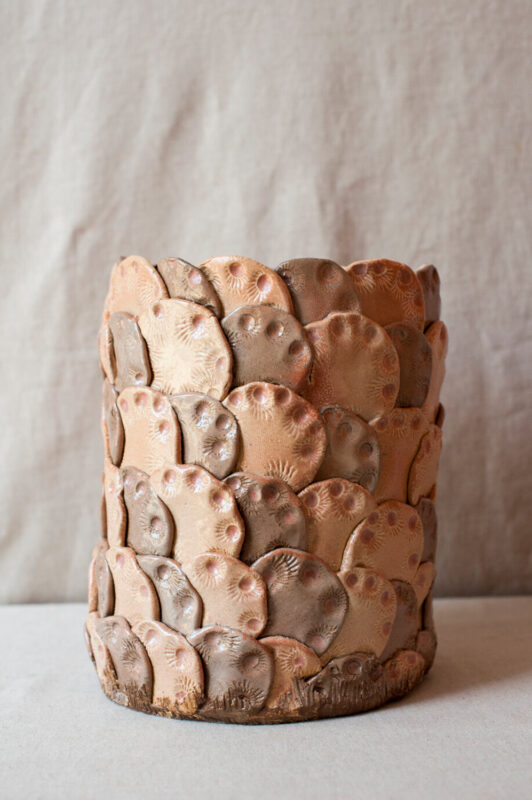
Since December 2024, I have been collaborating with the world-renowned French architecture Studio KO, in partnership with Studio Lisboa, on a new hotel opening in Comporta in 2026 called “Na Praia”. For this project, I am hand-sculpting wall lamps, 62 lamps with a diameter of 45 cm and 22 lamps measuring 32 cm. Each one inspired by the fluid, organic forms of the seascape that surrounds the hotel. They are like fragments of coastline transformed into light. I am also developing 180 plates for one of the hotel’s fine-dining restaurants, led by head chef João Rodrigues. This project is still mostly confidential, but it is one of the collaborations I am most excited about.
© Courtesy of the artist
© Courtesy of the artist
Do you have a favourite place in your area where you like to relax and linger?
Monchique is a place for contemplation and thermal waters with healing powers. I love walking along the mountain paths and letting myself be surprised by the beauty of each season and observing the changing landscapes. Heading down to the southeast coast for a swim in the sea at a wild, secret beach, even in the winter chill I enter the sea which helps me renew my energy and calm my mind.
© Photo: Alena Torgonskaya,Unsplash
Are there any urgent political issues or problems in your region?
This region faces persistent problems linked to forest fires and poor land management, exacerbated by the predominance of eucalyptus plantations and a lack of effective prevention. The slow reconstruction following the major fire of 2018 left many residents without adequate support, fueling social discontent and a sense of abandonment. Added to this is a serious housing problem, with expensive or dilapidated houses making it difficult for new families to settle. The population is predominantly elderly, and there is a notable lack of young people, a result of the scarcity of economic opportunities and services. This combination—environmental vulnerability, social fragility, and demographic decline—creates an alarming scenario where the region remains exposed to risks and a progressive weakening of the community.
In your opinion, what has developed well in the last 5 years—and what has not?
Over the past five years, Monchique has managed to recover some of its dynamism thanks to the strengthening of nature tourism, the creation of new hiking trails, and the diversification of its tourism offerings. Reforestation and environmental restoration projects have progressed consistently, making the mountains more resilient and valued. There have also been improvements in forest fire prevention and investments related to landscape management, but in a minimal and very slow way.
Despite this progress, several challenges persist: forest management is still insufficient to eliminate the risk of large fires; post 2018 reconstruction has progressed slowly; the lack of affordable housing and economic opportunities continues to deter young people, leaving the county with an aging population; and the loss of local services reinforces the feeling of social fragility. Thus, Monchique has evolved, but it maintains structural problems that require consistent, long-term policies.
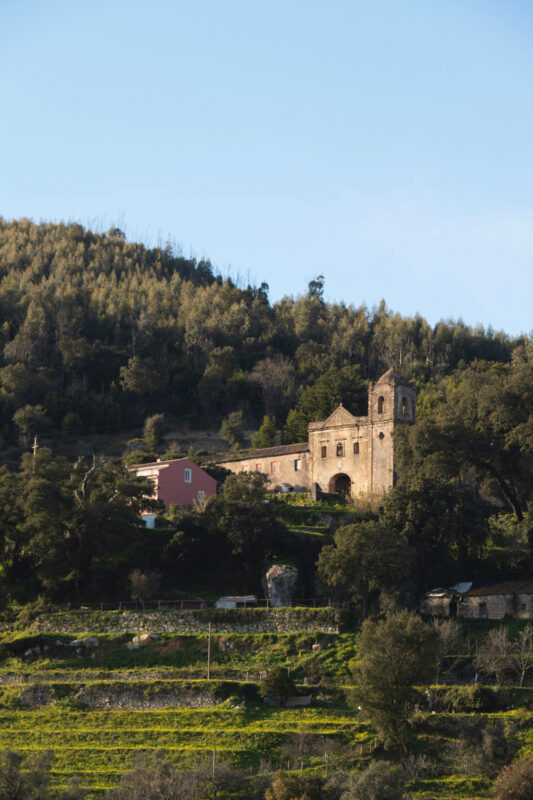
I have the vision that it’s an incredible place, full of opportunities for sensitive people who want to connect with the essence of nature. Because it’s a safe and pleasant place to live, a small refuge in these uncertain times.
© Photo: Filipe Nobre,Unsplash
© Photo: Richard de Ruijter,Unsplash
Do you know a hidden gem when it comes to local manufacturers—whether it’s arts and crafts, sustainable products or food?
Monchique holds several rare sustainable gems that combine tradition, nature, and local know-how. In gastronomy, highlights include artisanal medronho (a type of brandy), wildflower honey, olive oil, family-produced cured meats and hams, as well as jams and sweets made with mountain fruits. In handicrafts, ancient techniques such as basketry, wood carving, ceramics, and weaving are preserved, creating unique and ecological pieces. Fairs and small local producers keep this heritage alive, valuing the natural resources of the mountains and promoting responsible practices that respect the territory. It combines the nature of the mountains, artisanal and gastronomic traditions, and a slower, more authentic lifestyle—something increasingly rare in an urbanized world. This allows one to live (or visit) appreciating local resources, without depending on large industrial chains or mass tourism. Those seeking local products, genuine crafts, and soulful flavors will find something difficult to replicate in more “commercial” areas.
Is there anything particularly innovative in your region? Also in comparison to other places you have already visited?
Monchique combines pioneering environmental regeneration, low-intensity sustainable tourism, and modern valorization of traditional products and arts, creating a unique development model that integrates nature, culture, and the local economy. Monchique has become one of the few territories in Portugal with large-scale reforestation projects using native species, integrating science, local communities, and international funding (e.g., Renature Monchique). This model—which replaces eucalyptus with oaks, chestnut trees, and Medronho trees—is seen as innovative in the Portuguese and even European context.
Traditional Medronho Tree System + Innovation in Certification. Medronho tree drink production is ancestral, but in recent years it has begun to combine traditional stilling methods with certification, immersive tourism, and forest sustainability. Few places in the country have such a distinctive product that is being valued in a modern and responsible way.
Innovative use of the mountains as an alternative economy. Themed hiking trails, structured ecotourism, wellness experiences linked to thermal waters and the landscape, making it a living laboratory of low-intensity tourism, something rare in an Algarve dominated by mass tourism. Living crafts integrated into the local economy. The preservation of traditional arts (wood, basketry, weaving). Monchique has managed to transform artisans into micro-entrepreneurs and integrate these pieces into sustainable tourism offerings. Few places maintain this functional balance.
Do you have a secret restaurant tip that you would like to share with us?
There’s a restaurant in Monchique called Petrol where you can try the food from the mountains, with unique dishes, local and homemade ingredients cooked over a wood fire, just like my grandmother used to do.
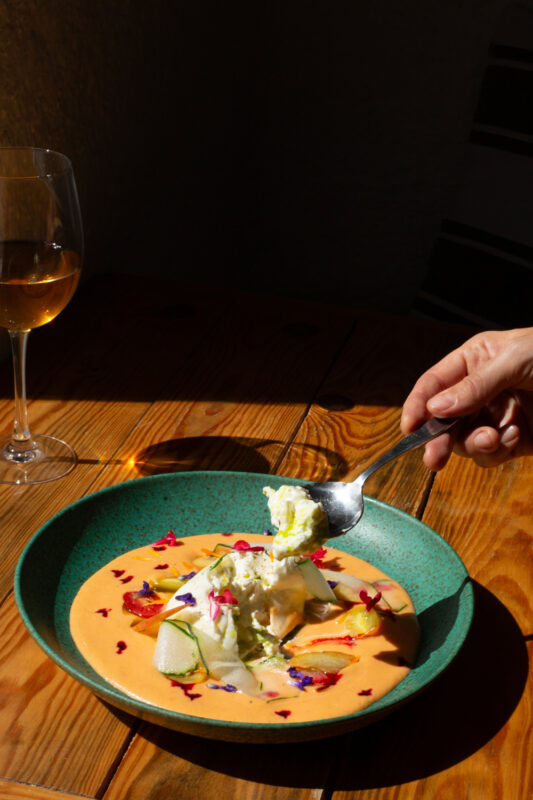
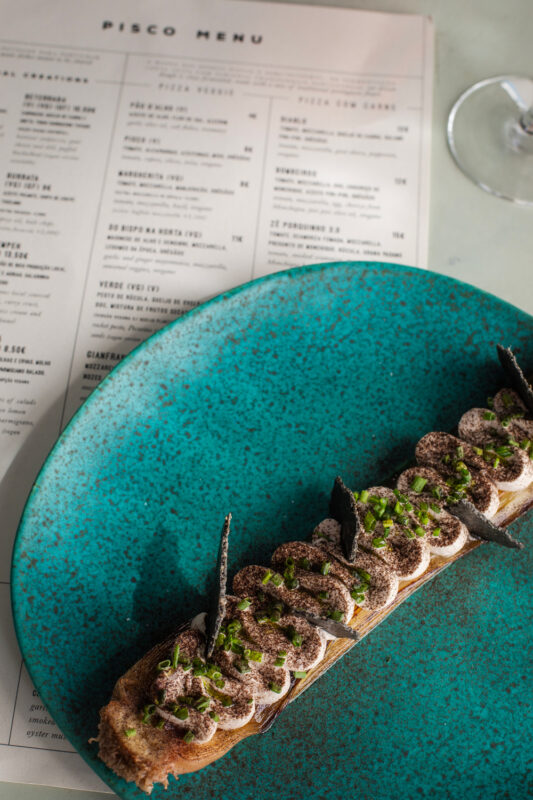
Also Pisco in Vila do Bispo, food and atmosphere that tastes like a warm hug. Chef Rosalba is super creative and talented, using local ingredients in a surprising and delicious way.
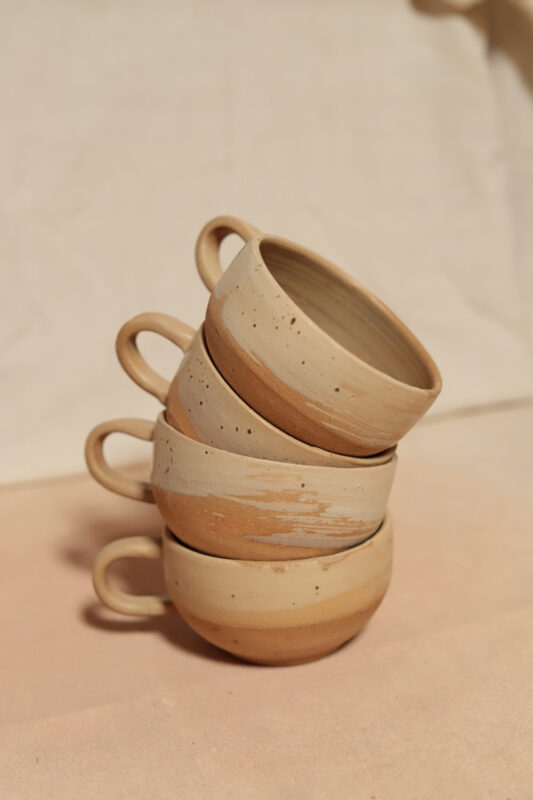
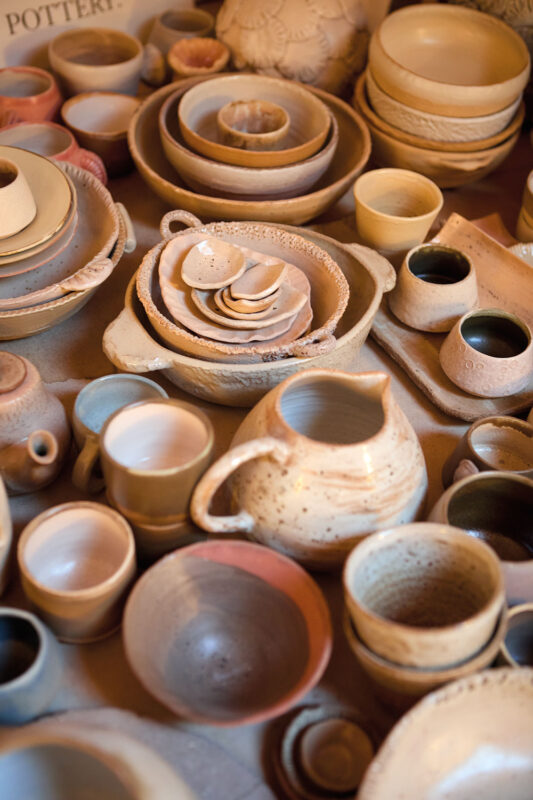
But my favorite thing to do is cook at home, using a different piece from my ceramics each day to complement my dishes. I feel such a big difference in the taste of the food depending on the ceramic piece I choose; it’s part of a special ritual.
© Pisco
© Pisco
Is there a local shop whose products are only available in your region?
Loja do Mel e do Medronho specialises in mountain honey, Medronho brandy/liqueur and melosa, locally made jams and preserves.
Sabores de Monchique is a local factory/shop that produces black pork sausages, Medronho liqueurs, and traditional sweets made with figs and almonds.
What are your 3 favourite apps that you use every day and couldn’t live without?
Instagram, it’s vital for me to connect with the world, living in a more isolated place. It functions as my portfolio; through this app I’ve already made countless contacts that have yielded many positive results, such as my first exhibition in a gallery in Osaka, Japan.
Spotify, for listening to music, for dancing in the morning, and for listening to podcasts while I’m in the studio creating.
WhatsApp to talk to my sister and my 6-month-old nephew, who live in Mozambique.
Do you have any favourite newspapers or online magazines? And how do you keep up to date with politics or social and cultural issues?
Right now I’m obsessed with Blumenhaus magazine. Because I love gardening and growing flowers and everything that involves the plantae world. Milk Decoration Magazine is also a favourite.
As a highly sensitive person, I try to restrict news and newspapers as much as possible, staying updated only on the essential and indispensable information. I am aware that it is a privilege to be able to choose and filter so much information. But my mind needs to be clear and inspired to be able to create. Which is very difficult because nowadays, for better or for worse, we are tuned in 24/7 to everything that happens in various corners of the world.
© Photo: Bextrel, Monchique – 19.09.2019, Adjusted Colours, CC BY-SA 4.0
Imagine you could be mayor for a year—what would you change?
I think it would be such a demanding job. First, I would rehabilitate the beautiful historic houses in the center of my village, 80% of which are empty, at controlled costs, to sell or rent to young people and families who wish to settle in Monchique. I would create a cultural center for the promotion of all kinds of cultural events, concerts, plays, film screenings. I would create an artists’ route, where it would be possible to visit workshops and studios scattered throughout the mountains, and I would support these artists with funds to rehabilitate their studios. I would improve the public transport network service, which at the moment is almost non-existent, to connect to the rest of the Algarve.
One last question: If you could choose another place to live—regardless of financial or time constrains—which one would you choose?
I would choose exactly where I am and where I chose to be. I wouldn’t trade this little paradise for any other.


