

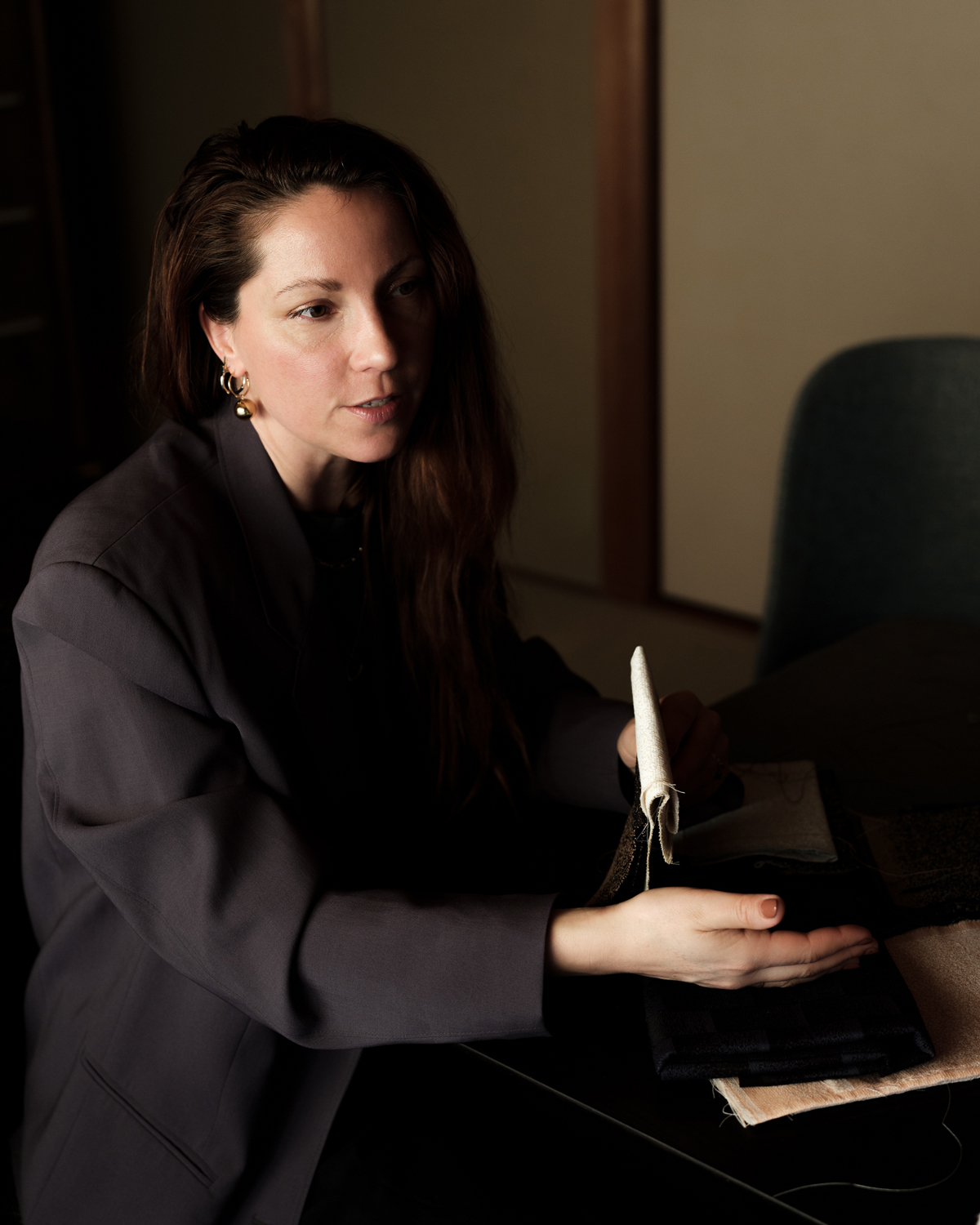
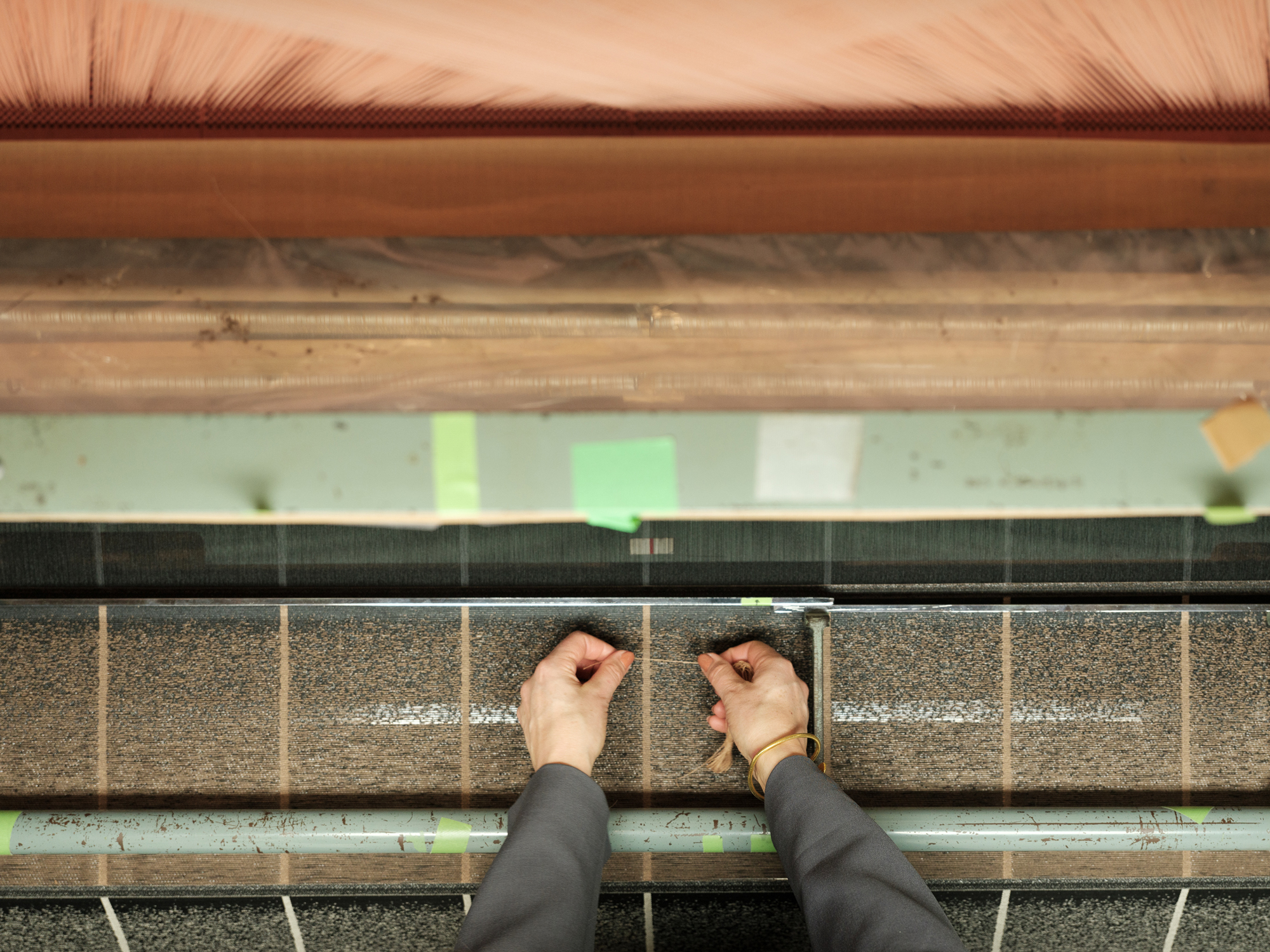
Mae Engelgeer works with textiles as a way of shaping spatial situations rather than surfaces. Color shifts through gradients, interruptions and subtle tensions. Her process is intuitive but precise, with each thread contributing to a larger rhythm.
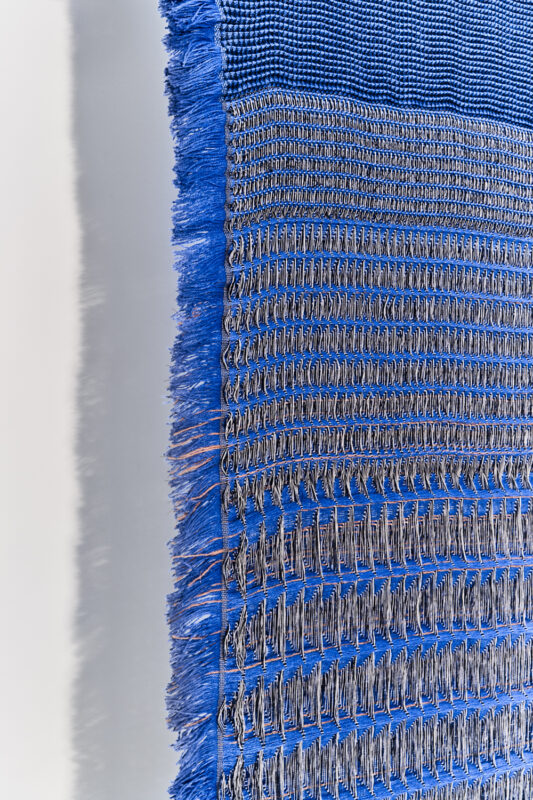
Her works do not decorate space but alter it. Woven structures become fields of perception where scale, material and color challenge what feels familiar. Tradition remains present, but is reworked into something that unfolds slowly as atmosphere.
© Photo : Courtesy of Hosoo / Hidenori Suzuki
Which place do you currently call home and where do you work on your projects?
Since 2,5 year I live in Kyoto, Japan with my husband and 2 kids. This is also the place where I work on my projects.
Where is your studio located & how does it look?
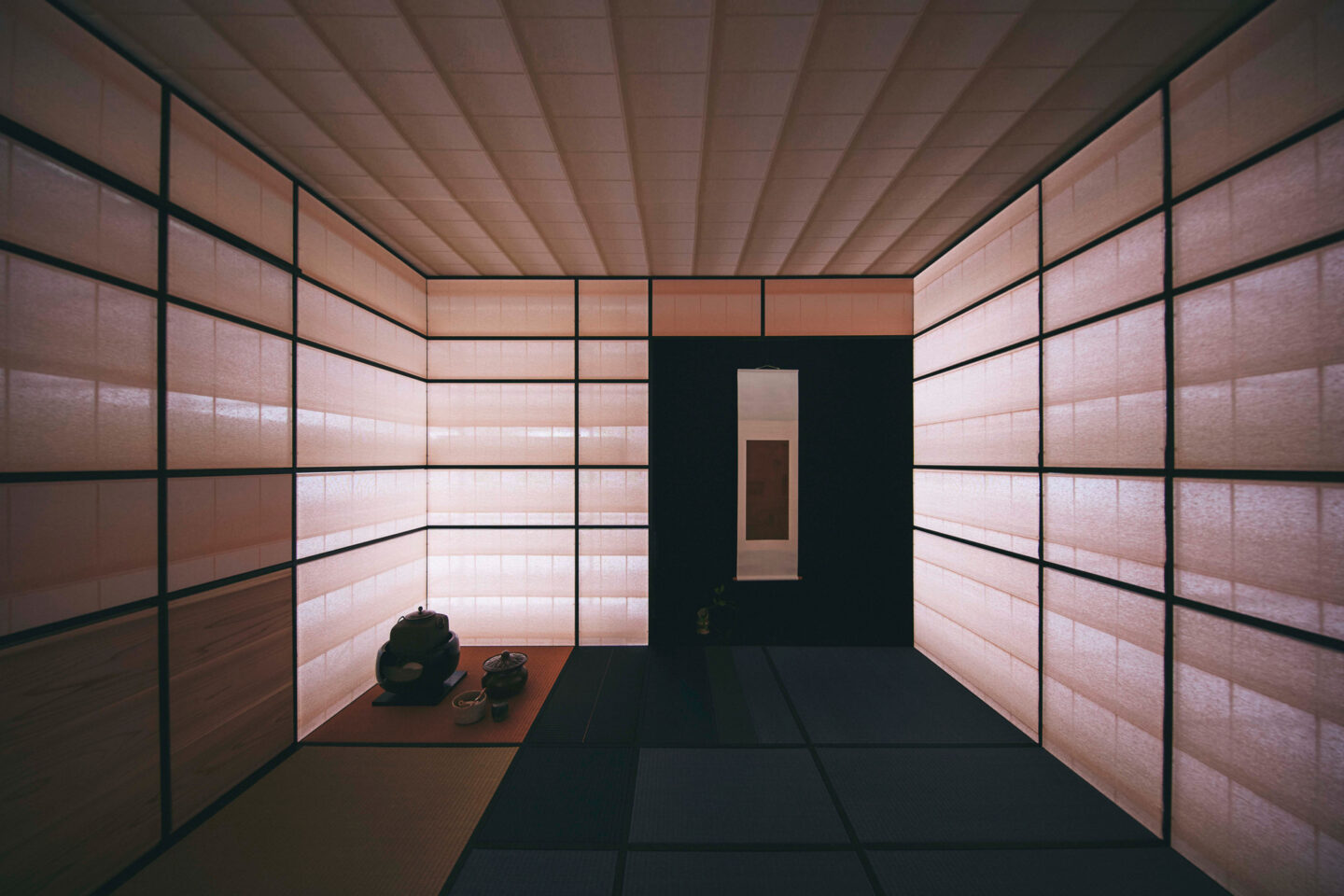
We still have our studio in Amsterdam, and when I am in the Netherlands, I enjoy working from there. Currently, I am looking for the right type of workspace in Kyoto, so for now the tatami room on the second floor of our house serves as my studio. It has a very traditional Japanese appearance, with green walls, a tokonoma, and sliding doors.
The space has a lot of atmosphere, which always helps me while developing my work. Here, I collect materials such as fabric swatches and ceramics sourced locally from antique markets. Working on a tatami floor gives me a sense of calm and the right kind of energy. I always make sure to have flowers in the room as well. I like my workspace to be clean, with materials organized in stacks or groups, creating a sense of order within the chaos of the design process.
© Photo : Courtesy of Hosoo / Hidenori Suzuki
Are there any projects that are personally important to you—whether recently completed or currently in progress?
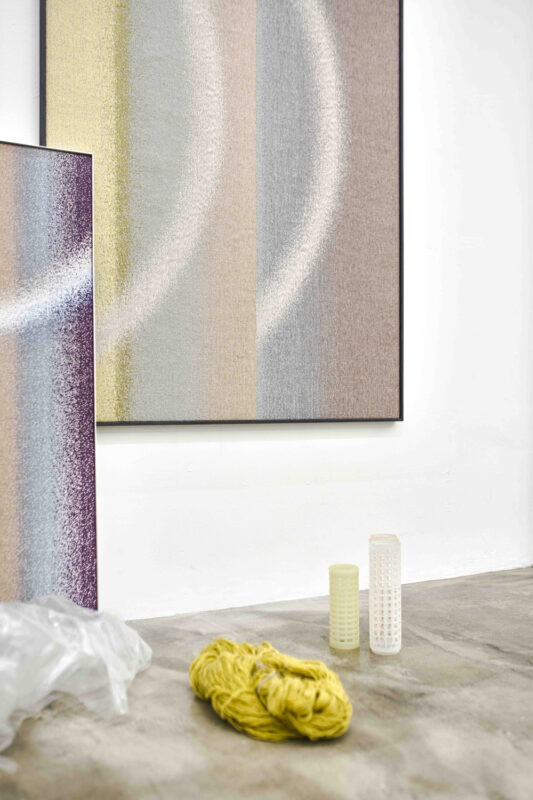
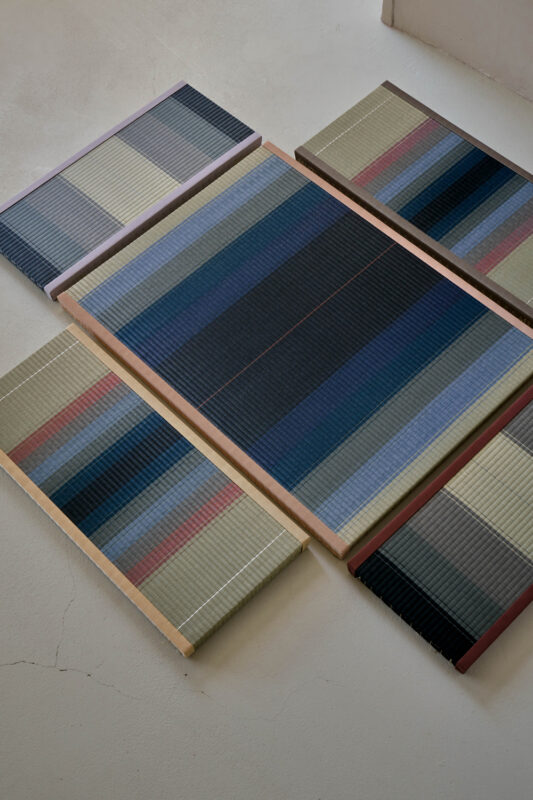
Most of my projects are very personal, so I feel deeply connected to all of them. It is therefore difficult to choose just one. However, for now I would say that creating the tea house “Ori An” from textiles designed for Hosoo in Kyoto was especially meaningful. This project represents the way I found my language in translating heritage into contemporary work. In this case, it resulted in a completely new atmosphere for something so important to Japanese life and aesthetics. Seeing this project accepted and appreciated has been truly special.
© Courtesy of the artist
© Courtesy of the artist
© Courtesy of the artist
Do you have a favorite place in your area where you like to relax and linger?
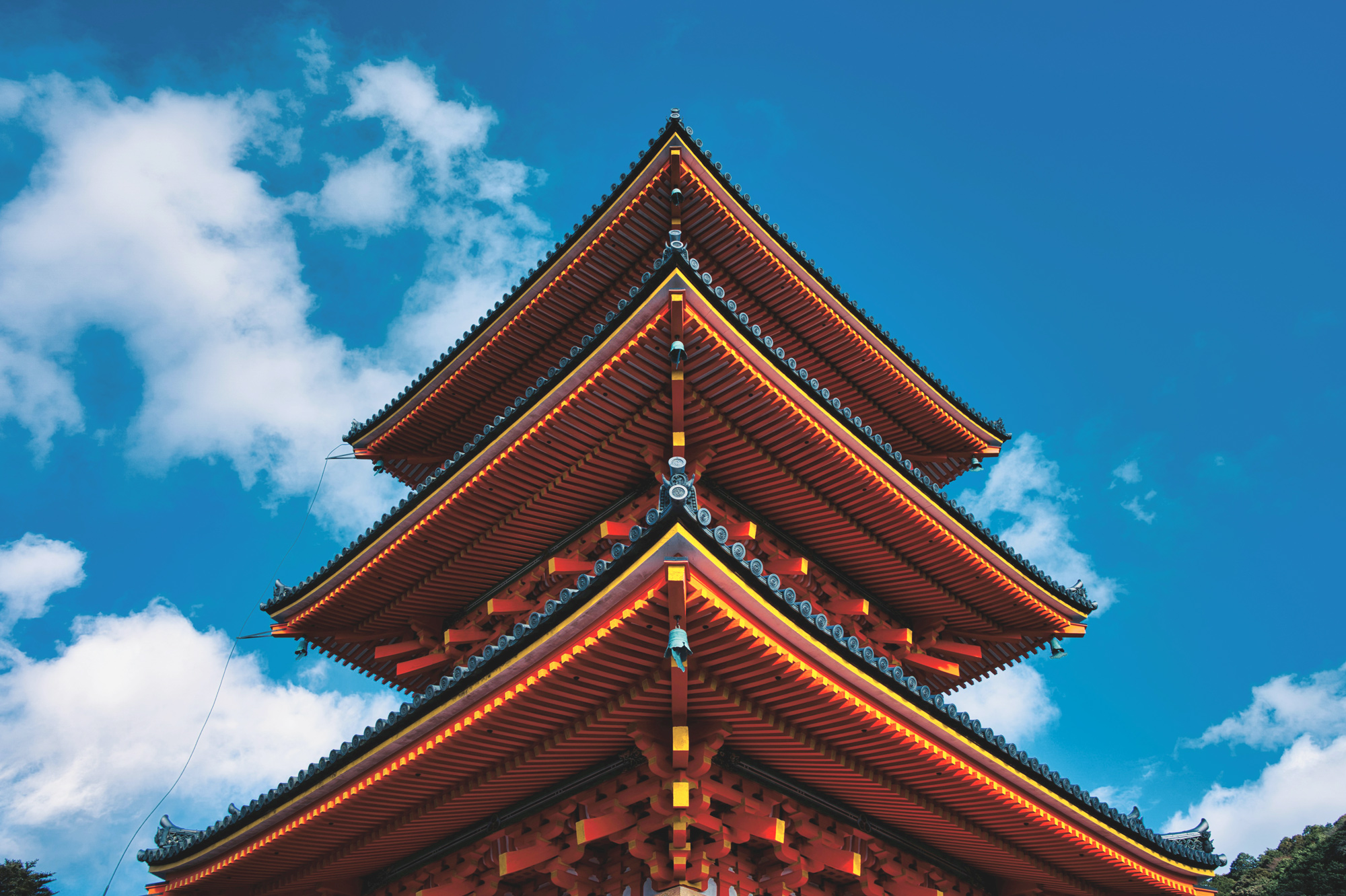
I love visiting old shrines and temples, as they always calm me down. They often have impressive gardens and beautiful natural surroundings. When I was younger, I would never have imagined that these places could make me feel so grounded and at peace. This is one of the main reasons I wanted to live in Japan, especially in Kyoto. There was simply something about it that called to me and made me feel it was okay to slow down.
© Photo: Yoshihiro,Unsplash
Are there any urgent political issues or problems in your region?
There are a lot of things going on here at the moment, since a new government has come into power that is very focused on immigration and is taking steps to change the way Japan accepts immigrants. There is discussion about creating a more harmonious framework for integration and coexistence, with some local governments advocating for supportive policies for foreigners. The issue is generating a lot of public debate, as the country balances labor shortages, demographic challenges, and societal concerns about community and safety.
In your opinion, what has developed well in the last 5 years—and what has not?
Since we have been in Japan for 2.5 years, I will split the answer between Amsterdam, the Netherlands, and Kyoto, Japan. As for Amsterdam, we lived in that beautiful city for more than 22 years, mostly in the same house. Unfortunately, we really saw the city change. The streets were always a bit dirty, but at a certain point we felt, “This is insane, it looks like a garbage dump at times.”
People would just throw their stuff out on the streets, and the wind would blow it everywhere. Also, when crossing the street with a baby and a teenager, I felt like I needed a few extra pairs of eyes. This has been one of the reasons we no longer wanted to live in the city centre (the De Pijp area, Old South).
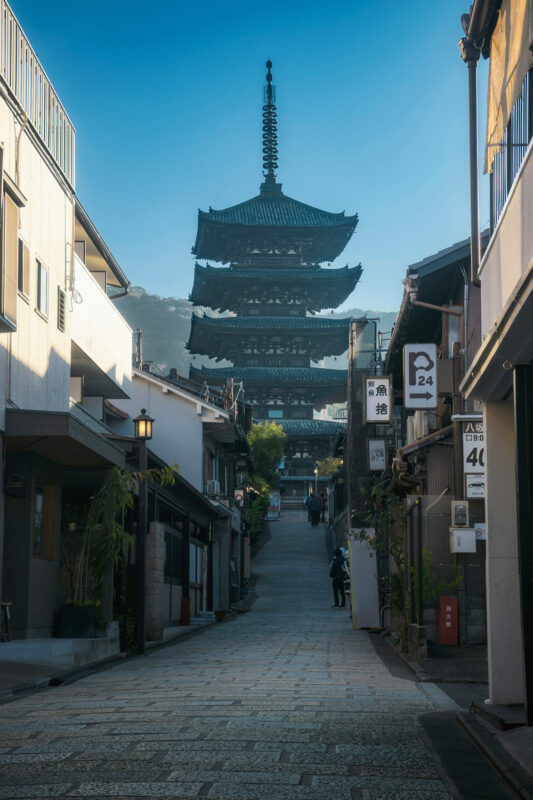
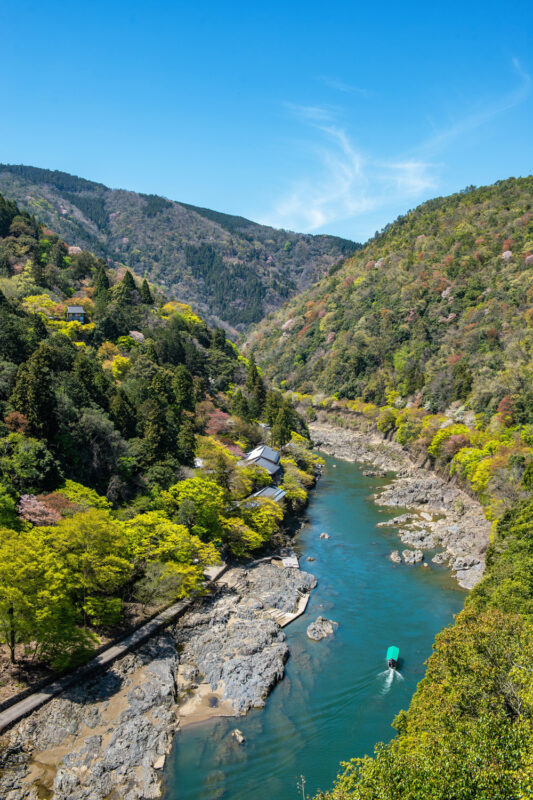
As for Kyoto, I think what is changing now is that the number of tourists is becoming a bit overwhelming for the city to handle. We also see that some foreigners are spoiling it for the rest — showing no respect and no understanding of the country’s culture. Sitting on the streets, being loud, and leaving trash behind. I think we are at a point where the Japanese government is really trying to find solutions, while at the same time relying on the tourism industry. Let’s see how this evolves.
I feel Japan works as a country because people follow even the smallest unwritten rules. I hope it can stay that way, since this is what makes it such an amazing country to live in.
© Photo: Filipe Freitas,Unsplash
© Photo: Fredrik Gyllenhammar,Unsplash
Do you know a hidden gem when it comes to local manufacturers—whether it’s arts and crafts, sustainable products or food?
I am now living in a place that is, in a way, surrounded by craftsmen. The longer I stay here, the more access I gain to hidden gems, which truly excites me. It is incredibly inspiring to visit the workshops and ateliers of craftsmen, to have the opportunity to ask questions, and sometimes even to collaborate. I really value this moment in my career by allowing myself the time and space to fully immerse in it. It has become a profound element of my work.
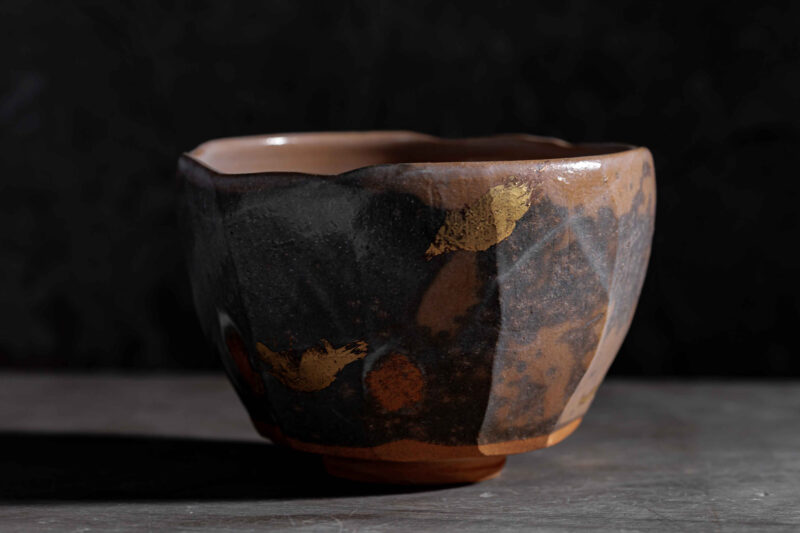
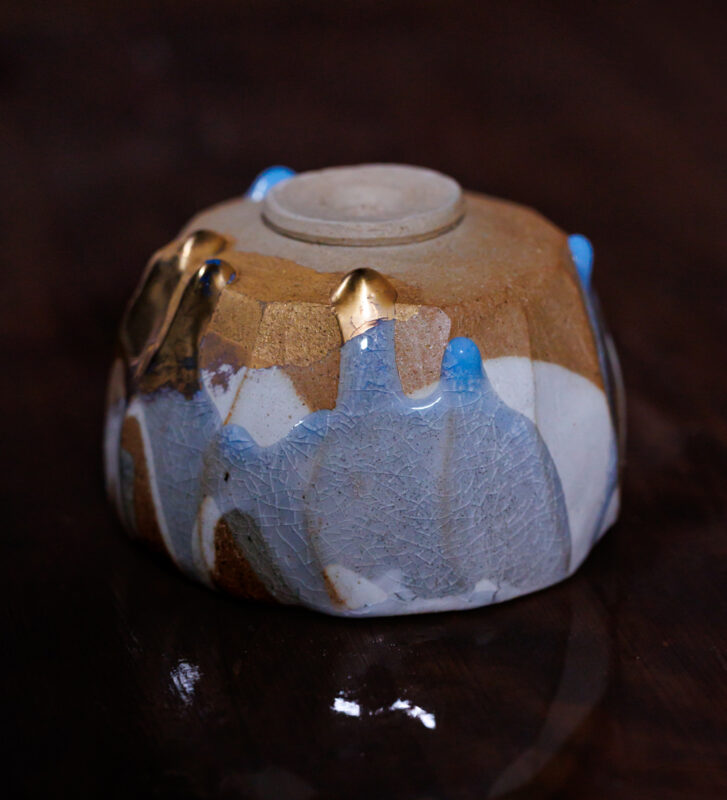
A beautiful craft shop and workshop to visit is Asahiyaki in Uji, close to Kyoto. I have known about Asahiyaki pottery for a long time since Hosai Matsubayashi, 16th generation is part of a group Go On. Go On is a collective of young, traditional craft artisan working to bring Japanese Crafsmanship into contemporary contexts through collaboration and innovation.
Masataka Hosoo from Hosoo a prestigious, long-established Japanese textile company founded in 1688, renowned for creating luxury Nishijin textiles for high-end fashion and interior design who I have been working for for around 10 years now started this group with him.
At the moment I am working in my duo show exhibition with Hosai Matsubayashi at Spazio Nobile in Brussels, mid September 2026.
© Photo: Akihito Yoshida
© Photo: Akihito Yoshida
Is there anything particularly innovative in your region? Also in comparison to other places you have already visited?
Luckily, there is an enormous interest and movement surrounding traditional arts and crafts, and I happen to find myself in one of its epicenters. I believe similar places and energies can be found across Asia at the moment, where there is both a deep respect and a renewed appreciation for handwork, natural materials, and centuries-old crafts—preserving, archiving, and reinterpreting them for the future.
Do you have a secret restaurant tip that you would like to share with us?
I love the izakaya-style restaurants in Japan, as well as the small, counter-seated, more upscale dining spots. In Amsterdam, one place on my list is Tewatashi Sushi. We gave a gift card to my sister-in-law to go there, and she said it was amazing. The location is at the former Gowri 101, which used to be one of our favorites. I hope to visit Tewatashi Sushi on my next trip to the Netherlands.
Is there a local shop whose products are only available in your region?
So many! I love the small shops that sell wagashi, traditional Japanese sweets. They change with the seasons and are always beautifully presented. It’s such a pleasure to try so many new flavors here! For example, many wagashi use anko, a sweet red bean paste, which is a taste I wasn’t used to at first. Initially, I didn’t really like it, but now I absolutely love it. Wagashi are often made from natural ingredients like beans, rice flour, and fruits, and they are closely tied to Japanese culture and seasonal celebrations. They’re not just desserts, they are miniature works of art, often served with matcha tea to balance the sweetness. Eating wagashi and mochi is not just about taste, it’s a sensory experience.
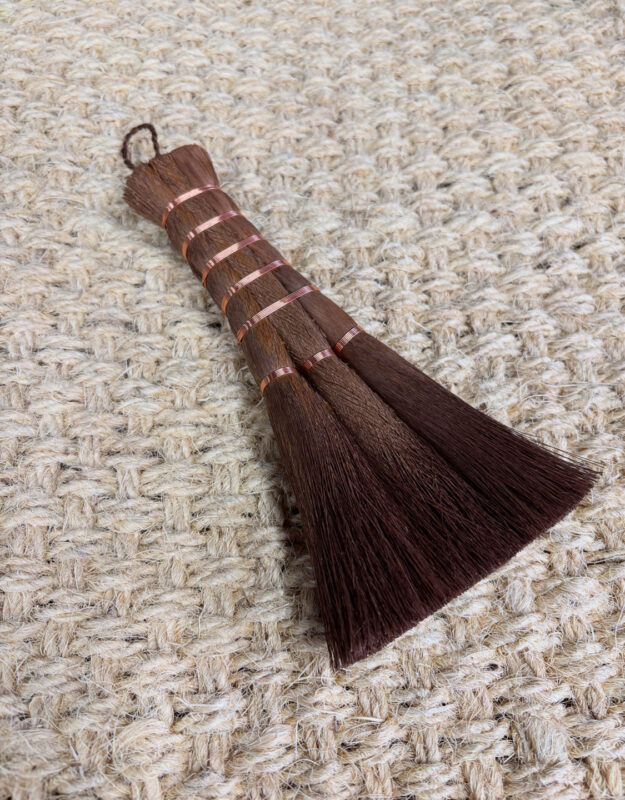
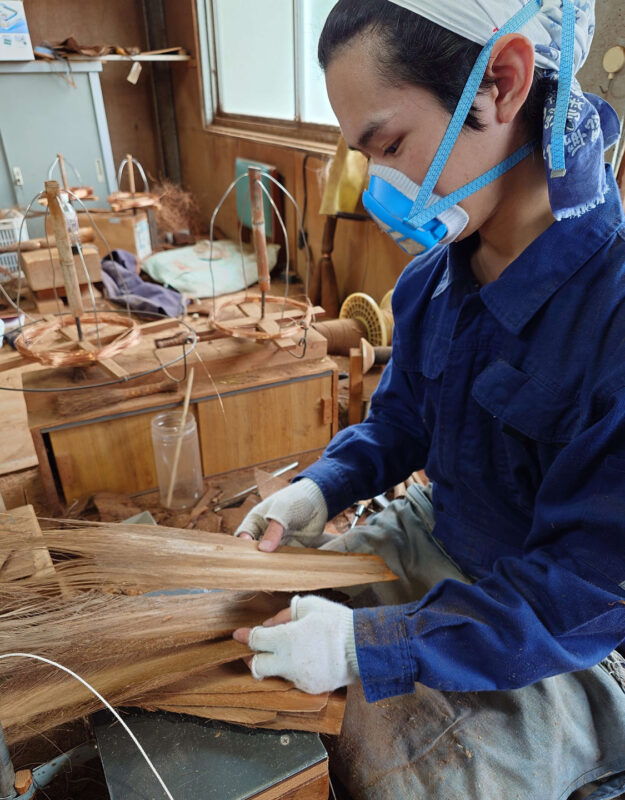
There is also a broom store in Kyoto city which is special and quite rara I think. I remember years back when we traveled through Japan before living here we visited the shop and a very old grandma was there, sitting there proudly talking about the brooms. They are all handmade and I think they use them for things we would never consider. The name is Naito Shoten and exists since 1818.
© Naito Shoten
© Naito Shoten
What are your 3 favourite apps that you use every day and couldn’t live without?
To be honest, I’m not someone who uses many apps. The one I use most is Instagram—I would say it’s like my daily diary. Even though it has changed a lot, I find myself getting lost in pointless videos quite quickly, so at the moment I’m trying to limit my use of it. I read The Japan Times app every day, together with the Dutch news app NOS. Perhaps Netflix would be a third, although instead of watching films, I’ve started reading books again before going to sleep. So overall, I’m not too attached to apps, it seems.
Do you have any favourite newspapers or online magazines? And how do you keep up to date with politics or social and cultural issues?
Ah, my previous answer already gives you insight into where I get my news—mainly through news apps and Instagram. I simply can’t seem to find the time to explore online magazines, and when I buy printed magazines, I hardly open them. I suppose I need to consciously make more time for that. That said, I do feel that I stay well informed about politics and social and cultural issues. I wouldn’t say I’m at the forefront of any particular social movement, but I try to remain aware and engaged.
© Photo: Zion C,Unsplash
Imagine you could be mayor for a year—what would you change?
I’m not sure whether a mayor has that much power, but I think I would begin by really listening to what people have to say and trying to bring back a sense of humanity. I’ve noticed that Amsterdam has become quite a harsh city to live in. People seem more frustrated, sometimes less considerate of one another (of course, not everyone), and it feels less safe than it once did. I used to be drawn to the sense of freedom in the city — the feeling that anything was possible and that dreams could truly take shape there. Somehow, it now feels more difficult to start new initiatives. That said, my love for Amsterdam will never disappear. So yes, if I were mayor of Amsterdam, I would focus on strengthening the sense of community and restoring mutual respect.
One last question: If you could choose another place to live—regardless of financial or time constrains—which one would you choose?
I am right where I want to be! 😉 I completely changed my life to make it happen, and despite missing our family and friends, we have gained an entirely new lifestyle — both privately and professionally. We are happy and feel blessed that we were able to turn this dream into reality, of course through a lot of hard work. We truly made our dream come true.


