

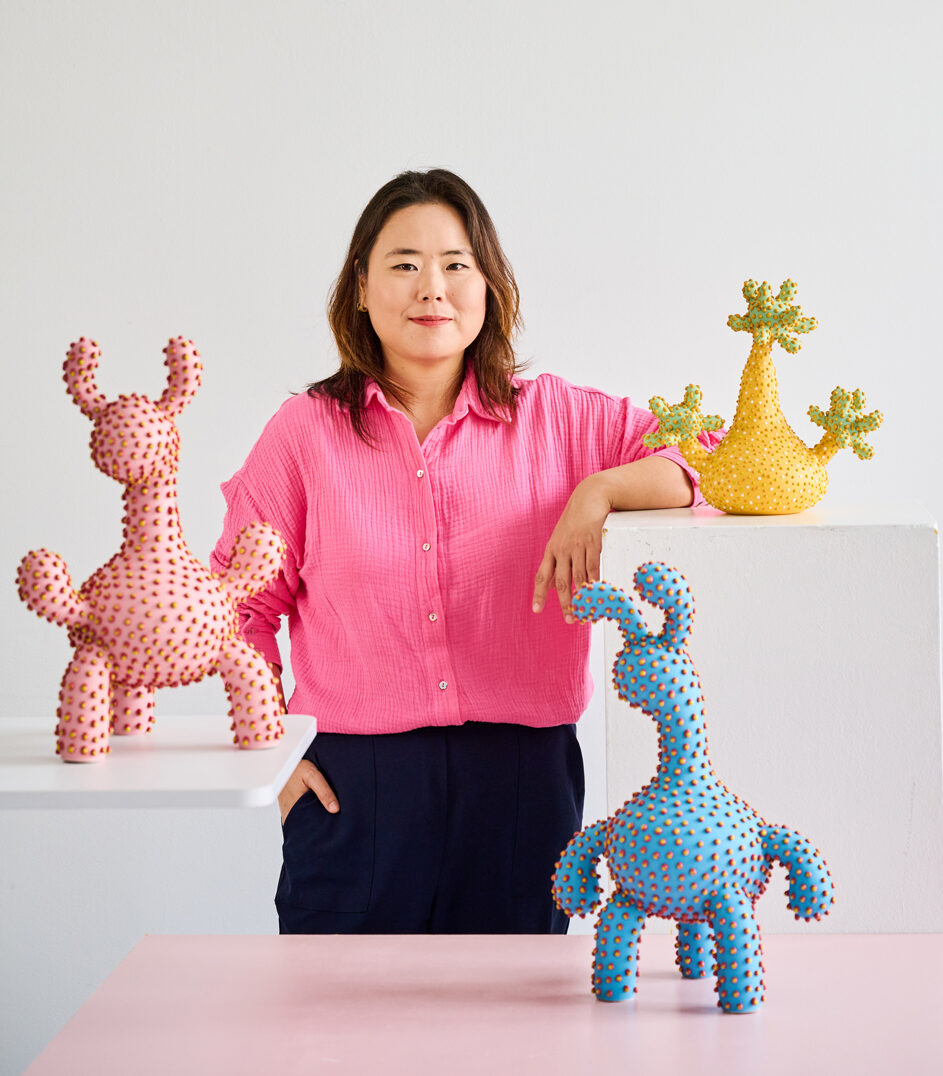
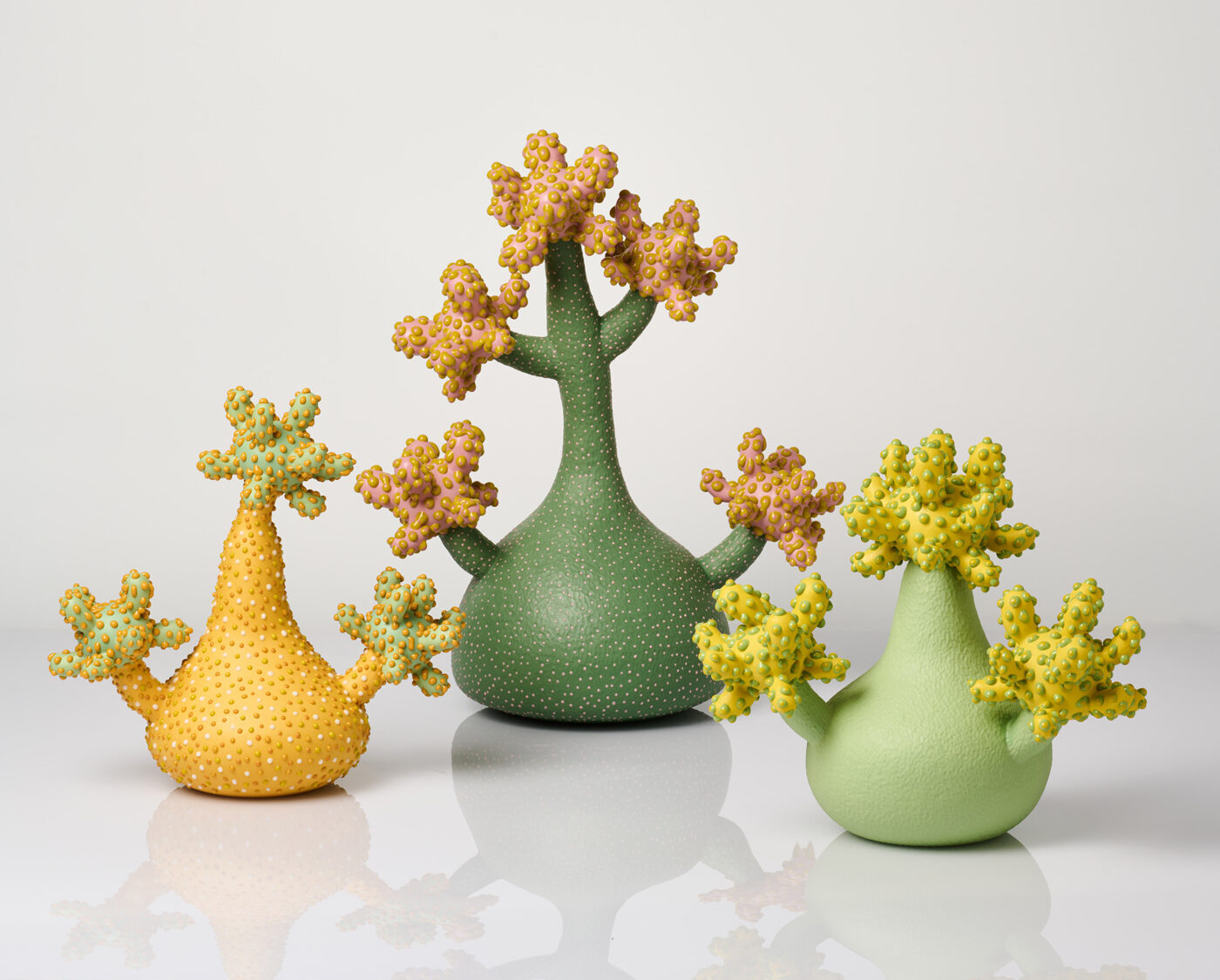
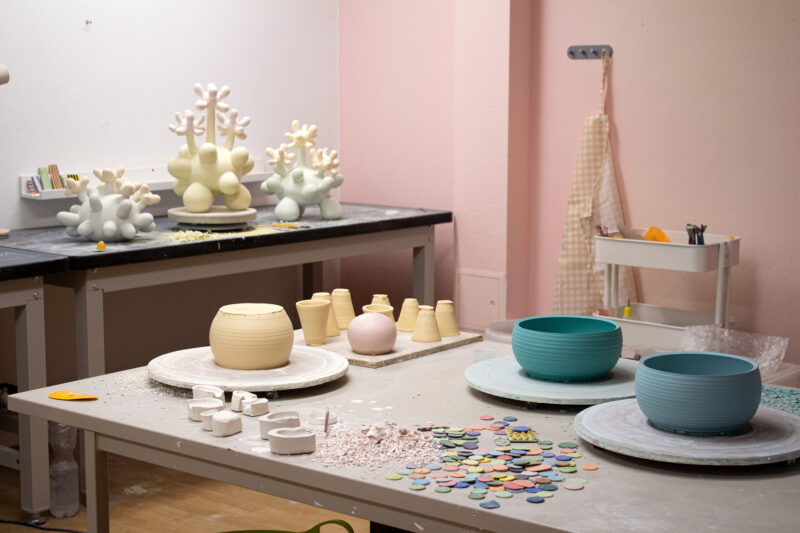
Colour seems to spill freely through the ceramic world of Ahryun Lee. Her objects twist, drip and bloom into playful sculptural forms that feel almost edible, as if drawn from a fantastical dessert table. Working intuitively with clay, she pushes the material beyond its traditional limits, embracing its softness, texture and unpredictability. Each piece grows through experimentation, allowing form and surface to evolve together in a lively dialogue.
© Courtesy of the artist
Which place do you currently call home and where do you work on your projects?
After moving between cultures—from Korea to Europe—I’ve come to think of London as my second home. It’s where I spent the most exciting and formative years of my twenties, studying ceramics and shaping my artistic identity within a richly multicultural environment. After graduation, life carried me to Germany for personal reasons: I followed my love from London, as my husband is German, and eventually settled in Essenbach, a small village about an hour from Munich.
During the pandemic, I found myself longing for a place where I could build my own studio at home—a space with more freedom, more room to experiment, and a more flexible rhythm for working. But, I don’t necessarily see it as my forever home. I’m not yet sure where I will ultimately settle or what place will truly feel like “home,” especially since my life has been quite nomadic—and I’ve grown to appreciate that fluidity and freedom. For now, though, it’s an ideal environment to focus deeply on my practice and continue my artistic development.
Where is your studio located & how does it look?
Essenbach is not too far from Munich—just over an hour’s drive—and actually even closer to Munich Airport. My town is very quiet and rural, surrounded by open fields and forests. Birds chirp throughout the day, rabbits and deer wander across the fields behind my house, and sometimes the stillness is so complete that it feels as if I’m living in the middle of nowhere. Being removed from the noise and crowds can be a relief, offering a gentle environment where I can slow down, clear my mind, and recover from the intensity of work.
Since I grew up in Seoul and had never lived outside a major metropolitan city before, adapting to countryside life has been challenging at times. I’ve experienced both the pros and cons of the contrast between big cities and rural living. I still feel that my energy naturally aligns more with urban life—I belong to the rhythm of a city. Yet nature gives me a different kind of strength, a grounding energy. And when I need deep focus and uninterrupted time for my creative work, this quietness becomes a true blessing.

© Courtesy of the artist
Are there any projects that are personally important to you—whether recently completed or currently in progress?
For me, every project holds deep significance, because my work is a portrait of my thoughts and expressions—a form of storytelling shared with the public to spark dialogue through art. I sometimes joke with my friends that by the end of the year, it feels as if I’ve given birth to more than fifty children. My sculptures truly feel like my babies, each one shaped with immense time, care, and affection.
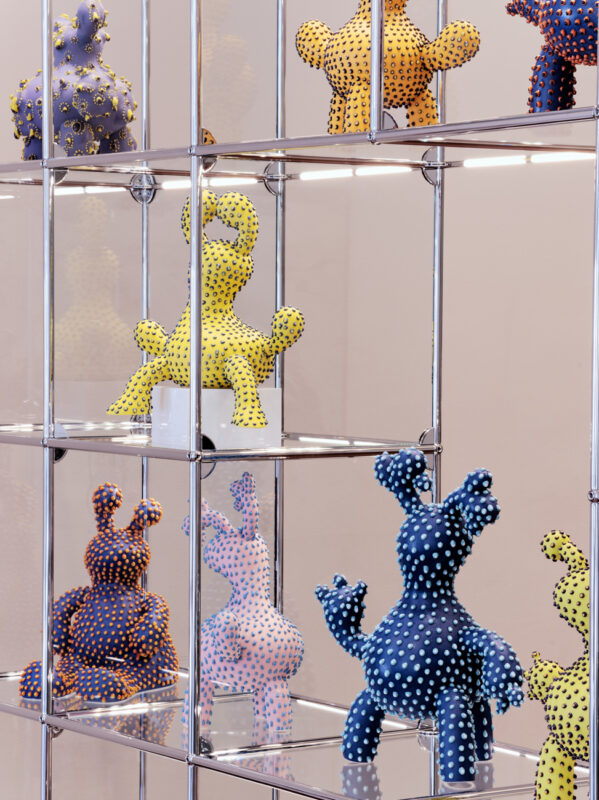
Looking back on this year, I primarily collaborated with galleries from around the world. I was grateful to begin the year in New York with my vibrant solo show “Hoppy Marvels” at J. Lohmann Gallery, presented in collaboration with USM Haller New York. Meeting new people through these partnerships—especially those with diverse backgrounds and experiences—is always inspiring, and I love exchanging ideas and life stories beyond my usual circle.
Another major highlight was presenting my new collection, “Bloomtopia”, with Pik’D Gallery at PAD London. London has always felt like home to me, so returning to the city to introduce a new body of work at one of its most dynamic and prestigious art events was especially meaningful. I also cherished the chance to connect with artists, galleries, and collectors from across the globe.
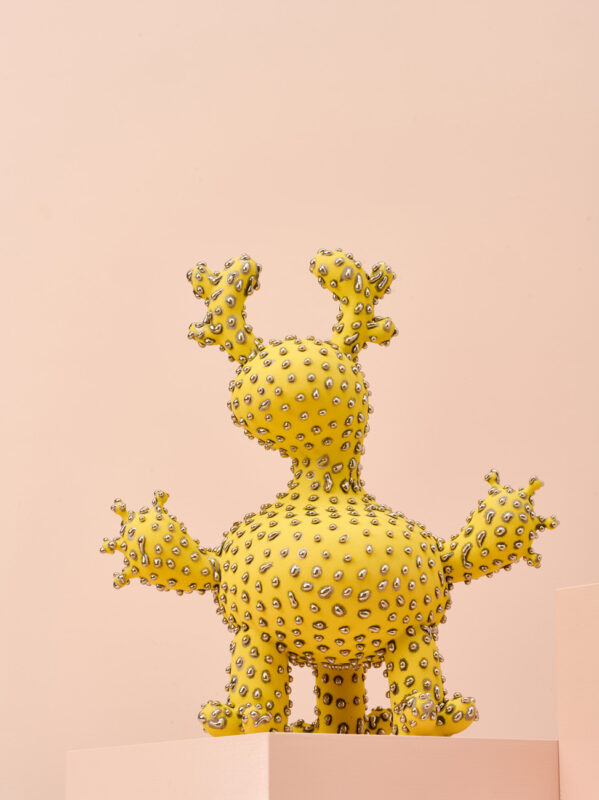
Lastly, my solo exhibition “Bloomimals” is still ongoing in France at Galerie de l’Ancienne Poste. As my final solo show of the year, it represents an integration of my style—a fantastical and joyful world of creatures. This exhibition also serves as a blueprint for my future work, which I hope to develop with even greater vibrancy and emotional richness. These pieces revolve around the idea of joy as resilience, exploring optimism, emotional stimulation, and the imaginative spark that brings new, curious creatures to life. Through them, I hope to inspire a sense of wonder in everyday life.
I remain deeply grateful to work with galleries with whom I have built strong, trusting relationships. Their encouragement and support have been invaluable to my artistic journey.
© Courtesy of the artist
© Courtesy of the artist
© Courtesy of the artist
Do you have a favourite place in your area where you like to relax and linger?
There are two places where I feel truly relaxed and healed: in nature, and in museums.
Bavaria is full of beautiful landscapes, and I love visiting the lakes from time to time. Since I was young, I’ve always been drawn to rivers and oceans whenever I needed to clear my mind or reset my thoughts. Sitting by the water makes me feel like the smallest being on the planet in the face of such vastness. In those quiet moments, my worries and stress seem to dissolve instantly, and I treasure that sense of calm reflection. Starnberger See and Tegernsee were especially lovely in the summer.
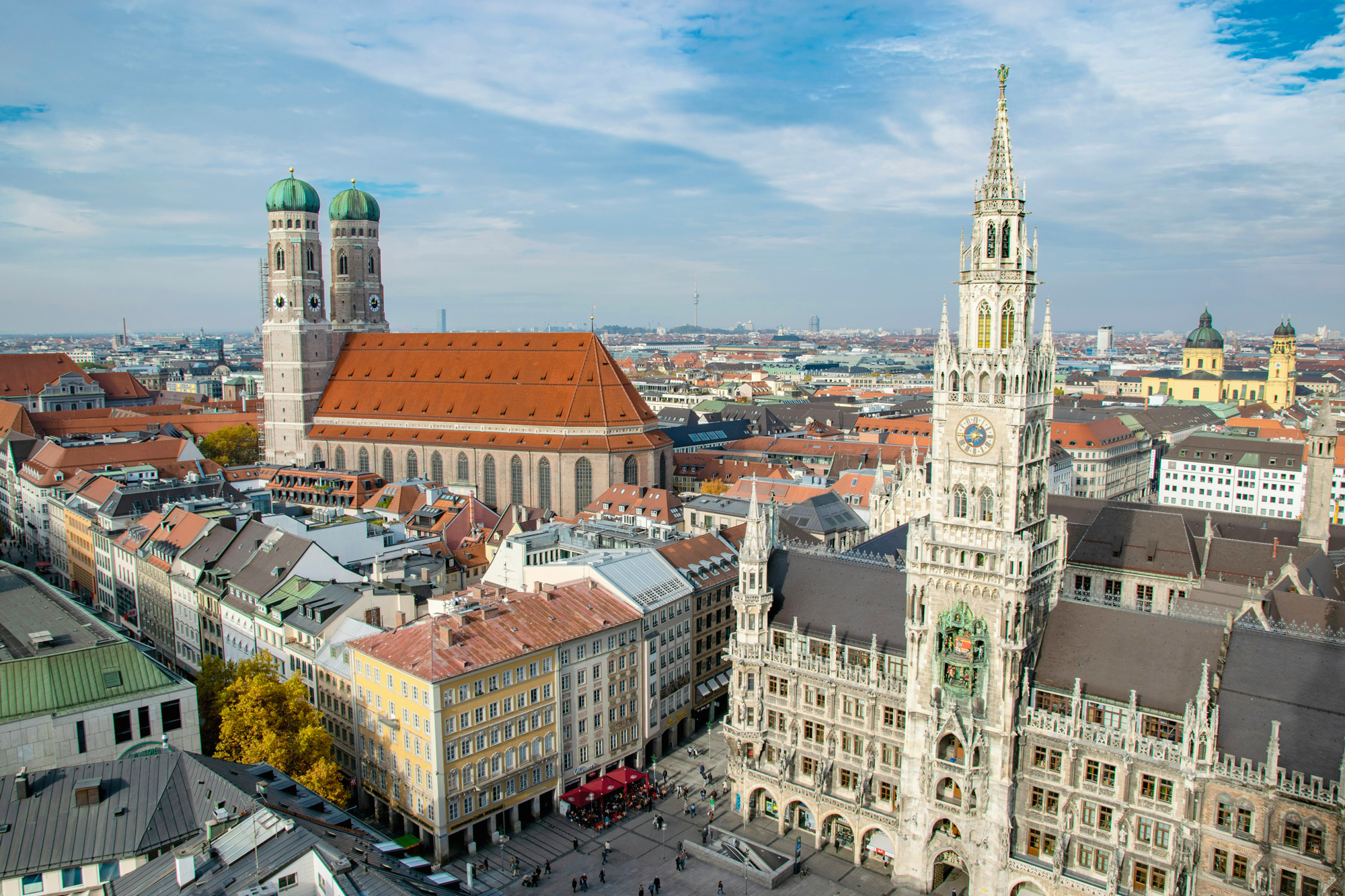
Spending time in museums is another form of meditation for me. I love going alone, lingering in the galleries, and letting the atmosphere guide me. Being in a museum always brings me back to my childhood—the time when I first dreamed of becoming an artist. It gives me space to reflect on the path I’ve taken, the direction I’m moving toward, and to reconnect with my purpose. Museums also offer endless inspiration; encountering other artists’ work refreshes my thoughts and renews my mindset. I especially love the Pinakothek der Moderne in Munich. Its permanent collection is fantastic, and the way the museum curates exhibitions between art and design is always deeply engaging.
© Anastasiya Dalenka, Unsplash
Are there any urgent political issues or problems in your region?
When it comes to political issues, I feel that many regions around the world are facing similar challenges related to rising nationalism. I still remember studying in the UK during the time of Brexit—it was a striking example of how political shifts can affect society. I haven’t personally experienced harsh discrimination as a Korean living here, but I do notice how profoundly different it feels to live in a culturally open-minded environment. Such places tend to be more tolerant, flexible, liberating, independent, and intellectually stimulating. Being surrounded by people from diverse backgrounds fosters a deeper appreciation of global histories and perspectives. These individuals often remain curious and respectful toward different cultures, adapt more easily to new situations, and thrive in professional settings. Networking also feels more natural in societies shaped by a more altruistic and outward-looking mindset. I choose to remain optimistic—believing that the world will not close itself off entirely, and that openness and understanding will continue to grow.
In your opinion, what has developed well in the last 5 years—and what has not?
Thinking about the region where I currently live, I would say it is still developing. Munich, however, can be an exception—the international scene there has grown dramatically compared to ten years ago. Outside of Munich, much of Bavaria remains culturally conservative, but people are gradually becoming more open to experiencing other cultures. I remember my first visit to Landshut about ten years ago, a medium-sized city near Essenbach. At that time, there were very few international restaurants, and Asian influences were rare. Since then, the city seems to have evolved, embracing more intercultural exchange through events like the African Festival or French Week, rather than focusing solely on traditional celebrations like the medieval festival, Landshuter Hochzeit 1475. While there has certainly been progress, compared to cities like London or New York, the art and cultural scene here still feels relatively underdeveloped, based on my experience.
© kwan fung, Unsplash
© Ioana Cristiana, Unsplash
Do you know a hidden gem when it comes to local manufacturers—whether it’s arts and crafts, sustainable products or food?
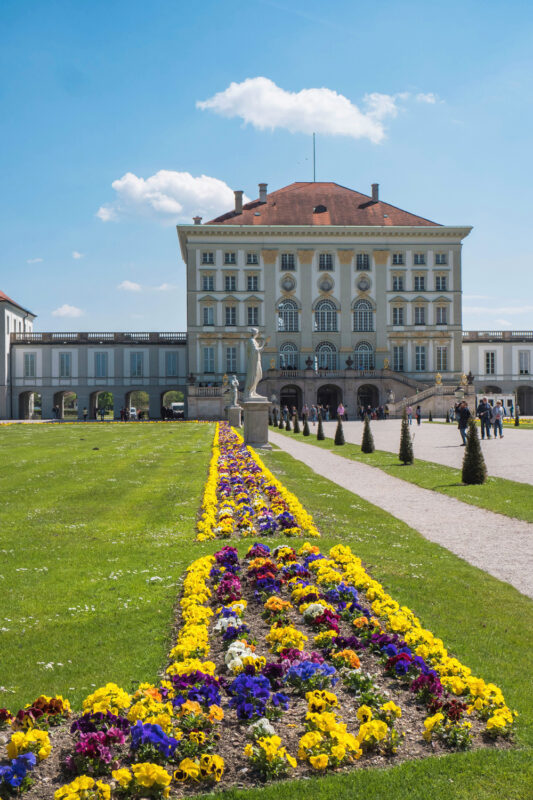
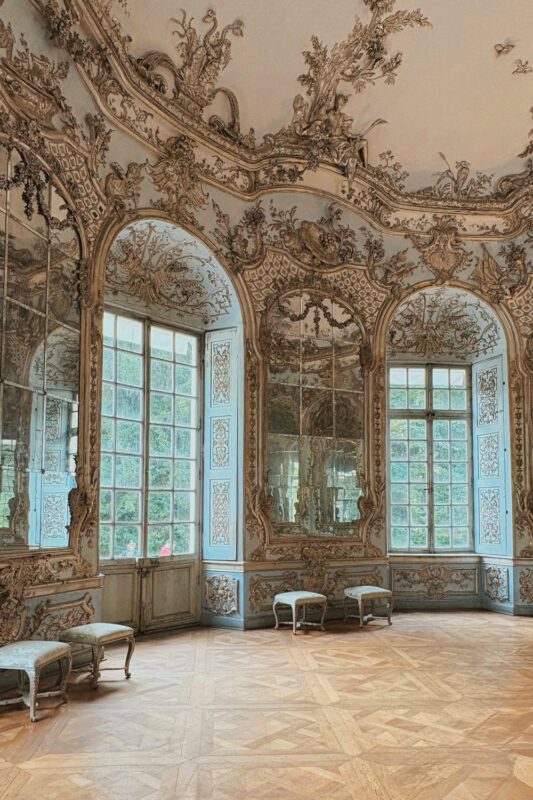
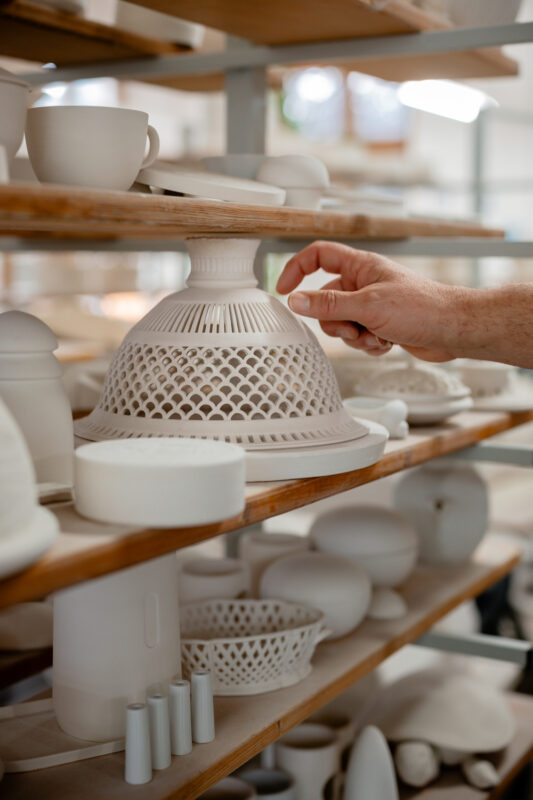
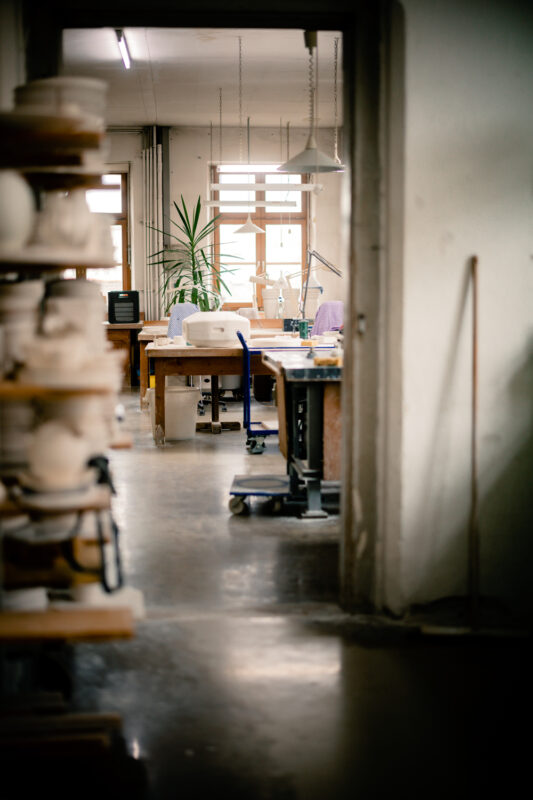
As I am a ceramic artist, in relation to my profession for me Porzellan Manufaktur Nymphenburg could be one of the hidden gem in Munich. Tucked near the beautiful Nymphenburg Palace, the place is a true treasure for anyone interested in art, craftmanship, and timeless beauty. Since 1747, this historic porcelain manufatory has been handcrafting exquisite pieces, from delicate Rococo-style figurines to modern collaboration with contemporary artists. Beyond the functionality sometime their exquisite sculptures are surprising, with the master of craftsmanship, for visitors exploring Nymphenburg offers a rare glimpse into a world where tradition meets creativity, and where every porcelain figure tells a story.
I have another hidden gem in mind: The Oskar Maria Brasserie in Munich. Their Sunday Jazz Brunch is a well-established tradition—live jazz music by local musicians sets a relaxed, elegant mood over brunch. The brasserie is housed in a historic, light-filled hall (now part of the Literaturhaus), featuring high ceilings and classic café-house vibes. I think this place is perfect for art lovers or anyone who appreciates atmosphere and detail. To me, it’s more than just a meal—it’s a cultural experience, bridging art, culture, and everyday life. Even small touches make it memorable: when I finished my coffee, I discovered a hidden message at the bottom of my cup—mine read “Mehr Erotik, bitte!”—a playful note that adds a little fun to the day.
Is there anything particularly innovative in your region? Also in comparison to other places you have already visited?
In terms of technological infrastructure actively used by the public, I personally feel that Germany is not as advanced as countries like South Korea, the United States, or Singapore. When I visited home, Seoul a few years after the pandemic, I was quite struck by how everything ran through QR systems—no paperwork at all, everything quick and efficient. The convenience of daily life there felt on another level. From this perspective, I don’t feel a strong sense of public-facing innovation in my region.
However, if I consider innovations specific to Bavaria, I would point to the mobility and automotive sector, for which the region is world-renowned, particularly with companies like BMW. Electric mobility is becoming increasingly popular in Germany, some considerations for energy saving and Germany has developed a robust infrastructure for charging, making it more accessible compared to other European countries from my road trip experiences. The region is also leading in producing components for next-generation electric and hybrid vehicles, which represents a significant technological advancement.
Do you have a secret restaurant tip that you would like to share with us?
I believe choosing a restaurant is all about personal experiences and sharing them with others. For me, authenticity and ambiance are essential, because eating is never just a practical activity—it’s a cultural experience. In Korean culture, sharing a meal is a way to create memorable moments and stories, and these days the culinary scene in Korea is exceptionally creative and dynamic.
To find the best spots, I often turn to curated travel guides from platforms like Condé Nast Traveller, Icon Magazine, Time Out, or Lonely Planet, and I also trust recommendations from fellow artists. When I’m abroad, I do some online research, but I equally enjoy exploring spontaneously—wandering into unknown streets and discovering hidden places by chance. These unexpected encounters often lead to unique culinary moments that excite my senses and genuinely surprise me.
© Nymphenburg
© Nymphenburg
Is there a local shop whose products are only available in your region?
Focusing on what is unique to my region, the town of Landshut—close to my house—is famous for its traditional medieval festival, the Landshuter Hochzeit, held every four years. One of the festival’s iconic symbols is the Hochzeits-Humpen, a handmade commemorative cup produced by local artisans. Often made of matal (e.g. tim or pewter) or ceramics, featuring detailed painting or engravings, the cup celebrates the historic wedding of Duke George of Bavaria in 1475. Owning or using a Hochzeits-Humpen is more than having a souvenir—it is a way to connect with the region’s history, craftsmanship, and festive spirit, making it a meaningful keepsake of Landshut’s rich cultural heritage. A great place to buy an authentic Hochzeits-Humpen in Landshut is Der Landshut Shop, the city’s official souvenir store, which regularly offers these cups among its collection of Landshut-themed items.
What are your 3 favourite apps that you use every day and couldn’t live without?
The three apps I use daily are Instagram, Pinterest, and YouTube. Actually, they are all visually driven apps, of course. All three are essential for my work as an artist: Instagram helps with promotion and communication, Pinterest serves as a collection of inspirational ideas, and YouTube provides both learning resources and creative inspiration.
Do you have any favourite newspapers or online magazines? And how do you keep up to date with politics or social and cultural issues?
Yes, I keep up to date through online magazines like ARTnews and Artnet. These platforms are very useful for learning about current developments in the global art world and for finding information about upcoming exhibitions. I also try to stay informed about my hometown. Even though I live far away, I follow the news on Naver to keep up with political issues and social matters at home.
© Photo: Sven Masuhr,Unsplash
Imagine you could be mayor for a year—what would you change?
If I could be Mayor, I would create a special mandatory healing week every month—a week when everyone must take time off and all work stops, with nothing operating. We often work so hard just to survive in this expensive, busy, and competitive world that we miss the time to take care of our true selves, and sometimes even taking a holiday can feel like a pressure. Many young people experience burnout or mental health issues without even realizing it.
For Koreans, working hard is almost the default—we are used to it—so it’s actually difficult for me to fully step away from work, even as a freelance artist, since my work is part of who I am. But if there were a special week when nobody could work and everything was closed, perhaps we could enjoy truly meaningful time with friends and family. Just imagining a week without pressure, stress, duties, concerns, phone calls, or notifications—a real time of freedom for everyone, a genuine opportunity to regenerate physically and mentally—feels incredibly refreshing.
One last question: If you could choose another place to live—regardless of financial or time constrains—which one would you choose?
I think this is one of the most exciting questions to reflect on, and my answer comes straight from the heart: it’s definitely New York.
I personally love the city—in my perspective, it’s one of the best cities, not just as an artist but also in terms of personal taste. The multicultural scene is incredible: each street tells cultural stories, filled with people from all over the world, a world-class vibrant art scene, and an endless flow of new ideas and experiments. New York itself is a constant source of inspiration and motivation. I’ve noticed that in certain countries or cities, traveling can instantly regenerate your energy—some places drain you, while others awaken you. From my experience, New York has always energized me, boosting me both physically and mentally. For me, it’s a dream destination as an artist, and I hope one day to have the chance to live there. I visualize this dream clearly in my mind and hope it comes true in the near future.


